
lovethailand home >North Travel Attractions >Phichit Travel Attractions >Bang Mun Nak >Huai Khen > Wat Huai Khen
TL;DR: Wat Huai Khen is located at Huai Khen Subdistrict, Bang Mun Nak District, Phichit Province, open Daily, hours Daytime.
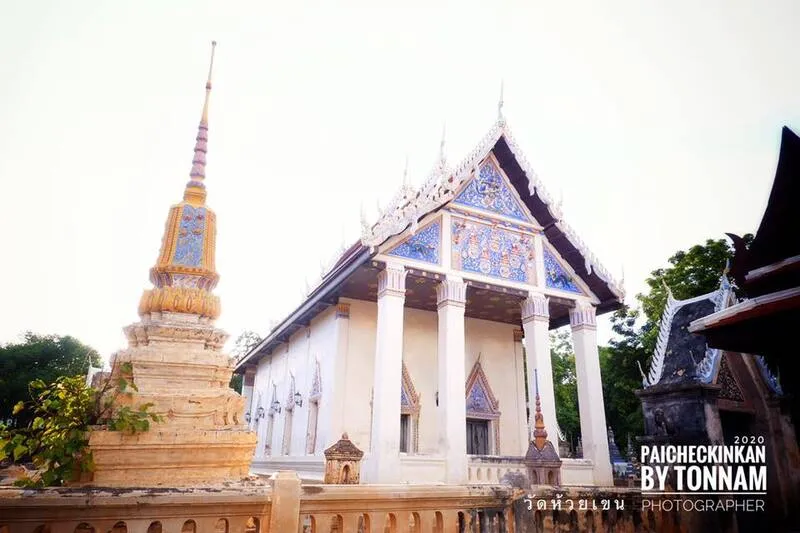
Wat Huai Khen
Open Days: Daily
Opening Hours: Daytime
Wat Huai Khen in Phichit Province is a small but culturally significant Buddhist temple in Huai Khen Subdistrict, Bang Mun Nak District. Located about 8 km from Bang Mun Nak town along the Bang Mun Nak–Wang Ngio road, the temple offers a quiet rural atmosphere and an important opportunity to experience local Buddhist art, community faith, and historic mural painting. Although Wat Huai Khen is not a large commercial tourist site, it preserves one of the most meaningful cultural treasures in the area: an old ordination hall with historic wall paintings that reflect the faith and artistic imagination of past generations.
The most important highlight of Wat Huai Khen is its old ordination hall, which has been registered for conservation by the Fine Arts Department. This protection helps preserve the building from demolition or inappropriate alteration. The hall is a brick-and-stucco structure with a timber roof and clay tiles. Its architecture is modest and simple, yet deeply expressive of local craftsmanship. When visitors approach the old hall, they can feel the difference between a newly built temple structure and a building that has stood through time. The walls, doors, windows, and interior space all carry traces of age and devotion.
Inside the old ordination hall are the mural paintings that make Wat Huai Khen especially valuable. These paintings are examples of local Buddhist art that still retain much of their original character. They have not been heavily repainted or transformed, so visitors can see the authentic traces of old workmanship. The paintings mainly depict the life of the Buddha, the Ten Jataka stories, and moral narratives used to teach Buddhist values to the local community. Behind the principal Buddha image, the scenes relate to Vessantara Jataka, while other scenes from the Buddha’s life appear along the upper and side walls.
The murals at Wat Huai Khen are not merely decorative art. They were once an important educational tool for villagers. In earlier times, when books and formal education were less accessible, temple murals helped people learn Buddhist teachings through visual storytelling. Images of the Buddha’s birth, enlightenment, preaching, and final passing reminded people of perseverance, wisdom, compassion, and moral discipline. The Jataka stories, especially the Vessantara Jataka, taught generosity, sacrifice, patience, and the cultivation of virtue.
Some visual details also reflect the broader cultural world of Thai storytelling, including themes of good overcoming evil and moral struggle. These elements show how Buddhist teaching, local art, and Thai literary imagination could coexist in a temple setting. The murals may not have the refined precision of royal court art, but they possess the sincerity and expressive power of local artists. Their lines, colors, compositions, and surviving fragments reveal how people in the past understood religion, morality, and the world around them.
The charm of the murals lies in their age and imperfect survival. Some areas have faded, some colors remain visible, and some plaster has deteriorated. Yet these signs of time do not reduce the value of the paintings. Instead, they make the experience more powerful. Visitors who take time to look carefully will notice the texture of the wall, the remaining pigments, and the human effort behind each scene. Standing inside the hall feels like standing before a living historical record, where art, faith, and memory still speak softly through the walls.
The old ordination hall is therefore more than an ancient building. It is evidence of how a rural temple once served as a place of worship, learning, and moral instruction. Within this hall, villagers listened to teachings, joined ceremonies, prayed, learned stories of the Buddha, and passed moral values from one generation to the next. Visiting the hall allows travelers to understand how Buddhist temples functioned as educational and cultural centers in Thai village life.
Wat Huai Khen continues to play an important role in the local community. It remains a place for merit-making, Buddhist ceremonies, and community gatherings. Local people come for important occasions such as Buddhist Lent, the end of Lent, Kathin, robe-offering ceremonies, and chanting activities. During temple events, people of different generations come together. Elderly villagers make merit, children learn manners and Buddhist values, and younger adults help organize and support temple activities. The temple therefore remains a shared memory space for the community.
The conservation of the old hall and murals requires careful cooperation. Time, humidity, dust, weather, and continued use all affect the condition of historic wall paintings. Preservation must balance respect for the original artwork with the practical needs of a living temple. Local people, monks, cultural agencies, and visitors all share responsibility for protecting the site. For travelers, this means entering the old hall with care, avoiding touching the walls, and understanding that the fragile condition of the paintings is part of their historical value.
Wat Huai Khen is a strong example of a cultural attraction that does not need grandeur to be meaningful. Its value comes from authenticity. The temple remains connected to the community, the old hall still preserves historic paintings, and the atmosphere remains quiet and rural. A visit here offers more than photographs; it offers insight into local Buddhist art, rural history, and the enduring relationship between temple and community.
For students, researchers, and art lovers, Wat Huai Khen is a useful learning site. It allows visitors to study local mural painting, Buddhist narrative art, the Ten Jataka stories, and the role of visual storytelling in Thai religious culture. Seeing the paintings in their original architectural setting gives a deeper understanding than viewing them in photographs. Visitors can observe the wall surface, surviving colors, scale of the scenes, and the spatial relationship between the paintings and the principal Buddha image.
For travelers seeking peace, the temple is also a good place to slow down. The quiet surroundings, old trees, rural atmosphere, and faded murals create a contemplative experience. Sitting quietly near the old hall or walking slowly around the temple helps visitors feel the calmness that is often found in local Thai temples. This peaceful quality makes Wat Huai Khen different from larger and busier tourist temples.
The temple and surrounding community are also connected with local faith, including reverence for Chao Pho Huai Khen. Such local beliefs often coexist naturally with Buddhism in Thai communities. While the main cultural value of the temple lies in the old hall and mural paintings, understanding the broader local faith context helps travelers appreciate Wat Huai Khen as a living spiritual landscape rather than a static heritage site.
Wat Huai Khen can be included in a broader travel route through Bang Mun Nak District. Visitors may combine it with Bang Mun Nak Railway Station, the Living Museum of Bang Mun Nak, Wat Tha Chang, Wat Khao Rup Chang, and Wat Thewaprasat. This type of route allows travelers to experience Phichit beyond its better-known attractions, focusing instead on small-town life, Buddhist art, community history, and quiet cultural heritage.
Getting There is convenient from Bang Mun Nak town. Travelers can take the Bang Mun Nak–Wang Ngio road toward Huai Khen Subdistrict for about 8 km. The temple is accessible by private car, rental car, or local hired transport. Those arriving by train can get off at Bang Mun Nak Railway Station and continue to the temple by local transport. Navigation apps can be used by searching for Wat Huai Khen, Huai Khen Subdistrict, Bang Mun Nak District, Phichit Province.
The best time to visit is in the morning or late afternoon. Morning is suitable for merit-making and quiet viewing of the old ordination hall, while late afternoon offers softer light for exterior photography. Visitors who wish to appreciate the murals should allow at least 30 to 60 minutes, as the details are best understood slowly and carefully. This is not a place to rush through; it rewards patient observation.
Respectful behavior is essential when visiting Wat Huai Khen. Visitors should dress modestly, speak quietly, avoid touching the mural walls, avoid leaning against the old plaster, and refrain from using flash photography where it may affect the paintings. The old hall and murals are fragile cultural heritage. Careful conduct helps preserve them for future generations and shows respect for the community that has protected the temple for many years.
For families, Wat Huai Khen can be an educational destination. Children can learn about Buddhist stories, local art, conservation, and temple etiquette in a real setting. They can see how old wall paintings tell stories, how communities preserve sacred spaces, and why cultural heritage should be treated carefully. A visit here can therefore become more than a short temple stop; it can be a lesson in Thai art, history, and respect.
Wat Huai Khen should be approached as a place for learning, reflection, and appreciation of the past. Its old ordination hall, mural paintings, Buddhist narratives, local faith, and community connection form a rare cultural environment in Bang Mun Nak District. Visitors can gain peace of mind, artistic insight, and a deeper understanding of Phichit’s local heritage. This quiet temple is one of the hidden cultural treasures of the province, waiting for those who are willing to look closely and travel with respect.
| Name | Wat Huai Khen, Phichit Province |
| Location | Huai Khen Subdistrict, Bang Mun Nak District, Phichit Province |
| Address | Public Works Road PC 2059, Ban Huai Khen–Ban Dai Khen, Huai Khen Subdistrict, Bang Mun Nak District, Phichit Province 66120, Thailand |
| Highlights | Old ordination hall registered for conservation by the Fine Arts Department, historic mural paintings depicting the life of the Buddha and the Ten Jataka stories, and a peaceful rural temple atmosphere |
| History | The old ordination hall is a brick-and-stucco structure with a timber roof and clay tiles, preserving local mural art that reflects Buddhist storytelling and rural community faith |
| Name Origin | The temple name is connected with Huai Khen community and Huai Khen Subdistrict, where the temple has long served as a local center of faith |
| Distinctive Features | A quiet community temple with an old ordination hall and mural paintings that retain their original character, suitable for art, history, and cultural learning |
| Travel Information | From Bang Mun Nak town, take the Bang Mun Nak–Wang Ngio road toward Huai Khen Subdistrict for about 8 km. Travelers arriving by train can get off at Bang Mun Nak Railway Station and continue by local transport |
| Current Status | An active temple open for merit-making and respectful visits to the old ordination hall and mural paintings |
| Open Days | Daily |
| Opening Hours | Daytime |
| Fees | No admission fee |
| Facilities | Parking area, worship area, old ordination hall viewing area, resting areas within the temple, and access from Bang Mun Nak town |
| Main Areas / Zones | Old ordination hall, mural paintings of the Buddha’s life and Ten Jataka stories, principal Buddha image, community temple grounds, and Chao Pho Huai Khen worship point in the local area |
| Abbot / Caretaker | Phra Khru Phiphat Sutkhunthorn |
| Main Contact Number | 056-693-238 |
| Nearby Tourist Attractions | 1. Bang Mun Nak Railway Station, about 8 km 2. Living Museum of Bang Mun Nak, about 8 km 3. Wat Tha Chang, about 9 km 4. Wat Huai Khen and Chao Pho Huai Khen worship point in the community, about 1 km 5. Wat Khao Rup Chang, about 35 km 6. Wat Thewaprasat and Luang Pho To Taphan Hin, about 38 km |
| Nearby Restaurants | 1. For-Est Cafe’, about 8 km, Tel. 063-518-4887 2. Jae Lee Khanom Jeeb Salapao, about 8 km, Tel. 094-826-8666 3. Lung Ueng Pla Maenam Bang Mun Nak, about 9 km 4. Khanom Jeeb Bang Mun Nak Railway Station, about 8 km 5. Suan Ahan Phuean Mai, about 10 km 6. KFC PTT OR Bang Mun Nak, about 10 km |
| Nearby Accommodations | 1. T. Thongchai Resort, about 7 km 2. Ban Mai Ngam Resort, about 12 km 3. Weethara Resort Bang Mun Nak, about 9 km, Tel. 081-785-2040 4. Suan Khun Yai Resort, about 10 km, Tel. 056-633-388, 088-282-1152, 086-327-0716 5. Baan Sabaijai Resort, about 11 km, Tel. 082-877-8848 6. Baan Rak Resort, about 12 km, Tel. 083-330-3308, 056-633-336 |
Frequently Asked Questions (FAQ)
Q: Where is Wat Huai Khen located?
A: Wat Huai Khen is located in Huai Khen Subdistrict, Bang Mun Nak District, Phichit Province, about 8 km from Bang Mun Nak town along the Bang Mun Nak–Wang Ngio road.
Q: What is the main highlight of Wat Huai Khen?
A: The main highlight is the old ordination hall registered for conservation by the Fine Arts Department, together with historic mural paintings depicting Buddhist stories.
Q: What stories are shown in the mural paintings at Wat Huai Khen?
A: The murals mainly depict the life of the Buddha, the Ten Jataka stories, and the Vessantara Jataka, which were used to teach Buddhist values to the local community.
Q: Who is Wat Huai Khen suitable for?
A: The temple is suitable for travelers interested in Thai art, mural painting, old temples, Buddhist history, rural culture, and peaceful merit-making experiences.
Q: Who is the abbot of Wat Huai Khen?
A: The 2025 Kathin information lists the abbot as Phra Khru Phiphat Sutkhunthorn.
Q: How can travelers get to Wat Huai Khen?
A: From Bang Mun Nak town, take the Bang Mun Nak–Wang Ngio road toward Huai Khen Subdistrict for about 8 km. Travelers can also arrive by train at Bang Mun Nak Railway Station and continue by local transport.
Q: How should visitors behave inside the old ordination hall?
A: Visitors should dress modestly, speak quietly, avoid touching the mural walls, avoid leaning against old plaster, and follow temple guidance to help preserve the paintings.
Q: What nearby places can be visited with Wat Huai Khen?
A: Nearby places include Bang Mun Nak Railway Station, the Living Museum of Bang Mun Nak, Wat Tha Chang, Wat Khao Rup Chang, and Wat Thewaprasat.
 Category: ●Places of Worship
 Group: ●Temple
Last Update : 5 MonthAgo
 Last Update : 5 MonthAgo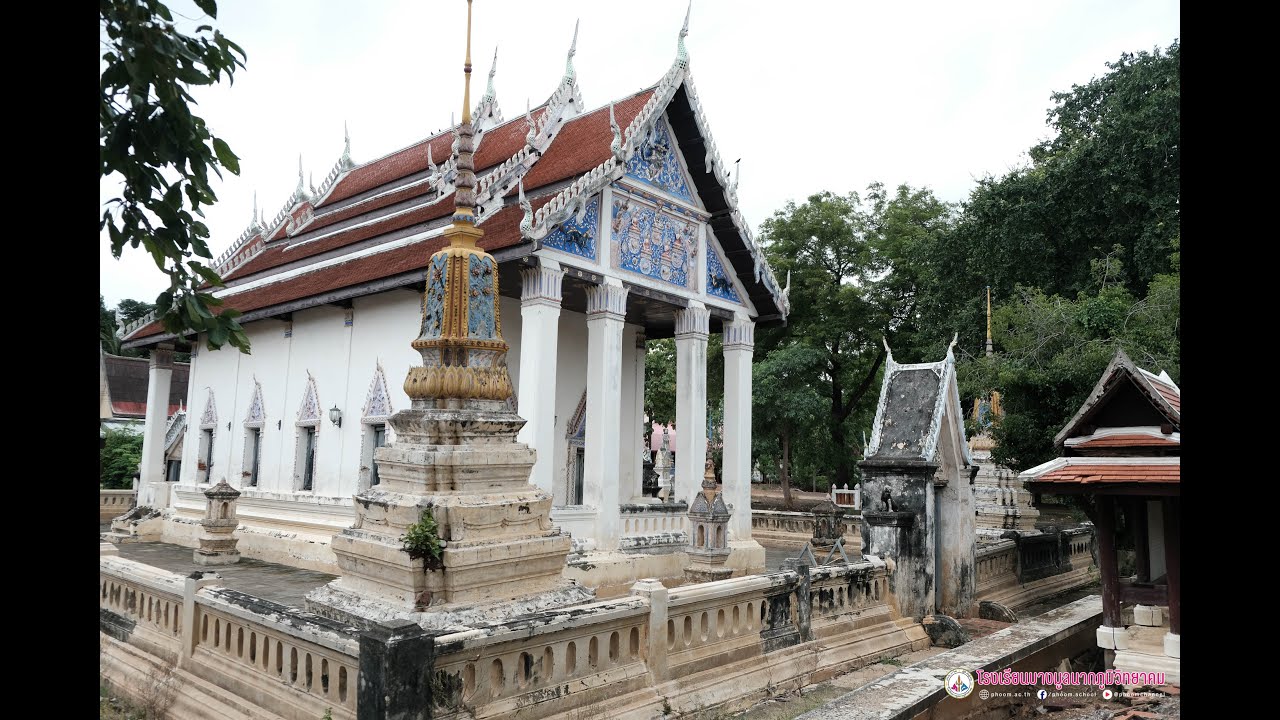
 Click to Access the Navigation Map GPS
Wat Huai Khen Map
Gellery
Recommend

 Art, Culture and Heritage
 Historical Sites and Monuments(1)
 Art, Craft Centres, Tradition(1)
 Museums(1)
Temple(32)
Museums(1)
Temple(32)
 Other Sacred Sites(5)
 Research and Development
 Royal Project(1)
 Suburban Living
 Floating Market(1)
 Nature and Wildlife
 National Parks and Marine Reserves(1)
 Dam, Reservoir, Lake(3)
 River, Canal(2)
 Other natural attractions(1)
 Entertainment and Agricultural
 Animal camps and shows(1)
 Farms, Parks and Ecotourism(4)
 Travel Articles, Recipes
 Travel Review, Food Review(1)


