
lovethailand home >Northeastern Travel Attractions >Nong Bua Lamphu Travel Attractions > 20 Best Places to Visit in Nong Bua Lamphu
TL;DR: 20 Best Places to Visit in Nong Bua Lamphu.
20 Best Places to Visit in Nong Bua Lamphu
20 Best Places to Visit in Nong Bua Lamphu – Popular Isan Travel Destinations Nong Bua Lamphu is a relatively small province in upper northeastern Thailand, yet it offers a surprisingly diverse range of attractions. The province combines the history of Phra Wo and Phra Ta, routes associated with King Naresuan the Great, forest monasteries of the Thai meditation tradition, limestone caves, sandstone mountains, prehistoric rock paintings, fossils dating back around 150 million years, the vast reservoir above Ubol Ratana Dam, and rural communities preserving traditional Isan architecture and local knowledge. For first-time visitors, major highlights include the Shrine of King Naresuan the Great, Tham Erawan Cave, Wat Tham Klong Phen, Phu Kao–Phu Phan Kham National Park, the 150 Million-Year-Old Shell Fossil Museum, Nong Bua, Phu Phan Noi, Thao To Waterfall Forest Park, Tham Suwannakhuha Cave, and Phu Pha Ya Archaeological Site.
The province is surrounded by sections of the Phu Phan mountain system and several limestone ranges, creating a landscape of plains, agricultural communities, ridges, caves, forests, and headwater areas. Southern Nong Bua Lamphu connects with Phu Kao and Phu Phan Kham, where elevated viewpoints overlook the enormous reservoir above Ubol Ratana Dam. This varied geography makes it possible to move between caves, forests, religious sites, archaeological landscapes, and lakeside scenery within the same trip.
The history of Nong Bua Lamphu is closely associated with Nakhon Khuean Khan Kab Kaeo Bua Ban, the stories of Phra Wo and Phra Ta, and political developments in the Mekong region. The old settlement occupied an important position on routes connecting Vientiane with communities in northeastern Siam. Areas around Phu Phan Kham and Chong Nam Chan are also associated with historical conflicts and the defense of local communities. After several administrative changes, Nong Bua Lamphu became a province on December 1, 1993.
Buddhism and the Thai forest meditation tradition are another important part of the province's identity. Wat Tham Klong Phen is closely associated with Luang Pu Khao Analayo, an important meditation master in the lineage of Luang Pu Mun Bhuridatta. Tham Suwannakhuha combines a natural cave with Lan Xang Buddhist history, while Wat Phra That Han Thao preserves an old sacred stupa and local worship traditions. The wooden ubosot of Wat Charoen Songtham is also a valuable example of vernacular Isan craftsmanship.
Nong Bua Lamphu also has archaeological evidence reaching far beyond recorded local history. Phu Pha Ya Archaeological Site contains red prehistoric rock paintings estimated to be around 2,000–3,000 years old. Ban Kut Ko Moei and Ban Kut Kwang Soi are associated with discoveries of pottery, metal tools, ornaments, burials, and ancient settlement evidence, while Non Wat Pa preserves traces of an ancient religious site and a stone Buddha image in the Naga-protected posture.
For geology and prehistoric life, the 150 Million-Year-Old Shell Fossil Museum is particularly important. The Ban Huai Duea area contains Jurassic-period fossil shells along with other ancient animal remains. This gives Nong Bua Lamphu a valuable educational dimension for families, students, and travelers interested in fossils and geological history.
For practical trip planning, divide the province into zones. Nong Bua Lamphu City Zone includes the Shrine of King Naresuan the Great, Nong Bua, Phu Phan Noi, Thao To Waterfall Forest Park, Wat Tham Klong Phen, the 150 Million-Year-Old Shell Fossil Museum, and Wat Phra That Han Thao. Non Sang–Phu Kao Zone includes Phu Kao–Phu Phan Kham National Park, Ho Sawan, Khao Chong Khad, Non Yao Beach, Non Wat Pa, and Ban Kut Ko Moei–Ban Kut Kwang Soi. Na Wang Zone includes Tham Erawan Cave, Huai Pha Wang Reservoir, and Tham Pha Cho Cave. Suwannakhuha Zone includes Tham Suwannakhuha Cave and Phu Pha Ya Archaeological Site, while Si Bun Rueang Zone is suitable for the Wooden Ubosot of Wat Charoen Songtham and Pha Sam Yot.
If you have only 1 day, concentrate on Nong Bua Lamphu city and nearby attractions or choose Na Wang for a cave-focused route. With 2–3 days, add Non Sang and Phu Kao. A 4–5 day trip allows enough time to continue to Suwannakhuha and Si Bun Rueang and experience the province through history, Buddhism, archaeology, nature, and local communities.
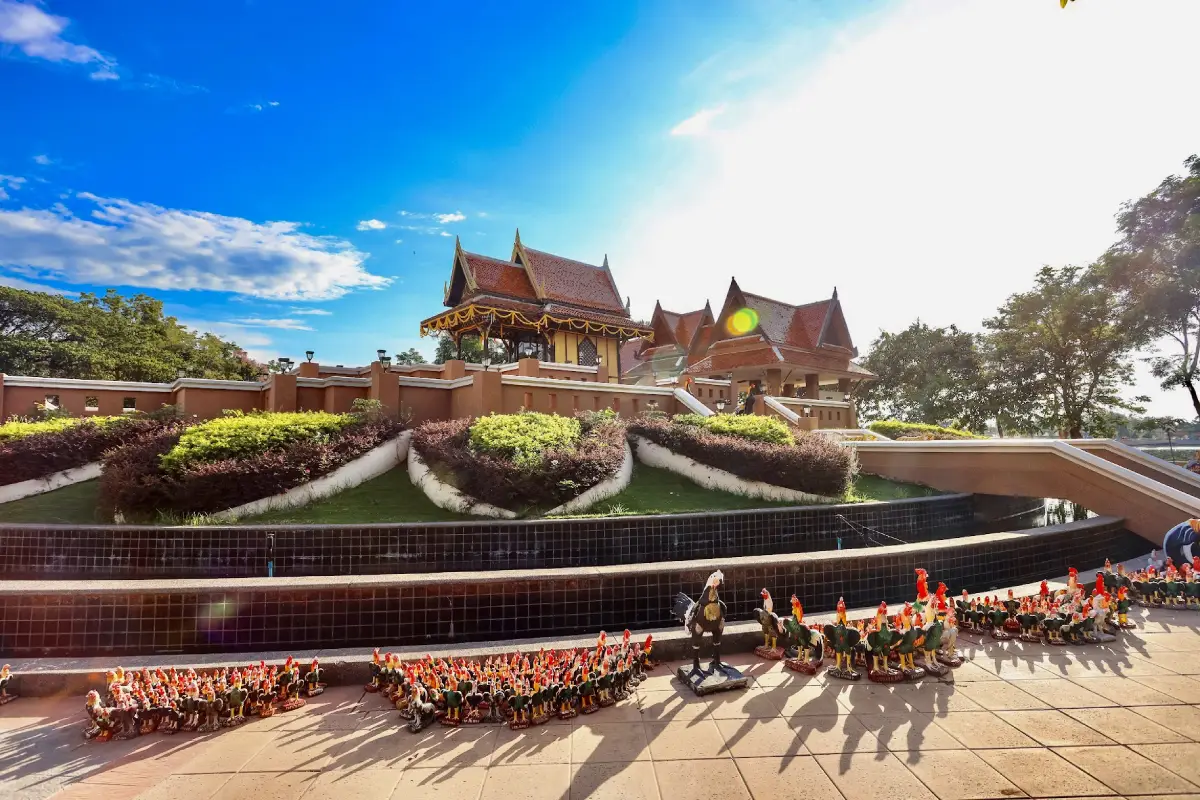
1. Shrine of King Naresuan the Great is one of the most important historical landmarks in Nong Bua Lamphu. Located near Nong Bua and the central administrative area, the shrine was established to honor King Naresuan the Great and remains an important place of respect for local residents.
Highlights: The royal statue of King Naresuan the Great, worship area, local historical narratives connected with military routes through northeastern Thailand, and the annual ceremonies honoring the king.
The shrine is important not only as a place of devotion but also as a gateway to understanding Nong Bua Lamphu as a historically strategic settlement between communities in the Mekong region and the wider northeast. It is therefore a useful first stop before exploring the province in greater depth.
The surrounding area is easy to explore and can be combined with Nong Bua and central Nong Bua Lamphu. Early morning and late afternoon are generally the most comfortable times for worship and photography.
Getting There: Located in central Mueang Nong Bua Lamphu District. The shrine is accessible daily and admission is free.
Map (GPS): https://www.google.com/maps/dir/?api=1&destination=17.205099,102.442472&travelmode=driving
2. Tham Erawan Cave is located near Ban Pha In Plaeng in Wang Thong Subdistrict, Na Wang District. The cave lies inside a massive limestone mountain often compared to the shape of a reclining elephant and is one of the province's most recognizable natural attractions.
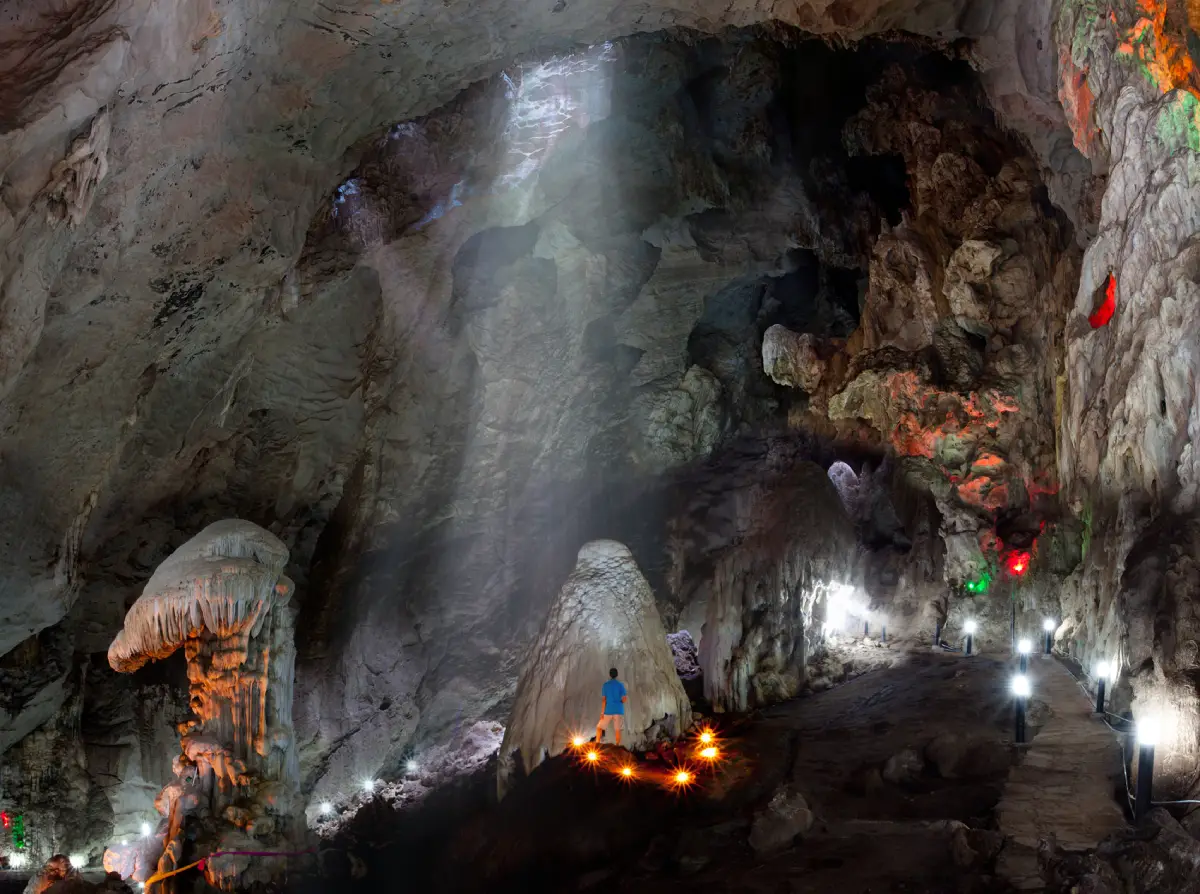
Highlights: More than 600 steps to the cave entrance, large Buddha image near the cave mouth, spacious limestone chambers, stalactites and stalagmites, natural skylights, panoramic views, and local folklore associated with Nang Phom Hom.
After climbing to the entrance, visitors are rewarded with wide views over the surrounding plains and mountains. Inside, the cave contains large chambers with both illuminated and darker sections. Stalactites, stalagmites, and openings in the ceiling demonstrate the long geological processes that shaped the limestone mountain.
The cave also has a religious dimension because a large Buddha image stands prominently near the entrance and sections of the cave are used for worship. Visitors should dress respectfully, avoid touching cave formations, and keep noise to a minimum.
The climb requires considerable effort. Senior travelers and visitors with knee, heart, or mobility problems should assess their condition before attempting the stairs. Carry drinking water and wear secure footwear.
Getting There: Located at Ban Pha In Plaeng, Wang Thong Subdistrict, Na Wang District, approximately 47 km from Nong Bua Lamphu city. Visit during daylight and allow enough time to descend before evening.
Map (GPS): https://www.google.com/maps/dir/?api=1&destination=17.345578,102.018615&travelmode=driving
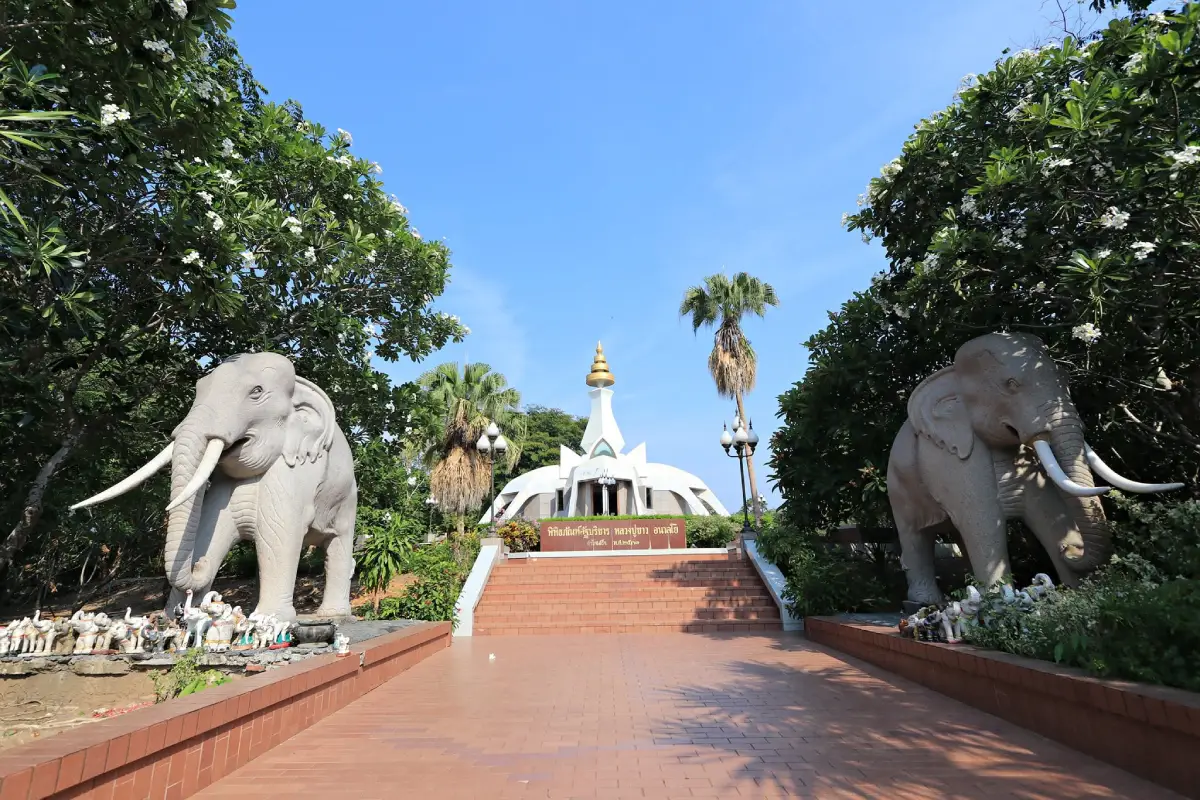
3. Wat Tham Klong Phen is an important forest monastery in Non Than Subdistrict, Mueang Nong Bua Lamphu District. The temple is closely associated with Luang Pu Khao Analayo, an important forest meditation monk in the tradition of Luang Pu Mun Bhuridatta.
Highlights: Memorial areas related to Luang Pu Khao Analayo, meditation huts, forest surroundings, rock formations, caves, and the quiet atmosphere characteristic of the Thai forest tradition.
The temple differs from a typical urban monastery because its buildings are dispersed among forest, rocks, and slopes. The natural surroundings form an important part of meditation practice, and the simplicity of the monastic structures reflects the disciplined lifestyle of forest monks.
Luang Pu Khao is widely respected as an important meditation master. His life and teachings have made Wat Tham Klong Phen a major pilgrimage destination. Visitors should walk quietly and avoid disturbing monks or people practicing meditation.
Wat Tham Klong Phen can be combined with the 150 Million-Year-Old Shell Fossil Museum because both are in the Non Than area, creating a convenient half-day route combining Buddhism, nature, and geology.
Getting There: From Nong Bua Lamphu city, take Highway 210 toward Udon Thani for approximately 13 km and continue around 2 km toward the temple. Open daily. Admission is free.
Map (GPS): https://www.google.com/maps/dir/?api=1&destination=17.230599,102.531580&travelmode=driving
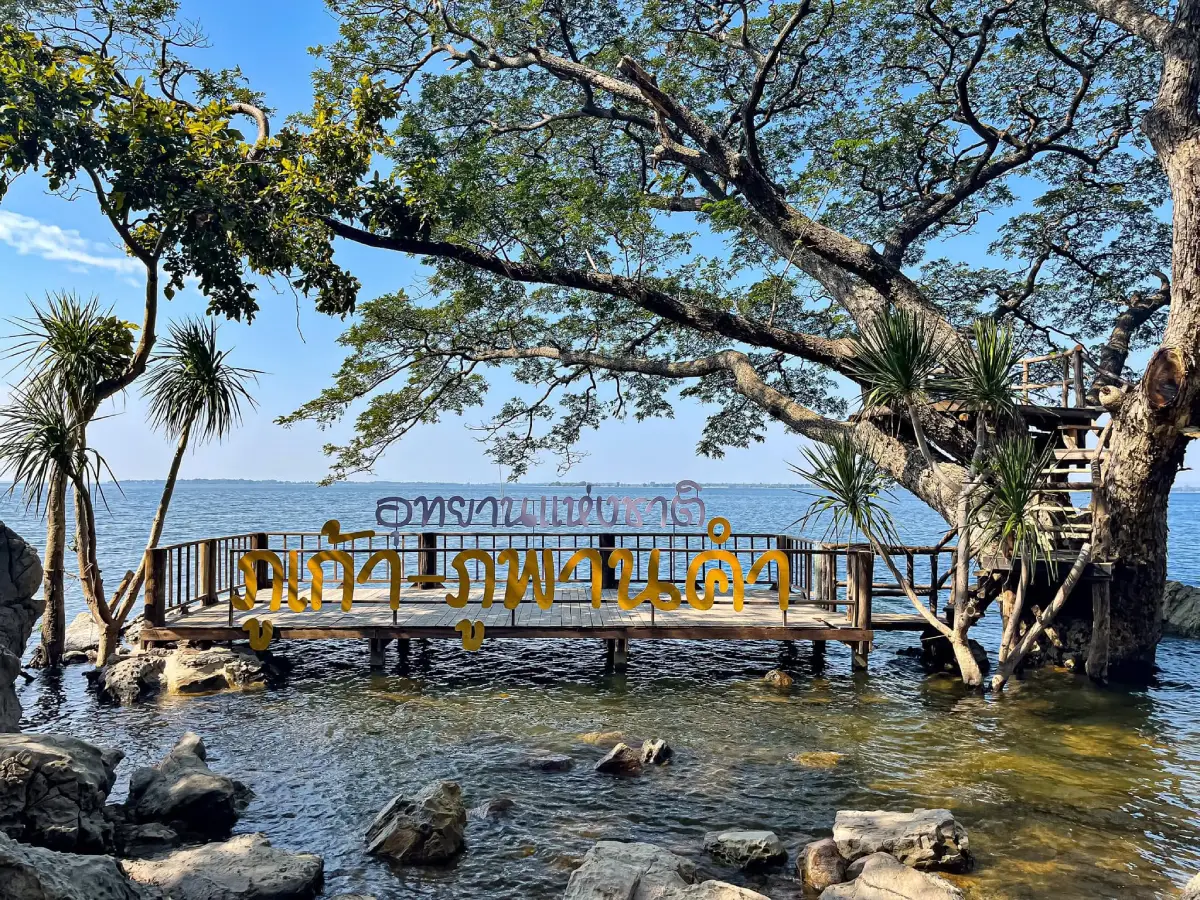
4. Phu Kao–Phu Phan Kham National Park is a large protected area covering Phu Kao and Phu Phan Kham and extending between Nong Bua Lamphu and Khon Kaen provinces. The landscape includes sandstone mountains, dry dipterocarp and mixed forests, cliffs, caves, archaeological sites, and viewpoints overlooking the reservoir above Ubol Ratana Dam.
Highlights: Phu Kao, Phu Phan Kham, Ho Sawan viewpoint, nature trails, prehistoric archaeological evidence, sandstone landscapes, forests, and panoramic reservoir views.
Phu Kao consists of a complex system of ridges and valleys, while Phu Phan Kham lies closer to Ubol Ratana Reservoir. This combination creates a wide range of scenery and habitats suitable for sightseeing, nature study, hiking, and archaeological exploration.
Several areas contain archaeological evidence and rock art associated with prehistoric human activity. The park should therefore be understood not only as a natural landscape but also as a cultural landscape shaped by long-term interaction between people and mountains.
Visitors planning longer trails or access to more remote areas should confirm trail conditions with park staff, particularly during the rainy season.
Getting There: The main Nong Bua Lamphu section is in Non Sang District. A private vehicle is the most convenient option. Access is subject to national park regulations and current safety conditions.
Map (GPS): https://www.google.com/maps/dir/?api=1&destination=16.811454,102.611081&travelmode=driving
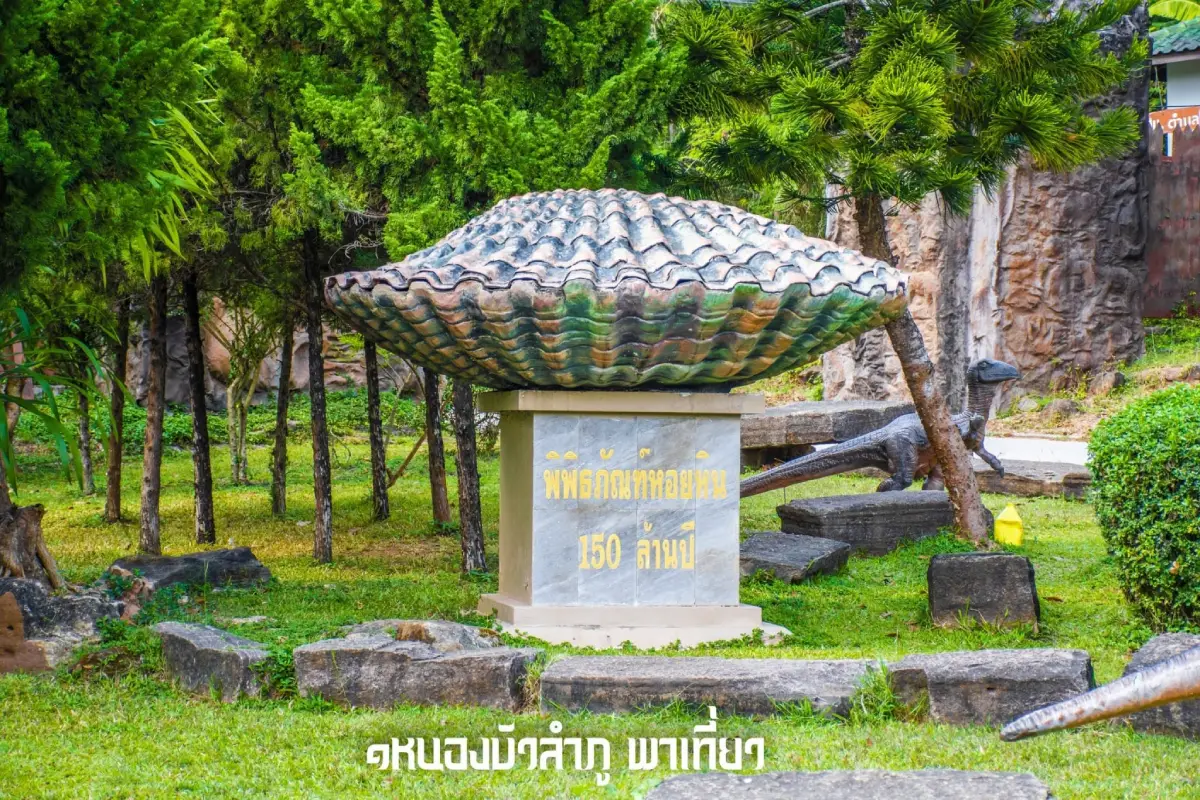
5. 150 Million-Year-Old Shell Fossil Museum is located at Ban Huai Duea, Non Than Subdistrict, Mueang Nong Bua Lamphu District. It is an important geological and fossil-learning attraction and is also associated with dinosaur and prehistoric animal discoveries in the area.
Highlights: Jurassic-period bivalve fossils dating back around 150 million years, prehistoric animal remains, geological exhibitions, fossil interpretation, and outdoor dinosaur displays.
The museum developed following the discovery of large concentrations of fossil shells in rock layers around Ban Huai Duea. Visitors can therefore understand the relationship between fossils, rock formations, and ancient environments in the same region where the material was discovered.
Displays also cover dinosaurs, prehistoric animals, rocks, and minerals, making the site particularly suitable for children and students. Allowing at least 1–2 hours provides enough time to explore both indoor exhibits and outdoor areas.
The museum can be combined with Wat Tham Klong Phen and Thao To Waterfall Forest Park because all are located relatively close to Nong Bua Lamphu city.
Getting There: Located at Ban Huai Duea, Non Than Subdistrict, approximately 10 km from Nong Bua Lamphu city. Check the museum's current operating days before traveling.
Map (GPS): https://www.google.com/maps/dir/?api=1&destination=17.243645,102.513418&travelmode=driving

6. Nong Bua is a large lake and public recreation area in the center of Nong Bua Lamphu city. Its name is directly connected with the name of the province, and the lake remains one of the most important everyday public spaces for local residents.
Highlights: Central city lake, public park, exercise paths, Ho Song Nang shrine, views toward surrounding hills, and pleasant morning and evening scenery.
The lake contains water throughout the year and has been developed with walking paths, resting areas, and exercise facilities. Mountains in the background create a landscape where water, city, and surrounding hills can be seen together.
Ho Song Nang is associated with local legends of Kham Si and Kham Sai, twin granddaughters of Phra Wo and Phra Ta. This adds historical and cultural meaning to an area that might otherwise appear to be simply an urban park.
Late afternoon is particularly suitable for walking. Nong Bua can easily be combined with the Shrine of King Naresuan the Great and other central-city attractions.
Getting There: Located in central Mueang Nong Bua Lamphu District near government offices. The public area is accessible daily.
Map (GPS): https://www.google.com/maps/dir/?api=1&destination=17.206350,102.441178&travelmode=driving
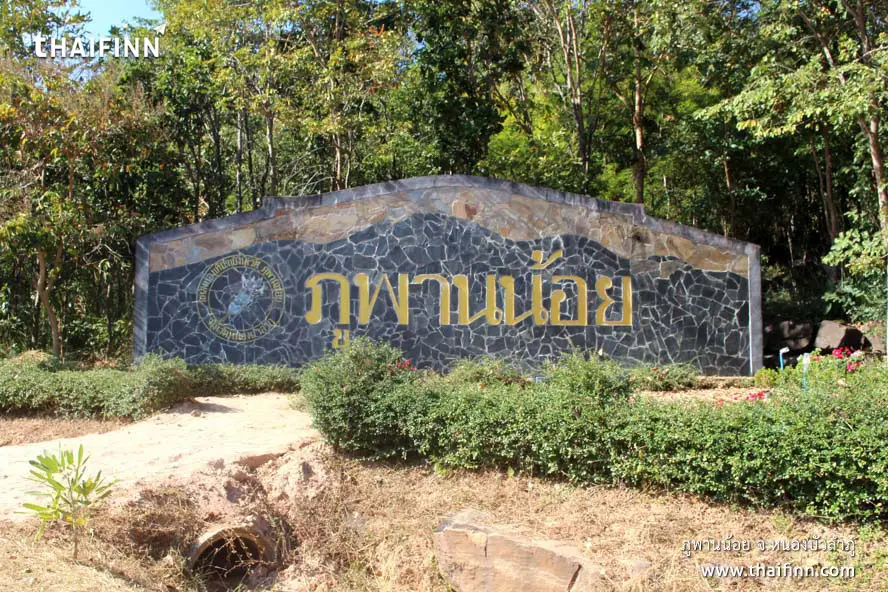
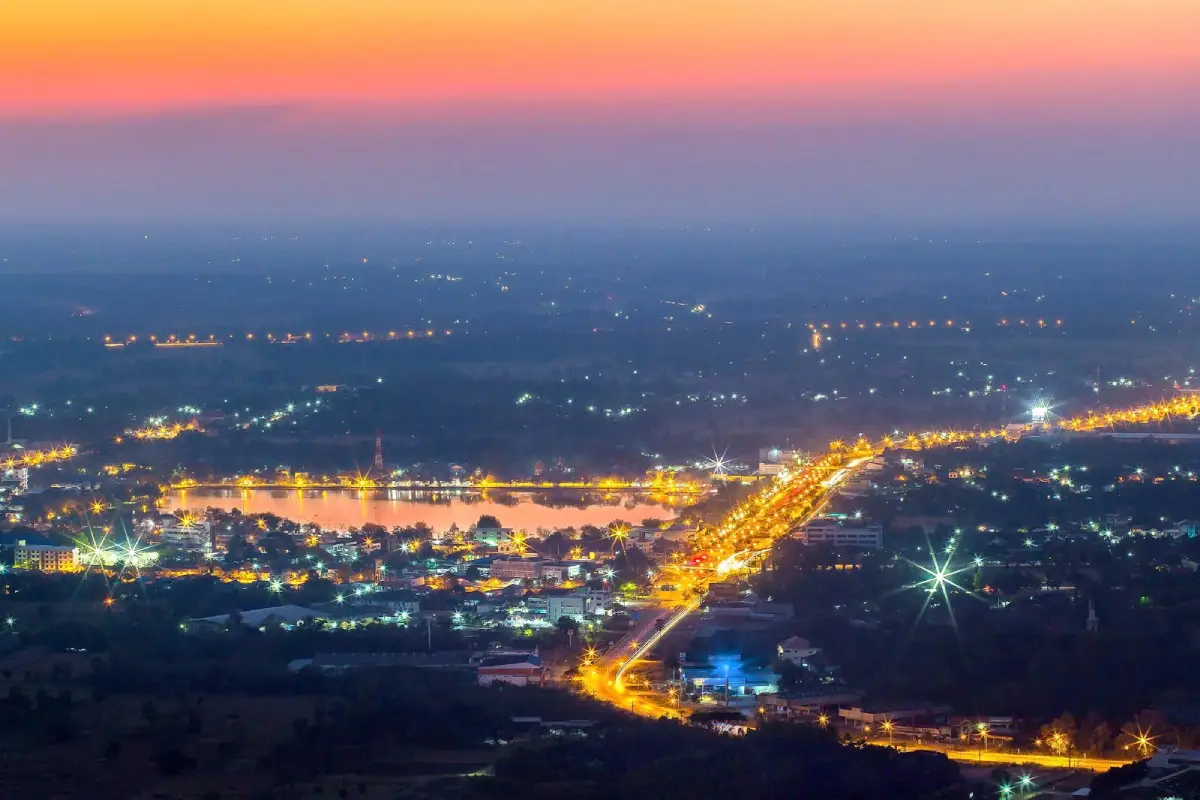
7. Phu Phan Noi is an ecotourism and viewpoint area near Nong Bua Lamphu city at Ban Phu Phan Thong, Nong Bua Subdistrict. Its main attraction is the elevated view over the city without requiring a long journey from the provincial center.
Highlights: Panoramic city views, sunset, nighttime “stars on the ground” formed by city lights, dry dipterocarp forest, mixed forest, activity areas, and camping space.
From the ridge, visitors can see the city, lakes, roads, agricultural areas, and surrounding mountains. Daytime provides a clear sense of the province's geography, while sunset gradually gives way to city lights below.
The area is also suitable for outdoor recreation and forest learning. Visitors should avoid lighting fires outside designated areas and must take all rubbish away. Camping conditions should be checked before arrival.
Getting There: Located approximately 6 km from Nong Bua Lamphu city. The upper service area can be reached by road.
Map (GPS): https://www.google.com/maps/dir/?api=1&destination=17.192249,102.475578&travelmode=driving
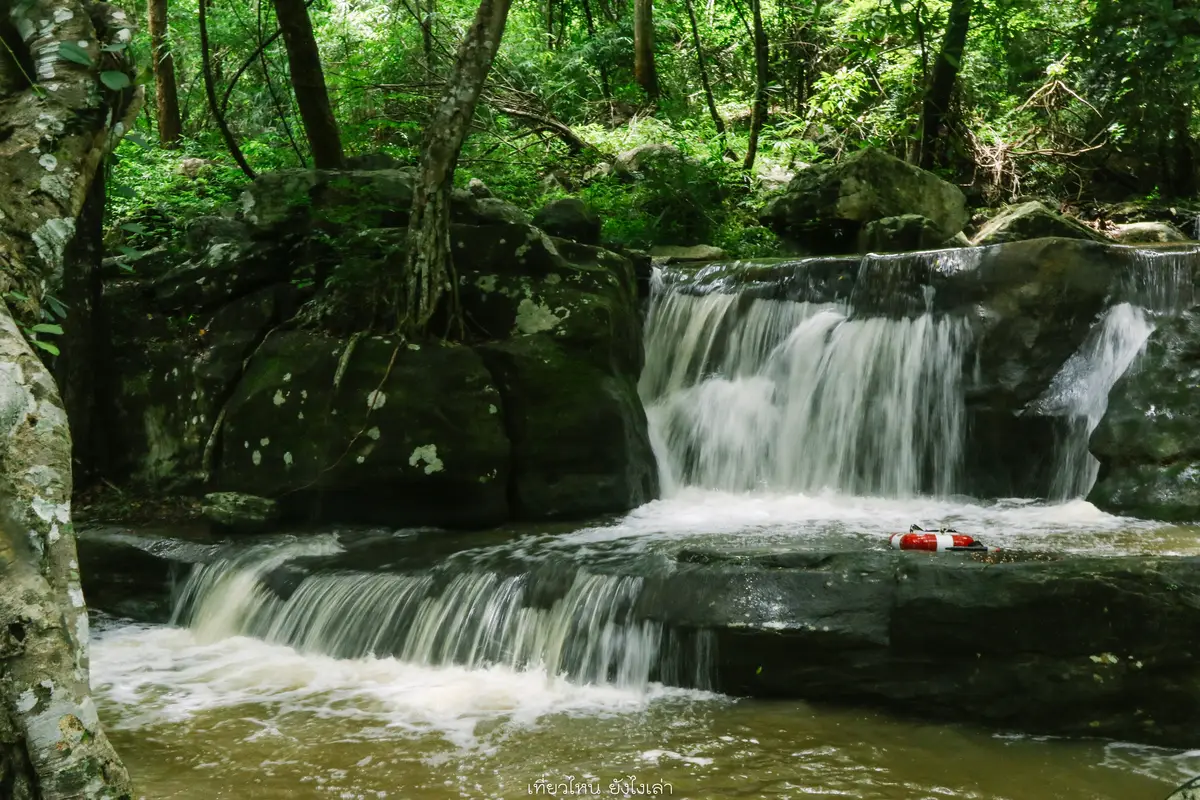
8. Thao To Waterfall Forest Park is a natural recreation area near Nong Bua Lamphu city along Highway 210 toward Udon Thani. It contains forest, streams, rocks, a small seasonal waterfall, and the locally revered Chao Pu Lup Shrine.
Highlights: Seasonal waterfall, forest, rock formations, short walking areas, Chao Pu Lup Shrine, and local historical associations with the Phra Wo–Phra Ta period.
Water flow changes significantly by season. During the rainy season the waterfall becomes more visible and the forest greener, while the dry season offers less water but the area remains suitable for walking and relaxation.
The Chao Pu Lup Shrine is located within the same area and is respected by local people. Visitors should respect both the natural environment and local beliefs.
Getting There: Located along Highway 210 approximately 3 km from Nong Bua Lamphu city. Best visited during daylight.
Map (GPS): https://www.google.com/maps/dir/?api=1&destination=17.229460,102.462543&travelmode=driving
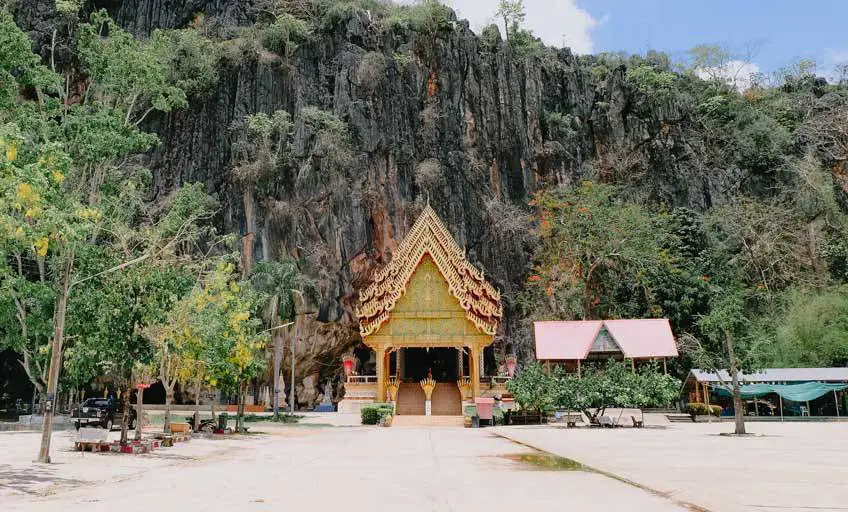
9. Tham Suwannakhuha Cave is located at Wat Tham Suwannakhuha, Ban Khuha Phatthana, Na Si Subdistrict, Suwannakhuha District. It combines a natural cave, Buddhist sanctuary, and historical site associated with the Lan Xang cultural sphere.
Highlights: Natural cave sanctuary, historic Buddha images, antiquities, inscriptions, and historical traditions associated with King Setthathirath of Lan Xang.
The cave floor is relatively level and the ceiling naturally arches above the interior, allowing the space to function as a Buddhist sanctuary for generations. The combination of natural cave and religious use creates an atmosphere very different from a conventional temple building.
The site is particularly important for understanding historical connections between present-day northeastern Thailand and the Lan Xang kingdom centered in the Mekong region. Religious art and historical traditions associated with King Setthathirath add another layer of significance.
Getting There: Take Highway 210 and continue onto Highway 2097 toward Suwannakhuha District before following local roads to Ban Khuha Phatthana. Open during daylight. Admission is free.
Map (GPS): https://www.google.com/maps/dir/?api=1&destination=17.607856,102.282550&travelmode=driving
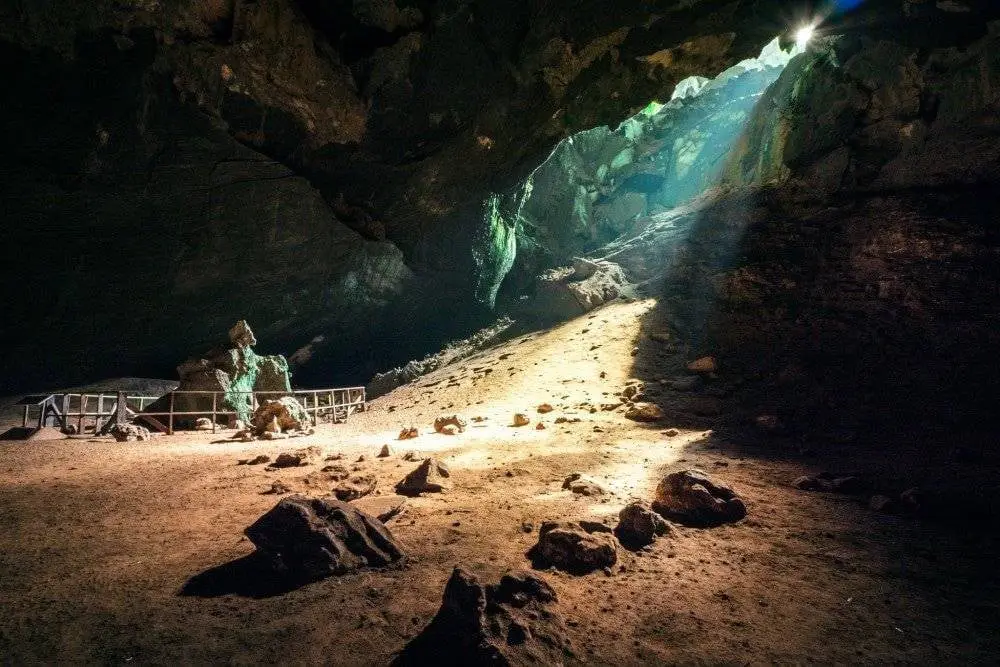
10. Phu Pha Ya Archaeological Site lies north of Ban Na Charoen in Dong Mafai Subdistrict, Suwannakhuha District. The limestone mountain contains caves with groups of prehistoric red rock paintings.
Highlights: Red rock paintings in lower and upper caves, geometric patterns, human figures, animal forms, handprints, and limestone cave landscapes.
The lower cave contains paintings on relatively smooth rock surfaces, including geometric motifs, animals, and handprints. The upper cave has additional groups of images such as diamond-shaped patterns, human figures, and reptiles.
The paintings are estimated to be approximately 2,000–3,000 years old and are important evidence of prehistoric communities in the region. Some forms can be compared with rock-art traditions elsewhere in mainland Southeast Asia.
Visitors must not touch, rub, wet, or mark the painted surfaces. The pigments are extremely vulnerable and any damage would be irreversible.
Getting There: Take Highway 210 and Highway 2097 toward Suwannakhuha, then follow the local route to Ban Na Charoen. Visit during daylight.
Map (GPS): https://www.google.com/maps/dir/?api=1&destination=17.505288,102.269922&travelmode=driving
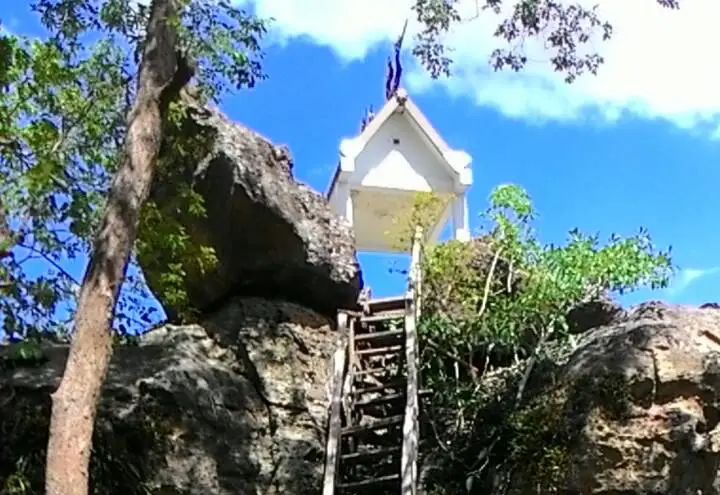
11. Ho Sawan is an important viewpoint in the Phu Kao area of Phu Kao–Phu Phan Kham National Park. The site is known for a large rock formation near the cliff edge and a viewpoint structure overlooking forests, Non Sang District, and parts of the Ubol Ratana Reservoir landscape.
Highlights: Elevated rock viewpoint, forest scenery, Phu Kao landscape, and broad views toward the reservoir and surrounding lowlands.
The appeal of Ho Sawan comes from the feeling of standing high above the forest. Clear weather provides long-distance views, while the rainy season transforms the surrounding landscape into deep green forest.
Because the viewpoint lies inside a national park, visitors should remain within designated areas, avoid climbing beyond safety barriers, and follow current park instructions.
Getting There: Located inside the Phu Kao section of Phu Kao–Phu Phan Kham National Park in Non Sang District.
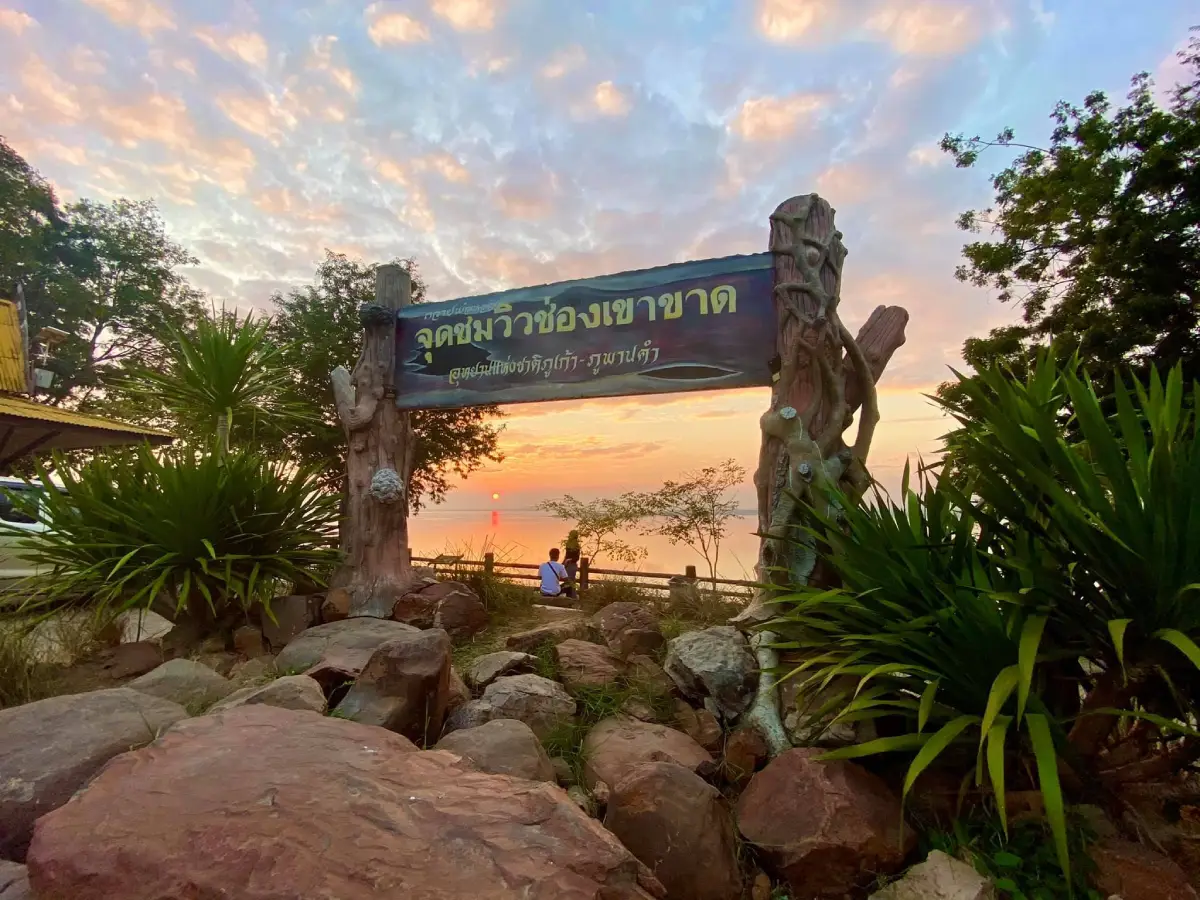
12. Khao Chong Khad is a viewpoint along the Phu Phan Kham mountain range near the route connecting Non Sang District with the Ubol Ratana Reservoir area. It offers broad views over the reservoir and surrounding mountain ridges.
Highlights: Phu Phan Kham viewpoints, reservoir scenery, sunset, mountain-road landscapes, and nearby religious and viewpoint attractions.
The site functions both as a scenic destination and a stopping point along the mountain route. From the higher ground, travelers can clearly see the transition from ridges and forest toward the large reservoir below.
Khao Chong Khad can be combined with Phu Kao–Phu Phan Kham National Park, Ho Sawan, and Non Yao Beach, creating a full-day route through mountains, forests, and lakeside landscapes.
Getting There: Travel from Nong Bua Lamphu toward Non Sang along Highway 2146 and continue toward the Phu Phan Kham and reservoir area.
Map (GPS): https://www.google.com/maps/dir/?api=1&destination=17.042933,102.566187&travelmode=driving

13. Non Yao Beach (Pattaya Sam) is located at Ban Non Yao, Khok Yai Subdistrict, Non Sang District. It is a freshwater lakeside recreation area on the Ubol Ratana Reservoir and is popular with local visitors during weekends and holidays.
Highlights: Freshwater beach, reservoir breeze, views toward surrounding hills, restaurants, shaded seating, and lakeside recreation.
The atmosphere is very different from the caves and mountains that dominate many Nong Bua Lamphu attractions. Families and groups can spend time eating, relaxing, and enjoying the wide water views without demanding hiking.
Water levels and shoreline conditions change seasonally. Swimming should be limited to safe areas, and visitors should avoid deep water without appropriate safety equipment.
Getting There: Located at Ban Non Yao, Khok Yai Subdistrict, Non Sang District. A private vehicle is the most convenient option.
Map (GPS): https://www.google.com/maps/dir/?api=1&destination=16.795413,102.582433&travelmode=driving
14. Non Wat Pa is an archaeological site in Non Sang District believed to have once contained an ancient religious structure. Archaeological finds include a stone Buddha image protected by a Naga and other remains related to historic religious art in northeastern Thailand.
Highlights: Archaeological mound, stone Naga-protected Buddha image, traces of an ancient religious complex, and connections with older artistic traditions of the northeast.
The attraction does not contain a large monumental ruin. Its value lies in reading the surviving landscape, mounds, building materials, and archaeological evidence rather than expecting a reconstructed historical monument.
Visitors must not move bricks, stones, pottery fragments, or other objects because even apparently minor material may be archaeologically important.
Getting There: Travel approximately 20 km from Nong Bua Lamphu city along Highway 2146 toward Non Sang District.
Map (GPS): https://www.google.com/maps/dir/?api=1&destination=16.946990,102.572691&travelmode=driving
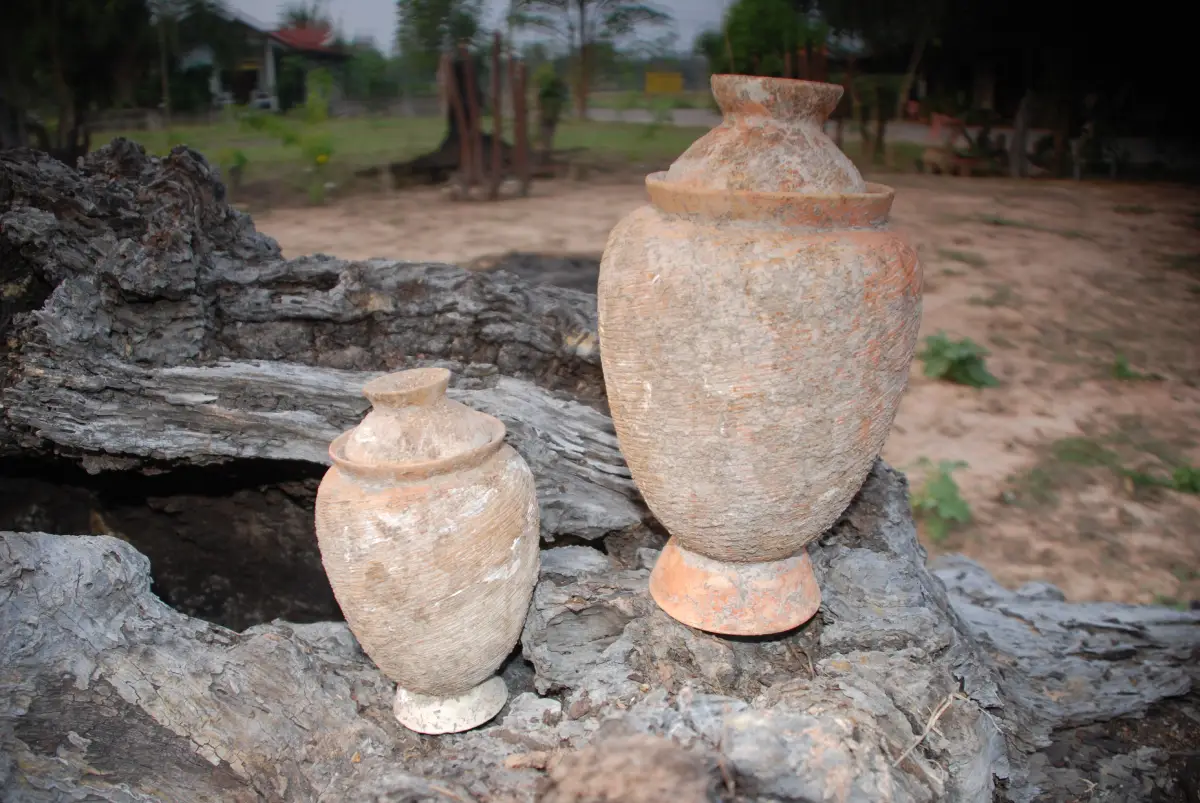
15. Ban Kut Ko Moei and Ban Kut Kwang Soi are important archaeological areas in Non Sang District associated with discoveries including human burials, pottery, bronze and stone bracelets, iron tools, beads, and evidence of metalworking.
Highlights: Prehistoric settlement evidence, pottery, bronze and stone ornaments, iron objects, burial evidence, and the archaeological landscape around Phu Kao.
Ban Kut Ko Moei lies near the western foothills of the surrounding highlands, while Ban Kut Kwang Soi occupies another part of the broader Phu Kao landscape. Similar archaeological discoveries across both areas suggest that Non Sang supported settled communities for a long period.
These are learning-oriented destinations rather than conventional photo stops. Visitors should respect residential areas and must not remove objects or archaeological material.
Getting There: Follow Highway 2146 toward Non Sang District and continue along local roads to the communities.
Map (GPS): https://www.google.com/maps/dir/?api=1&destination=16.954388,102.638750&travelmode=driving
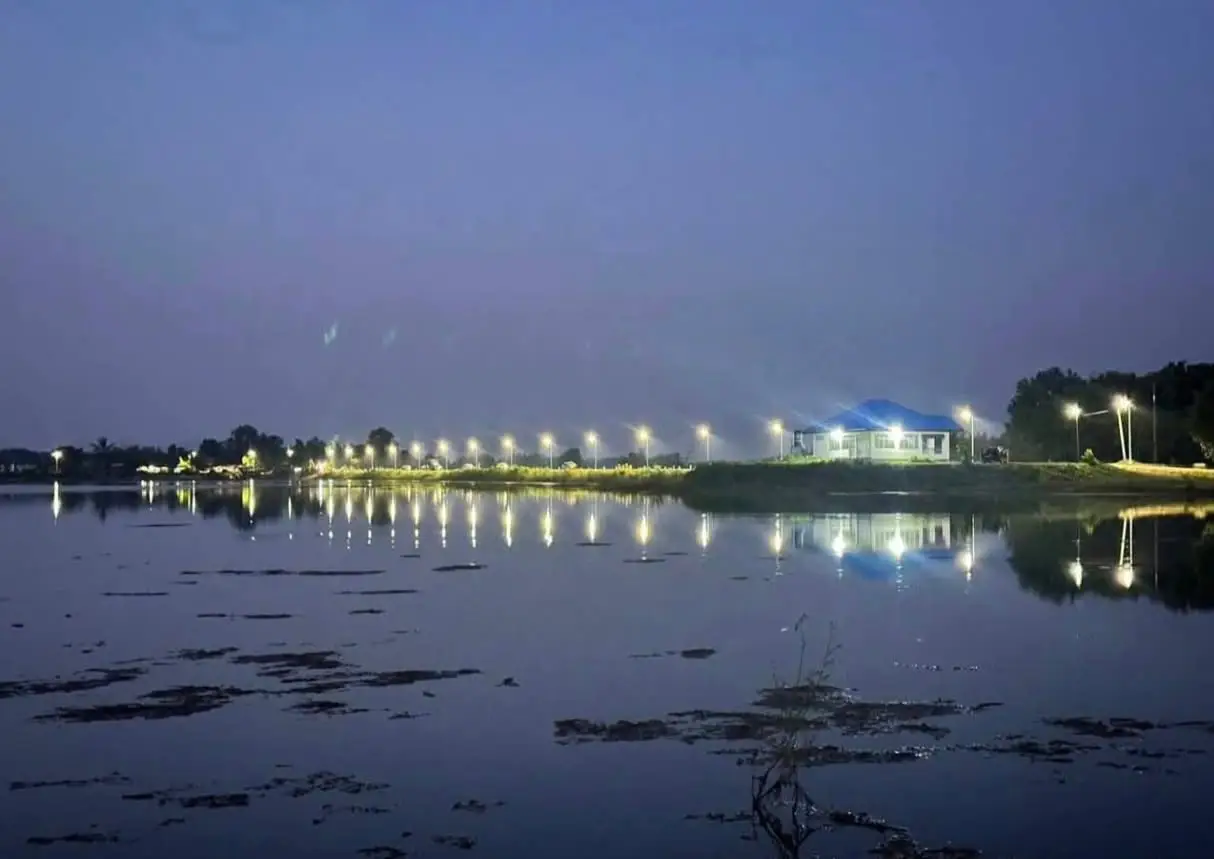
16. Huai Pha Wang Reservoir is located at Ban Thai Niyom, Wang Thong Subdistrict, Na Wang District. Surrounded by hills, the reservoir has developed into a local leisure area with relaxed scenery and community-based tourism.
Highlights: Reservoir views, surrounding mountains, floating dining areas, local restaurants, sunset, and a peaceful rural atmosphere.
The main appeal is simplicity. Visitors can sit beside the water, enjoy local food, and watch reflections of the surrounding hills without the physical effort required for cave or mountain routes.
It combines well with Tham Erawan Cave and Tham Pha Cho Cave. A practical itinerary is to explore the caves earlier in the day and relax at the reservoir later in the afternoon.
Getting There: Located at Ban Thai Niyom, Moo 5, Wang Thong Subdistrict, Na Wang District. Take Highway 210 and follow local roads toward Ban Thai Niyom.
Map (GPS): https://www.google.com/maps/dir/?api=1&destination=17.304763,102.036859&travelmode=driving
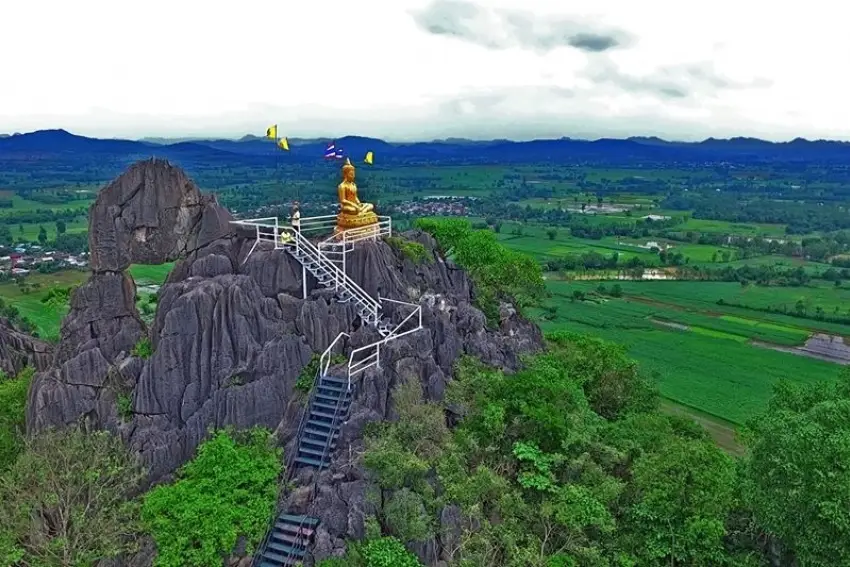
17. Tham Pha Cho Cave is located around Wat Phuttha Banphot at Ban Pha Cho, Thep Khiri Subdistrict, Na Wang District. The site combines limestone mountains, caves, Buddhist worship areas, and elevated viewpoints.
Highlights: Limestone mountain scenery, Buddha images, stairway to elevated viewpoints, caves, and panoramic agricultural landscapes of Na Wang District.
The main difference between Tham Pha Cho and Tham Erawan is the elevated viewpoint. From higher sections of the mountain, visitors can see farmland, villages, and surrounding mountain ranges over a broad area.
The route involves stairs and steep sections. Wear secure shoes, carry water, avoid the hottest part of the day, and use extra caution after rain when steps may become slippery.
Getting There: Located at Ban Pha Cho, Thep Khiri Subdistrict, Na Wang District. From the main route, continue approximately 500 meters toward Wat Phuttha Banphot.
Map (GPS): https://www.google.com/maps/dir/?api=1&destination=17.313994,102.117973&travelmode=driving
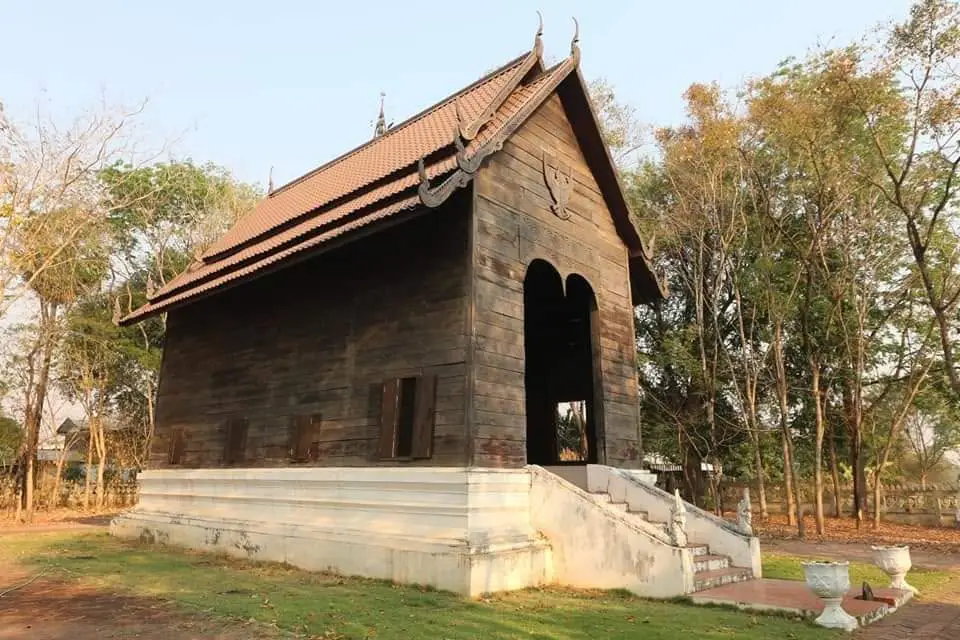
18. The Wooden Ubosot (Chapel) of Wat Charoen Songtham is located at Ban Don Po, Nong Bua Tai Subdistrict, Si Bun Rueang District. The wooden chapel is an important example of traditional Isan religious craftsmanship and vernacular temple architecture.
Highlights: Historic wooden ubosot, entrance porch, Naga stairway, carved Garuda motif on the gable, traditional wooden decoration, and Buddha images inside the chapel.
The northeastern Thai word “sim” refers to an ordination hall or ubosot. Older examples were usually relatively small and built to serve local communities. This wooden sim is therefore important as both an active religious structure and evidence of regional architectural traditions.
Carved details on the gable and wooden structural elements demonstrate the skills of local craftsmen who combined available materials with Buddhist symbolism and Isan aesthetics.
Getting There: Located at Ban Don Po, Nong Bua Tai Subdistrict, Si Bun Rueang District, approximately 30 km from Nong Bua Lamphu city.
Map (GPS): https://www.google.com/maps/dir/?api=1&destination=16.920564,102.368470&travelmode=driving
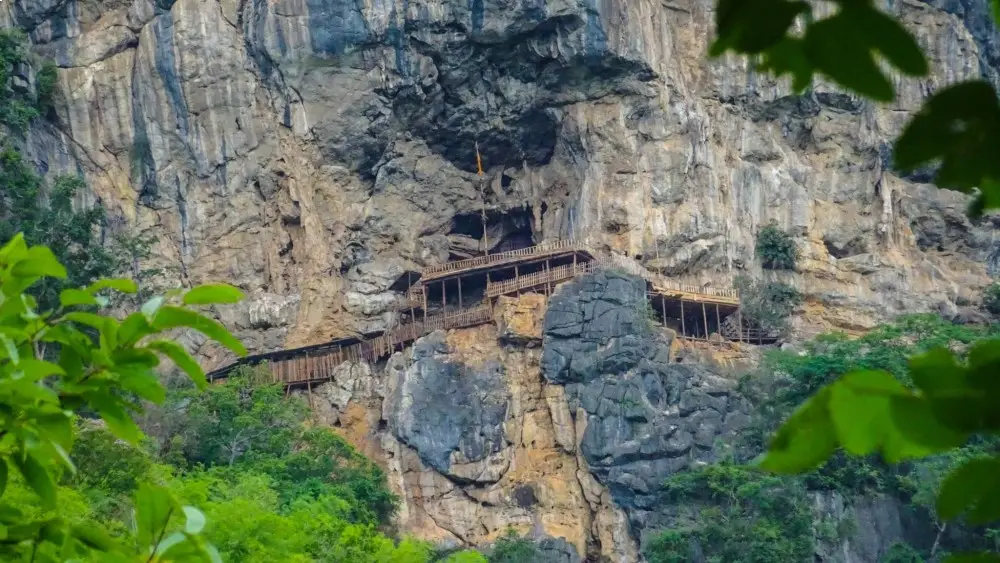
19. Pha Sam Yot is located around Ban Pha Suk, Nong Kung Kaeo Subdistrict, Si Bun Rueang District. The landscape is characterized by 3 connected mountain peaks, small caves, forest, and Buddhist religious areas.
Highlights: Three connected peaks, numerous small caves, limestone formations, Wat Pa Pha Sam Yot Phasukaram, mountain paths, and Buddha images along the route.
The mountains rise clearly above surrounding farmland and villages. Several caves and natural features remain within the upper areas, making Pha Sam Yot suitable for travelers interested in quiet landscapes and less commercialized destinations.
Paths inside the forest monastery combine nature walking with Buddhist practice. Visitors should dress appropriately and avoid leaving established routes unnecessarily.
Getting There: Located at Ban Pha Suk, Moo 5, Nong Kung Kaeo Subdistrict, Si Bun Rueang District. A private vehicle is recommended.
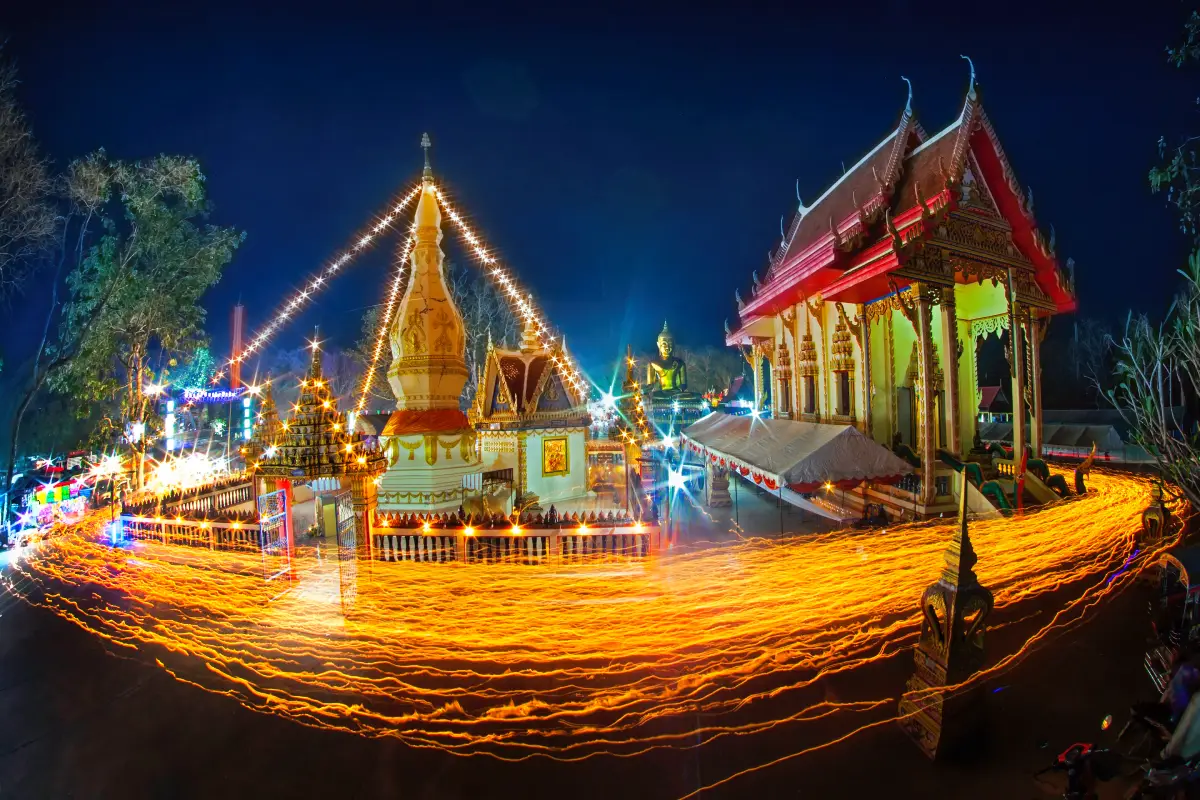
20. Wat Phra That Han Thao is located at Ban That Han Thao, Ban Kham Subdistrict, Mueang Nong Bua Lamphu District. The historic temple contains an octagonal brick-and-stucco stupa and traces of older religious structures.
Highlights: Octagonal Phra That Han Thao stupa, historic bricks, traces of an older religious site, and the annual stupa worship tradition around the full moon of the third lunar month.
The stupa remains an important spiritual center for the surrounding community and an architectural reminder of the area's religious history. Its octagonal plan and traditional brick-and-stucco construction distinguish it from many modern Buddhist stupas.
The annual worship tradition helps maintain a close relationship between the temple and the surrounding community through merit-making, ceremonies, and local participation.
Getting There: Located at Ban That Han Thao, Ban Kham Subdistrict, Mueang Nong Bua Lamphu District. The temple can be visited during daylight.
Map (GPS): https://www.google.com/maps/dir/?api=1&destination=17.136044,102.449880&travelmode=driving
| Topic | Details |
| Province Overview | Nong Bua Lamphu is an upper northeastern province known for the history of Phra Wo and Phra Ta, forest meditation temples, limestone caves, mountains, archaeology, prehistoric fossils, and the reservoir above Ubol Ratana Dam. A 2–5 day trip is ideal, with attractions organized by geographical zone. |
| Top 10 Highlights | 1. Shrine of King Naresuan the Great 2. Tham Erawan Cave 3. Wat Tham Klong Phen 4. Phu Kao–Phu Phan Kham National Park 5. 150 Million-Year-Old Shell Fossil Museum 6. Nong Bua 7. Phu Phan Noi 8. Thao To Waterfall Forest Park 9. Tham Suwannakhuha Cave 10. Phu Pha Ya Archaeological Site |
| Nong Bua Lamphu City Zone | 1. Shrine of King Naresuan the Great 2. Nong Bua 3. Phu Phan Noi 4. Thao To Waterfall Forest Park 5. Wat Tham Klong Phen 6. 150 Million-Year-Old Shell Fossil Museum 7. Wat Phra That Han Thao Suitable for a 1–2 day trip combining history, Buddhism, nature, geology, and the provincial city. |
| Non Sang–Phu Kao Zone | 1. Phu Kao–Phu Phan Kham National Park 2. Ho Sawan 3. Khao Chong Khad 4. Non Yao Beach (Pattaya Sam) 5. Non Wat Pa 6. Ban Kut Ko Moei and Ban Kut Kwang Soi Suitable for nature, viewpoints, reservoir scenery, and archaeology. |
| Na Wang Zone | 1. Tham Erawan Cave 2. Huai Pha Wang Reservoir 3. Tham Pha Cho Cave Ideal for caves, mountains, viewpoints, and relaxing beside the reservoir. |
| Suwannakhuha Zone | 1. Tham Suwannakhuha Cave 2. Phu Pha Ya Archaeological Site Suitable for Lan Xang history, cave temples, and prehistoric rock art. |
| Si Bun Rueang Zone | 1. The Wooden Ubosot of Wat Charoen Songtham 2. Pha Sam Yot Suitable for vernacular architecture, forest temples, caves, mountains, and community routes. |
| History and Archaeology | Shrine of King Naresuan the Great, Phu Pha Ya Archaeological Site, Non Wat Pa, Ban Kut Ko Moei and Ban Kut Kwang Soi, Tham Suwannakhuha Cave, and Wat Phra That Han Thao. |
| Buddhist and Meditation Sites | Wat Tham Klong Phen, Tham Suwannakhuha Cave, Wat Phra That Han Thao, the Wooden Ubosot of Wat Charoen Songtham, and Pha Sam Yot. |
| Caves and Mountains | Tham Erawan Cave, Tham Pha Cho Cave, Tham Suwannakhuha Cave, Phu Phan Noi, Pha Sam Yot, and Phu Kao–Phu Phan Kham National Park. |
| Nature and Viewpoints | Phu Kao–Phu Phan Kham National Park, Ho Sawan, Khao Chong Khad, Phu Phan Noi, Thao To Waterfall Forest Park, Non Yao Beach, and Huai Pha Wang Reservoir. |
| Family-Friendly Attractions | Nong Bua, the 150 Million-Year-Old Shell Fossil Museum, Non Yao Beach, Huai Pha Wang Reservoir, Shrine of King Naresuan the Great, and Thao To Waterfall Forest Park. |
| Suitable for Senior Travelers | Shrine of King Naresuan the Great, Nong Bua, Wat Tham Klong Phen, the fossil museum, Huai Pha Wang Reservoir, and Wat Phra That Han Thao are easier to access. Tham Erawan and Tham Pha Cho involve significant climbing. |
| 1 Day | Choose central Nong Bua Lamphu and Non Than: Shrine of King Naresuan the Great – Nong Bua – Thao To Waterfall Forest Park – 150 Million-Year-Old Shell Fossil Museum – Wat Tham Klong Phen. Alternatively, explore Na Wang with Tham Erawan Cave – Tham Pha Cho Cave – Huai Pha Wang Reservoir. |
| 2 Days / 1 Night | Day 1: Nong Bua Lamphu city and Non Than Day 2: Non Sang – Phu Kao–Phu Phan Kham National Park – Ho Sawan – Khao Chong Khad – Non Yao Beach |
| 3 Days / 2 Nights | Day 1: Nong Bua Lamphu city Day 2: Non Sang and Phu Kao Day 3: Na Wang – Tham Erawan Cave – Tham Pha Cho Cave – Huai Pha Wang Reservoir |
| 4–5 Days | Add Suwannakhuha and Si Bun Rueang for Tham Suwannakhuha Cave, Phu Pha Ya Archaeological Site, the Wooden Ubosot of Wat Charoen Songtham, and Pha Sam Yot. |
| Best Time to Visit | Nong Bua Lamphu can be visited year-round. November–February offers cooler weather for temples, caves, and mountain viewpoints. The rainy season brings greener forests and stronger waterfall flow but requires extra caution on slippery trails and mountain roads. |
| Getting Around | A private or rental car is the most convenient option because attractions are distributed across several districts and many natural sites are not directly served by public transport. |
| Safety | Wear footwear with good grip on cave and mountain routes, watch for slippery stairs and rocks, remain on established trails, do not climb beyond safety barriers, and leave remote natural areas before dark. |
| Responsible Travel | Do not touch prehistoric rock paintings, remove archaeological objects, damage stalactites or stalagmites, litter, or create unnecessary noise in temples and caves. Support local businesses and follow national park and community regulations. |
Frequently Asked Questions (FAQ)
Q: What are the must-visit attractions in Nong Bua Lamphu?
A: Major highlights include the Shrine of King Naresuan the Great, Tham Erawan Cave, Wat Tham Klong Phen, Phu Kao–Phu Phan Kham National Park, the 150 Million-Year-Old Shell Fossil Museum, Nong Bua, Phu Phan Noi, Thao To Waterfall Forest Park, Tham Suwannakhuha Cave, and Phu Pha Ya Archaeological Site.
Q: Where should I go if I have only one day in Nong Bua Lamphu?
A: First-time visitors can explore central Nong Bua Lamphu and Non Than, including the Shrine of King Naresuan the Great, Nong Bua, Thao To Waterfall Forest Park, the fossil museum, and Wat Tham Klong Phen. Another option is a Na Wang route covering Tham Erawan Cave, Tham Pha Cho Cave, and Huai Pha Wang Reservoir.
Q: How many days should I spend in Nong Bua Lamphu?
A: Two to three days are suitable for Nong Bua Lamphu city, Non Sang, and Na Wang. Four to five days are better if you also want to explore Suwannakhuha, Si Bun Rueang, and several archaeological sites.
Q: Is Tham Erawan Cave difficult to visit?
A: Reaching the cave requires climbing more than 600 steps. Visitors should prepare drinking water, wear secure footwear, and assess their physical condition before starting the climb.
Q: Why is Wat Tham Klong Phen important?
A: Wat Tham Klong Phen is an important forest meditation monastery closely associated with Luang Pu Khao Analayo, a respected meditation master in the lineage of Luang Pu Mun Bhuridatta.
Q: What is special about Phu Kao–Phu Phan Kham National Park?
A: The park combines sandstone mountains, forests, viewpoints, archaeological evidence, rock art, caves, and expansive scenery over the Ubol Ratana Reservoir.
Q: Are there family-friendly attractions in Nong Bua Lamphu?
A: Yes. Recommended places include the 150 Million-Year-Old Shell Fossil Museum, Nong Bua, Non Yao Beach, Huai Pha Wang Reservoir, the Shrine of King Naresuan the Great, and Thao To Waterfall Forest Park.
Q: What can I see at the 150 Million-Year-Old Shell Fossil Museum?
A: The museum presents Jurassic-period shell fossils, prehistoric animal remains, geological exhibits, rocks, minerals, dinosaur-related displays, and outdoor dinosaur models.
Q: Where can I see prehistoric rock paintings in Nong Bua Lamphu?
A: Phu Pha Ya Archaeological Site in Suwannakhuha District contains red prehistoric paintings including geometric patterns, human figures, animals, and handprints.
Q: Why is Tham Suwannakhuha Cave historically important?
A: It combines a natural cave sanctuary with historic Buddha images, antiquities, inscriptions, and traditions associated with King Setthathirath and the Lan Xang cultural sphere.
Q: Where are the best viewpoints in Nong Bua Lamphu?
A: Phu Phan Noi, Ho Sawan, Khao Chong Khad, and Tham Pha Cho are important viewpoints. Phu Phan Noi overlooks the provincial city, while Ho Sawan and Khao Chong Khad provide mountain and reservoir scenery.
Q: Is Non Yao Beach a real sea beach?
A: No. Non Yao Beach is a freshwater beach on the Ubol Ratana Reservoir. Its wide water views and recreational atmosphere have led to its local nickname “Pattaya Sam.”
Q: What archaeological sites can I visit in Nong Bua Lamphu?
A: Important sites include Phu Pha Ya Archaeological Site, Non Wat Pa, Ban Kut Ko Moei and Ban Kut Kwang Soi, and historic religious remains around Wat Phra That Han Thao.
Q: Which attractions are suitable for senior travelers?
A: The Shrine of King Naresuan the Great, Nong Bua, Wat Tham Klong Phen, the fossil museum, Huai Pha Wang Reservoir, and Wat Phra That Han Thao are generally easier to access than mountain caves and steep stair routes.
Q: What is the best time to visit Nong Bua Lamphu?
A: November–February generally offers the most comfortable weather for sightseeing, temples, caves, and mountain viewpoints. The rainy season is greener and better for seasonal waterfalls but requires additional caution.
Q: Can I travel around Nong Bua Lamphu without a private car?
A: Some central attractions can be reached using local transport, but many caves, mountains, archaeological sites, and rural attractions are widely dispersed. A private car, rental car, or hired driver is considerably more convenient.
Q: How should I organize a Nong Bua Lamphu itinerary to avoid backtracking?
A: Divide the trip into Nong Bua Lamphu City–Non Than, Non Sang–Phu Kao, Na Wang, Suwannakhuha, and Si Bun Rueang zones. Complete attractions within one zone before moving to the next.
 Category: ●Travel Articles, Recipes
 Group: ●Travel Review, Food Review
Last Update : 3 WeekAgo
 Last Update : 3 WeekAgo

 Art, Culture and Heritage
 Historical Sites and Monuments(4)
 Landmarks and Memorials(1)
 Art, Craft Centres, Tradition(1)
 Museums(3)
 Places of Worship
 Temple(10)
 Other Sacred Sites(6)
 Suburban Living
 Village, Community(3)
 Nature and Wildlife
 National Parks and Marine Reserves(3)
 Mountain (Doi)(5)
 Dam, Reservoir, Lake(5)
 Waterfalls(1)
 Caves(6)
 River, Canal(2)
 Bays and Beaches(1)
 Other natural attractions(3)
Travel Review, Food Review(1)


