
lovethailand home >Northeastern Travel Attractions >Nong Bua Lamphu Travel Attractions >Na Wang >Wang Thong > Tham Erawan Cave
TL;DR: Tham Erawan Cave is located at Ban Pha In Plaeng, Wang Thong Subdistrict, Na Wang District, Nong Bua Lamphu Province, open Daily, hours 07.00 – 16.30.
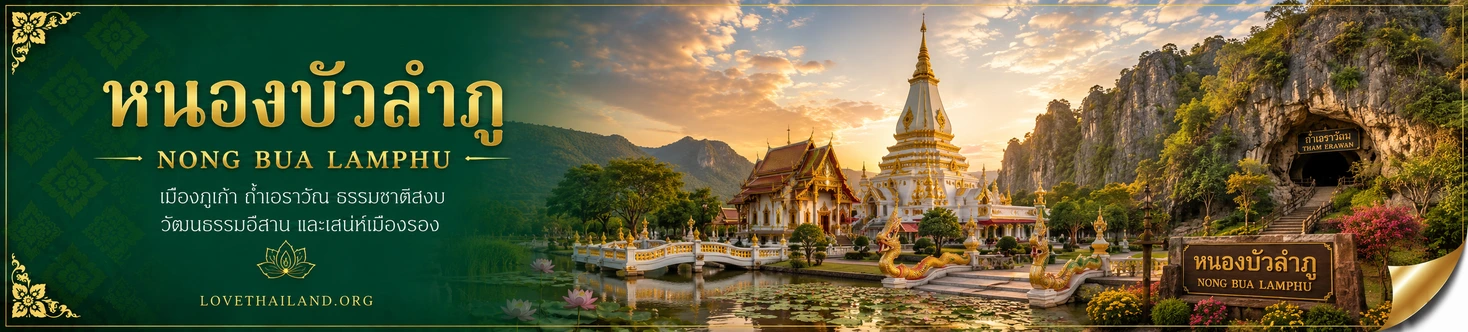
Tham Erawan Cave
Open Days: Daily
Opening Hours: 07.00 – 16.30
Tham Erawan Cave in Nong Bua Lamphu is one of the most impressive cave temples and natural landmarks in Na Wang District. It is located at Ban Pha In Plaeng, Wang Thong Subdistrict, on a hard limestone mountain locally known as Phu Pha Tham Chang, or the Elephant Cave Cliff. The mountain stands near the boundary between Wang Saphung District in Loei Province and Na Wang District in Nong Bua Lamphu Province, about 47 km from Nong Bua Lamphu town. The site is best known for its elephant-like mountain shape, more than 600 winding steps leading up to the cave entrance, a large Buddha image seated at the mouth of the cave, a vast inner chamber, beautiful stalactites and stalagmites, natural skylights, and the local legend of Nang Phom Hom.
Tham Erawan is not only a cave. It is a place where nature, Buddhism, local memory, and folklore meet in one powerful landscape. As a natural site, the cave reveals the long process of limestone formation, erosion, mineral deposition, and the shaping of underground chambers. As a religious site, it is home to Phra Phuttha Chai Si Maha Muni Tri Lokkanat, the large Buddha image that watches over the cave entrance and is deeply respected by local people. As a cultural site, it is tied to the story of Nang Phom Hom and the mythical elephant, a folktale that gives meaning to many rock formations inside the cave. For foreign travelers, this combination makes Tham Erawan one of the most meaningful places to visit in Nong Bua Lamphu.
The mountain itself is part of the attraction. From a distance, Phu Pha Tham Chang appears like a large elephant resting on the land. This shape gave rise to the older local name Tham Chang, or Elephant Cave. The cliff, the cave opening, the winding stairs, and the Buddha image all become part of one visual identity. Before visitors even reach the cave entrance, they already see why the mountain has become such a strong symbol for the area. Its mass, form, and position above the surrounding rural landscape make it instantly memorable.
The name Erawan adds another layer of meaning. In Thai and broader Southeast Asian imagination, Erawan is associated with a great celestial elephant and with ideas of power, protection, and sacredness. When this name is applied to a mountain shaped like an elephant, it strengthens the symbolic identity of the cave. Tham Erawan therefore carries both a local identity, through the name Tham Chang, and a wider sacred image, through the name Erawan.
The climb to the cave is an essential part of the experience. Visitors walk from the foot of the mountain up a long flight of more than 600 steps. The stairway curves along the slope, passing resting points and viewpoints before reaching the cave entrance. The climb requires effort, especially in hot weather, but it also gives the visit a sense of progression. The higher visitors climb, the wider the surrounding view becomes. By the time they reach the top, the feeling of arrival is strong and rewarding.
At the cave entrance stands Phra Phuttha Chai Si Maha Muni Tri Lokkanat, the large Buddha image that has become the spiritual symbol of Tham Erawan. The image is visible from far below and appears striking against the dark cave opening and pale limestone cliff. For local worshippers, this is a sacred image connected with merit-making, pilgrimage, and protection. For travelers, it is also one of the most photogenic and recognizable scenes in Nong Bua Lamphu.
The entrance area is both a worship space and a viewpoint. After climbing the stairs, visitors can rest, pay respect to the Buddha image, and look across the landscape of Na Wang District. From this elevated position, the view opens toward fields, villages, hills, and distant ridges. The breeze at the cave mouth gives welcome relief after the climb, making this area a natural pause before entering the darker and cooler cave interior.
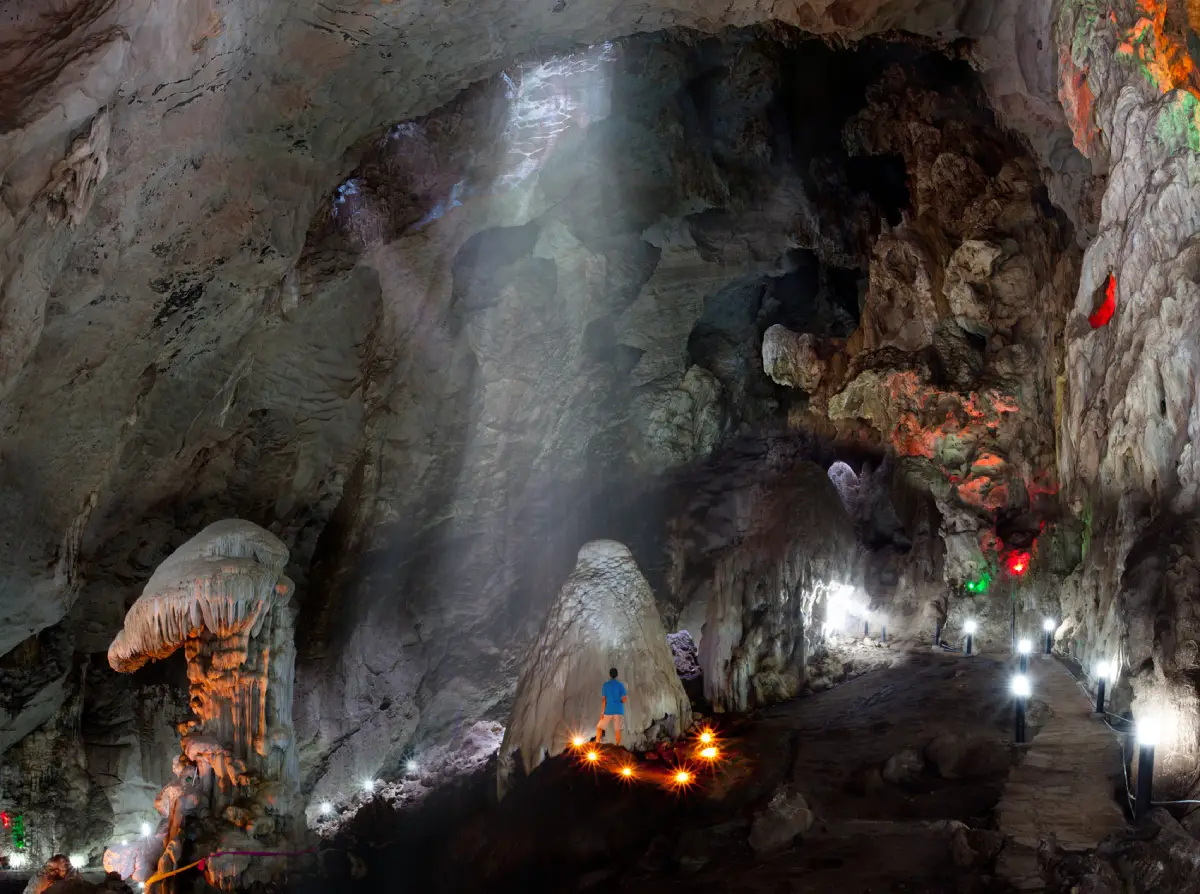
Inside the cave is a large chamber shaped by limestone over a long period of time. The interior includes rough cave walls, stalactites, stalagmites, columns, stone passages, and natural openings where light enters from above. The beauty of Tham Erawan is not polished or artificial. It comes from mineral formations, rock textures, shadows, and the way natural light changes the mood of the cave throughout the day. Each part of the chamber has its own atmosphere.
The skylights, often called star openings, are among the most attractive features inside the cave. Light passes through openings in the cave roof and falls onto the floor and rock formations below. These shafts of light create a dramatic contrast between darkness and brightness. They also remind visitors that the cave is not a sealed space, but a living geological environment connected with the sky, air, rain, and mountain surface above.
Several rock formations inside the cave are linked with the legend of Nang Phom Hom. Visitors may hear about stone forms associated with the mythical elephant, Nang Phom Hom, mushroom-like rocks, stone basins, and other shapes interpreted through local imagination. This is one of the most interesting aspects of Tham Erawan. The cave is not experienced only as geology; it is read as a landscape of story. Nature provides the shapes, and community memory gives them meaning.
The legend of Nang Phom Hom gives the cave a cultural depth that many ordinary caves do not have. Local storytelling connects the cave, the elephant-shaped mountain, and unusual rock forms into a narrative that has been passed down through generations. For visitors, the story helps make the cave more memorable. For the community, it preserves a relationship between people and place. Folklore becomes a way of remembering the mountain and explaining its forms.
Historically, the cave was once known as Tham Chang, named after the elephant-like mountain. Later, through the effort of monks and local devotees, the area developed into Wat Tham Erawan. The temple was established around the stairway and cave area, creating a religious landscape where the climb, the cave, and the Buddha image all support one another. Today, the temple continues to function as a Buddhist site while also welcoming travelers who come to see the cave and mountain scenery.
Wat Tham Erawan is also associated with an important annual tradition known as the hill-climbing worship ceremony at Tham Erawan. During the Songkran period, local people and worshippers carry offerings, flowers, candles, scented water, and ceremonial cloth up the long stairway to pay respect to Phra Phuttha Chai Si Maha Muni Tri Lokkanat at the cave entrance. This event shows that Tham Erawan is not just a scenic site; it remains a living spiritual center for Wang Thong and Na Wang communities.
The act of climbing the stairs during the festival has symbolic meaning. The journey from the foot of the mountain to the Buddha image at the cave mouth becomes a physical expression of devotion. People climb together, carrying offerings and intention. The curved stairway becomes a path of faith, linking the village below, the mountain, the cave, and the sacred image above. This living tradition adds important cultural value to the site.
Travelers should allow at least 2 to 3 hours for a proper visit. The time is needed for walking up the steps, resting along the way, paying respect at the cave entrance, enjoying the viewpoint, and exploring the cave interior. Visitors who travel with children, seniors, or anyone with limited stamina should allow more time and should not rush. The climb is manageable for many people, but it is still physically demanding.
The best time to visit is in the morning. The air is cooler, the climb is more comfortable, and the light around the cave entrance and viewpoint is pleasant. Afternoon visits are possible, but visitors should plan to descend before the site closes and before the stairs become dim. Photographers may prefer soft morning or late-afternoon light, especially for the Buddha image, the cave entrance, and the surrounding cliffs.
Preparation is important. Visitors should wear shoes with good grip, as the stairway is long and some areas may be humid. A small bottle of water, a hat, insect repellent, and a light towel are useful. A phone flashlight or small torch can help inside darker parts of the cave. Heavy bags should be avoided because they make the climb more tiring.
Since the site is an active temple, respectful clothing is recommended. Visitors should avoid overly revealing clothing and should behave quietly near the Buddha image and worship areas. Inside the cave, people should avoid touching stalactites and stalagmites, writing on the cave walls, climbing unsafe rocks, or making loud noise. Natural cave formations take a very long time to form and can be damaged permanently by careless behavior.
Children, seniors, and visitors with health conditions should assess the climb carefully. The stairway has more than 600 steps and requires steady effort. Resting at intervals is the safest approach. Children should be supervised closely, especially near stairs, viewpoints, and uneven cave floors. Senior travelers should walk slowly and avoid climbing during the hottest part of the day.
Important photo spots include the view from below looking up toward the cave and Buddha image, the winding stairway, the platform in front of the Buddha image, the cave entrance, the inner chamber, the skylight areas, and the rock formations associated with the Nang Phom Hom legend. Photography should be done carefully and respectfully. Visitors should avoid blocking the stairway and should not risk standing near unsafe edges for photographs.
From a geological point of view, Tham Erawan is a strong example of a limestone cave in upper Isan. The cave includes both drier sections and areas where mineral formation is still visible. Stalactites, stalagmites, columns, old cave floors, collapsed rocks, and skylight openings all show how water, minerals, and time have shaped the mountain. For travelers interested in geology, the cave is a natural classroom as well as a place of worship.
Tham Erawan can be combined with several nearby attractions in Na Wang District. Huai Pha Wang Reservoir is a good relaxing stop after the climb, offering water scenery, local food, and raft-style leisure. Tham Pha Cho provides another cave-and-cliff experience with a high viewpoint. Wat Tham Pha Wang, Luang Pu Somwang Rattanamanee, Wat Song Tham Banphot, and Wat Pa Phu Fang Santitham add temple and rural cultural elements to the route. Together, these places create a rich one-day itinerary around Na Wang.
Huai Pha Wang Reservoir is especially suitable after a visit to Tham Erawan because it changes the mood of the trip. After climbing stairs and exploring a cave, visitors can rest beside the water, eat local food, and enjoy a quieter reservoir atmosphere. This combination gives the day a balanced rhythm of effort and relaxation.
Tham Pha Cho is suitable for travelers who want another elevated view and unusual cliff formation. While Tham Erawan is known for its large limestone cave and sacred Buddha image, Tham Pha Cho is known for its naturally pierced cliff and viewpoint over the surrounding countryside. Visiting both gives travelers a broader understanding of Na Wang’s cave and mountain landscape.
Food options are found in Na Wang District, Ban Naklang, Ban Thai Niyom, and Nong Bua Lamphu town. Visitors can eat before climbing or after descending. Local choices include noodle shops, papaya salad, made-to-order Thai food, seafood-style local vendors, bakeries, and raft restaurants around Huai Pha Wang Reservoir. Planning meals in advance is useful because the cave itself is primarily a temple and nature site, not a restaurant area.
Accommodation options are available in Na Wang District, Na Klang District, and Nong Bua Lamphu town. Erawan Pool Villa is a nearby option in Na Wang, while Pialo Resort in Na Klang works well for travelers continuing along the Udon-Loei route. Travelers who prefer more restaurants, markets, and town services may stay in Nong Bua Lamphu town at Ruean Chor Fah Hotel, Rungrod Grand Hotel, or Nongbua Garden View.
For Thai visitors, Tham Erawan offers merit-making, pilgrimage, local folklore, and a challenging but rewarding climb. For foreign visitors, it provides a deeper view of Thailand beyond beaches and major city temples. The site combines a limestone mountain, an active Buddhist temple, a sacred cliffside Buddha, a large natural cave, local legend, and a living annual tradition. This makes it one of the most distinctive cultural-natural destinations in Nong Bua Lamphu.
A complete visit should begin by observing the elephant-like mountain from below. Visitors can then climb slowly, rest at the designated points, pay respect to the Buddha image at the entrance, enjoy the view, and continue into the cave chamber. Inside the cave, they should look for stalactites, stalagmites, skylights, and rock formations connected with the Nang Phom Hom story. This sequence allows travelers to understand the place as a whole rather than seeing it only as a staircase or a photo stop.
Visitors should avoid littering, making loud noise, touching cave formations, scratching cave walls, climbing unsafe rocks, or taking risky photos near edges. Tham Erawan is both a sacred place and a natural heritage site. Keeping it clean, calm, and respected helps protect the cave for local people, worshippers, and future travelers.
Overall, Tham Erawan Cave in Nong Bua Lamphu is a remarkable destination where mountain scenery, Buddhist devotion, cave geology, local folklore, and community tradition come together. Its highlights include the elephant-shaped Phu Pha Tham Chang, more than 600 steps, Phra Phuttha Chai Si Maha Muni Tri Lokkanat, the large cave chamber, stalactites and stalagmites, skylight openings, and the legend of Nang Phom Hom. For travelers seeking a meaningful destination in upper northeastern Thailand, Tham Erawan is one of the strongest places to include on the route.
Getting There from Nong Bua Lamphu town is most convenient by private car. Take Highway 210 on the Nong Bua Lamphu – Loei route toward Na Wang District. From the main road, turn right onto the local access road for about 2.7 – 3 km to reach Wat Tham Erawan and the foot of the mountain. A self-drive trip is recommended because visitors can easily combine the cave with Huai Pha Wang Reservoir, Tham Pha Cho, Wat Tham Pha Wang, and other nearby attractions in Na Wang District.
| Name | Tham Erawan Cave / Wat Tham Erawan |
| Location | Ban Pha In Plaeng, Wang Thong Subdistrict, Na Wang District, Nong Bua Lamphu Province |
| Address | Wat Tham Erawan, Ban Pha In Plaeng, No. 129, Moo 3, Wang Thong Subdistrict, Na Wang District, Nong Bua Lamphu Province |
| Coordinates | 17.3452319, 102.0186034 |
| Highlights | Elephant-shaped limestone mountain, more than 600 steps, Phra Phuttha Chai Si Maha Muni Tri Lokkanat at the cave entrance, large cave chamber, stalactites, stalagmites, skylight openings, and the Nang Phom Hom legend |
| History | Formerly known as Tham Chang or Pha Tham Chang, the site developed into Wat Tham Erawan through monastic and local devotion. The temple was established on 5 October 1994 and remains an important religious site in Wang Thong Subdistrict |
| Name Origin | The name Erawan reflects the elephant-like shape of the limestone mountain and the sacred image of the great Erawan elephant in Thai cultural imagination |
| Distinctive Features | Large limestone cave on a hard rock mountain, winding stairway, expansive inner chamber, rock formations, skylights, cave viewpoints, and a sacred Buddha image at the entrance |
| Travel Information | Take Highway 210 on the Nong Bua Lamphu – Loei route toward Na Wang District, then turn right onto the local road for about 2.7 – 3 km to reach Wat Tham Erawan |
| Current Status | Open as a Buddhist temple, worship site, and natural-cultural attraction in Na Wang District |
| Open Days | Daily |
| Opening Hours | 07.00 – 16.30 |
| Facilities | Temple grounds, parking area, stairway to the cave, resting pavilions, viewpoints, Buddha worship area, toilets within the temple area, and local shops during service periods |
| Main Areas / Zones | 1. Temple courtyard and mountain-base zone 2. Stairway zone with more than 600 steps 3. Resting pavilions and viewpoint zone 4. Cave entrance and Phra Phuttha Chai Si Maha Muni Tri Lokkanat zone 5. Cave chamber, stalactite, stalagmite, and skylight zone 6. Nang Phom Hom legend rock-formation zone 7. Annual Songkran hill-climbing worship area |
| Caretaker / Related Organization | Wat Tham Erawan under the Dhammayuttika Buddhist order, together with local authorities in Wang Thong Subdistrict, Na Wang District, Nong Bua Lamphu Province |
| Abbot / Temple Administration Record | Phra Khru Wichit Thamma Khunakorn |
| Main Contact Number | Wat Tham Erawan, Tel. 088-068-5711, 065-896-9862 |
| Annual Tradition | The annual Tham Erawan hill-climbing worship ceremony takes place during the Songkran period, when local people carry offerings up the stairway to pay respect to Phra Phuttha Chai Si Maha Muni Tri Lokkanat at the cave entrance |
| Nearby Tourist Attractions | 1. Huai Pha Wang Reservoir, Wang Thong Subdistrict, about 14 km 2. Luang Pu Somwang Rattanamanee at Wat Tham Pha Wang, about 15 km 3. Tham Pha Cho, Ban Pha Cho, Thep Khiri Subdistrict, about 16 km 4. Wat Song Tham Banphot, Ban Wang Samran, about 18 km 5. Wat Pa Phu Fang Santitham, Ban Thai Samakkhi, about 20 km 6. Nong Bua Lamphu town and King Naresuan the Great Shrine, about 47 km |
| Nearby Restaurants | 1. Som Tam and Made-To-Order Food Mae Mali, Ban Naklang, Na Wang District, about 15 km, Tel. 088-629-6353 2. Kuai Tiao Yai Phrai Si, Ban Naklang, Na Wang District, about 16 km, Tel. 062-550-2541 3. Puk Pik Talay Sod Na Wang, Na Wang District Office Market, about 17 km, Tel. 095-761-1961 4. Ban Cake Khun Mae, Na Wang Branch, about 17 km, Tel. 086-401-0575 5. Phae Nong Film, Huai Pha Wang Reservoir, about 18 km, Tel. 089-570-3489 |
| Nearby Accommodations | 1. Erawan Pool Villa, Na Wang District, about 18 km, Tel. 099-138-3446 2. Pialo Resort, Na Klang District, about 28 km, Tel. 081-873-6145, 089-841-1535 3. Ruean Chor Fah Hotel, Nong Bua Lamphu, about 47 km, Tel. 095-658-5544, 042-311-139 4. Rungrod Grand Hotel, Nong Bua Lamphu, about 47 km, Tel. 093-321-1199 5. Nongbua Garden View, Nong Bua Lamphu, about 47 km, Tel. 089-499-5657 |
Frequently Asked Questions (FAQ)
Q: Where is Tham Erawan Cave located?
A: Tham Erawan Cave is located at Ban Pha In Plaeng, Wang Thong Subdistrict, Na Wang District, Nong Bua Lamphu Province, near the boundary with Wang Saphung District in Loei Province.
Q: What are the opening hours of Tham Erawan Cave?
A: The cave temple is open daily from 07.00 to 16.30.
Q: How many steps are there to the cave entrance?
A: Visitors climb more than 600 steps from the mountain base to the cave entrance. The stairway curves along the slope and includes resting points along the way.
Q: What is the main highlight of Tham Erawan Cave?
A: The main highlights are the elephant-shaped limestone mountain, the large Buddha image at the cave entrance, the spacious cave chamber, stalactites, stalagmites, skylight openings, and the Nang Phom Hom legend.
Q: How is Tham Erawan connected with the Nang Phom Hom legend?
A: Several rock formations inside the cave are linked with the local folktale of Nang Phom Hom and the mythical elephant, giving the cave strong cultural meaning in addition to its natural beauty.
Q: How can travelers get to Tham Erawan Cave?
A: From Nong Bua Lamphu town, take Highway 210 toward Na Wang and Loei, then turn right onto the local access road for about 2.7 – 3 km to reach Wat Tham Erawan.
Q: Is Tham Erawan suitable for children and senior travelers?
A: It can be suitable for visitors who can manage a long stair climb, but children and senior travelers should be closely supervised, rest often, and take care on stairs, viewpoints, and uneven cave floors.
Q: Is there an important annual tradition at Tham Erawan?
A: Yes. The annual hill-climbing worship ceremony takes place during the Songkran period, when local people carry offerings up the stairway to pay respect to Phra Phuttha Chai Si Maha Muni Tri Lokkanat at the cave entrance.
 Category: ●Nature and Wildlife
 Group: ●Caves
Last Update : 2 MonthAgo
 Last Update : 2 MonthAgo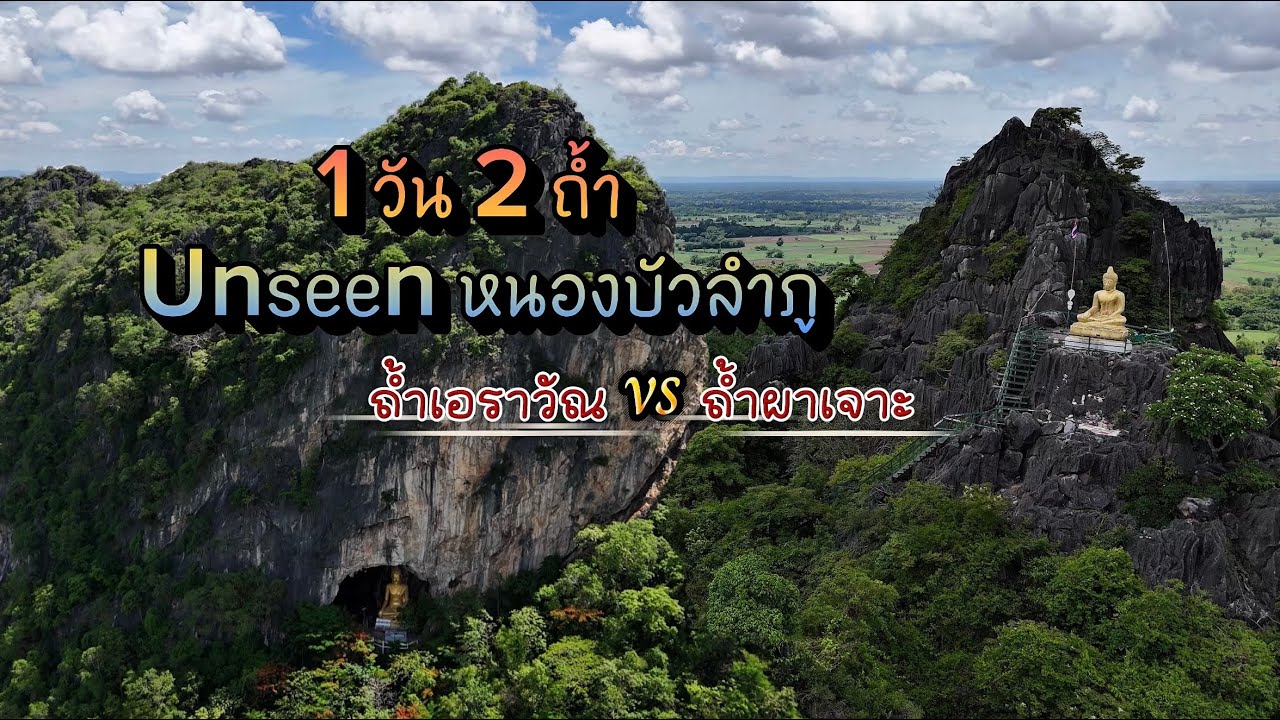
 Click to Access the Navigation Map GPS
 Art, Culture and Heritage
 Historical Sites and Monuments(4)
 Landmarks and Memorials(1)
 Art, Craft Centres, Tradition(1)
 Museums(3)
 Places of Worship
 Temple(10)
 Other Sacred Sites(6)
 Suburban Living
 Village, Community(3)
 National Parks and Marine Reserves(3)
 Mountain (Doi)(5)
 Dam, Reservoir, Lake(5)
 Waterfalls(1)
Caves(6)
Waterfalls(1)
Caves(6)
 River, Canal(2)
 Bays and Beaches(1)
 Other natural attractions(3)


