
lovethailand home >Northeastern Travel Attractions >Nong Bua Lamphu Travel Attractions >Suwan Khuha >Dong Ma Fai > Phu Pha Ya Archaeological Site
TL;DR: Phu Pha Ya Archaeological Site is located at North of Ban Na Charoen, Dong Mafai Subdistrict, Suwannakhuha District, Nong Bua Lam Phu Province, open Daily, hours 08.00 – 17.00.

Phu Pha Ya Archaeological Site
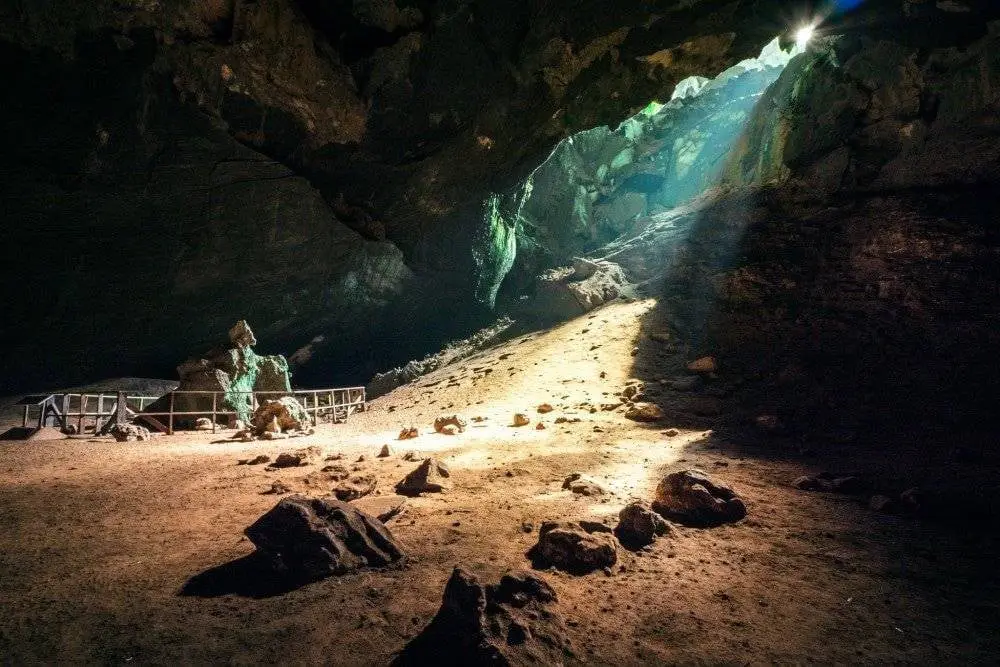
Open Days: Daily
Opening Hours: 08.00 – 17.00
Phu Pha Ya Archaeological Site in Nong Bua Lam Phu Province is an important prehistoric rock-art destination in Suwannakhuha District. Located north of Ban Na Charoen in Dong Mafai Subdistrict, the site is a limestone mountain separated from the Phu Phan mountain range. Inside the area, prehistoric red paintings appear in several groups on cave walls. The images include geometric designs, animal figures, handprints, human figures, reptile-like forms, diamond-shaped patterns, and the outline of a large animal. For travelers, Phu Pha Ya is not just a cave or a limestone hill. It is a rare cultural landscape where rock art, mountain geography, Buddhist monastic space, local belief, and prehistoric human expression meet in one place.
The value of Phu Pha Ya lies in its many layers of meaning. At the first level, it is a natural limestone mountain rising from the local landscape near Ban Na Charoen. At the second level, it is a prehistoric rock-art site, where ancient people used cave walls as a surface for visual communication. At the third level, it is a place of local faith, because a Buddhist hermitage respected by nearby villagers is located in the cave area. At the fourth level, it has wider cultural importance because the rock paintings are estimated to be around 2,000 – 3,000 years old, close in age to rock paintings found at Phu Phra Bat Historical Park in Udon Thani Province. Some visual characteristics have also been compared with rock art at Pha Lai in Guangxi, China. This makes Phu Pha Ya meaningful not only for local tourism, but also for understanding prehistoric visual culture in a broader regional context.
The most important feature of Phu Pha Ya is the red cave paintings that appear in two main areas. The first area is known as the “Lower Cave”, where a group of red paintings appears on a smooth cave wall about 5 meters long. The paintings include geometric designs, animal images, and handprints. The handprints are especially powerful because they create a direct emotional connection between present-day visitors and people of the ancient past. A handprint is not an abstract symbol in the same way as a geometric mark. It carries the physical trace of a human body. Standing in front of these handprints, visitors can imagine ancient people once placing their hands near the same rock surface, using pigment and stone to leave a visible mark that has survived for thousands of years.
The second major area is the “Upper Cave”, where red paintings are scattered in separate groups. Clear images include diamond-shaped forms, human figures, reptile-like animals, and the outline of a large animal. This group is visually diverse and invites several interpretations. Human figures may relate to ritual, group activity, identity, or memory. Reptile-like and large animal figures may reflect animals known to the local environment or creatures with symbolic importance. Diamond-shaped forms and geometric patterns may have served as signs meaningful to the community that created them. Although these images cannot be read like written language, their placement, shape, and survival on the cave wall confirm that this was once an important symbolic space.
The paintings at Phu Pha Ya are valuable because they show prehistoric human skill in choosing a location, preparing pigment, and using natural stone surfaces as a medium. Red pigment in rock-art sites is often related to natural mineral or earth-based color. Applying it to a cave wall required knowledge of materials, preparation, and control of line and form on an uneven surface. The paintings that remain today are therefore art, thought, and early technology at the same time. They are not merely old decorations. They are evidence of people who observed their world and used images to communicate meaning within their community.
The estimated age of 2,000 – 3,000 years places Phu Pha Ya within an important period of prehistoric northeastern Thailand. During this time, communities in the region were becoming more complex. They settled in suitable landscapes, used tools, produced food, exchanged materials, and developed ritual or symbolic practices. Cave paintings may have been connected with communication, social identity, ritual activity, memory, or the relationship between humans and animals. Images of people, animals, hands, and geometric patterns show that prehistoric life was not limited to survival. People also created meaning, marked space, and expressed ideas through visual forms.
When compared with Phu Phra Bat Historical Park in Udon Thani Province, Phu Pha Ya becomes part of a wider prehistoric rock-art landscape in upper northeastern Thailand. Phu Phra Bat is well known for rock shelters, unusual stone formations, religious layers, and ancient paintings. Phu Pha Ya, by contrast, is a limestone mountain with caves and rock surfaces that carry red paintings. The similar time frame helps visitors understand a broader pattern: ancient people in this region used caves, shelters, cliffs, and stone surfaces as meaningful places. Phu Pha Ya should therefore not be viewed as an isolated attraction, but as part of a larger network of prehistoric cultural landscapes.
The comparison with rock art at Pha Lai in Guangxi, China opens an even wider perspective. It shows that ancient people in different regions often used stone surfaces, animal forms, human figures, handprints, and geometric designs to express meaning. This does not necessarily mean that every site was directly connected by migration or trade. Instead, it shows that humans across different places shared a deep tendency to use image-making as a way of marking space, communicating belief, and transforming natural rock walls into cultural surfaces. For foreign travelers, this makes Phu Pha Ya easier to appreciate as part of the universal human history of cave art.
Geographically, Phu Pha Ya is a limestone mountain separated from the Phu Phan range. This setting helps explain why the area contains caves, rock walls, and natural shelters suitable for painting. In the ancient past, caves and rock shelters could serve many purposes. They could be temporary shelters, ritual places, lookout points, places of gathering, or locations that felt powerful or sacred. The presence of several groups of paintings suggests that Phu Pha Ya had special importance for ancient people. It may have been a place of repeated use, memory, or symbolic activity rather than a random rock surface chosen only once.
The Buddhist hermitage near Tham Pha Ya adds another layer of living meaning to the site. The cave area is not only an archaeological place, but also a space respected by local villagers. This continuity is important. A cave wall that once carried prehistoric symbolic images later became part of a landscape of meditation, quiet practice, and local faith. Visitors should therefore approach Phu Pha Ya with both archaeological interest and cultural respect. It is a place where ancient visual traces and present-day spiritual life exist close together.
Because the site contains fragile rock paintings, visitors should walk carefully and avoid touching the images. Sweat, oil from the skin, and physical friction can damage ancient pigment and stone surfaces. Do not write on the cave walls, do not lean objects against painted surfaces, do not use flash too close to the paintings, and do not climb areas that are not intended for visitors. These images cannot be replaced once damaged. Responsible visiting is essential because the paintings connect present-day people with communities that lived thousands of years ago.
For photography, the best approach is to document the site without disturbing it. Natural light near cave entrances and rock walls often helps make the red paintings visible. A wider frame that includes the cave wall and surrounding landscape can tell the story more effectively than an extremely close shot of a single line. The paintings belong to the cave and mountain environment, not to a separate museum wall. If details are needed, use zoom from a respectful distance rather than moving too close to the painted surface. This helps preserve the rock art while still allowing visitors to record their experience.
The Lower Cave is a good starting point for understanding Phu Pha Ya because the smooth wall surface and 5-meter-long painted area allow visitors to see a continuous group of images. Geometric forms, animal figures, and handprints appear together, encouraging questions about their meaning. Were they records of real animals? Signs for a group? Ritual images? Marks of presence? The uncertainty does not reduce their value. Instead, it gives the images power. They invite careful observation and thought based on real evidence left on the stone.
The Upper Cave offers a different feeling of exploration because its paintings are scattered in groups and include more varied forms. The diamond-shaped images, human figures, reptile-like animals, and large animal outline suggest a symbolic world filled with movement, animals, and meaningful shapes. Large animal forms may relate to hunting, respect, fear, food, or ritual. Human figures may represent people, spirits, or group activities. Reptile-like figures may come from animals known in the local environment. Geometric patterns may have functioned as signs or visual codes within the prehistoric community. Together, these images make the Upper Cave a complex visual space.
Phu Pha Ya is important not only as a tourist attraction, but also as a learning site for understanding human thought before written history. The paintings show that ancient people did more than survive. They made images, used signs, transformed rock walls into meaningful places, and possibly practiced rituals connected with nature, animals, or community identity. In this sense, the cave walls are a form of pre-writing communication. They allow modern visitors to see the creative and symbolic abilities of people who lived long before written records appeared in the region.
For students and educational groups, Phu Pha Ya can support learning across many subjects. In history, it helps explain the prehistoric period of Nong Bua Lam Phu. In art, it offers examples of line, color, shape, and composition. In geography, it shows the relationship between limestone mountains, caves, and human use of landscape. In social studies, it opens discussion about belief, ritual, and cultural meaning. In environmental education, it teaches why fragile cultural sites in natural settings require careful conservation. This makes Phu Pha Ya an outdoor classroom as well as a travel destination.
General travelers can use Phu Pha Ya as the starting point for a wider Suwannakhuha route. The district contains caves, temples, local learning sites, and mountain landscapes. A half-day trip can combine Phu Pha Ya with Tham Si Thon or Wat Tham Suwannakhuha. A full-day trip can include Hong Kham Suwannachet Learning Center, Wat Tham Pha Cho, and other cave or mountain attractions nearby. This kind of route helps visitors understand Suwannakhuha as a district where archaeology, Buddhism, natural caves, and community culture exist side by side.
Getting There from Nong Bua Lam Phu town, take Highway 210 on the Nong Bua Lam Phu-Wang Saphung route. Then turn right onto Highway 2097 toward Suwannakhuha District. From Suwannakhuha, continue on the Suwannakhuha-Ban Na Charoen route to reach the Phu Pha Ya area near Ban Na Charoen in Dong Mafai Subdistrict. A private car or rental car is the most convenient option because the site is located in a natural and mountainous area. Having your own vehicle also makes it easier to combine the trip with nearby caves, temples, and viewpoints.
Travelers coming from Udon Thani, Loei, or Khon Kaen can include Phu Pha Ya in a broader upper-Isan itinerary. Those interested in rock art can connect it with Phu Phra Bat in Udon Thani Province to see how stone landscapes and prehistoric image-making appear across the region. Travelers coming from Loei can use the Nong Bua Lam Phu-Wang Saphung route to link natural and cultural sites. Those coming from Khon Kaen can plan a route through Nong Bua Lam Phu or Udon Thani depending on available time.
Timing matters when visiting the site. Morning is the most comfortable period for walking around caves and rock surfaces because the weather is cooler and there is enough time to explore both the Lower Cave and the Upper Cave. Afternoon visits are possible, but avoid very hot periods and be careful after heavy rain because limestone and rock paths can become slippery. The cool season is the most pleasant time for walking. During the rainy season, the surrounding landscape becomes green and beautiful, but footwear with good grip is important.
No fixed mandatory admission fee has been found in the main tourism information for Phu Pha Ya Archaeological Site. Visitors should bring some cash for merit-making at the hermitage, community support, or small local expenses along the route. If local authorities arrange special access, improvement works, or community activities in the future, travelers should follow the current information provided by local caretakers on the day of travel.
The site is locally connected with Dong Mafai Subdistrict Administrative Organization, Ban Na Charoen community, the Buddhist hermitage at Tham Pha Ya, and the Nong Bua Lam Phu local natural and cultural environment conservation unit. The cultural environment database identifies Tham Phu Pha Ya as an archaeological site with both investigated and uninvestigated archaeological evidence and cultural material. This shows that Phu Pha Ya must be cared for as an archaeological, natural, religious, and community place at the same time.
Before visiting, prepare for a cave and mountain environment. Wear shoes with good grip, bring drinking water, a hat, and a small flashlight, and dress respectfully because a Buddhist hermitage is located in the area. Clothing should be comfortable for walking but still appropriate for a religious setting. Avoid slippery sandals or clothing that makes walking on rock surfaces difficult. If traveling with children or elderly visitors, assess the walking conditions before going up to the Upper Cave and take extra care when the rock surface is wet.
A visit to Phu Pha Ya is also a chance to understand the relationship between local communities and cultural heritage. Local people do not see the mountain only as a tourist attraction. It is also a place connected with faith, memory, and community respect. Visitors should speak politely, follow local guidance, and listen to caretakers or monks if advice is given. Local people often know the safest paths, the best viewing points, and the proper way to appreciate the paintings without damaging them.
Restaurants are mainly found in Suwannakhuha town and surrounding areas rather than directly at the archaeological site. Visitors should plan meals before entering the site or after leaving the cave area. Publicly listed food stops in or near Suwannakhuha include Ti-A-Mo, Nat Phop Restaurant, Odin Café Suwan Branch, Mae Lai Noodle and Chicken Rice, and Krua Khun Toi. These can be useful options for travelers planning a meal before or after visiting Phu Pha Ya.
Accommodation near the site is more limited than in major towns. Travelers who want to stay close to Suwannakhuha can choose local accommodation in or near the district, such as Bansuan Tassanee or Phu Fa Resort. Those who want more choices can stay in Na Klang District or Nong Bua Lam Phu town, including Sakaethong Resort and other local resorts. Accommodation should be chosen according to the next day’s route. Staying near Suwannakhuha is practical for an early cave visit, while staying closer to a larger town is better for travelers continuing to other districts.
For foreign travelers, Phu Pha Ya is easy to understand as a prehistoric cave painting site in a limestone mountain. Its key appeal is visual and universal. Handprints, animals, human figures, and geometric forms can be appreciated even without reading Thai. Travelers interested in prehistoric rock art, cave paintings, limestone landscapes, and Buddhist hermitages will find the site meaningful. The estimated age of 2,000 – 3,000 years also makes it a strong cultural attraction for those who want to see evidence of ancient human expression outside Thailand’s major archaeological sites.
Phu Pha Ya is best visited slowly. Instead of treating it as a quick photo stop, take time to observe the Lower Cave, the Upper Cave, the position of the paintings, the natural rock surfaces, and the Buddhist hermitage area. Seeing all these parts together reveals why the site matters. It is a place where prehistoric art, limestone geology, community belief, and present-day religious life overlap. This deeper approach gives visitors a more rewarding experience than simply looking at the paintings for a few minutes.
For Nong Bua Lam Phu Province, Phu Pha Ya is an important piece of evidence showing that the area has a long and diverse human past. The province is often known for caves, temples, and natural scenery, but it also contains significant prehistoric and archaeological sites. When Phu Pha Ya is connected with other places such as Non Don Klang, Phu Kao, Tham Muem, Tham Ajarn Sim, and other rock-art areas, Nong Bua Lam Phu becomes a strong destination for prehistoric cultural routes in upper Isan.
In summary, Phu Pha Ya Archaeological Site is one of the most meaningful cultural destinations in Nong Bua Lam Phu. Its red prehistoric cave paintings, limestone mountain setting, cave zones, Buddhist hermitage, and links with wider rock-art traditions give it strong value for both Thai and foreign travelers. The Lower Cave and Upper Cave allow visitors to see the visual traces of people who lived thousands of years ago, while the local hermitage and Ban Na Charoen community keep the area alive in the present. With careful planning, respectful behavior, and enough time to observe the site, Phu Pha Ya becomes a memorable destination for anyone interested in archaeology, rock art, local belief, and the cultural landscape of northeastern Thailand.
| Name | Phu Pha Ya Archaeological Site |
| Location | North of Ban Na Charoen, Dong Mafai Subdistrict, Suwannakhuha District, Nong Bua Lam Phu Province |
| Address | Ban Na Charoen area, Dong Mafai Subdistrict, Suwannakhuha District, Nong Bua Lam Phu Province 39270 |
| Coordinates | 17.627246, 102.170996 |
| Highlights | Prehistoric red cave paintings, including geometric patterns, animal figures, handprints, human figures, reptile-like forms, and the outline of a large animal |
| History | The paintings are estimated to be around 2,000 – 3,000 years old, close in age to rock paintings found at Phu Phra Bat Historical Park in Udon Thani Province |
| Name Origin | The name Phu Pha Ya is associated with the mountain and cliff landscape of the area, a limestone mountain separated from the Phu Phan range |
| Distinctive Features | A limestone mountain with the Lower Cave, Upper Cave, several groups of red cave paintings, and a Buddhist hermitage respected by local villagers |
| Travel Information | From Nong Bua Lam Phu town, take Highway 210 on the Nong Bua Lam Phu-Wang Saphung route, then turn right onto Highway 2097 toward Suwannakhuha District and continue on the Suwannakhuha-Ban Na Charoen route to the Phu Pha Ya area |
| Current Status | Open as a tourism and learning site for prehistoric cave paintings, with local community, hermitage, and conservation-related agencies involved in site care |
| Open Days | Daily |
| Opening Hours | 08.00 – 17.00 |
| Fees | No fixed mandatory admission fee has been found |
| Facilities | Hermitage area, cave walking route, parking depending on site conditions, and basic community facilities |
| Main Areas / Zones | 1. Lower Cave, with red paintings on a smooth cave wall about 5 meters long 2. Upper Cave, with red paintings including diamond-shaped forms, human figures, reptile-like animals, and the outline of a large animal 3. Cave wall painting areas 4. Buddhist hermitage at Tham Pha Ya 5. Limestone mountain and natural walking area |
| Caretaker | Dong Mafai Subdistrict Administrative Organization, Ban Na Charoen community, the Buddhist hermitage at Tham Pha Ya, and the Nong Bua Lam Phu local natural and cultural environment conservation unit |
| Main Contact Number | Dong Mafai Subdistrict Administrative Organization Tel. 042-109841 Nong Bua Lam Phu local natural and cultural environment conservation unit Tel. 084-775-2716 |
| Official Website / Official Page | Dong Mafai Subdistrict Administrative Organization website and the Cultural Environment Conservation Site database by the Office of Natural Resources and Environmental Policy and Planning |
| Nearby Tourist Attractions | 1. Tham Si Thon, about 2 km 2. Wat Tham Suwannakhuha, about 11 km 3. Tham Suwannakhuha, about 11 km 4. Hong Kham Suwannachet Learning Center, about 14 km 5. Suwannakhuha Municipal Fresh Market, about 7 km 6. Wat Tham Pha Cho, about 34 km |
| Nearby Restaurants | 1. Ti-A-Mo, Suwannakhuha District, about 8 km, Tel. 081-872-3132 2. Nat Phop Restaurant, Suwannakhuha District, about 8 km, Tel. 087-640-8158 3. Odin Café Suwan Branch, about 8 km, Tel. 091-054-4690 4. Mae Lai Noodle and Chicken Rice, about 13 km, Tel. 083-704-5859 5. Krua Khun Toi, Na Si area, about 15 km, Tel. 061-579-8322 |
| Nearby Accommodations | 1. Bansuan Tassanee, Suwannakhuha District, about 8 km 2. Phu Fa Resort, Nong Bua Lam Phu, about 37 km, Tel. 0-4231-2043 3. Sakaethong Resort, Na Klang District, about 24 km, Tel. 089-861-4433 4. Patchawan Resort, about 31 km 5. Thararin Resort, about 29 km |
Frequently Asked Questions (FAQ)
Q: Where is Phu Pha Ya Archaeological Site located?
A: It is located north of Ban Na Charoen in Dong Mafai Subdistrict, Suwannakhuha District, Nong Bua Lam Phu Province. The site is a limestone mountain separated from the Phu Phan range.
Q: What is important about Phu Pha Ya?
A: Phu Pha Ya contains several groups of prehistoric red cave paintings, including geometric patterns, animal figures, handprints, human figures, reptile-like forms, and the outline of a large animal.
Q: How old are the cave paintings at Phu Pha Ya?
A: The cave paintings are estimated to be around 2,000 – 3,000 years old, close in age to rock paintings found at Phu Phra Bat Historical Park in Udon Thani Province.
Q: Is Phu Pha Ya open every day?
A: Yes. The site is open daily from 08.00 to 17.00. Morning or late afternoon is the most comfortable time to visit.
Q: Is there an admission fee?
A: No fixed mandatory admission fee has been found. Visitors may prepare some cash for merit-making or local community support.
Q: What are the main areas inside Phu Pha Ya?
A: The main areas include the Lower Cave, Upper Cave, cave wall painting areas, the Buddhist hermitage at Tham Pha Ya, and the surrounding limestone mountain walking area.
Q: How do travelers get there from Nong Bua Lam Phu town?
A: Take Highway 210 toward Wang Saphung, turn right onto Highway 2097 toward Suwannakhuha District, then continue on the Suwannakhuha-Ban Na Charoen route to the Phu Pha Ya area.
Q: What should visitors be careful about when viewing the cave paintings?
A: Visitors should not touch the paintings, use flash too close to the wall, write on rock surfaces, climb unsafe areas, or behave disrespectfully near the Buddhist hermitage.
 Category: ●Art, Culture and Heritage
 Group: ●Historical Sites and Monuments
Last Update : 3 MonthAgo
 Last Update : 3 MonthAgo
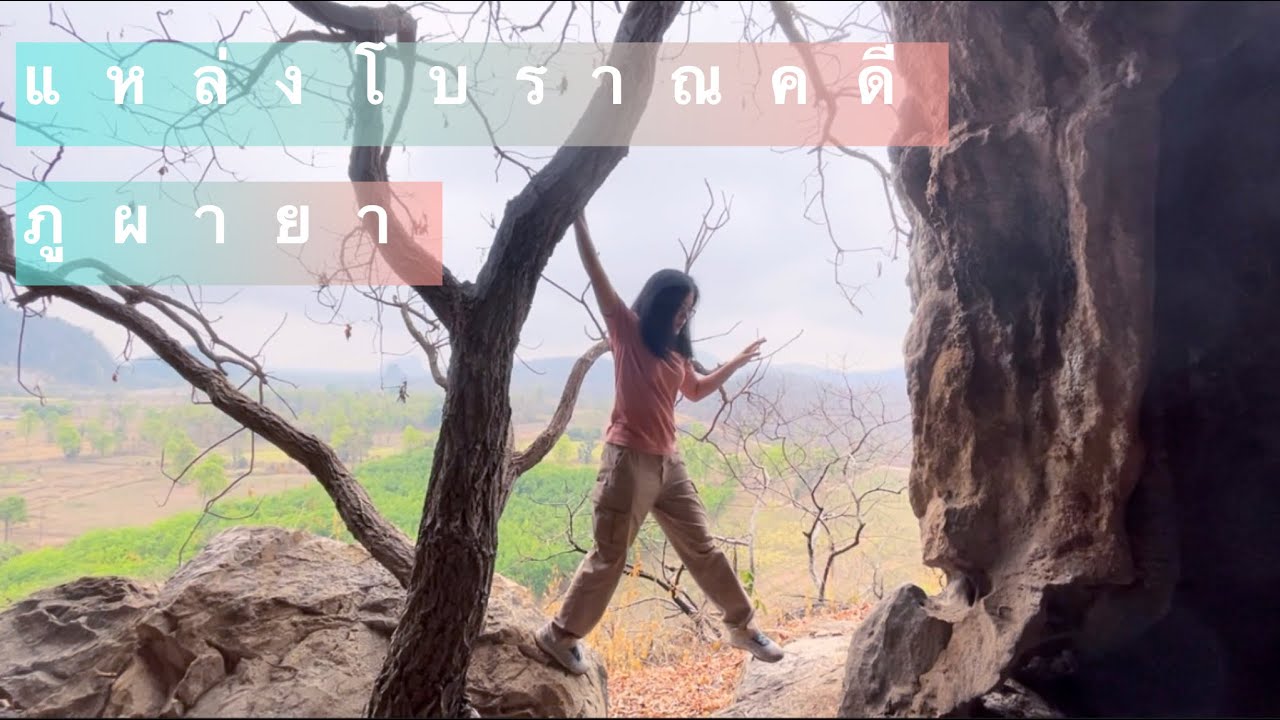
 Click to Access the Navigation Map GPS
Phu Pha Ya Archaeological Site Map
 Historical Sites and Monuments(4)
 Landmarks and Memorials(1)
 Art, Craft Centres, Tradition(1)
 Museums(3)
 Places of Worship
 Temple(10)
 Other Sacred Sites(6)
 Suburban Living
 Village, Community(3)
 Nature and Wildlife
 National Parks and Marine Reserves(3)
 Mountain (Doi)(5)
 Dam, Reservoir, Lake(5)
 Waterfalls(1)
 Caves(6)
 River, Canal(2)
 Bays and Beaches(1)
 Other natural attractions(3)
 Travel Articles, Recipes
 Travel Review, Food Review(1)


