
lovethailand home >Northeastern Travel Attractions >Nong Bua Lamphu Travel Attractions >Si Bun Ruang >Nong Kung Kaeo > Pha Sam Yot
TL;DR: Pha Sam Yot is located at Ban Pha Suk, Moo 5, Nong Kung Kaeo Subdistrict, Si Bun Rueang District, Nong Bua Lam Phu Province, near the border of Nong Bua Lam Phu and, open Daily, hours 08.00 – 17.00.
Pha Sam Yot
Open Days: Daily
Opening Hours: 08.00 – 17.00
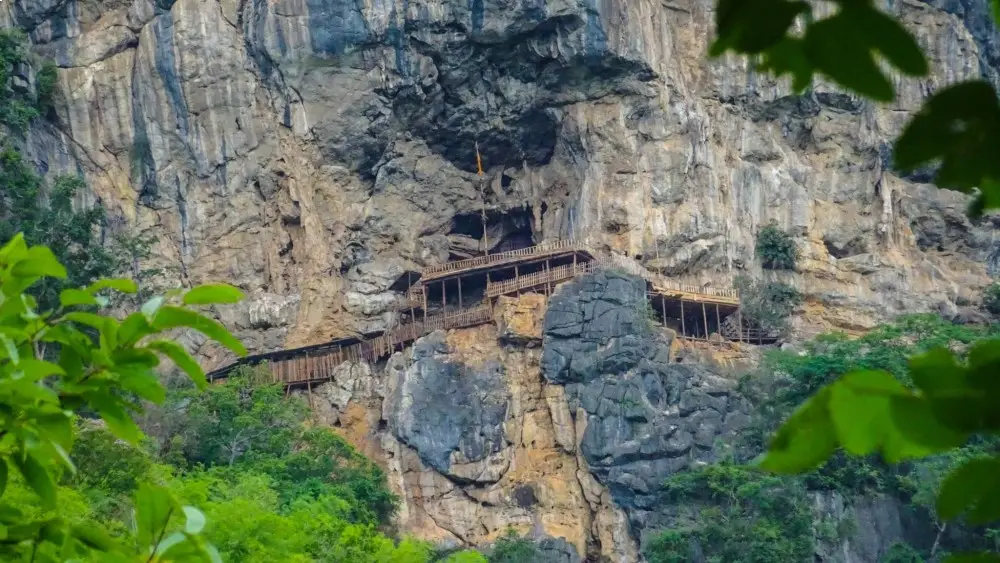
Pha Sam Yot in Nong Bua Lam Phu Province is a distinctive natural, religious, and historical destination near the provincial boundary between Nong Bua Lam Phu and Loei. It is located at Ban Pha Suk, Nong Kung Kaeo Subdistrict, Si Bun Rueang District, Nong Bua Lam Phu Province. The landscape is defined by 3 connected mountain peaks, with ridges linking them together. Around the mountains are local farms and village areas, while the upper mountain zone still preserves a quiet and natural atmosphere. The main highlights include limestone-like mountain scenery, numerous caves, impressive stalactites and stalagmites, forested slopes, and Wat Pa Pha Sam Yot Pha Sukaram, a peaceful forest temple associated with the development of the area as a Buddhist nature park.
Pha Sam Yot is suitable for travelers who want to experience a quieter side of northeastern Thailand. It is not a heavily commercialized attraction. Instead, it offers a combination of natural mountain scenery, cave exploration, forest-temple atmosphere, local faith, and traces of ancient human presence. The 3 connected peaks give the site a strong visual identity. From below, visitors can see the mountain group rising above the fields and village landscape. From the temple and higher areas, the experience becomes calmer, with the sense of being surrounded by forest, rock, and rural Isan scenery.
The landscape around Pha Sam Yot shows a close relationship between local communities and the mountains. Ban Pha Suk lies near the base of the mountain, and the surrounding fields form a rural foreground to the rocky peaks. This setting makes a visit here more meaningful than a simple viewpoint stop. Visitors can see how a mountain, a village, a temple, and local farmland exist together in one cultural landscape. Pha Sam Yot is therefore both a natural landmark and part of the everyday identity of the Nong Kung Kaeo area.
The geological appeal of Pha Sam Yot lies in its caves and rock formations. The area contains many small and large caves, some with beautiful stalactites and stalagmites created by natural mineral deposits over time. Some caves have narrow chambers, some have sheltered hollows, and others reveal surfaces shaped by long erosion. These cave features make the site more complex than a normal mountain viewpoint. Travelers can experience both the external form of the 3 peaks and the hidden interior world of the caves.
Pha Sam Yot also has archaeological and historical importance. Human skeletal remains and old objects have been found in the area, giving the place another layer of meaning. Although the entire mountain and cave system has not been fully surveyed in every detail, the discoveries suggest that the area may have been used by people in the past. The caves and rock shelters may have served as places of refuge, activity, or temporary habitation. This turns Pha Sam Yot into a landscape where nature and traces of human history coexist.
Wat Pa Pha Sam Yot Pha Sukaram is one of the key points of the area. Located at Ban Pha Suk, Moo 5, Nong Kung Kaeo Subdistrict, the temple is a quiet forest temple surrounded by mountain scenery. Phra Achan Kriangkrai Khosathammamo began developing Pha Sam Yot into a Buddhist nature park, linking the mountain landscape with religious practice and local faith. The temple entrance, forest atmosphere, and mountain backdrop create a strong sense of calm and reverence from the moment visitors arrive.
The Buddhist nature park route allows visitors to walk upward through the mountain area, with Buddha images placed along the way until reaching the middle cliff area. This route combines nature walking with religious reflection. Visitors can stop to pay respect, enjoy the forest setting, and observe the mountain landscape at a slow pace. The route should be approached carefully because some sections follow natural slopes, uneven rock, and elevated ground. Good walking shoes and a daytime visit are strongly recommended.
The atmosphere of Pha Sam Yot is deeply connected with the forest-temple tradition. The site is not designed for loud recreation or entertainment. Its value lies in quietness, contemplation, natural scenery, and respect for the sacred space. Travelers who enjoy forest temples, meditation settings, natural caves, and less-developed attractions will appreciate this place more than those looking for a busy tourist complex. Pha Sam Yot rewards slow walking, careful observation, and respectful behavior.
Visitors should be cautious when exploring caves and rock areas. Natural caves may have slippery floors, uneven stones, narrow passages, low light, and fragile formations. Do not enter deep cave sections alone, do not touch stalactites or stalagmites, and do not move any objects found in the area. If old materials, fragments, or traces of archaeological value are encountered, they should be left in place. These features are part of what makes Pha Sam Yot meaningful and should be protected.
For photographers, Pha Sam Yot offers several strong compositions: the 3 connected peaks, the entrance to Wat Pa Pha Sam Yot Pha Sukaram, serpent sculptures, Buddha images along the nature park route, cave openings, stalactites, stalagmites, and the rural landscape of fields and mountains. Morning light is comfortable for walking and gives softer images. Afternoon visits should allow enough time to leave before evening because the area includes rural roads, mountain paths, and natural cave zones.
The best season to visit is from the late rainy season to the cool season. During this period, the forest is greener, the air is more comfortable, and walking is easier than during the hottest part of the year. The rainy season makes the area fresh and green but may also make rocks and paths slippery. The hot season is still possible for a visit, but travelers should go in the morning, bring drinking water, and avoid strenuous walking under strong sunlight.
Pha Sam Yot can be visited by families, but children should be supervised closely. The mountain, caves, stairs, and uneven ground require care. Children can learn about mountains, caves, forest temples, and local history in a real setting, but adults should keep them away from slippery rocks, cave edges, and steep sections. Older visitors can enjoy the temple and accessible areas, while those who want to walk higher into the nature park should consider their physical condition before continuing.
For international travelers, Pha Sam Yot offers a deeper view of Isan. It is not a beach, a large city temple, or a fully polished tourist attraction. It is a mountain, cave, forest temple, and local village landscape combined. Foreign visitors can understand how many Thai natural places also function as sacred spaces, meditation landscapes, and memory sites connected with earlier human activity. This makes Pha Sam Yot an especially meaningful destination for travelers interested in culture, nature, and history beyond standard tourist routes.
Pha Sam Yot can be combined with several nearby attractions. Wat Pa Pha Sam Yot Pha Sukaram is part of the same area. Wat Tham Khao San and other local temples in nearby Loei-side communities can be included along the route. Tham Erawan is another major cave attraction in the region, known for its large cave, long stairway, and dramatic limestone scenery. Wat Tham Suwannakhuha in Suwannakhuha District is also important for travelers interested in caves, Buddhist history, and ancient objects. Combining these destinations creates a strong cave-and-temple route across Nong Bua Lam Phu and nearby Loei.
Items to prepare include walking shoes with good grip, drinking water, a hat, a small flashlight for low-light areas, a fully charged phone, a personal trash bag, and modest clothing suitable for visiting a temple. Visitors who plan to walk along the Buddhist nature park route should avoid going alone into unfamiliar areas and should ask temple staff or local residents about safe access points before entering deeper cave or mountain sections.
Responsible behavior is essential at Pha Sam Yot. Visitors should keep the area clean, avoid loud noise, respect the temple, avoid writing on rocks, never damage cave formations, never remove stones or old objects, avoid disturbing wildlife, and stay away from unsafe cave sections. The site remains valuable because it preserves a calm and natural atmosphere. Every visitor helps maintain that value by behaving respectfully.
Getting There from Nong Bua Lam Phu town, travel toward Si Bun Rueang District, then continue to Nong Kung Kaeo Subdistrict and Ban Pha Suk, where Pha Sam Yot and Wat Pa Pha Sam Yot Pha Sukaram are located. Travelers coming from Loei Province or Erawan District can also enter from the border-side route. A private car or rental vehicle is the most convenient option because the site is in a rural area and can be combined with Tham Erawan, Wat Tham Suwannakhuha, and attractions around Si Bun Rueang District.
In summary, Pha Sam Yot in Nong Bua Lam Phu is a valuable natural, religious, and historical attraction. Its highlights include 3 connected mountain peaks, numerous caves, stalactites and stalagmites, archaeological traces, a peaceful forest-temple atmosphere, and Wat Pa Pha Sam Yot Pha Sukaram, developed as a Buddhist nature park by Phra Achan Kriangkrai Khosathammamo. The site is open daily from 08.00 to 17.00 and is suitable for travelers interested in caves, mountain scenery, Buddhist forest temples, local history, photography, and meaningful nature-based travel in northeastern Thailand.
| Name | Pha Sam Yot / Wat Pa Pha Sam Yot Pha Sukaram |
| Location | Ban Pha Suk, Moo 5, Nong Kung Kaeo Subdistrict, Si Bun Rueang District, Nong Bua Lam Phu Province, near the border of Nong Bua Lam Phu and Loei provinces |
| Distinctive Features | Three connected mountain peaks, numerous caves, stalactites and stalagmites, a forest temple, Buddhist nature park route, mountain scenery, and a quiet rural setting |
| History / Significance | The area is known for caves where ancient human skeletal remains and old objects have been found. Phra Achan Kriangkrai Khosathammamo began developing the Pha Sam Yot area into a Buddhist nature park at Wat Pa Pha Sam Yot Pha Sukaram |
| Name Origin | The name Pha Sam Yot comes from the 3 mountain peaks connected by ridges in the Ban Pha Suk area |
| Open Days | Daily |
| Opening Hours | 08.00 – 17.00 |
| Current Status | Open for temple visits, nature walks, mountain viewing, cave observation, and Buddhist nature park visits |
| Facilities | Forest temple area, Buddhist nature park walking route, worship areas, parking space depending on site conditions, mountain viewpoint areas, and basic community services around Ban Pha Suk |
| Main Areas / Zones | Wat Pa Pha Sam Yot Pha Sukaram Zone, Buddhist Nature Park Zone, Mountain Walking Route, Cave And Rock Shelter Zone, Stalactite And Stalagmite Zone, Three-Peak View Zone, Ban Pha Suk Community Zone |
| Caretaker / Responsible Agency | Wat Pa Pha Sam Yot Pha Sukaram and local agencies in Nong Kung Kaeo Subdistrict, Si Bun Rueang District |
| Founder Of The Buddhist Nature Park Development | Phra Achan Kriangkrai Khosathammamo |
| Travel Information | From Nong Bua Lam Phu town, travel toward Si Bun Rueang District, then continue to Nong Kung Kaeo Subdistrict and Ban Pha Suk. A private car or rental vehicle is the most convenient option |
| Nearby Tourist Attractions | 1. Wat Pa Pha Sam Yot Pha Sukaram, about 0 km 2. Pha Sam Yot Caves And Rock Terraces, about 1 km 3. Wat Tham Khao San, Sap Phaiwan Subdistrict, Erawan District, about 8 km 4. Tham Erawan, about 22 km 5. Wat Tham Suwannakhuha, about 35 km 6. Wat Chan Prasit, Si Bun Rueang District, about 38 km 7. Wat Thep Photharam, Si Bun Rueang District, about 40 km |
| Nearby Restaurants | 1. Wanvela Cafe, Erawan District, about 24 km, Tel. 062-294-5932 2. R&B Cafe, Si Bun Rueang District, about 38 km, Tel. 089-283-1709, 095-706-9259 3. Na Khun Yai, Si Bun Rueang District, about 39 km, Tel. 098-258-9838 4. PunThai Coffee Road 228 Si Bun Rueang, about 39 km, Tel. 061-414-3547 5. Zaab Loei Wang Saphung, about 50 km, Tel. 080-684-8959 |
| Nearby Accommodations | 1. P2 Garden View Si Bun Rueang, about 38 km, Tel. 061-079-7136 2. Hi Creek Resort & Campsite Si Bun Rueang, about 39 km, Tel. 082-570-5925 3. Bansuan Inn Resort Si Bun Rueang, about 39 km, Tel. 087-225-4005 4. Namfon Resort Si Bun Rueang, about 40 km, Tel. 085-683-4162 5. TonLiw Hotel Si Bun Rueang, about 40 km |
Frequently Asked Questions (FAQ)
Q: Where is Pha Sam Yot located?
A: Pha Sam Yot is located at Ban Pha Suk, Moo 5, Nong Kung Kaeo Subdistrict, Si Bun Rueang District, Nong Bua Lam Phu Province, near the border between Nong Bua Lam Phu and Loei provinces.
Q: What are the opening days and hours?
A: Pha Sam Yot is open daily from 08.00 to 17.00.
Q: What makes Pha Sam Yot special?
A: Its highlights include 3 connected mountain peaks, numerous caves, stalactites and stalagmites, archaeological traces, and Wat Pa Pha Sam Yot Pha Sukaram, a forest temple developed as a Buddhist nature park.
Q: How is Wat Pa Pha Sam Yot Pha Sukaram related to Pha Sam Yot?
A: The temple is located in the Pha Sam Yot area at Ban Pha Suk. Phra Achan Kriangkrai Khosathammamo began developing the mountain area into a Buddhist nature park.
Q: Are there caves at Pha Sam Yot?
A: Yes. The area contains many caves, with stalactites and stalagmites inside. Some parts are also associated with discoveries of ancient human remains and old objects.
Q: How should visitors prepare for the trip?
A: Visitors should wear shoes with good grip, bring drinking water, a hat, a small flashlight, a fully charged phone, and dress modestly because the site includes a forest temple and Buddhist nature park.
Q: Who is Pha Sam Yot suitable for?
A: It is suitable for travelers interested in nature, caves, mountain scenery, forest temples, Buddhist sites, photography, and local history in Nong Bua Lam Phu.
Q: What nearby attractions can be visited on the same trip?
A: Nearby attractions include Wat Pa Pha Sam Yot Pha Sukaram, Wat Tham Khao San, Tham Erawan, Wat Tham Suwannakhuha, Wat Chan Prasit, and Wat Thep Photharam.
 Category: ●Nature and Wildlife
 Group: ●Mountain (Doi)
Last Update : 3 MonthAgo
 Last Update : 3 MonthAgo

 Art, Culture and Heritage
 Historical Sites and Monuments(4)
 Landmarks and Memorials(1)
 Art, Craft Centres, Tradition(1)
 Museums(3)
 Places of Worship
 Temple(10)
 Other Sacred Sites(6)
 Suburban Living
 Village, Community(3)
 National Parks and Marine Reserves(3)
Mountain (Doi)(5)
 Dam, Reservoir, Lake(5)
 Waterfalls(1)
 Caves(6)
 River, Canal(2)
 Bays and Beaches(1)
 Other natural attractions(3)
 Travel Articles, Recipes
 Travel Review, Food Review(1)


