
lovethailand home >Northeastern Travel Attractions >Nong Bua Lamphu Travel Attractions >Muang Nong Bua Lamphu >Non Than > 150-Million-Year-Old Shell Fossil Museum
TL;DR: 150-Million-Year-Old Shell Fossil Museum is located at Ban Huai Duea, Non Than Subdistrict, Mueang Nong Bua Lam Phu District, Nong Bua Lam Phu Province, open Tuesday – Sunday, hours 08.30 – 16.30 / Closed on Monday.
150-Million-Year-Old Shell Fossil Museum
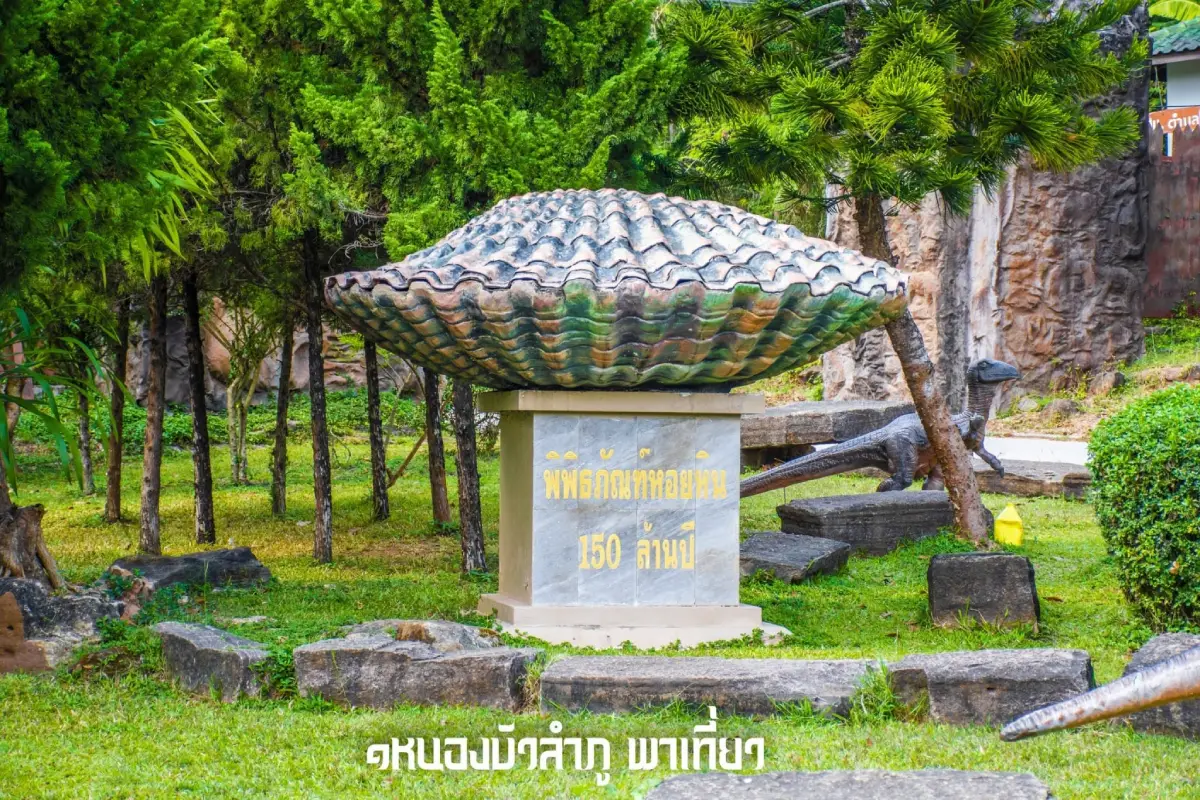
Open Days: Tuesday – Sunday
Opening Hours: 08.30 – 16.30 / Closed on Monday
The 150-Million-Year-Old Shell Fossil Museum and Dinosaur Non Than in Nong Bua Lam Phu is one of the province’s most distinctive learning attractions for geology, fossils, dinosaurs, and family travel. Located at Ban Huai Duea in Non Than Subdistrict, Mueang Nong Bua Lam Phu District, the museum sits along Highway 210 on the Nong Bua Lam Phu-Udon Thani route, about 10 km from the city center. Its main highlight is the discovery of large numbers of fossilized bivalve shells estimated to be around 140 – 150 million years old. These fossils were found in a steep rock cliff about 50 meters high, in an area that was formerly an old stone quarry. What villagers once saw as unusual shell-shaped stones was later recognized as scientifically valuable fossil evidence. The site was then developed into a museum and outdoor dinosaur park, combining the original fossil discovery area, indoor exhibitions, and open-air learning zones.
The story of the museum began around 1994, when local villagers entering the abandoned quarry area near Ban Huai Duea noticed many strange stones that looked like beautiful shell forms. Later geological surveys confirmed that the objects were fossilized bivalve shells from the Jurassic period, approximately 140 – 150 million years old. Many of the shell fossils are well preserved. Some clearly show the shape of the shell, while some are relatively large and heavy. Their quantity and condition make Ban Huai Duea one of the most interesting fossil locations in Nong Bua Lam Phu. The site helps explain an ancient environment that existed long before the present landscape of northeastern Thailand.
The importance of the 150-million-year-old shell fossils lies not only in their age, but also in the question they raise: how did shell fossils come to be found in inland northeastern Thailand? The answer is found in geological history. Over very long periods, ancient environments, sediments, water systems, and rock layers changed repeatedly. Small organisms such as bivalves were buried in sediment and gradually fossilized. Later geological processes, including uplift, erosion, and human quarrying, exposed the rock layers that preserved these ancient shells. For visitors, the museum makes this deep time story visible and easier to understand.
The fossil-bearing cliff is an important part of the museum experience. Because the museum is located near the actual discovery site, visitors do not only see fossils inside a display case. They can also understand the relationship between fossils, rock layers, landscape, and the place where the evidence was found. This site-museum character gives the museum special value. A fossil becomes more meaningful when its original environment and geological context remain close to the display area. This makes the museum suitable for students, families, teachers, and travelers who want a clearer understanding of how fossils are found and studied.
In addition to shell fossils, the Ban Huai Duea area has also yielded ancient crocodile remains, mica fragments, certain minerals, and dinosaur bones. The dinosaur bones were found in a rock layer located about two meters above the layer containing the shell fossils. This makes the site broader than a shell museum alone. It can tell stories about prehistoric ecosystems, fossilization, ancient animals, geology, and paleontology. Bones found in the area include parts of the upper forelimbs on both sides, lower hind limbs, scapula, finger bones, and ribs. These remains help visitors understand that each fossil bone is not just an unusual stone, but scientific evidence of ancient life.
The museum presents its exhibitions in a way that begins with the universe and moves toward the Earth, life, evolution, dinosaurs, and fossil discoveries in Nong Bua Lam Phu. This sequence helps visitors understand fossils within a much larger timeline. The 150-million-year-old shell fossils are not isolated objects. They are part of the history of the planet, far older than human history. By showing the solar system, the origin of the Earth, the evolution of life, prehistoric animals, and local fossil evidence, the museum turns deep geological time into a more accessible story.
The exhibition areas are organized into several learning zones. The welcome zone introduces the overall museum and the Dinosaur Non Than family. The cosmic journey zone presents the solar system, including the sun and planetary models, as a way to explain the larger context of Earth’s history. The world and origin of life zone explains the evolution of living things, from ancient life forms to plants, animals, and humans. The kingdom of predators zone focuses on dinosaurs and fossil remains found in Thailand, including dinosaur bones discovered at Ban Huai Duea. The miracle of discovery zone displays fossil shell models and reconstructed rock-wall settings. The explorer trail zone explains the work of paleontologists, geologists, and fossil researchers.
One of the most popular parts of the site for children and families is the outdoor Dinosaur Park. Here, visitors can see dinosaur models placed in a green open-air setting. These models help make fossil learning more vivid. Children can connect the bones and scientific displays inside the museum with the imagined body shapes of prehistoric animals. Some dinosaur figures are large and photogenic, making the park a good place for family photos and school trips. This balance of learning and recreation is one reason the museum has become a favorite family attraction in Nong Bua Lam Phu.
The kingdom of predators zone is especially memorable because it presents carnivorous dinosaurs and fossil evidence from Thailand. Museum information describes a large model of Siamotyrannus isanensis, approximately 4 meters high and 7 meters long, as one of the highlights. Such a display helps visitors understand the scale and appearance of predatory dinosaurs. It also links scientific names, fossil bones, and visual reconstruction in a way that is easier for general visitors to understand than technical text alone.
The dinosaur bones from Ban Huai Duea add an important dimension to the museum. Nong Bua Lam Phu is not only a place of fossil shells. It also preserves evidence of large prehistoric animals that once lived in the region. Fossil bones such as limb bones, scapula, finger bones, and ribs allow scientists to study body structure, movement, and possible dinosaur groups. For visitors, seeing such fossils helps transform the idea of dinosaurs from fantasy into real evidence preserved in rock.
The museum also helps visitors understand the difference between archaeology and paleontology. Archaeology studies traces of humans and human culture, while paleontology studies ancient life such as fossil shells, dinosaurs, crocodiles, plants, and other organisms preserved in rock. The 150-Million-Year-Old Shell Fossil Museum is mainly a paleontological and geological learning site. However, it also connects with the local community, because the discovery was first recognized by villagers and later developed by local authorities into a public learning attraction.
Another strength of the museum is that it remains close to the original discovery area. Fossils displayed far from their discovery context can still be valuable, but their connection to place is harder to understand. At Ban Huai Duea, visitors can associate the fossils with the cliff, the quarry history, the landscape, and the community. This strengthens the educational value of the museum and gives visitors a clearer sense that fossils are part of a real environment, not just objects collected for display.
For children and young learners, the museum functions like a large science classroom. It helps explain geological time, fossil formation, ancient life, extinction, dinosaurs, and environmental change through objects and visual displays. A child can see real shell fossils, walk through dinosaur models, and understand that the Earth has changed dramatically over millions of years. This kind of learning is more memorable than reading from a textbook alone because it combines sight, movement, imagination, and real evidence.
For adult travelers, the museum is a compact but meaningful stop. It can be visited in about 1 – 2 hours and combined easily with nearby attractions such as Wat Tham Klong Phen, the Luang Pu Khao Analayo Museum, the Shrine of King Naresuan the Great, Wat Mahachai, Nong Bua Lake public park, and Thao To Waterfall Forest Park. Because the museum is close to the main road between Nong Bua Lam Phu and Udon Thani, it is practical for both dedicated visits and road-trip stops.
The museum entrance and grounds create the feeling of a community-based learning attraction. Visitors pass the entrance arch, then move through outdoor displays, exhibition buildings, dinosaur areas, and fossil learning zones. The walking route is simple and suitable for families, school groups, and general travelers. Information signs, display objects, reconstructed scenes, and dinosaur figures allow visitors to move at their own pace. The route works well for short visits but also has enough content for deeper educational trips.
The atmosphere of the museum is different from a large urban museum. Its value lies in its connection to the real discovery landscape, the local community, and the fossil-bearing cliff. The museum shows how a natural resource and scientific discovery in a rural community can become a public learning site. It also shows how local administration and community participation can turn geological heritage into tourism, education, and local pride.
Visitors should follow site rules carefully. Do not climb dangerous rock areas, do not touch fossils or display objects unless allowed, do not write on stones, signs, or dinosaur models, and keep children under supervision. Fossils are natural evidence created over millions of years. Once damaged, they cannot be replaced. Respectful behavior helps preserve the site for future visitors and students.
The best time to visit is during the morning or early afternoon within the official opening hours from 08.30 to 16.30. Since the museum is closed on Mondays, visitors should plan for Tuesday to Sunday. During school holidays or long weekends, allow more time because families and school groups may be present. Morning is usually better for walking around the outdoor Dinosaur Park, while afternoon works well for indoor exhibitions before continuing to Nong Bua Lam Phu town or Udon Thani.
Getting There from Nong Bua Lam Phu city center is straightforward. Take Highway 210 on the Nong Bua Lam Phu-Udon Thani route for about 10 km. At Ban Huai Duea in Non Than Subdistrict, the museum is on the left-hand side when traveling from Nong Bua Lam Phu toward Udon Thani. Visitors can travel by private car, rental car, or local bus on the Nong Bua Lam Phu-Udon Thani route. Those using public transport should ask to get off at Ban Huai Duea or near the museum entrance, then continue on foot to the exhibition area.
Travelers coming from Udon Thani can also use Highway 210 toward Nong Bua Lam Phu. The museum is located before reaching the city center, making it a convenient stop on the way into town. Travelers coming from Nong Bua Lam Phu can visit the museum first in the morning, then continue to Wat Tham Klong Phen or the Luang Pu Khao Analayo Museum in Non Than Subdistrict. This route combines science, fossils, Buddhism, and local history in one day.
Admission information from the Museum Database in Thailand lists the fees as 20 baht for children, 50 baht for adults, and 100 baht for foreign visitors. Some older reviews mention different lower rates, so the current museum database rate should be used as the main reference. Visitors should prepare cash for admission, snacks, drinks, and possible local purchases. School groups or organized educational visits should contact Non Than Subdistrict Administrative Organization or the tourism contact number in advance for the latest group-visit information.
The main caretaker is Non Than Subdistrict Administrative Organization in Mueang Nong Bua Lam Phu District. The local authority’s contact information lists office hours from 08.30 to 16.30, office telephone number 042-000048, and tourism contact number 087-852-5159. Visitors who need current information about opening days, group visits, or special activities should use these official local contacts before traveling.
The museum can be understood through several main zones: the welcome and Dinosaur Non Than family zone, cosmic journey zone, world and origin of life zone, kingdom of predators zone, miracle of discovery zone, explorer trail zone, shell fossil exhibition building, dinosaur bone exhibition building, outdoor Dinosaur Park, fossil cliff learning area, and the shrine area near the entrance. These zones make the visit varied, combining science, real fossils, visual reconstruction, outdoor walking, and photography.
Nearby attractions include Wat Tham Klong Phen and the Luang Pu Khao Analayo Museum, both important religious and cultural places in Non Than Subdistrict. In Nong Bua Lam Phu town, visitors can continue to the Shrine of King Naresuan the Great, Wat Mahachai, Nong Bua Lake public park, and Thao To Waterfall Forest Park. This makes it easy to start the day with deep geological time at the fossil museum, then continue to Buddhist heritage, city history, and natural scenery.
Food options are available both along the Non Than route and in Nong Bua Lam Phu town. Nearby publicly listed restaurants and cafés include The Container Coffee, Parinya Restaurant Nong Bua Lam Phu, Naka Loft Cafe, C.U. Hua Pla Mor Fai, Overtime, A Sor @ 5.59, and Belief Cafe & Garden. Families visiting with children may prefer cafés or city restaurants after the museum. Planning meal stops in advance is useful because the museum itself is primarily a learning attraction rather than a dining destination.
Accommodation is mainly available in Mueang Nong Bua Lam Phu District. Options with public contact information include Ruean Cho Fa Hotel, Nongbualamphu Signature, Nong Bua Garden Ville, 39000 Resort, and Phu Fa Resort. Staying in town is practical because the museum is only a short drive away. Travelers continuing toward Udon Thani or Loei can also use the museum as a convenient road-trip stop.
As a family attraction, the museum is especially strong because it combines real fossil evidence, dinosaur models, science exhibitions, outdoor space, and an easy walking route. Children can learn about fossils and dinosaurs through direct observation, while adults can appreciate the geological and local context. Teachers can use the site as an outdoor classroom connected with science, geography, environmental studies, and natural history.
For foreign travelers, the museum can be described as a fossil shell museum and outdoor dinosaur park in Nong Bua Lam Phu. Its key attractions are 150-million-year-old bivalve fossils, dinosaur bones from Ban Huai Duea, exhibitions on the evolution of life, and dinosaur displays suitable for families. Even visitors who do not read Thai can understand much of the museum through fossils, models, reconstructed displays, and outdoor scenes.
Good photography spots include the entrance arch, outdoor dinosaur models, the fossil exhibition building, shell fossil displays, reconstructed fossil cliff displays, and green areas around the Dinosaur Park. Visitors should avoid climbing on models, touching fossils, or blocking other visitors. The best photographs capture both the fun of the dinosaur park and the educational value of the fossil exhibits.
In summary, the 150-Million-Year-Old Shell Fossil Museum and Dinosaur Non Than is one of the most worthwhile stops in Nong Bua Lam Phu. It is based on real fossil discoveries at Ban Huai Duea and presents Jurassic bivalve shell fossils, dinosaur bones, ancient crocodile remains, minerals, geology exhibitions, and an outdoor Dinosaur Park in one place. It is suitable for families, students, science lovers, and general travelers. With proper timing, at least 1 – 2 hours for the visit, and a plan to continue to nearby attractions, this museum reveals a deeper side of Nong Bua Lam Phu: a province that preserves the story of ancient life in its rock layers.
| Name | 150-Million-Year-Old Shell Fossil Museum and Dinosaur Non Than / Outdoor Dinosaur Park |
| Location | Ban Huai Duea, Non Than Subdistrict, Mueang Nong Bua Lam Phu District, Nong Bua Lam Phu Province |
| Address | Moo 10, Ban Huai Duea, Non Than Subdistrict, Mueang Nong Bua Lam Phu District, Nong Bua Lam Phu Province 39000 |
| Coordinates | 17.1549, 102.5144 |
| Highlights | 140 – 150-million-year-old bivalve shell fossils, dinosaur bones, ancient crocodile remains, fossil exhibition building, and outdoor Dinosaur Park |
| History | Fossil shells were first discovered around 1994 at Ban Huai Duea. The bivalve fossils are estimated to be around 140 – 150 million years old from the Jurassic period. The area was later developed into a site museum and learning attraction. |
| Name Origin | Named after the 150-million-year-old fossilized shells found in large numbers at Ban Huai Duea in Non Than Subdistrict |
| Distinctive Features | A fossil museum located near the original discovery site, with a fossil-bearing cliff about 50 meters high, indoor exhibitions, and outdoor dinosaur displays |
| Travel Information | From Nong Bua Lam Phu city, take Highway 210 on the Nong Bua Lam Phu-Udon Thani route for about 10 km to Ban Huai Duea. The museum is on the left-hand side. Local buses on the Nong Bua Lam Phu-Udon Thani route can also be used. |
| Current Status | Open as a tourism and learning attraction of Non Than Subdistrict, with 2026 local activity information published by Non Than Subdistrict Administrative Organization |
| Open Days | Tuesday – Sunday |
| Opening Hours | 08.30 – 16.30 / Closed on Monday |
| Fees | Children 20 Baht / Adults 50 Baht / Foreign Visitors 100 Baht |
| Facilities | Exhibition building, fossil display rooms, outdoor Dinosaur Park, photo areas, parking, restrooms, and visitor service areas according to museum management |
| Main Areas / Zones | 1. Welcome and Dinosaur Non Than family zone 2. Cosmic journey zone 3. World and origin of life zone 4. Kingdom of predators zone 5. Miracle of discovery zone 6. Explorer trail zone 7. 150-million-year-old shell fossil exhibition building 8. Dinosaur bone exhibition building 9. Outdoor Dinosaur Park 10. Fossil cliff and original discovery learning area |
| Caretaker | Non Than Subdistrict Administrative Organization, Mueang Nong Bua Lam Phu District, Nong Bua Lam Phu Province |
| Main Contact Numbers | Non Than Subdistrict Administrative Organization Tel. 042-000048 Tourism Contact Tel. 087-852-5159 |
| Official Website / Official Page | Non Than Subdistrict Administrative Organization website and the official page of the 150-Million-Year-Old Shell Fossil Museum and Dinosaur Non Than |
| Nearby Tourist Attractions | 1. Wat Tham Klong Phen, about 6 km, Abbot: Phra Ajarn Inthawai Santussako 2. Luang Pu Khao Analayo Museum, about 6 km 3. Shrine of King Naresuan the Great, Nong Bua Lam Phu, about 10 km 4. Wat Mahachai, about 10 km 5. Nong Bua Lake Public Park, about 10 km 6. Thao To Waterfall Forest Park, about 18 km |
| Nearby Restaurants | 1. The Container Coffee, about 7 km, Tel. 081-009-5441 2. Parinya Restaurant Nong Bua Lam Phu, about 8 km 3. Naka Loft Cafe, about 9 km, Tel. 091-405-9888 4. C.U. Hua Pla Mor Fai, about 10 km, Tel. 083-328-1180 5. Overtime, about 10 km, Tel. 088-281-5295 6. A Sor @ 5.59, about 11 km, Tel. 098-434-2645 7. Belief Cafe & Garden, about 12 km, Tel. 062-545-1955 |
| Nearby Accommodations | 1. Ruean Cho Fa Hotel, about 9 km, Tel. 095-658-5544, 042-311-139 2. Nongbualamphu Signature, about 9 km, Tel. 094-565-0565 3. Nong Bua Garden Ville, about 10 km, Tel. 089-499-5657 4. 39000 Resort, about 12 km, Tel. 042-313-109 5. Phu Fa Resort, about 13 km, Tel. 042-311-866 |
Frequently Asked Questions (FAQ)
Q: Where is the 150-Million-Year-Old Shell Fossil Museum located?
A: It is located at Ban Huai Duea, Non Than Subdistrict, Mueang Nong Bua Lam Phu District, Nong Bua Lam Phu Province, along Highway 210 on the Nong Bua Lam Phu-Udon Thani route, about 10 km from the city center.
Q: What are the opening days and hours?
A: The museum is open Tuesday to Sunday from 08.30 to 16.30 and is closed on Monday.
Q: How much is the admission fee?
A: The admission fee is 20 baht for children, 50 baht for adults, and 100 baht for foreign visitors.
Q: What can visitors see inside the museum?
A: Visitors can see 140 – 150-million-year-old bivalve shell fossils, dinosaur bones, exhibitions on the origin of Earth and life, the kingdom of predators zone, the explorer trail zone, and the outdoor Dinosaur Park.
Q: Why are the shell fossils important?
A: They are Jurassic bivalve fossils around 140 – 150 million years old and help explain the ancient environment and geological history of Nong Bua Lam Phu.
Q: Is the museum suitable for children?
A: Yes. The museum is very suitable for children and families because it combines real fossils, dinosaur models, outdoor spaces, and science exhibitions that make prehistoric life easy to understand.
Q: How do travelers get there?
A: From Nong Bua Lam Phu city, take Highway 210 toward Udon Thani for about 10 km to Ban Huai Duea. The museum is on the left-hand side. Local buses on the Nong Bua Lam Phu-Udon Thani route can also be used.
Q: What nearby places can be visited together with the museum?
A: Nearby places include Wat Tham Klong Phen, the Luang Pu Khao Analayo Museum, the Shrine of King Naresuan the Great, Wat Mahachai, Nong Bua Lake Public Park, and Thao To Waterfall Forest Park.
 Category: ●Art, Culture and Heritage
 Group: ●Museums
Last Update : 2 MonthAgo
 Last Update : 2 MonthAgo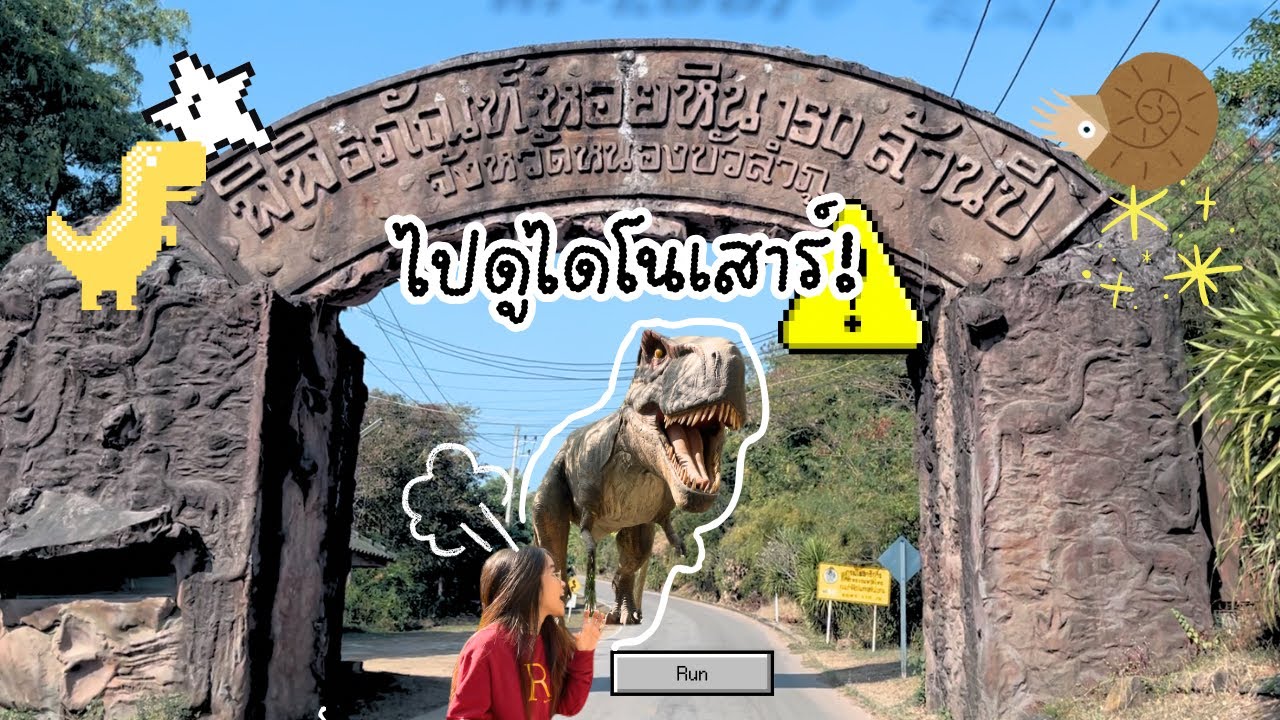
 Click to Access the Navigation Map GPS
150-Million-Year-Old Shell Fossil Museum Map

 Historical Sites and Monuments(4)
 Landmarks and Memorials(1)
 Art, Craft Centres, Tradition(1)
Museums(3)
Art, Craft Centres, Tradition(1)
Museums(3)
 Places of Worship
 Temple(10)
 Other Sacred Sites(6)
 Suburban Living
 Village, Community(3)
 Nature and Wildlife
 National Parks and Marine Reserves(3)
 Mountain (Doi)(5)
 Dam, Reservoir, Lake(5)
 Waterfalls(1)
 Caves(6)
 River, Canal(2)
 Bays and Beaches(1)
 Other natural attractions(3)
 Travel Articles, Recipes
 Travel Review, Food Review(1)


