
lovethailand home >Central Travel Attractions >Suphan Buri Travel Attractions > 20 Best Places to Visit in Suphan Buri Central Tha..
TL;DR: 20 Best Places to Visit in Suphan Buri Central Thailand, open Daily Opening Hours: 08:00 – 18:00.
20 Best Places to Visit in Suphan Buri Central Thailand
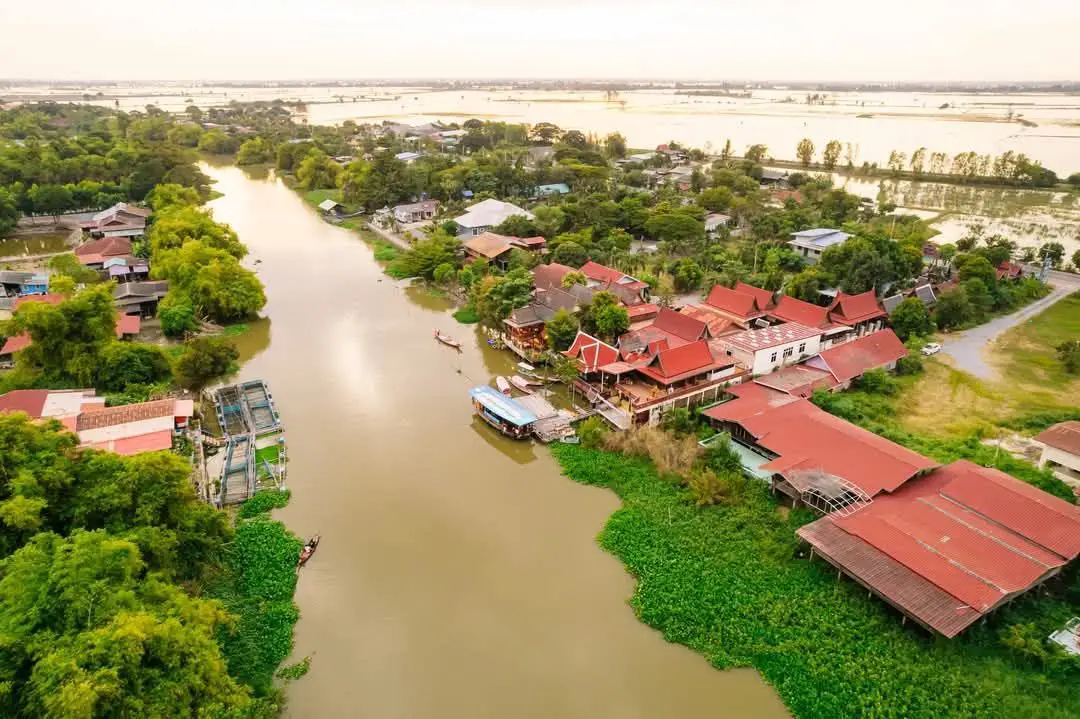
20 Best Places to Visit in Suphan Buri, Central Thailand Suphan Buri is one of Central Thailand’s historic provinces, offering a rich mix of history, Buddhism, archaeology, Thai literature, Thai-Chinese communities, traditional markets, agriculture, and nature. The province is known not only for the legendary elephant battle associated with King Naresuan and its important temples, but also for the ancient city of U Thong, museums, cultural learning centers, scenic viewpoints, riverside communities, and natural landscapes in the western part of the province.
Suphan Buri lies in the western part of Thailand’s Central Region. Much of the province consists of fertile lowlands shaped by agriculture and the Tha Chin River, also locally known as the Suphan Buri River. Central and eastern districts are characterized by farming communities and riverside settlements, while the landscape gradually becomes hillier toward the west, particularly around Dan Chang, where mountains, forests, and large reservoirs create a very different atmosphere. This geographical variety makes it possible to combine historic towns, cultural attractions, rural landscapes, and nature trips within the same province.
Suphan Buri has exceptionally deep historical roots. Archaeological evidence found throughout the province ranges from prehistoric settlements to the Dvaravati cultural period and later developments associated with Suphannaphum and Ayutthaya. U Thong is one of the most important areas for understanding this long history, with ancient monuments, Buddha images, beads, ornaments, ceramics, and evidence of regional trade providing a vivid picture of an early urban center in Central Thailand.
The province is also closely connected with major events in Thai history. Don Chedi is associated with the famous elephant battle of King Naresuan the Great and has become one of Suphan Buri’s defining historic landmarks. At the same time, many places in the province are linked to the classic Thai literary epic Khun Chang Khun Phaen, including Wat Pa Lelai, Wat Khae, and parts of the old town. Travelers can therefore explore both recorded history and locations remembered through one of Thailand’s best-known literary works.
Suphan Buri also has a diverse cultural landscape, especially in communities shaped by generations of Thai-Chinese settlement. This heritage is particularly visible at Sam Chuk Market and the Dragon Descendants Museum. Sam Chuk still preserves wooden shophouses, traditional food, family-run businesses, and the atmosphere of an old Tha Chin riverside trading community, while the Dragon Descendants Museum presents the long history of Chinese civilization and the cultural relationship between Chinese communities and Thailand.
Nature lovers can explore a very different side of the province around Dan Chang and U Thong. Krasiao Dam is popular for relaxed afternoons, reservoir scenery, and sunset photography, while U Thong combines limestone hills, archaeological landscapes, and hilltop religious sites such as Wat Khao Di Salak. These areas make it easy to combine nature, archaeology, and Buddhist heritage in one journey.
If you have only one day in Suphan Buri, the city area is the most practical choice. A good route can include Wat Pa Lelai Worawihan, Wat Khae, Wat Phra Si Rattana Mahathat, Banharn-Jamsai Tower, and the Dragon Descendants Museum. Travelers who prefer local community life can replace some city attractions with Sam Chuk Market. With two or three days, adding Don Chedi, U Thong, and Dan Chang provides a much broader view of the province.
Suphan Buri offers a wide variety of experiences, from major landmarks, historic temples and archaeological sites to museums, community markets, agricultural learning centers, natural attractions, and viewpoints outside the city. Each area reveals a different side of the province through history, faith, local life, art and culture, and the landscapes of Central Thailand. Travelers with limited time can begin with the city and nearby attractions before extending their journey to U Thong, Sam Chuk, Don Chedi, Si Prachan, Song Phi Nong, and Dan Chang.
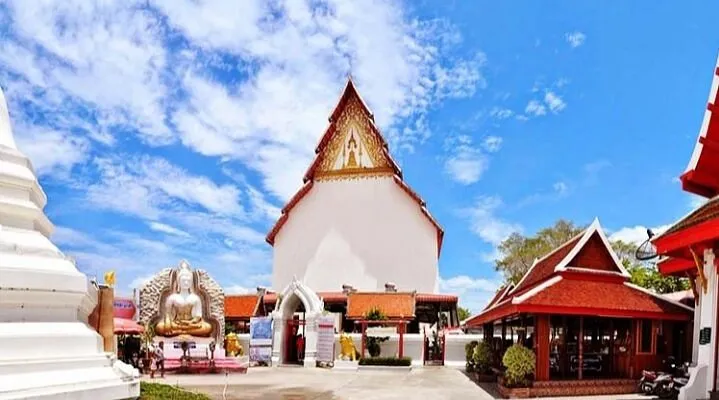
1. Wat Pa Lelai Worawihan is one of the most important temples in Suphan Buri Province. Located on Malai Maen Road in Rua Yai Subdistrict, Mueang Suphan Buri District, it is a third-class royal temple of the Worawihan category and is home to “Luang Pho To,” a monumental Buddha image in the Pa Lelai posture that has long been a major center of faith for local residents and Buddhist pilgrims from across Thailand.
Highlights: Luang Pho To in the Pa Lelai posture, the large viharn, the royal crown emblem on the pediment, Khum Khun Chang, annual worship festivals, and the temple’s connections with Buddhism, Suphan Buri history, and the literary epic Khun Chang Khun Phaen.
Luang Pho To stands approximately 23.46 meters high and measures about 11.20 meters around the body. The image is seated with both legs hanging downward in the characteristic Pa Lelai posture. Its form reflects the artistic traditions of the U Thong-Suphannaphum period and the historic preference for monumental Buddha images in ancient Central Thai cities. The scale of the image within the viharn immediately conveys both its religious importance and the skill of earlier craftsmen.
The viharn pediment features a royal crown emblem between ceremonial umbrellas, a detail associated with King Mongkut, Rama IV, who visited the temple while he was still a monk. After ascending the throne, he ordered restoration work at Wat Pa Lelai, giving the temple an important connection not only with local history but also with the Chakri royal court.
Behind the temple is Khum Khun Chang, a traditional Thai-style house inspired by descriptions in Khun Chang Khun Phaen. Displays inside include household objects and material associated with the story’s characters, allowing visitors to extend their experience from Buddhist worship into Thai literature and traditional domestic life.
Wat Pa Lelai is suitable for families, senior travelers, students, Buddhist pilgrims, history enthusiasts, and anyone interested in Thai literature. It can easily be combined with Wat Khae, Wat Phra Si Rattana Mahathat, and the Dragon Paradise area within a city sightseeing route.
Open Days: Daily Opening Hours: 08:00 – 18:00
Getting There: From Bangkok, follow Highway 340 toward Suphan Buri, then continue into the city and onto Malai Maen Road. The temple is in Rua Yai Subdistrict on the western side of the Suphan Buri River. Private cars and local hired transport from the city center are convenient options.
Map (GPS):Directions to Wat Pa Lelai Worawihan

2. Don Chedi Monument is one of Suphan Buri’s most important historic memorials and a major place for learning about King Naresuan the Great and the famous elephant battle remembered in Thai history. The complex contains an equestrian-style royal monument depicting King Naresuan on a war elephant, the Don Chedi stupa, and a broad ceremonial plaza.
Highlights: The monument of King Naresuan on his war elephant, the large white Don Chedi stupa, historic interpretation areas, and the annual Don Chedi Memorial Fair.
The present stupa is a large Sri Lankan-style chedi constructed around an earlier structure and has become the defining symbol of Don Chedi District. From the main plaza, the monument and stupa form a powerful visual axis that connects the historic landscape with the province’s collective memory.
The site is especially rewarding for travelers interested in Thai history. In addition to paying respects, visitors can spend time reading about the elephant battle and King Naresuan’s role in the Ayutthaya period. The atmosphere becomes particularly lively during the annual Don Chedi event, while ordinary weekdays are better for quieter exploration.
Don Chedi Monument works well for families and students and can be combined with Sam Chuk or destinations farther west without repeatedly returning to the provincial capital.
Open Days: Daily Opening Hours: 05:00 – 20:00
Getting There: From central Suphan Buri, take Highway 322 toward Don Chedi District for approximately 30 kilometers. Traveling by private car is the most convenient option.
Map (GPS):Directions to Don Chedi Monument
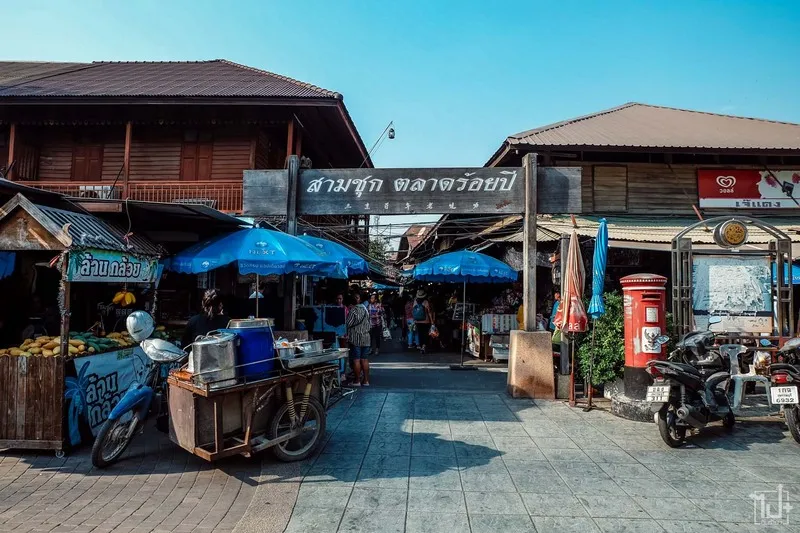
3. 100 Years Old Sam Chuk Market is one of Central Thailand’s best-known historic riverside markets. Located beside the Tha Chin River in Sam Chuk District, the market is distinguished by wooden shophouses, long-established businesses, community museums, local food, and an atmosphere that still feels like a living riverside town rather than a recreated tourist attraction.
Highlights: Traditional wooden buildings, riverside market lanes, Khun Chamnong Chinarak House Museum, traditional medicine shops, old-style coffee shops, local cuisine, Thai desserts, and the atmosphere of a historic Thai-Chinese trading community.
Sam Chuk developed when the Tha Chin River served as one of the region’s most important transport and trading routes. Thai and Chinese settlers established homes, warehouses, pharmacies, food shops, and trading businesses here, eventually turning the settlement into a commercial center for the district.
The charm of the market lies in its small details: old shop signs, vintage household objects, coffee tables, historic photographs, and family businesses that have continued across generations. Allow around 1.5–2 hours to explore the lanes, eat, and absorb the atmosphere rather than treating the market only as a quick shopping stop.
Sam Chuk is particularly suitable for families, food lovers, photographers, and travelers interested in community heritage. It can easily be combined with Don Chedi, Si Prachan, or Ban Khwai.
Open Days: Daily Opening Hours: 08:00 – 17:00
Getting There: From Bangkok, take Highway 340 toward Suphan Buri and continue north toward Sam Chuk District. The market is beside the Tha Chin River near the Sam Chuk District Office.

4. Banharn-Jamsai Tower is a major landmark in central Suphan Buri, standing inside Chaloem Phatthara Rachini Park. The tower rises 123.25 meters and is one of the most distinctive city viewpoints in Central Thailand. Visitors can enjoy panoramic views from an observation level approximately 78.75 meters above the ground.
Highlights: Panoramic city views, Chaloem Phatthara Rachini Park, observation facilities, murals related to King Naresuan, landscaped gardens, children’s recreation areas, a water-play area, and illuminated views of the tower after dark.
The tower contains several visitor levels. The ground level includes ticketing and souvenir areas, while upper levels provide rest areas and viewpoints. From the highest public observation level, visitors can look across the city grid, roads, temples, and surrounding communities.
The surrounding park makes this a good family destination. Visitors can walk through landscaped areas, bring children to the recreation zones, and go up the tower toward late afternoon before watching the city lights come on.
Banharn-Jamsai Tower is particularly suitable for photographers, families, couples, and first-time visitors who want an overview of the city. It can easily be combined with the Dragon Descendants Museum, Wat Pa Lelai, and Wat Phra Si Rattana Mahathat.
Open Days: Tuesday – Sunday and public holidays Opening Hours: Tuesday – Friday 10:00 – 19:00 / Saturday – Sunday and public holidays 10:00 – 20:30
Getting There: The tower is on Nang Phim Road in Tha Phi Liang Subdistrict, Mueang Suphan Buri District, inside Chaloem Phatthara Rachini Park. It is easy to reach from anywhere in the city by private car or hired transport.
Map (GPS):Directions to Banharn-Jamsai Tower
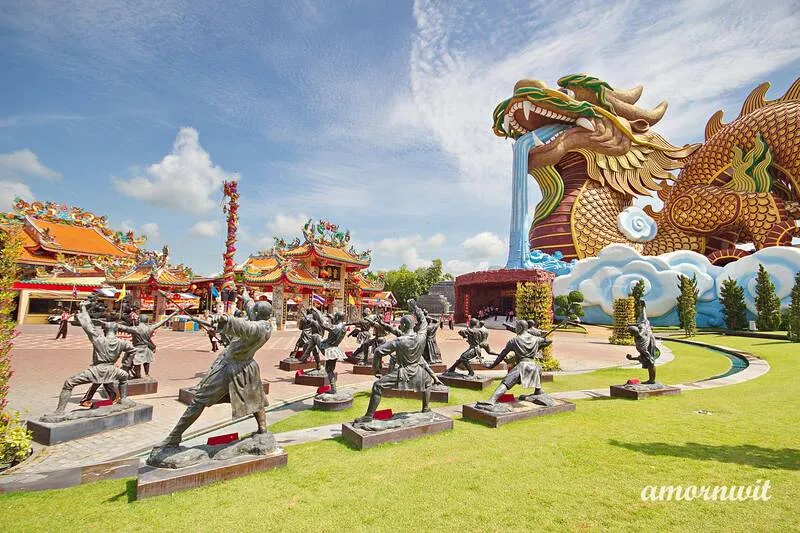
5. Dragon Descendants Museum is one of Suphan Buri’s most distinctive Thai-Chinese cultural attractions. Located within the City Pillar Shrine complex, the museum itself is designed in the form of a giant dragon, making it immediately recognizable and one of the city’s most photographed landmarks.
Highlights: The giant dragon-shaped museum, exhibitions covering more than 5,000 years of Chinese history, Dragon Paradise Village, the City Pillar Shrine, multimedia displays, and Chinese-style architecture.
The museum traces Chinese civilization from legendary origins and early rulers through successive dynasties, the republican period, and the experiences of overseas Chinese communities in Thailand. Displays combine film, lighting, sound, models, and exhibition installations, making the subject accessible even to visitors without prior knowledge of Chinese history.
Dragon Paradise Village and the City Pillar Shrine add architectural and religious dimensions to the experience. Visitors can easily spend several hours in the complex without needing to travel between separate sites.
The museum is suitable for families, students, history enthusiasts, Thai-Chinese visitors, and international travelers. It combines easily with Banharn-Jamsai Tower, Wat Pa Lelai, and Wat Phra Si Rattana Mahathat.
Open Days: Wednesday – Sunday Opening Hours: Wednesday – Friday 10:00 – 16:00 / Saturday – Sunday 09:00 – 16:20
Getting There: From Bangkok, take Highway 340 into Suphan Buri city and continue toward the City Pillar Shrine area near Malai Maen Road.

6. Wat Khao Di Salak in U Thong District combines a hilltop Buddhist site, archaeological significance, and scenic views. Its most important feature is a replica Buddha footprint carved into reddish sandstone and decorated with 108 auspicious symbols.
Highlights: The red sandstone Buddha footprint, 108 auspicious motifs, a 16-spoked Dharmachakra, the hilltop mondop, and elevated views across the U Thong landscape.
The footprint measures approximately 65.5 × 141.5 centimeters and is carved in low relief. Its details include a Dharma wheel and auspicious designs associated with Dvaravati-period Buddhist art, giving the site considerable archaeological and art-historical importance.
The road and path up the hill also provide a different perspective over the U Thong area. Wat Khao Di Salak is particularly rewarding for Buddhist travelers, archaeology enthusiasts, and photographers and combines well with U Thong National Museum and other ancient-city sites.
Getting There: From U Thong town, continue toward Don Kha Subdistrict. A road of around 2 kilometers leads from the temple area toward the summit. Use a roadworthy vehicle and travel during daylight hours.
Map (GPS):Directions to Wat Khao Di Salak

7. Krasiao Dam is one of the major natural attractions in Dan Chang District. The reservoir is surrounded by rural landscapes and distant hills, creating a relaxed environment quite different from the temple and historic-town routes elsewhere in Suphan Buri.
Highlights: The large earth dam, reservoir scenery, mountain views, sunset photography, open recreation areas, and the peaceful atmosphere of Dan Chang.
Krasiao Dam plays an important role in irrigation, agriculture, and freshwater fisheries. At the same time, the dam crest and reservoir shore have become popular places for local residents and visitors to relax, particularly in the late afternoon when the sun reflects across the water.
The area is suitable for families, couples, groups of friends, and photographers. Travelers with two days and one night can stay around Dan Chang to enjoy both morning and evening scenery and explore other natural areas nearby.
Getting There: From central Suphan Buri, drive toward Dan Chang District and follow signs for the Krasiao irrigation project. A private vehicle is the most practical way to visit.
Map (GPS):Directions to Krasiao Dam

8. U Thong National Museum is one of the most important places for understanding ancient U Thong and the Dvaravati period. Located on Malai Maen Road in U Thong District, the museum houses archaeological objects discovered in the ancient city and surrounding areas.
Highlights: Dvaravati Buddha images, ancient beads, jewelry, pottery, evidence of long-distance trade, ethnographic collections, and a traditional Lao Song house in the outdoor area.
The museum’s principal displays are divided between two main buildings. One focuses on the development of U Thong from prehistoric settlement into the Dvaravati period, while another emphasizes beads and ethnography. The outdoor Lao Song house helps connect archaeological history with the cultural diversity of modern Suphan Buri.
One of the museum’s most important contributions is showing that ancient U Thong belonged to extensive cultural and trading networks rather than existing as an isolated settlement. Beads, religious objects, and works of art from different periods demonstrate these wider connections.
Travelers who want to understand U Thong should begin here before visiting Wat Khao Di Salak, Khok Chang Din, and other archaeological sites, as the museum provides useful context for what can later be seen in the landscape.
Open Days: Wednesday – Sunday and public holidays Opening Hours: 09:00 – 16:00
Getting There: From Bangkok, follow Highway 340 toward Suphan Buri and continue to U Thong via Malai Maen Road. The museum is close to the U Thong District Office.
Map (GPS):Directions to U Thong National Museum

9. Wat Khae is an old temple in the historic area of Suphan Buri that is particularly well known for its association with Khun Chang Khun Phaen. According to local tradition, Khun Phaen studied magical knowledge under Somphan Khong at this temple, making Wat Khae an important stop for travelers following the literary heritage of Suphan Buri.
Highlights: The giant tamarind tree, Khun Phaen-related displays, a four-footprint Buddha image, important sacred objects, Luang Pu Khong, the giant wasp figure, Naga Cave, and connections with King Chulalongkorn’s royal travels.
The giant tamarind tree and Khun Phaen associations are the best-known attractions, but the temple contains several other religious and historic features that reflect multiple periods, from Ayutthaya traditions to later Rattanakosin memories.
Wat Khae is ideal for visitors interested in Thai literature, history, and local beliefs. It can be combined easily with Wat Phra Si Rattana Mahathat, the Dragon Descendants Museum, and Wat Pa Lelai.
Open Days: Daily Opening Hours: 07:00 – 18:00
Getting There: The temple is in Rua Yai Subdistrict, Mueang Suphan Buri District, and is easily reached from the city center as part of an old-town sightseeing route.
Map (GPS):Directions to Wat Khae
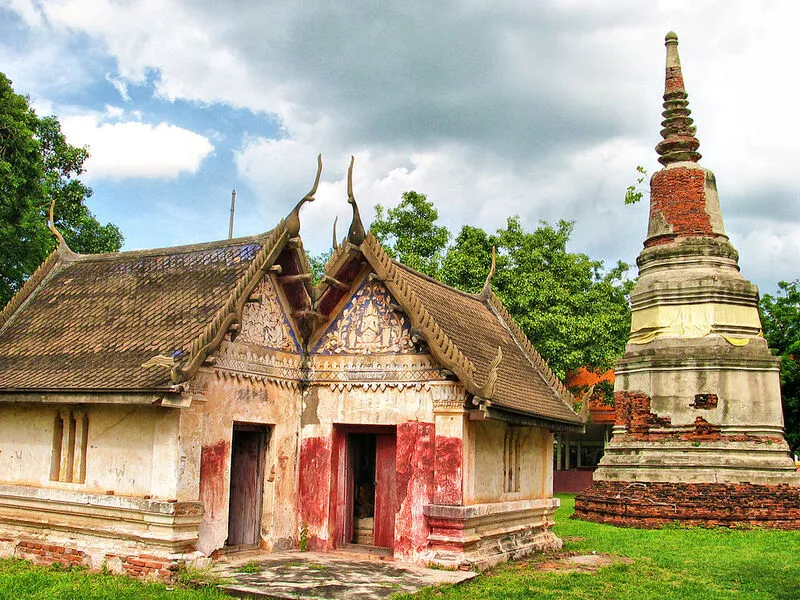
10. Wat Phra Si Rattana Mahathat is one of the most important archaeological temple sites in Suphan Buri city. Located in Rua Yai Subdistrict, it is distinguished by its large central prang and by its association with the famous Phra Phong Suphan amulets, among the best-known Buddhist amulets in Thailand.
Highlights: The central prang, more than 600 years of history, the Phra Phong Suphan crypt, sacred relics, satellite chedis, viharn remains, and archaeological evidence associated with historic Suphannaphum.
The temple stands within the old city on the western side of the Suphan Buri or Tha Chin River, an area that once formed an important urban center. The monumental prang reflects the status and prosperity of Suphannaphum in earlier centuries.
The prang and surrounding structures are important for studying the development of architecture and Buddhist art in Central Thailand. The discovery of Phra Phong Suphan amulets within the temple has also given the site major importance in both archaeology and Thailand’s amulet tradition.
Visitors should walk around the ruins respectfully and avoid climbing or unnecessarily touching ancient structures. The temple can easily be combined with Wat Khae, the Dragon Descendants Museum, and Wat Pa Lelai.
Open Days: Daily Opening Hours: 08:00 – 17:00
Getting There: From Malai Maen Road in Mueang Suphan Buri, turn onto Somphan Khong Road. The temple is in Rua Yai Subdistrict and is easily accessible from the city center.
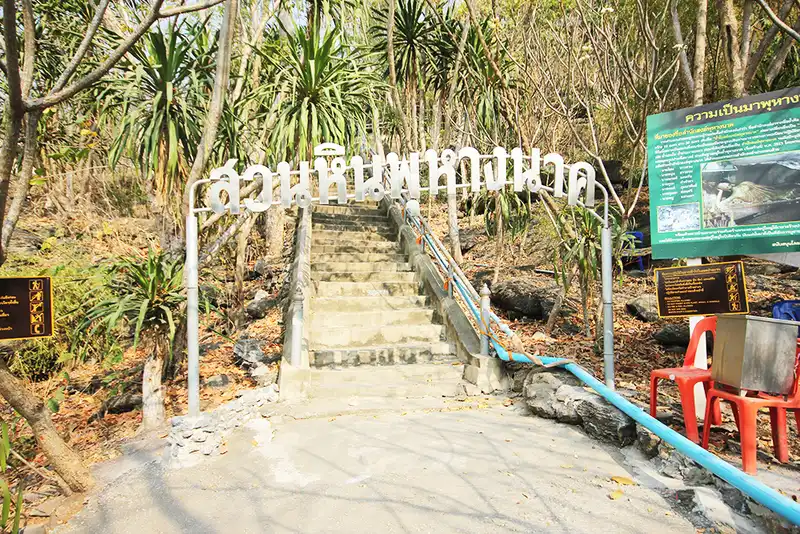
11. Phu Hang Nak Natural Stone Garden is a nature attraction in U Thong District that offers a very different atmosphere from the temples and archaeological ruins nearby. Located around the Phu Hang Nak meditation area, the landscape contains natural rock formations, cycads, Dracaena trees, woodland, and quiet mountain scenery.
Highlights: Unusual natural rock formations, ancient cycads, Dracaena trees, standing stones, natural rock bridges, seasonal vegetation, and a nature trail connected with the landscape of ancient U Thong.
The rock formations have been shaped over very long periods by wind, rain, sunlight, and natural erosion. Some resemble walls, gateways, or imagined figures. As the trail progresses, the scenery shifts between woodland and open rock formations, offering different photographic perspectives along the way.
The nature trail extends for more than 5 kilometers and is best suited to visitors comfortable with light hiking. Bring drinking water, a hat, and shoes with good grip. Surfaces can be slippery after rain. Walking with local staff or a community guide adds useful information about the plants, rock formations, and local stories.
The landscape is particularly green from the rainy season into early winter. Morning and late afternoon are generally more comfortable for walking. Phu Hang Nak can be combined with Wat Khao Di Salak, U Thong National Museum, and other archaeological attractions in the district.
Open Days: Daily Opening Hours: Guided visits operate according to staff and community schedules; contact the site in advance before walking the trail.
Getting There: From Suphan Buri city, take Highway 321 toward U Thong. At the U Thong clock-tower roundabout, continue toward Wat Khao Phra Si Sanphetcharam, then follow the local road toward the Phu Hang Nak meditation area.

12. Ban Khwai (Thai Buffalo Conservation Village) is a cultural learning attraction in Si Prachan District where visitors can discover the traditional relationship between Thai farmers and water buffaloes. The site brings together buffaloes, traditional houses, rice-threshing areas, farming equipment, local knowledge, and activities reflecting rural life in Central Thailand.
Highlights: Thai buffaloes, a traditional farming village, rice-threshing grounds, buffalo stalls, Central Thai houses, buffalo demonstrations, herbal knowledge, traditional Thai medicine, and New Theory agricultural areas.
Water buffaloes once played an essential role in Thai agriculture, plowing rice fields, pulling carts, carrying produce, and supporting farming households. The spread of agricultural machinery gradually reduced that role, and Ban Khwai helps preserve both the animals and the knowledge associated with traditional rice farming.
The reconstructed village includes threshing grounds, buffalo enclosures, traditional houses, and agricultural tools. Children and international visitors can easily understand how much work was involved in growing rice before mechanized farming. Herbal medicine and traditional massage displays broaden the experience beyond agriculture alone.
Buffalo performances are popular with families. On Saturdays, Sundays, and public holidays, performances are scheduled at 11:00, 14:30, and 16:00. Visitors traveling on weekdays should check the current schedule in advance.
Ban Khwai is conveniently located beside a main highway and works well with Sam Chuk Market or other stops in Si Prachan. Allow at least 1–2 hours, especially if you plan to watch a performance.
Open Days: Daily Opening Hours: 09:00 – 18:00
Getting There: Ban Khwai is beside Highway 340 around kilometer markers 115–116 in Wang Nam Sap Subdistrict, Si Prachan District. From Suphan Buri city, drive north toward Si Prachan and Chai Nat.
Map (GPS):Directions to Ban Khwai

13. Wat Phai Rong Wua is a large Buddhist temple in Song Phi Nong District known for its numerous Buddha images and religious sculptures. The extensive grounds present episodes from the Buddha’s life, Buddhist concepts of merit and wrongdoing, heaven and hell, and moral teaching through highly visual sculpture.
Highlights: Phra Phuttha Khodom, Phra Kakusandha, replicas of the four major Buddhist pilgrimage sites, depictions of hell and heaven, the Hundred-Spired Viharn, a large Dharma wheel, and monumental bells and alms bowls.
The temple’s development is closely associated with Phra Khru Uthai Phakhathon, commonly known as Luang Pho Khom, who developed the grounds as a place where Buddhist teaching could be communicated through architecture and large-scale sculpture.
The hell-realm section is particularly memorable and presents the consequences of wrongdoing according to popular Buddhist beliefs in a very direct visual style. Some scenes are graphic, so families with young children may wish to consider whether this section is appropriate.
The temple grounds are extensive, and visitors should allow at least 1–2 hours. It can be a convenient first stop when driving from Bangkok before continuing north toward Suphan Buri city.
Open Days: Daily Opening Hours: 08:00 – 17:00
Getting There: The temple is in Bang Ta Then Subdistrict, Song Phi Nong District. From Bangkok, travel toward Suphan Buri and turn toward the temple before the Lat Bua Luang junction, or use Highway 3422 around kilometer markers 18–19.
Map (GPS):Directions to Wat Phai Rong Wua
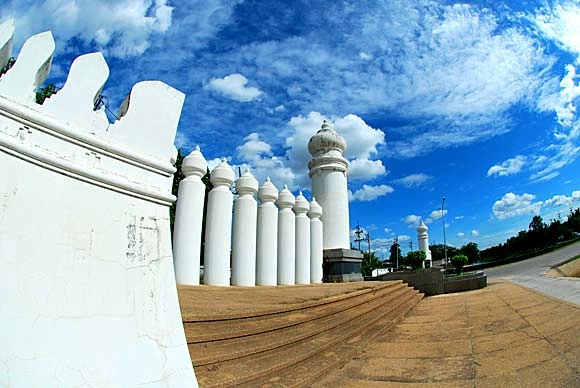
14. Old City Wall and City Gate provide important evidence of Suphan Buri’s historic development as a fortified riverside city. The surviving landscape around Rua Yai Subdistrict and Malai Maen Road includes traces of the old moat and earthen defenses once associated with the historic city boundary.
Highlights: Earthen defensive embankments, sections of the old moat, the reconstructed city gate at the presumed location of an earlier entrance, and the historic city landscape west of the Suphan Buri River.
The western side of the old city was protected by a substantial system of water-filled moats, raised earthworks, and walls, while the river created a natural defensive line on another side. Examining the surviving landscape helps visitors understand how historic cities were deliberately planned and defended.
The present city gate is a later reconstruction designed according to Fine Arts Department principles at a location believed to correspond with an earlier gate. Although not all visible structures are original, the gate helps visitors visualize how people once entered and left the historic town.
This is a useful stop for travelers interested in urban history and historic town planning. It combines easily with Wat Pa Lelai, Wat Khae, Wat Phra Si Rattana Mahathat, and the Dragon Paradise area.
Open Days: Daily Opening Hours: 09:00 – 17:00
Getting There: From Bangkok, follow Highway 340 into Suphan Buri city and continue toward Malai Maen Road. The gate area is in Rua Yai Subdistrict near the route connecting Wat Pa Lelai and the City Pillar Shrine.
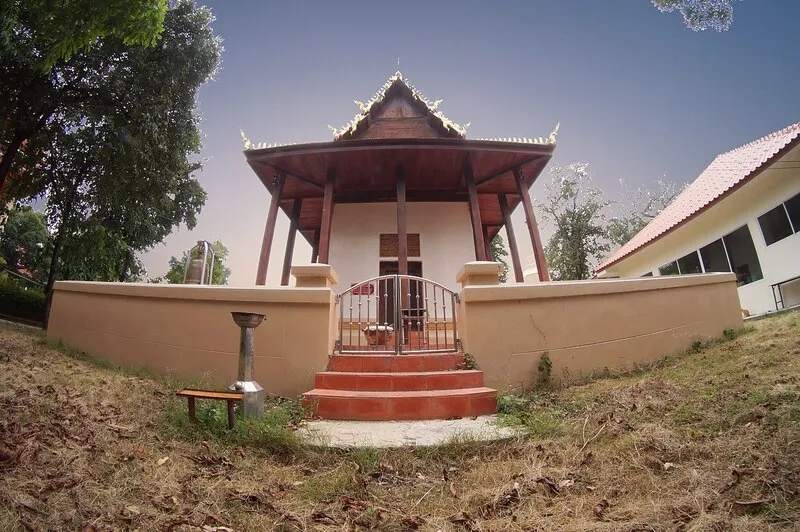
15. Wat Sam Chuk is an important community temple in Sam Chuk District located close to the famous century-old market. It provides a quieter religious and local-history experience that complements the commercial heritage of the market and the Tha Chin riverside community.
Highlights: Important Buddha images, historic religious structures, the atmosphere of a functioning local temple, and its convenient location near 100 Years Old Sam Chuk Market.
Wat Sam Chuk has long served the surrounding community and remains an active place for merit-making, Buddhist ceremonies, and local events. Visitors therefore experience a living religious space rather than simply an archaeological monument.
Visiting both the temple and the market helps reveal how religion, commerce, and riverside settlement developed alongside one another in Sam Chuk. The temple is also a convenient stop for travelers continuing toward Don Chedi or Si Prachan.
Open Days: Daily Opening Hours: 09:00 – 18:00
Getting There: The temple is in Sam Chuk District approximately 1 kilometer from 100 Years Old Sam Chuk Market and can be reached easily by private car or local transport.
Map (GPS):Directions to Wat Sam Chuk

16. Wat Lat Singh is an old temple in Ban Sa Subdistrict, Sam Chuk District, associated in local memory with King Naresuan the Great, King Ekathotsarot, and Princess Suphankanlaya. The temple was formerly known as “Wat Ratchasing” before its name gradually changed to Wat Lat Singh.
Highlights: Luang Pho Dam, an approximately 500-year-old laterite Buddha image in the meditation-defeating-Mara posture, monuments to King Naresuan, King Ekathotsarot, and Princess Suphankanlaya, and a peaceful rural temple atmosphere.
Luang Pho Dam is one of the temple’s most important sacred objects. The laterite Buddha image has a lotus-bud finial and reflects an older artistic tradition. Seeing the image together with the temple’s historical stories gives visitors more context than a simple worship stop.
The monuments to the three royal figures further connect Wat Lat Singh with the historical tourism route around Don Chedi and northern Suphan Buri. The temple combines well with Don Chedi Monument, Sam Chuk Market, and Ban Khwai.
Open Days: Daily Opening Hours: Morning – Evening
Getting There: From Highway 3038, turn onto the irrigation-canal road and continue for approximately 7 kilometers. The temple is in Moo 5, Ban Sa Subdistrict, Sam Chuk District.
Map (GPS):Directions to Wat Lat Singh

17. Ban Ton Tan Field Observation Tower is a rural viewpoint in Song Phi Nong District that captures the agricultural landscape of Suphan Buri in a simple and attractive way. Its main feature is an octagonal bamboo tower approximately 20 meters high, surrounded by open rice fields and offering 360-degree views.
Highlights: A three-level bamboo observation tower, views across around 120 rai of rice fields, coconut trees lining field boundaries, rural waterways, and sunrise or late-afternoon scenery.
The appeal here comes from the changing landscape rather than monumental architecture. Depending on the agricultural season, visitors may see flooded paddies during planting, bright green rice fields, or golden mature rice ready for harvest.
The tower is suitable for photographers, families, couples, and travelers who enjoy slow rural experiences. Early morning and late afternoon offer more comfortable temperatures and attractive light. Families should supervise young children carefully when climbing the tower.
The viewpoint can be combined with Wat Phai Rong Wua, Bang Li Market, or other community attractions in Song Phi Nong.
Open Days: Daily Opening Hours: 06:00 – 18:30
Getting There: The tower stands in the rice fields of Ban Mae Phra Prachak, Moo 4, Ton Tan Subdistrict, Song Phi Nong District. A private vehicle is recommended for the local rural roads.
18. Suphan Buri Chang Sip Mu Training Center is a learning center dedicated to traditional Thai arts and conservation crafts. Located on Malai Maen Road in Mueang Suphan Buri, the center plays an important role in teaching and preserving specialist skills that require years of practice.
Highlights: Traditional painting, lacquer work, carving, sculpture, casting, model making, metalwork, plaster work, woodturning, and opportunities to understand how Thai decorative arts are produced.
The Thai term “Chang Sip Mu” refers collectively to traditional specialist craft disciplines used in the construction, restoration, and decoration of temples, sacred objects, ceremonial objects, and fine arts. These crafts require knowledge of traditional designs, materials, tools, and extensive hands-on practice.
Seeing the training environment helps visitors understand how the elaborate art found in temples, palaces, and museums is produced through many stages, including drawing, material preparation, carving, modeling, lacquer application, gilding, and detailed finishing.
The center is particularly relevant to students, art teachers, craftspeople, and visitors with a serious interest in Thai art. As it is primarily a working training center rather than a conventional walk-in attraction, advance coordination is recommended.
Open Days: Advance coordination required Opening Hours: Contact the center in advance before visiting.
Getting There: The center is on Malai Maen Road in Rua Yai Subdistrict, Mueang Suphan Buri, near the provincial sports complex. From Bangkok, take Highway 340 into the city and continue onto Malai Maen Road.

19. Wat Bang Khwak and Pak Khlong Bang Khwak Community form a quiet historic riverside area in Yan Yao Subdistrict, Sam Chuk District. The combination of temple, traditional riverside houses, landing areas, and the remains of a small old market offers a more understated experience than the busy century-old market at Sam Chuk.
Highlights: Luang Pho Dam, the mondop, ubosot, a small collection of historic objects, riverside fish-feeding areas, an old community, and the traditional atmosphere around Pak Khlong Bang Khwak.
Wat Bang Khwak stands beside the Tha Chin River and has long played a role in the surrounding community. Visitors can pay respects to Luang Pho Dam, view older objects, and relax near the river.
Pak Khlong Bang Khwak is better understood as a historic community than as a fully developed tourist market. Shops may be limited at certain times, but the appeal lies in wooden houses, traces of the old market, and the relationship among river, canal, temple, and local settlement.
The area is approximately 5 kilometers before Sam Chuk Market and works well as a quiet morning stop before continuing to Sam Chuk, Wat Sam Chuk, or Wat Lat Singh.
Open Days: Daily Opening Hours: Morning – Evening
Getting There: From Highway 340 between Suphan Buri and Chai Nat, turn into the Bang Khwak community for approximately 200 meters. The area is in Yan Yao Subdistrict, Sam Chuk District.
Map (GPS):Directions to Wat Bang Khwak

20. Khok Chang Din is an archaeological and natural site within the Phu Muang Forest Park area of U Thong District. It is particularly rewarding for travelers who want to understand ancient U Thong through its physical landscape rather than only through museum objects. The surrounding environment consists of open woodland, ancient earthworks, archaeological traces, and nature trails.
Highlights: Ancient earthen enclosures known as Khok Chang Din, Dvaravati archaeological traces, laterite viharn foundations, nature trails, and the woodland landscape of Phu Muang Forest Park.
Khok Chang Din is important for studying the relationship between ancient U Thong and the surrounding forests and hills. The name is associated with earthen embankments interpreted in connection with elephant management and activities of early communities, showing that U Thong’s history involved not only temples and urban structures but also natural resources and large animals.
The site is best explored slowly while observing the earthworks, rock surfaces, trees, and archaeological remains. Visitors should not climb ancient structures or remove any natural or archaeological material. During the rainy season, wear appropriate footwear and check trail conditions.
Khok Chang Din combines well with U Thong National Museum, Wat Khao Di Salak, Phu Hang Nak Natural Stone Garden, and nearby religious sites, allowing a full day in U Thong to include archaeology, Buddhism, and nature.
Open Days: Daily Opening Hours: 09:00 – 16:00
Getting There: From Suphan Buri city, take Highway 321 toward U Thong. Around kilometer markers 128–129, turn onto Highway 3342 and continue for approximately 500 meters to the entrance of the Phu Muang Forest Park area.
Map (GPS):Directions to Khok Chang Din
| By Zone / District | 1. Mueang Suphan Buri: Wat Pa Lelai Worawihan, Banharn-Jamsai Tower, Dragon Descendants Museum, Wat Khae, Wat Phra Si Rattana Mahathat, Old City Wall and City Gate, Suphan Buri Chang Sip Mu Training Center 2. U Thong: Wat Khao Di Salak, U Thong National Museum, Phu Hang Nak Natural Stone Garden, Khok Chang Din 3. Don Chedi: Don Chedi Monument 4. Sam Chuk: 100 Years Old Sam Chuk Market, Wat Sam Chuk, Wat Lat Singh, Wat Bang Khwak and Pak Khlong Bang Khwak Community 5. Si Prachan: Ban Khwai (Thai Buffalo Conservation Village) 6. Song Phi Nong: Wat Phai Rong Wua, Ban Ton Tan Field Observation Tower 7. Dan Chang: Krasiao Dam |
| Top Highlights | 1. Wat Pa Lelai Worawihan – Pay respects to Luang Pho To and follow the story of Khun Chang Khun Phaen 2. Don Chedi Monument – Explore the history of King Naresuan the Great 3. 100 Years Old Sam Chuk Market – Walk through historic wooden shops, eat local food, and experience riverside life 4. Dragon Descendants Museum – Discover Chinese civilization and Thai-Chinese heritage 5. U Thong National Museum – Learn about ancient U Thong and the Dvaravati period 6. Krasiao Dam – Enjoy reservoir scenery and sunset views |
| Best for Families and Children | 1. Ban Khwai (Thai Buffalo Conservation Village) 2. Banharn-Jamsai Tower 3. Dragon Descendants Museum 4. 100 Years Old Sam Chuk Market 5. U Thong National Museum 6. Ban Ton Tan Field Observation Tower |
| Best for History Lovers | 1. Don Chedi Monument 2. U Thong National Museum 3. Wat Phra Si Rattana Mahathat 4. Old City Wall and City Gate 5. Khok Chang Din 6. Wat Khao Di Salak |
| Best for Buddhist Pilgrimage | 1. Wat Pa Lelai Worawihan 2. Wat Phra Si Rattana Mahathat 3. Wat Khae 4. Wat Khao Di Salak 5. Wat Phai Rong Wua 6. Wat Sam Chuk 7. Wat Lat Singh |
| Best for Nature Lovers | 1. Krasiao Dam 2. Phu Hang Nak Natural Stone Garden 3. Ban Ton Tan Field Observation Tower 4. Khok Chang Din and Phu Muang Forest Park |
| Best for Culture and Community Tourism | 1. 100 Years Old Sam Chuk Market 2. Ban Khwai 3. Dragon Descendants Museum 4. Wat Bang Khwak and Pak Khlong Bang Khwak Community 5. Suphan Buri Chang Sip Mu Training Center 6. Wat Sam Chuk |
| Best for Photography | 1. Banharn-Jamsai Tower – Panoramic city views 2. Krasiao Dam – Reservoir and sunset scenery 3. Ban Ton Tan Field Observation Tower – 360-degree rice-field views 4. Phu Hang Nak Natural Stone Garden – Rock formations and woodland 5. 100 Years Old Sam Chuk Market – Historic wooden architecture 6. Dragon Descendants Museum – Chinese architecture and the dragon-shaped museum |
| Adventure / Outdoor Activities | 1. Walk the nature trail at Phu Hang Nak Natural Stone Garden 2. Explore Khok Chang Din and Phu Muang Forest Park 3. Visit Krasiao Dam and the natural landscapes of Dan Chang 4. Climb Ban Ton Tan Field Observation Tower for rural views |
| Local Food and Souvenirs | 1. Suphan Buri sali cake 2. Local food and traditional snacks at Sam Chuk Market 3. Freshwater fish dishes and Central Thai cuisine 4. Traditional Thai desserts and old-market snacks 5. Community products from different districts 6. Souvenirs associated with Suphan Buri and its major attractions |
| Important Festivals and Traditions | 1. Don Chedi Memorial Fair 2. Luang Pho To worship festivals at Wat Pa Lelai Worawihan 3. Buddhist ceremonies at important temples across the province 4. Thai-Chinese cultural events around the City Pillar Shrine and Dragon Paradise 5. Community events in Sam Chuk and other districts |
| Recommended Areas to Stay | 1. Suphan Buri City: Best for first-time visitors and easy access to several districts 2. U Thong: Ideal for archaeology, ancient-city attractions, and nature 3. Dan Chang: Best for travelers wanting to stay near Krasiao Dam and natural landscapes 4. Sam Chuk: Suitable for travelers interested in historic markets, community life, and northern Suphan Buri |
| 1-Day Itinerary – City Highlights | 1. Wat Pa Lelai Worawihan 2. Wat Phra Si Rattana Mahathat 3. Wat Khae 4. Old City Wall and City Gate 5. Dragon Descendants Museum 6. Banharn-Jamsai Tower in the late afternoon |
| 1-Day Itinerary – History Route | 1. Don Chedi Monument 2. Wat Lat Singh 3. 100 Years Old Sam Chuk Market 4. Wat Sam Chuk 5. Wat Bang Khwak and Pak Khlong Bang Khwak Community |
| 1-Day Itinerary – U Thong Route | 1. U Thong National Museum 2. Khok Chang Din 3. Wat Khao Di Salak 4. Phu Hang Nak Natural Stone Garden 5. Enjoy the atmosphere of U Thong in the late afternoon |
| 1-Day Itinerary – Family and Community Route | 1. Ban Khwai 2. 100 Years Old Sam Chuk Market 3. Dragon Descendants Museum 4. Banharn-Jamsai Tower |
| 2 Days 1 Night | Day 1: 1. Wat Pa Lelai Worawihan 2. Wat Phra Si Rattana Mahathat 3. Wat Khae 4. Dragon Descendants Museum 5. Banharn-Jamsai Tower 6. Overnight in Suphan Buri city Day 2: 1. Ban Khwai 2. 100 Years Old Sam Chuk Market 3. Don Chedi Monument 4. Return journey |
| 3 Days 2 Nights | Day 1 – Suphan Buri City: 1. Wat Pa Lelai Worawihan 2. Wat Phra Si Rattana Mahathat 3. Wat Khae 4. Dragon Paradise 5. Banharn-Jamsai Tower Day 2 – U Thong: 1. U Thong National Museum 2. Khok Chang Din 3. Wat Khao Di Salak 4. Phu Hang Nak Natural Stone Garden Day 3 – Community and History: 1. Ban Khwai 2. 100 Years Old Sam Chuk Market 3. Don Chedi Monument |
| 4 Days 3 Nights | Day 1: Explore central Suphan Buri, including Wat Pa Lelai, Wat Khae, Wat Phra Si Rattana Mahathat, Dragon Paradise, and Banharn-Jamsai Tower Day 2: Explore U Thong, including U Thong National Museum, Khok Chang Din, Wat Khao Di Salak, and Phu Hang Nak Day 3: Ban Khwai, Sam Chuk Market, Wat Sam Chuk, Wat Bang Khwak, and Don Chedi Monument Day 4: Travel to Dan Chang, visit Krasiao Dam, enjoy the scenery, and return |
| 5 Days 4 Nights | 1. Day 1: Historic Suphan Buri city and major temples 2. Day 2: U Thong – museums, archaeology, and Phu Hang Nak 3. Day 3: Si Prachan – Sam Chuk – Don Chedi 4. Day 4: Song Phi Nong – Wat Phai Rong Wua – Ban Ton Tan Field Observation Tower 5. Day 5: Dan Chang – Krasiao Dam – return journey |
| Best Way to Get Around | A private car or rental car is the most practical option for visiting several districts because attractions are spread from Song Phi Nong in the south to Sam Chuk in the north and Dan Chang in the west. Public buses can bring travelers into Suphan Buri city, followed by local transport, but multi-stop itineraries will take considerably longer without a private vehicle. |
| Best Time to Visit | Suphan Buri can be visited throughout the year. November to February generally offers more comfortable temperatures for markets, temples, outdoor walks, and reservoir visits. The rainy season makes forests and rice fields especially green, although trail conditions should be checked before visiting Phu Hang Nak and other natural areas. |
| Safety Tips | Wear suitable footwear on nature trails, carry drinking water, and avoid walking alone in areas where a guide is recommended. Supervise children closely on observation towers and elevated areas. At temples and archaeological sites, follow posted instructions and do not climb ancient structures. |
| Responsible Travel | Dress respectfully at temples, reduce single-use plastics, take your rubbish with you in natural areas, do not remove rocks, plants, or archaeological objects, support local markets and community products, and respect residents in places that remain functioning local communities. |
Planning a Suphan Buri Trip by Number of Days If you have only one day, concentrating on Suphan Buri city is the most practical option because several major attractions are located relatively close together. Begin in the morning at Wat Pa Lelai Worawihan, continue to Wat Phra Si Rattana Mahathat and Wat Khae, then visit the Dragon Descendants Museum and City Pillar Shrine in the afternoon before ending the day at Banharn-Jamsai Tower for panoramic city views.
Travelers who prefer markets and community life can choose a northern route instead. Begin at Ban Khwai in Si Prachan, have lunch at 100 Years Old Sam Chuk Market, then visit Wat Sam Chuk and Wat Lat Singh before continuing to Don Chedi Monument in the afternoon.
For archaeology enthusiasts, allow at least one full day in U Thong. Start at U Thong National Museum for an overview of the ancient city, continue to Khok Chang Din and Wat Khao Di Salak, and, if time and weather conditions permit, finish with Phu Hang Nak Natural Stone Garden. This route combines history, religion, landscape, and nature.
For a two-day, one-night trip, spend the first day exploring Suphan Buri city and stay overnight there. On the second day, travel north through Si Prachan, Sam Chuk, and Don Chedi. This arrangement avoids excessive backtracking. With three days and two nights, dedicate an additional full day to U Thong, which has enough important attractions to deserve its own itinerary.
With four or five days, travelers can experience a much wider range of landscapes. Begin with the old city and major temples, continue to archaeology in U Thong, then explore markets and communities around Si Prachan, Sam Chuk, and Don Chedi before adding Song Phi Nong or Dan Chang toward the end of the trip. Organizing the route geographically reduces driving time and allows more time at each attraction.
Frequently Asked Questions (FAQ)
Q: Where should first-time visitors go in Suphan Buri?
A: Good first-time choices include Wat Pa Lelai Worawihan, Don Chedi Monument, 100 Years Old Sam Chuk Market, the Dragon Descendants Museum, and U Thong National Museum. Together they introduce visitors to the province’s religion, history, community heritage, and archaeology.
Q: Can Suphan Buri be visited as a day trip?
A: Yes. For a one-day trip, choose a single area such as Suphan Buri city or the Si Prachan–Sam Chuk–Don Chedi route. Trying to visit every district in one day is not practical because some attractions are far apart.
Q: What is a good 2-day, 1-night Suphan Buri itinerary?
A: Spend the first day visiting Wat Pa Lelai, Wat Khae, Wat Phra Si Rattana Mahathat, Dragon Paradise, and Banharn-Jamsai Tower. On the second day, visit Ban Khwai, Sam Chuk Market, and Don Chedi Monument before returning.
Q: What are the best natural attractions in Suphan Buri?
A: Major natural attractions include Krasiao Dam in Dan Chang, Phu Hang Nak Natural Stone Garden and Khok Chang Din in U Thong, and Ban Ton Tan Field Observation Tower in Song Phi Nong.
Q: Which Suphan Buri attractions are good for families and children?
A: Ban Khwai is excellent for children interested in buffaloes, farming, and rural life. The Dragon Descendants Museum, Banharn-Jamsai Tower, Sam Chuk Market, and U Thong National Museum are also suitable for families.
Q: Where should history lovers go in Suphan Buri?
A: Don Chedi Monument, U Thong National Museum, Wat Phra Si Rattana Mahathat, the Old City Wall and City Gate, Wat Khao Di Salak, and Khok Chang Din cover several different periods of the province’s history.
Q: Which temples should I visit in Suphan Buri?
A: Wat Pa Lelai Worawihan is the most important starting point. Other recommended temples include Wat Phra Si Rattana Mahathat, Wat Khae, Wat Khao Di Salak, Wat Phai Rong Wua, Wat Sam Chuk, and Wat Lat Singh.
Q: How much time should I allow for Sam Chuk Market?
A: Allow around 1.5–2 hours to explore the wooden shophouses, community museums, restaurants, traditional snacks, and souvenir shops. On weekends, allow extra time for parking and larger visitor numbers.
Q: Where are the best viewpoints and photography spots in Suphan Buri?
A: Banharn-Jamsai Tower offers panoramic city views, Krasiao Dam is excellent for sunset photography, Ban Ton Tan Field Observation Tower overlooks rice fields, and Phu Hang Nak provides natural rock formations and woodland scenery.
Q: What food and souvenirs is Suphan Buri known for?
A: Suphan Buri is well known for sali cake, along with traditional Thai desserts, freshwater fish dishes, local Central Thai food, snacks from Sam Chuk Market, and community products from different districts.
Q: What is the best time of year to visit Suphan Buri?
A: The province can be visited throughout the year, but November to February is generally the most comfortable period for outdoor sightseeing. Late in the rainy season, forests and rice fields are especially green, although nature-trail conditions should be checked before traveling.
Q: Can I travel around Suphan Buri without a private car?
A: Yes, buses can take you into Suphan Buri city and local transport is available for some attractions. However, a private or rental car is much more convenient if you plan to visit several districts such as U Thong, Dan Chang, Sam Chuk, and Song Phi Nong.
Q: Is Suphan Buri suitable for a family trip?
A: Yes. The province offers temples, museums, historic markets, Ban Khwai, viewpoints, and natural attractions, making it easy to plan a trip suitable for children, adults, and senior travelers.
Q: Where should I stay for a 3-day Suphan Buri trip?
A: Suphan Buri city is a convenient base for the first night. For another night, choose U Thong if your priority is archaeology and ancient history, or Dan Chang if you prefer nature and reservoir scenery.
Q: Which places are good for travelers who prefer quieter attractions?
A: Wat Bang Khwak and the Pak Khlong Bang Khwak community, Ban Ton Tan Field Observation Tower, Khok Chang Din, and the natural areas around U Thong are generally quieter than major attractions such as Sam Chuk Market and Wat Pa Lelai.
 Category: ●Travel Articles, Recipes
 Group: ●Travel Review, Food Review
Last Update : 3 WeekAgo
 Last Update : 3 WeekAgo
Recommend

 Art, Culture and Heritage
 Historical Sites and Monuments(2)
 Landmarks and Memorials(4)
 Art, Craft Centres, Tradition(2)
 Museums(5)
 Educational Places
 Educational Gardens, Farm(4)
 Training Center(2)
 Places of Worship
 Temple(36)
 Other Sacred Sites(4)
 Suburban Living
 Village, Community(6)
 Local Market(7)
 Floating Market(1)
 Nature and Wildlife
 National Parks and Marine Reserves(4)
 Mountain (Doi)(2)
 Dam, Reservoir, Lake(3)
 Caves(1)
 Bays and Beaches(1)
 Entertainment and Agricultural
 Farms, Parks and Ecotourism(6)
 Theater(1)
Travel Review, Food Review(1)


