lovethailand home >Central Travel Attractions >Suphan Buri Travel Attractions >U Thong >U Thong > U Thong National Museum
TL;DR: U Thong National Museum is located at Malai Maen Road, U Thong Subdistrict, U Thong District, Suphan Buri Province, open Wednesday – Sunday and National Holidays, hours 09.00 – 16.00.
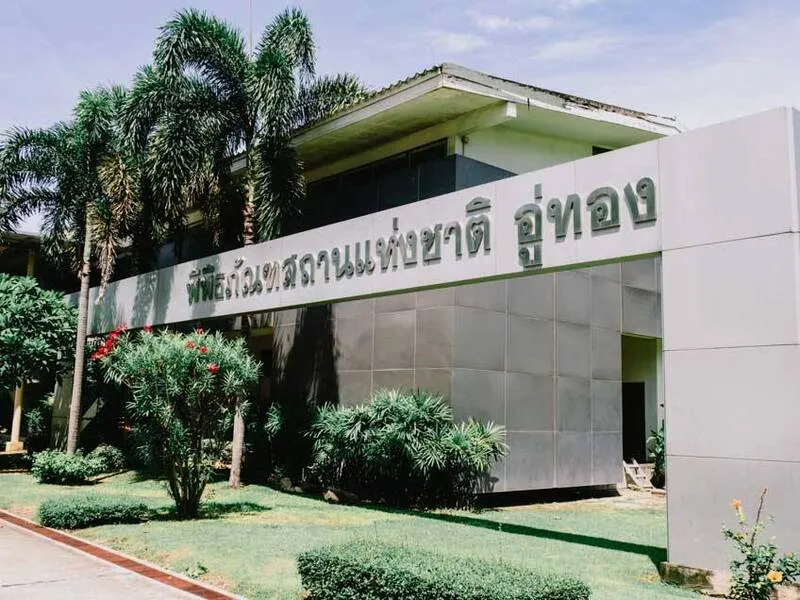
U Thong National Museum
Open Days: Wednesday – Sunday and National Holidays
Opening Hours: 09.00 – 16.00
U Thong National Museum in Suphan Buri Province is one of the most important archaeological, historical, and cultural learning centers in western central Thailand. Located on Malai Maen Road in U Thong District, next to the U Thong District Office and near U Thong Suksa Lai School, the museum preserves and displays ancient art objects, archaeological artifacts, and cultural evidence discovered in the ancient city of U Thong and surrounding areas. For foreign travelers, this museum is one of the best starting points for understanding the deep history of Suphan Buri, the Dvaravati culture, and the development of early urban communities in central Thailand.
U Thong is one of the most significant ancient cities in Thailand. Archaeological evidence suggests that the area was occupied for a long period, from prehistoric communities to the Dvaravati period and later historical phases. The city contains evidence of settlement, moats, earthen ramparts, religious objects, Buddha images, votive tablets, beads, ornaments, pottery, and artifacts that reflect both local development and long-distance cultural exchange. U Thong was not only a local settlement; it was a meaningful urban center connected with trade, Buddhism, craftsmanship, and wider cultural networks.
The museum makes this complex history easier to understand. Instead of presenting artifacts as isolated old objects, U Thong National Museum arranges them into a story of human development in the region. Visitors can follow the transition from prehistoric settlement to the rise of Dvaravati culture, when Buddhism, art, trade, and external influences became increasingly important. This structure helps visitors see how U Thong developed from early communities into a significant cultural and religious center.
The museum is divided into 2 main exhibition buildings and an outdoor area. Building 1 presents the discovery of ancient U Thong, including prehistoric evidence and Dvaravati culture, as well as Dvaravati-period Buddha images and important religious objects. Building 2 presents ethnographic displays and beads discovered in U Thong from prehistoric times through the Dvaravati period. The outdoor area includes a Lao Song-style house, presenting the culture, traditions, dress, tools, and everyday objects of the Lao Song community, an important ethnic group in Suphan Buri Province.
Building 1 is the best place to begin the visit because it introduces the broader historical context of U Thong. The prehistoric section shows that before U Thong became a major Dvaravati-period city, people had already lived in this area, used tools, made ornaments, produced pottery, and interacted with the local environment. These finds reveal that the roots of human settlement in Suphan Buri are much older than the historical cities recorded in later documents.
The Dvaravati section is one of the museum’s most important parts. Dvaravati culture played a major role in central Thailand between approximately the 6th and 11th centuries CE. It was associated with Buddhism, Indian cultural influence, artistic production, and urban networks. U Thong provides important evidence for understanding this period because it contains religious art, artifacts, and settlement traces that point to its role as a significant center. Visitors can see how local communities adopted and adapted Buddhism and artistic styles while maintaining their own regional identity.
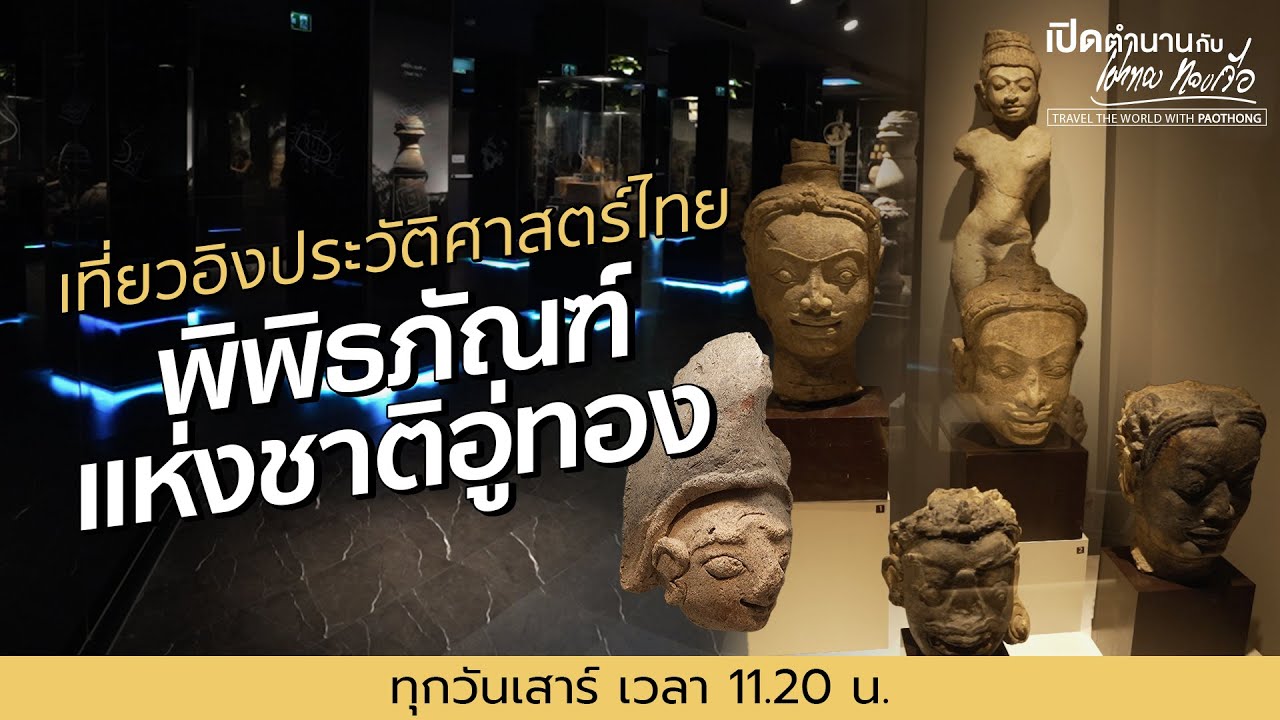
Dvaravati-period Buddha images are among the museum’s highlights. These objects show how Buddhism was expressed through local artistic forms in early central Thailand. The calm facial expression, balanced body form, and religious symbolism of Dvaravati art help visitors understand the spiritual and artistic life of the time. For foreign travelers unfamiliar with Thai art history, this section provides a clear introduction to one of the earliest Buddhist art traditions in the region.
Another important highlight is the bead collection. Beads may be small objects, but they are highly valuable for understanding ancient trade, craft, beauty, social meaning, and exchange networks. The beads found in U Thong help explain how the city was connected with wider regional and possibly long-distance trade systems. Some beads reflect local craftsmanship, while others may indicate contact with external cultural spheres. Building 2’s bead display therefore opens a window into the movement of goods, people, and ideas in ancient Southeast Asia.
Building 2 also includes ethnographic content that connects the ancient city with the living cultural diversity of Suphan Buri. The museum does not present U Thong only as an archaeological site. It also introduces later communities and ethnic groups, especially Lao Song or Thai Song Dam people. This approach helps visitors understand that Suphan Buri’s heritage includes both ancient objects and living cultural traditions.
The outdoor Lao Song-style house is one of the museum’s most engaging features. It allows visitors to see how architecture, clothing, tools, and daily life reflect ethnic identity. The house is not merely a decorative structure; it is an interpretive space that helps explain how people lived, worked, dressed, cooked, and organized domestic life. This gives the museum a human dimension beyond archaeology and religious art.
One of the strengths of U Thong National Museum is that it serves as a gateway to the ancient city of U Thong. Visitors who explore the museum before visiting nearby archaeological sites will understand the landscape much more clearly. Ancient moats, earthen ramparts, temple remains, and religious sites become more meaningful when seen after learning about the artifacts and historical context inside the museum. A museum-first itinerary is therefore highly recommended for anyone who wants a deeper travel experience.
For students and educational groups, the museum is especially useful because it covers archaeology, history, religious art, trade, ethnic culture, and local identity in one place. Dvaravati culture can seem abstract when studied only from textbooks, but seeing actual artifacts, Buddha images, beads, pottery, and a reconstructed ethnic house makes the subject easier to understand. The museum transforms historical knowledge into a place-based learning experience.
For general travelers, U Thong National Museum adds depth to a trip to U Thong District. The district is known for Buddhist sites, mountains, the large seated Buddha image known as Phra Phuttha Pushaya Khiri Si Suvarnabhumi, local cafes, and nature areas. The museum explains why this district matters historically and helps visitors appreciate that U Thong is not just a scenic or religious destination, but one of Thailand’s most important ancient cultural landscapes.
A recommended way to visit the museum is to begin with Building 1, then continue to Building 2, and finish at the outdoor Lao Song house. This sequence allows visitors to move from prehistoric evidence to Dvaravati urban culture, then to beads, ethnography, and living cultural traditions. The visit becomes a layered journey from ancient settlement to local community life.
Visitors interested in Buddhism and art should spend extra time with the Dvaravati Buddha images and religious objects. These objects help explain the arrival and development of Buddhism in early Thailand. Visitors interested in ancient trade should pay close attention to the bead collection. Those interested in ethnic culture should explore the Lao Song house and ethnographic displays carefully. Together, these sections show that U Thong’s importance lies in both archaeology and people.
U Thong National Museum can easily be combined with nearby sites such as Ancient U Thong City, Wat Khao Phra Si Sanphetchayaram, Phra Phuttha Pushaya Khiri Si Suvarnabhumi, Phu Muang National Park, Wat Khao Tham Thiam, Na Hia Chai Thai Farmer’s Way of Life and Spirit Learning Center, and Nong Ratchawat Archaeological Site. A full-day route can include both the museum and several outdoor historical or cultural sites, giving visitors a complete understanding of U Thong’s ancient and modern identity.
Getting There is convenient by private car or rental vehicle. From Bangkok, take Highway 340 toward Suphan Buri and continue to U Thong District via Malai Maen Road. The museum is located next to the U Thong District Office and near U Thong Suksa Lai School. From Suphan Buri town, the distance to U Thong District is about 30 kilometers. Travelers using public transport can get off in U Thong town and continue by local transport to the museum.
The museum is open Wednesday to Sunday and on national holidays, from 09.00 to 16.00. It is closed on Monday and Tuesday. Admission follows the national museum rate. Group visitors, especially schools or study groups, should contact the museum in advance to coordinate the visit. A guided explanation or staff assistance can make the museum experience much more meaningful, especially for visitors who want to understand the relationship between artifacts, ancient U Thong City, and Dvaravati culture.
U Thong National Museum is therefore an essential destination for anyone who wants to understand Suphan Buri in depth. It explains the development of U Thong from prehistoric settlement to Dvaravati culture and connects this ancient past with ethnic heritage and local identity. The museum does not merely preserve ancient objects; it helps visitors see U Thong as a living historical landscape shaped by people, trade, religion, art, and cultural memory. For international travelers, it provides a clear and meaningful introduction to one of the most important ancient cities in central Thailand.
| Name | U Thong National Museum |
| Location | Malai Maen Road, U Thong Subdistrict, U Thong District, Suphan Buri Province |
| Address | Malai Maen Road, U Thong District, Suphan Buri 72160, Thailand |
| Highlights | A museum presenting ancient U Thong, prehistoric evidence, Dvaravati culture, Dvaravati Buddha images, ancient beads, ethnographic displays, and an outdoor Lao Song-style house |
| History | A national museum collecting and displaying ancient art objects and archaeological artifacts from U Thong and nearby areas, showing human development from prehistoric times to the Dvaravati period |
| Key Evidence | Dvaravati Buddha images, votive tablets, ancient artifacts from U Thong, beads, ornaments, pottery, tools, and archaeological evidence found in the area |
| Distinctive Features | The museum is divided into 2 exhibition buildings and an outdoor area, linking ancient U Thong archaeology with Lao Song ethnic culture in Suphan Buri Province |
| Travel Information | From Bangkok, take Highway 340 toward Suphan Buri and continue to U Thong District via Malai Maen Road. The museum is located next to the U Thong District Office and near U Thong Suksa Lai School. |
| Current Status | Open as a national museum and learning center for archaeology, history, art, culture, and ethnic heritage under the Fine Arts Department |
| Open Days | Wednesday – Sunday and National Holidays; Closed Monday – Tuesday |
| Opening Hours | 09.00 – 16.00 |
| Fees | Thai Visitors 30 Baht / Foreign Visitors 200 Baht |
| Facilities | Two exhibition buildings, outdoor display area, Lao Song-style house, artifact galleries, ethnographic room, restrooms, parking area, and group visit facilities |
| Main Areas / Zones | 1. Building 1: Prehistoric U Thong Zone 2. Building 1: Dvaravati Culture Zone 3. Dvaravati Buddha Images and Religious Objects Zone 4. Building 2: Ethnographic Room 5. Building 2: U Thong Bead Collection Zone 6. Ancient Artifacts from U Thong and Nearby Areas Zone 7. Outdoor Lao Song-Style House 8. Lao Song Culture, Dress, Traditions, and Daily Tools Zone |
| Caretaker | Fine Arts Department / U Thong National Museum |
| Main Contact Number | 035-551021 |
| Official Website / Official Page | Fine Arts Department Website: U Thong National Museum / Facebook Page: U Thong National Museum |
| Nearby Tourist Attractions | 1. Ancient U Thong City, about 1 km 2. Wat Khao Phra Si Sanphetchayaram, about 2 km 3. Phra Phuttha Pushaya Khiri Si Suvarnabhumi / Luang Pho U Thong, about 4 km 4. Phu Muang National Park, about 7 km 5. Wat Khao Tham Thiam, about 8 km 6. Thai Farmer’s Way of Life and Spirit Learning Center, Na Hia Chai, about 26 km 7. Nong Ratchawat Archaeological Site, about 43 km |
| Nearby Restaurants | 1. Local Restaurants in U Thong Market, about 1 km 2. The Little Hut Cafe U Thong, about 2 km 3. GreenBough Cafe U Thong, about 5 km, Tel. 064-661-4936 4. Restaurants Around Wat Khao Phra Si Sanphetchayaram, about 2 km 5. Restaurants Around Phra Phuttha Pushaya Khiri Si Suvarnabhumi, about 4 km 6. Restaurants Along the U Thong – Suphan Buri Route, about 5 km |
| Nearby Accommodations | 1. Prem Mansion U Thong, about 1 km, Tel. 099-481-8899, 090-880-9997 2. U Thong Hotel, about 2 km 3. Tolopoti Hotel & Resort, about 3 km, Tel. 082-333-3308 4. Hotels and Resorts in U Thong District, about 3 km 5. Accommodations Along the U Thong – Suphan Buri Route, about 10 km 6. Hotels in Suphan Buri Town, about 30 km |
Frequently Asked Questions (FAQ)
Q: Where is U Thong National Museum located?
A: It is located on Malai Maen Road in U Thong District, Suphan Buri Province, next to the U Thong District Office and near U Thong Suksa Lai School.
Q: What does U Thong National Museum display?
A: The museum displays ancient art objects, archaeological artifacts, prehistoric evidence, Dvaravati-period Buddha images, ancient beads, ethnographic materials, and Lao Song cultural displays.
Q: When is U Thong National Museum open?
A: It is open Wednesday to Sunday and on national holidays from 09.00 to 16.00, and is closed on Monday and Tuesday.
Q: How much is the admission fee?
A: Admission is 30 baht for Thai visitors and 200 baht for foreign visitors.
Q: What is displayed in Building 1?
A: Building 1 presents the discovery of ancient U Thong, prehistoric evidence, Dvaravati culture, and Dvaravati-period Buddha images and religious objects.
Q: What is displayed in Building 2?
A: Building 2 presents ethnographic displays and beads discovered in U Thong from prehistoric times through the Dvaravati period.
Q: What can visitors see in the outdoor area?
A: The outdoor area features a Lao Song-style house displaying Lao Song culture, traditions, clothing, tools, and everyday objects.
Q: What nearby attractions can be visited with U Thong National Museum?
A: Nearby attractions include Ancient U Thong City, Wat Khao Phra Si Sanphetchayaram, Phra Phuttha Pushaya Khiri Si Suvarnabhumi, Phu Muang National Park, Wat Khao Tham Thiam, and Na Hia Chai learning center.
Tel : 035551021, 035551040
 Tel : 035551021, 035551040
 Category: ●Art, Culture and Heritage
 Group: ●Museums
Last Update : 5 MonthAgo
 Last Update : 5 MonthAgo
 Click to Access the Navigation Map GPS
U Thong National Museum Map
Recommend

 Historical Sites and Monuments(2)
 Landmarks and Memorials(4)
 Art, Craft Centres, Tradition(2)
Museums(5)
 Educational Places
 Educational Gardens, Farm(4)
 Training Center(2)
 Places of Worship
 Temple(36)
 Other Sacred Sites(4)
 Suburban Living
 Village, Community(6)
 Local Market(7)
 Floating Market(1)
 Nature and Wildlife
 National Parks and Marine Reserves(4)
 Mountain (Doi)(2)
 Dam, Reservoir, Lake(3)
 Caves(1)
 Bays and Beaches(1)
 Entertainment and Agricultural
 Farms, Parks and Ecotourism(6)
 Theater(1)
 Travel Articles, Recipes
 Travel Review, Food Review(1)


