
lovethailand home >Central Travel Attractions >Suphan Buri Travel Attractions >Song Phi Nong >Bang Ta Then > Wat Phai Rong Wua
TL;DR: Wat Phai Rong Wua is located at Bang Ta Then Subdistrict, Song Phi Nong District, Suphan Buri Province 72110, Thailand, open Daily, hours 08.00 – 17.00.
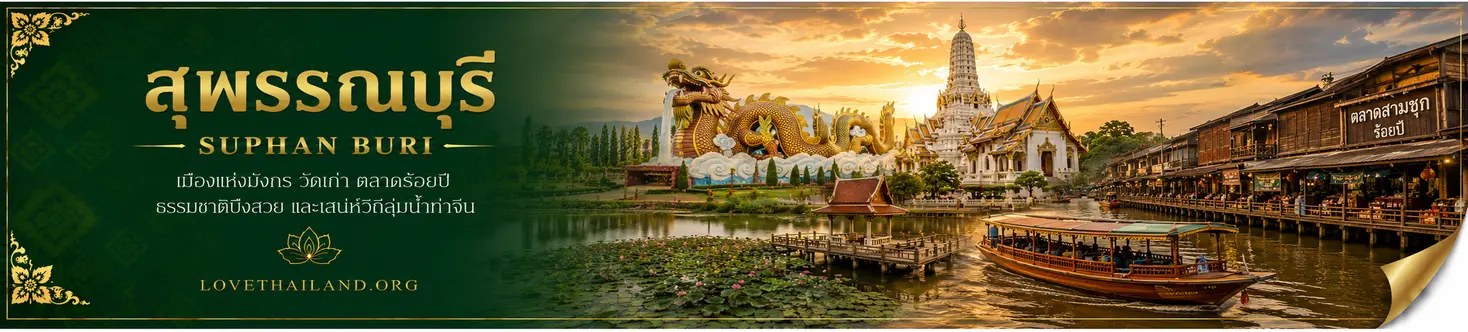
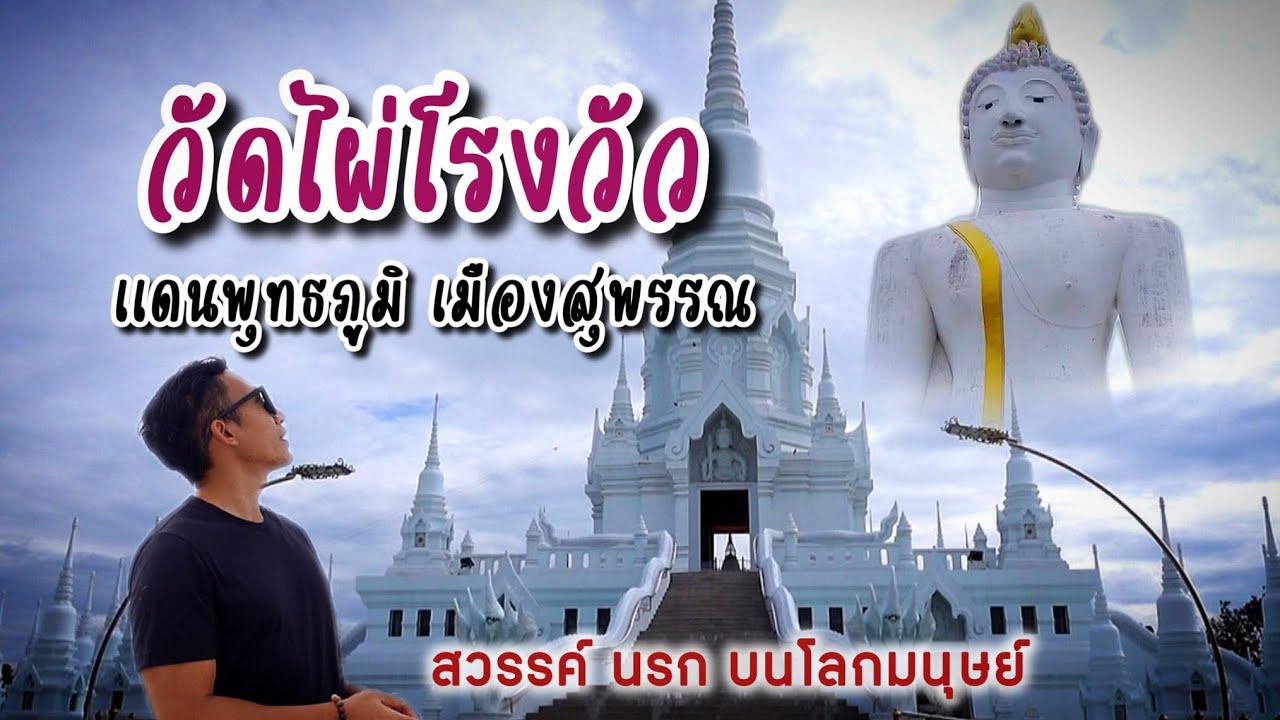
Wat Phai Rong Wua

Open Days: Daily
Opening Hours: 08.00 – 17.00
Wat Phai Rong Wua in Suphan Buri Province, also known as Wat Photharam, is one of the most remarkable Buddhist temples in Song Phi Nong District. Located in Bang Ta Then Subdistrict, about 43 kilometers from Suphan Buri town and around 70 kilometers from Bangkok, the temple is widely known for its vast grounds, giant Buddha images, large-scale Buddhist structures, and dramatic sculptural scenes that illustrate Buddhist teachings about merit, sin, heaven, hell, and the life of the Buddha. For travelers who want to see a temple that functions almost like an open-air Buddhist learning park, Wat Phai Rong Wua is one of the most distinctive destinations in Suphan Buri.
The temple was established in 1926 and later became especially well known through the work of Phra Khru Uthai Phakathon, better known as Luang Pho Khom. He played a major role in developing the temple into a large religious complex filled with monumental Buddhist art. Under his initiative, Wat Phai Rong Wua became a place where people could come not only to worship, but also to learn Buddhist teachings visually through statues, symbolic structures, and detailed scenes from Buddhist cosmology.
The name Wat Phai Rong Wua reflects the rural landscape of the past. “Phai” refers to bamboo, while “rong wua” suggests a place where cattle were kept or rested. The name preserves the memory of an agricultural community before the temple became a major religious attraction. This makes Wat Phai Rong Wua a good example of how a local rural temple can grow into a nationally recognized Buddhist destination while still keeping traces of its local identity.
The temple’s most famous feature is Phra Phuttha Khodom, a large bronze Buddha image created through the faith and vision of Luang Pho Khom. The image is one of the main worship points in the temple. Standing before it, visitors can feel the scale, solemnity, and devotional power that define Wat Phai Rong Wua. The image is not only a monumental sculpture; it is a symbol of faith and the long effort to create a temple that could inspire large numbers of people.
Another important highlight is Phra Kakusandho, a very large white stucco Buddha image in the meditation posture. Its size and open-air setting make it one of the most memorable landmarks of the temple. Many visitors come here to pay respect, take photographs, and appreciate the scale of Buddhist art. Together with Phra Phuttha Khodom, Phra Kakusandho gives Wat Phai Rong Wua its powerful visual identity.
The temple also contains replicas of the Four Buddhist Holy Sites, representing the places where the Buddha was born, attained enlightenment, gave his first sermon, and entered final nirvana. These sites are originally associated with Lumbini, Bodh Gaya, Sarnath, and Kushinagar in India and Nepal. By creating replicas within the temple, Wat Phai Rong Wua allows Thai visitors and international travelers to understand the major events of the Buddha’s life without traveling abroad.
One of the most striking areas of the temple is the section representing hell and heaven. The hell scenes are vivid, direct, and sometimes unsettling. They show the consequences of harmful actions according to Buddhist moral teaching and Thai folk belief. These sculptures are intended to make visitors reflect on karma, ethical behavior, and the results of one’s actions. They are not merely decorative or frightening displays, but visual moral lessons.
The heaven scenes provide the opposite message, showing the rewards of merit, good conduct, generosity, and moral living. Seeing the hell and heaven sections together helps visitors understand the Buddhist teaching that actions have consequences. For families, teachers, and young visitors, this part of the temple can be an accessible way to discuss moral choices, compassion, and responsibility.
Wat Phai Rong Wua is also known for Phra Wihan Roi Yot, the Hundred-Spired Viharn. Its many spires create an impressive and unusual architectural form. The structure reflects the temple’s characteristic approach: large, symbolic, and visually memorable. It gives visitors the feeling of walking through a large Buddhist city rather than a small rural temple.
Another symbolic feature is the large bronze Dhamma Wheel. In Buddhism, the Dhamma Wheel represents the turning of the Buddha’s teaching and the spreading of the Dhamma. Its presence in the temple reinforces the idea that Wat Phai Rong Wua was designed not only for worship but also for teaching. The temple’s large-scale structures are meant to communicate Buddhist ideas to ordinary visitors in clear visual form.
Near the large Buddha images, visitors can also see a giant gong and alms bowl. The gong is associated with sound, mindfulness, and temple life, while the alms bowl symbolizes the monastic way of life and the relationship between monks and laypeople. Enlarging these objects makes them easier for visitors to notice and understand, especially those unfamiliar with Buddhist monastic culture.
Luang Pho Khom remains the key figure behind the temple’s identity. His vision was not simply to build large objects, but to create a religious landscape that ordinary people could learn from. The giant Buddha images, the Buddhist holy site replicas, the heaven and hell scenes, and the many symbolic structures all show an effort to make Buddhist teaching visible and memorable.
Visitors should allow at least 1 to 2 hours to explore Wat Phai Rong Wua properly. The temple grounds are spacious, and many attractions are outdoors. A good route is to begin with Phra Phuttha Khodom and Phra Kakusandho, then continue to the replicas of the Four Buddhist Holy Sites, the heaven and hell sections, the Hundred-Spired Viharn, the Dhamma Wheel, and the market or shop areas inside the temple.
Wat Phai Rong Wua is suitable for many types of visitors: Buddhist pilgrims, families, students, photographers, cultural travelers, and foreign visitors interested in Thai Buddhism. Its strength lies in its ability to communicate Buddhist ideas through powerful images. Even visitors who do not know much about Buddhism can understand the basic moral message of the temple through its sculptures and layout.
For foreign travelers, Wat Phai Rong Wua offers a very different experience from temples known mainly for refined architecture or royal history. This temple is expressive, dramatic, educational, and accessible. It shows how Thai Buddhism can be communicated through public art, large-scale sculpture, storytelling, and visual examples of karma, heaven, and hell.
Getting there is convenient by private car. From Bangkok, travelers can use the Taling Chan–Suphan Buri route. Before reaching the Lat Bua Luang junction, turn left toward Wat Phai Rong Wua. Travelers can also use Highway 3422 around kilometer markers 18–19. The temple is about 70 kilometers from Bangkok, making it possible to visit as a one-day trip.
Another route from Bangkok is via Phet Kasem Road, Highway 4, toward Nakhon Pathom, or via the Pinklao–Nakhon Chai Si route, Highway 338. After reaching the Nakhon Chai Si junction, continue past the Ban Phaeo junction and toward the road leading to Suphan Buri. From the Nakhon Chai Si junction to the Suphan Buri junction, the distance is about 15.4 kilometers. This route is useful for travelers starting from western Bangkok or Nakhon Pathom.
From Suphan Buri town, drive toward Song Phi Nong District for about 43 kilometers and continue to Bang Ta Then Subdistrict. A private car is the most convenient option because the temple grounds are large and nearby attractions are spread across the district. Travelers can combine the temple with Bang Li Market, Wat Thap Kradan, Wat Song Phi Nong, U Thong National Museum, or Sam Chuk 100-Year Market.
The best time to visit is in the morning or late afternoon. Many areas are outdoors, and the weather can be hot during midday. Visitors should bring a hat, drinking water, and comfortable walking shoes. Families with children or elderly visitors should plan the walking route carefully and take breaks when needed.
Visitors should dress modestly and behave respectfully. Although some areas resemble an open-air sculpture park, the entire site remains a Buddhist temple. Avoid climbing on statues, speaking loudly in worship areas, littering, or treating religious sculptures as amusement objects. Respectful behavior helps preserve the temple as both a sacred place and a cultural learning site.
There are shops, food stalls, and market areas inside or near the temple, making it easy to spend more time on site. Nearby local restaurants and cafés in Song Phi Nong District also allow visitors to plan a half-day or full-day trip. The temple works well for those traveling from Bangkok who want a destination that combines merit-making, unusual Buddhist art, local food, and rural scenery.
In summary, Wat Phai Rong Wua is one of the most distinctive temples in Suphan Buri Province. Its highlights include giant Buddha images, Phra Phuttha Khodom, Phra Kakusandho, replicas of the Four Buddhist Holy Sites, heaven and hell sculptures, the Hundred-Spired Viharn, the large Dhamma Wheel, giant gong and alms bowl, and the vision of Luang Pho Khom. For travelers seeking a temple that combines faith, scale, visual storytelling, and Buddhist moral teaching, Wat Phai Rong Wua is a destination worth adding to a Suphan Buri itinerary.
| Name | Wat Phai Rong Wua / Wat Photharam |
| Location | Bang Ta Then Subdistrict, Song Phi Nong District, Suphan Buri Province 72110, Thailand |
| Highlights | Phra Phuttha Khodom, Phra Kakusandho, replicas of the Four Buddhist Holy Sites, heaven and hell sculpture zones, Hundred-Spired Viharn, large Dhamma Wheel, giant gong and alms bowl, and a large open-air Buddhist learning environment |
| History | Established in 1926 and later developed significantly by Phra Khru Uthai Phakathon, known as Luang Pho Khom, who initiated many large Buddhist structures within the temple. |
| Name Origin | The name reflects the former rural landscape associated with bamboo groves and cattle resting areas before the temple became a major Buddhist destination. |
| Distinctive Features | A large Buddhist temple with many monumental statues and structures designed to teach Buddhist history, karma, merit, sin, heaven, and hell through visual storytelling |
| Important Objects And Areas | Phra Phuttha Khodom, Phra Kakusandho, Four Holy Sites replicas, hell zone, heaven zone, Hundred-Spired Viharn, Dhamma Wheel, giant gong and alms bowl, temple market, and merit-making areas |
| Important Figure | Phra Khru Uthai Phakathon, or Luang Pho Khom, the monk who played a major role in developing the temple and building its large Buddhist structures |
| Travel Information | From Bangkok, use the Taling Chan–Suphan Buri route and turn left before Lat Bua Luang junction, or use Highway 3422 around kilometer markers 18–19. From Suphan Buri town, the temple is about 43 km away. |
| Current Status | Open for worship, merit-making, sightseeing, and walking through the Buddhist sculpture and learning areas during opening hours |
| Open Days | Daily |
| Opening Hours | 08.00 – 17.00 |
| Fees | No admission fee |
| Facilities | Parking areas, worship areas, temple market, food stalls, restrooms, walking areas, and open-air sculpture zones |
| Main Areas / Zones | Phra Phuttha Khodom Zone Phra Kakusandho Zone Four Buddhist Holy Sites Replica Zone Heaven And Hell Sculpture Zone Hundred-Spired Viharn Zone Dhamma Wheel, Giant Gong And Alms Bowl Zone Temple Market And Local Product Zone |
| Main Contact Number | 035-461-561 |
| Nearby Tourist Attractions | 1. Bang Li Market, about 12 km 2. Wat Thap Kradan, about 16 km 3. Wat Song Phi Nong, about 18 km 4. U Thong National Museum, about 28 km 5. Sam Chuk 100-Year Market, about 42 km |
| Nearby Restaurants | 1. Baan Rim Na Cafe, about 1 km, Tel. 081-936-6681 2. The Grace Krua Rim Nam, about 3.3 km 3. Khanom Pia A. Prasert, about 4.7 km 4. Krua Lung Chit, about 5.1 km 5. Lung Dam Kung Pen, about 5.4 km |
| Nearby Accommodations | 1. Ruan Thai Home Resort, about 0.4 km 2. Baan Yudee Thaweesap, about 4.3 km 3. Sak Siam Lakeside Resort, about 8 km 4. D.S. Resort, about 10 km 5. Hotels And Resorts In Song Phi Nong District, about 12–18 km |
Frequently Asked Questions (FAQ)
Q: Where is Wat Phai Rong Wua located?
A: Wat Phai Rong Wua is located in Bang Ta Then Subdistrict, Song Phi Nong District, Suphan Buri Province, about 43 km from Suphan Buri town and around 70 km from Bangkok.
Q: What is Wat Phai Rong Wua famous for?
A: The temple is famous for its giant Buddha images, Phra Phuttha Khodom, Phra Kakusandho, replicas of the Four Buddhist Holy Sites, heaven and hell sculpture zones, Hundred-Spired Viharn, and large Dhamma Wheel.
Q: When was Wat Phai Rong Wua established?
A: Wat Phai Rong Wua was established in 1926 and later developed significantly by Luang Pho Khom.
Q: Why is Phra Phuttha Khodom important?
A: Phra Phuttha Khodom is a large bronze Buddha image created through the initiative of Luang Pho Khom and remains one of the most important worship points in the temple.
Q: Who should visit Wat Phai Rong Wua?
A: The temple is suitable for Buddhist pilgrims, families, students, photographers, cultural travelers, and foreign visitors interested in Thai Buddhist art and moral storytelling.
Q: What are the opening hours of Wat Phai Rong Wua?
A: Wat Phai Rong Wua is open daily from 08.00 to 17.00.
Q: Is there an admission fee for Wat Phai Rong Wua?
A: No. Wat Phai Rong Wua does not charge an admission fee for general visits.
Q: What nearby attractions can be visited with Wat Phai Rong Wua?
A: Nearby attractions include Bang Li Market, Wat Thap Kradan, Wat Song Phi Nong, U Thong National Museum, and Sam Chuk 100-Year Market.
 Category: ●Places of Worship
 Group: ●Temple
Last Update : 5 MonthAgo
 Last Update : 5 MonthAgo
 Click to Access the Navigation Map GPS
Wat Phai Rong Wua Map
Recommend

 Art, Culture and Heritage
 Historical Sites and Monuments(2)
 Landmarks and Memorials(4)
 Art, Craft Centres, Tradition(2)
 Museums(5)
 Educational Places
 Educational Gardens, Farm(4)
 Training Center(2)
Temple(36)
 Other Sacred Sites(4)
 Suburban Living
 Village, Community(6)
 Local Market(7)
 Floating Market(1)
 Nature and Wildlife
 National Parks and Marine Reserves(4)
 Mountain (Doi)(2)
 Dam, Reservoir, Lake(3)
 Caves(1)
 Bays and Beaches(1)
 Entertainment and Agricultural
 Farms, Parks and Ecotourism(6)
 Theater(1)
 Travel Articles, Recipes
 Travel Review, Food Review(1)


