
lovethailand home >Central Travel Attractions >Suphan Buri Travel Attractions >Muang Suphan Buri >Rua Yai > Wat Phra Si Rattana Mahathat
TL;DR: Wat Phra Si Rattana Mahathat is located at Somphan Khong Road, Rua Yai Subdistrict, Mueang Suphan Buri District, Suphan Buri Province, open Daily, hours 08.00 – 17.00.
Wat Phra Si Rattana Mahathat
Open Days: Daily
Opening Hours: 08.00 – 17.00
Wat Phra Si Rattana Mahathat in Suphan Buri Province is one of the most important historic temples in the old city of Suphan Buri. Located on Somphan Khong Road, about 300 meters from Malaiman Road, in Rua Yai Subdistrict on the western side of the Suphan Buri River, the temple was once a central sacred site of ancient Suphan Phum. With a history of at least 600 years, it preserves one of the province’s most significant ancient prangs and is closely associated with Phra Phong Suphan, one of Thailand’s most famous amulets in the Benjapakee group.
Wat Phra Si Rattana Mahathat is not simply an old temple in the city. It is a major historical landmark that helps visitors understand Suphan Buri as an ancient urban center. The temple stands in an area that once formed the heart of ancient Suphan Buri, on the western bank of the river that supported settlement, trade, religious life, and movement of people. The presence of a large sacred monument in this area shows that Suphan Phum was a city of considerable importance before and during the rise of Ayutthaya.
The central feature of the temple is the main prang, which served as the principal stupa of the temple and enshrined sacred relics of the Buddha. In Thai Buddhist tradition, a stupa or prang containing relics becomes a center of devotion where people come to pay respect, make merit, and remember the Buddha’s teachings. The prang at Wat Phra Si Rattana Mahathat therefore functioned not only as an architectural monument but also as the spiritual core of the old city.
Archaeologists and art historians have associated the prang with the U Thong-Suphan Phum artistic tradition and the early Ayutthaya period. Its construction method is especially important. The prang was built with brick using an older technique, including brickwork bonded with earth or clay and exterior plastering. This construction method reflects a building tradition that predates later Ayutthaya techniques and helps explain why the structure is valuable for the study of early central Thai architecture.
The main prang has suffered serious deterioration over time. Part of the damage came from illegal digging in search of valuables inside the crypt. This history is important because it reminds visitors that archaeological sites are not valuable only because of objects hidden inside them. The architecture, brickwork, layout, surrounding structures, and historical context are all part of the cultural heritage. Visitors should therefore view the site with care and respect, avoiding any climbing, touching, or behavior that could further damage the ancient structure.
The temple is also famous for the crypt of Phra Phong Suphan. Phra Phong Suphan is one of the most highly respected amulets from Suphan Buri and is included in the Benjapakee, the celebrated group of 5 classic Thai amulets. The Benjapakee group includes Phra Somdej from Wat Rakhang in Bangkok, Phra Nang Phaya from Phitsanulok, Phra Somdej or Phra Soom Kor from Kamphaeng Phet, Phra Rod from Lamphun, and Phra Phong Suphan from Suphan Buri. This connection gives Wat Phra Si Rattana Mahathat national significance in Thai amulet culture.
Phra Phong Suphan should be understood not only as a collectible amulet but also as part of an older religious practice. In many ancient temples, small votive tablets were created and placed within stupas or prangs to make merit, preserve Buddhist faith, and connect the community with sacred architecture. The fame of Phra Phong Suphan today continues to carry the name of Wat Phra Si Rattana Mahathat far beyond Suphan Buri, linking the temple with Thai devotion, local identity, and the history of Buddhist material culture.
The architectural form of the main prang is rich in detail. The Fine Arts Department describes the prang as a brick structure with an outer plaster surface, a base formed as layered lotus-molding elements, and a square indented plan rising in receding tiers to support the main chamber. These details reflect sophisticated craftsmanship and a symbolic architectural idea in which the prang represents a sacred vertical center. The monument was designed not only to be seen but to express religious meaning through form, height, and proportion.
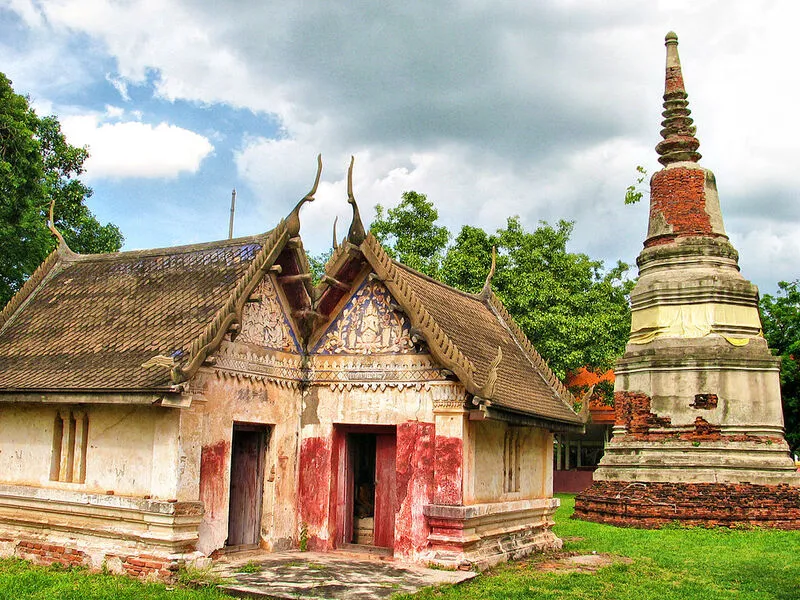
The temple compound includes other important archaeological elements. These include 2 octagonal stupas on the eastern side of the prang, an ordination hall, a small viharn, remains of subsidiary stupas on the western side, and sandstone Buddha images housed in the viharn in front of the prang. These elements show that the temple was once a large and well-organized religious complex. To understand the site properly, visitors should look beyond the main prang and observe the entire layout of the temple area.
Wat Phra Si Rattana Mahathat was an important temple of ancient Suphan Phum, a city deeply connected with the historical development of central Thailand. Its role as a city temple suggests that it was linked with religious authority, community identity, and the political importance of the city. For foreign travelers, the temple provides a valuable window into the layered history of Suphan Buri before it became a modern provincial town.
The sacred relics once enshrined in the prang are central to the temple’s spiritual meaning. In Buddhist practice, relics represent the presence of the Buddha and create a focus for devotion. A prang built to enshrine relics becomes a sacred center that draws people into acts of worship and remembrance. Even though the monument has deteriorated, its religious meaning remains clear through its name, form, and continued importance in local memory.
The weathered condition of the prang gives the temple a powerful historical atmosphere. Visitors can see exposed brick, traces of plaster, the indented base, and structural remains that speak of centuries of change. This kind of beauty is different from newly restored temples. It is a beauty of age, survival, and historical evidence. The prang invites visitors to slow down, observe carefully, and imagine the role of the temple when Suphan Buri was an important ancient city.
Wat Phra Si Rattana Mahathat is especially suitable for a cultural and historical itinerary in Suphan Buri. Visitors can begin here to understand the ancient city center and the origin of Phra Phong Suphan, then continue to Wat Phra Rup to see the Nen Kaeo reclining Buddha and the wooden Buddha footprint, Wat Khae and Khum Khun Phaen for local legends, Wat Phra Loi for the floating Buddha story and fish sanctuary, and Wat Pa Lelai Worawihan for another major sacred image of the province.
For travelers interested in Thai amulets, the temple is a must-visit site. Seeing the actual place where the famous Phra Phong Suphan originated allows visitors to understand amulets within their proper historical and religious context. They are not merely objects of collection. They are part of a temple, a city, a sacred crypt, and the wider tradition of making votive tablets to support Buddhism. This context gives the amulet tradition greater depth and meaning.
The atmosphere of the temple is solemn and historical. It is not a modern decorative temple designed mainly for photography. Instead, it is a place where the weight of time can still be felt in the brickwork, broken surfaces, open spaces, and remains around the prang. Morning and late afternoon are good times to visit, when the light makes the old brick textures more visible and the weather is more comfortable for walking.
Getting There is convenient because the temple is located in Mueang Suphan Buri District. From Malaiman Road, turn into Somphan Khong Road for about 300 meters. The temple stands on the western side of the Suphan Buri River. It is easy to include in a city itinerary together with Wat Phra Rup, Wat Khae, Wat Phra Loi, the Dragon Descendants Museum, the City Pillar Shrine, and Suphan Buri National Museum.
Travelers coming from Bangkok can drive to Suphan Buri and visit the temple as part of a one-day cultural trip. Those without a private vehicle can travel to Suphan Buri town by bus or van and then continue by local transport. A private car or hired local vehicle is the most convenient option for visiting several temples in one route.
The best time to visit is in the morning or late afternoon. The site is partly open and the weather in Suphan Buri can be hot during the day. Visitors should bring drinking water, a hat, and comfortable walking shoes. A visit of 45 minutes to 1.5 hours is suitable for general travelers, while those interested in archaeology, architecture, or amulet history may want to spend longer.
Visitors should dress respectfully and behave appropriately, as the site is both a temple and an archaeological monument. The ancient prang and surrounding remains should not be climbed or touched unnecessarily. Nothing should be moved or removed from the site. Responsible behavior helps protect one of Suphan Buri’s most important cultural landmarks for future generations.
Wat Phra Si Rattana Mahathat is suitable for several types of travelers. History lovers can study the ancient city of Suphan Phum. Architecture enthusiasts can examine the early brick prang and related structures. Amulet collectors can understand the origin of Phra Phong Suphan. Families and students can use the temple as an outdoor learning site for Thai history and Buddhist art. For foreign travelers, it offers a meaningful and authentic experience in the heart of historic Suphan Buri.
Overall, Wat Phra Si Rattana Mahathat is one of the essential cultural destinations in Suphan Buri. Its main prang, sacred relic tradition, Phra Phong Suphan crypt, archaeological layout, and connection with the ancient city make it far more than a local temple. A visit here is a journey into the roots of Suphan Buri’s history, faith, and cultural identity.
| Name | Wat Phra Si Rattana Mahathat, Suphan Buri |
| Location | Somphan Khong Road, Rua Yai Subdistrict, Mueang Suphan Buri District, Suphan Buri Province |
| Address | Somphan Khong Road, Rua Yai Subdistrict, Mueang Suphan Buri District, Suphan Buri 72000, Thailand |
| Highlights | Main prang enshrining sacred relics of the Buddha, ancient city-center temple of Suphan Phum, and the origin of Phra Phong Suphan, one of Thailand’s Benjapakee amulets |
| History | An ancient city temple of Suphan Phum with a history of at least 600 years; the main prang reflects the U Thong-Suphan Phum and early Ayutthaya artistic tradition |
| Distinctive Features | Brick prang with earth-bonded brickwork, plastered exterior, layered lotus-molding base, indented square plan, and surrounding archaeological elements |
| Amulet Importance | The prang crypt is the origin of Phra Phong Suphan, one of the 5 highly revered Benjapakee amulets of Thailand |
| Travel Information | From Malaiman Road, turn into Somphan Khong Road for about 300 meters. The temple is on the western side of the Suphan Buri River and is easily reached from downtown Suphan Buri. |
| Current Status | Open to visitors as an important historic temple and archaeological site. The main prang shows deterioration from age and past illegal excavation. |
| Open Days | Daily |
| Opening Hours | 08.00 – 17.00 |
| Facilities | Temple grounds, archaeological walking area, worship area, and parking space around the temple |
| Main Areas / Zones | 1. Main prang enshrining sacred relics of the Buddha 2. Phra Phong Suphan crypt area within the prang 3. Two octagonal stupas east of the prang 4. Ordination hall and small viharn 5. Remains of subsidiary stupas west of the prang 6. Viharn in front of the prang housing sandstone Buddha images |
| Abbot / Caretaker | Phra Sri Rattanaviphusit |
| Nearby Tourist Attractions | 1. Wat Phra Rup, about 1 km 2. Wat Khae and Khum Khun Phaen, about 1 km 3. Wat Phra Loi, about 3 km 4. Dragon Descendants Museum and Suphan Buri City Pillar Shrine, about 3 km 5. Suphan Buri National Museum, about 3 km 6. Wat Pa Lelai Worawihan, about 4 km 7. Wat Phra Non, about 4 km |
| Nearby Restaurants | 1. Kuai Chap Chao Kao Na Wat Phra Si Rattana Mahathat, about 0.2 km 2. Playground Bistro, about 0.3 km 3. Reboot Coffee Room, about 0.3 km 4. Zaap Yok Krok Som Tam Suphan Buri, about 0.4 km 5. Ko Ae Ancient Pork Noodle Suphan Buri, about 0.4 km 6. Kopi Lang Rong Mai, about 0.5 km 7. Chom Duean Tharaburi Suphan Buri, about 0.5 km |
| Nearby Accommodations | 1. Sutharnlai Apartment, about 0.5 km 2. Lamoon Boutique Hotel, about 1.4 km 3. Lertthanee Hotel, about 2 km 4. Lertthanee Hotel Suphan Buri, about 2 km 5. Soi 4 Service Residence, about 2.1 km 6. Suphan Wanwan Resort & Lester Lounge, about 2.2 km 7. Sweet Hug Hotel, about 2.4 km |
Frequently Asked Questions (FAQ)
Q: Where is Wat Phra Si Rattana Mahathat in Suphan Buri located?
A: The temple is located on Somphan Khong Road, Rua Yai Subdistrict, Mueang Suphan Buri District, about 300 meters from Malaiman Road on the western side of the Suphan Buri River.
Q: Why is Wat Phra Si Rattana Mahathat important?
A: It was a major city temple of ancient Suphan Phum, has a history of at least 600 years, and contains the main prang that enshrined sacred relics of the Buddha.
Q: How is Phra Phong Suphan connected with this temple?
A: The crypt inside the main prang of Wat Phra Si Rattana Mahathat is the origin of Phra Phong Suphan, one of the 5 classic Benjapakee amulets of Thailand.
Q: What period does the main prang belong to?
A: The main prang reflects the U Thong-Suphan Phum and early Ayutthaya artistic tradition, with old brick construction techniques that are valuable for archaeological study.
Q: What can visitors see inside the temple?
A: Visitors can see the main prang, octagonal stupas, ordination hall, small viharn, remains of subsidiary stupas, and sandstone Buddha images in the viharn in front of the prang.
Q: How can visitors get to Wat Phra Si Rattana Mahathat?
A: From Malaiman Road, turn into Somphan Khong Road for about 300 meters. The temple is easily reached from downtown Suphan Buri by private car, local transport, or hired vehicle.
Q: What nearby attractions can be combined with this visit?
A: Nearby attractions include Wat Phra Rup, Wat Khae, Khum Khun Phaen, Wat Phra Loi, Wat Pa Lelai Worawihan, the Dragon Descendants Museum, and Suphan Buri National Museum.
 Category: ●Places of Worship
 Group: ●Temple
Last Update : 4 MonthAgo
 Last Update : 4 MonthAgo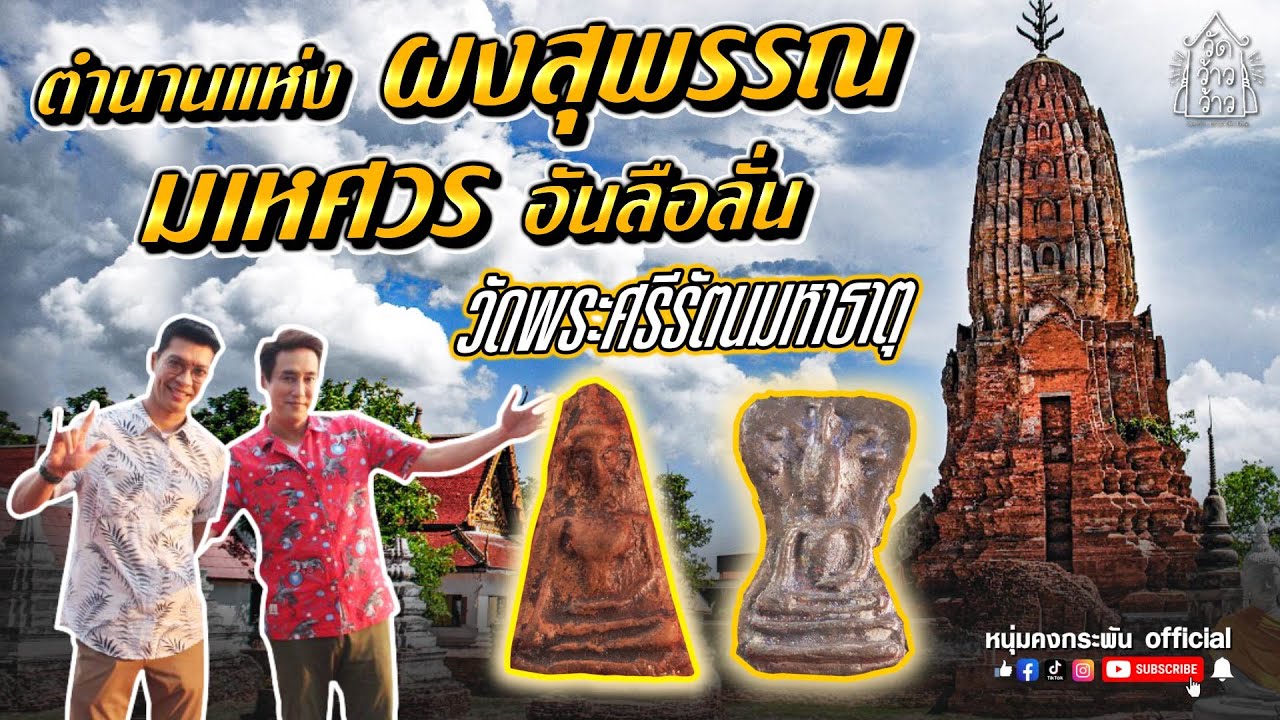
 Click to Access the Navigation Map GPS
Wat Phra Si Rattana Mahathat Map
Recommend

 Art, Culture and Heritage
 Historical Sites and Monuments(2)
 Landmarks and Memorials(4)
 Art, Craft Centres, Tradition(2)
 Museums(5)
 Educational Places
 Educational Gardens, Farm(4)
 Training Center(2)
Temple(36)
Training Center(2)
Temple(36)
 Other Sacred Sites(4)
 Suburban Living
 Village, Community(6)
 Local Market(7)
 Floating Market(1)
 Nature and Wildlife
 National Parks and Marine Reserves(4)
 Mountain (Doi)(2)
 Dam, Reservoir, Lake(3)
 Caves(1)
 Bays and Beaches(1)
 Entertainment and Agricultural
 Farms, Parks and Ecotourism(6)
 Theater(1)
 Travel Articles, Recipes
 Travel Review, Food Review(1)


