
lovethailand home >Central Travel Attractions >Suphan Buri Travel Attractions >Muang Suphan Buri >Rua Yai > Wat Pa Lelai Worawihan
TL;DR: Wat Pa Lelai Worawihan is located at Malai Maen Road, Rua Yai Subdistrict, Mueang Suphan Buri District, Suphan Buri Province, on the western side of the Suphan Buri River, open Daily, hours 08.00 – 18.00.
Wat Pa Lelai Worawihan
Open Days: Daily
Opening Hours: 08.00 – 18.00
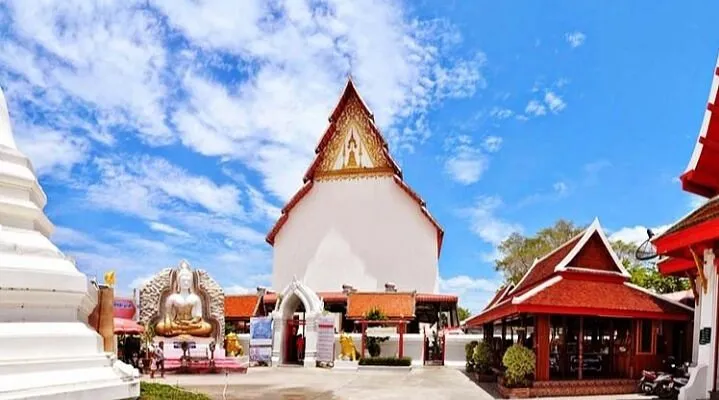
Wat Pa Lelai Worawihan is one of the most important Buddhist temples in Suphan Buri Province. Located on Malai Maen Road in Rua Yai Subdistrict, Mueang Suphan Buri District, on the western side of the Suphan Buri River, the temple is a third-class royal temple of the Worawihan type. For Thai visitors, it is one of the great spiritual landmarks of Suphan Buri. For foreign travelers, it is an excellent place to understand Thai Buddhism, local faith, ancient art, royal restoration history, and the cultural world of the Khun Chang Khun Phaen literary tradition in one destination.
The temple is widely known as the home of Luang Pho To, a large seated Buddha image in the Pa Lelai posture. This Buddha image is deeply respected by people of Suphan Buri and neighboring provinces. The temple is not only a place for worship, but also a historical and cultural landmark connected with the old city of Suphan Buri. Its location on Malai Maen Road makes it easy to combine with nearby attractions such as Wat Pratu San, the Old City Wall and City Gate, Suphan Buri City Pillar Shrine, Dragon Descendants Museum, Banharn-Jamsai Tower, and Suphan Buri National Museum.
Wat Pa Lelai Worawihan is believed to date back to the period when ancient Suphan Buri was a prosperous city. The Northern Chronicles mention that King Kathe assigned Mon Noi to restore Wat Pa Lelai after 1181 CE. This tradition reflects the long-standing importance of the temple. The temple also carries a strong connection with King Mongkut, Rama IV. When he was still a monk, he is believed to have discovered the temple during a forest pilgrimage. After ascending the throne, he later had the temple restored. The royal crown emblem between a pair of ceremonial umbrellas on the gable of the main vihara reflects this royal connection.
The spiritual center of the temple is Luang Pho To, the large Buddha image enshrined inside the tall vihara. The image is approximately 23.46 meters high and about 11.20 meters around. It is a Buddha image in the Pa Lelai posture, associated with the episode in which the Buddha stayed in the Parileyyaka forest and was attended by an elephant and a monkey. The image sits with both legs pendant, the left hand placed downward on one knee and the right hand turned upward in a gesture of receiving offerings. Its scale, posture, and atmosphere make it one of the most memorable Buddha images in central Thailand.
The Pa Lelai posture carries a special meaning. It represents retreat from conflict, peace in solitude, compassion, and the devotion of living beings toward the Buddha. In Thai Buddhist imagination, the episode reflects the power of serenity and the ability of the Dharma to inspire reverence even among animals. At Wat Pa Lelai, this symbolism is expressed through the monumental form of Luang Pho To, making the image both a sacred object and a visual lesson in Buddhist calmness.
Some scholars have suggested that Luang Pho To may originally have been a Buddha image in the First Sermon posture and may once have stood in an open-air setting. Large Buddha images from the pre-Ayutthaya and early Ayutthaya periods were often built in open spaces so they could be seen from far away. This interpretation gives the image additional art historical interest because it suggests that the present form of the temple may preserve traces of different historical phases, from ancient open-air worship to later vihara construction and royal restoration.
Inside the Buddha image, 36 relics of the Buddha are traditionally said to be enshrined. This makes Luang Pho To a highly sacred image for local devotees. Many visitors come to pay respect, make merit, ask for blessings, offer flowers and incense, and join temple festivals. The reverence for Luang Pho To is not only individual faith. It is a shared cultural memory of Suphan Buri, passed down through generations.
Every year, the temple holds the Luang Pho To worship festival twice, during the waxing 7th to 9th days of the 5th lunar month and again during the waxing 7th to 9th days of the 12th lunar month. These festivals include Buddhist ceremonies, merit-making, worship, local vendors, and the atmosphere of a traditional central Thai temple fair. For visitors, the festival period is a lively time to experience local devotion, community gatherings, food, and cultural activities around the temple.
Behind the temple is Khum Khun Chang, a large teak Thai-style house built according to the description of Khun Chang’s residence in the Thai literary classic Khun Chang Khun Phaen. Inside the house are displays related to the story, painted scenes, character imagery, photo spots, and cabinets showing old household objects such as partitions, bowls, jars, dishes, and traditional utensils. This area adds a literary and cultural dimension to the visit, allowing travelers to connect the temple with one of Thailand’s most important narrative traditions.
Khum Khun Chang makes Wat Pa Lelai more than a temple visit. It allows visitors to understand how Suphan Buri’s religious landscape is linked with literature, local memory, and traditional domestic life. Khun Chang Khun Phaen is strongly associated with Suphan Buri, and visiting this site after paying respect to Luang Pho To helps travelers see the relationship between faith, storytelling, architecture, and community identity.
Opposite the vihara and around the temple area, visitors will find local shops and souvenir stalls. These shops sell local products, snacks, souvenirs, and items for worship or merit-making. The area shows how a major temple can support local community life. Wat Pa Lelai is therefore not only a sacred place; it is also part of the local economy and everyday cultural life of Suphan Buri.
For visitors interested in Thai art, the temple deserves more time than a quick stop. The scale of Luang Pho To, the vihara, the royal crown emblem on the gable, and the temple layout all reflect different layers of Thai Buddhist art and history. Observing the posture of the Buddha image, the proportions of the vihara, and the devotional atmosphere inside the temple helps travelers understand the connection between faith, architecture, and local identity.
For international travelers, Wat Pa Lelai Worawihan is especially useful for understanding Buddhism as it is lived in Thailand. The temple combines a sacred Buddha image, royal restoration history, annual festivals, local shops, literary heritage, and active worship. This shows that Thai temples are not only historical monuments. They are living places where religion, memory, economy, culture, and community continue to meet.
Getting There is convenient by private car, rental vehicle, or local transport in Suphan Buri town. From Bangkok, take Highway 340 toward Suphan Buri, enter Mueang Suphan Buri District, and continue to Malai Maen Road in Rua Yai Subdistrict. The temple is located along the main road and is easy to find because the vihara housing Luang Pho To is large and prominent. From central Suphan Buri, the temple can be reached within a short drive and can be combined with other attractions in the old city area.
Visitors should dress modestly and behave respectfully inside the temple, especially in the vihara of Luang Pho To. Quiet behavior is recommended because many people come to pray, chant, and make merit. Photography should be done carefully and without disturbing worshippers. Respectful conduct helps preserve the sacred atmosphere of the temple and allows all visitors to experience the place properly.
A recommended route begins with paying respect to Luang Pho To, observing the vihara and its royal architectural details, visiting Khum Khun Chang behind the temple, and then walking through the local souvenir area. After that, travelers can continue to Wat Pratu San, the Old City Wall and City Gate, Suphan Buri City Pillar Shrine, Dragon Descendants Museum, Banharn-Jamsai Tower, or Suphan Buri National Museum. This creates a full cultural route through religion, literature, history, and local life.
Wat Pa Lelai Worawihan is therefore a must-visit destination in Suphan Buri. It brings together Buddhism, ancient art, royal history, local festivals, literary heritage, and community life. Luang Pho To remains the spiritual heart of the temple, while Khum Khun Chang connects the site with Thai literature. For both Thai and foreign visitors, the temple offers one of the clearest ways to understand the cultural identity of Suphan Buri.
| Name | Wat Pa Lelai Worawihan |
| Location | Malai Maen Road, Rua Yai Subdistrict, Mueang Suphan Buri District, Suphan Buri Province, on the western side of the Suphan Buri River |
| Address | 249 Malai Maen Road, Rua Yai Subdistrict, Mueang Suphan Buri District, Suphan Buri 72000, Thailand |
| Distinctive Features | A third-class royal temple of the Worawihan type and one of Suphan Buri’s most important Buddhist landmarks, enshrining the large Pa Lelai Buddha image known as Luang Pho To |
| History | Believed to date back to the prosperous period of ancient Suphan Buri. The Northern Chronicles mention restoration after 1181 CE, and the temple was later restored under royal patronage during the reign of King Mongkut, Rama IV. |
| Key Evidence | Royal crown emblem between ceremonial umbrellas on the vihara gable, Luang Pho To in the Pa Lelai posture, and Khum Khun Chang connected with the Khun Chang Khun Phaen literary tradition |
| Luang Pho To | A large Pa Lelai Buddha image in U Thong-Suphanaphum style, about 23.46 meters high and about 11.20 meters around, traditionally believed to enshrine 36 relics of the Buddha |
| Important Festival | Luang Pho To worship festival, held twice a year during the waxing 7th–9th days of the 5th lunar month and the waxing 7th–9th days of the 12th lunar month |
| Travel Information | From Bangkok, take Highway 340 toward Suphan Buri, enter Mueang Suphan Buri District, and continue to Malai Maen Road. The temple is located on the main road in Rua Yai Subdistrict and is convenient by private car, rental vehicle, or local transport. |
| Current Status | A living Buddhist temple, royal temple, and major religious, historical, and cultural attraction of Suphan Buri Province |
| Open Days | Daily |
| Opening Hours | 08.00 – 18.00 |
| Fees | Free Admission |
| Facilities | Parking area, Luang Pho To vihara, merit-making area, souvenir shops, restrooms, waiting areas, Khum Khun Chang, and local product stalls near the temple |
| Main Areas / Zones | 1. Luang Pho To Vihara 2. Luang Pho To in Pa Lelai Posture 3. Royal Crown Emblem on the Vihara Gable 4. Worship and Merit-Making Area 5. Khum Khun Chang 6. Thai Teak House and Khun Chang Khun Phaen Exhibition 7. Local Product and Souvenir Shops 8. Luang Pho To Festival Area |
| Caretaker / Related Organization | Wat Pa Lelai Worawihan / Maha Nikaya Sangha / Local Cultural and Tourism Organizations in Suphan Buri Province |
| Abbot | Phra Tham Phutthimongkhon (Sa-ing Sirinando) |
| Main Contact Number | 092-590-9595 |
| Visitor Guidelines | Dress modestly, behave respectfully, keep quiet inside the vihara, avoid disturbing worshippers, and follow temple guidance while visiting sacred areas |
| Nearby Tourist Attractions | 1. Khum Khun Chang, about 0 km 2. Wat Pratu San, about 2 km 3. Old City Wall and City Gate of Suphan Buri, about 2 km 4. Suphan Buri City Pillar Shrine and Dragon Descendants Museum, about 3 km 5. Banharn-Jamsai Tower, about 4 km 6. Thai Farmers National Museum, about 5 km 7. Suphan Buri National Museum, about 6 km |
| Nearby Restaurants | 1. Nopparatana Restaurant, about 0 km, Tel. 035-555-333, 081-587-5214 2. Jok Pa Duean Wat Pa, about 1 km 3. Local Restaurants Around Wat Pa Lelai, about 1 km 4. Playground Bistro, about 3 km, Tel. 061-446-9442 5. Lainam Restaurant, about 5 km 6. Surachai Pla Phao, about 7 km, Tel. 081-763-6102, 098-232-8395 |
| Nearby Accommodations | 1. Songphanburi Hotel, about 3 km 2. Vasidtee City Hotel Suphan Buri, about 4 km, Tel. 035-526-111, 035-526-123 3. Sri U-Thong Grand Hotel, about 4 km 4. Hop Inn Suphan Buri, about 5 km, Tel. 02-080-2222 5. B2 Suphan Buri Premier Hotel, about 5 km 6. Country Lake View Hotel, about 7 km |
Frequently Asked Questions (FAQ)
Q: Where is Wat Pa Lelai Worawihan located?
A: Wat Pa Lelai Worawihan is located on Malai Maen Road in Rua Yai Subdistrict, Mueang Suphan Buri District, Suphan Buri Province, on the western side of the Suphan Buri River.
Q: Why is Wat Pa Lelai Worawihan important?
A: It is a third-class royal temple of the Worawihan type and one of Suphan Buri’s most important sacred temples, enshrining Luang Pho To, a large Pa Lelai Buddha image.
Q: What is Luang Pho To at Wat Pa Lelai?
A: Luang Pho To is a large Buddha image in the Pa Lelai posture, about 23.46 meters high and about 11.20 meters around, created in U Thong-Suphanaphum style.
Q: When is Wat Pa Lelai Worawihan open?
A: The temple is open daily from 08.00 to 18.00.
Q: Is there an admission fee?
A: Admission is free. Visitors can pay respect to Luang Pho To, make merit, and visit important areas of the temple.
Q: When is the Luang Pho To worship festival held?
A: The festival is held twice a year, during the waxing 7th–9th days of the 5th lunar month and the waxing 7th–9th days of the 12th lunar month.
Q: Where is Khum Khun Chang?
A: Khum Khun Chang is located behind Wat Pa Lelai. It is a large teak Thai-style house presenting the Khun Chang Khun Phaen literary tradition, character displays, and old household objects.
Q: What nearby attractions can be visited with Wat Pa Lelai?
A: Nearby attractions include Wat Pratu San, the Old City Wall and City Gate, Suphan Buri City Pillar Shrine, Dragon Descendants Museum, Banharn-Jamsai Tower, and Suphan Buri National Museum.
 Category: ●Places of Worship
 Group: ●Temple
Last Update : 4 MonthAgo
 Last Update : 4 MonthAgo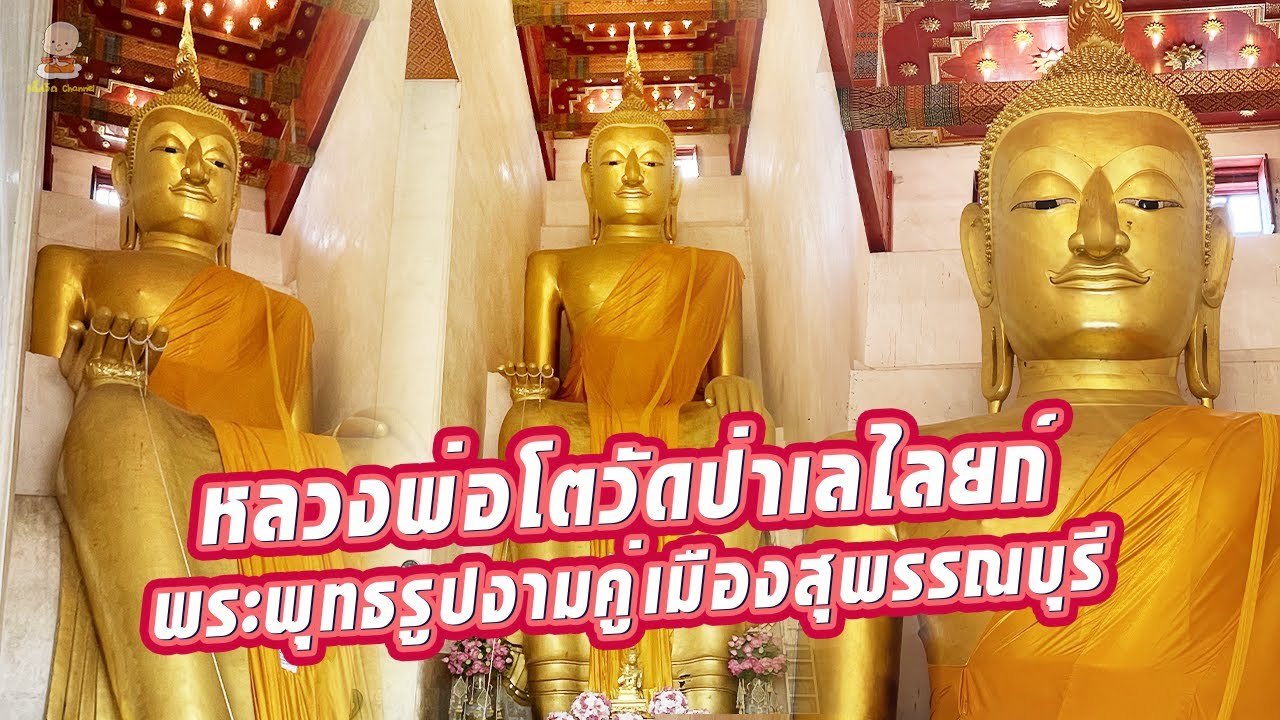
 Click to Access the Navigation Map GPS
Wat Pa Lelai Worawihan Map
Recommend

 Art, Culture and Heritage
 Historical Sites and Monuments(2)
 Landmarks and Memorials(4)
 Art, Craft Centres, Tradition(2)
 Museums(5)
 Educational Places
 Educational Gardens, Farm(4)
 Training Center(2)
Temple(36)
Training Center(2)
Temple(36)
 Other Sacred Sites(4)
 Suburban Living
 Village, Community(6)
 Local Market(7)
 Floating Market(1)
 Nature and Wildlife
 National Parks and Marine Reserves(4)
 Mountain (Doi)(2)
 Dam, Reservoir, Lake(3)
 Caves(1)
 Bays and Beaches(1)
 Entertainment and Agricultural
 Farms, Parks and Ecotourism(6)
 Theater(1)


