
lovethailand home >Central Travel Attractions >Suphan Buri Travel Attractions >Muang Suphan Buri >Rua Yai > Old City Wall and City Gate
TL;DR: Old City Wall and City Gate is located at Rua Yai Subdistrict and Malai Maen Road Area, Mueang Suphan Buri District, Suphan Buri Province, open Daily, hours 09.00 – 17.00.
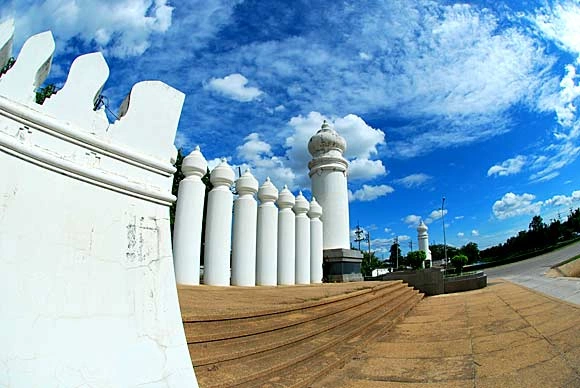
Old City Wall and City Gate
Open Days: Daily
Opening Hours: 09.00 – 17.00
The Old City Wall and City Gate of Suphan Buri is one of the most important historical landmarks in the old urban area of Suphan Buri Province. Located around Rua Yai Subdistrict, also associated with Ban Khun Chang, on the western side of the Suphan Buri River, the site preserves traces of the old earthen city wall, moat, and a reconstructed city gate built according to the Fine Arts Department’s design on the site believed to be the original gate location. For foreign travelers, this is a valuable place to understand Suphan Buri not only as a modern provincial town, but also as an old riverine city with a clear defensive system and a long historical background.
Old Suphan Buri was closely tied to the Suphan Buri River, which served as an important waterway in the western part of Thailand’s central plains. In the past, rivers functioned as transportation routes, sources of water, economic corridors, and natural defensive lines. Many historic towns in central Thailand were established beside rivers or large canals because waterways supported trade, agriculture, communication, and political control. Suphan Buri developed in this kind of landscape, making it a city where geography and history are deeply connected.
Today, visitors can still see traces of the old earthen wall and moat along the route between Wat Pa Lelai Worawihan and the Suphan Buri City Pillar Shrine. These remains may look modest compared with brick temples or large monuments, but they are highly important for understanding the old city. A moat and an earthen rampart help reveal the boundary of the historic settlement, the direction of urban expansion, and the defensive logic of the town. When observed carefully, these features show that old Suphan Buri was not a randomly formed settlement, but a planned town with defined limits and protective structures.
The western wall of the old city was especially strong. It was constructed as a double defensive system, with an outer moat, an earthen embankment, and an inner wall. The wall on this side extended for about 3,500 meters, while the width of the city wall area reached about 1,000 meters toward the river. This arrangement suggests that the western side required stronger artificial defenses, while the river itself provided a natural defensive element on the other side. The city’s protection system therefore combined human-built structures with the natural landscape.
The eastern side of the city wall is no longer clearly visible because parts of the original structures were removed in the past. As the city developed, roads, buildings, and modern land use gradually changed the appearance of the old urban landscape. For this reason, visiting the Old City Wall and City Gate requires both visual observation and historical imagination. Travelers may not see a complete wall surrounding the city today, but the surviving moat, rampart lines, gate location, and nearby landmarks still allow the old city plan to be understood.
An important historical reference comes from the royal travel writing of King Rama V during his journey along the Makham Thao waterway. In his description of Suphan Buri, he noted that the city wall appeared on both sides like that of Phitsanulok, extending from the riverbank for a considerable distance and having a noticeable width outside the parapet. This royal description is important because it confirms that the city wall of Suphan Buri was still clearly visible and distinctive during that period. It also helps modern visitors imagine the scale of the old defensive system.
The same description also shows that the city wall was not a small or insignificant structure. It was part of a large urban defense system with measurable width, length, and form. The comparison with Phitsanulok emphasizes that Suphan Buri was a historic city worthy of study in terms of urban layout, military defense, and its relationship with the river. What remains today may be only part of the original system, but those traces are still meaningful evidence of a once important river city.
The present city gate stands along Malai Maen Road on the line of the old city wall. It was newly constructed according to the design of the Fine Arts Department at the site believed to have been the location of the original gate. Although the visible gate is not the original ancient structure, it plays an important role as a historical marker and a landscape symbol of old Suphan Buri. It helps visitors identify the old defensive line and imagine how people once entered and left the city.
Historically, a city gate was more than a simple entrance. It was a point of control for movement, trade, security, and ceremonial passage. Walled cities usually organized roads and important spaces in relation to their gates. These gates connected to temples, markets, administrative areas, and sacred centers. Although modern Suphan Buri has changed considerably, the reconstructed city gate helps preserve the memory of the old urban structure and gives visitors a clear reference point for understanding the historic town.
Rua Yai and Ban Khun Chang also carry cultural meaning. The name Ban Khun Chang is associated with the famous Thai literary work Khun Chang Khun Phaen, which is deeply linked with Suphan Buri’s cultural identity. A visit to the Old City Wall and City Gate therefore connects not only with urban history and defense, but also with local literature, folklore, and the cultural imagination of Suphan Buri. This overlap between historical evidence and literary memory gives the area a distinctive character.
For travelers interested in historical tourism, the Old City Wall and City Gate is an excellent starting point for exploring old Suphan Buri. It is located near Wat Pa Lelai Worawihan and the Suphan Buri City Pillar Shrine, two major places that help complete the story of the city. Wat Pa Lelai reflects the religious importance of the area, the City Pillar Shrine reflects civic belief and urban identity, and the old wall and gate reflect city planning and defense. Visiting these places together gives a fuller understanding of Suphan Buri as an old city.
The atmosphere of the site is suitable for a short to moderate visit. Travelers can stop to photograph the city gate, observe the remaining lines of the moat and earthen wall, and continue to nearby attractions in the city. Because the site is located within the urban area of Suphan Buri, access is convenient. It is suitable for independent travelers, families, students, and visitors planning a half-day or full-day itinerary around the town.
The main appeal of the Old City Wall and City Gate lies in its quiet historical value. This is not a monument that overwhelms visitors with grand architecture. Instead, it requires observation and understanding. Travelers who know the background before arriving will appreciate the site more deeply. The gate, moat, and earthen traces are not merely roadside features; they are evidence of an old city that once had a defined boundary and a defensive system.
Conserving an earthen wall and moat is more difficult than preserving a large brick building. Earthworks can easily be absorbed into modern urban development through roads, land filling, construction, and changes in land use. The reconstructed city gate therefore plays an important symbolic role. It reminds residents and visitors that this area once formed part of the old city and that the remaining historical landscape deserves recognition and care.
Visitors should explore the site respectfully. Climbing on historical remains, damaging the landscape, or leaving litter should be avoided. Because the site stands within a living urban environment, responsible visitation helps the historical landscape coexist with the modern city. The value of this place is not based only on visual beauty, but on the historical meaning still preserved in the landform and city layout.
A meaningful Suphan Buri city route can begin at the Old City Wall and City Gate, then continue to the Suphan Buri City Pillar Shrine, Dragon Descendants Museum, Wat Pa Lelai Worawihan, Suphan Buri National Museum, and Banharn-Jamsai Tower. This route allows travelers to experience the old city, religious heritage, civic belief, museum interpretation, and a modern viewpoint over the town in a single day without traveling far from the city center.
Getting There is convenient by private car, rental vehicle, or local transport within Suphan Buri town. From Bangkok, travelers can take Highway 340 toward Suphan Buri and continue into the town area via Malai Maen Road. The city gate stands along the old wall line near the route to Wat Pa Lelai Worawihan and the Suphan Buri City Pillar Shrine. From Suphan Buri Bus Terminal, local hired transport can take visitors to the gate area easily because it is located close to several major attractions.
The best time to visit is in the morning or late afternoon, when the weather is more comfortable and natural light is better for photography. Travelers who want to understand the moat and wall lines should read the background in advance or use a map to relate the visible traces to the old city plan. The stop itself may not require much time, but when combined with Wat Pa Lelai, the City Pillar Shrine, and the National Museum, it becomes part of a richer historical itinerary.
The Old City Wall and City Gate of Suphan Buri is therefore a valuable place for anyone who wants to see the deeper historical layer of the province. The surviving earthen wall, moat, reconstructed gate, and the royal description from King Rama V all confirm that Suphan Buri once had a clear urban defense system and an important position beside the river. Even though only parts of the old city remain visible today, these traces are enough to help visitors imagine old Suphan Buri and understand why this historic landscape deserves preservation and continued storytelling.
| Name | Old City Wall and City Gate of Suphan Buri |
| Location | Rua Yai Subdistrict and Malai Maen Road Area, Mueang Suphan Buri District, Suphan Buri Province |
| Address | Malai Maen Road, Rua Yai Subdistrict / Old Suphan Buri City Area, Mueang Suphan Buri District, Suphan Buri 72000, Thailand |
| Coordinates | Latitude 14.4869483528, Longitude 100.112144776 |
| Highlights | Old earthen wall, moat, and reconstructed city gate built according to the Fine Arts Department’s design on the presumed original gate site |
| History | Part of old Suphan Buri city on the western side of the Suphan Buri River, showing traces of an earthen wall and moat defense system |
| Key Evidence | Moat lines, earthen ramparts, city gate, and King Rama V’s royal travel description mentioning the city wall of Suphan Buri |
| Distinctive Features | The western wall was a strong double defensive system with an outer moat, earthen embankment, and inner wall, extending about 3,500 meters in length and about 1,000 meters toward the river |
| Travel Information | From Bangkok, take Highway 340 to Suphan Buri town and continue to Malai Maen Road. The gate is close to the route leading to Wat Pa Lelai Worawihan and Suphan Buri City Pillar Shrine. |
| Current Status | Open to visitors as a historical learning site of old Suphan Buri city |
| Open Days | Daily |
| Opening Hours | 09.00 – 17.00 |
| Fees | No admission fee |
| Facilities | Roadside viewing area, photo spot at the city gate, and convenient access to nearby attractions in Suphan Buri town |
| Main Areas / Zones | 1. Suphan Buri City Gate on Malai Maen Road 2. Old Earthen City Wall Line 3. Old Moat Line 4. Rua Yai / Ban Khun Chang Old City Area 5. Connecting Route to Wat Pa Lelai Worawihan and Suphan Buri City Pillar Shrine |
| Caretaker | Suphan Buri local authorities and related Fine Arts agencies |
| Main Contact Number | 0-3554-3774 |
| Nearby Tourist Attractions | 1. Suphan Buri City Pillar Shrine and Dragon Descendants Museum, about 1 km 2. Wat Pa Lelai Worawihan, about 2 km 3. Suphan Buri National Museum, about 2 km 4. Banharn-Jamsai Tower, about 3 km 5. Suphan Buri Town Market, about 3 km 6. Wat Khae, about 4 km 7. Sam Chuk 100-Year Market, about 37 km |
| Nearby Restaurants | 1. Nopparat Restaurant, about 2 km 2. Restaurants Around Wat Pa Lelai Worawihan, about 2 km 3. Restaurants in Suphan Buri Town Market, about 3 km 4. Restaurants Around City Pillar Shrine and Dragon Descendants Museum, about 1 km 5. Local Restaurant Outside Suphan Buri Town, about 8 km, Tel. 035-450-811, 086-996-9970, 085-693-9795 |
| Nearby Accommodations | 1. Vasidtee City Hotel Suphan Buri, about 3 km, Tel. 035-526-111, 035-526-123 2. Songphanburi Hotel, about 3 km 3. B2 Suphan Buri Premier Hotel, about 4 km 4. Sri U-Thong Grand Hotel, about 3 km 5. Hop Inn Suphan Buri, about 5 km 6. Hotels and Resorts in Mueang Suphan Buri District, about 5 km |
Frequently Asked Questions (FAQ)
Q: Where is the Old City Wall and City Gate of Suphan Buri located?
A: It is located around Rua Yai Subdistrict and Malai Maen Road in Mueang Suphan Buri District, near the route to Wat Pa Lelai Worawihan and Suphan Buri City Pillar Shrine.
Q: Why is the Old City Wall and City Gate of Suphan Buri important?
A: It preserves traces of old Suphan Buri’s moat, earthen wall, and city gate, showing the city’s historical layout and defensive system.
Q: Is the present city gate the original ancient gate?
A: The present gate was newly built according to the Fine Arts Department’s design on the site believed to be the original gate location.
Q: What are the opening hours of the Old City Wall and City Gate of Suphan Buri?
A: The site is open daily from 09.00 to 17.00.
Q: Is there an admission fee?
A: No. Visitors can stop by, view the gate, and take photographs without an admission fee.
Q: What nearby attractions can be combined with this site?
A: Visitors can combine the trip with Suphan Buri City Pillar Shrine, Dragon Descendants Museum, Wat Pa Lelai Worawihan, Suphan Buri National Museum, and Banharn-Jamsai Tower.
Q: Who should visit the Old City Wall and City Gate of Suphan Buri?
A: It is suitable for history lovers, students, families, and travelers who want to understand the old urban landscape of Suphan Buri.
Q: How can travelers get there from Bangkok?
A: Take Highway 340 to Suphan Buri town, then continue to Malai Maen Road. The city gate is located within the town area near several major attractions.
 Category: ●Art, Culture and Heritage
 Group: ●Landmarks and Memorials
Last Update : 4 MonthAgo
 Last Update : 4 MonthAgo
 Click to Access the Navigation Map GPS
Old City Wall and City Gate Map
Recommend

 Historical Sites and Monuments(2)
Landmarks and Memorials(4)
Historical Sites and Monuments(2)
Landmarks and Memorials(4)
 Art, Craft Centres, Tradition(2)
 Museums(5)
 Educational Places
 Educational Gardens, Farm(4)
 Training Center(2)
 Places of Worship
 Temple(36)
 Other Sacred Sites(4)
 Suburban Living
 Village, Community(6)
 Local Market(7)
 Floating Market(1)
 Nature and Wildlife
 National Parks and Marine Reserves(4)
 Mountain (Doi)(2)
 Dam, Reservoir, Lake(3)
 Caves(1)
 Bays and Beaches(1)
 Entertainment and Agricultural
 Farms, Parks and Ecotourism(6)
 Theater(1)
 Travel Articles, Recipes
 Travel Review, Food Review(1)


