
lovethailand home >Central Travel Attractions >Suphan Buri Travel Attractions >Sam Chuk >Yan Yao > Wat Bang Khwak
TL;DR: Wat Bang Khwak is located at No. 133, Moo 6, Yan Yao Subdistrict, Sam Chuk District, Suphan Buri Province 72130, Thailand, open Daily, hours Morning – Evening.
Wat Bang Khwak

Open Days: Daily
Opening Hours: Morning – Evening
Wat Bang Khwak in Suphan Buri Province and Pak Khlong Bang Khwak Market are not conventional tourist attractions. They are part of an old riverside community in Yan Yao Subdistrict, Sam Chuk District, where the Tha Chin River, also known locally as the Suphan River, has shaped local life for generations. This is a place for travelers who prefer quiet authenticity over staged tourism. The old market may not be lively every day, and some parts of the community may feel as if they are fading with time. Yet that fragile atmosphere is exactly what makes Bang Khwak meaningful. It preserves the feeling of a riverside market that has not been heavily polished for tourism.
Visitors arriving from Highway 340, the Suphan Buri-Chai Nat road, can turn into the community for only about 200 meters. The area is located roughly 5 kilometers before Sam Chuk 100-Year Market. This makes Wat Bang Khwak and Pak Khlong Bang Khwak Market a worthwhile stop for travelers who want to see another side of Sam Chuk beyond the famous market. Here, the experience is quieter, more local, and more reflective. Visitors can pay respect to Luang Pho Dam, see the temple’s old-object museum, make merit by feeding fish at the riverside, and walk through the old market community.
Wat Bang Khwak is located at No. 133, Moo 6, Yan Yao Subdistrict, Sam Chuk District, Suphan Buri Province. The temple stands by the Tha Chin River near Pak Khlong Bang Khwak Market and covers an area of 37 rai, 2 ngan, and 84 square wah. It is a local Buddhist temple with a long relationship with the surrounding riverside community. The exact date of its foundation and the name of its founder are not clearly recorded, but local sources suggest that the temple is more than 200 years old. One important marker is that it was officially declared a temple in 1807.
The name “Bang Khwak” comes from a local story. In the past, the original temple area was located near the Tha Chin River, close to a canal flowing into the river. Local people called the area “Pak Khlong,” meaning the mouth of the canal. Later, the monks’ living quarters were moved southward to the present temple site. At that time, the new area was overgrown with dense shrubs and trees. The community also had problems with thieves. When thieves stole from houses and were chased by owners or officials, they would escape through the dense area and place sharpened bamboo stakes along the route.
These sharpened bamboo stakes were called “khwak.” They were made by cutting bamboo into pointed spear-like forms and placing them along escape paths to slow down pursuers. Anyone chasing the thieves had to be careful not to step on the spikes. According to local memory, the area where these bamboo traps were placed eventually became the location of the temple and Bang Khwak market community. People therefore called the settlement “Ban Bang Khwak,” and the temple later became known as Wat Bang Khwak.
Another local name for the temple is Wat Pak Khlong, because of its location near the mouth of a canal flowing into the Tha Chin River. These two names reveal different layers of local identity. “Wat Pak Khlong” reflects geography and water routes, while “Wat Bang Khwak” preserves a story about the social conditions of the past. Together, the names show how the temple grew from the landscape, the river, the canal, and the memory of local people.
The most important sacred object at Wat Bang Khwak is Luang Pho Dam, also known as the main Buddha image of the temple. The image is enshrined in a beautiful mondop near the ordination hall. Although there is no clear evidence about where the image came from, who created it, or when it was made, Luang Pho Dam has long been respected as the temple’s key sacred image. Local residents and visitors regularly come to pay respect and make merit.
Paying respect to Luang Pho Dam is a good way to begin a visit to Wat Bang Khwak. The image represents the spiritual center of the temple and the continuing faith of the community. Even if the old market around the temple is quieter than it once was, Luang Pho Dam continues to draw worshippers to the temple. Visitors can then continue to the ordination hall, the old-object museum, the riverside fish-feeding area, and the old market community nearby.
The ordination hall of Wat Bang Khwak was built in 1962 through the collective effort of local residents. This detail is important because it shows that the temple has always belonged to the community in a practical and emotional sense. The ordination hall is not only a religious building for monastic ceremonies. It is also evidence of shared faith, collective labor, and the desire of local people to maintain the temple as a spiritual center.
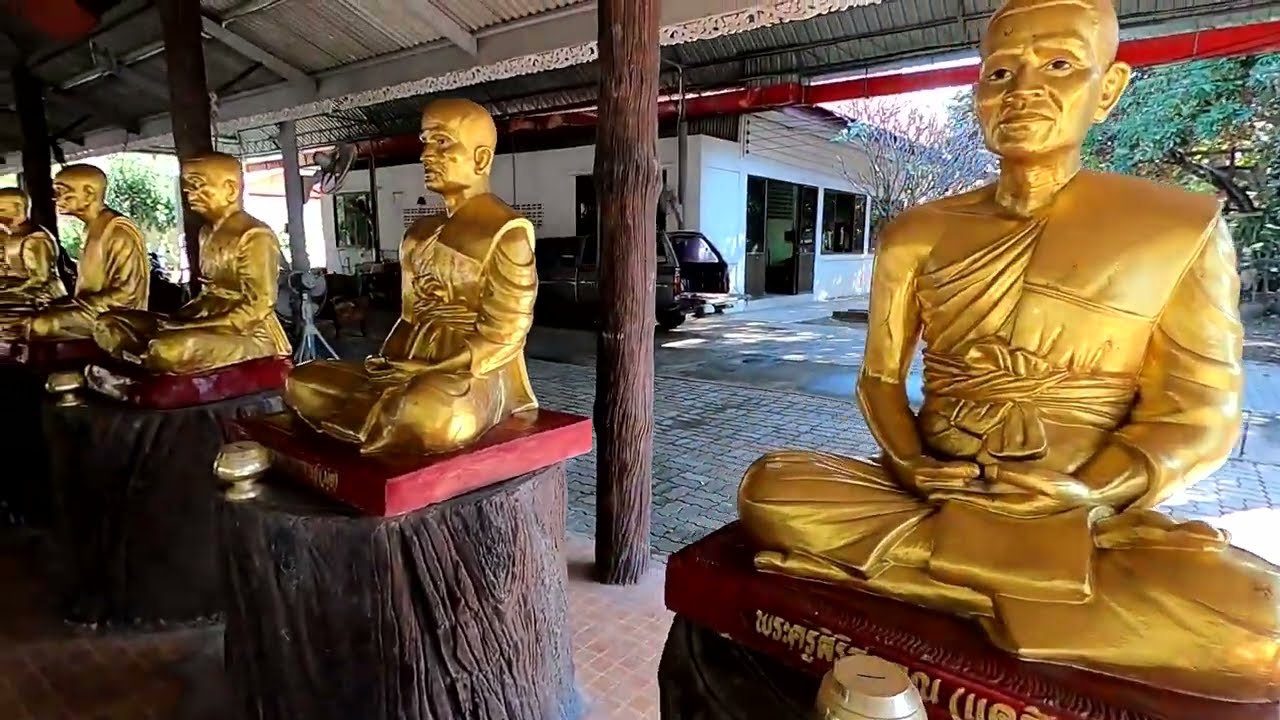
Another meaningful feature is the temple’s old-object museum. It preserves items related to local life, temple history, and the old riverside community. The museum may not be arranged like a large national museum, but it has strong local value. Objects inside such a museum often come from real homes, real daily life, and real community memory. They help visitors understand that a temple can function as a repository of local heritage, not only a place for worship.
Visitors should see the museum together with the market area. Old objects, old houses, the river, the temple, and the quiet lanes of the market all tell the same story: Bang Khwak was once part of a wider riverside world. Before roads became dominant, rivers and canals were the main routes for trade, travel, and communication. Temples and markets grew near these waterways because people lived, bought, sold, and made merit along the river.
In front of the temple, the riverside area allows visitors to make merit by feeding fish. This simple activity connects Buddhist generosity with the river environment. In Thai temple culture, feeding fish is often associated with kindness, compassion, and merit-making. It also gives visitors a moment to sit by the water, watch the river, and feel the slower rhythm of the old community.
Pak Khlong Bang Khwak Market is an essential part of the experience. It should not be approached as a busy tourist market. Instead, it is an old riverside community with traces of a former market life. Some shops may be closed. Some houses may look old and quiet. Some areas may feel almost forgotten. But this is precisely why the place is interesting. It shows what many old river markets become when trade routes shift, younger generations move away, and tourism does not fully transform the area.
Historically, Bang Khwak was part of a network of small river markets along the Suphan River. Before reaching the larger Sam Chuk market, there were several smaller markets along the river and canal routes. Bang Khwak stood near a canal mouth connected with the river and with waterways leading toward Chai Nat. This position made it part of the old river-based trading landscape of Suphan Buri.
Walking through Pak Khlong Bang Khwak Market requires patience and sensitivity. Do not expect a polished tourism scene, colorful souvenir rows, or constant activity. The beauty here is in the silence, the old houses, the river breeze, the narrow paths, and the feeling that time has slowed down. For some visitors, the market may appear to be fading. For others, that fading quality becomes a rare chance to see an older layer of Thai community life before it disappears completely.
Wat Bang Khwak and Pak Khlong Bang Khwak Market are therefore suitable for travelers who appreciate authenticity. There may not be many cafés, photo props, or tourist facilities, but there is a real sense of place. The temple, the market, the river, the old houses, and the remaining local life together create a cultural landscape that is quiet but deeply meaningful.
For photography, the area offers subtle but powerful scenes: the mondop of Luang Pho Dam, the ordination hall, the riverside landing, fish-feeding areas, old wooden houses, market lanes, and the Tha Chin River. The images are not bright and commercial; they are quiet, nostalgic, and layered with time. Visitors who enjoy documentary-style travel photography will find this community especially rewarding.
A good visit may take around 1 to 2 hours. Begin by paying respect to Luang Pho Dam, then walk around the temple, visit the old-object museum, feed fish at the riverside, and continue into the old market community. Morning or late afternoon is best because the weather is more comfortable and the river atmosphere is pleasant.
Because this is a real community rather than a fully designed tourist attraction, visitors should behave respectfully. Dress modestly inside the temple, speak quietly, avoid disturbing monks or residents, ask before taking close-up photographs of people, avoid touching museum objects without permission, and keep the riverside and market areas clean. The value of Bang Khwak lies in its fragility, so careful travel matters.
Getting there is easiest by private car. From Highway 340, the Suphan Buri-Chai Nat road, turn into the Bang Khwak community for about 200 meters. The temple is located roughly 5 kilometers before Sam Chuk 100-Year Market. From Suphan Buri town, drive north toward Sam Chuk District and continue to Yan Yao Subdistrict. A private car is the most convenient option because it allows travelers to combine Wat Bang Khwak with Sam Chuk 100-Year Market, Wat Sam Chuk, Wat Lat Singh, and Si Prachan Old Market.
From Bangkok, travelers can use the Bang Bua Thong-Suphan Buri route or the Nakhon Pathom-Suphan Buri route, then continue toward Sam Chuk District. The site works well as a one-day trip or as part of a slower two-day Suphan Buri itinerary. Travelers who want a deeper route should visit Wat Bang Khwak in the morning, continue to Sam Chuk 100-Year Market for food, then visit Wat Sam Chuk or Wat Lat Singh in the afternoon.
For foreign travelers, Wat Bang Khwak and Pak Khlong Bang Khwak Market offer a valuable look at an unpolished Thai riverside community. Many visitors see only famous temples and busy markets. Bang Khwak shows another side of Thailand: a quiet old community where the temple, market, river, canal, houses, and local memory still exist together. It helps explain how central Thai communities once developed around waterways and Buddhist temples.
In summary, Wat Bang Khwak and Pak Khlong Bang Khwak Market are meaningful places for travelers who want to see the quieter side of Sam Chuk. Highlights include Luang Pho Dam in the mondop, the ordination hall built in 1962, the old-object museum, the riverside fish-feeding area, the story behind the name Bang Khwak, and the unpolished atmosphere of the old market community. This is not a place for fast tourism. It is a place to walk slowly, observe carefully, and respect the memory of an old riverside way of life.
| Name | Wat Bang Khwak And Pak Khlong Bang Khwak Market |
| Location | No. 133, Moo 6, Yan Yao Subdistrict, Sam Chuk District, Suphan Buri Province 72130, Thailand |
| Temple Area | 37 Rai, 2 Ngan, 84 Square Wah |
| Highlights | Luang Pho Dam in the mondop, ordination hall, old-object museum, riverside fish-feeding area, Tha Chin riverside community, and the unpolished atmosphere of Pak Khlong Bang Khwak old market |
| History | The exact founding date and founder are not clearly recorded. The temple is believed to be more than 200 years old, based partly on its official declaration as a temple in 1807. |
| Name Origin | The name Bang Khwak comes from a local story about thieves placing sharpened bamboo stakes, called khwak, along escape routes in the dense area that later became the temple and market community. |
| Local Name | Wat Pak Khlong, a local name linked to the temple’s location near the mouth of a canal flowing into the Tha Chin River |
| Distinctive Features | An old local Buddhist temple by the Tha Chin River, closely connected with a fading old riverside market community and suitable for travelers interested in authentic local atmosphere |
| Important Objects And Areas | Luang Pho Dam, the main Buddha image in the mondop; ordination hall built in 1962; old-object museum; riverside landing; fish-feeding area; and old market community |
| Nearby Community | Pak Khlong Bang Khwak Market, an old riverside community with traces of former market life, old houses, river atmosphere, and a quiet local character rather than a staged tourist-market identity |
| Travel Information | From Highway 340, the Suphan Buri-Chai Nat road, turn into the Bang Khwak community for about 200 meters. The area is roughly 5 km before Sam Chuk 100-Year Market. |
| Current Status | Open for merit-making, worship at Luang Pho Dam, visits to the old-object museum, fish-feeding by the river, and quiet walks through the old riverside community |
| Open Days | Daily |
| Opening Hours | Morning – Evening |
| Facilities | Parking area, worship area, Luang Pho Dam mondop, ordination hall, old-object museum, riverside landing, fish-feeding area, and walking area through the old community |
| Main Areas / Zones | Luang Pho Dam Mondop Zone Ordination Hall Zone Old-Object Museum Zone Riverside Landing And Fish-Feeding Zone Pak Khlong Bang Khwak Market Zone Old Riverside Community Zone |
| Abbot / Caretaker | Phra Khru Sathon Suwankhun Akkapanyo |
| Main Contact Number | 035-544-028, 086-133-0161 |
| Nearby Tourist Attractions | 1. Sam Chuk 100-Year Market, about 5 km 2. Wat Sam Chuk, about 5 km 3. Wat Lat Singh, about 20 km 4. Don Chedi Monument, about 22 km 5. Si Prachan Old Market, about 25 km |
| Nearby Restaurants | 1. Local Food Stalls In Pak Khlong Bang Khwak Market, about 0 km 2. Local Restaurants In Sam Chuk 100-Year Market, about 5 km 3. Kuai Tiao Yam Khai In Sam Chuk Market, about 5 km 4. Udom Chok Coffee In Sam Chuk Market, about 5 km 5. Kung Pen Sam Chuk, about 7 km |
| Nearby Accommodations | 1. Happy Motel Sam Chuk, about 6 km, Tel. 062-424-5323, 035-504-211 2. Punpisa Resort, about 7 km 3. Grand Bronze Resort, about 8 km 4. Accommodations Around Sam Chuk 100-Year Market, about 5–7 km 5. Hotels And Resorts In Suphan Buri Town, about 39 km |
Frequently Asked Questions (FAQ)
Q: Where is Wat Bang Khwak located?
A: Wat Bang Khwak is located at No. 133, Moo 6, Yan Yao Subdistrict, Sam Chuk District, Suphan Buri Province, by the Tha Chin River near Pak Khlong Bang Khwak Market and about 5 km before Sam Chuk 100-Year Market.
Q: Is Pak Khlong Bang Khwak Market a tourist market?
A: No. It is not a polished tourist market. It is an old riverside community with traces of an old market, old houses, and a quiet local atmosphere.
Q: What does the name Bang Khwak mean?
A: The name comes from a local story about thieves placing sharpened bamboo stakes, called khwak, along escape routes in the dense area that later became the temple and market community.
Q: What is Wat Bang Khwak known for?
A: The temple is known for Luang Pho Dam in the mondop, its ordination hall built in 1962, an old-object museum, the riverside fish-feeding area, and its connection with the old Bang Khwak riverside community.
Q: Why is Luang Pho Dam important?
A: Luang Pho Dam is the main sacred Buddha image of Wat Bang Khwak and has long been respected by local residents and visitors as the spiritual center of the temple.
Q: Does Wat Bang Khwak have a museum?
A: Yes. The temple has an old-object museum that preserves items connected with local life, temple history, and the old riverside community.
Q: What nearby places can be visited with Wat Bang Khwak?
A: Nearby places include Sam Chuk 100-Year Market, Wat Sam Chuk, Wat Lat Singh, Don Chedi Monument, and Si Prachan Old Market.
Q: Who should visit Wat Bang Khwak and Pak Khlong Bang Khwak Market?
A: The area is suitable for travelers interested in old temples, quiet riverside communities, unpolished old markets, documentary-style photography, and deeper cultural travel in Suphan Buri.
 Category: ●Places of Worship
 Group: ●Temple
Last Update : 5 MonthAgo
 Last Update : 5 MonthAgo
 Click to Access the Navigation Map GPS
Wat Bang Khwak Map
Recommend

 Art, Culture and Heritage
 Historical Sites and Monuments(2)
 Landmarks and Memorials(4)
 Art, Craft Centres, Tradition(2)
 Museums(5)
 Educational Places
 Educational Gardens, Farm(4)
 Training Center(2)
Temple(36)
 Other Sacred Sites(4)
 Suburban Living
 Village, Community(6)
 Local Market(7)
 Floating Market(1)
 Nature and Wildlife
 National Parks and Marine Reserves(4)
 Mountain (Doi)(2)
 Dam, Reservoir, Lake(3)
 Caves(1)
 Bays and Beaches(1)
 Entertainment and Agricultural
 Farms, Parks and Ecotourism(6)
 Theater(1)
 Travel Articles, Recipes
 Travel Review, Food Review(1)


