
lovethailand home >Northeastern Travel Attractions >Amnat Charoen Travel Attractions > 20 Must-Visit Attractions in Amnat Charoen
TL;DR: 20 Must-Visit Attractions in Amnat Charoen. Amnat Charoen is a compact province in Northeastern Thailand that is ideal for travelers looking to experience Isan in a peaceful and.
20 Must-Visit Attractions in Amnat Charoen
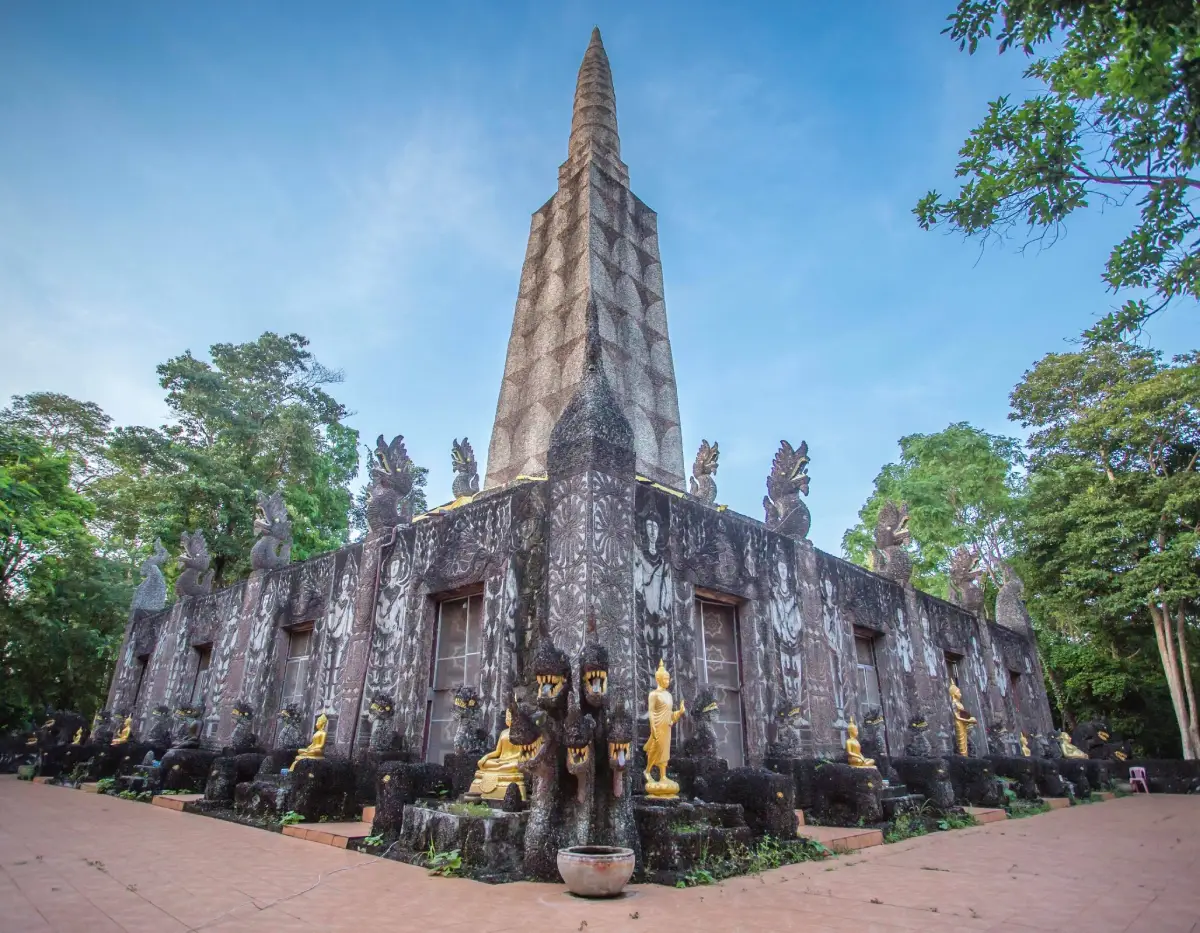
20 Must-Visit Attractions in Amnat Charoen Amnat Charoen is a compact province in Northeastern Thailand that is ideal for travelers looking to experience Isan in a peaceful and authentic atmosphere. Its attractions are not limited to important temples or sacred sites. The province also offers sandstone mountains, forests, rock plateaus, waterfalls, Mor Lam communities, traditional handicrafts, handwoven textiles, and local ways of life that remain closely connected with religion, agriculture, and regional culture. It is therefore suitable for merit-making trips, nature travel, cultural journeys, family holidays, and slow travel without the need to rush through too many places in a single day.
For travelers visiting Amnat Charoen for the first time, a good starting point is Buddha Park and Phra Mongkhon Ming Mueang, one of the province’s major landmarks close to the city. Continue to Wat Tham Saeng Phet for the atmosphere of a forest monastery, then choose between the natural landscapes of Phu Sing–Phu Pha Phueng Forest Park or Phu Sa Dok Bua National Park. History enthusiasts should visit Wat Pho Sila to see ancient Dvaravati boundary stones, while travelers interested in local culture should add Nong Pla Khao Mor Lam Village, Ban Kham Phra handicraft centers, and Ban Sang Tho Arts and Crafts Center to the itinerary.
Amnat Charoen’s landscape includes agricultural plains, low hills, community forests, and sandstone mountain ranges. The northern and eastern parts of the province contain mountains, rock plateaus, and forests characteristic of lower Northeastern Thailand, while Chanuman District in the east borders the Mekong River. As a result, some local communities show strong Mekong cultural influences in food, language, trade, and traditional customs.
The area has a long history that predates its modern status as a province. Amnat Charoen was historically connected with Khemarat and other ancient communities of the Mekong Basin. In 1858, Ban Kho Yai was elevated to town status and received the name “Mueang Amnat Charoen.” The present province of Amnat Charoen was officially established on December 1, 1993. Although it is relatively new in administrative terms, the region preserves much older religious and cultural evidence.
One of the most important forms of evidence is the collection of sandstone sema boundary stones in Lue Amnat District, particularly at Wat Pho Sila. These remains show that the area was connected with Dvaravati culture and early Buddhist networks in Northeastern Thailand more than 1,000 years ago. When combined with Wat Amnat and Phra Chao Yai Lue Chai, visitors can trace the development of local faith from ancient archaeological remains to temples that continue to serve as spiritual centers today.
Amnat Charoen also preserves strong performing-arts and community traditions, especially Mor Lam. Ban Pla Khao is known as a village with many Mor Lam troupes, and the tradition is more than stage entertainment. It is closely connected with memory, language, livelihoods, festivals, and the identity of local people. Traditional khit weaving, basketry, and other handicrafts also reveal another dimension of Isan craftsmanship and community knowledge.
Local traditions continue to follow the Buddhist calendar and agricultural way of life, including Bun Phawet, Songkran, Bun Bang Fai rocket festivals, Buddhist Lent, the end of Buddhist Lent, and temple merit-making events. Visiting during these periods adds another dimension to the journey, allowing travelers to experience processions, folk music, traditional dance, merit-making, and community gatherings.
Local cuisine is typically Isan in character and uses ingredients available in surrounding communities. Popular dishes include larb, som tam, grilled fish, jaew dipping sauces, and seasonal vegetables. Recommended souvenirs include handwoven textiles, khit cloth, basketry, and community-made handicrafts, especially from Hua Taphan District, which is well known for weaving and arts-and-crafts production.
Travel planning can be divided into several zones. Mueang Amnat Charoen is suitable for Phra Mongkhon Ming Mueang, Wat Tham Saeng Phet, Mor Lam communities, and nature close to the city. Lue Amnat is best for Wat Pho Sila and Wat Amnat. Hua Taphan is ideal for Ban Kham Phra handicrafts and Ban Sang Tho Arts and Crafts Center. Senangkhanikhom is the gateway to Phu Sa Dok Bua National Park, while Pathum Ratchawongsa offers sandstone landscapes and the natural scenery of Phu Sing–Phu Pha Phueng Forest Park. Traveling by zone reduces unnecessary driving and makes it easier to understand the distinct character of each area.
If you have only 1 day, begin with Buddha Park and Phra Mongkhon Ming Mueang, continue to Wat Tham Saeng Phet, then choose Nong Pla Khao Mor Lam Village or a nearby nature attraction. With 2–3 days, add Wat Pho Sila, Wat Amnat, and the Hua Taphan handicraft route. Travelers with 4–5 days should also include Phu Sa Dok Bua National Park, Phu Sing–Phu Pha Phueng Forest Park, and communities in other districts to experience faith, nature, handicrafts, and Isan culture more completely.

1. Buddha Park and Phra Mongkhon Ming Mueang are located at Khao Dan Phra Bat in Bung Subdistrict, Mueang Amnat Charoen District, only about 3 kilometers from the city center. This is one of the province’s most important spiritual landmarks and an excellent first stop for visitors because it is easy to reach, does not require much time, and introduces travelers to the principal Buddha image of Amnat Charoen.
Highlight: Phra Mongkhon Ming Mueang is a large Buddha image in the Subduing Mara posture, with a lap width of approximately 11 meters and a height of about 20 meters from the ground to the top of the flame finial. The reinforced-concrete structure is decorated with golden mosaic tiles and stands prominently among natural rock plateaus and trees within the park.
Phra Mongkhon Ming Mueang is revered as the principal Buddha image of the province. Its artistic form shows influences associated with the Pala style of northern India, which also influenced Buddhist art in parts of Southeast Asia. The golden mosaic surface becomes especially striking in morning and late-afternoon light.
The surrounding Buddha Park is characterized by natural rock surfaces interspersed with trees and shaded areas, creating an atmosphere very different from a typical urban temple. Visitors can walk around the grounds, pay respect to the Buddha image, relax under the trees, and enjoy the peaceful environment without rushing.
Phra Mongkhon Ming Mueang is important both religiously and symbolically. Local residents regularly come to pray for good fortune, and the site also serves as an important location for Buddhist activities and welcoming visitors to the province.
The attraction is suitable for all ages, including families, older travelers, couples, and those on a merit-making trip. Because it is close to the city and does not require a long hike, access is relatively easy. Visitors should dress respectfully and avoid making excessive noise in areas used for religious practice.
The park can be combined with Wat Tham Saeng Phet or Nong Pla Khao Mor Lam Village in the same day, creating a convenient route that includes religion, nature, and community culture.
Getting There: The site is located at Khao Dan Phra Bat, Bung Subdistrict, Mueang Amnat Charoen District, beside Highway 212, approximately 3 kilometers from the city center. A private vehicle is convenient. The open-air grounds can be visited daily.
Map (GPS): https://www.google.com/maps/dir/?api=1&destination=15.891504,104.622213&travelmode=driving

2. Wat Tham Saeng Phet is located in Nong Masaeo Subdistrict, Mueang Amnat Charoen District. It is an important forest monastery and meditation site on the foothills of Phu Kham, approximately 18 kilometers from the city. The temple grounds combine forest, rock plateaus, natural caves, a viharn, chedi, Buddha images, and walking paths that blend with the surrounding landscape.
Highlight: The cave contains mineral flakes that reflect light, giving rise to the name “Saeng Phet,” meaning diamond light. Other features include the peaceful forest-monastery atmosphere, rock plateaus, bamboo arches, a viharn, chedi, reclining Buddha, and walking routes through nature.
Wat Tham Saeng Phet is also known as “Wat Sala Phan Hong” and is important in the Thai forest meditation tradition. It is the fifth branch monastery of Wat Nong Pah Pong in Ubon Ratchathani Province and follows a practice emphasizing simplicity, calmness, mindfulness, and meditation in natural surroundings.
The name Tham Saeng Phet comes from the mineral crystals embedded in the cave walls. When they catch the light, they sparkle like diamonds. The cave interior is cool and quiet, with Buddha images enshrined for worship, making a visit both a natural and contemplative experience.
The temple landscape includes rock surfaces, boulders, forest, and sloping terrain along the foothills. Walking through the site therefore brings a variety of environments, from shaded forest areas to exposed rock. Suitable footwear is recommended, especially during the rainy season when some surfaces may become slippery.
The temple is suitable for merit-making travelers, visitors interested in forest monasteries, meditation practitioners, and anyone looking for a quiet destination. Allow at least 1–2 hours to explore without rushing, and dress modestly because several areas are actively used for religious practice and meditation.
Wat Tham Saeng Phet can be combined with Buddha Park and Phra Mongkhon Ming Mueang or Phu Sing–Phu Pha Phueng Forest Park for a full-day route combining spirituality and nature.
Getting There: Follow the Amnat Charoen–Khemarat route for approximately 18 kilometers from the city, then turn onto the road leading uphill for another 2 kilometers. The temple is in Nong Masaeo Subdistrict, Mueang Amnat Charoen District, and is generally open daily from 07.30–17.00.
Map (GPS): https://www.google.com/maps/dir/?api=1&destination=15.894821,104.727485&travelmode=driving

3. Phu Sing–Phu Pha Phueng Forest Park is a natural attraction covering parts of Mueang Amnat Charoen and Pathum Ratchawongsa districts. It is characterized by sandstone mountains, broad rock plateaus, cliffs, forests, and naturally eroded rock formations. The park is suitable for travelers who want to explore a classic Isan sandstone landscape away from large crowds.
Highlight: Sandstone mountains approximately 200–300 meters high, broad rock plateaus, cliffs, viewpoints, unusual rock formations, and natural forest suitable for walking and observing the landscape.
The park’s appeal lies in its sandstone terrain, a characteristic feature of several areas in lower Northeastern Thailand. Some rock plateaus open onto wide views of forest and agricultural land below, while other sections contain boulders and cliff formations that continually change the scenery along the route.
The area has not been heavily developed for mass tourism, helping preserve a quiet atmosphere ideal for slow exploration of plants, rocks, and terrain. Nature photographers may prefer early morning or late afternoon to avoid strong sunlight across exposed rock surfaces.
The rainy season turns the surrounding forest lush and green, although rock surfaces may become slippery. The cool season is especially suitable for nature walks because temperatures are more comfortable and visibility is often better. Carry drinking water, a hat, and footwear with good grip.
The park is suitable for nature lovers, families with older children, groups of friends, students, and visitors interested in geomorphology. Avoid climbing cliffs or leaving designated routes in areas without safety barriers.
Phu Sing–Phu Pha Phueng Forest Park can be combined with Wat Tham Saeng Phet or other natural attractions in Mueang Amnat Charoen for a half-day or full-day route focused on mountains, forest, and quiet scenery.
Getting There: The forest park covers areas of Mueang Amnat Charoen and Pathum Ratchawongsa districts, including locations around Khuem Yai and nearby subdistricts. A private vehicle is the most convenient option. It is generally open daily from 08.30–16.30.
Map (GPS): https://www.google.com/maps/dir/?api=1&destination=15.888725,104.776216&travelmode=driving
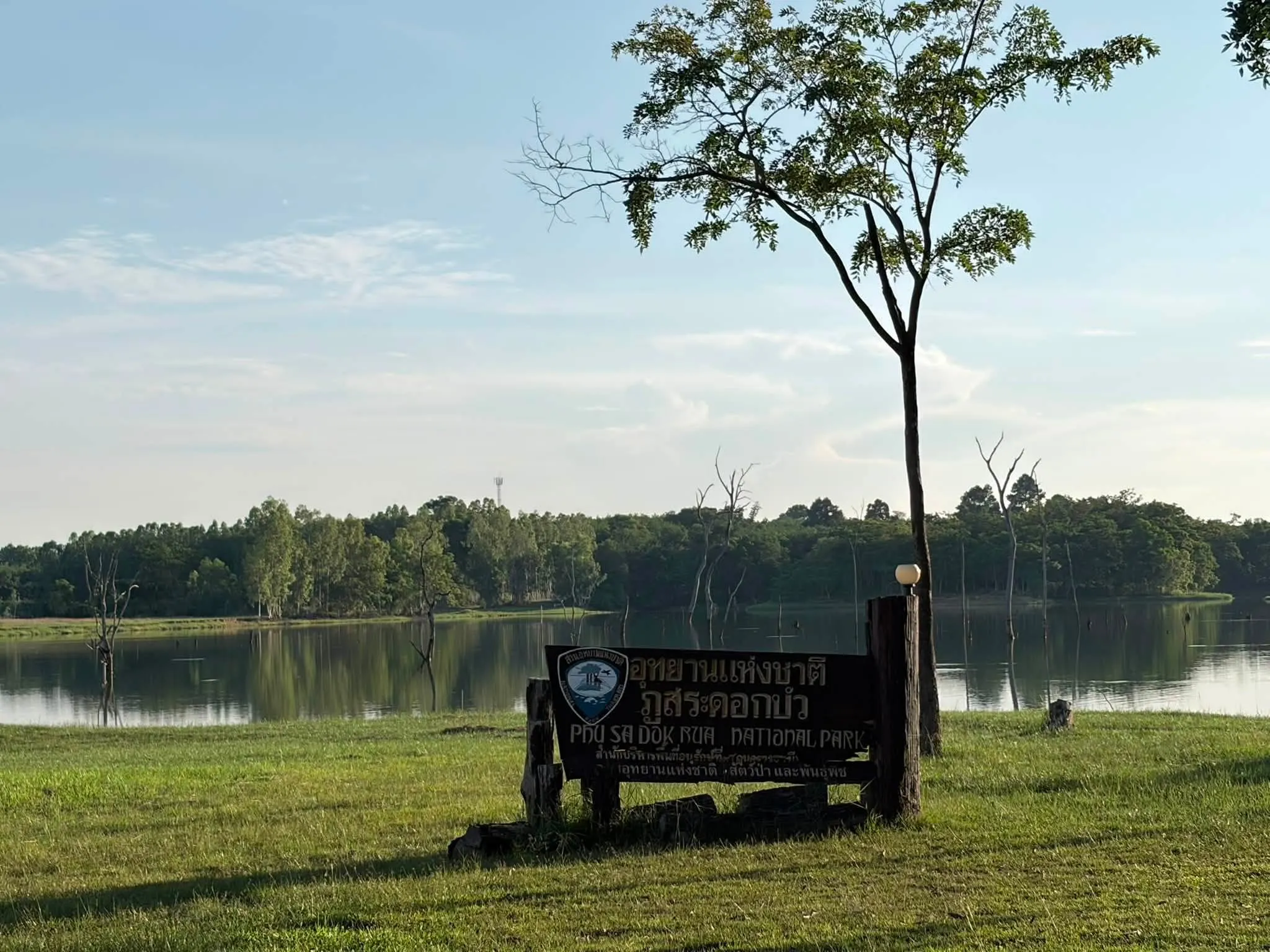
4. Phu Sa Dok Bua National Park is a large national park extending across the provincial borders of Mukdahan, Yasothon, and Amnat Charoen. The Amnat Charoen section is associated with Senangkhanikhom District. The entire park covers approximately 252 square kilometers and includes mountains, forests, rock plateaus, and varied terrain suitable for travelers seeking a more serious nature experience.
Highlight: Complex mountain ranges, mixed deciduous forest, dry evergreen forest, dry dipterocarp forest, broad rock plateaus known locally as “dan,” scenic viewpoints, and historical traces within the forest.
The park is made up of connected mountain ridges with rock plateaus scattered across many areas. This terrain creates multiple viewpoints and different ecological environments, ranging from open woodland to moister valleys and stream zones.
The attraction of Phu Sa Dok Bua is not limited to nature. The park also contains historical stories and community memories, giving a journey through the area both ecological and cultural dimensions.
Visitors planning to walk nature trails should check with park staff about routes currently open, as some areas may be restricted by season or weather. The rainy season brings lush forest and fuller streams but also slippery rocks and trails. The cool season is generally better for hiking and viewpoints.
The park is suitable for nature travelers, groups of friends, hikers, birdwatchers, and visitors who enjoy quiet destinations. Bring drinking water, light food, hiking shoes, and sun or rain protection according to the season.
If staying in Amnat Charoen for several days, Phu Sa Dok Bua is best planned as a full-day trip separate from the city zone because of the distance and scale of the protected area.
Getting There: The park extends across 3 provinces, with the Amnat Charoen section in Senangkhanikhom District. A private vehicle is the most convenient option. It is generally open daily from 08.00–16.30. Check current route and weather announcements before traveling.
Map (GPS): https://www.google.com/maps/dir/?api=1&destination=16.126537,104.747420&travelmode=driving
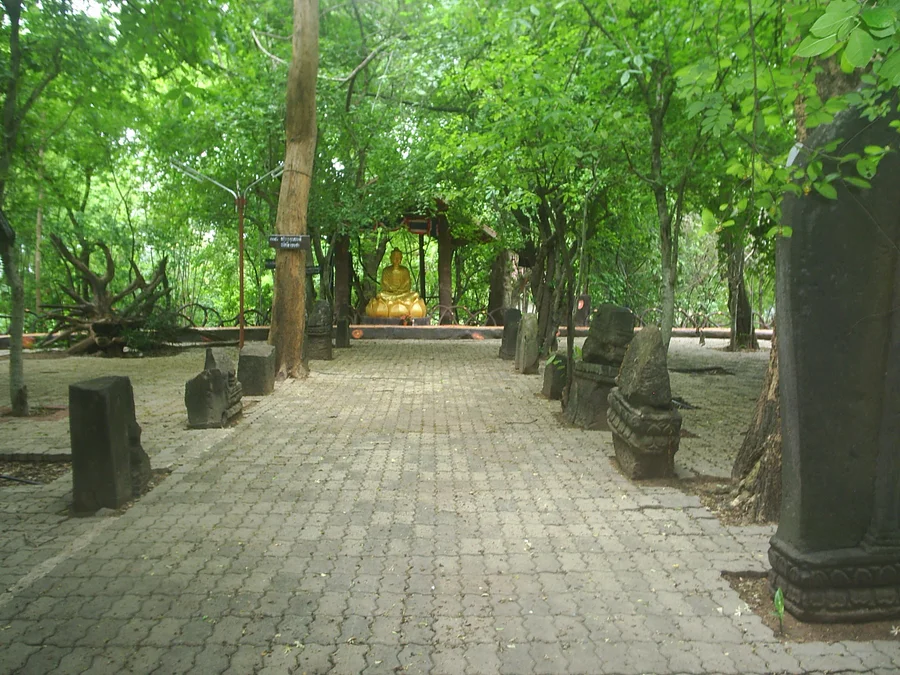
5. Wat Pho Sila is located at Ban Pueai, Moo 6, Pueai Subdistrict, Lue Amnat District. The temple is significant not only as a community religious site but also because it preserves a group of ancient sandstone sema boundary stones, important archaeological evidence of Dvaravati culture in Amnat Charoen.
Highlight: Approximately 16 large white sandstone sema stones with slender forms, pointed tops, lotus-petal bases, and symbolic carvings including miniature stupas, water vessels, inverted bell shapes, and three-lobed leaf motifs. They date to approximately the 8th–10th centuries CE.
The sema stones demonstrate that communities in the Amnat Charoen area had adopted Buddhism and Dvaravati cultural traditions more than 1,000 years ago. Their sandstone material and carved religious symbols reflect both spiritual beliefs and the craftsmanship of the period.
Today, the sema stones are arranged in 2 rows on a raised area with laterite foundations, making them relatively easy to observe. Although some pieces are broken or weathered, many important details remain visible and allow visitors to study their artistic forms.
Wat Pho Sila is especially suitable for travelers interested in history, art, and archaeology, as well as families and students who want to learn about Northeastern Thailand before the Lan Xang period. Visitors should spend time examining individual stones rather than simply taking a quick photograph.
Dress respectfully, avoid climbing or unnecessarily touching the sema stones, and do not place objects on the ancient remains because they are fragile historical artifacts.
The temple can be combined with Wat Amnat and Phra Chao Yai Lue Chai in the same district, creating a route that connects archaeology, Buddhist art, and living community faith.
Getting There: Wat Pho Sila is located at Ban Pueai, Moo 6, Pueai Subdistrict, Lue Amnat District. A private vehicle is the most convenient option. It is generally open daily from 08.00–17.00.
Map (GPS): https://www.google.com/maps/dir/?api=1&destination=15.686503,104.684445&travelmode=driving

6. Ban Kham Phra Community Enterprise Center is located in Ban Kham Phra, Kham Phra Subdistrict, Hua Taphan District. The center brings together handicraft products made by local women’s groups and community artisans. Its main specialty is handwoven khit cloth and textile products that clearly reflect the weaving knowledge of Northeastern Thailand.
Highlight: Handwoven khit textiles, traditional patterns, products made from woven cloth, and opportunities to learn how weaving functions as an art form, livelihood, and knowledge system passed down through families and the community.
Khit weaving requires precision in thread selection, pattern construction, supplementary weaving techniques, and control of the loom rhythm. As a result, each textile differs from machine-produced products and reflects the individual skill of the weaver.
The center functions as more than a souvenir shop. It helps return income from handicrafts directly to local producers, so buying textiles or handmade products here also supports the community economy.
Visitors interested in handicrafts should take time to examine patterns, colors, and weaving techniques because every piece reflects the skill and aesthetic choices of its maker. These products make meaningful souvenirs with stronger local identity than mass-produced items.
The center is suitable for families, students, textile enthusiasts, designers, and travelers interested in community knowledge. Those wishing to observe production or meet artisans should coordinate with the community before visiting.
The site can be combined with Ban Sang Tho Arts and Crafts Center in Hua Taphan District to compare weaving, basketry, and other forms of local craftsmanship within the same area.
Getting There: The center is located at 106 Moo 3, Ban Kham Phra, Kham Phra Subdistrict, Hua Taphan District, beside the Hua Taphan–Amnat Charoen road opposite Chumchon Kham Phra School, approximately 5 kilometers from Hua Taphan District Office. Visitors should coordinate in advance before visiting.
Map (GPS): https://www.google.com/maps/dir/?api=1&destination=15.758990,104.471480&travelmode=driving
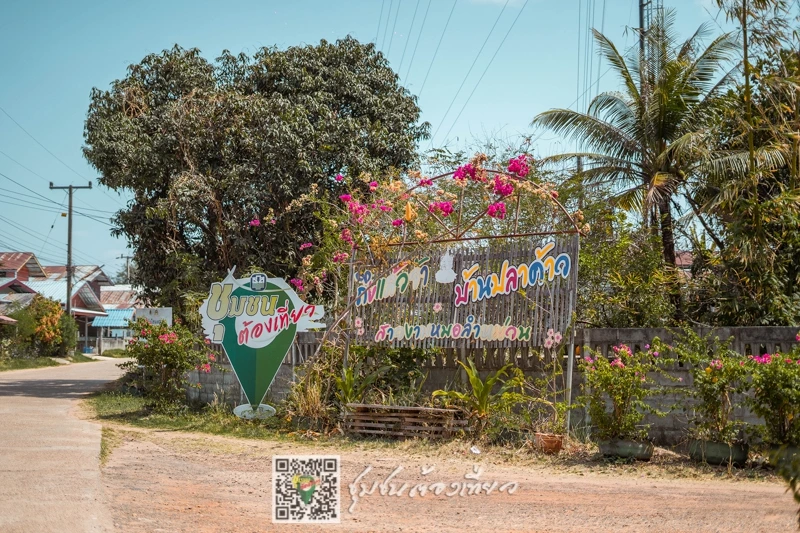
7. Nong Pla Khao Mor Lam Village, also known as Ban Pla Khao, is located in Pla Khao Subdistrict, Mueang Amnat Charoen District. It is one of the province’s most distinctive cultural communities because Mor Lam is not simply performed for visitors; it remains part of local life, livelihoods, memory, and identity.
Highlight: The community is approximately 200 years old, with many residents of Phu Thai ancestry, and is home to around 20 Mor Lam troupes performing styles such as Mor Lam Klon, Mor Lam Phuen, Mor Lam Mu, Mor Lam Sing, and modern forms accompanied by bands.
Ban Pla Khao is a strong example of a living performing-arts community. Mor Lam appears in merit-making events, festivals, professional work, and the transfer of skills between generations. The sound of the khaen, poetic singing, and traditional dance remain connected with daily life rather than being separated from the community.
Visiting the village offers a very different experience from watching a stage show in a city because travelers can see the social context behind the art, including homes, agricultural life, spoken language, clothing, and the relationship between performers and their community.
In addition to Mor Lam, the village preserves elements of Phu Thai culture and local handicrafts. Visiting during a merit-making festival or community event makes the relationship between religion, music, dance, and village life especially visible.
The village is suitable for cultural travelers, students, musicians, researchers, and anyone who wants to experience Isan through its people rather than only through landmarks. Cultural performances should be arranged in advance because there are no fixed daily showtimes.
Nong Pla Khao can be combined with Buddha Park and Phra Mongkhon Ming Mueang or Wat Tham Saeng Phet, as all are within Mueang Amnat Charoen District. This makes it possible to experience spirituality, nature, and Mor Lam culture in a single day.
Getting There: The village is located in Pla Khao Subdistrict, Mueang Amnat Charoen District and can be reached easily by car from the city. The community itself can be visited daily, but Mor Lam or cultural activities should be arranged with the community in advance.
Map (GPS): https://www.google.com/maps/dir/?api=1&destination=15.755081,104.776673&travelmode=driving

8. Ban Sang Tho Arts and Crafts Center is located in Sang Tho Noi Subdistrict, Hua Taphan District. It is a learning center that brings together several forms of local handicraft and vocational training, including textile weaving, basketry, gemstone cutting, and other handmade products. It is ideal for travelers who want to understand Amnat Charoen through the knowledge and skills of local people.
Highlight: Visitors can observe weaving and handicraft production, shop for community-made products, and combine the trip with Ban Pa Dong Yai community forest, creating a route that includes both arts-and-crafts heritage and nature.
Weaving is one of the center’s key activities. Visitors can observe stages ranging from preparing threads and setting up the loom to shuttle work and pattern creation. Each finished textile therefore reflects time, skill, and the careful work of the weaver.
The center also supports training and production in several other crafts. It functions as more than a souvenir outlet, creating employment and income while helping preserve skills that could otherwise disappear if younger generations did not continue them.
Buying products directly from the center helps return income to local producers and the surrounding community, allowing travelers to take home distinctive souvenirs while supporting local craftsmanship.
The center is suitable for families, students, designers, textile enthusiasts, and cultural travelers. A visit usually takes about 1–2 hours, but more time can be allowed for those who want to study individual craft processes in detail.
Ban Sang Tho Arts and Crafts Center can be combined with Ban Kham Phra handicraft attractions in Hua Taphan District to create a full-day route focused on weaving, local knowledge, and community-made souvenirs.
Getting There: The center is located in Sang Tho Noi Subdistrict, Hua Taphan District. A private vehicle is the most convenient option. It is generally open daily from 08.30–17.00.
Map (GPS): https://www.google.com/maps/dir/?api=1&destination=15.653406,104.471826&travelmode=driving
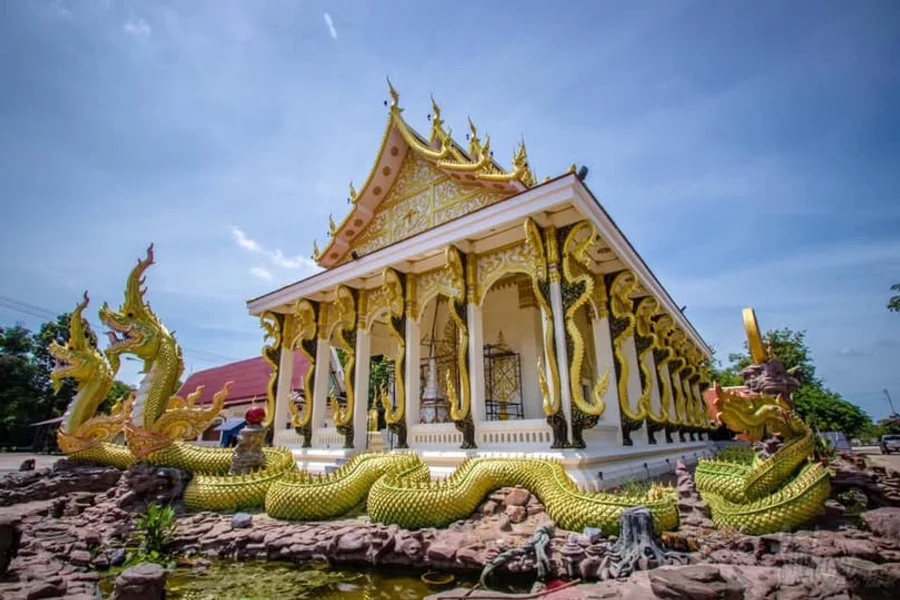
9. Wat Amnat, also known as Wat Phra Chao Yai Lue Chai, is located in Amnat Subdistrict, Lue Amnat District. It is an important temple and spiritual center for local residents. The temple enshrines Phra Chao Yai Lue Chai, also known as Phra Ritthi Lue Chai, a Buddha image in the Subduing Mara posture created in the Lan Xang artistic tradition.
Highlight: Phra Chao Yai Lue Chai is an important Lan Xang-style Buddha image and a major pilgrimage point in Amnat Charoen, suitable for paying respect, making merit, praying for good fortune, and learning about Buddhist art of the Mekong region.
The Subduing Mara posture represents the Buddha’s victory over Mara before enlightenment and therefore symbolizes overcoming obstacles and developing inner stability. The name “Lue Chai,” meaning renowned victory, has also contributed to local beliefs about praying for success and auspicious outcomes.
The Lan Xang artistic style reflects cultural connections between Isan communities and the Mekong Basin, which can also be seen in Buddha images, temple architecture, language, and traditions across Amnat Charoen.
Wat Amnat remains a center of community religious life, hosting merit-making activities on major Buddhist days and during local festivals. Visitors should dress modestly and respect areas actively used by local residents for worship.
The temple is suitable for merit-making travelers, older visitors, families, and those interested in Lan Xang Buddhist art. Access is relatively easy and does not require long walking distances, making it convenient for a half-day trip in Lue Amnat District.
Wat Amnat is best combined with Wat Pho Sila to compare Dvaravati archaeological remains with later Lan Xang Buddhist art, helping travelers understand the continuity of religion and culture in the region.
Getting There: The temple is located in Amnat Subdistrict, Lue Amnat District, about 20 kilometers from central Amnat Charoen. A turnoff from the main road leads approximately 500 meters to the temple. It is generally open daily from 08.00–17.00.
Map (GPS): https://www.google.com/maps/dir/?api=1&destination=15.682536,104.655634&travelmode=driving

10. Thida Thep Waterfall is located near Wat Tham Saeng Kaeo at Ban Kham Po Kaeo, Lao Phruan Subdistrict, Mueang Amnat Charoen District. It is a relatively small waterfall set among a forest monastery, mountains, and natural surroundings, making it suitable for travelers seeking a quiet place that combines merit-making with relaxation beside a stream.
Highlight: A natural seasonal waterfall within a cave-temple environment, surrounded by forest, rocks, streams, and a peaceful atmosphere. The waterfall is especially attractive during the rainy season and after rainfall when water levels increase.
The appeal of Thida Thep Waterfall lies more in the overall environment than in the size of the waterfall itself. Visitors can experience nature trails, caves, religious areas, forest, and a quiet temple atmosphere in a single route. As the path leaves the community area, the landscape gradually becomes more forested and mountainous.
The waterfall is connected with a natural stream that flows over rock layers and boulders seasonally. The rainy season offers the strongest water flow, while the dry season naturally brings lower water levels. Travelers should therefore choose the season according to the experience they want.
Visitors should be careful on slippery rocks and avoid entering sections with strong currents, especially after heavy rainfall. Shoes with good grip make walking through the natural terrain safer.
The waterfall is suitable for couples, families, groups of friends, nature travelers, and visitors who enjoy forest temples. It should not be approached as a large commercial attraction with extensive facilities; its main strengths are tranquility and natural surroundings.
Thida Thep Waterfall can be combined with Wat Tham Saeng Kaeo or other natural attractions in Mueang Amnat Charoen for a half-day route focused on forest temples, mountains, and peaceful scenery.
Getting There: The waterfall is located near Wat Tham Saeng Kaeo at Ban Kham Po Kaeo, Lao Phruan Subdistrict, Mueang Amnat Charoen District. A private vehicle is the most convenient option. It is generally open daily from 06.00–18.00. Water conditions should be checked during the rainy season.
Map (GPS): https://www.google.com/maps/dir/?api=1&destination=15.676833,104.854250&travelmode=driving
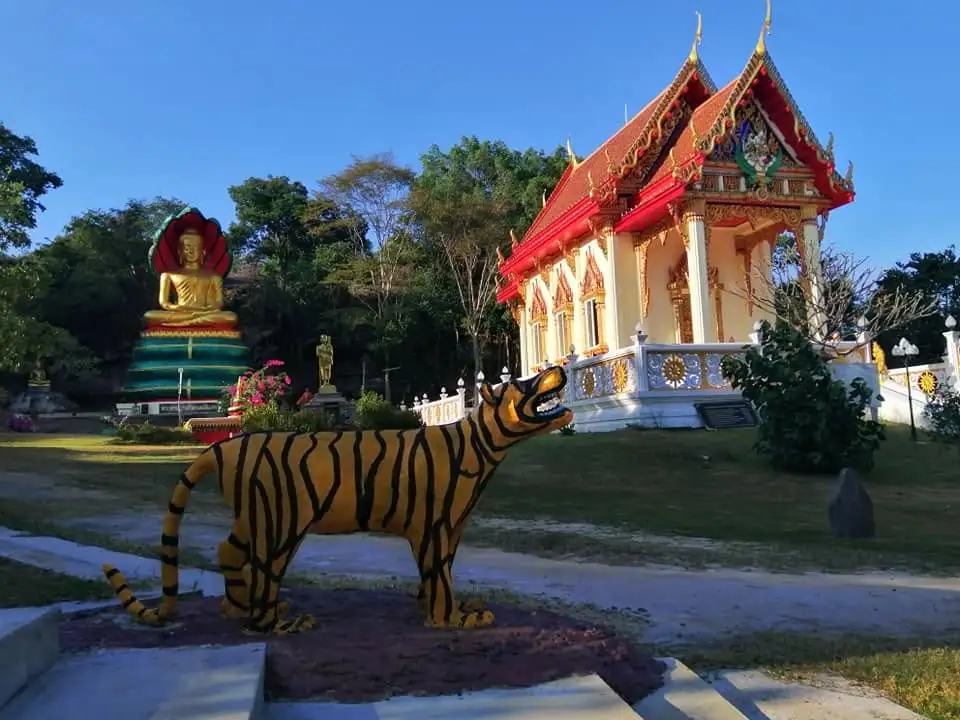
11. Wat Tham Saeng Kaeo is located on Phu Sing in Lao Phruan Subdistrict, Mueang Amnat Charoen District. It is a cave temple that blends religious spaces naturally with the surrounding landscape. The grounds include caves, boulders, rock plateaus, hillside paths, viewpoints, and several Buddha images, making it suitable for visitors who want to experience a peaceful temple surrounded by nature.
Highlight: Tham Saeng Kaeo Cave, its broad cave entrance, natural rock plateaus, viewpoints, the Naga-protected Buddha image known as “Phra Barami Rattana Mani Saeng,” a hermit statue, sacred caves, and religious areas connected with local beliefs.
The temple’s appeal comes from its simplicity and the way the natural landscape forms part of the experience. Visitors walk across rock plateaus and through forested areas to reach different points around the temple, creating an atmosphere very different from an urban temple dominated by large buildings.
Local stories associated with the temple refer to light reflecting from cave walls, sacred crystal-like objects, and meditation practices of wandering monks and hermits in earlier times. These stories give the area a spiritual dimension in addition to its natural beauty, making it a good place for quiet walking and reflection.
The Phu Sing area also offers viewpoints over the surrounding countryside, especially pleasant in the morning and late afternoon when temperatures are lower. During the rainy season, visitors should be cautious on slippery rock surfaces and wear footwear with good grip.
The temple is suitable for merit-making travelers, photographers, visitors interested in cave temples, and anyone looking for a natural attraction not far from the city. It can easily be combined with Thida Thep Waterfall and the Phra Sīvali Footprint in the same general area.
Getting There: From central Amnat Charoen, travel toward Lao Phruan Subdistrict, pass the Lao Phruan Subdistrict Administrative Organization area, and continue approximately 6 kilometers toward the temple. The site is open daily during daytime hours.
Map (GPS): https://www.google.com/maps/dir/?api=1&destination=15.899547,104.796068&travelmode=driving

12. Tham Tu Thong Cave is located in Non Ngam Subdistrict, Pathum Ratchawongsa District. The attraction combines a natural cave, mountains, a monastic retreat, forest, and views toward Phra Lao Reservoir in one area. It is particularly suitable for travelers who appreciate quiet natural settings with stories connected to faith and meditation practice.
Highlight: A natural cave, mountain scenery, a monastic retreat, forest atmosphere, and views toward Phra Lao Reservoir behind the site, creating a peaceful landscape different from caves located in flat lowland areas.
Local tradition associated with Tham Tu Thong tells of a respected monk who once traveled through the area and kept sacred scriptures within the cave. This story contributed to the cave’s reputation as a place for meditation and a location with Buddhist spiritual significance.
The landscape surrounding the cave includes elevated terrain, forest, and views over the water below. Morning visits are especially pleasant because the atmosphere is quiet and temperatures are cooler. During the rainy season, the forest becomes lush, although paths can become slippery.
This destination is more suitable for peaceful exploration than adventure activities. Visitors should dress respectfully because the area includes an active monastic retreat and should avoid making loud noise inside the cave.
Tham Tu Thong Cave can be combined with Wat Khao Suwan Banphot or Phu Sing–Phu Pha Phueng Forest Park to create a nature-and-spirituality route through Pathum Ratchawongsa District.
Getting There: The cave is located in Non Ngam Subdistrict, Pathum Ratchawongsa District. A private vehicle is the most convenient option. It is generally open daily from 08.00–17.00.

13. Phra Sīvali Footprint is located within Wat Tham Saeng Kaeo in Lao Phruan Subdistrict, Mueang Amnat Charoen District. It is a sacred point visited by worshippers in combination with the cave temple and surrounding natural landscape on Phu Sing.
Highlight: The Phra Sīvali Footprint shrine is located within a cave-temple environment surrounded by forest, boulders, mountains, and a peaceful atmosphere suitable for worship, prayer, and nature walks.
Phra Sīvali is an arahant disciple widely revered by Buddhists as a monk associated with abundance and good fortune. Because of this belief, worshippers often visit the footprint to pray for prosperity, smooth progress in life, and freedom from hardship or shortage.
One of the site’s distinctive qualities is that the sacred footprint is not isolated from nature but forms part of the wider Wat Tham Saeng Kaeo landscape. Reaching the shrine therefore combines the quiet atmosphere of a forest temple with the rocky terrain of Phu Sing.
The site is suitable for merit-making visitors, older travelers who are comfortable walking within the temple grounds, and anyone seeking a peaceful experience. It is best visited together with other points inside the temple area to make the journey more worthwhile.
The Phra Sīvali Footprint, Wat Tham Saeng Kaeo, and Thida Thep Waterfall can all be combined into one itinerary because they are located within the same general natural area.
Getting There: The footprint is located within Wat Tham Saeng Kaeo in Lao Phruan Subdistrict, Mueang Amnat Charoen District. It can be visited daily, although there is no fixed official opening and closing schedule. Daytime visits are recommended.
Map (GPS): https://www.google.com/maps/dir/?api=1&destination=15.899547,104.796069&travelmode=driving

14. Fai Rong Hin is located in Phra Lao Subdistrict, Phana District. It is a freshwater dam and community recreation area that plays an important role in conservation, learning, and local water use. The surrounding landscape is open, with water and green spaces suitable for relaxing in the morning or late afternoon.
Highlight: A large freshwater dam, waterside recreation areas, a learning center, and community activity spaces that provide insight into local life and community water-resource management.
Fai Rong Hin reflects the close relationship between Isan communities and water resources. Water is essential for agriculture, ecosystems, and everyday life, particularly during the dry season when local reservoirs and dams become especially important.
Morning and evening are the best times for walking and photography because temperatures are lower and reflections across the water create a peaceful atmosphere. The site is suitable for families or travelers looking for a quiet rest stop while exploring Phana District.
The site has not been developed into a major commercial attraction, and its appeal lies in its simplicity and continued use by local residents. Visitors should keep the area clean and avoid interfering with community activities.
Fai Rong Hin can be combined with important temples and nearby communities in Phana District to create an itinerary mixing religion, nature, and rural Isan life.
Getting There: The dam is located in Phra Lao Subdistrict, Phana District. A private vehicle is convenient. It can be visited daily, with morning and late afternoon being the most pleasant times.

15. Tat Yai Waterfall is located at Ban Hin Kong, Moo 5, Khok Kong Subdistrict, Chanuman District. The natural waterfall is formed by Huai Thom flowing across sandstone formations and a rock ledge, creating a broad cascade surrounded by riverside forest.
Highlight: The waterfall is approximately 30 meters wide and features sandstone cliffs, boulders, a sandy area below the falls, and forest along the stream. It is suitable for relaxing, photography, and nature travel in the Chanuman area.
Tat Yai is characterized by a broad sheet of water rather than a tall vertical drop. As the stream passes over layers of rock, it creates an attractive pattern of flowing water, while the sandy and rocky areas below produce a landscape different from many mountain waterfalls.
Water can be seen throughout the year, while the period from approximately January–May is another particularly interesting time because of the character of the stream and surrounding environment. Visitors should still check water levels after heavy rainfall upstream.
The waterfall is suitable for families, groups of friends, and nature travelers. Shoes with good traction are recommended because rocks near the water may be slippery, and visitors should avoid swimming in areas with strong currents.
If time allows, Tat Yai Waterfall can be combined with Wat Pa Khiri Wong Kot or other natural attractions in Chanuman District for a route that includes waterfall scenery, forest, and mountains.
Getting There: The waterfall is located at Ban Hin Kong, Moo 5, Khok Kong Subdistrict, Chanuman District, approximately 3 kilometers from Ban Hin Kong. It is generally open daily from 06.00–18.00.
Map (GPS): https://www.google.com/maps/dir/?api=1&destination=16.070004,104.950581&travelmode=driving

16. Wat Pa Khiri Wong Kot is located around Ban Kham Kaeo in Kham Khuean Kaeo Subdistrict, Chanuman District. It is a forest temple hidden among mountains, woodland, and natural rock formations, making it suitable for travelers who want to experience a peaceful temple while exploring nature.
Highlight: Diverse forest vegetation, boulders, cliffs, rock channels, and unusual natural rock formations, including some that resemble animals such as turtles.
The temple does not focus on monumental architecture. Instead, the original landscape forms an important part of the meditation environment. The sounds of wind, leaves, and forest create an atmosphere suitable for quiet walking and contemplation.
The name “Khiri Wong Kot” reflects the complex terrain of mountains and interlocking rock formations. Walking around the area can feel like gradually exploring a natural maze while visiting a forest monastery at the same time.
Small wildlife and many natural plant species can also be found in the area, making it suitable for conservation-oriented travel. Visitors should not feed wildlife, collect plants, or remove stones from the site.
The temple is best suited to nature travelers, merit-making visitors, and those who appreciate quiet places. It is less suitable for travelers expecting extensive commercial facilities, and daytime visits are recommended.
Wat Pa Khiri Wong Kot can be combined with Tat Yai Waterfall in Chanuman District to create a full-day route focused on forest temples and nature.
Getting There: From Ban Kham Kaeo, Kham Khuean Kaeo Subdistrict, Chanuman District, travel approximately 700 meters west along the Ban Kham Kaeo–Kham Dueai road. The temple can be visited daily, with daytime hours recommended.
Map (GPS): https://www.google.com/maps/dir/?api=1&destination=16.134482,104.911800&travelmode=driving
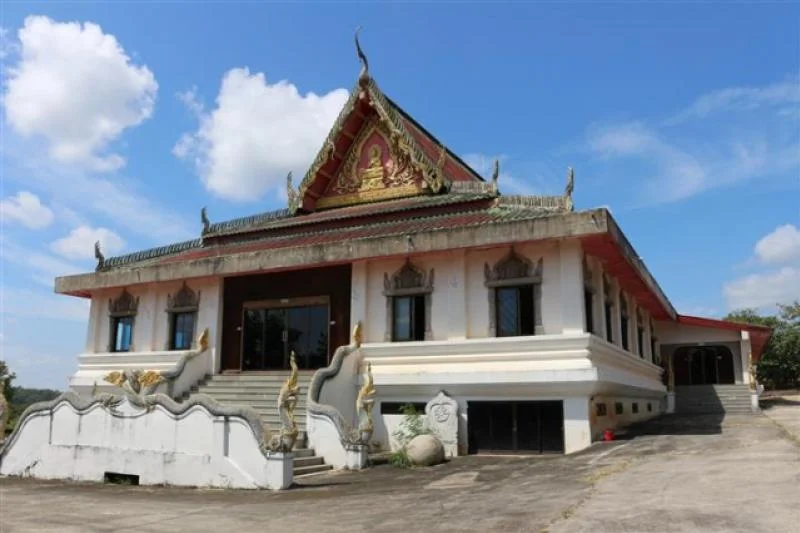
17. Wat Khao Suwan Banphot is located at Ban Kham Ya Nang, Moo 8, Na Pa Saeng Subdistrict, Pathum Ratchawongsa District. The hillside temple features both sacred Buddha images and viewpoints over nearby communities, making it suitable for visitors who want to combine worship with elevated views of rural Isan landscapes.
Highlight: A replica of the Emerald Buddha, a temple setting on elevated terrain, and viewpoints across Na Pa Saeng Subdistrict overlooking fields and surrounding communities.
The replica of the Emerald Buddha is an important focus of worship at the temple. Local visitors come to make merit and pray for auspiciousness, peace, and stability in life.
The name “Suwan Banphot” refers to an auspicious or beautiful mountain and suits the temple’s elevated location surrounded by nature. Reaching the temple therefore provides both a religious experience and a broader perspective over the surrounding countryside.
Morning and late afternoon are better for views than midday because temperatures are lower and the light across rice fields and villages is more attractive.
The temple is suitable for merit-making travelers, couples, families, and photographers. Visitors should dress respectfully and take care when walking on sloping or elevated sections of the grounds.
Wat Khao Suwan Banphot can be combined with Tham Tu Thong Cave or other natural attractions in Pathum Ratchawongsa District.
Getting There: The temple is located at Ban Kham Ya Nang, Moo 8, Na Pa Saeng Subdistrict, Pathum Ratchawongsa District. A private vehicle is the most convenient option. It can be visited daily and is best explored during daylight hours.
Map (GPS): https://www.google.com/maps/dir/?api=1&destination=15.927180,104.866777&travelmode=driving

18. Kham Phra Community Enterprise Center is located at Ban Kham Phra, Moo 3, Kham Phra Subdistrict, Hua Taphan District. It is an important learning and retail center for locally produced khit textiles, making it particularly suitable for travelers who want a deeper understanding of Isan weaving and who prefer to buy souvenirs directly from local producers.
Highlight: Kham Phra khit textiles, handwoven fabrics, geometric patterns, floral designs, animal motifs, and products developed from traditional supplementary-weft and thread-lifting techniques.
Kham Phra khit weaving requires skilled manipulation and lifting of threads to create patterns across the fabric. Weavers must control rhythm and detail precisely, giving every textile its own character and making the maker’s craftsmanship clearly visible.
The center serves several roles at once: production, retail, knowledge transfer, and income generation. It is therefore a good example of how traditional community knowledge can be adapted to contemporary lifestyles without losing its identity.
Visitors can purchase khit cloth and textile products as souvenirs, particularly useful for travelers looking for locally made items with a clear place of origin and a story behind their production.
The center can be combined with Ban Kham Phra Community Enterprise Center and Ban Sang Tho Arts and Crafts Center to create a full-day handicraft route through Hua Taphan District.
Getting There: The center is located at 106 Moo 3, Ban Kham Phra, Kham Phra Subdistrict, Hua Taphan District, beside the Hua Taphan–Amnat Charoen road, approximately 23 kilometers from the provincial center. It is generally open daily from 08.30–16.30.
Map (GPS): https://www.google.com/maps/dir/?api=1&destination=15.767149,104.471741&travelmode=driving

19. Wat Phu Champa is located at Ban Phu Champa in Na Mo Ma Subdistrict, Mueang Amnat Charoen District. The temple is distinctive for combining a sacred landscape, natural rock plateau, champa trees, and local beliefs about planting a champa tree as an act of prayer and fortune-seeking.
Highlight: The local belief in planting champa trees while making wishes, natural rock landscapes, champa or frangipani flowers, and the peaceful temple atmosphere that makes the area suitable for quiet reflection.
Worshippers traditionally plant champa trees as symbols of hope. According to local belief, if the tree grows strongly, it is considered a favorable sign connected with life, love, fortune, or a wish that has been made.
The sight of flowering champa trees growing among natural rock and forest gives the temple a distinctive atmosphere. When the trees bloom, the flowers soften the rugged character of the rocky terrain and elevated landscape.
In addition to these beliefs, visitors can make merit, pay respect to Buddha images, sit quietly, and enjoy the temple’s natural surroundings. The destination therefore appeals both to merit-making travelers and those interested in local Isan beliefs.
Morning or late afternoon is the best time to visit because temperatures are lower and walking around the grounds is more comfortable. Visitors should keep the area clean and avoid disturbing trees planted by worshippers.
Wat Phu Champa can be combined with Buddha Park and Phra Mongkhon Ming Mueang and Wat Tham Saeng Phet as part of a Mueang Amnat Charoen itinerary.
Getting There: The temple is located at Ban Phu Champa, Na Mo Ma Subdistrict, Mueang Amnat Charoen District. It can be visited daily from morning until evening, and a private vehicle is the most convenient option.
Map (GPS): https://www.google.com/maps/dir/?api=1&destination=15.922246,104.496681&travelmode=driving
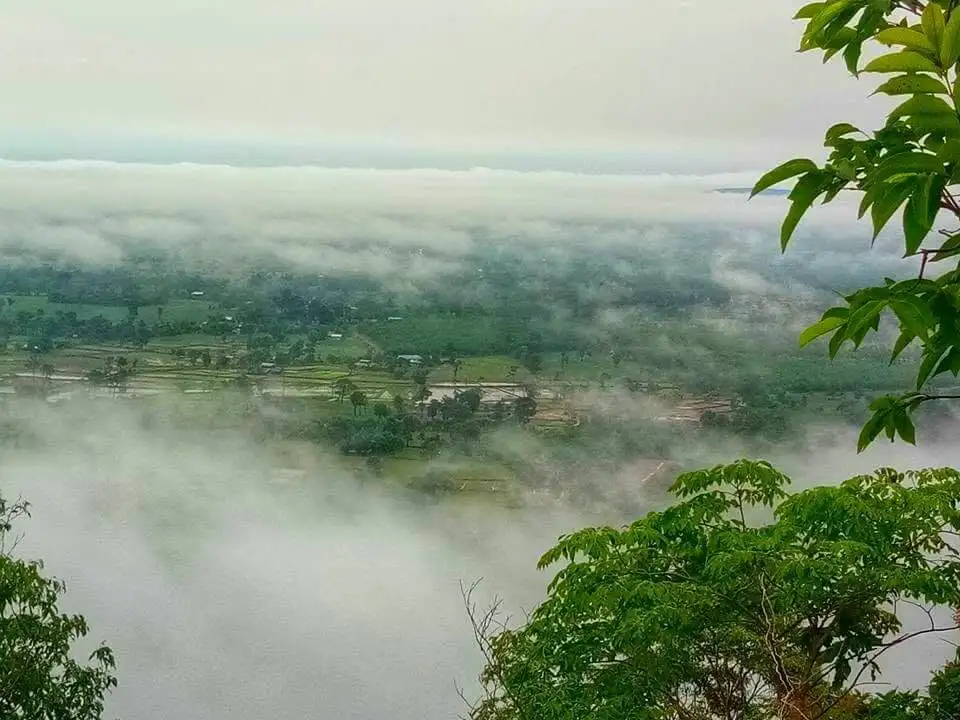
20. Phu Kaset, also known as Wat Tham Hua Nak Phu Kaset and Dan Hin Hua Nak, is located in Senangkhanikhom District. The attraction combines a mountain, forest temple, broad rock plateaus, cliffs, seasonal waterfalls, and unusual natural rock formations in one area, making it an excellent final stop for travelers who want to experience a distinctive Isan landscape.
Highlight: Large rock plateaus, Dan Hin Hua Nak, cliffs, unusual natural rock formations, Tat Hang Waterfall during the rainy season, seasonal flower fields from late rainy season into early cool season, and open woodland across the mountain.
Phu Kaset is a large mountain that stands prominently within the landscape of Senangkhanikhom District. The terrain rises in several steep levels and includes rock plateaus in different areas, allowing visitors to experience viewpoints, boulders, and forest scenery within the same trip.
During the rainy season, broad rock surfaces collect rainwater from the mountain. Water then flows through rock channels and forms seasonal cascades, with Tat Hang Waterfall among the area’s notable features. The mountain becomes especially green during this period, while the dry season reveals more detail in the rock formations and cliffs.
Late rainy season through early cool season is another attractive period because some areas develop seasonal flower fields and temperatures are comfortable for nature walks. Hiking shoes or footwear with good traction are recommended.
Phu Kaset is suitable for nature lovers, photographers, groups of friends, and visitors interested in forest temples or sandstone landscapes. Stay away from cliff edges and avoid leaving known paths in unfamiliar areas.
Phu Kaset can be combined with Phu Sa Dok Bua National Park because both are in the Senangkhanikhom zone, although the route should be planned as a full-day trip with an early start.
Getting There: Phu Kaset is located in Nong Hai Subdistrict, Senangkhanikhom District. A private vehicle is the most convenient option. It is generally open daily from 09.00–16.00.
Map (GPS): https://www.google.com/maps/dir/?api=1&destination=16.048333,104.781378&travelmode=driving
| Topic | Details |
| Province Overview | Amnat Charoen is a peaceful Isan province combining faith, nature, community culture, and traditional craftsmanship. Major attractions include sacred Buddha images, forest temples, cave temples, sandstone mountains, waterfalls, a national park, Mor Lam communities, khit textiles, and locally made handicrafts. |
| Top 10 Highlights | 1. Buddha Park and Phra Mongkhon Ming Mueang 2. Wat Tham Saeng Phet 3. Phu Sing–Phu Pha Phueng Forest Park 4. Phu Sa Dok Bua National Park 5. Wat Pho Sila 6. Ban Kham Phra Community Enterprise Center 7. Nong Pla Khao Mor Lam Village 8. Ban Sang Tho Arts and Crafts Center 9. Wat Amnat 10. Thida Thep Waterfall |
| Mueang Amnat Charoen Zone | 1. Buddha Park and Phra Mongkhon Ming Mueang 2. Wat Tham Saeng Phet 3. Nong Pla Khao Mor Lam Village 4. Thida Thep Waterfall 5. Wat Tham Saeng Kaeo 6. Phra Sīvali Footprint 7. Wat Phu Champa This zone works well for a 1-day itinerary because it combines spirituality, forest temples, nature, and Mor Lam culture without requiring long-distance travel between districts. |
| Lue Amnat Zone | 1. Wat Pho Sila 2. Wat Amnat This zone is especially important for travelers interested in Dvaravati sema stones, Lan Xang Buddhist art, and the long continuity of Buddhist belief in Amnat Charoen. |
| Hua Taphan Zone | 1. Ban Kham Phra Community Enterprise Center 2. Ban Sang Tho Arts and Crafts Center 3. Kham Phra Community Enterprise Center This is one of the best areas for learning about khit textiles, hand weaving, local crafts, community knowledge, and souvenirs made directly by local artisans. |
| Pathum Ratchawongsa Zone | 1. Phu Sing–Phu Pha Phueng Forest Park 2. Tham Tu Thong Cave 3. Wat Khao Suwan Banphot This zone is ideal for travelers interested in sandstone mountains, caves, viewpoints, and quiet hillside temples. |
| Senangkhanikhom Zone | 1. Phu Sa Dok Bua National Park 2. Phu Kaset A strong nature zone featuring mountains, broad rock plateaus, cliffs, forest, and seasonal waterfalls. It is best explored as a full-day trip. |
| Chanuman Zone | 1. Tat Yai Waterfall 2. Wat Pa Khiri Wong Kot This zone is suitable for travelers who want to experience waterfalls, forest, mountains, and a quiet forest monastery with natural rock formations on the same route. |
| Phana Zone | 1. Fai Rong Hin A peaceful stop for waterside relaxation, community life, and understanding how water resources support agriculture and rural life in Isan. |
| Faith and Merit-Making | 1. Buddha Park and Phra Mongkhon Ming Mueang 2. Wat Tham Saeng Phet 3. Wat Pho Sila 4. Wat Amnat 5. Wat Tham Saeng Kaeo 6. Phra Sīvali Footprint 7. Wat Pa Khiri Wong Kot 8. Wat Khao Suwan Banphot 9. Wat Phu Champa |
| Nature and Mountains | 1. Phu Sing–Phu Pha Phueng Forest Park 2. Phu Sa Dok Bua National Park 3. Thida Thep Waterfall 4. Tham Tu Thong Cave 5. Tat Yai Waterfall 6. Wat Pa Khiri Wong Kot 7. Phu Kaset 8. Fai Rong Hin |
| History and Archaeology | Wat Pho Sila is one of the province’s most important historical sites because it preserves ancient sandstone sema boundary stones dating to the Dvaravati period more than 1,000 years ago. Wat Amnat adds another layer of cultural history through Lan Xang Buddhist art and Mekong-region religious traditions. |
| Mor Lam Culture | Nong Pla Khao Mor Lam Village is the province’s strongest destination for living Mor Lam culture. The old Phu Thai community is home to multiple Mor Lam styles and preserves khaen music, traditional singing, dance, local language, and performance traditions as part of everyday community life. |
| Textiles and Handicrafts | 1. Ban Kham Phra Community Enterprise Center 2. Kham Phra Community Enterprise Center 3. Ban Sang Tho Arts and Crafts Center These attractions are known for khit weaving, handwoven textiles, basketry, and community crafts that represent the traditional skills of Hua Taphan District. |
| Best for Families | 1. Buddha Park and Phra Mongkhon Ming Mueang 2. Wat Tham Saeng Phet 3. Nong Pla Khao Mor Lam Village 4. Ban Sang Tho Arts and Crafts Center 5. Wat Amnat 6. Fai Rong Hin 7. Wat Phu Champa |
| Best for Photography | 1. Phra Mongkhon Ming Mueang 2. Wat Tham Saeng Phet 3. Phu Sing–Phu Pha Phueng Forest Park 4. Phu Kaset 5. Tat Yai Waterfall 6. Wat Khao Suwan Banphot 7. Wat Phu Champa |
| Local Food | Local cuisine is strongly rooted in Isan food culture. Common dishes include larb, som tam, grilled fish, jaew dipping sauces, and meals prepared with seasonal vegetables and local ingredients available in each district. |
| Souvenirs | 1. Kham Phra khit textiles 2. Traditional handwoven fabrics 3. Basketry 4. Ban Sang Tho arts-and-crafts products 5. Textile accessories and community handicrafts |
| Traditions and Culture | Amnat Charoen continues to observe traditional Isan merit-making events linked with the Heet Sip Song cycle, including Bun Phawet, Bun Bang Fai, Buddhist Lent, the end of Buddhist Lent, and temple festivals. Mor Lam, traditional dance, folk music, and textile weaving remain active parts of community life. |
| 1-Day City-Zone Itinerary | Morning: Buddha Park and Phra Mongkhon Ming Mueang Late Morning: Wat Tham Saeng Phet Afternoon: Nong Pla Khao Mor Lam Village Evening: Wat Phu Champa or return to central Amnat Charoen |
| 1-Day Nature Itinerary | Morning: Phu Sing–Phu Pha Phueng Forest Park Afternoon: Wat Tham Saeng Kaeo – Thida Thep Waterfall Evening: Return to central Amnat Charoen |
| 2 Days, 1 Night | Day 1: Phra Mongkhon Ming Mueang – Wat Tham Saeng Phet – Nong Pla Khao Mor Lam Village Day 2: Wat Pho Sila – Wat Amnat – Ban Kham Phra handicraft attractions – Ban Sang Tho Arts and Crafts Center |
| 3 Days, 2 Nights | Day 1: Mueang Amnat Charoen Zone Day 2: Lue Amnat – Hua Taphan Day 3: Phu Sa Dok Bua National Park – Phu Kaset |
| 4–5 Day Itinerary | Add Pathum Ratchawongsa, Chanuman, and Phana attractions such as Tham Tu Thong Cave, Wat Khao Suwan Banphot, Tat Yai Waterfall, Wat Pa Khiri Wong Kot, and Fai Rong Hin for a broader journey covering faith, forests, waterfalls, mountains, and community life. |
| Best Time to Visit | Amnat Charoen can be visited throughout the year. Temples and community attractions are suitable in every season. The rainy season is best for green forests and waterfalls, while late rainy season through the cool season is particularly good for mountains, rock plateaus, and outdoor nature trips. |
| Getting Around | A private car is the most practical way to visit several districts because many nature attractions, forest temples, and communities are spread across the province. Planning by zone helps reduce unnecessary backtracking and makes daily itineraries easier to manage. |
| Safety | Check weather conditions before visiting mountains, waterfalls, and rock plateaus. Wear footwear with good grip, especially during the rainy season. Avoid cliff edges, dress respectfully at temples, and contact communities in advance if you want to see Mor Lam performances or handicraft-making activities. |
| Responsible Travel | Do not leave rubbish in forests, waterfalls, temples, or communities. Do not write on or climb ancient objects, remove rocks or plants from natural areas, or feed wildlife. Buy products directly from local groups whenever possible to help distribute tourism income within the community. |
Frequently Asked Questions (FAQ)
Q: What are the main attractions in Amnat Charoen?
A: Major attractions include Buddha Park and Phra Mongkhon Ming Mueang, Wat Tham Saeng Phet, Wat Pho Sila, Phu Sa Dok Bua National Park, Phu Sing–Phu Pha Phueng Forest Park, Nong Pla Khao Mor Lam Village, and community handicraft attractions in Hua Taphan District.
Q: Where should I go for a 1-day trip in Amnat Charoen?
A: For a first visit, start at Buddha Park and Phra Mongkhon Ming Mueang, continue to Wat Tham Saeng Phet, then spend the afternoon at Nong Pla Khao Mor Lam Village or Wat Phu Champa. This route combines spirituality, nature, and local culture.
Q: How many days should I spend in Amnat Charoen?
A: 2 days and 1 night are enough for Mueang Amnat Charoen, Lue Amnat, and Hua Taphan. If you want to add Phu Sa Dok Bua, Phu Kaset, Chanuman, and Pathum Ratchawongsa, plan 3–5 days.
Q: Which attractions are best for a merit-making trip?
A: Recommended places include Phra Mongkhon Ming Mueang, Wat Tham Saeng Phet, Wat Pho Sila, Wat Amnat, Wat Tham Saeng Kaeo, the Phra Sīvali Footprint, Wat Pa Khiri Wong Kot, Wat Khao Suwan Banphot, and Wat Phu Champa.
Q: Which natural attractions in Amnat Charoen should not be missed?
A: Phu Sing–Phu Pha Phueng Forest Park, Phu Sa Dok Bua National Park, Phu Kaset, Tat Yai Waterfall, Thida Thep Waterfall, Tham Tu Thong Cave, and Fai Rong Hin are among the province’s most interesting nature destinations.
Q: Are there historical or archaeological attractions in Amnat Charoen?
A: Yes. Wat Pho Sila is especially important because it preserves sandstone sema stones from the Dvaravati period that are around 1,000 years old and provide evidence of early Buddhist culture in Northeastern Thailand.
Q: Why is Nong Pla Khao Mor Lam Village worth visiting?
A: Ban Pla Khao is an old community with several Mor Lam performance traditions and strong Phu Thai cultural identity. Khaen music, Mor Lam singing, traditional dance, and local crafts remain part of real community life. Cultural activities should be arranged in advance.
Q: Where can I buy handwoven textiles and local souvenirs?
A: Recommended places include Ban Kham Phra Community Enterprise Center, Kham Phra Community Enterprise Center, and Ban Sang Tho Arts and Crafts Center. These locations offer khit textiles, handwoven fabrics, basketry, and community-made handicrafts.
Q: Is Amnat Charoen suitable for family travel?
A: Yes. Family-friendly attractions include Phra Mongkhon Ming Mueang, Wat Tham Saeng Phet, Nong Pla Khao Mor Lam Village, Ban Sang Tho Arts and Crafts Center, Wat Amnat, Fai Rong Hin, and Wat Phu Champa.
Q: Can Phu Sa Dok Bua and Phu Kaset be visited on the same day?
A: Yes. Both are in the Senangkhanikhom area, but travelers should start early and allow enough time at each destination because both involve extensive natural landscapes and walking routes.
Q: When is the best time to visit Tat Yai Waterfall?
A: The waterfall has water throughout the year, and approximately January–May can also be an attractive period depending on stream conditions. Always check rainfall and water levels before traveling.
Q: What is the best season to visit Amnat Charoen?
A: Late rainy season through the cool season is especially suitable for mountains, rock plateaus, and forest temples because temperatures are more comfortable. The rainy season is best for lush forests and waterfalls, while temples, communities, and handicraft centers can be visited throughout the year.
Q: Can I travel around Amnat Charoen without a private car?
A: You can reach the provincial center by public bus, but a private car or rental vehicle is much more convenient for visiting multiple districts because many natural attractions, forest temples, and communities are located outside the city and are not directly served by public transport.
Q: What local food and souvenirs is Amnat Charoen known for?
A: Local food is strongly influenced by Isan cuisine, including larb, som tam, grilled fish, jaew dipping sauces, and dishes made with seasonal ingredients. Popular souvenirs include khit textiles, handwoven fabrics, basketry, and handicrafts from Hua Taphan communities.
Q: Which itinerary is best for travelers who want both nature and culture?
A: Plan at least 2–3 days. Spend the first day at Phra Mongkhon Ming Mueang, Wat Tham Saeng Phet, and Nong Pla Khao Mor Lam Village. On the second day, visit Wat Pho Sila and handicraft communities in Hua Taphan. On the third day, choose Phu Sa Dok Bua National Park or Phu Kaset.
 Category: ●Travel Articles, Recipes
 Group: ●Travel Review, Food Review
Last Update : 2 DayAgo
 Last Update : 2 DayAgo

 Art, Culture and Heritage
 Historical Sites and Monuments(1)
 Art, Craft Centres, Tradition(4)
 Museums(1)
 Places of Worship
 Temple(30)
 Other Sacred Sites(8)
 Suburban Living
 Village, Community(4)
 Nature and Wildlife
 National Parks and Marine Reserves(3)
 Mountain (Doi)(6)
 Dam, Reservoir, Lake(5)
 Waterfalls(3)
 Caves(2)
 River, Canal(5)
 Other natural attractions(5)
 Entertainment and Agricultural
 Zoos and Aquariums(1)
 Farms, Parks and Ecotourism(4)
 Shopping
 Shopping and Night Market(1)
Travel Review, Food Review(3)


