
lovethailand home >Central Travel Attractions >Bangkok Travel Attractions >Bang Sue >Wong Sawang > King Mongkut's University of Technology North Bang..
TL;DR: King Mongkut's University of Technology North Bangkok, open Monday – Friday (Office of the President, General Affairs Division; Closed on, hours 08:30 – 16:30 (Administrative Office Hours, Not General Campus Access Hours).
King Mongkut's University of Technology North Bangkok
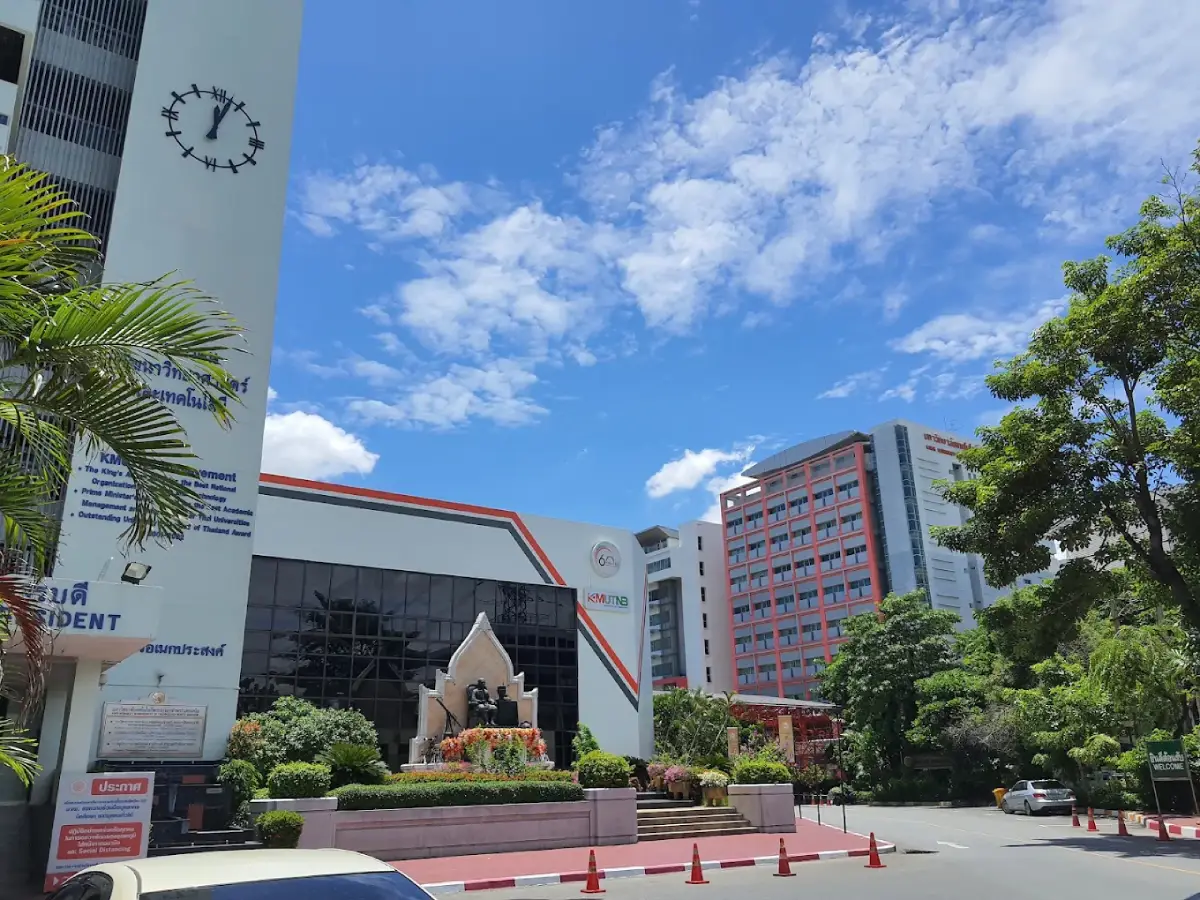
Open Days: Monday – Friday (Office of the President, General Affairs Division; Closed on Public Holidays)
Opening Hours: 08:30 – 16:30 (Administrative Office Hours, Not General Campus Access Hours)
King Mongkut's University of Technology North Bangkok (KMUTNB) is an autonomous public university under Thailand's Ministry of Higher Education, Science, Research and Innovation. Its main campus is located at 1518 Pracharat 1 Road, Wong Sawang, Bang Sue, Bangkok 10800, Thailand. The institution was established on February 19, 1959, as the North Bangkok Technical School through educational cooperation between the Thai and West German governments. This origin gave rise to its longstanding reputation as the Thai–German Technical School. It was upgraded to North Bangkok Technical College in 1964, became King Mongkut's Institute of Technology, North Bangkok Campus in 1971, and gained independent administration as King Mongkut's Institute of Technology North Bangkok in 1986. In 2007, it acquired university status under its present name. Today KMUTNB operates academic campuses in Bangkok, Prachin Buri, and Rayong, specializing in engineering, industrial technology, technical education, applied sciences, digital innovation, and industry-oriented research. The university celebrated its 67th anniversary in 2026. Professor Thanin Silpcharu, Ph.D., serves as President, leading an institution that continues to emphasize the integration of academic theory, practical skills, and technological innovation.
One of KMUTNB's most distinctive characteristics is its educational heritage rooted in Thai–German cooperation. Its teaching philosophy places considerable importance on experimentation, technical instruments, workshop practice, and solving real engineering problems. This approach remains central to the university's identity, especially in engineering and industrial technology programs that require students to develop analytical abilities alongside practical competence in designing, building, operating, and improving technological systems.
The main Bangkok campus is located in Wong Sawang, Bang Sue District, a neighborhood in northern Bangkok associated with transportation, manufacturing, and historic riverside communities. The campus is accessible from Pracharat Sai 1 Road, Wong Sawang Road, Phibun Songkhram Road, and Rama VII Bridge. Its facilities include engineering laboratories, industrial workshops, science classrooms, research centers, administrative buildings, the central library, conference halls, food courts, sports facilities, and spaces for student activities. The university's buildings illustrate its development from a specialized technical school into a comprehensive technological institution.
The origins of North Bangkok Technical School were closely connected with Thailand's economic development after World War II. As the country expanded its infrastructure, transportation networks, industrial factories, and modern manufacturing systems, it required increasing numbers of skilled technicians. Mechanical engineering, electrical systems, machinery maintenance, and industrial production were becoming essential to economic growth. At that time, technical education faced limitations in equipment, facilities, and instructors with experience of modern industrial practices. Cooperation with an industrialized European country offered an opportunity to strengthen Thailand's technical workforce.
On February 19, 1959, Thailand's Ministry of Education officially established North Bangkok Technical School under the Department of Vocational Education. The school aimed to train skilled technicians through intensive practical instruction. On March 16, 1959, Thailand and the Federal Republic of Germany signed their first technical cooperation agreement supporting the development of the institution. This partnership introduced technical expertise, workshop equipment, and educational methods influenced by the German vocational training tradition.
The name Thai–German Technical School came to represent more than an informal institutional nickname. It reflected a genuine international partnership in transferring technical knowledge and developing the country's industrial education system. The objective was to prepare people who could apply their skills in professional environments, including reading engineering drawings, using measuring equipment, controlling machinery, inspecting quality, and maintaining industrial systems. Graduates were expected to contribute directly to Thailand's manufacturing and industrial development.
On October 1, 1964, the Ministry of Education upgraded the school to North Bangkok Technical College. This change reflected the institution's growing academic responsibilities and increasing contribution to technical workforce development. As manufacturing expanded, the country's demand went beyond skilled tradespeople to include personnel capable of managing production systems, designing processes, and adapting technology to local industrial conditions.
On April 23, 1971, the King Mongkut's Institute of Technology Act established a new higher education institution by combining North Bangkok Technical College, Thonburi Technical College, and Nonthaburi Telecommunications College. The institution received the royally bestowed name King Mongkut's Institute of Technology and operated through three campuses. North Bangkok Technical College became King Mongkut's Institute of Technology, North Bangkok Campus. This development marked its transition from vocational and technical education into a broader system of higher education, scientific research, and industrial teacher preparation.
The name King Mongkut commemorates King Mongkut, Rama IV, who was renowned for his knowledge of science, astronomy, and contemporary scholarship. The association with the King represents the importance of scientific reasoning, observation, and the pursuit of knowledge. These principles are consistent with the mission of a technological university dedicated to advancing science and engineering for national development.
On November 5, 1974, the Faculty of Engineering and the Faculty of Technical Education and Science were established at North Bangkok. These two academic units provided important foundations for the institution's expansion. The Faculty of Engineering developed professional engineering education, while the Faculty of Technical Education and Science prepared technical teachers and instructors who could pass industrial knowledge and practical skills to future generations of vocational students.
On May 8, 1981, the College of Industrial Technology was formally established. The college became an important institution for preserving KMUTNB's hands-on training tradition. Its academic programs focused on industrial engineering technology, manufacturing, advanced technical skills, and continuing education for vocational graduates. Students were trained to design, operate, maintain, and improve equipment and industrial production processes.
February 19, 1986, marked another major transition when the original King Mongkut's Institute of Technology was divided into three independently administered institutions. The North Bangkok campus became King Mongkut's Institute of Technology North Bangkok. Separate governance allowed each institution to develop curricula, laboratories, resources, and research priorities according to its own strengths. A Graduate School was subsequently established on May 21, 1986, supporting the expansion of postgraduate education.
On May 14, 1988, the institution reorganized several academic and administrative units. The Faculty of Applied Science was established, the Faculty of Technical Education received its present identity, the Office of the President was upgraded, and the Central Library became a major supporting unit. Applied science strengthened the institution's capabilities in mathematics, physics, chemistry, computing, and other foundational disciplines essential to engineering and advanced technological research.
The institution also developed organizations dedicated to technology transfer and industrial cooperation. On July 22, 1991, the Institute for Industrial Technology Development was established. On January 22, 1993, the institute approved the creation of the Thai–French Innovation Technology Center. These initiatives demonstrated the growing importance of cooperation with industry and international partners, allowing the institution to provide technical advice, research services, and technological support to businesses.
In 1995, the institution expanded into Prachin Buri Province to increase access to science and technology education in eastern Thailand. The Faculty of Industrial Technology and Management became the pioneering academic unit in the region, receiving formal establishment in 1996 alongside the university's developing information technology services. The expansion provided additional space for teaching, research, and cooperation with local communities and regional industry.
The Prachin Buri campus is located in Noen Hom, Mueang Prachin Buri District, near the road leading toward Khao Yai National Park. Its surrounding region includes agricultural communities, tourism destinations, and industrial areas. The campus focuses on industrial management, information technology, computer-aided construction design and management, agricultural technology, product development, and service industries. These fields reflect the economic characteristics of eastern Thailand and neighboring provinces.
Between 2001 and 2003, the institution expanded into information technology, applied arts, and agro-industry. The Faculty of Information Technology was established in 2001, the Faculty of Applied Arts in 2002, and the Faculty of Agro-Industry in 2003. These changes reflected the increasingly interdisciplinary nature of industrial development, where manufacturing operations require not only machinery and engineering but also digital technology, communication, management, and product innovation.
On March 16, 2005, the Sirindhorn International Thai-German Graduate School of Engineering, commonly known as TGGS, was established. It became a major symbol of the continuing educational relationship between Thailand and Germany that began in 1959. The school emphasizes advanced engineering education, internationally oriented research, and collaboration with foreign universities and industrial partners. It offers English-language programs that prepare specialists for contemporary technological industries.
On December 27, 2007, the King Mongkut's University of Technology North Bangkok Act B.E. 2550 was published, enabling the institution to become an autonomous public university under its present name. The transition provided greater flexibility in academic administration, staffing, budget management, and research partnerships. KMUTNB retained its central mission of preparing graduates in science, engineering, and technology who could contribute to the country's development.
Another important phase began in 2010 with the development of the Rayong campus. On August 4, 2010, the University Council endorsed the expansion of science and technology education to Nong Lalok, Ban Khai District, Rayong Province. Earlier that year, on February 10, the Faculty of Architecture and Design had also been established. The expansion into Rayong was particularly important because eastern Thailand had become a major center for automotive manufacturing, petrochemicals, energy, logistics, and related industries.
On October 16, 2013, the University Council approved three faculties at the Rayong campus: the Faculty of Engineering and Technology, the Faculty of Science, Energy and Environment, and the Faculty of Business Administration. Their combined academic strengths address engineering design, manufacturing efficiency, energy systems, environmental responsibility, and business management, all of which are essential to the development of a modern industrial economy.
KMUTNB continued broadening its academic scope in the following years. The International College was established on April 23, 2014, followed by the Faculty of Business and Industrial Development on May 6, 2015, and the Faculty of Business Administration and Service Industry on June 24, 2015. These units expanded the university's expertise into industrial management, human resource development, international trade, tourism, hospitality, and service businesses.
On January 22, 2020, the Faculty of Information Technology was renamed the Faculty of Information Technology and Digital Innovation. The change reflected the growing influence of digital technologies on the economy and industrial systems. Areas such as artificial intelligence, data analytics, intelligent information systems, cybersecurity, and software development have become essential to improving the competitiveness of technology-driven organizations.
In 2026, Professor Thanin Silpcharu, Ph.D., serves as President of King Mongkut's University of Technology North Bangkok. He leads the institution across its Bangkok, Prachin Buri, and Rayong locations and supports cooperation with academic, scientific, and industrial partners. The university's educational direction remains focused on preparing graduates who can apply academic knowledge in practical situations while developing research that leads to useful technologies, industrial processes, and innovative services.
The university's identity is closely associated with King Mongkut, Rama IV. Its official emblem features the Great Crown, which was the King's royal insignia and was adopted with royal permission. The official university color is ripe betel nut red, identified by the color code #AC3520. It commemorates the royal connection with King Mongkut and serves as a shared symbol for students, faculty members, staff, and alumni.
The university's symbolic tree is the Red Pradu, or Pradu Daeng. It is a strong hardwood tree representing resilience and institutional strength. Its dark red flowers resemble the university's official color and bloom around February, the month of the university's anniversary. The tree therefore connects the university's natural environment with its institutional history and traditions.
KMUTNB communicates its identity through the idea of a university dedicated to transforming inventions into innovations. This reflects its commitment to scientific discovery, technological invention, and practical application. Its educational philosophy is expressed as developing people, innovation, science, and technology. Together, these ideas connect its Thai–German practical training heritage with the requirements of digital transformation and increasingly competitive international industries.
February 19 is the university's annual foundation anniversary. On February 19, 2026, KMUTNB held the 67th anniversary celebration known as Wan Ruam Nam Jai Chao KMUTNB, an event bringing together students, employees, alumni, and university supporters. The program celebrated technological contributions to national development and recognized distinguished alumni, academics, students, and personnel whose achievements brought recognition to the institution.
Alumni relationships are particularly important at a university with a strong technical education tradition. Many graduates work in manufacturing companies, engineering businesses, technology organizations, educational institutions, and public agencies. Alumni activities help develop professional networks, encourage internships, support scholarships, and create opportunities for experienced specialists to share their knowledge with younger generations.
Student life also includes orientation activities, teacher appreciation ceremonies, student clubs, engineering competitions, academic exhibitions, innovation showcases, and volunteer projects. Activities involving robotics, engineering design, software development, and prototype creation give students experience in teamwork, problem-solving, and presenting technical work to wider audiences.
The Faculty of Engineering in Bangkok is one of the university's principal academic units. Its fields include mechanical, electrical, civil, chemical, industrial, materials, computer, and related engineering disciplines. Teaching combines mathematics and scientific theory with laboratory work, technical tools, design projects, and practical experimentation. Students are encouraged to analyze engineering problems and develop workable solutions for professional environments.
The Faculty of Engineering also conducts research in robotics, automation, energy systems, manufacturing, and satellite technology. One notable example is the KNACKSAT small satellite project, reflecting KMUTNB's experience in space-related engineering and technological invention. The faculty has also developed a strong international reputation through student achievements in RoboCup Rescue competitions, demonstrating its ability to integrate research, practical engineering, and teamwork.
The Faculty of Technical Education prepares technical teachers, industrial educators, and professionals involved in vocational training. Its fields combine engineering knowledge with educational methods, including mechanical engineering and education, electrical engineering and education, and production and industrial engineering. Students study technical subjects alongside curriculum design, teaching methods, educational media, and instructional practice appropriate for vocational and technical education.
The College of Industrial Technology is among the academic units that most directly preserve KMUTNB's Thai–German heritage. It provides education from the Thai–German Pre-Engineering Vocational Certificate program through undergraduate and postgraduate study. Major areas include mechanical technology, mechatronics, welding, power electronics, automotive engineering, refrigeration and air conditioning, and aircraft maintenance. Practical training remains an important component of the college's educational approach.
Students at the College of Industrial Technology follow different educational pathways according to their qualifications. Some programs serve secondary school graduates, while continuing and credit-transfer degrees are designed for students who have completed vocational or higher vocational qualifications. Workshops, machinery, manufacturing equipment, and technical laboratories allow students to develop practical competence in design, production, assembly, maintenance, and system testing.
The Faculty of Applied Science develops the mathematics and scientific knowledge that supports modern technological development. Its academic fields include applied mathematics, statistics, physics, chemistry, computer science, and related analytical disciplines. The faculty contributes to research, computational modeling, data interpretation, scientific experimentation, and solutions requiring systematic scientific methods.
The Faculty of Information Technology and Digital Innovation prepares specialists in information systems and contemporary digital technologies. Its academic work includes software development, information systems, data management, analytics, and technologies that support industrial and business transformation. The faculty also provides graduate and international education, contributing to the development of researchers and technical experts in rapidly changing digital fields.
The Faculty of Applied Arts contributes knowledge in languages, communication, social sciences, and skills relevant to professional cooperation. These areas are important because engineering and technological work increasingly involves multidisciplinary teams and international collaboration. Humanities and social science education also strengthens critical thinking, communication, and the ability to explain technical knowledge to people from different professional and cultural backgrounds.
The Faculty of Architecture and Design provides education in architecture, industrial design, and disciplines associated with products and the built environment. Its teaching connects creativity with manufacturing technology and practical usability. Students learn to develop design concepts, understand materials, communicate their ideas, prepare drawings, and create solutions that respond to user needs and industrial requirements.
The Faculty of Business and Industrial Development focuses on business administration within industrial organizations. Its major fields include Industrial Business and Human Resource Development and Manufacturing and Service Industry Management. Students study organizational planning, personnel management, production systems, business development, and methods for improving competitiveness in industrial enterprises.
The International College provides English-language higher education and encourages international learning experiences. Its focus includes international business and global trade, connecting students with the knowledge and communication skills required for work across national markets. Its programs support intercultural understanding, international commercial awareness, and professional preparation for businesses operating in global networks.
The Sirindhorn International Thai-German Graduate School of Engineering, or TGGS, is distinguished by its advanced research orientation and international cooperation. Important fields include mechanical and automotive engineering, chemical engineering, materials and production engineering, electrical and computer engineering, smart energy systems, and railway infrastructure. It has also developed bachelor's programs in Microelectronics Design and Semiconductor Engineering and Electric Vehicle and Automation System Engineering, both associated with emerging technology industries.
At Prachin Buri, the Faculty of Industrial Technology and Management prepares students in information technology, industrial management, computer-aided design and construction management, and agricultural engineering for industry. Courses connect information systems with real industrial processes, such as production planning, logistics, digital construction design, quality control, and the development of engineering tools for agricultural applications.
The Faculty of Digital Agro-Industry at Prachin Buri focuses on food technology, agricultural product development, production management, and digital technology applications. Its programs connect food science, processing methods, quality control, innovation, and the creation of higher-value products. This expertise contributes to the transformation of agricultural raw materials into products that meet consumer expectations concerning quality, safety, and convenience.
The Faculty of Business Administration and Service Industry at Prachin Buri prepares personnel for tourism, hospitality, trade, and business management. Its academic fields address business planning, marketing, organizational administration, and service operations. These subjects are relevant to Prachin Buri's regional economy, which combines agriculture, tourism, local businesses, and nearby industrial development.
In 2026, KMUTNB also developed German-inspired dual education through its School–Factory program. This pathway connects institutional study with work-based training and is designed to support students entering technical education after lower secondary school. Its associate-level fields include electrical and electronics technology, modern mechanical technology, logistics and digital technology, and herbal and beauty technology. The approach expands opportunities for students who wish to combine vocational development with continued education.
The Rayong campus is located in one of Thailand's most important industrial regions. Its academic programs respond to the needs of automotive manufacturers, petrochemical industries, power producers, logistics operations, and engineering businesses. The Faculty of Engineering and Technology provides bachelor's education in Chemical Process Engineering Technology, Mechanical and Automotive Engineering Technology, Electrical and Automation Engineering Technology, Materials and Process Engineering Technology, and Industrial and Logistics Engineering Technology.
The Faculty of Science, Energy and Environment at Rayong contributes knowledge associated with energy systems, environmental management, and scientific applications in industry. Modern industrial operations require efficient resource use, safe processes, pollution prevention, and sustainability. The Faculty of Business Administration complements these technical fields by preparing professionals in accounting, finance, management, and other business disciplines relevant to industrial organizations.
KMUTNB also operates the Research and Training Center for Industry in Map Ta Phut, Mueang Rayong District. The center provides professional training, technical development, and cooperation with industrial enterprises. It is physically separate from the academic campus at Nong Lalok in Ban Khai District. Its activities help connect industry workers and employers with technical knowledge, professional standards, and workforce development.
KMUTNB offers education from vocational certificates and associate degrees to bachelor's, master's, and doctoral degrees. According to the university's official academic program statistics for the first semester of academic year 2026, it operated 213 programs: 4 vocational certificate programs, 4 associate degree programs, 104 bachelor's degree programs, 61 master's degree programs, and 40 doctoral degree programs. These include Thai-language programs, English-language programs, international programs, and courses incorporating enhanced English-language skills.
Admission for the 2026 academic year included university-administered selection and procedures linked to Thailand's TCAS system, depending on the program and qualification requirements. Four- or five-year bachelor's programs generally serve upper secondary or vocational graduates, while continuing and credit-transfer programs allow holders of higher vocational qualifications to pursue further study. The Thai–German Pre-Engineering program also provides a pathway for students who have completed lower secondary education.
Research and innovation at KMUTNB are closely connected with manufacturing and Thailand's technological development. Areas of expertise include rescue robotics, automation, electric vehicles, small satellite systems, energy technologies, advanced materials, data analytics, and industrial process improvement. Research in these fields creates opportunities to apply discoveries from laboratories to practical challenges faced by manufacturers and other organizations.
Industry partnerships are central to the university's educational model. Students can gain experience through cooperative education, internships, practical projects, and work involving the equipment and systems used in industry. In August 2026, KMUTNB signed a cooperation agreement with Thai Airways International to support the development of skilled personnel for aircraft maintenance. This initiative reflects the university's continuing commitment to meeting professional workforce requirements in specialized engineering sectors.
In October 2026, KMUTNB hosted an academic seminar addressing future health technologies, artificial intelligence, and digital innovation. The event provided opportunities to discuss how emerging technologies can be applied responsibly to healthcare and other social challenges. It illustrated that the university's work extends beyond traditional machinery and manufacturing into areas where engineering and scientific knowledge can improve everyday life.
Important facilities at the Bangkok campus include the Office of the President, engineering buildings, industrial technology workshops, the Faculty of Technical Education, and applied science facilities. They provide spaces for theoretical instruction, laboratory experimentation, technical training, and academic meetings. These buildings demonstrate how teaching and practical research operate together within the same university environment.
Navamindrarajini Building is one of the university's important academic and administrative buildings. It houses the Central Library and areas used for conferences and meetings. The library supports learning and research through books, journals, electronic resources, and academic databases. Its reading and study spaces are important to student life, while external visitors should consult the library's access rules before using its facilities.
Benjarat Auditorium, located within the Navamindrarajini Building, is used for academic meetings, seminars, professional training, and university activities. Other multipurpose facilities provide spaces for student events, project presentations, and public lectures. These venues support KMUTNB's role in communicating research and encouraging cooperation among students, academics, professionals, and external organizations.
The university's Archives Center preserves historical documents, photographs, records of important figures, and materials concerning the development of the institution from North Bangkok Technical School into KMUTNB. These resources help explain the transformation of Thai technical education and the influence of long-term educational cooperation with Germany. They are valuable to researchers, students, alumni, and people interested in Thailand's industrial and educational history.
The campus also contains locations associated with spiritual traditions and institutional identity, including a replica of Phra Nirantarai and spaces used for commemorative ceremonies. These places reflect the values and historical continuity of the university community. The Red Pradu trees and campus symbols contribute to a shared institutional atmosphere. Visitors should observe the rules and traditions appropriate to these areas.
KMUTNB's laboratories, workshops, technical testing facilities, and innovation spaces are essential to its practical educational approach. Students work with mechanical systems, electrical equipment, materials, control systems, and experimental prototypes. Members of the public interested in visiting laboratories or research units should arrange permission in advance because some facilities contain industrial machinery, electrical hazards, chemicals, and other equipment requiring strict safety procedures.
The surrounding Wong Sawang and Bang Sue neighborhoods have longstanding connections with the university through local businesses, restaurants, student accommodation, and transportation services. Wong Sawang Soi 11 contains shops, places to eat, and residential properties that serve students and visitors. Pracharat Sai 1 Road also connects the campus with historic temples and markets in the Bang Pho district. The development of the university has contributed to the changing economic and social character of the surrounding community.
Nearby cultural attractions include Wat Matchantikaram, Wat Soi Thong, Wat Bang Pho Omawat, and Bang Pho Market. These places provide insights into local communities along the Chao Phraya River. Rama VII Bridge is an important transportation landmark connecting Bangkok and Nonthaburi, while the EGAT Learning Center in nearby Bang Kruai offers interactive educational exhibits concerning energy, electricity, and environmental awareness.
Educational tourism around KMUTNB can therefore combine institutional history, industrial technology, transportation infrastructure, and the cultural heritage of northern Bangkok. Visitors may explore accessible parts of the university before continuing to nearby temples, markets, or the EGAT Learning Center. However, KMUTNB is an operating university, and many teaching and research facilities are not general tourist attractions. Entry to restricted academic areas requires authorization.
Getting There to KMUTNB's Bangkok campus is possible by MRT, public bus, taxi, or private car. Travelers using the MRT Purple Line can alight at Wong Sawang Station and continue by bus or local transportation to Pracharat Sai 1 Road. Another option is the MRT Blue Line to Bang Sue or Tao Poon Station, followed by onward transportation. The MRT stations are not located immediately beside the university's main entrance.
Public buses operate along Pracharat Sai 1 Road and surrounding areas such as Bang Pho and Wong Sawang. Routes historically associated with the district include 32, 90, 97, 117, 175, and 203, together with services operating under Bangkok's revised bus numbering system. Travelers should confirm the current route and boarding location before departure, particularly when transferring from Wong Sawang or Tao Poon MRT stations.
Visitors arriving by private car can approach the university through Pracharat Sai 1 Road, Wong Sawang Road, Phibun Songkhram Road, or roads connected to Rama VII Bridge. They should enter the exact campus address, 1518 Pracharat 1 Road, Wong Sawang, Bang Sue, Bangkok 10800, to avoid confusion with the university's regional campuses. Vehicle access and parking are governed by university regulations and may change during large events.
The Prachin Buri campus can be reached from Bangkok by road through Prachin Buri Province toward Noen Hom and the route leading to Khao Yai. Its address is 129 Moo 21, Noen Hom, Mueang Prachin Buri, Prachin Buri 25230. Travelers to the Rayong academic campus should use KMUTNB Rayong Campus in Nong Lalok, Ban Khai District, Rayong, as their destination. This is separate from the university's industrial training center in Map Ta Phut.
The main university telephone number for the Bangkok campus is +66 2 555 2000. The Prachin Buri campus can be contacted at +66 37 217 300, while the industrial training center in Rayong has its own extensions. The General Affairs Division of the Office of the President operates Monday through Friday, 08:30–16:30, except public holidays. These are administrative office hours and should not be interpreted as university gate hours or the teaching schedule of every academic program.
King Mongkut's University of Technology North Bangkok has played an important role in the development of Thailand's technical, engineering, and technological education. From North Bangkok Technical School in 1959 through its years as a technical college and institute of technology to its current status as an autonomous public university, the institution has developed alongside the country's need for skilled industrial personnel. Its teaching has evolved from machinery and workshop practice into advanced scientific research and innovation.
In 2026, as KMUTNB celebrates 67 years since its establishment, the university continues its Thai–German heritage through practice-oriented education while expanding into electric vehicles, automation, digital technology, smart energy systems, and digital agro-industry. Its academic presence in Bangkok, Prachin Buri, and Rayong connects education with industrial production and local communities across different regions. KMUTNB therefore contributes not only to graduate education but also to research, professional workforce development, technology transfer, and Thailand's long-term industrial future.
| University Name | King Mongkut's University of Technology North Bangkok (KMUTNB) |
| Thai Name | มหาวิทยาลัยเทคโนโลยีพระจอมเกล้าพระนครเหนือ |
| Abbreviation | KMUTNB / มจพ. |
| University Type | Autonomous Public University Under Thailand's Ministry of Higher Education, Science, Research and Innovation |
| Main Campus Address | 1518 Pracharat 1 Road, Wong Sawang, Bang Sue, Bangkok 10800, Thailand |
| Original Foundation Date | February 19, 1959 |
| Institutional Anniversary in 2026 | 67th Anniversary |
| Historical Names | 1. North Bangkok Technical School (1959) 2. North Bangkok Technical College (1964) 3. King Mongkut's Institute of Technology, North Bangkok Campus (1971) 4. King Mongkut's Institute of Technology North Bangkok (1986) 5. King Mongkut's University of Technology North Bangkok (2007) |
| Founding Organizations | Thai Ministry of Education, Department of Vocational Education, Government of Thailand, and Government of the Federal Republic of Germany |
| President in 2026 | Professor Thanin Silpcharu, Ph.D. |
| Name Origin | Named in Honor of King Mongkut (Rama IV), Recognized for His Scientific and Astronomical Knowledge |
| Educational Philosophy | Developing People, Innovation, Science, and Technology |
| Academic Identity | An Invention-to-Innovation University Emphasizing Hands-On Learning and Thai–German Technical Education Heritage |
| University Emblem | The Great Crown, Royal Insignia of King Mongkut (Rama IV) |
| University Color | Ripe Betel Nut Red (#AC3520) |
| University Tree | Red Pradu (Pradu Daeng) |
| Academic Locations | 1. Bangkok Campus, Bang Sue, Bangkok 2. Prachin Buri Campus, Noen Hom, Mueang Prachin Buri 3. Rayong Campus, Nong Lalok, Ban Khai, Rayong |
| Prachin Buri Campus Address | 129 Moo 21, Noen Hom, Mueang Prachin Buri, Prachin Buri 25230, Thailand |
| Industrial Training Center in Rayong | Research and Training Center for Industry, 15 Map Ta Phut Phan Road, Map Ta Phut, Mueang Rayong, Rayong 21150, Thailand |
| Bangkok Faculties and Colleges | 1. Faculty of Engineering 2. Faculty of Technical Education 3. Faculty of Applied Science 4. College of Industrial Technology 5. Faculty of Information Technology and Digital Innovation 6. Faculty of Applied Arts 7. Faculty of Architecture and Design 8. Faculty of Business and Industrial Development 9. International College 10. Sirindhorn International Thai-German Graduate School of Engineering (TGGS) 11. Graduate School |
| Prachin Buri Faculties | 1. Faculty of Industrial Technology and Management 2. Faculty of Business Administration and Service Industry 3. Faculty of Digital Agro-Industry |
| Rayong Faculties | 1. Faculty of Business Administration 2. Faculty of Science, Energy and Environment 3. Faculty of Engineering and Technology |
| Total Programs, First Semester 2026 | 213 Programs: 4 Vocational Certificate, 4 Associate Degree, 104 Bachelor's Degree, 61 Master's Degree, and 40 Doctoral Degree Programs, According to the University Academic Services Division |
| Important Campus Facilities | 1. Office of the President 2. Navamindrarajini Building 3. Central Library 4. Benjarat Auditorium 5. Faculty of Engineering and Laboratories 6. Faculty of Technical Education 7. College of Industrial Technology 8. Sirindhorn International Thai-German Graduate School of Engineering 9. KMUTNB Archives Center 10. Phra Nirantarai Replica Area 11. Multipurpose Buildings and Student Activity Spaces 12. KMUTNB Techno Park |
| Important Traditions and Events | 1. University Foundation Day — February 19 2. KMUTNB Alumni Homecoming Celebration 3. Distinguished Alumni and Academic Awards 4. Engineering Competitions and Innovation Exhibitions 5. Academic Conferences and Community Service Events |
| Academic and Research Strengths | Engineering, Industrial Technology, Rescue Robotics, Automation, Electric Vehicles, Aircraft Maintenance Technology, KNACKSAT Small Satellite Development, Applied Sciences, Digital Technology, and Digital Agro-Industry |
| General Affairs Office Days | Monday – Friday, Except Public Holidays |
| General Affairs Office Hours | 08:30 – 16:30 |
| Visitor Access | Access to Classrooms, Laboratories, Workshops, and Research Facilities Is Subject to University Regulations. Educational Tours Should Be Arranged in Advance |
| Facilities | Academic Buildings, Laboratories, Workshops, Library, Auditorium, Food Courts, Sports Facilities, Student and Guest Accommodation, and Parking Subject to University Regulations |
| Getting There | MRT Purple Line to Wong Sawang With Onward Transport; Public Buses Along Pracharat Sai 1 Road; Private Cars Via Wong Sawang Road, Phibun Songkhram Road, or Rama VII Bridge |
| Nearby Attractions and Learning Destinations | 1. Wat Matchantikaram (Wat Noi) 2. Wat Soi Thong Royal Temple 3. Wat Bang Pho Omawat 4. Bang Pho Market 5. Rama VII Bridge 6. EGAT Learning Center, Bang Kruai |
| Nearby Restaurants | 1. Mahanoi Malatang KMUTNB, Tel. +66 80 082 2972 2. Siam Shabu Malatang, Pracharat Sai 1 Road, Tel. +66 85 569 5596 3. So Grill & Shabu, Market Place Wong Sawang, Tel. +66 64 474 2189 4. Viet Cuisine Garden and Cafe, Wong Sawang, Tel. +66 81 315 2477 5. Sompong Hot Pot Buffet, Pracha Chuen Road, Tel. +66 95 891 9141 |
| Nearby Accommodation | 1. KMUTNB Guesthouse, On Campus, Tel. +66 2 555 2000 2. The Loft Resort, Wong Sawang Soi 19, Tel. +66 2 913 0557 3. The Curve, Wong Sawang Soi 11, Tel. +66 90 635 5311 4. The State Apartment, Pracharat Sai 2 Road, Tel. +66 81 442 5516 5. Riverine Place Hotel and Residence, Phibun Songkhram Road, Nonthaburi, Tel. +66 2 966 6111 6. BB Wongsawang, Wong Sawang Road, Tel. +66 94 875 0271 |
| Bangkok Campus Telephone | +66 2 555 2000 |
| Office of the President, General Affairs Division | +66 2 555 2000 Ext. 1100 |
| Prachin Buri Campus Telephone | +66 37 217 300 |
| Rayong Industrial Training Center Telephone | +66 38 627 000 Ext. 5601–5609 |
| Official Website | https://www.kmutnb.ac.th/ |
| Admissions Website | https://admission.kmutnb.ac.th/ |
| Current Status | Operating as an Autonomous Public Technological University With Academic Campuses in Bangkok, Prachin Buri, and Rayong |
Academic Programs and Fields of Study at King Mongkut's University of Technology North Bangkok, Academic Year 2026
| Faculty / College / Campus | Academic Programs and Fields of Study |
| Faculty of Engineering — Bangkok | Undergraduate Fields — Selected Examples 1. Mechanical Engineering 2. Electrical Engineering 3. Civil Engineering 4. Chemical Engineering 5. Industrial Engineering 6. Materials Engineering 7. Computer Engineering 8. Manufacturing Engineering and Automation Graduate Studies 1. Master of Engineering Programs Across the Faculty's Engineering Disciplines 2. Doctoral Programs Across the Faculty's Engineering Disciplines Official Program Count, Semester 1/2026: 19 Bachelor's, 12 Master's, and 7 Doctoral Programs |
| Faculty of Technical Education — Bangkok | Undergraduate Fields — Selected Examples 1. Mechanical Engineering and Education 2. Electrical Engineering and Education 3. Production and Industrial Engineering 4. Technological Education and Information Technology Graduate Studies 1. Master's Programs in Education and Industrial Technology 2. Doctoral Programs in Education and Industrial Technology Official Program Count, Semester 1/2026: 7 Bachelor's, 6 Master's, and 7 Doctoral Programs |
| College of Industrial Technology — Bangkok | Vocational Certificate Education 1. Thai–German Pre-Engineering Program Based on Science and Technology Undergraduate Fields 1. Mechanical Technology 2. Mechatronics Technology 3. Power Technology 4. Welding Technology 5. Electrical and Power Electronics Technology 6. Electronics Technology 7. Machine Design and Manufacturing Engineering Technology 8. Tools and Dies Engineering Technology 9. Mechatronics Engineering Technology 10. Polymer Engineering and Rubber Industrial Technology 11. Welding Engineering Technology 12. Automotive Engineering Technology 13. Refrigeration and Air Conditioning Engineering Technology 14. Aircraft Maintenance Engineering Technology 15. Electrical and Power Electronics Engineering Technology 16. Electronics Engineering Technology 17. Industrial Engineering Technology 18. Civil Engineering and Technology 19. Information and Production Technology Management Graduate Fields 1. Energy Engineering Technology 2. Automotive and Energy Engineering Technology 3. Welding Engineering Technology 4. Information and Production Technology Management Official Program Count, Semester 1/2026: 4 Vocational Certificate, 20 Bachelor's, 10 Master's, and 5 Doctoral Programs |
| Faculty of Applied Science — Bangkok | Undergraduate Fields — Selected Examples 1. Applied Mathematics 2. Applied Statistics 3. Applied Physics 4. Industrial Chemistry 5. Computer Science 6. Data Science and Computational Analytics Graduate Studies 1. Master of Science Programs in Applied Sciences 2. Doctoral Programs in Applied Sciences Official Program Count, Semester 1/2026: 1 Associate, 18 Bachelor's, 11 Master's, and 8 Doctoral Programs |
| Faculty of Information Technology and Digital Innovation — Bangkok | Undergraduate Education 1. International Undergraduate Program in Information Technology and Digital Innovation Graduate Fields 1. Information Technology 2. Information Systems 3. Data Science and Analytics 4. Digital Technologies and Related Studies Official Program Count, Semester 1/2026: 1 Bachelor's, 5 Master's, and 5 Doctoral Programs |
| Faculty of Applied Arts — Bangkok | Graduate Fields 1. Applied Linguistics 2. English and Professional Communication 3. Social Sciences and Skills Relevant to Industrial Development Official Program Count, Semester 1/2026: 3 Master's and 1 Doctoral Programs |
| Faculty of Architecture and Design — Bangkok | Undergraduate Fields — Selected Examples 1. Architecture 2. Industrial Design 3. Product Design and Innovation 4. Built Environment and Manufacturing-Oriented Design Graduate Studies 1. Master's Program in Design 2. Doctoral Program in Architecture and Design Official Program Count, Semester 1/2026: 5 Bachelor's, 1 Master's, and 1 Doctoral Programs |
| Faculty of Business and Industrial Development — Bangkok | Undergraduate Programs 1. Bachelor of Business Administration in Industrial Business and Human Resource Development 2. Bachelor of Business Administration in Manufacturing and Service Industry Management Graduate Studies 1. Master's Degree in Business and Industrial Management 2. Doctoral Degree in Business and Industrial Management Official Program Count, Semester 1/2026: 2 Bachelor's, 1 Master's, and 1 Doctoral Programs |
| International College — Bangkok | Undergraduate Fields 1. International Business and Global Trade Official Program Count, Semester 1/2026: 2 International Bachelor's Degree Programs |
| The Sirindhorn International Thai-German Graduate School of Engineering (TGGS) — Bangkok | Bachelor's Programs 1. Microelectronics Design and Semiconductor Engineering 2. Electric Vehicle and Automation System Engineering Master's and Doctoral Program Groups 1. Electrical and Computer Engineering 2. Chemical Engineering and Management 3. Mechanical and Automotive Engineering 4. Materials and Production Engineering 5. Railway Vehicles and Infrastructure Engineering Official Program Count, Semester 1/2026: 2 Bachelor's, 5 Master's, and 4 Doctoral Programs |
| Faculty of Industrial Technology and Management — Prachin Buri | Undergraduate Fields 1. Information Technology 2. Industrial Management 3. Computer-Aided Design and Construction Management 4. Agricultural Engineering for Industry Graduate Studies 1. Master's-Level Education in Industrial Management and Related Technologies Official Program Count, Semester 1/2026: 2 Associate, 8 Bachelor's, and 1 Master's Degree Programs |
| Faculty of Digital Agro-Industry — Prachin Buri | Undergraduate Fields 1. Innovation and Product Development Technology 2. Agro-Industry Technology and Management 3. Food Science and Food Industry Management Graduate Studies 1. Master's-Level Education in Agro-Industry Official Program Count, Semester 1/2026: 1 Associate, 3 Bachelor's, and 1 Master's Degree Programs |
| Faculty of Business Administration and Service Industry — Prachin Buri | Undergraduate Fields 1. Tourism and Hotel Business Administration 2. Industrial Business and Trade Administration Graduate Studies 1. Master's-Level Education in Business Administration and Service Management Official Program Count, Semester 1/2026: 1 Associate, 2 Bachelor's, and 1 Master's Degree Programs |
| Faculty of Engineering and Technology — Rayong | Bachelor's Degree Fields 1. Chemical Process Engineering Technology 2. Mechanical and Automotive Engineering Technology 3. Electrical and Automation Engineering Technology 4. Materials and Process Engineering Technology 5. Industrial and Logistics Engineering Technology Official Program Count, Semester 1/2026: 5 Bachelor's Degree Programs |
| Faculty of Science, Energy and Environment — Rayong | Undergraduate Fields 1. Energy Science 2. Environmental Science and Management 3. Safety and Industry-Oriented Technologies Graduate Studies 1. Master's-Level Education in Science, Energy and Environment Official Program Count, Semester 1/2026: 1 Associate, 3 Bachelor's, and 2 Master's Degree Programs |
| Faculty of Business Administration — Rayong | Undergraduate Fields 1. Accounting 2. Business Management 3. Industrial Administration 4. Marketing and Related Management Studies Graduate Studies 1. Master's-Level Business Administration 2. Doctoral-Level Business Administration Official Program Count, Semester 1/2026: 4 Bachelor's, 2 Master's, and 1 Doctoral Programs |
| Graduate School and KMUTNB Techno Park — Supporting Units | The Graduate School coordinates postgraduate education provided by the university's faculties. These degrees are not counted again as separate Graduate School programs. KMUTNB Techno Park is recorded with 1 bachelor's degree program in the university's official first-semester 2026 statistics. |
Frequently Asked Questions (FAQ)
Q: Where is King Mongkut's University of Technology North Bangkok located?
A: The main campus is located at 1518 Pracharat 1 Road, Wong Sawang, Bang Sue, Bangkok 10800, Thailand. The university also operates academic campuses in Prachin Buri and Rayong.
Q: When was King Mongkut's University of Technology North Bangkok founded?
A: The institution was founded on February 19, 1959, as North Bangkok Technical School. It became King Mongkut's University of Technology North Bangkok under the university legislation enacted in 2007 and celebrated its 67th anniversary on February 19, 2026.
Q: Why is KMUTNB associated with Thai–German technical education?
A: The university originated from cooperation between the Thai and West German governments in 1959. The partnership emphasized practical industrial training, workshops, professional technical skills, and the application of engineering knowledge to real production processes.
Q: What is KMUTNB best known for?
A: KMUTNB is recognized for engineering, industrial technology, technical education, robotics, automation, automotive engineering, applied sciences, digital technologies, and research connected with industrial development.
Q: How many campuses and academic faculties does KMUTNB have?
A: The university has three main academic locations: Bangkok, Prachin Buri, and Rayong. Its faculties cover engineering, applied sciences, technical education, digital technology, architecture and design, business, agro-industry, and related fields. The academic units at each location are listed in the summary table.
Q: What degree levels does KMUTNB offer in 2026?
A: KMUTNB offers vocational certificates, associate degrees, bachelor's degrees, master's degrees, and doctoral degrees. Its official academic records for the first semester of 2026 list 213 programs across these levels.
Q: What are the university's office hours, and can the public visit?
A: The General Affairs Division of the Office of the President operates Monday through Friday, 08:30–16:30, except public holidays. Visits to classrooms, workshops, and research laboratories are subject to university regulations and should be arranged in advance.
Q: How can I travel to KMUTNB's Bangkok campus?
A: Take the MRT Purple Line to Wong Sawang Station and continue by local bus or taxi to Pracharat Sai 1 Road. Private vehicles can approach through Wong Sawang Road, Phibun Songkhram Road, or the roads connecting to Rama VII Bridge.
 Category: ●University
 Group: ●Autonomous Universities
Last Update : 1 WeekAgo
 Last Update : 1 WeekAgo
 Click to Access the Navigation Map GPS
King Mongkut's University of Technology North Bangkok Map
Recommend

 Art, Culture and Heritage
 Historical Sites and Monuments(3)
 Landmarks and Memorials(23)
 Royal Palace(13)
 Art, Craft Centres, Tradition(35)
 Museums(59)
 Historic Homes and Cities(3)
 Art Gallery(16)
 Educational Places
 Museum for Study(6)
 Library(4)
 Public university(8)
Autonomous Universities(8)
 Rajamangala University of Technology(6)
 Rajabhat University(6)
 Private University(22)
 Places of Worship
 Temple(72)
 Church(2)
 Mosque(67)
 Other Sacred Sites(8)
 Research and Development
 Royal Project(1)
 Suburban Living
 Village, Community(5)
 Local Market(9)
 Floating Market(2)
 Nature and Wildlife
 River, Canal(3)
 Bays and Beaches(1)
 Other natural attractions(1)
 Entertainment and Agricultural
 Zoos and Aquariums(5)
 Animal camps and shows(5)
 Stadium(9)
 Farms, Parks and Ecotourism(20)
 Amusement Park(1)
 Waterpark(4)
 Theater(7)
 Cinema(1)
 Shopping
 Shopping and Night Market(20)
 Department Store(7)
 Spas and Wellness
 Spas and Wellness(1)
 Restaurant
 Michelin Star(5)
 Accommodation
 Hotel(3)
 Call Customer Service in Tourism
 Call Customer Service in Tourism(1)
 Travel Articles, Recipes
 Travel Review, Food Review(46)
 Royal Thai Desserts and Recipes(56)


