
lovethailand home >Central Travel Attractions >Bangkok Travel Attractions >Thung Khru >Bang Mot > King Mongkut’s University of Technology Thonburi
TL;DR: King Mongkut’s University of Technology Thonburi, Bangkok attractions : University, Autonomous Universities.
King Mongkut’s University of Technology Thonburi
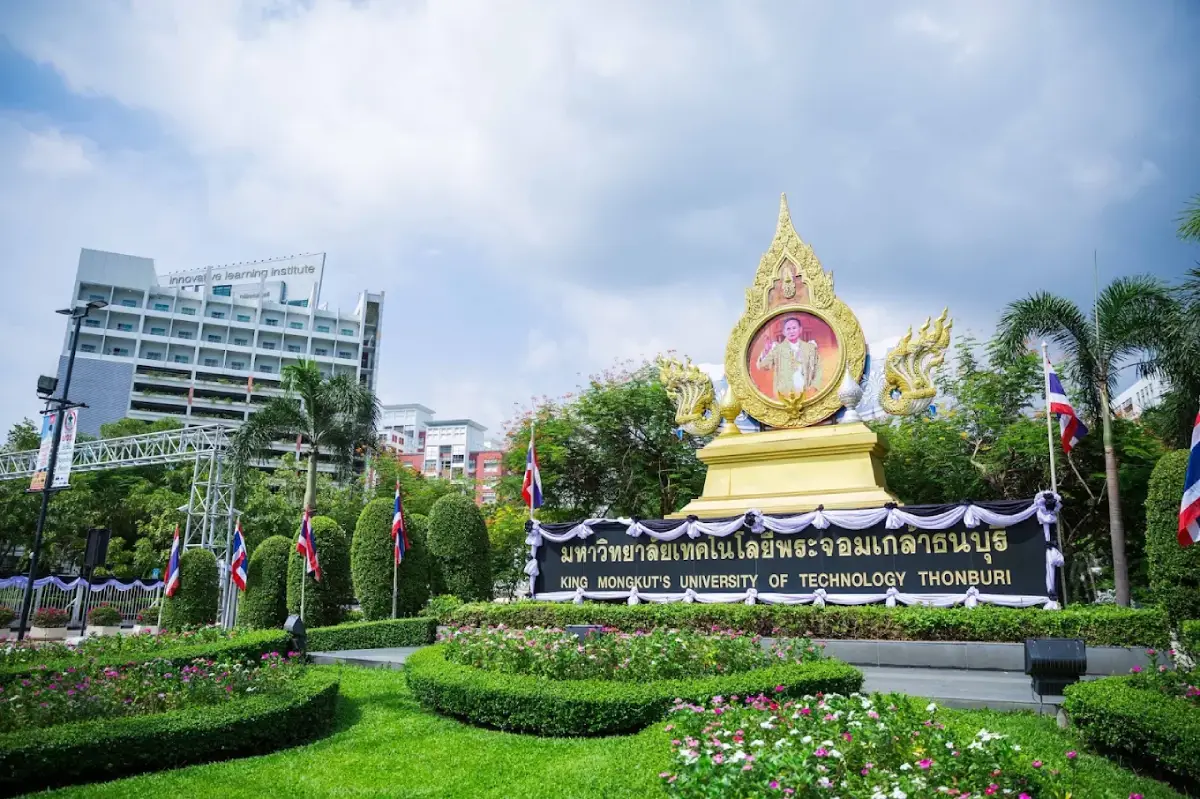
Open Days: Monday – Friday (Administrative Offices; Closed on Saturdays, Sundays, and Public Holidays)
Opening Hours: 08:30 – 16:30 (Administrative Office Hours; Individual Departments and Facilities May Have Different Schedules)
King Mongkut's University of Technology Thonburi (KMUTT) is an autonomous public university located at 126 Pracha Uthit Road, Bang Mot, Thung Khru District, Bangkok 10140, Thailand. The university is particularly recognized for its academic strengths in engineering, science, information technology, architecture and design, energy, environmental technology, materials science, biotechnology, and robotics. Its history began with the establishment of Thonburi Technical College on February 4, 1960. The college became part of King Mongkut's Institute of Technology in 1971, developed into the independent King Mongkut's Institute of Technology Thonburi in 1986, and officially became King Mongkut's University of Technology Thonburi on March 7, 1998. This transformation made KMUTT Thailand's first public university to adopt an autonomous administrative system. Today, the university operates across four major academic and operational locations: Bangmod, Bangkhuntien, Ratchaburi, and the Knowledge Exchange (KX) Building on Krung Thonburi Road. On February 4, 2026, KMUTT celebrated its 66th anniversary, continuing its important role in developing skilled professionals, advancing scientific research, and creating innovations that contribute to sustainable development.
KMUTT is more than an engineering university. Its history reflects the transformation of technological education in Thailand, from the training of skilled technicians to the development of engineers, scientists, researchers, designers, and entrepreneurs capable of applying knowledge to practical problems. The university emphasizes hands-on learning, analytical thinking, experimental research, and collaboration with industry. This educational approach creates a distinctive academic identity in which classroom knowledge is closely connected with professional experience, problem-solving, and the development of technologies that can deliver measurable benefits to society.
The university's main campus is located in Bang Mot, within Thung Khru District on the Thonburi side of Bangkok. Historically, this area was characterized by canals, agricultural communities, and extensive fruit orchards. Bang Mot was especially famous for its oranges, which became an important part of the district's agricultural identity. Over time, urban expansion, transportation development, and residential growth transformed much of the former agricultural landscape. The growth of KMUTT was closely connected with these changes, contributing to Bang Mot's development into an educational and residential district while the surrounding communities gradually adapted to Bangkok's expanding urban economy.
The Bangmod campus contains academic buildings, research facilities, engineering and science laboratories, the university library, the Learning Exchange (LX) Building, sports facilities, student activity spaces, and landscaped green areas. Its physical environment combines modern educational architecture with mature trees, pedestrian routes, and outdoor spaces that support everyday campus life. The buildings and facilities are designed to accommodate academic instruction, experimental research, group activities, and professional development, reflecting the university's continuing commitment to learning through practical experience.
The history of KMUTT began during a period of rapid economic and industrial development in Thailand. In the late 1950s, the country needed more technically trained personnel to support manufacturing, infrastructure construction, machinery, and modern industrial processes. The existing vocational education system required institutions capable of producing graduates with advanced technical knowledge. Sanan Sumit, then Director-General of the Department of Vocational Education, played an important role in proposing a new technical college that would accept students with a science-oriented pre-university education and provide intensive technical training.
The Ministry of Education approved the project in November 1959, leading to the official establishment of Thonburi Technical College on February 4, 1960, under the Department of Vocational Education. The college was created to produce technically competent personnel who could enter the workforce and contribute to industrial development. Its educational model combined mathematics, scientific principles, technical instruction, and workshop-based training. The establishment of the college represented an important step toward strengthening technological education in Thailand and developing the skilled workforce required for national progress.
During its early years, Thonburi Technical College focused on subjects related to engineering and industrial technology. Students studied scientific foundations while developing practical skills in technical workshops and laboratory environments. This approach required them to understand how machines and systems worked, operate specialized equipment, and solve engineering problems independently. The emphasis on practical training became a defining feature of the institution and continued to influence its academic philosophy as the college developed into a higher education institution.
April 24, 1971, marked a major turning point when Thonburi Technical College, North Bangkok Technical College, and the Telecommunications Technical College were brought together under King Mongkut's Institute of Technology. Thonburi Technical College subsequently became King Mongkut's Institute of Technology, Thonburi Campus. This integration was intended to strengthen higher education in science, engineering, and technology by combining the expertise and educational resources of the three institutions. It also supported the transition from technical training to degree-level education and more advanced research activities.
In 1974, King Mongkut's Institute of Technology was elevated to the status of a state higher education institution under the Ministry of University Affairs. This development strengthened its academic structure and supported the expansion of degree programs and research. The transformation occurred during a period of increasing industrial investment and infrastructure development in Thailand, when the demand for engineers, scientists, and technical specialists continued to grow. The institution's role in preparing graduates for these sectors became increasingly important.
In 1986, King Mongkut's Institute of Technology was reorganized into three independent institutions: King Mongkut's Institute of Technology Thonburi, King Mongkut's Institute of Technology North Bangkok, and King Mongkut's Institute of Technology Ladkrabang. Each institution developed its own legal status, administrative structure, and academic direction. This separation enabled the three institutions to respond more effectively to their respective educational priorities while preserving their shared historical origins within the former King Mongkut's Institute of Technology.
Another landmark development occurred in 1998 with the enactment of the King Mongkut's University of Technology Thonburi Act. The legislation came into force on March 7, 1998, transforming King Mongkut's Institute of Technology Thonburi into King Mongkut's University of Technology Thonburi. This change made KMUTT the first public university in Thailand to operate under an autonomous university model. The transformation represented an important development in Thai higher education administration, allowing greater institutional flexibility in academic affairs, research management, resource allocation, and cooperation with external organizations.
On August 18, 1998, the Supreme Patriarch, Somdet Phra Nyanasamvara, presided over the unveiling ceremony of the university's official sign at the Bangmod campus. The event symbolized the institution's formal transition into its new university status. Beyond the change of name, the autonomous university system introduced a different approach to institutional management, emphasizing academic responsibility, organizational flexibility, and the ability to develop new initiatives in response to changing educational and research requirements.
During the 21st century, KMUTT expanded its role beyond traditional engineering education into research and innovation addressing contemporary global challenges. Important academic fields include renewable and efficient energy systems, environmental technology, advanced materials, biotechnology, robotics, automation, and information technology. The university also developed educational approaches emphasizing student participation, project-based learning, research experience, and collaboration with businesses and industries. These developments strengthened its identity as a research-oriented university committed to generating knowledge with practical applications.
On February 4, 2026, KMUTT celebrated 66 years since the establishment of Thonburi Technical College in 1960. The university had also completed 28 years under its present name and autonomous university status, which began in 1998. These dates represent different historical milestones. The year 1960 marks the institution's original foundation, while 1998 marks its transformation into an autonomous public university. Understanding these distinctions provides a clearer picture of KMUTT's institutional development over more than six decades.
The name King Mongkut's University of Technology Thonburi honors King Mongkut, Rama IV, whose reign is associated with significant developments in scientific learning and Thailand's engagement with modern knowledge. King Mongkut's interests in astronomy and scientific observation contributed to his lasting reputation as an important figure in the history of Thai science. The word Thonburi refers to the historical region on the western side of the Chao Phraya River, where the university originated. The university's name therefore connects its geographical identity with the legacy of scientific inquiry and educational development in Thailand.
KMUTT's official emblem is derived from the royal insignia of King Mongkut. Its central feature is the Great Crown of Victory, accompanied by royal umbrellas on both sides and surrounded by circular borders containing the university's Thai and English names. This emblem symbolizes the institution's connection to the royal heritage of Rama IV and reflects its commitment to scientific education and technological advancement.
The university's official colors are orange and yellow, representing movement, energy, strength, and the continuous pursuit of knowledge. These colors appear throughout the university's visual identity and institutional activities. KMUTT's symbolic flower is the Thammaraksa, a Heliconia flower that has been associated with the campus since its early development. The flower's Thai name reflects the moral principle that righteousness protects those who practice it, connecting the institution's identity with ethical responsibility and the importance of using knowledge for beneficial purposes.
The university's motto is "Tanto Settho Manussesu," commonly expressed in English as "The Trained Man Wins." The Pali phrase conveys the meaning that a well-trained person is distinguished among human beings. This philosophy is especially relevant to engineering and technological education, where professional competence requires continuous learning, discipline, repeated practice, and experience. The motto emphasizes that knowledge becomes most valuable when it is developed through training and applied responsibly in real situations.
KMUTT maintains traditions and activities that strengthen the connection between its present academic community and its historical foundations. February 4 is commemorated as the university's founding anniversary. In 2026, the 66th-anniversary celebrations included institutional commemorations, recognition of individuals who had supported the university, and activities highlighting its educational development. These occasions bring together students, academic staff, administrators, alumni, and supporters in celebrating the institution's shared history and values.
Other important university activities include student orientation, educational guidance programs, open-house events, academic conferences, and community service initiatives. During the university's 65th-anniversary period, activities were organized under the theme "65 Years of Wisdom: Crafting Sustainable Futures." The program included exhibitions, community engagement, international cooperation, health and wellness activities, and academic events. These initiatives demonstrated how the university connects its historical identity with future-oriented goals in sustainability, education, and social development.
In 2026, KMUTT was led by Associate Professor Dr. Suvit Saetia, the university president. His administration continued to support education, research, collaboration, and institutional development. The university also worked with government agencies, private organizations, and educational networks to expand learning opportunities and develop academic initiatives for different groups of learners and professionals.
The Faculty of Engineering is one of KMUTT's most important academic units, with historical roots extending back to Thonburi Technical College. Its fields of study include computer engineering, chemical engineering, mechanical engineering, electrical engineering, civil engineering, materials engineering, industrial engineering, environmental engineering, mechatronics, control systems, and other areas of modern industrial technology. Engineering education at KMUTT emphasizes scientific reasoning, mathematical analysis, experimental work, technical design, and the practical application of knowledge to engineering challenges.
The Faculty of Science supports education and research in fundamental and applied sciences. Its academic programs include mathematics, statistics and data science, applied computer science, chemistry, microbiology, physics, and food science and technology. Students develop skills in analytical thinking, scientific investigation, laboratory experimentation, and data interpretation. These abilities provide a foundation for scientific research, technological development, and professional work in a wide range of industries.
The Faculty of Industrial Education and Technology prepares professionals who can apply engineering knowledge in educational and technical training environments. Programs are related to industrial education in mechanical, electrical, civil, and industrial engineering, as well as industrial technology, packaging and printing technology, educational technology, and digital media. The faculty plays an important role in developing educators and technical specialists who can transfer scientific and engineering knowledge to future generations of learners.
The School of Information Technology contributes to the development of digital professionals through programs in information technology, computer science, and digital service innovation. Students learn programming, software development, database management, information systems, networking, and data-related technologies. These fields support digital transformation across businesses, industrial organizations, public services, and other sectors that increasingly depend on information systems and intelligent technologies.
The School of Architecture and Design combines creativity with technological and social understanding. Its international undergraduate programs include architecture, interior architecture, landscape architecture, design innovation, communication design, and interdisciplinary design. Students are encouraged to consider users, culture, environmental conditions, material properties, and technical feasibility when developing their work. This approach prepares graduates to address contemporary challenges in architecture, urban environments, products, and digital design.
The School of Energy, Environment and Materials is an important center for graduate education and research in energy technology, energy management, materials technology, environmental technology, thermal technology, and integrated design and manufacturing. Research in these fields supports the efficient use of energy, the development of advanced materials, and the reduction of environmental impacts associated with industrial processes. Its academic work is relevant to sustainable manufacturing, environmental protection, and modern energy systems.
The School of Bioresources and Technology specializes in graduate education connecting biological sciences, biotechnology, natural resources, and bio-based industries. Its academic fields include biotechnology, natural resources management and sustainability, agricultural science and technology, biochemical technology, bioinformatics, and systems biology. These disciplines contribute to research on biological products, food production, industrial biotechnology, and sustainable natural resource management.
The School of Liberal Arts develops communication, critical thinking, language, and social understanding within the university's technological education environment. It supports students in developing the ability to work with people from different cultures and professional backgrounds. The school also provides graduate programs related to applied English studies and environmental social sciences, creating connections between the humanities, social issues, and technological development.
The Graduate School of Management and Innovation focuses on the relationship between management, technology, and innovation. Its graduate programs include integrated innovation management, logistics and supply chain management, management, and management for innovation entrepreneurship. These academic fields are important for transforming technological expertise into effective organizations, competitive business operations, and commercially useful innovations.
The Institute of Field Robotics (FIBO) represents KMUTT's specialized expertise in robotics and automation. Its academic programs and research activities address the development of robotic systems capable of operating in practical environments. Robotics combines mechanical engineering, electronics, computer science, control engineering, and artificial intelligence. Students learn how machines can detect their surroundings, process information, and perform tasks through integrated hardware and software systems.
The Joint Graduate School of Energy and Environment (JGSEE) offers international graduate education and research related to energy and environmental technologies. Its programs address energy technology and management, as well as environmental technology and management. The school's research is relevant to energy efficiency, pollution reduction, climate change, and sustainable industrial development. These areas require cooperation between engineers, scientists, environmental specialists, and policymakers.
The College of Multidisciplinary Sciences reflects the increasing importance of interdisciplinary education. Its undergraduate offerings include digital design, creative technology, and intelligent systems engineering. These areas bring together knowledge from engineering, digital technology, design, and human-centered problem-solving. Such interdisciplinary learning is particularly valuable for developing products and services that must respond to both technical requirements and the needs of users.
KMUTT also supports innovative education before the university level. Important educational initiatives include Darunsikkhalai School for Innovative Learning, the Science Classrooms in University-Affiliated School Project, and KOSEN KMUTT. These programs emphasize scientific understanding, engineering-oriented education, practical learning, and the development of problem-solving skills. Their presence reflects the university's wider role in creating a continuous learning environment that connects secondary education with higher education and professional development.
The university's operations extend beyond its principal Bangmod campus. KMUTT Bangkhuntien, located at 49 Soi Thian Thale 25 on Bang Khun Thian-Chai Thale Road in Bangkok, is an important location for research, biotechnology, specialized facilities, and industrially relevant innovation. Its research infrastructure supports activities that require dedicated laboratories and technical environments, making it a valuable complement to the teaching and administrative functions of Bangmod.
KMUTT Ratchaburi, located in Rang Bua Subdistrict, Chom Bueng District, Ratchaburi Province, has developed an educational model known as the Residential College. This approach emphasizes learning through shared residential experiences, teamwork, communication, and personal development alongside engineering education. Students participate in modular learning activities and extracurricular experiences intended to strengthen their abilities to work independently and collaborate effectively with others. The learning environment is designed to integrate technical education with broader life skills.
The Knowledge Exchange (KX) Building, located at 110/1 Krung Thon Buri Road in Khlong San District, Bangkok, is another important part of the university's wider innovation ecosystem. KX provides a space for interaction among universities, businesses, industries, government organizations, and entrepreneurs. By encouraging knowledge exchange and collaboration, the facility supports the transformation of research ideas into practical innovations, new businesses, and services that can generate economic and social value.
These four locations perform complementary functions. Bangmod serves as the university's principal center for education and administration. Bangkhuntien provides specialized research infrastructure. Ratchaburi emphasizes residential and experiential education, while KX connects academic knowledge with industry, entrepreneurs, and innovation. Together, these locations enable KMUTT to pursue a broad academic mission while developing facilities and learning environments suited to different educational and research needs.
For the 2026 academic year, KMUTT offers undergraduate, master's, and doctoral programs, including Thai-language courses, English-language programs, and international degree options. Admission requirements vary by faculty and program. Prospective students should examine the official program title, degree level, curriculum structure, admission qualifications, and study location before applying. Some programs are revised periodically to reflect professional standards and technological developments, while certain courses may involve learning activities at more than one university location.
The university's academic calendar for 2026 identifies the first semester as running from August 3 to December 12, 2026, with the wider academic year continuing into 2027. This information is relevant to both current and prospective students, as admission procedures, registration periods, examinations, and university activities are organized according to the academic calendar. Students should distinguish the academic year from the calendar year when reviewing program announcements and administrative schedules.
Research in energy and sustainability is one of KMUTT's important academic strengths. Energy consumption, greenhouse gas emissions, environmental impacts, and resource efficiency are challenges that require knowledge from several disciplines. Research involving energy management, energy efficiency, materials technology, and environmentally responsible manufacturing supports the development of more sustainable industrial and technological systems.
Biotechnology and biological production processes are also important areas of expertise. Research in these fields is connected to biological products, food technology, biomaterials, and applications in healthcare and industry. KMUTT is associated with the National Biopharmaceutical Facility and other research organizations that support the development of bioprocessing technologies. These facilities contribute to Thailand's capacity to develop biotechnology-based innovations and strengthen scientific capabilities in health-related industries.
Robotics and automation form another major part of the university's research environment. Designing a robotic system requires knowledge of mechanics, electronics, programming, sensors, control systems, and intelligent data processing. This interdisciplinary approach supports technologies that can perform tasks in manufacturing, industrial services, and other practical settings. It also demonstrates how research and engineering education can work together to create systems that improve productivity and support human activities.
KMUTT's research ecosystem includes institutions that support technology transfer and collaboration with external organizations. The Institute for Scientific and Technological Research and Services, the Research, Innovation and Partnerships Office, and the university's science and industry-related initiatives help connect academic expertise with practical needs. Their work involves research support, scientific services, industrial cooperation, and the development of innovations that can contribute to economic and social progress.
The university also emphasizes wider access to education and professional development. In 2026, KMUTT participated in initiatives supporting the training and employment opportunities of people with disabilities through a network of higher education institutions. Such projects connect education with practical vocational experience and illustrate the university's social responsibilities beyond degree-level teaching. They demonstrate how academic expertise and institutional partnerships can contribute to improved career opportunities and quality of life.
Collaboration with secondary schools is another important part of KMUTT's educational mission. In February 2026, the university signed cooperation agreements with several secondary educational service area offices to strengthen educational networks and support the development of students and teachers. These partnerships help connect schools with university-level knowledge, particularly in science, technology, and innovation. They also support a broader learning ecosystem extending beyond the university campus.
KMUTT has an important relationship with the surrounding communities of Bang Mot and Thung Khru. Students, staff, researchers, and visitors contribute to local economic activity through restaurants, accommodation, retail businesses, and transportation services. At the same time, university initiatives and academic services can support community development, lifelong learning, and environmental improvement. This relationship illustrates how a university can influence and be influenced by the social and economic conditions of its surrounding neighborhoods.
The cultural heritage of Bang Mot remains closely associated with its former orchards, waterways, and agricultural communities. Although urban development has transformed much of the district, the history of Bang Mot oranges and traditional canalside life continues to form part of local identity. Understanding this heritage provides a broader perspective on KMUTT's geographical setting and demonstrates that the university's development has taken place within a community with its own distinctive historical and cultural background.
For visitors interested in educational tourism, the Bangmod campus offers insights into the relationship between modern university architecture, technological education, and environmental design. The Learning Exchange (LX) Building is an example of a contemporary educational environment designed to support interaction and collaborative learning. The university library provides academic information resources, while the Learning Garden and landscaped campus areas contribute to an atmosphere that supports both study and recreation.
The KMUTT Library is an important center for academic learning and research. It provides access to books, scholarly resources, databases, and study facilities for the university community. Modern university libraries also help students develop information literacy, research skills, and the ability to evaluate scientific and academic sources. Access for external visitors is subject to the library's regulations and service arrangements.
The Learning Exchange (LX) Building reflects contemporary approaches to higher education that emphasize participation, group learning, and collaboration. Such environments support the development of communication, creativity, independent learning, and interdisciplinary problem-solving skills. These abilities are increasingly important in professional environments where technical expertise must be combined with teamwork and adaptability.
The Learning Garden provides a landscaped outdoor environment within the university. Its green spaces, trees, and open areas contribute to the campus atmosphere and provide opportunities for relaxation between academic activities. Green infrastructure is important not only for visual appearance but also for student well-being and the creation of more comfortable learning environments.
Several places of interest are located in the surrounding area. Thonburirom Park, situated along Phutthabucha Road, is a public green space popular with residents and students for walking, exercise, and relaxation. Bang Mot and Thung Khru are also home to temples and neighborhood markets that reflect local religious traditions and everyday community life in southern Bangkok.
Visitors interested in local culture can explore Wat Luang Pho Ophasi, Wat Phutthabucha, and Wat Bang Mot Sothonaram, which represent different aspects of Buddhist community life in the area. Talad Mai Tungkru, a neighborhood market, provides another perspective on local commerce and daily activities. These places help illustrate how temples, markets, residential neighborhoods, and educational institutions coexist within the changing urban environment of Thung Khru.
Anyone planning to visit the university should identify the purpose of the visit in advance. Prospective students can contact the Admissions and Recruitment Office, while those interested in university open-house activities should consult the relevant event announcements. Academic study tours and visits to laboratories or research centers require prior coordination with the responsible departments because some facilities contain specialized equipment and have safety restrictions.
KMUTT's general administrative offices operate Monday through Friday from 08:30 to 16:30, excluding public holidays. These hours refer to administrative services rather than unrestricted public access to every university building. Libraries, laboratories, classrooms, research centers, and specialized facilities may follow different schedules. Visitors with specific appointments should confirm the relevant department's arrangements before traveling.
Getting There to KMUTT Bangmod is possible by private car, public bus, taxi, and onward connections from Bangkok's BTS Skytrain system. The main campus is located on Pracha Uthit Road in Thung Khru District. Public bus routes serving the university area include routes 21 and 75, subject to the current operating arrangements of the transport providers. Other bus routes connect the wider neighborhood with Suksawat Road and Rat Burana Road, from where travelers can transfer to services heading toward Pracha Uthit Road.
Travelers using the BTS Skytrain can get off at Wongwian Yai Station and continue by bus or taxi. Some public transportation journeys require transfers at locations such as Dao Khanong or Suksawat Road. Visitors who prefer a more direct journey can use a taxi or ride-hailing service from the BTS station to the university's entrance. The most convenient route depends on the traveler's starting point and the specific destination within the campus.
For visitors traveling by private car, KMUTT Bangmod can be reached through Suksawat Road and the Pracha Uthit intersection. The university is located near Soi Pracha Uthit 45. Visitors should follow the university's security procedures at the designated entrance and use authorized parking areas. A 14-story parking building is available under the university's parking regulations. Because traffic in the Bang Mot area can be heavy during commuting hours, allowing extra travel time is advisable.
Travelers heading to KMUTT Bangkhuntien or KMUTT Ratchaburi should not use the Bangmod campus as their destination. Bangkhuntien is located on Bang Khun Thian-Chai Thale Road in Bangkok, while the Ratchaburi campus is in Chom Bueng District, Ratchaburi Province. The KX Building is situated on Krung Thon Buri Road in Khlong San District, closer to Bangkok's inner commercial areas. Identifying the correct university location is essential for planning an efficient journey.
King Mongkut's University of Technology Thonburi is therefore significant both as a higher education institution and as part of the history of scientific and technological development in Thailand. From Thonburi Technical College in 1960 to its integration into King Mongkut's Institute of Technology, its independent institutional status in 1986, and its transformation into an autonomous university in 1998, KMUTT has continually expanded its educational and research responsibilities. Today, its operations at Bangmod, Bangkhuntien, Ratchaburi, and KX demonstrate its commitment to connecting higher education with industry, innovation, community development, and environmental sustainability. After 66 years of institutional development, KMUTT remains an important contributor to the future of science, engineering, and technology in Thailand.
| University Name | King Mongkut's University of Technology Thonburi (KMUTT) |
| Thai Name | มหาวิทยาลัยเทคโนโลยีพระจอมเกล้าธนบุรี (มจธ.) |
| Institution Type | Autonomous Public University |
| Main Campus Location | Bang Mot, Thung Khru District, Bangkok, Thailand |
| Address | 126 Pracha Uthit Road, Bang Mot, Thung Khru, Bangkok 10140, Thailand |
| Historical Foundation | February 4, 1960, as Thonburi Technical College |
| King Mongkut's Institute of Technology Period | April 24, 1971 |
| Independent Institute Period | 1986 |
| University Status | March 7, 1998 |
| Institutional Age in 2026 | 66 Years Since the Establishment of Thonburi Technical College |
| Important Historical Figures | King Mongkut (Rama IV) and Sanan Sumit, an Important Figure in the Establishment of Thonburi Technical College |
| University President in 2026 | Associate Professor Dr. Suvit Saetia |
| Official Emblem | Royal Crown With Supporting Royal Umbrellas Within a Circular Emblem |
| Institutional Colors | Orange and Yellow |
| Symbolic Flower | Thammaraksa (Heliconia) |
| University Motto | Tanto Settho Manussesu — The Trained Man Wins |
| Faculties, Schools, and Institutes | 1. Faculty of Engineering 2. Faculty of Science 3. Faculty of Industrial Education and Technology 4. School of Information Technology 5. School of Architecture and Design 6. School of Energy, Environment and Materials 7. School of Bioresources and Technology 8. School of Liberal Arts 9. Graduate School of Management and Innovation 10. Institute of Field Robotics 11. Joint Graduate School of Energy and Environment 12. College of Multidisciplinary Sciences |
| Additional Educational Units | Darunsikkhalai School for Innovative Learning, Science Classrooms in University-Affiliated School Project, KOSEN KMUTT, and the Joint Media Arts and Media Technology Program Administration |
| Major University Locations | 1. KMUTT Bangmod, Bangkok 2. KMUTT Bangkhuntien, Bangkok 3. KMUTT Ratchaburi, Ratchaburi Province 4. Knowledge Exchange (KX) Building, Khlong San District, Bangkok |
| Academic Strengths | Engineering, Science, Robotics, Automation, Information Technology, Energy, Environmental Technology, Materials Science, Biotechnology, Architecture, and Innovation |
| Important Campus Facilities | Learning Exchange (LX) Building, KMUTT Library, Learning Garden, King Mongkut's 190th Anniversary Memorial Building, Research Facilities, and Student Activity Areas |
| Important Traditions and Activities | Foundation Anniversary on February 4, Institutional Commemorations, University Open House, and Community Service Activities |
| Administrative Open Days | Monday – Friday, Excluding Public Holidays |
| Administrative Office Hours | 08:30 – 16:30 |
| Visitor Access | Subject to University and Departmental Regulations; Permission Required for Restricted Laboratories and Research Areas |
| Facilities | Libraries, Academic Buildings, Laboratories, Green Spaces, Sports Facilities, Food Courts, Parking, and Educational Support Services |
| Getting There | Public Buses 21 and 75 on Pracha Uthit Road; BTS to Wongwian Yai Station Followed by Bus or Taxi; Private Car Access Via Suksawat Road and Pracha Uthit Road |
| Nearby Attractions | 1. Thonburirom Park 2. Wat Luang Pho Ophasi 3. Wat Phutthabucha 4. Wat Bang Mot Sothonaram (Wat Klang Na) 5. Talad Mai Tungkru |
| Nearby Restaurants | 1. King Mongkut's Food Center 2. Manpuku Ramen, Pracha Uthit 34 — +66 92 780 8917 3. Kitchen Chef's — +66 89 116 6358 4. Tid Mun Bangmod — +66 62 383 2830 5. Eat With Bear Steak & More — +66 81 653 9928 |
| Accommodation in the Surrounding Area | 1. Heliconia House KMUTT — +66 2 470 8487 2. K Daily Rental — +66 81 242 2478 3. @19 Apartment — +66 81 842 1732 4. Loft 17 Residence — +66 64 954 4404 5. Zense Residence — +66 62 341 8188 |
| Main Telephone | +66 2 470 8000 |
| Admissions Office Telephone | +66 2 470 8333 |
| General Contact Email | contact@kmutt.ac.th |
| Official Website | https://www.kmutt.ac.th |
| Curriculum Website | https://eds.kmutt.ac.th/curriculum-search/ |
| Admissions Website | https://admission.kmutt.ac.th |
| Current Status | Active Higher Education, Research, and Academic Services Institution in Academic Year 2026 |
King Mongkut's University of Technology Thonburi Academic Programs — Academic Year 2026
| Faculty / School / Institute | Programs and Fields of Study |
| Faculty of Engineering | Bachelor's Degree Fields 1. Computer Engineering 2. Computer Engineering (International Program) 3. Health Data Science 4. Chemical Engineering 5. Mechanical Engineering 6. Automotive Engineering 7. Smart Manufacturing and Advanced Tooling Engineering 8. Materials Engineering 9. Electrical Engineering 10. Civil Engineering 11. Civil Engineering (International Program) 12. Control Systems and Instrumentation Engineering 13. Automation Engineering (International Program) 14. Environmental Engineering 15. Environmental Engineering (International Program) 16. Electrical Communication and Electronics Engineering 17. Industrial Engineering 18. Mechatronics Engineering 19. Electronic and Telecommunication Engineering (International Program) 20. Electrical Engineering — Power Systems, Power Electronics and Energy 21. Modern Automotive and Aerospace Parts Manufacturing Engineering Master's Degree Fields 1. Chemical Engineering (English Program) 2. Mechanical Engineering (International Program) 3. Electrical Engineering 4. Electrical and Information Engineering 5. Computer Engineering (International Program) 6. Civil Engineering 7. Construction Engineering and Management 8. Environmental Engineering 9. Industrial and Manufacturing Systems Engineering 10. Welding Engineering 11. Metallurgical Engineering 12. Food Engineering 13. Materials Forming Technology and Manufacturing Innovation 14. Biological Engineering 15. Civil Engineering Technology 16. Automotive Engineering and Advanced Transportation (International Program) Doctoral Degree Fields 1. Chemical Engineering 2. Mechanical Engineering (International Program) 3. Electrical and Computer Engineering (International Program) 4. Civil Engineering 5. Environmental Engineering 6. Food Engineering 7. Materials Forming Technology and Manufacturing Innovation 8. Industrial and Manufacturing Systems Engineering 9. Biological Engineering 10. Electrical and Information Engineering Technology |
| Faculty of Science | Bachelor's Degree Fields 1. Mathematics 2. Statistics and Data Science 3. Applied Computer Science 4. Chemistry 5. Microbiology 6. Food Science and Technology 7. Physics Master's Degree Fields 1. Applied Mathematics 2. Mathematics Education 3. Industrial Chemistry 4. Chemistry Education 5. Chemistry 6. Physics 7. Physics Education 8. Applied Microbiology 9. Nanoscience and Nanotechnology (International Program) 10. Science and Mathematics Education (Bilingual Program) Doctoral Degree Fields 1. Applied Mathematics (English Program) 2. Physics 3. Biological Sciences (International Program) 4. Chemistry 5. Nanoscience and Nanotechnology (International Program) |
| Faculty of Industrial Education and Technology | Bachelor's Degree Fields 1. Industrial Technology 2. Mechanical Engineering (Five-Year Industrial Education Program) 3. Electrical Engineering (Five-Year Industrial Education Program) 4. Civil Engineering (Five-Year Industrial Education Program) 5. Industrial Engineering (Five-Year Industrial Education Program) 6. Packaging and Printing Technology 7. Educational Technology and Mass Communication 8. Applied Computer Science — Multimedia Master's Degree Fields 1. Mechanical Engineering 2. Electrical Engineering 3. Learning Technology and Mass Communication 4. Computer and Information Technology 5. Civil Engineering 6. Industrial Engineering 7. Packaging Technology and Printing Innovation Doctoral Degree Fields 1. Learning Innovation and Technology |
| Joint Media Arts and Media Technology Program Administration | Bachelor's Degree Fields 1. Media Arts 2. Media Technology 3. Medical and Science Media |
| School of Information Technology | Bachelor's Degree Fields 1. Information Technology 2. Computer Science (English Program) 3. Digital Service Innovation Master's Degree Fields 1. Computer Science 2. Information Technology 3. Digital Business Information Systems 4. Software Engineering for Data Science Doctoral Degree Fields 1. Computer Science 2. Information Technology |
| School of Architecture and Design | Bachelor's Degree Fields — International Programs 1. Architecture 2. Interior Architecture 3. Design Innovation 4. Communication Design 5. Landscape Architecture 6. Integrated Design Through Multiple Intelligences (Multidisciplinary Program) Master's Degree Field 1. Design and Planning (International Program) |
| School of Energy, Environment and Materials | Master's Degree Fields 1. Energy Technology 2. Energy Management Technology 3. Materials Technology 4. Environmental Technology 5. Thermal Technology 6. Integrated Design and Manufacturing |
| School of Bioresources and Technology | Master's Degree Fields 1. Biotechnology (International Program) 2. Natural Resources Management and Sustainability 3. Agricultural Science and Technology — Postharvest Technology (International Program) 4. Biochemical Technology (International Program) 5. Bioinformatics and Systems Biology (International Program) |
| School of Liberal Arts | Master's Degree Fields 1. Applied English Studies (International Program) 2. Environmental Social Sciences |
| Graduate School of Management and Innovation | Master's Degree Fields 1. Integrated Innovation Management 2. Logistics and Supply Chain Management 3. Management 4. Management for Innovation Entrepreneurship |
| Institute of Field Robotics | Bachelor's Degree Field 1. Robotics and Automation Engineering Master's Degree Field 1. Robotics and Automation |
| Joint Graduate School of Energy and Environment | Master's Degree Fields — International Programs 1. Energy Technology and Management 2. Environmental Technology and Management |
| College of Multidisciplinary Sciences | Bachelor's Degree Fields 1. Digital Design (International Program) 2. Creative Technology (International Program) 3. Intelligent Systems Engineering (Multidisciplinary Program) |
Frequently Asked Questions (FAQ)
Q: Where is King Mongkut's University of Technology Thonburi located?
A: The university's main Bangmod campus is located at 126 Pracha Uthit Road, Bang Mot, Thung Khru District, Bangkok 10140, Thailand.
Q: When was KMUTT founded?
A: KMUTT traces its origins to Thonburi Technical College, established on February 4, 1960. It officially became King Mongkut's University of Technology Thonburi on March 7, 1998.
Q: Who founded King Mongkut's University of Technology Thonburi?
A: The university originated from a Ministry of Education initiative to establish Thonburi Technical College. Sanan Sumit, then Director-General of the Department of Vocational Education, played an important role in proposing the institution.
Q: What is KMUTT best known for?
A: KMUTT is especially recognized for engineering, science, information technology, robotics, automation, energy, environmental technology, materials science, biotechnology, and research-driven innovation.
Q: What are KMUTT's administrative opening hours?
A: General administrative offices operate Monday to Friday, 08:30 – 16:30, excluding public holidays. Individual libraries, laboratories, and university facilities may have separate schedules.
Q: How many major campus locations does KMUTT have?
A: KMUTT has four major academic and operational locations: Bangmod, Bangkhuntien, Ratchaburi, and the Knowledge Exchange (KX) Building in Bangkok. Each location serves different academic, research, or innovation-related functions.
Q: What academic programs does KMUTT offer in 2026?
A: The university offers bachelor's, master's, and doctoral programs in engineering, science, industrial education, information technology, architecture and design, energy, environmental technology, biotechnology, innovation management, and robotics, including selected international programs.
Q: How can I get to KMUTT Bangmod Campus?
A: Public buses 21 and 75 serve Pracha Uthit Road near the university. Travelers can also take the BTS Skytrain to Wongwian Yai Station and continue by bus or taxi. Private cars can access the campus from Suksawat Road via Pracha Uthit Road.
 Category: ●University
 Group: ●Autonomous Universities
Last Update : 1 WeekAgo
 Last Update : 1 WeekAgo
 Click to Access the Navigation Map GPS
King Mongkut’s University of Technology Thonburi Map
Recommend

 Art, Culture and Heritage
 Historical Sites and Monuments(3)
 Landmarks and Memorials(23)
 Royal Palace(13)
 Art, Craft Centres, Tradition(35)
 Museums(59)
 Historic Homes and Cities(3)
 Art Gallery(16)
 Educational Places
 Museum for Study(6)
 Library(4)
 Public university(8)
Autonomous Universities(8)
 Rajamangala University of Technology(6)
 Rajabhat University(6)
 Private University(22)
 Places of Worship
 Temple(72)
 Church(2)
 Mosque(67)
 Other Sacred Sites(8)
 Research and Development
 Royal Project(1)
 Suburban Living
 Village, Community(5)
 Local Market(9)
 Floating Market(2)
 Nature and Wildlife
 River, Canal(3)
 Bays and Beaches(1)
 Other natural attractions(1)
 Entertainment and Agricultural
 Zoos and Aquariums(5)
 Animal camps and shows(5)
 Stadium(9)
 Farms, Parks and Ecotourism(20)
 Amusement Park(1)
 Waterpark(4)
 Theater(7)
 Cinema(1)
 Shopping
 Shopping and Night Market(20)
 Department Store(7)
 Spas and Wellness
 Spas and Wellness(1)
 Restaurant
 Michelin Star(5)
 Accommodation
 Hotel(3)
 Call Customer Service in Tourism
 Call Customer Service in Tourism(1)
 Travel Articles, Recipes
 Travel Review, Food Review(46)
 Royal Thai Desserts and Recipes(56)


