
lovethailand home >South Travel Attractions >Pattani Travel Attractions >Nong Chik >Da To > Wat Khok Saman Pracharam (Wat Khok Mak)
TL;DR: Wat Khok Saman Pracharam (Wat Khok Mak) is located at Ban Khok Mak, Moo 2, Datoh Subdistrict, Nong Chik District, Pattani Province 94170, Thailand, open Daily, hours 08.00 – 17.00.
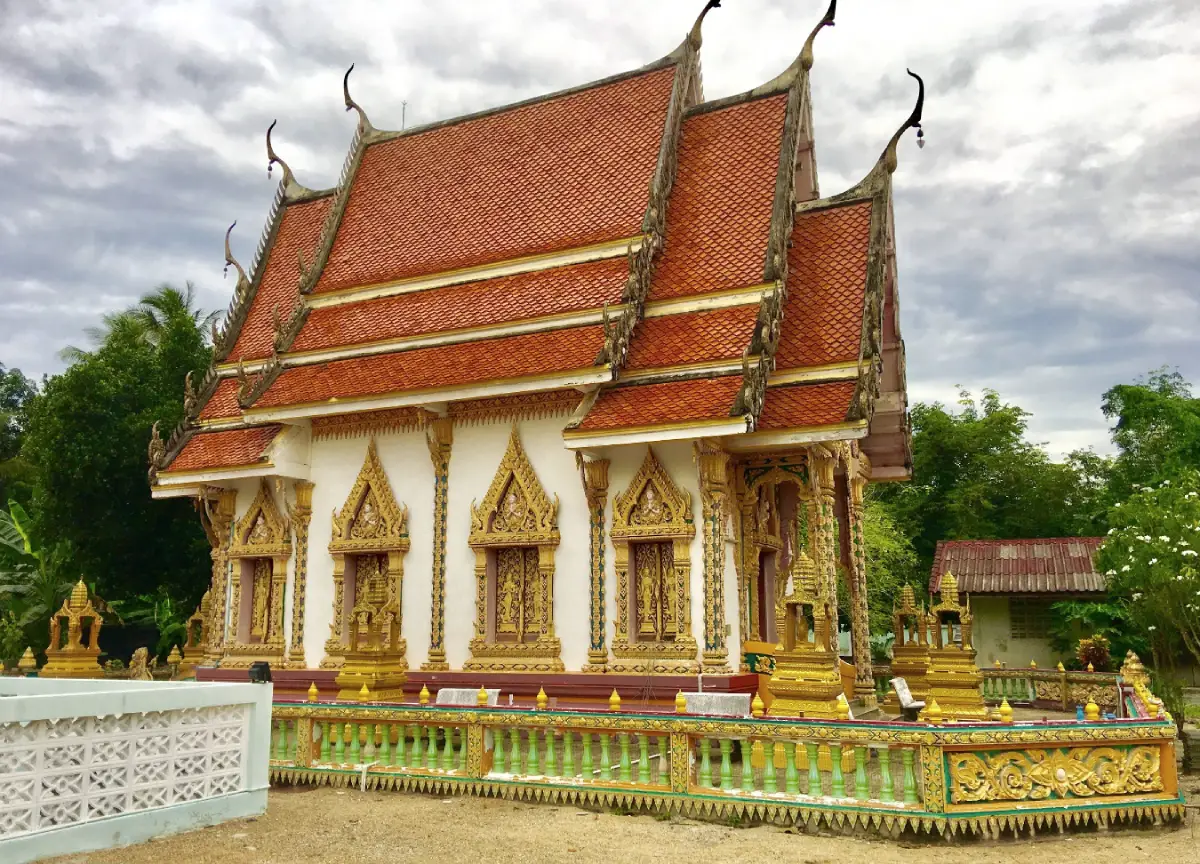
Wat Khok Saman Pracharam (Wat Khok Mak)
Open Days: Daily
Opening Hours: 08.00 – 17.00
Wat Khok Saman Pracharam, also known as Wat Khok Mak, is an important community Buddhist temple in Nong Chik District, Pattani Province. It is respected by local Buddhists as a spiritual anchor of Ban Khok Mak and Datoh Subdistrict. The temple is not best understood as a large monument or royal monastery, but as a living rural temple with resident monks, a current abbot, annual Buddhist ceremonies, local traditions, and strong community faith. Its main identity is connected with worship of Luang Pho Rak and Luang Pho Pheng, the Wat Khok Saman Pracharam moral community, Kathin ceremonies, Chak Phra, Phra Phing Fai, and the agricultural life of Ban Khok Mak.
The temple stands within a rural agricultural landscape. Datoh Subdistrict is largely used for farming and residential life, with local livelihoods connected to rice fields, orchards, rubber plantations, and some palm oil cultivation. In this setting, Wat Khok Saman Pracharam functions as a village Buddhist center where people make merit, gather for annual traditions, strengthen moral values, and pass community memory from one generation to the next.
Current Pattani temple records state that Wat Khok Saman Pracharam was established in 1948 and received its royal consecrated boundary on 10 November 1972. This consecrated boundary is important because it gives the temple formal status for Sangha activities that require an official sacred boundary, such as ordination and other monastic rites.
The name Wat Khok Saman Pracharam reflects the idea of harmony within the community, while the local name Wat Khok Mak connects the temple with Ban Khok Mak. A local origin story says that a group of settlers from Nong Chik came to the area in search of a new place to live. Their elephants and horses went to eat a local fruit called luk mak, a small orange-red fragrant fruit with a sweet and slightly astringent taste. From this event, the settlement became known as Ban Khok Mak.
This origin story gives the temple additional meaning. Wat Khok Saman Pracharam is not located in an anonymous rural area; it stands in a village with its own memory of migration, settlement, agriculture, and landscape. The village name reflects the relationship between people and local nature, while the temple name reflects community harmony. Together, these names explain why the temple is closely tied to local identity.
Recent 2025 Kathin information confirms that Wat Khok Saman Pracharam, or Wat Khok Mak, remains active. The temple is listed as a Mahanikaya community temple with 7 resident monks and Phra Khru Saman Pracharak as abbot. The same information records a Kathin ceremony scheduled for 1 November 2025 at 13.00. This confirms that the temple is not only a historical listing but a living Buddhist temple with continuing religious activities.
Pattani temple records for 2024 also identify the temple with registration code 64194030001, establishment year 1948, consecrated boundary on 10 November 1972, Phra Khru Saman Pracharak as abbot, main contact number 063-3782463, and 7 resident monks. These current details are important because they help distinguish reliable present information from older or incomplete descriptions.
The Datoh Subdistrict Administrative Organization identifies Wat Khok Saman Pracharam as a religious attraction where visitors can pay respect to Luang Pho Rak and Luang Pho Pheng of Wat Khok Mak. These figures are described locally as sacred and as a spiritual anchor for people in Datoh Subdistrict and beyond. This makes the temple meaningful not only for Ban Khok Mak but also for the wider local community.
Luang Pho Rak and Luang Pho Pheng are the key devotional figures associated with the temple in public local information. For visitors, paying respect to these worship points should be done with calm and sincerity. For local residents, they represent memory, faith, and continuity within the Buddhist life of Datoh Subdistrict.
Wat Khok Saman Pracharam is also linked with the model moral community of Ban Khok Mak. Cultural community information from Pattani identifies the Wat Khok Saman Pracharam community as a model moral community based on Buddhist principles, the sufficiency economy philosophy, and good Thai cultural traditions. This makes the temple a center of community development, not only a place for ceremonies.
In terms of Buddhist principles, the temple helps cultivate generosity, discipline, public-mindedness, and moral conduct. Local people use the temple for merit-making, Dhamma activities, and community gatherings. In a multicultural province such as Pattani, this role is especially important because the temple helps preserve Buddhist identity while supporting respectful coexistence.
The community around the temple has also used the sufficiency economy philosophy as a practical learning framework. Activities have included training to reduce expenses, increase income, and apply self-reliance principles in daily life. This connects the temple with real household and agricultural life, making it relevant beyond ritual practice.
The community has held public-minded activities such as fish release and landscape improvement near Khlong Don Rak on National Day and Father’s Day. These activities connect Buddhist merit-making with environmental care, local water resources, and community responsibility. They show that the temple helps encourage both spiritual and civic values.
Wat Khok Saman Pracharam also appears in learning-resource listings of Nong Chik District. This indicates that the temple is regarded as a place where people can learn about religion, community history, culture, and local coexistence. It is not only a ceremonial space but also a local knowledge space.
Ban Khok Mak is connected with a royal-initiative demonstration farm project. This nearby agricultural learning area reflects the livelihood and development character of the village. Travelers who visit Wat Khok Saman Pracharam can therefore understand Ban Khok Mak through both Buddhist and agricultural dimensions.
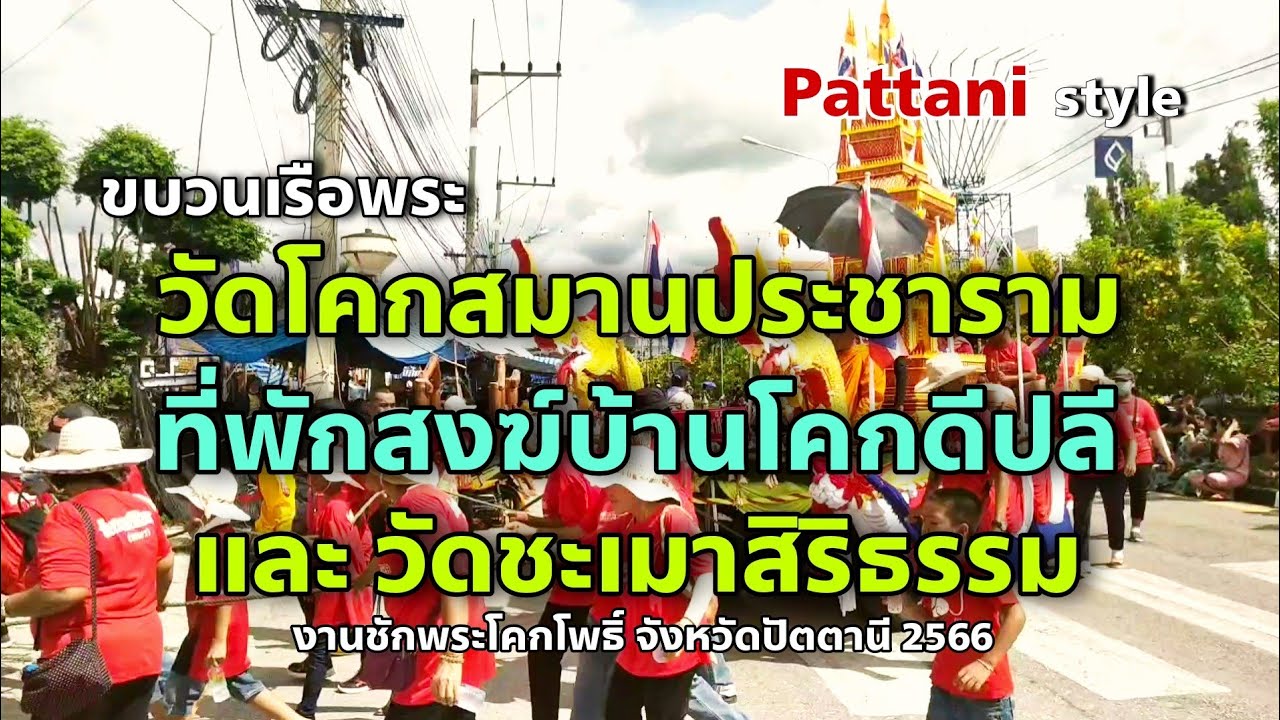
One important tradition connected with the temple is Chak Phra, or the ceremonial boat-pulling tradition. Cultural community information records that the Wat Khok Saman Pracharam community has organized boat-pulling activities to preserve local tradition. Public information about Pattani’s Chak Phra tradition also lists Wat Khok Saman Pracharam, or Wat Khok Mak, among the temples connected with the event.
Chak Phra is a major post-Buddhist Lent tradition in southern Thailand. It involves the preparation and movement of a ceremonial boat associated with Buddhist devotion. The tradition requires cooperation among monks, villagers, local craftsmen, youth, and elders. Wat Khok Saman Pracharam is therefore part of a larger Buddhist cultural network in Pattani.
The temple is also connected with the Phra Phing Fai tradition, recorded in Pattani cultural promotion materials as an activity held at the Wat Khok Saman Pracharam moral community. This gives the temple an additional cultural layer because it preserves a specific local ritual that is not widely known outside the area.
Kathin is another important activity confirming the temple’s continuing religious life. Kathin is a major post-Buddhist Lent ceremony in which laypeople offer robes and support to the monastic community. The temple’s listing in 2025 Kathin information shows that local Buddhists and supporters continue to participate in the temple’s annual religious life.
Wat Khok Saman Pracharam does not have the same volume of published architectural detail as Pattani’s larger royal temples. Its value should therefore be understood through its active community role. The temple is important because it supports worship, merit-making, Kathin, Chak Phra, Phra Phing Fai, moral community activities, and local Buddhist identity.
A meaningful visit should begin with paying respect at the temple’s worship areas and the points connected with Luang Pho Rak and Luang Pho Pheng. Visitors who arrive during a merit-making event should observe the participation of monks, elders, youth, and villagers. This is where the temple’s social and spiritual importance becomes most visible.
Wat Khok Saman Pracharam is suitable for travelers who want to understand Pattani beyond its major landmarks. It can be combined with the Ban Khok Mak demonstration farm, Wat Muchalinthawapi Wihan or Wat Tuyong, the old Nong Chik palace, Tuyong canal, Pattani Central Mosque, Lim Ko Niao Shrine, and attractions in Pattani city. This route shows Pattani through Buddhist, Muslim, Chinese, agricultural, and historical dimensions.
Wat Muchalinthawapi Wihan is a useful nearby addition because it is a major royal Buddhist temple in Nong Chik District. While Wat Khok Saman Pracharam represents the community temple life of Ban Khok Mak, Wat Muchalinthawapi Wihan adds the dimension of royal patronage, old Buddhist history, relic worship, and the Tuyong cultural tourism route.
The old Nong Chik palace and Tuyong canal can also be added to the same itinerary. These places help visitors understand the historical landscape of Nong Chik through temples, old administrative sites, waterways, agriculture, and local settlement patterns.
Travel to the temple is best made by private car, rental car, or local hired vehicle. From Pattani city, travel toward Nong Chik District and continue to Datoh Subdistrict and Ban Khok Mak. Because Datoh is a rural area, visitors should plan the route in advance and allow enough time for local roads.
Visitors should observe proper temple etiquette. Dress modestly, speak quietly, remove shoes where required, avoid disturbing monks or worshippers, and refrain from inappropriate photography. During Kathin, Chak Phra, Phra Phing Fai, or other ceremonies, follow the arrangements of the temple and local community.
Food options can be found along the Nong Chik, Tuyong, and Pattani city routes. Accommodation is most practical in Pattani city or along the Nong Chik road, where there are more choices than in the village area. Travelers visiting during festivals or major merit-making periods should check transport and accommodation in advance.
The strength of Wat Khok Saman Pracharam is the clarity of its community role. Public records confirm its active temple status, establishment in 1948, consecrated boundary in 1972, current abbot, resident monks, Kathin activity, recognition as a religious attraction of Datoh, worship of Luang Pho Rak and Luang Pho Pheng, model moral community status, and connections with Chak Phra and Phra Phing Fai traditions.
Getting There From Pattani city, travel toward Nong Chik District and continue to Datoh Subdistrict and Ban Khok Mak. A private car, rental car, or local hired vehicle is the most convenient option. The temple can be included in a route with the Ban Khok Mak demonstration farm, Wat Muchalinthawapi Wihan, the old Nong Chik palace, Tuyong canal, Pattani Central Mosque, Lim Ko Niao Shrine, and attractions in Pattani city.
In summary, Wat Khok Saman Pracharam or Wat Khok Mak is an important community Buddhist temple of Datoh Subdistrict, Nong Chik District, Pattani Province. It was established in 1948 and received its royal consecrated boundary in 1972. The temple remains active under Phra Khru Saman Pracharak and continues to support Buddhist ceremonies, Kathin, community merit-making, Chak Phra, Phra Phing Fai, sufficiency economy learning, and moral community activities. Its value lies in its role as the spiritual center of Ban Khok Mak and as a meaningful window into Buddhist community life in Pattani.
| Name | Wat Khok Saman Pracharam, also known as Wat Khok Mak |
| Location | Ban Khok Mak, Moo 2, Datoh Subdistrict, Nong Chik District, Pattani Province 94170, Thailand |
| Temple Type | Mahanikaya Community Temple |
| History | Established in 1948 and received its royal consecrated boundary on 10 November 1972 |
| Name Origin | Wat Khok Mak is connected with Ban Khok Mak and a local story about a native fruit called luk mak; Wat Khok Saman Pracharam reflects the idea of community harmony |
| Highlights | Ban Khok Mak community temple, worship of Luang Pho Rak and Luang Pho Pheng, model moral community, Kathin ceremony, Chak Phra, and Phra Phing Fai tradition |
| Important Sacred Figures / Worship Points | Luang Pho Rak and Luang Pho Pheng of Wat Khok Mak, revered by people in Datoh Subdistrict and beyond |
| Abbot / Caretaker | Phra Khru Saman Pracharak |
| Main Contact Number | 063-3782463 |
| Current Status | Active community temple with resident monks, current abbot, and continuing Buddhist activities such as Kathin and local merit-making |
| Open Days | Daily |
| Opening Hours | 08.00 – 17.00 |
| Education And Community Role | Recognized as a model moral community and a learning resource in Nong Chik District, with roles in Buddhist principles, sufficiency economy learning, Thai cultural traditions, and public-minded activities |
| Facilities | Worship areas for Luang Pho Rak and Luang Pho Pheng, merit-making areas, Kathin and ceremony areas, moral-community activity areas, and parking around or near the temple |
| Main Areas / Zones | Luang Pho Rak and Luang Pho Pheng worship area, Buddhist ceremony area, Kathin merit-making area, moral-community activity area, and quiet community temple space |
| Important Rituals / Activities | Kathin ceremony, Chak Phra or ceremonial boat-pulling tradition, Phra Phing Fai tradition, public-minded landscape improvement, sufficiency economy learning, and Ban Khok Mak community merit-making |
| Travel Information | From Pattani city, travel toward Nong Chik District, then continue to Datoh Subdistrict and Ban Khok Mak. Private car, rental car, or local hired vehicle is the most convenient option |
| Nearby Tourist Attractions | 1. Ban Khok Mak Demonstration Farm, about 2 km 2. Wat Muchalinthawapi Wihan / Wat Tuyong, about 15 km 3. Old Nong Chik Palace, about 15 km 4. Tuyong Canal And Tuyong Community Tourism Area, about 15 km 5. Pattani Central Mosque, about 23 km 6. Lim Ko Niao Shrine, about 25 km |
| Nearby Restaurants | 1. Krua Khang Roen, about 15 km, Tel. 081-0973172 2. Don Love Food, Fun And Healthy, about 18 km 3. Onesa Cafe & Restaurant Pattani Tuyong, about 16 km, Tel. 061-5675941 4. Tuyong Cafe Branch 02, about 16 km, Tel. 065-6342294 5. Iman Roti Baka, about 17 km, Tel. 091-3164270 6. Roti Mataba By Girirelax, about 17 km, Tel. 086-9654003 |
| Nearby Accommodations | 1. Bakkahland Farm and Resort, about 19 km, Tel. 081-8962464 2. The Rooms Residence, about 24 km, Tel. 073-335999 3. C.S. Pattani Hotel, about 25 km, Tel. 073-335093 4. Park View Resort Pattani, about 25 km, Tel. 073-335100 5. Southern View Hotel Pattani, about 26 km, Tel. 073-450570 |
Frequently Asked Questions (FAQ)
Q: Where is Wat Khok Saman Pracharam or Wat Khok Mak located?
A: The temple is in Ban Khok Mak, Moo 2, Datoh Subdistrict, Nong Chik District, Pattani Province.
Q: What are the opening hours of Wat Khok Saman Pracharam?
A: The temple is open daily from 08.00 to 17.00.
Q: Who is the abbot of Wat Khok Saman Pracharam?
A: The current abbot listed in Pattani temple records and recent Kathin information is Phra Khru Saman Pracharak.
Q: Why is Wat Khok Saman Pracharam important?
A: It is a religious attraction of Datoh Subdistrict, a spiritual center for local Buddhists, and a worship place connected with Luang Pho Rak and Luang Pho Pheng of Wat Khok Mak.
Q: What is the temple’s official history?
A: Pattani temple records state that Wat Khok Saman Pracharam was established in 1948 and received its royal consecrated boundary on 10 November 1972.
Q: What traditions are connected with the temple?
A: The temple is connected with Kathin, Chak Phra, Phra Phing Fai, public-minded landscape improvement, sufficiency economy activities, and Ban Khok Mak community merit-making.
Q: What is the origin of the name Ban Khok Mak?
A: Local tradition says the name came from a native fruit called luk mak found in the area by early settlers.
Q: What nearby places can be visited with the temple?
A: Nearby places include Ban Khok Mak Demonstration Farm, Wat Muchalinthawapi Wihan, Old Nong Chik Palace, Tuyong Canal, Pattani Central Mosque, and Lim Ko Niao Shrine.
 Category: ●Places of Worship
 Group: ●Temple
Last Update : 3 MonthAgo
 Last Update : 3 MonthAgo
 Click to Access the Navigation Map GPS
Wat Khok Saman Pracharam (Wat Khok Mak) Map

 Art, Culture and Heritage
 Historical Sites and Monuments(3)
 Landmarks and Memorials(7)
 Royal Palace(2)
 Art, Craft Centres, Tradition(7)
 Historic Homes and Cities(1)
 Educational Places
 Museum for Study(1)
 Training Center(1)
 University
 Public university(1)
 Private University(1)
Temple(13)
 Mosque(5)
 Other Sacred Sites(4)
 Research and Development
 Royal Project(2)
 Suburban Living
 Village, Community(5)
 Local Market(2)
 Nature and Wildlife
 National Parks and Marine Reserves(2)
 Mountain (Doi)(3)
 Waterfalls(3)
 River, Canal(2)
 Bays and Beaches(13)
 Islands(2)
 Other natural attractions(1)
 Entertainment and Agricultural
 Farms, Parks and Ecotourism(1)
 Travel Articles, Recipes
 Travel Review, Food Review(1)
 Southern Food Menu, Southern Food Recipes(3)


