
lovethailand home >Northeastern Travel Attractions >Surin Travel Attractions >Si Khora Phum >Chang Pi > Prasat Ban Chang Pi
TL;DR: Prasat Ban Chang Pi is located at Village No. 1, Ban Chang Pi, Chang Pi Subdistrict, Sikhoraphum District, Surin Province, open Daily, hours 07.00 – 18.00.
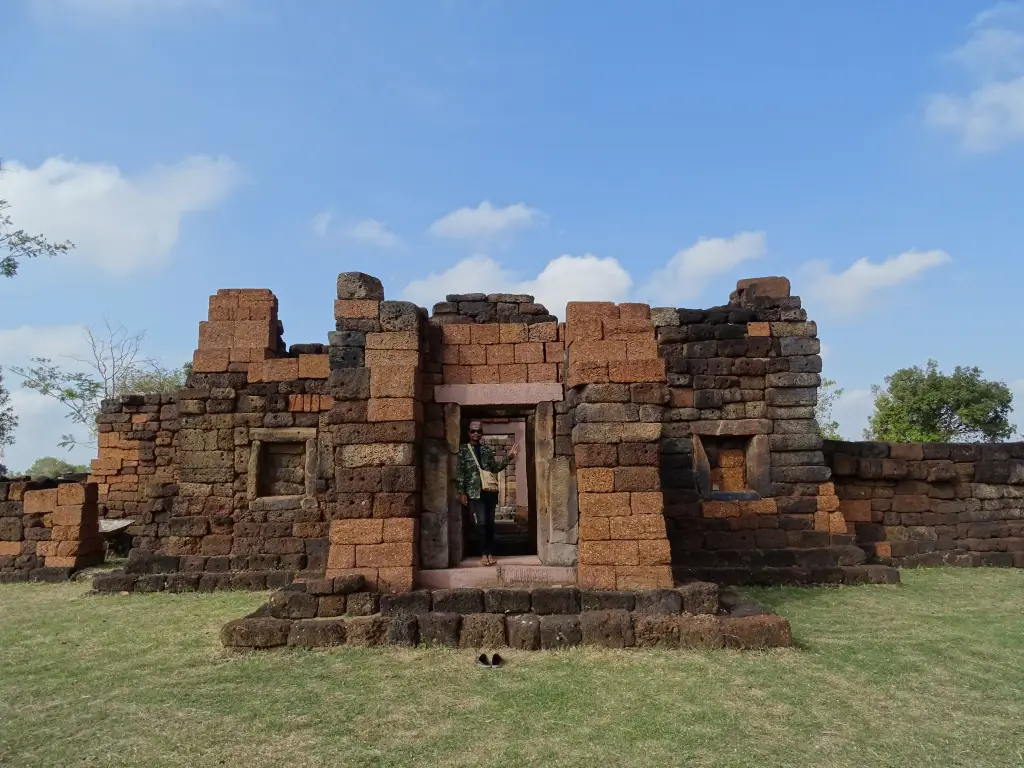
Prasat Ban Chang Pi
Open Days: Daily
Opening Hours: 07.00 – 18.00
Prasat Ban Chang Pi in Surin Province, also known as Prasat Chang Pi, is an important Bayon-style Khmer monument in Sikhoraphum District. It is located in Village No. 1, Ban Chang Pi, Chang Pi Subdistrict, within an old community landscape connected with ancient Khmer culture. The monument is an Arokayasala, or ancient hospital sanctuary, built during the reign of King Jayavarman VII of the Khmer Empire. It was associated with Mahayana Buddhism and the worship of Bhaisajyaguru Vaiduryaprabha, the Medicine Buddha. The site reflects the Khmer concept of healing, compassion, sacred space, and public welfare. Prasat Ban Chang Pi is open daily, has no admission fee, and is one of the most meaningful places in Surin for travelers interested in Khmer hospital sanctuaries.
The monument was built mainly of laterite, with sandstone used for important architectural and sculptural elements. Its overall plan is rectangular and faces east, following the traditional orientation of Khmer sacred architecture. The site includes a main sanctuary, a bannalai or auxiliary ritual building, an enclosing wall, an eastern entrance gateway, and a rectangular pond outside the northeastern side of the enclosure. These elements are typical of Arokayasala sites established during the reign of King Jayavarman VII, allowing visitors to understand the original function of the monument clearly.
The term Arokayasala refers to a place associated with freedom from illness. In the Khmer world of Jayavarman VII, these hospital sanctuaries were not hospitals in the modern institutional sense. They were sacred healing spaces where religion, ritual, traditional medicine, medicinal plants, and devotion worked together. Healing was understood as both a social responsibility and a religious act. Prasat Ban Chang Pi therefore preserves evidence of a historical system in which public care, Buddhist compassion, and royal merit-making were expressed through architecture.
The main sanctuary is the heart of the monument. It faces east and has a front platform connected to the entrance gateway. The laterite walls and blocks show the strength and texture of late Khmer construction. Laterite is common in Khmer monuments across northeastern Thailand. Its reddish-brown color and rough surface give the sanctuary a quiet, solid, and ancient appearance. The building stands within a rural landscape of fields, local roads, houses, and community space, giving the site a strong sense of continuity between past and present.
The bannalai stands in the southeastern corner of the sacred precinct and faces the main sanctuary. This small rectangular structure is an important component of many Khmer religious complexes, including hospital sanctuaries. It functioned as an auxiliary building connected with ritual activities. At Prasat Ban Chang Pi, the bannalai helps complete the spatial organization of the site. Together with the sanctuary, gateway, wall, and pond, it shows that the monument was planned as a complete sacred environment.
The enclosing wall surrounds the main sanctuary and the bannalai, marking the boundary between the outer world and the sacred interior. The eastern gateway stands at the center of the eastern wall and functions as the main approach into the monument. Walking through this gateway allows visitors to experience the original sequence of movement: from the outside area, through the gateway, into the enclosed sacred space, and toward the main sanctuary. This spatial order is essential to understanding Khmer religious architecture.
The rectangular pond outside the northeastern side of the enclosure is a key feature of the Arokayasala layout. Water was connected with purification, ritual practice, healing, and community life. At Prasat Ban Chang Pi, the pond is not merely a landscape feature. It belongs to the religious and medical meaning of the site. When the pond is considered together with the sanctuary, bannalai, wall, and gateway, the monument becomes a complete healing sanctuary rather than a single ancient building.
Excavations at Prasat Ban Chang Pi uncovered important sandstone sculptures, including four-armed Avalokitesvara figures and sculptures associated with Bhaisajyaguru Vaiduryaprabha and his two attendants, Suryavairocana Candraroci and Candravairocana Rohiniśa. These finds confirm the Mahayana Buddhist context of the site. They also explain why Prasat Ban Chang Pi is understood as an ancient hospital sanctuary rather than a general religious monument.
Bhaisajyaguru Vaiduryaprabha, the Medicine Buddha, is closely associated with healing, relief from suffering, and the removal of illness in Mahayana Buddhist belief. The connection between this figure and Prasat Ban Chang Pi gives the monument a deeper spiritual meaning. It was not only a place of worship, but also a place where faith, ritual, and healing were brought together. This meaning remains alive in the local community through ceremonies, memory, and annual cultural events held at the site.
Prasat Ban Chang Pi dates to the 18th Buddhist century, during the reign of King Jayavarman VII. This was a period when Mahayana Buddhism received strong royal support. Jayavarman VII established many public religious works, including hospital sanctuaries, rest houses, and major temples. These Arokayasala sites formed a network across important settlements and routes. Prasat Ban Chang Pi is part of this wider system of religion, medicine, governance, and compassion in the Khmer world.
Ban Chang Pi itself is an old community located on slightly elevated ground near the monument. A large baray or reservoir lies to the north of the village and has long been used for agriculture and daily life. This landscape shows that the sanctuary did not stand alone. It belonged to a living settlement with water resources, rice fields, houses, a temple, a school, and local traditions. The relationship between the monument and the community is one of the most important aspects of the site.
The name Chang Pi is connected with local memory, craftsmanship, and traditional knowledge. Today, Ban Chang Pi is known not only for the ancient monument, but also for pottery and local craft traditions. Clay pottery has been revived as a form of community heritage and is connected with local education and youth learning. A visit to Prasat Ban Chang Pi is therefore not only a visit to a Khmer monument, but also a way to understand a Thai-Khmer community with language, memory, craft, and living culture.
The large Ban Chang Pi reservoir is another important part of the cultural landscape. It served as a water source for agriculture and community use. In ancient Khmer landscapes, water had both practical and symbolic meaning. It supported life, farming, purity, ritual, fertility, and healing. The relationship between the sanctuary, pond, baray, and village shows how sacred architecture and community life were connected through water.
The Fine Arts Department has restored and cared for Prasat Ban Chang Pi, and the surrounding area has been maintained for cultural tourism and learning. Today the site is suitable for walking, photography, and studying the Arokayasala layout. Visitors can see the main sanctuary, the enclosing wall, the gateway, the bannalai, and the pond in one place, making the site easy to understand even for first-time travelers.
The annual “Suebsan Tamnan Prasat Chang Pi” cultural event is the most important community activity connected with the monument. It is held from March 5 to 7 each year and includes ritual offerings, local dance, light-and-sound performances, exhibitions, OTOP products, and the viewing of the sunset light passing through the sanctuary doorways. This event shows that Prasat Ban Chang Pi is not a silent ruin. It continues to serve as a center of cultural memory and community identity.
A good visit should begin at the eastern gateway, the original entrance direction. From there, visitors walk into the enclosed space and view the main sanctuary, bannalai, and internal courtyard. After that, walk around the monument to observe the laterite construction, foundations, wall lines, and the location of the pond. This route helps visitors understand the monument as a complete hospital sanctuary with a meaningful sacred plan.
The gateway and doorway alignment deserve special attention because they are related to the annual sunset-light phenomenon. During the cultural event, the evening sunlight passes through the sanctuary doorways, creating a powerful visual moment for the community and visitors. The phenomenon connects architectural planning, light, belief, and local ritual, making the site especially memorable in early March.
For people interested in archaeology, Prasat Ban Chang Pi is an excellent example of an Arokayasala with a readable plan. It has the key components of this architectural type: the main sanctuary, bannalai, enclosing wall, entrance gateway, and pond. Comparing it with other hospital sanctuaries in Surin and southern Isan, such as Prasat Mueang Thi and Prasat Chom Phra, helps visitors understand the wider network of healing sanctuaries from Jayavarman VII’s reign.
For general travelers, Prasat Ban Chang Pi is peaceful, accessible, and rewarding. A normal visit takes about 45–90 minutes. Travelers who want to photograph the site, observe the details, and visit the surrounding community should allow 1–2 hours. The site is suitable for visitors interested in Khmer history, Mahayana Buddhism, ancient healthcare, laterite architecture, and Thai-Khmer communities in Surin.
The best time to visit is in the morning or late afternoon, when the weather is more comfortable and the sunlight brings out the texture of the laterite blocks. March is especially meaningful because of the annual cultural event and the sunset-light phenomenon. During the rainy season, the surrounding fields and water landscape become greener, making the relationship between the sanctuary and its water environment more visible.
Getting There from Surin city is straightforward. Take Highway 226 on the Surin–Sikhoraphum route toward Sikhoraphum District. Around the 19 km marker, turn onto the local road toward Ban Chang Pi. The total distance from Surin city is about 25 km. From Sikhoraphum District town, travel southwest toward Chang Pi Subdistrict for about 12–15 km. The route is suitable for private cars, rental cars, and local hired vehicles.
A practical half-day route can begin in Surin city in the morning, followed by Prasat Ban Chang Pi for about 1 hour. Travelers can then continue to Prasat Sikhoraphum or Prasat Mueang Thi. For a deeper Arokayasala route, combine Prasat Ban Chang Pi with Prasat Mueang Thi and Surin National Museum. This helps connect the on-site monument with artifacts and the broader historical context of Khmer heritage in Surin.
For food and rest stops, travelers can continue to Sikhoraphum District, where restaurants and cafes include Phu Pha Boat Noodles Sikhoraphum, Home Hug Coffee & Steak, Tummour PTT Sikhoraphum, Kalamae Sikhoraphum Ton Tamrap 5 Prasat, and Cream Mu Kratha Sikhoraphum. Travelers who want more dining and accommodation options can continue to Surin city.
For accommodation, travelers who want to stay close to Sikhoraphum District can choose Jamjuree Resort. Those who prefer greater convenience can stay in Surin city at Arena Hotel Surin, Martina Hotel Surin, Thongtarin Hotel Surin, or The Wood Surin, then visit Prasat Ban Chang Pi as a day trip. The route from Surin city is convenient and suitable for both Thai and international travelers.
Visitors should treat Prasat Ban Chang Pi with respect. Dress appropriately, do not climb on the monument, do not move laterite blocks or stones, do not write on the structure, do not litter, and do not disturb local ceremonies or community life. Every part of the monument is historical evidence that should remain in place. Responsible travel helps preserve the site for future generations.
For international visitors, Prasat Ban Chang Pi clearly explains the idea of a Khmer hospital sanctuary in Thailand. The site brings together Mahayana Buddhism, Jayavarman VII, the Medicine Buddha, laterite architecture, sacred water, and a living Thai-Khmer community. It shows that Khmer heritage in Thailand was not limited to large ceremonial temples. It also included healing sanctuaries built around compassion, medicine, and public welfare.
Compared with other Khmer monuments in Surin, Prasat Ban Chang Pi has a clear identity as an Arokayasala. It differs from Prasat Sikhoraphum, which is known for its 5 towers and Shiva Nataraja lintel; from Prasat Ban Phluang, which is known for refined Baphuon-style sandstone carving; and from Prasat Ban Phlai, a Hindu Shaivite sanctuary. Prasat Ban Chang Pi completes the cultural map of Surin by representing the Mahayana Buddhist healing tradition of the Khmer world.
Prasat Ban Chang Pi brings together history, religion, ancient medicine, water, community, and local tradition in one place. Its laterite architecture may look simple at first, but once its meaning as an Arokayasala is understood, the monument becomes a powerful reminder of compassion and healing in the reign of King Jayavarman VII. For travelers who take time to observe the sanctuary, pond, baray, and community landscape, this quiet site becomes one of the most meaningful cultural stops in Surin Province.
| Name | Prasat Ban Chang Pi / Prasat Chang Pi |
| Location | Village No. 1, Ban Chang Pi, Chang Pi Subdistrict, Sikhoraphum District, Surin Province |
| Address | Village No. 1, Ban Chang Pi, Chang Pi Subdistrict, Sikhoraphum District, Surin Province 32110, Thailand |
| Coordinates | Latitude 14.929942962415568, Longitude 103.70285319764356 |
| Highlights | An Arokayasala from the reign of King Jayavarman VII, built with laterite and sandstone, with a main sanctuary, bannalai, enclosing wall, entrance gateway, and ancient pond |
| History | 18th Buddhist century, Bayon-style Khmer art, reign of King Jayavarman VII, associated with Mahayana Buddhism and Bhaisajyaguru Vaiduryaprabha |
| Distinctive Features | Rectangular Arokayasala layout, east-facing main sanctuary with a front platform, bannalai in the southeastern corner, enclosing wall, eastern gateway, and pond outside the northeastern side of the enclosure |
| Key Evidence | Sandstone sculptures of four-armed Avalokitesvara, objects associated with Bhaisajyaguru Vaiduryaprabha, and the two attendants Suryavairocana Candraroci and Candravairocana Rohiniśa |
| Travel Information | From Surin city, take Highway 226 on the Surin–Sikhoraphum route. Around the 19 km marker, turn toward Ban Chang Pi. The total distance from Surin city is about 25 km. From Sikhoraphum town, travel southwest for about 12–15 km |
| Current Status | Open to visitors as an important ancient monument of Chang Pi Subdistrict and the venue of the annual Suebsan Tamnan Prasat Chang Pi cultural event |
| Open Days | Daily |
| Opening Hours | 07.00 – 18.00 |
| Fees | No Admission Fee |
| Facilities | Walking area around the monument, open courtyard, photo spots, community area, Wat Ban Chang Pi, Ban Chang Pi School, Ban Chang Pi Reservoir, and parking areas around the village |
| Main Areas / Zones | Main sanctuary, front platform, eastern gateway, enclosing wall, bannalai, ancient pond, Ban Chang Pi Reservoir, Wat Ban Chang Pi, and local pottery craft community area |
| Monument Caretaker | Fine Arts Department through the 10th Regional Office of Fine Arts, Nakhon Ratchasima, and Surin National Museum, together with Chang Pi Subdistrict Administrative Organization and Ban Chang Pi community |
| Main Contact Number | Chang Pi Subdistrict Administrative Organization, Tel. 044-558-765 Surin National Museum, Tel. 044-513-274 10th Regional Office of Fine Arts, Nakhon Ratchasima, Tel. 044-471-518, 044-481-024 |
| Nearby Tourist Attractions | 1. Ban Chang Pi Reservoir, about 1 km 2. Prasat Mueang Thi, about 11 km 3. Prasat Sikhoraphum, about 14 km 4. Surin National Museum, about 31 km 5. Wat Burapharam Royal Temple, about 29 km 6. Surin City Pillar Shrine, about 29 km |
| Nearby Restaurants | 1. Phu Pha Boat Noodles Sikhoraphum, about 14 km, Tel. 093-343-3246 2. Home Hug Coffee & Steak, about 15 km, Tel. 044-560-189 3. Kalamae Sikhoraphum Ton Tamrap 5 Prasat, about 14 km, Tel. 044-561-285, 044-065-244 4. Cream Mu Kratha Sikhoraphum, about 16 km, Tel. 092-836-5198 5. KFC PTT Sikhoraphum, about 15 km, Tel. 081-207-4791 |
| Nearby Accommodations | 1. Jamjuree Resort Sikhoraphum, about 15 km, Tel. 044-560-289, 089-190-5156 2. Arena Hotel Surin, about 27 km, Tel. 044-519-555, 063-356-2455 3. Martina Hotel Surin, about 31 km, Tel. 044-713-555, 044-713-655 4. Thongtarin Hotel Surin, about 29 km, Tel. 044-514-281, 044-514-282, 044-514-283 5. The Wood Surin, about 29 km, Tel. 063-023-7999 |
Frequently Asked Questions (FAQ)
Q: Where is Prasat Ban Chang Pi located?
A: Prasat Ban Chang Pi is located in Village No. 1, Ban Chang Pi, Chang Pi Subdistrict, Sikhoraphum District, Surin Province.
Q: Is Prasat Ban Chang Pi open every day?
A: Yes. Prasat Ban Chang Pi is open daily from 07.00 to 18.00.
Q: Is there an admission fee for Prasat Ban Chang Pi?
A: No. There is no admission fee to visit the ancient monument.
Q: Why is Prasat Ban Chang Pi important?
A: It is an Arokayasala, or ancient hospital sanctuary, from the reign of King Jayavarman VII, associated with Mahayana Buddhism and Bhaisajyaguru Vaiduryaprabha, the Medicine Buddha.
Q: What are the main components of Prasat Ban Chang Pi?
A: The site includes a main sanctuary, bannalai, enclosing wall, eastern gateway, ancient pond, and surrounding Ban Chang Pi community landscape.
Q: What period does Prasat Ban Chang Pi belong to?
A: The monument dates to the 18th Buddhist century, during the reign of King Jayavarman VII of the Khmer Empire.
Q: How do I travel from Surin city to Prasat Ban Chang Pi?
A: Take Highway 226 on the Surin–Sikhoraphum route. Around the 19 km marker, turn toward Ban Chang Pi. The total distance from Surin city is about 25 km.
Q: How long should I spend at Prasat Ban Chang Pi?
A: Around 45–90 minutes is suitable for walking around the Arokayasala layout, taking photographs, and understanding the relationship between the sanctuary, pond, baray, and Ban Chang Pi community.
 Category: ●Art, Culture and Heritage
 Group: ●Historical Sites and Monuments
Last Update : 2 MonthAgo
 Last Update : 2 MonthAgo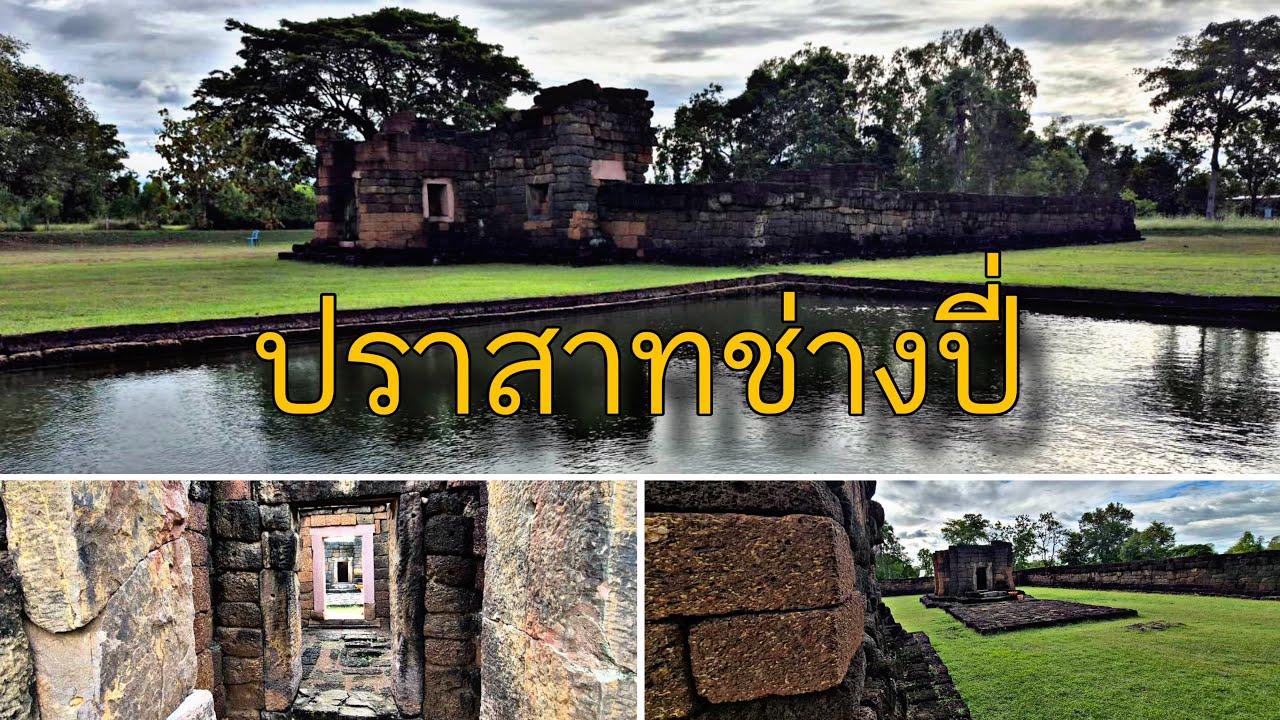
 Click to Access the Navigation Map GPS
Prasat Ban Chang Pi Map
Recommend
 Historical Sites and Monuments(11)
 Landmarks and Memorials(2)
 Art, Craft Centres, Tradition(5)
 Museums(1)
 Places of Worship
 Temple(15)
 Other Sacred Sites(1)
 Suburban Living
 Village, Community(9)
 Local Market(1)
 Nature and Wildlife
 National Parks and Marine Reserves(2)
 Mountain (Doi)(2)
 Dam, Reservoir, Lake(6)
 Waterfalls(1)
 River, Canal(2)
 Other natural attractions(4)
 Entertainment and Agricultural
 Farms, Parks and Ecotourism(2)


