
lovethailand home >Northeastern Travel Attractions >Surin Travel Attractions > Entertainment and Agricultural
TL;DR: Entertainment and Agricultural of Northeastern in Surin
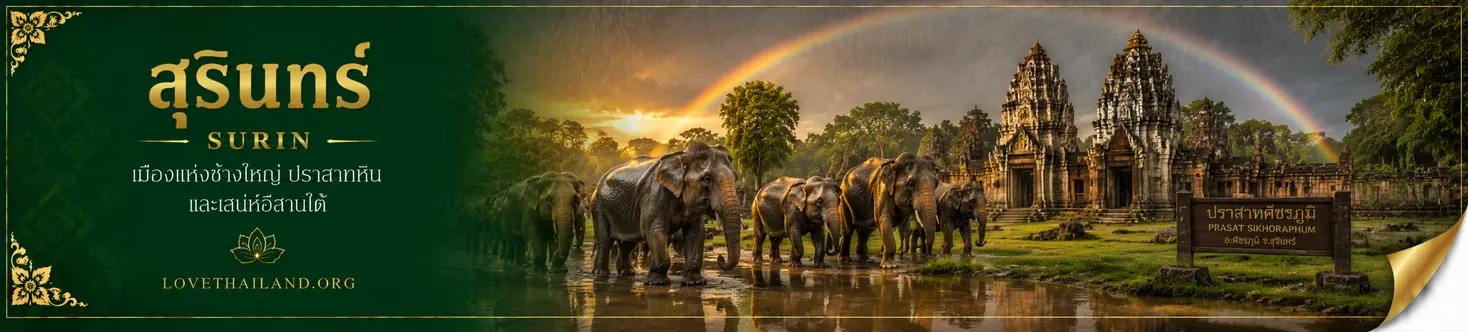

Entertainment and Agricultural
Agricultural and Entertainment Tourism in Thailand is a form of travel that combines relaxation, enjoyment, and hands-on learning about rural and agricultural lifestyles. Visitors not only experience nature but also gain insight into food production, animal farming, and traditional local wisdom that has been passed down through generations.
Agricultural tourism involves traveling to farming communities such as fruit orchards, herbal gardens, livestock farms, pet farms, and aquaculture sites. Visitors can learn, participate in activities, and experience the daily lives of farmers firsthand. This differs from general tourism, which often focuses only on sightseeing.
In Thailand, agricultural tourism has continued to evolve, with many destinations adapting to include more engaging and entertaining activities. Visitors can harvest fruits themselves, cook with fresh ingredients, or learn how to care for animals on real farms.
In Northern Thailand, agricultural tourism emphasizes simplicity and a close connection with nature. Tea plantations, coffee farms, and highland agriculture offer opportunities to learn about cultivation and processing while enjoying cool mountain climates.
The Northeastern region (Isan) showcases agricultural tourism that strongly reflects local community life, such as traditional rice farming, raising local livestock, and cultivating herbal plants. Visitors can actively participate in these activities.
Central Thailand is home to diverse agricultural activities, including fruit orchards, dairy farms, and modern agricultural learning centers. Many places offer entertaining activities such as feeding animals, milking cows, and producing dairy products.
The Eastern region is well known for its fruit orchards, especially durian, mangosteen, and rambutan in provinces like Chanthaburi and Rayong. Visitors can join fruit buffet experiences and learn professional orchard management.
Southern Thailand features agricultural tourism related to rubber plantations, palm oil farms, and aquaculture such as shrimp and fish farming. These experiences provide insight into the region’s economy and local livelihoods.
What makes agricultural tourism unique is the opportunity for hands-on participation. Whether planting crops, harvesting produce, or caring for animals, these activities create meaningful and memorable experiences.
In addition, agricultural tourism plays an important role in distributing income to local communities, supporting rural economies, and preserving traditional knowledge for future generations.
The popularity of these destinations depends on individual preferences. Some travelers enjoy educational activities, while others seek peaceful natural settings for relaxation. Both experiences can be found in agricultural tourism.
Getting There Most agricultural tourism destinations are located in rural areas and are best accessed by private car. Some locations offer guided tours or group activities to make visits more convenient.
When visiting agricultural sites, it is important to respect local communities and their way of life. Visitors should avoid disturbing animals, damaging crops, and should follow the guidance of local hosts to ensure sustainable tourism.
| Region | Notable Attractions | Characteristics | Activities | Highlights |
| Northern Thailand | Tea and coffee plantations | Mountains, cool climate | Tea picking, coffee tasting | Scenic natural views |
| Northeastern Thailand | Rice fields, local farms | Rural lifestyle | Rice farming, livestock care | Traditional culture |
| Central Thailand | Dairy farms, orchards | Mixed agriculture | Milking cows, product making | Variety of activities |
| Eastern Thailand | Durian, mangosteen orchards | Fruit plantations | Fruit picking, fruit buffet | High-quality fruits |
| Southern Thailand | Rubber farms, shrimp farms | Agricultural industry | Farming and aquaculture learning | Local economic insight |
Q: What is agricultural tourism?
A: It is tourism in farming areas where visitors can learn and participate in real agricultural activities.
Q: How is it different from general tourism?
A: It focuses on participation and learning rather than just sightseeing.
Q: Who is it suitable for?
A: It is suitable for all ages, especially families and nature lovers.
Q: Do I need to book in advance?
A: Some places require advance booking, especially for group activities.
Q: What activities are available?
A: Activities include fruit picking, animal feeding, cooking, and farming experiences.
Q: Is it safe?
A: Yes, if visitors follow the guidance of the farm operators.
Q: Can children participate?
A: Yes, it is a great educational experience for children.
Q: What should I prepare?
A: Comfortable clothing, suitable shoes, and sun protection.

 Farms, Parks and Ecotourism(


