
lovethailand home >Northeastern Travel Attractions >Surin Travel Attractions >Khwao Sinrin >Khwao Sinrin > Khwao Sinarin Handicraft Village
TL;DR: Khwao Sinarin Handicraft Village is located at Khwao Sinarin Subdistrict, Khwao Sinarin District, Surin Province 32000, open Daily, hours 08.00 – 17.00.

Khwao Sinarin Handicraft Village
Open Days: Daily
Opening Hours: 08.00 – 17.00
Khwao Sinarin Handicraft Village Surin is one of the most distinctive craft communities in northern Surin Province. Located in Khwao Sinarin District, the village is known for two important local crafts: traditional silk weaving, especially the local textile known as “Hol silk,” and ancient silver beadwork called “Luk Pakueam.” These 2 crafts represent the cultural identity of lower northeastern Thailand. Visitors come here to see local silk, silver jewelry, community shops, craft demonstrations arranged in advance, and the living relationship between clothing, ornament, ritual, family work, and village economy.
The village is important because it brings together silk and silver in one cultural landscape. Hol silk is a traditional textile associated with dress, ceremonies, merit-making, weddings, ordinations, and the identity of local people. Luk Pakueam is a form of silver bead made from silver sheet, shaped into round or oval beads, then decorated with enamel and engraved patterns. These beads are used to make necklaces, bracelets, belts, earrings, and women’s ornaments. Together, Hol silk and Pakueam silver create one of Surin’s most recognizable forms of cultural dress.
Khwao Sinarin Handicraft Village lies north of Surin city. From the city, travelers take Highway 214, the Surin – Roi Et route, for about 14 km, then turn right and continue another 4 km into Khwao Sinarin. The total distance from Surin city is about 18 km. The route is convenient by private car, rental car, or chartered van. Because the village is close enough to the city, it can be visited as a half-day cultural trip or combined with Surin city attractions and Ban Tha Sawang silk weaving village.
The name Khwao Sinarin reflects local history. “Khwao” refers to a type of large tree whose wood was used for auspicious objects, while “Sinarin” is connected with Khun Sinarin Bamrung, a former local leader. The name therefore carries both natural and historical meaning. When combined with the district’s well-known silk and silver crafts, Khwao Sinarin becomes more than a place name. It represents a community identity built from local resources, people, skills, and memory.
Historically, the Khwao Sinarin area was once part of Mueang Surin District. It later became a minor district in 1996 and was upgraded to Khwao Sinarin District in 2007. The district’s recognition grew not only through administrative development, but also through its cultural assets. Silk weaving, silverwork, local festivals, and handicraft shops have made the area known among travelers, collectors, textile lovers, silver jewelry buyers, and people interested in Surin’s living local wisdom.
Hol silk is one of the strongest textile identities of Khwao Sinarin and Surin Province. It is a traditional silk with deep cultural roots in lower northeastern Thailand and a strong relationship with Khmer-influenced local culture. Hol silk is not simply beautiful cloth. It is used in ceremonies, family events, important community occasions, and traditional dress. A piece of Hol silk carries social meaning as clothing, auspicious textile, family property, and cultural expression.
In the past, weaving in Khwao Sinarin began within households. Villagers wove cloth for family use and local sale. Many processes were done by the household itself, including mulberry growing, silkworm raising, yarn preparation, dyeing, and loom weaving. Men often made weaving equipment such as looms and reels, while women were mainly responsible for weaving, pattern control, and finishing. This division of craft work made silk a family activity rather than the work of one individual alone.
As the silk economy developed, textiles from Khwao Sinarin reached larger markets through middlemen, city traders, and later OTOP channels. Government support for community products helped make local silk and silver better known. Many middle-aged and elderly women used free time outside agricultural work to weave silk for OTOP shops and private buyers. This allowed household skill to become community income while keeping craft knowledge alive.
Silk products in Khwao Sinarin include Hol silk, matmi silk, local-pattern silk, sarong cloth, pha sin, shawls, scarves, and fabric for tailoring. Their value lies in the pattern, color, handwoven texture, and direct link with the community. Visitors can identify handmade silk by observing weave density, edge finishing, motif rhythm, and the softness of natural silk thread. Each piece reflects the hand of the weaver, the dyeing method, and the design tradition behind it.
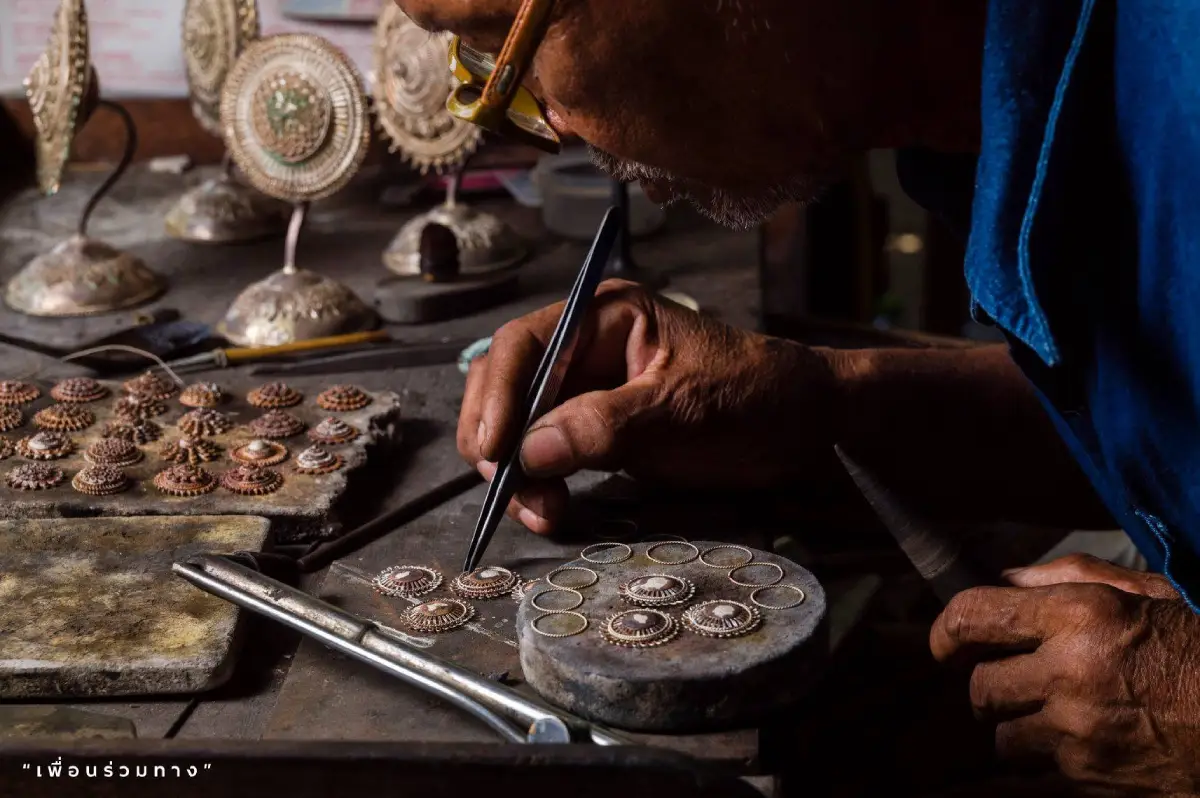
The second major identity of the village is Luk Pakueam silver. Pakueam refers to ancient silver beads made by shaping silver sheet into round or oval beads, then decorating them with enamel and traditional motifs. Popular designs include horseshoe-crab egg motifs, phikun flower motifs, and money-bag motifs. When the beads are strung or combined with other silver parts, they become necklaces, bracelets, belts, earrings, and elegant ornaments.
Making Luk Pakueam requires precise hand skill. The artisan must select silver sheet, cut it, shape it, hammer it, form the bead, decorate the surface, and finish the piece. The shape must be balanced, the surface must be clean, and the pattern must be clear without damaging the silver. Each motif is not only decoration. It is a visual language of local silverwork, showing taste, belief, and craft identity. This makes Pakueam both jewelry and collectible cultural craft.
Ban Chok in Khwao Sinarin is closely associated with ancient silverwork. Artisans and community silver groups continue to demonstrate and sell Pakueam silver to visitors. Seeing the craft process helps travelers understand that a piece of jewelry begins not at the shop counter, but with material preparation, fire, shaping, pattern work, and inherited skill. Walking through the village shops is therefore a way to learn about silver culture while selecting authentic local products.
The charm of Pakueam silver lies in its handmade character. It does not have the cold uniformity of factory jewelry. The silver surface, bead form, engraved pattern, and arrangement of the ornaments retain the feeling of human work. When worn with silk, Pakueam silver adds dignity and identity to local dress. Women commonly wear this kind of silver ornament for ceremonies, festivals, merit-making, and special occasions.
Khwao Sinarin Handicraft Village is valuable not only because of its products, but also because it functions as a community learning space. Visitors can understand the relationship between silk, silver, dress, agriculture, ritual, and local economy in one area. Silk provides the textile base of traditional dress, while silver provides ornamental meaning and auspicious beauty. Together, they create a complete cultural image of Surin’s local identity.
One of the important cultural expressions of the area is the festival “Nung Pha Mai, Sai Pakueam, Rueam Kantruem,” which means wearing silk, wearing Pakueam, and dancing to Kantruem music. This festival brings together silk, silver, local music, dance, and community pride. It shows that these crafts are not separate from life. They appear in dress, celebration, ceremony, and cultural performance. This helps keep the crafts visible and meaningful in the present.
Within the village, visitors will find shops selling silk, silver, and related community products. Buying from the production area allows visitors to ask about patterns, materials, use, care, and origin. A piece of Hol silk or a Pakueam necklace carries more meaning when purchased in the place where it is made. The buyer receives not only an object, but also a story connected with people, place, and cultural continuity.
When choosing silk, visitors should consider the intended use. Fabric for tailoring should have suitable length and color. Shawls and scarves are practical as gifts. Hol silk and detailed matmi pieces are valuable for cultural appreciation and collection. When choosing Pakueam silver, visitors should look at pattern clarity, bead weight, finishing, strength of assembly, and comfort when worn. Good craft balances beauty, durability, and meaning.
Silk should be cared for gently. Hand-wash with mild detergent, avoid strong rubbing, do not bleach, do not soak too long, and dry in shade with airflow. If ironing is needed, use low heat or iron through a protective cloth. Pakueam silver should be stored dry, wiped with a soft cloth after use, and kept away from perfume, chemicals, sweat, and moisture. Proper care helps both silk and silver remain beautiful for many years.
Important areas in the village include Pakueam silver shops, Hol silk shops, ancient silver craft groups, silver demonstration areas when arranged in advance, Hol and matmi silk learning areas, OTOP product shops, Ban Chok community routes, and community learning spaces related to silk and silver. Visitors should see the whole village as a living craft landscape rather than a single shop or photo stop.
The main caretakers and coordinators include ancient silver craft groups, community shops, silk groups, and Khwao Sinarin Subdistrict Municipality. Visitors who want a formal silver demonstration or group study visit should contact the group in advance. This allows artisans and the community to prepare time, space, and explanations properly while avoiding disturbance to normal household and shop work.
The main visiting time is daily from 08.00 to 17.00. Some silver shops may serve visitors until later in the evening. The best time to visit is late morning or early afternoon, when shops and community activity are usually active. Morning visits are good for a calm village atmosphere, while afternoon visits are practical for buying products before returning to Surin city or continuing to Ban Tha Sawang.
There is no admission fee for ordinary visits to Khwao Sinarin Handicraft Village. Costs depend on silk purchases, silver purchases, or pre-arranged group activities. Product prices vary according to fabric type, motif complexity, silver weight, production technique, shape, and labor time. Handmade craft should be valued not only as a product, but also as material, skill, and cultural heritage.
Getting There from Surin city is straightforward. Take Highway 214, the Surin – Roi Et route, northward for about 14 km, then turn right and continue about 4 km into Khwao Sinarin. The total distance is about 18 km. Private cars, rental cars, and chartered vans are the most convenient options. For navigation, search for “Khwao Sinarin Handicraft Village,” “Khwao Sinarin Silver Handicraft Village,” or “Ban Chok Khwao Sinarin.”
A good half-day route can begin in Surin city at Surin City Pillar Shrine or Wat Burapharam, then continue north to Khwao Sinarin to see Hol silk and Pakueam silver. Visitors can return to the city for lunch or continue to Ban Tha Sawang Ancient Gold Brocade Silk Weaving Village. This route combines civic faith, local textile culture, ancient silver craft, and community-based travel within a manageable distance.
Nearby attractions that combine well with Khwao Sinarin include Ban Tha Sawang Ancient Gold Brocade Silk Weaving Village, Surin City Pillar Shrine, Wat Burapharam Royal Temple, Phraya Surin Phakdi Si Narong Changwang Monument, Surin Railway Station and market area, Surin National Museum, Ban Butom Basketry Village, and Sikhoraphum Sanctuary. This route gives travelers a broad view of Surin through silk, silver, faith, history, and craft.
Dining options near the village include small cafés and local shops in Khwao Sinarin, while Surin city offers more choices. Travelers can stop at a café in the district or return to the city for Thai food, Isan food, Vietnamese food, cafés, and hotel restaurants. Groups should plan meals in advance, especially when visiting the village as part of a study trip or cultural route.
Accommodation is most convenient in Surin city because the village is only about 18 to 22 km away. Staying in the city gives visitors access to hotels, restaurants, markets, railway services, hospitals, and transport. Surin city is a good base for visiting Khwao Sinarin, Ban Tha Sawang, Ban Butom, Sikhoraphum Sanctuary, and other nearby attractions in the same trip.
For international visitors, Khwao Sinarin Handicraft Village offers a deeper view of Surin beyond elephants and Khmer ruins. The village shows that Surin also has rich textile and silver traditions connected with ethnic identity, ceremonial dress, household economy, and local artistic skill. Hol silk and Pakueam silver are excellent entry points for understanding the cultural life of Surin at community level.
International visitors should observe with respect, ask permission before photographing people, avoid touching tools or delicate products without permission, and bargain politely. Buying directly from local shops supports artisans and helps preserve craft knowledge. A respectful visit allows travelers to understand not only the beauty of silk and silver, but also the people and community behind them.
In summary, Khwao Sinarin Handicraft Village Surin is an important craft destination in lower northeastern Thailand. Located about 18 km north of Surin city, it is known for Hol silk, matmi silk, and Pakueam silver beads. The village is open daily with no general admission fee. It offers community shops, silver craft groups, local silk, cultural learning, and a strong connection between dress, ceremony, family craft, and local economy. It is suitable for travelers, craft collectors, designers, students, and international visitors who want to understand Surin through living silk and silver traditions.
| Name | Khwao Sinarin Handicraft Village Surin / Khwao Sinarin Silver Handicraft Village |
| Location | Khwao Sinarin Subdistrict, Khwao Sinarin District, Surin Province 32000 |
| Address | Khwao Sinarin Handicraft Village / Ban Chok, Khwao Sinarin Subdistrict, Khwao Sinarin District, Surin Province 32000 |
| Highlights | Hol silk, matmi silk, Pakueam silver beads, enamel and engraved silver patterns, community craft shops, silverwork demonstrations when arranged in advance, and the local festival of wearing silk, wearing Pakueam, and dancing Kantruem |
| History | Khwao Sinarin has preserved household and community wisdom in silk weaving and silverwork. The area was formerly under Mueang Surin District, became a minor district in 1996, and was upgraded to Khwao Sinarin District in 2007 |
| Name Origin | “Khwao” refers to a large tree used for auspicious objects, while “Sinarin” is connected with Khun Sinarin Bamrung, a former local leader. The district name reflects both nature and local history |
| Distinctive Features | A craft village combining local silk weaving and ancient silverwork. Hol silk is used in ceremonies and local dress, while Pakueam silver is made into necklaces, bracelets, belts, earrings, and women’s ornaments |
| Travel Information | From Surin city, take Highway 214 toward Roi Et for about 14 km, then turn right and continue about 4 km into Khwao Sinarin. The total distance is about 18 km |
| Current Status | Open for cultural visits, silk and silver shopping, and community craft learning. It remains an important cultural and handicraft destination of Surin Province |
| Open Days | Daily |
| Opening Hours | 08.00 – 17.00 |
| Fees | No Admission Fee For Ordinary Visits. Costs Depend On Silk Purchases, Silver Purchases, Or Pre-Arranged Group Activities |
| Facilities | Craft shops, silk shops, silver shops, demonstration areas when arranged in advance, village parking according to local conditions, cafés, and basic services in Khwao Sinarin District |
| Main Areas / Zones | 1. Pakueam Silver Shop Zone 2. Hol Silk And Local Silk Shop Zone 3. Ancient Silver Craft Group Area 4. Silverwork Demonstration Area When Arranged In Advance 5. OTOP Product Display And Sales Area 6. Hol Silk And Matmi Learning Area 7. Ban Chok Craft Community Route 8. Khwao Sinarin Community Learning Area 9. Festival Area For Wearing Silk, Wearing Pakueam, And Dancing Kantruem |
| Important Products | Hol silk, matmi silk, local silk, sarong cloth, pha sin, shawls, scarves, Pakueam silver beads, silver necklaces, silver bracelets, silver belts, silver earrings, and ancient-pattern silver ornaments |
| Product Care | Hand-wash silk with mild detergent, dry in shade, and iron with low heat through a protective cloth. Wipe silver with a soft cloth, store in a dry place, and keep away from perfume, chemicals, sweat, and moisture |
| Community Traditions / Lifestyle | Household weaving, silk use in merit-making, ordinations, weddings, local dress with Hol silk and Pakueam silver, family-based craft transmission, and the festival of wearing silk, wearing Pakueam, and dancing Kantruem |
| Caretaker / Community Groups | Ancient silver craft groups, community handicraft shops, local silk groups, and Khwao Sinarin Subdistrict Municipality are connected with the craft village area |
| Group / Craft Contact | Ancient Silver Craft Group, Tel. 081-309-4352 Silver Group / Community Shop, Tel. 086-264-5331 Khwao Sinarin Silver And Silk Shop, Tel. 085-499-4617 Natural-Dyed Ancient Hol Matmi Group, Tel. 087-241-4220 |
| Local Information Contact | Khwao Sinarin Subdistrict Municipality, Tel. 0-4458-2052 |
| Nearby Tourist Attractions | 1. Khwao Sinarin Community Learning Center, about 1 km 2. Ban Chok Pakueam Silver Area, about 2 km 3. Ban Tha Sawang Ancient Gold Brocade Silk Weaving Village, about 12 km 4. Surin City Pillar Shrine, about 18 km 5. Wat Burapharam Royal Temple, about 18 km 6. Phraya Surin Phakdi Si Narong Changwang Monument, about 19 km 7. Surin Railway Station And City Market Area, about 19 km 8. Surin National Museum, about 23 km, Tel. 044-513-272, 044-513-274 9. Ban Butom Basketry Village, Mueang Thi Subdistrict, about 28 km |
| Nearby Restaurants | 1. Cha Phu Khwan Coffee, Khwao Sinarin District, about 2 km, Tel. 099-442-9491 2. Starbeam Restaurant, Mueang Surin District, about 18 km, Tel. 044-519-629, 086-877-4447 3. Sawasdee Surin On Sirirat Road, about 18 km, Tel. 085-637-7707 4. Kon Khmer Namnueng Surin, about 18 km, Tel. 083-385-5599, 086-497-7958 5. Big Bite Restaurant At Thong Tarin Hotel, about 19 km, Tel. 088-103-2383 6. Aroi@Surin, Mueang Mai IQ Market, about 19 km, Tel. 093-380-4385 |
| Nearby Accommodations | 1. HOP INN Surin, about 18 km, Tel. 065-518-9784 2. Fortune Mansion Surin, about 18 km, Tel. 044-060-398, 084-554-5290 3. Maneerote Hotel Surin, about 18 km, Tel. 044-514-569 4. The Lion Residence Surin, about 18 km, Tel. 089-717-6961 5. Sorin Boutique Hotel, about 19 km, Tel. 044-060-188 6. The Wood Surin, about 19 km, Tel. 063-023-7999 7. Slive Hotel Surin, about 20 km, Tel. 044-060-322, 044-060-323 8. Thong Tarin Hotel, about 19 km, Tel. 044-514-281, 085-300-8858 |
Frequently Asked Questions (FAQ)
Q: Where Is Khwao Sinarin Handicraft Village Located?
A: Khwao Sinarin Handicraft Village is located in Khwao Sinarin Subdistrict, Khwao Sinarin District, Surin Province 32000, about 18 km north of Surin city via Highway 214 and the local road into Khwao Sinarin.
Q: When Is Khwao Sinarin Handicraft Village Open?
A: The village is open daily from 08.00 to 17.00. Some silver shops may serve visitors until later in the evening.
Q: Is There An Admission Fee?
A: No. There is no admission fee for ordinary visits. Costs depend on silk purchases, silver purchases, or pre-arranged group activities.
Q: What Is The Main Highlight Of Khwao Sinarin Handicraft Village?
A: The main highlights are Hol silk, matmi silk, and Pakueam silver beads, which are distinctive local crafts connected with Surin’s textile, ornament, ceremony, and community identity.
Q: What Is Luk Pakueam?
A: Luk Pakueam is an ancient silver bead made from silver sheet, shaped into round or oval beads, then decorated with enamel and engraved motifs such as horseshoe-crab egg, phikun flower, and money-bag patterns before being made into necklaces, bracelets, belts, earrings, and ornaments.
Q: Why Is Hol Silk Important?
A: Hol silk is a traditional lower-Isan textile used in local dress and important ceremonies such as merit-making, ordinations, weddings, and festivals. It reflects the cultural identity and textile taste of Surin communities.
Q: What Nearby Places Can Be Visited With Khwao Sinarin Handicraft Village?
A: Nearby places include Khwao Sinarin Community Learning Center, Ban Chok silver area, Ban Tha Sawang Ancient Gold Brocade Silk Weaving Village, Surin City Pillar Shrine, Wat Burapharam, Surin National Museum, and Ban Butom Basketry Village.
Q: How Should Visitors Prepare For A Visit?
A: Visitors should dress modestly, prepare cash for silk or silver purchases, ask permission before photographing people, avoid touching craft tools without permission, and contact the group in advance for demonstrations or group study visits.
 Category: ●Suburban Living
 Group: ●Village, Community
Last Update : 2 MonthAgo
 Last Update : 2 MonthAgo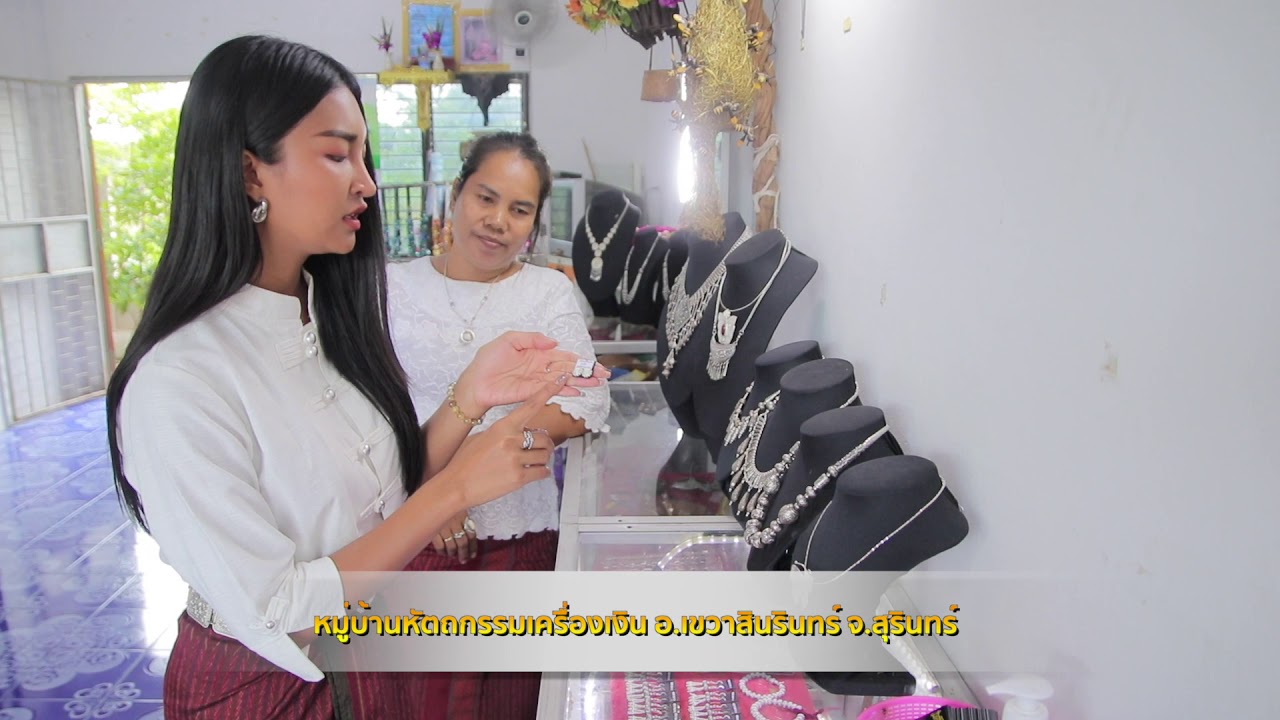
 Click to Access the Navigation Map GPS
Khwao Sinarin Handicraft Village Map
Recommend

 Art, Culture and Heritage
 Historical Sites and Monuments(11)
 Landmarks and Memorials(2)
 Art, Craft Centres, Tradition(5)
 Museums(1)
 Places of Worship
 Temple(15)
 Other Sacred Sites(1)
Village, Community(9)
Other Sacred Sites(1)
Village, Community(9)
 Local Market(1)
 Nature and Wildlife
 National Parks and Marine Reserves(2)
 Mountain (Doi)(2)
 Dam, Reservoir, Lake(6)
 Waterfalls(1)
 River, Canal(2)
 Other natural attractions(4)
 Entertainment and Agricultural
 Farms, Parks and Ecotourism(2)


