
lovethailand home >Central Travel Attractions >Samut Prakan Travel Attractions > 20 Best Places to Visit in Samut Prakan Central Th..
TL;DR: 20 Best Places to Visit in Samut Prakan Central Thailand, open Daily Opening Hours: 09:00 – 19:00; ticket sales close at 18:00.
20 Best Places to Visit in Samut Prakan Central Thailand
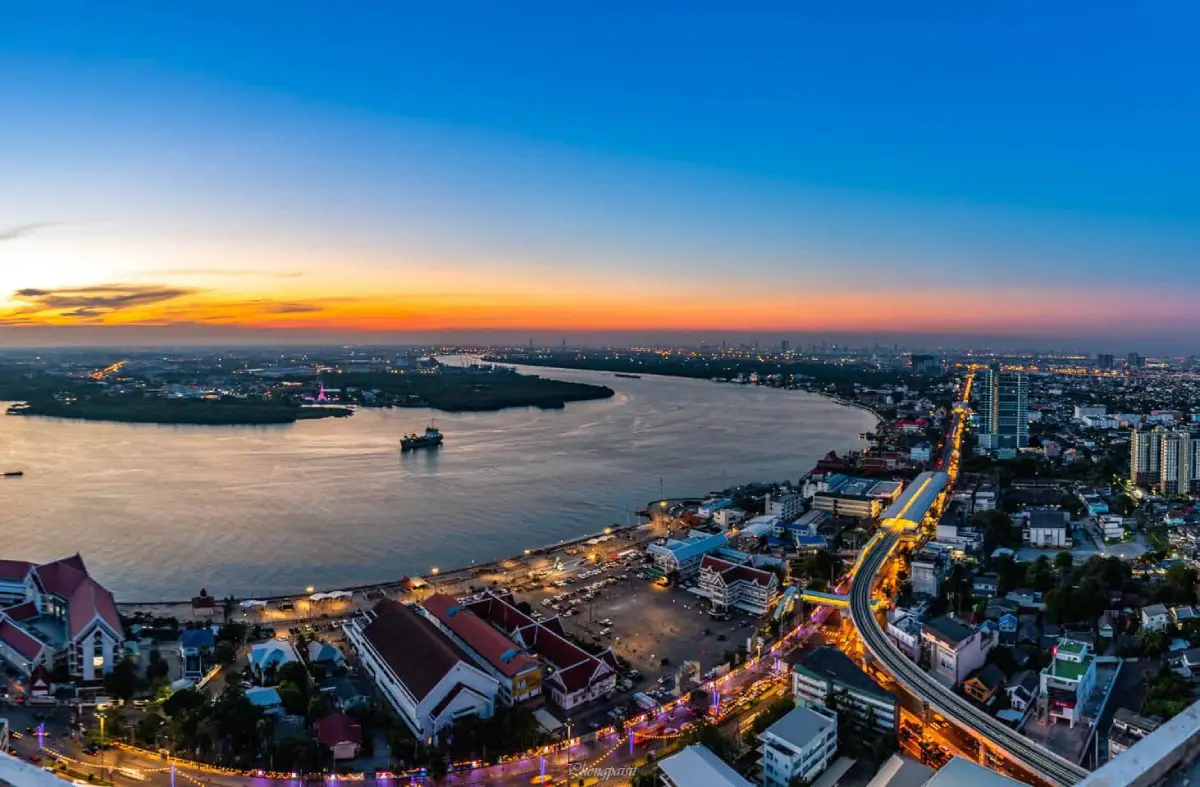
20 Best Places to Visit in Samut Prakan, Central Thailand Samut Prakan is a province next to Bangkok that brings together an unusually wide range of attractions in one destination. Visitors can explore Ancient Siam, an open-air museum showcasing Thai architecture from across the country; the Erawan Museum, famous for its enormous three-headed elephant sculpture; Bang Pu Recreation Center for coastal scenery and migratory seagulls; and Bang Kachao for cycling through lush green landscapes. The province also offers historic temples, military forts, naval museums, and traditional riverside communities. Travelers with only 1 day can focus on the Samut Prakan–Bang Pu area or the Bang Kachao–Bang Nam Phueng area, while those with 2–3 days can add Phra Samut Chedi and Phra Chulachomklao Fort for a broader experience of nature, history, religion, and the traditional lifestyle of Pak Nam.
Samut Prakan lies near the mouth of the Chao Phraya River before it reaches the Gulf of Thailand. Bordering Bangkok, the province functions simultaneously as part of the metropolitan area, an industrial center, a port city, and a historic defensive zone that has played an important role in protecting access to the capital. Much of the landscape consists of low-lying plains, rivers, canals, coastal areas, mangrove forests, and waterside communities, giving Samut Prakan far more tourism variety than its industrial image might suggest.
The province has long been popularly known as “Mueang Pak Nam,” or the City at the River Mouth, a name that reflects its strategic location where the Chao Phraya River meets the sea. For centuries, ships traveling toward the capital had to pass this area first, leading to the construction of forts, temples, and settlements along the river. Important examples include Phra Samut Chedi, Phra Chulachomklao Fort, and the historic Pak Nam area, all of which remain closely connected to Thailand’s naval history.
Another important dimension of Samut Prakan is the cultural heritage of Mon communities, particularly in Phra Pradaeng District, historically known as Nakhon Khuean Khan. Mon communities have preserved temples, customs, language, food, and religious ceremonies for generations. The Phra Pradaeng Songkran Festival, Hongsa flag and centipede-banner traditions, and traditional riverside communities remain important parts of the province’s cultural identity.
Bang Kachao presents a very different landscape from the province’s industrial districts. Surrounded by a large curve of the Chao Phraya River, the area contains orchards, canals, wetlands, and extensive cycling routes. It has become one of the most popular green escapes near Bangkok. Key attractions include Sri Nakhon Khuean Khan Park and Botanical Garden, Bang Nam Phueng Floating Market, historic temples, and communities that still retain a semi-rural atmosphere.
For nature lovers, Samut Prakan also has a Gulf of Thailand coastline and mangrove habitat at Bang Pu Recreation Center. The area is particularly famous for migratory birds, especially seagulls that arrive during the cooler season. Watching the sunset from Sukta Bridge and learning about coastal ecosystems make Bang Pu a strong destination for families, photographers, birdwatchers, and anyone looking for a break from the dense urban environment.
Samut Prakan is equally strong in art, culture, and educational tourism. Ancient Siam and the Erawan Museum are two of the province’s most recognizable landmarks. Both were developed around the idea of preserving and communicating Thai cultural heritage through physical spaces. Ancient Siam brings together architectural monuments from several regions of Thailand within a vast open-air museum, while the Erawan Museum uses monumental sculpture, architecture, religious symbolism, and cosmology as the foundation of its storytelling.
Local food reflects Mon heritage, Pak Nam communities, and the coastal environment. Travelers can find seafood, Mon cuisine, traditional desserts, community products, and local food at Bang Nam Phueng Floating Market and other neighborhood markets. Popular souvenirs therefore include processed seafood, traditional sweets, locally made products, and agricultural produce from the Phra Pradaeng and Bang Kachao areas.
For easier trip planning, Samut Prakan can be divided into several zones. Central Samut Prakan–Pak Nam is suitable for the Erawan Museum, Naval Museum, Wat Klang Worawihan, and historic sites in the city center. The Bang Pu zone is ideal for Ancient Siam, Bang Pu Recreation Center, and Wat Asokaram. Phra Pradaeng–Bang Kachao is best for Sri Nakhon Khuean Khan Park, Bang Nam Phueng Floating Market, and cycling routes, while the Phra Samut Chedi zone is ideal for Phra Samut Chedi, Phra Chulachomklao Fort, and historical sites around the mouth of the Chao Phraya River.
Travel from Bangkok is convenient by private car, Sukhumvit Road, expressways, and the BTS Sukhumvit Line, which reaches several parts of Mueang Samut Prakan directly. Bang Kachao can be accessed by road through Phra Pradaeng or by crossing the river from Bangkok by ferry. For Phra Samut Chedi and more remote coastal communities, a private car is generally the most convenient option when combining several attractions in one day.

1. Ancient Siam is one of the most important cultural attractions in Samut Prakan. Located in Bang Pu Mai Subdistrict, Mueang Samut Prakan District, the vast site covers more than 800 rai and brings together architecture, historic monuments, palaces, temples, traditional houses, and cultural landscapes representing different regions of Thailand. It is suitable for general travelers, families, students, history enthusiasts, and anyone interested in photographing Thai architecture.
Highlights: Sanphet Prasat Palace, replicas of important stupas from different regions, reconstructed historic monuments, a floating market, Thai cultural zones, the Pavilion of the Enlightened, and extensive architectural routes that can be explored on foot, by bicycle, or with vehicles available within the complex.
Ancient Siam was created from the vision of Lek Viriyaphant, who wanted to preserve Thailand’s artistic and cultural heritage in a form that future generations could study directly. The layout of the site resembles the geographical shape of Thailand, with many buildings and monuments positioned according to the regions they represent. This allows visitors to learn about geography and history while exploring architecture.
The structures include scaled reproductions of real historical sites, buildings reconstructed from historical evidence, and creative architectural works inspired by Thai beliefs and cultural concepts. Ancient Siam is therefore more than a collection of landmark replicas; it functions as an enormous open-air museum explaining Thai society through architecture, religion, literature, and traditional ways of life.
Because the grounds are very large, visitors should allow at least half a day. Travelers who want to see the major areas thoroughly should consider spending most of the day here. Renting a bicycle or using transport inside the complex reduces fatigue and makes it easier to reach attractions located farther from the entrance, especially for families with children and older travelers.
Photography enthusiasts should allow plenty of time because the architectural styles vary greatly, ranging from Lanna, Sukhothai, Ayutthaya, and Rattanakosin traditions to southern and northeastern Thai architecture. Morning and late afternoon generally provide softer light than midday.
Ancient Siam can be combined with Bang Pu Recreation Center and Wat Asokaram because all three are located along the old Sukhumvit Road corridor. However, travelers who want to explore Ancient Siam in depth will usually have a more relaxed experience by dedicating almost a full day to the site.
Open Days: Daily Opening Hours: 09:00 – 19:00; ticket sales close at 18:00
Getting There: Ancient Siam is located in Bang Pu Mai Subdistrict, Mueang Samut Prakan District, along the old Sukhumvit Road in the Bang Pu area. From Bangkok, follow Sukhumvit Road toward Samut Prakan, or take the BTS Sukhumvit Line into Samut Prakan and continue by local transport or taxi.
Map (GPS):Open Google Maps – Ancient Siam
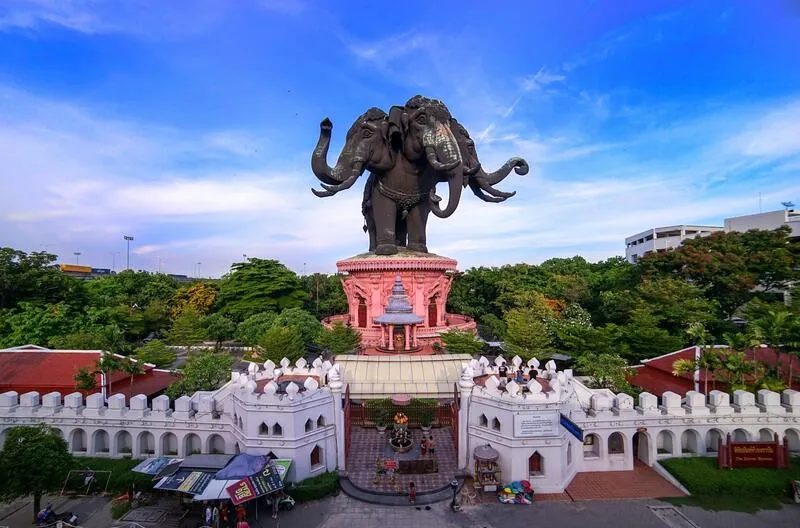
2. The Erawan Museum is one of Samut Prakan’s most recognizable landmarks, visible from Sukhumvit Road thanks to its enormous three-headed Erawan elephant sculpture standing above a pink pedestal building. Inside, the museum combines fine art, architecture, religious beliefs, and cosmological symbolism in a highly distinctive setting.
Highlights: The giant three-headed elephant sculpture, sculptural staircases, stained-glass ceiling, elaborate stucco work, religious and artistic objects, landscaped gardens, and a three-level symbolic layout representing Suvarnabhumi, the human world, and the celestial universe.
The museum was created from the vision of Lek Viriyaphant, the same founder associated with Ancient Siam. His intention was to provide a place where important art objects could be preserved while Asian religious concepts and cosmology were communicated through monumental architecture. The exterior creates an immediate visual impact, while the interior rewards slower exploration because of its rich craftsmanship.
The interior is organized according to a three-level cosmological concept. The lower level represents Suvarnabhumi, the middle level represents the human world, and the upper level inside the elephant represents heaven. Moving upward through the museum therefore symbolically takes visitors from the earthly realm toward a sacred celestial space.
One of the most photographed spaces is the central hall, with its sweeping staircases, sculptural decoration, and stained-glass ceiling illuminated by natural light. The atmosphere changes throughout the day as light enters the building. Outside, landscaped gardens with sculptures and greenery provide a quieter area for walking after the indoor visit.
The Erawan Museum is suitable for families, couples, international visitors, art lovers, and photographers. Allow around 2–3 hours to explore the interior and gardens without rushing. Visitors should dress respectfully because parts of the museum contain sacred objects and religious spaces.
The museum can be combined with the Naval Museum, Wat Klang Worawihan, or Ancient Siam farther south. For a full-day route, visiting the Erawan Museum in the morning and Ancient Siam in the afternoon creates an efficient itinerary along the Sukhumvit corridor.
Open Days: Daily Opening Hours: 09:00 – 18:00; ticket sales close at 17:00
Getting There: The museum is located at 99/9 Sukhumvit Road, Bang Mueang Mai Subdistrict, Mueang Samut Prakan District. Take the BTS Sukhumvit Line to Chang Erawan Station, use Exit 2, and continue on foot to the museum, or travel by car along Sukhumvit Road.
Map (GPS):Open Google Maps – The Erawan Museum

3. Bang Pu Recreation Center is a long-established seaside recreation area on the Gulf of Thailand in Bang Pu Mai Subdistrict, Mueang Samut Prakan District. The large coastal area combines mangrove habitat, sea views, Sukta Bridge, Sala Sukjai, and one of Thailand’s best-known seasonal gathering places for migratory seagulls.
Highlights: Sukta Bridge, Sala Sukjai, sunset views, migratory seagulls, mangrove forests, the Gulf of Thailand coastline, nature walks, and a relaxed seaside atmosphere close to Bangkok.
Bang Pu covers approximately 639 rai and includes natural areas, restaurants, accommodation facilities, and recreational spaces. Walking along Sukta Bridge opens wide views over the coast and sea. Late afternoon is particularly popular because temperatures are more comfortable and visitors can watch the sunset over the horizon.
Bang Pu is especially famous during the migratory bird season, generally from late in the year into the early months of the following year, when large numbers of seagulls arrive to feed along the coast. The area becomes a major destination for birdwatching and photography. Visitors should observe wildlife responsibly and avoid disturbing the natural ecosystem.
The mangrove forest and surrounding wetlands also provide important habitat for many species. A visit can therefore be combined with learning about coastal ecosystems, making Bang Pu particularly valuable for families and children who want to experience nature in a real environment close to Bangkok.
Bang Pu suits visitors of all ages, especially families, couples, photographers, and older travelers looking for an easy coastal escape. Weekends and the bird-migration season can be very busy, so additional time should be allowed for traffic and parking.
Bang Pu combines especially well with Ancient Siam and Wat Asokaram because all three are located along the old Sukhumvit Road. A practical one-day itinerary is to explore Ancient Siam in the morning, visit Wat Asokaram in the afternoon, and end the day with sunset at Bang Pu.
Open Days: Daily Opening Hours: 10:00 – 20:00
Getting There: Bang Pu Recreation Center is located around kilometer 37 of Sukhumvit Road in Bang Pu Mai Subdistrict, Mueang Samut Prakan District. Travelers can drive from Bangkok along Sukhumvit Road or take the BTS Sukhumvit Line into Samut Prakan and continue by local transport.

4. Sri Nakhon Khuean Khan Park and Botanical Garden is a large public park and botanical garden in Bang Kachao Subdistrict, Phra Pradaeng District. Covering more than 200 rai, it is one of the most important destinations in Bang Kachao and is well suited to cycling, walking, birdwatching, photography, and learning about wetland ecosystems and traditional orchard landscapes.
Highlights: Cycling routes, wooden bridges, ponds, aquatic plants, native vegetation, old orchard landscapes, an observation tower, birdwatching areas, and the shaded green environment of Bang Kachao.
The park was developed as both a recreational area and an ecological learning site while retaining elements of the area’s traditional agricultural landscape. Visitors can therefore see ponds, native plants, orchard areas, and walkways that connect different parts of the park.
Cycling is one of the most popular activities because the park connects easily with routes throughout Bang Kachao. Nearby narrow roads and paths pass gardens, houses, temples, and local communities. Riding slowly is the best way to enjoy the atmosphere rather than treating the route simply as transportation between stops.
The observation tower and pond areas are particularly good for photography, especially in the morning when the light is softer and temperatures are lower. Birdwatchers should move quietly and avoid loud noise because the park supports many bird species and small animals.
Families and older visitors can enjoy the park, although early morning or late afternoon is preferable to avoid the hottest part of the day. Cyclists should take particular care on narrow sections and wooden bridges, especially when visitor numbers are higher on weekends.
The park combines naturally with Bang Nam Phueng Floating Market and temples around Bang Kachao. On Saturdays and Sundays, a practical itinerary is to cycle in the park early in the morning and continue to the floating market later in the morning for food and shopping.
Open Days: Daily Opening Hours: 06:00 – 20:00
Getting There: From Phra Pradaeng, take Phet Hueng Road into Bang Kachao Subdistrict and turn toward Wat Rat Rangsan for approximately 2 kilometers. Travelers can also cross the Chao Phraya River by ferry from Bangkok and continue by rental bicycle or local transport.

5. Bang Nam Phueng Floating Market is a popular community market in Bang Nam Phueng Subdistrict, Phra Pradaeng District, located within the green landscape of Bang Kachao. It is one of the most popular weekend destinations near Bangkok, known for local food, community products, orchard produce, handicrafts, and a shaded canal-side atmosphere.
Highlights: Local food, Thai desserts, fruit and produce from nearby orchards, community products, handicrafts, canal-side eateries, and a neighborhood-market atmosphere closely connected with everyday life in Bang Kachao.
The market developed through cooperation between local residents and local authorities as a way to create sales channels for agricultural produce and generate additional income for the community. It later grew into a well-known community tourism destination as Bang Kachao became increasingly popular with visitors.
Food is one of the main attractions, with savory dishes, sweets, drinks, fruit, and takeaway snacks available throughout the market. Many stalls are operated by local producers, allowing tourism spending to contribute directly to the community economy.
The market also offers handicrafts and locally made products, making it a good place to buy small souvenirs with a clear connection to the area. Most visitors spend around 1–2 hours walking through the market, with morning to early afternoon being the most suitable period.
Weekends can become crowded, particularly in the late morning. Travelers who prefer a quieter atmosphere and better opportunities for photography should arrive close to opening time. Cyclists should park in designated areas and take extra care around busy pedestrian entrances.
Bang Nam Phueng Floating Market pairs especially well with Sri Nakhon Khuean Khan Park. Visitors can cycle in the park during the morning and continue to the market for brunch or lunch, while nearby temples and communities can easily be added to the same Bang Kachao itinerary.
Open Days: Saturday – Sunday Opening Hours: 08:00 – 14:00
Getting There: The market is located in Bang Nam Phueng Subdistrict, Phra Pradaeng District. From Suksawat Road, continue through Phra Pradaeng and along Phet Hueng Road toward Soi Phet Hueng 26. Another option is to cross by ferry from Bangkok into Bang Kachao and continue by bicycle or local transport.

6. Phra Samut Chedi, commonly known as the “Chedi in the Water,” is one of the most important religious monuments and symbols of Samut Prakan. It stands beside the Chao Phraya River in Phra Samut Chedi District. The chedi was originally located on an island in the river near the river mouth before sediment accumulation eventually connected the area with the mainland.
Highlights: The white Phra Samut Chedi, its history as a river-island chedi, Chao Phraya riverside scenery, the annual cloth-wrapping ceremony, and its importance as an enduring symbol of historic Pak Nam.
Phra Samut Chedi is deeply connected with the history of Pak Nam because the mouth of the Chao Phraya River was once the principal maritime route toward the capital. Its prominent position meant that travelers arriving by river could see the chedi as an important landmark before continuing inland.
Although the chedi no longer stands isolated in the river as it did in the past, the image of the “Chedi in the Water” remains central to the identity of Samut Prakan. The monument therefore has religious, historical, and landscape significance.
One of the most important local traditions is the annual ceremony in which a large cloth is carried and wrapped around Phra Samut Chedi. The long-established event attracts many participants and reflects the continuing religious relationship between the monument and local communities.
The main visitor area is not especially large, making it suitable for families, older travelers, and visitors who want to make merit before continuing to Phra Chulachomklao Fort. Respectful clothing and quiet behavior are appropriate within the religious grounds.
Phra Samut Chedi is an excellent starting point for a historical route through the district, continuing to Phra Chulachomklao Fort, coastal communities, and other sites associated with the defense of the Chao Phraya River mouth.
Open Days: Daily Opening Hours: 08:00 – 16:00
Getting There: Phra Samut Chedi is located on Suksawat Road in Pak Khlong Bang Pla Kot Subdistrict, Phra Samut Chedi District. Travelers can drive from Bangkok via Suksawat Road or travel to central Samut Prakan and cross the Chao Phraya River by ferry.
Map (GPS):Open Google Maps – Phra Samut Chedi

7. Phra Chulachomklao Fort, often called “Phra Chul Fort,” is one of Thailand’s most important historic coastal defense sites. Located in Laem Fa Pha Subdistrict, Phra Samut Chedi District, it was constructed during the reign of King Chulalongkorn, Rama V, to defend the mouth of the Chao Phraya River and Bangkok from maritime threats.
Highlights: Armstrong disappearing guns, the history of the 1893 Franco-Siamese crisis, the monument to King Rama V, Thai naval history, and views around the mouth of the Chao Phraya River.
The fort was constructed during the late 19th century as Siam sought to strengthen its defenses during a period of growing Western colonial pressure in Southeast Asia. Its position at Laem Fa Pha allowed artillery to control ships attempting to enter the Chao Phraya River.
Seven Armstrong guns formed the core of the defensive system. These guns were mounted so that they could drop behind protective cover when not firing, earning them the Thai nickname “crouching tiger guns.” They represented advanced military technology for Siam at the time.
The fort played a role during the Franco-Siamese crisis of 1893, when French warships attempted to enter the Chao Phraya River. The event makes the site especially important for understanding relations between Siam and Western imperial powers during the late 19th century.
History enthusiasts should allow at least 1–2 hours to examine the fortifications, guns, and related displays. Families and children can understand the historical events more easily by seeing the actual fort and military equipment rather than learning only from textbooks.
Phra Chulachomklao Fort is easy to combine with Phra Samut Chedi because both are in the same district. Together they create a strong historical route linking religion, navigation, maritime geography, and national defense.
Open Days: Daily Opening Hours: 08:00 – 16:00
Getting There: The fort is located in Laem Fa Pha Subdistrict, Phra Samut Chedi District. From Bangkok, follow Suksawat Road toward Phra Samut Chedi and continue toward Phra Chulachomklao Fort. A private car is the most practical option when combining several attractions in the district.
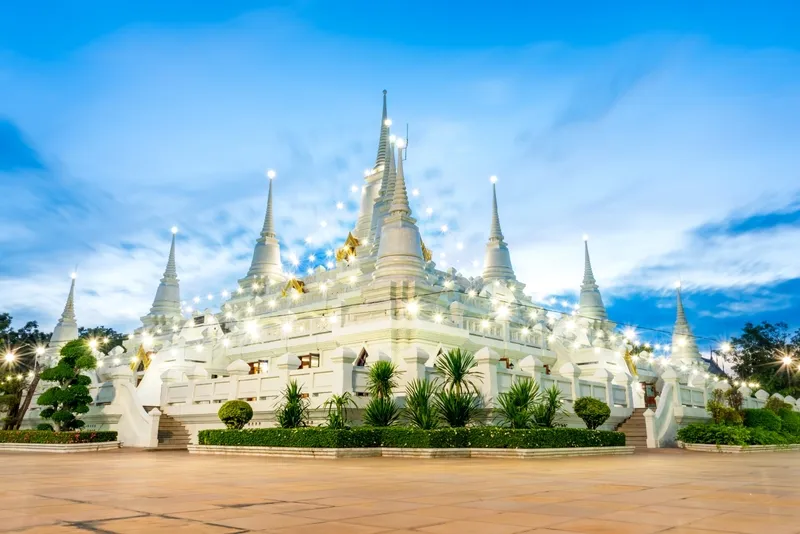
8. Wat Asokaram is a well-known Dhammayut Buddhist meditation temple in Thai Ban Subdistrict, Mueang Samut Prakan District. It is especially recognized for the striking group of 13 white Dhutanga Chedis. The temple has a peaceful and contemplative atmosphere and is more strongly associated with meditation practice than with conventional sightseeing.
Highlights: The group of 13 white Dhutanga Chedis, the history of Luang Por Lee Dhammadharo, the Thai Forest Tradition associated with Luang Pu Mun, meditation areas, and the distinctive white architecture that has become the visual identity of the temple.
The temple was established through the vision and faith of Phra Suddhidhammaransi, better known as Luang Por Lee Dhammadharo, a meditation master in the lineage of Luang Pu Mun Bhuridatta. The land was formerly known as “Na Mae Khao,” giving the site particular significance for followers and students of the Thai Forest Tradition.
The name “Asokaram” conveys the idea of a monastery free from sorrow, matching the quiet and simple atmosphere of the temple. Although it lies near urban areas and Sukhumvit Road, entering the temple creates a noticeably different sense of calm.
The Dhutanga Chedi complex is the main landmark, consisting of multiple white chedis grouped together in a distinctive composition. Visitors can pay respect and examine the architecture, but should maintain a quiet atmosphere because the temple regularly hosts meditation practitioners.
Wat Asokaram is suitable for pilgrims, older visitors, meditation practitioners, and travelers interested in Buddhist practice rather than photography alone. Visitors should dress modestly and avoid making unnecessary noise around meditation areas.
The temple can be combined with Ancient Siam and Bang Pu Recreation Center because all three are located along the old Sukhumvit corridor. This makes it possible to combine culture, religion, and coastal nature in a single day.
Open Days: Daily Opening Hours: 08:00 – 16:30
Getting There: Wat Asokaram is located in Thai Ban Subdistrict, Mueang Samut Prakan District. Follow the old Sukhumvit Road toward Bang Pu and turn toward the temple. A private car is particularly convenient when continuing to Ancient Siam or Bang Pu.
Map (GPS):Open Google Maps – Wat Asokaram

9. Naval Museum is a specialist Royal Thai Navy museum located on Sukhumvit Road in Pak Nam Subdistrict, Mueang Samut Prakan District, opposite the Royal Thai Naval Academy. It is especially suitable for visitors interested in naval history, warships, maritime warfare, weapons, military equipment, and the development of the Royal Thai Navy.
Highlights: Warship models, weapons and military equipment, naval uniforms, historical objects, documents relating to naval battles, and exhibitions on the development of the Royal Thai Navy.
The museum collects, preserves, and displays objects related to Thailand’s naval activities. It makes complex subjects such as fleet development, national defense, and naval warfare easier to understand through physical artifacts, photographs, documents, and models.
Ship models are among the most popular exhibits because they help visitors visualize the design and evolution of warships across different periods. Weapons, uniforms, and naval equipment also provide insight into how the lives and work of naval personnel have changed alongside technological development.
The museum is suitable for school-age children, families, students, and history enthusiasts. A typical visit takes around 1–2 hours. For children, combining explanations of ships and historical events with real objects and models makes the experience easier to understand.
One of the museum’s advantages is convenient BTS access, making it suitable for travelers without a private car. It can also be combined with the Erawan Museum, Wat Klang Worawihan, or attractions around Pak Nam without long travel times.
Travelers planning a full-day history itinerary can begin at the Naval Museum and continue to Phra Samut Chedi and Phra Chulachomklao Fort, creating a coherent route that links naval history with the geography of the Chao Phraya River mouth.
Open Days: Monday – Friday, except public holidays Opening Hours: 08:30 – 15:30
Getting There: The Naval Museum is located on Sukhumvit Road in Pak Nam Subdistrict, Mueang Samut Prakan District, opposite the Royal Thai Naval Academy. Take the BTS Sukhumvit Line to Royal Thai Naval Academy Station and continue on foot, or travel by car along Sukhumvit Road.
Map (GPS):Open Google Maps – Naval Museum

10. Wat Klang Worawihan is a second-class royal temple of the Worawihan category and one of the most important historic temples in the Pak Nam area. Its history reaches back to the late Ayutthaya period, when it was known as Wat Tako Thong. The temple preserves architecture and religious art that illustrate the development of Samut Prakan as both a religious center and a long-established riverside community.
Highlights: The historic ordination hall, the principal laterite Buddha image covered with plaster and gold leaf, mural paintings, a mondop containing a replica of the Buddha’s footprint, a teak sermon hall, and the atmosphere of an old temple in central Pak Nam.
Wat Klang Worawihan is important not only as a religious site but also as evidence of the long development of the Pak Nam community. As Samut Prakan became an important settlement at the mouth of the Chao Phraya River, the temple served both as a center for Buddhist activities and as a gathering place for local residents.
The historic ordination hall deserves careful attention. Its principal Buddha image is made from laterite, covered with plaster, and gilded. Other artistic elements reflect the craftsmanship of earlier periods, while the interior also contains murals and sacred objects that add historical and artistic value.
The mondop containing a replica of the Buddha’s footprint and the wooden sermon hall add further architectural variety. Visitors interested in traditional Thai craftsmanship can observe differences in material, form, and decorative details across the temple’s buildings.
The temple is suitable for pilgrims, older travelers, history enthusiasts, and visitors who want to experience a historic urban temple that is easy to reach. Visitors should dress respectfully and avoid flash photography around old murals or in areas where photography restrictions apply.
Wat Klang Worawihan can be combined with the Samut Prakan City Pillar Shrine, Naval Museum, Erawan Museum, or the wider Pak Nam area, making it a convenient stop on a cultural itinerary through central Samut Prakan.
Open Days: Daily Opening Hours: 07:00 – 17:00
Getting There: The temple is located in Pak Nam Subdistrict, Mueang Samut Prakan District, close to the historic community and city center. Travelers can drive along Sukhumvit Road or use the BTS Sukhumvit Line to reach the Pak Nam area and continue by local transport.
Map (GPS):Open Google Maps – Wat Klang Worawihan

11. Wat Bang Phli Yai Nai, widely known as “Wat Luang Pho To,” is one of the most important temples in Bang Phli District, Samut Prakan. Located beside Samrong Canal, the temple has served as a major center of local faith for generations. Its principal attraction is Luang Pho To, a highly revered Buddha image in the Sukhothai artistic style. The temple is also closely associated with the famous Rap Bua, or Lotus Receiving Festival, one of Samut Prakan’s most distinctive local traditions.
Highlights: Luang Pho To, a revered Sukhothai-style Buddha image, the Rap Bua Festival, the Samrong Canal community, Bang Phli Old Market, and the atmosphere of a historic temple closely connected with local life.
The temple has a long history and was once known as “Wat Phlapphla Chai Chana Songkhram.” Local historical traditions connect the area with military movements in the past before the temple eventually developed into an important Buddhist center for the Bang Phli community along Samrong Canal.
Luang Pho To is the temple’s most important sacred image and remains the focus of deep local devotion. Visitors commonly come to pay respect, make merit, and pray for prosperity, work, success, and general good fortune before continuing into the nearby old market area.
The temple is also central to the annual Rap Bua Festival, held before the end of Buddhist Lent. During the ceremony, a replica of Luang Pho To is placed on a decorated boat and carried along Samrong Canal while people standing on both banks throw lotus flowers toward the image as an act of worship. The tradition has become one of the best-known cultural symbols of Bang Phli.
The area around the temple also demonstrates the traditional relationship between religious sites, canals, and markets. Travelers interested in local culture should allow enough time to explore both the temple and the adjacent waterfront market rather than visiting only for a quick worship stop.
Wat Bang Phli Yai Nai is suitable for pilgrims, families, older travelers, and cultural visitors. It can easily be combined with Bang Phli Floating Market and Wat Bang Phli Yai Klang, as all three are close together and form an efficient half-day itinerary.
Open Days: Daily Opening Hours: Generally 08:00 – 17:00
Getting There: The temple is located in Bang Phli Yai Subdistrict, Bang Phli District. From Bangkok, take Bang Na–Trat Road, continue toward Bang Phli–King Kaeo Road, and follow local roads into the Bang Phli community. Additional travel time should be allowed on weekends and during major festivals.
Map (GPS):Open Google Maps – Wat Bang Phli Yai Nai

12. Bang Phli Floating Market is a historic waterside market beside Samrong Canal that still preserves the atmosphere of a traditional trading community. Wooden walkways, old shop houses, local food, Thai sweets, souvenirs, and everyday canal-side life make it very different from a modern shopping center and especially suitable for travelers interested in Bang Phli’s food and cultural heritage.
Highlights: Wooden waterside walkways, historic shops, local food, Thai desserts, household products and souvenirs, Samrong Canal community life, and direct access from Wat Bang Phli Yai Nai.
The market’s history can be traced back to around the middle of the 19th century, when Chinese merchants established shops and trading communities along Samrong Canal. It gradually became an important local commercial area during a period when waterways were more important than roads for transportation.
Wood remains an important part of the historic market structure, giving the walk through the shop houses a very different atmosphere from recently built tourist markets. Many vendors continue to sell products connected with everyday community life rather than merchandise created only for tourists.
Food lovers can spend time sampling savory dishes, Thai sweets, and snacks, while photographers will find attractive views of wooden buildings, waterside walkways, boats, and community life that still reflect the character of old Bang Phli.
Morning through lunchtime is generally the most comfortable period to visit. Some walkways are relatively narrow, so visitors should walk carefully and avoid blocking shop entrances or local residents using the market as part of their daily lives.
A convenient route begins with paying respect to Luang Pho To at Wat Bang Phli Yai Nai, followed by a walk through the market, and then continuing to Wat Bang Phli Yai Klang to see its enormous Reclining Buddha. This creates a balanced half-day trip combining religion, food, and local culture.
Open Days: Daily Opening Hours: 08:00 – 17:00
Getting There: The market is located directly beside Wat Bang Phli Yai Nai in Bang Phli Yai Subdistrict, Bang Phli District. From Bang Na–Trat Road, continue into Bang Phli and follow signs toward Wat Luang Pho To. The market can then be entered directly from the temple area.

13. Wat Bang Phli Yai Klang is another important temple in Bang Phli District, located beside Samrong Canal not far from Wat Bang Phli Yai Nai. Its most striking landmark is a giant Reclining Buddha approximately 53 meters long. The interior of the image contains several levels used for worship, meditation, and Buddhist learning.
Highlights: The giant Reclining Buddha, multiple levels inside the image, sacred relics, meditation rooms, educational displays relating to heaven and hell, and the atmosphere of a community temple beside Samrong Canal.
The temple has long been connected with the Bang Phli community and continues to function as an important local religious center. The Reclining Buddha is the principal destination for visitors and is large enough to contain interior rooms and different levels within the structure.
Inside the Reclining Buddha are areas used for Buddhist education and meditation, including displays relating to karma, heaven, hell, and moral teachings presented in an accessible format. This can make the temple particularly interesting for families and older children who want to learn while visiting a religious site.
The temple also enshrines sacred Buddhist relics that are highly respected by devotees. A visit therefore combines the experience of seeing monumental religious architecture with traditional Buddhist worship.
Older visitors should allow additional time and select areas that are easy to access because some internal sections require moving between different levels. Families with children should supervise them carefully around stairs and narrower areas.
Wat Bang Phli Yai Klang can be visited immediately after Wat Bang Phli Yai Nai and Bang Phli Floating Market. Because all three are in the same area, this is one of the easiest temple-and-market routes to organize in Samut Prakan.
Open Days: Daily Opening Hours: 08:00 – 17:00
Getting There: The temple is located in Bang Phli Yai Subdistrict, Bang Phli District. Use Bang Na–Trat Road toward Bang Phli and continue along local roads near Samrong Canal. Travel time from Wat Bang Phli Yai Nai is relatively short.

14. Huachiew Chalermprakiet Museum is located within Huachiew Chalermprakiet University in Bang Chalong Subdistrict, Bang Phli District. The museum is particularly suitable for visitors interested in Thai–Chinese relations, Chinese migration to Thailand, charitable organizations, education, and the development of Chinese communities within Thai society.
Highlights: Thai–Chinese community history, the development of the Poh Teck Tung Foundation, charitable work, education, overseas Chinese life, documents, photographs, and cultural objects explaining the role of Chinese communities in Thailand.
The museum goes beyond displaying old objects by presenting the relationship between Chinese communities and Thai society in a structured narrative. Themes include migration, commerce, community assistance, charitable work, education, and the establishment of public-benefit organizations.
One major theme concerns the Poh Teck Tung Foundation, which has played a long-standing role in charitable work, emergency assistance, and public welfare in Thailand. Learning about the foundation demonstrates that Chinese communities have contributed not only to commerce but also to social development.
Displays use photographs, documents, objects, and chronological storytelling, making the museum especially appropriate for students and travelers interested in social history rather than visitors looking only for photography opportunities.
The museum has a relatively quiet atmosphere and does not require extensive walking, making it suitable for families and older visitors. Allow approximately 1–2 hours to read the displays and view important objects without rushing.
The museum can be combined with Wat Bang Phli Yai Nai, Bang Phli Floating Market, and other attractions around Bang Na–Trat Road, allowing travelers to experience religion, local markets, and cultural history within the same Bang Phli itinerary.
Open Days: Monday – Friday Opening Hours: 08:30 – 16:30
Getting There: The museum is located inside Huachiew Chalermprakiet University in Bang Chalong Subdistrict, Bang Phli District. From Bangkok, use Bang Na–Trat Road and enter the university through the main entrance.

15. Thammakatanyu Foundation Shrine, also known as Sian Lo Tai Tian Gong, is a large Chinese shrine in the Bang Pu Mai area of Mueang Samut Prakan District. It is distinguished by elaborate Chinese architecture, carved decoration, and the enshrinement of several deities, making it an important destination for visitors interested in Chinese religion, Taiwanese cultural traditions, and contemporary Chinese religious art.
Highlights: Chinese shrine architecture, Wu Fu Qian Sui deities, a pair of large jade lions, Chinese carving and decorative arts, worship areas, and detailed architecture suitable for cultural photography.
Construction of the shrine began in 1991 on an area covering more than 26 rai. Its design drew inspiration from temples and charitable foundations in Taiwan, resulting in clearly recognizable Chinese architectural elements from the entrance and main halls to the roofs, columns, carvings, and decorative details.
Several deities are enshrined inside, and worshippers visit to pray for blessings and good fortune. Travelers unfamiliar with Chinese religious practices can still appreciate the architecture and learn about the meanings associated with the different deities without participating in every ritual.
The pair of jade lions is one of the shrine’s most notable features, both because of their size and their symbolic role as guardians against negative influences. Photography should be respectful and should not interfere with people performing religious ceremonies.
The shrine is suitable for families, older travelers, spiritual visitors, people interested in Chinese culture, and photographers. Modest clothing and respectful behavior are appropriate around worship spaces, although the outdoor grounds are spacious and easy to explore.
The shrine can be combined with Ancient Siam, Bang Pu Recreation Center, and Wat Asokaram because all are located within the broader Bang Pu corridor. It adds an important Chinese cultural dimension to a route otherwise focused on Thai heritage, Buddhism, and coastal nature.
Open Days: Daily Opening Hours: 08:00 – 17:00
Getting There: The shrine is located in the Bang Pu Mai area of Mueang Samut Prakan District, close to Sukhumvit Road. It can be reached conveniently by car from central Samut Prakan and fits easily into a wider Bang Pu itinerary.

16. Wat Songtham Worawihan is an important historic royal temple in Phra Pradaeng District and one of the most significant Buddhist temples associated with the Mon Ramanya tradition. It was established during the development of Nakhon Khuean Khan in the reign of King Rama II and is directly connected with the history of Mon communities in Phra Pradaeng.
Highlights: A large Mon-style chedi, Mon religious art, the viharn, a mother-of-pearl decorated replica of the Buddha’s footprint, teak craftsmanship, and the temple’s role as an important Buddhist center for the Mon community of Phra Pradaeng.
The earliest buildings at the temple were primarily wooden structures. During the reign of King Rama III, major restoration work introduced brick-and-mortar architecture and other elements that remain important parts of the temple complex today.
The large Mon-style chedi is one of the temple’s most important architectural features and clearly reflects the Mon cultural roots of the district. Its form differs from many conventional Thai chedis and helps visitors understand the continuing importance of Mon traditions in the religion and ceremonies of Phra Pradaeng.
The viharn and replica of the Buddha’s footprint decorated with mother-of-pearl also deserve careful attention, particularly for visitors interested in Thai and Mon craftsmanship. Their details show a combination of artistic traditions from different periods and the historical relationship between the temple and the royal court.
Wat Songtham Worawihan is particularly suitable for travelers interested in history, Mon culture, and the cultural roots of the Phra Pradaeng Songkran Festival rather than visitors who are simply looking for a photography stop. Modest clothing and respectful behavior are expected.
The temple can be combined with Wat Prodket Chettharam, Sri Nakhon Khuean Khan Park, and Bang Nam Phueng Floating Market, allowing travelers to experience Mon heritage, temples, green spaces, and local food within one day.
Open Days: Daily Opening Hours: 08:30 – 16:30
Getting There: Wat Songtham Worawihan is located on Songtham Road in Phra Pradaeng. From Suksawat Road, enter central Phra Pradaeng and continue along Songtham Road. It can easily be combined with other attractions around Phra Pradaeng.

17. Wat Khun Samuttrawat (Wat Khun Samut Jean) is a coastal community temple in Ban Khun Samut Chin, Laem Fa Pha Subdistrict, Phra Samut Chedi District. It is one of the clearest places in Samut Prakan to observe the effects of coastal erosion along the Gulf of Thailand. Areas that once surrounded the temple and community have gradually been lost to the sea, dramatically changing the surrounding landscape.
Highlights: A coastal temple affected by severe shoreline erosion, Ban Khun Samut Chin community, mangrove forests, walking routes into the village, local adaptation to environmental change, and direct views of changing coastal conditions.
The temple grounds were once considerably larger than they are today. Continuous coastal erosion has removed large areas of land, turning the environment around the temple into a visible example of shoreline change and its effects on local communities.
The experience is not limited to the temple itself. The route into Ban Khun Samut Chin passes mangrove areas, houses, walkways, and community spaces, revealing how residents have adapted to seawater intrusion and continuing changes in the coastal landscape.
Travelers interested in environmental issues can use the site to learn about shoreline erosion, changing ground levels, and the role of mangrove forests in reducing wave impact. General visitors will also see a side of Samut Prakan very different from its industrial districts and major tourist attractions.
Reaching the temple requires additional travel time and includes sections that must be covered on foot. Comfortable walking shoes and drinking water are recommended, particularly during hot weather. Older travelers and anyone with limited mobility should consider the conditions of the route before visiting.
Wat Khun Samuttrawat can be combined with Ban Sakhla Ancient Market and other attractions in Phra Samut Chedi District, but additional time should be allowed because reaching the coastal community takes longer than visiting a typical roadside temple.
Open Days: Daily Opening Hours: 06:00 – 17:30
Getting There: The temple is located in Moo 9, Ban Khun Samut Chin, Laem Fa Pha Subdistrict, Phra Samut Chedi District. The final part of the journey enters the local community and requires following local walking routes, so travelers should allow extra time and check weather conditions before departure.
Map (GPS):Open Google Maps – Wat Khun Samuttrawat

18. Ban Sakhla Ancient Market is a community tourism attraction in Na Kluea Subdistrict, Phra Samut Chedi District, where visitors can experience the character of an old fishing village and coastal community. The market is closely connected with the history of Ban Sakhla, Wat Sakhla, processed seafood, and locally made products, making it more representative of a living community than a market created solely for tourists.
Highlights: An old fishing community, processed seafood, OTOP products, local food, houses and narrow community walkways, Wat Sakhla, and the atmosphere of a coastal village close to Bangkok.
The market developed through cooperation between local residents, the temple, and local organizations seeking to preserve community identity while generating tourism income. The main idea was not to transform the village into a large tourist market but to present local food, products, and stories in an authentic community setting.
Seafood and processed seafood are among the most distinctive local products because fishing and coastal resources have long been central to the community. Visitors can buy food, souvenirs, and locally made products that directly reflect the resources and livelihoods of the area.
Walking through the community reveals houses, narrow paths, temples, and spaces that remain part of everyday life rather than tourist sets. Respectful behavior, avoiding disturbance to private homes, and supporting local businesses are important parts of responsible community tourism here.
The market is suitable for families, food lovers, cultural travelers, and photographers interested in coastal communities rather than monumental landmarks. Morning is generally the best time to visit because temperatures are lower and more local shops are open.
Ban Sakhla can be combined with Wat Sakhla, Phra Samut Chedi, or Ban Khun Samut Chin. With a full day, this route provides a broader understanding of local history, fishing culture, and environmental challenges along the coast of Phra Samut Chedi District.
Open Days: Saturday – Sunday Opening Hours: 08:00 – 16:00
Getting There: The market is located in Na Kluea Subdistrict, Phra Samut Chedi District. From Suksawat Road, continue toward Phra Samut Chedi and follow local roads into Ban Sakhla. A private car is the most convenient option when combining several coastal attractions in one day.

19. Wat Prodket Chettharam is a third-class royal monastery in Song Khanong Subdistrict, Phra Pradaeng District. It is a Thai Buddhist temple that stands out within an area strongly associated with Mon heritage. The temple is particularly notable for its combination of Thai and Chinese artistic influences, including stucco decoration, Chinese porcelain, murals, and architectural details different from many neighboring temples.
Highlights: The ordination hall, viharn, vine-pattern stucco, Chinese porcelain decoration, historic perspective paintings, mondop, and Chinese-style pavilions around important temple areas.
The temple is historically important as a royal monastery and preserves architecture showing several artistic influences from the Rattanakosin period. The use of Chinese porcelain and Chinese decorative elements creates a visual character distinct from nearby Mon temples.
The ordination hall and viharn are among the principal structures to examine carefully, particularly their stucco work and decorative patterns. Visitors interested in art history can clearly observe the adaptation of Chinese artistic elements within the structure of a Thai Buddhist temple.
Some historic paintings use perspective to create depth, reflecting changes in Thai mural traditions during a period when Western artistic concepts became increasingly influential. These details give the temple significant artistic value beyond its role as a place of worship.
Wat Prodket Chettharam is suitable for history enthusiasts, art lovers, Buddhist visitors, and photographers interested in architectural detail. Visitors should maintain a quiet atmosphere and avoid flash photography around historic murals where restrictions apply.
The temple can be combined with Wat Songtham Worawihan and Bang Kachao, allowing travelers to compare Thai temple art, Mon cultural heritage, and the green landscapes of Phra Pradaeng within the same trip.
Open Days: Daily Opening Hours: 07:00 – 18:00
Getting There: The temple is located on Songtham Road in Song Khanong Subdistrict, Phra Pradaeng District. Enter central Phra Pradaeng from Suksawat Road and continue along Songtham Road. Wat Songtham Worawihan can be visited conveniently on the same route.

20. Wat Bang Ko Bua is a historic temple in Bang Ko Bua Subdistrict, Phra Pradaeng District, located beside the Chao Phraya River within the Bang Kachao area. The temple is significant for its Buddhist heritage, Mon community history, and riverside landscape, making it a worthwhile stop for travelers who want to experience Bang Kachao beyond cycling routes and cafés.
Highlights: A historic riverside temple, traditional Thai sermon hall, Mon-style chedi, Bang Ko Bua community, and a peaceful setting closely connected with the Mon heritage of Phra Pradaeng.
The temple stands on the northern side of the Bang Kachao river bend and faces the Chao Phraya River. Its location reflects an older settlement pattern in which temples and communities were oriented toward waterways that functioned as the main transportation routes long before roads became dominant.
Architectural elements within the temple preserve traces of Phra Pradaeng’s Mon heritage, particularly in the chedi and some construction styles. Visitors interested in local culture can use Wat Bang Ko Bua as a useful continuation after visiting Wat Songtham Worawihan.
The atmosphere is generally quieter than popular attractions such as Bang Nam Phueng Floating Market and Sri Nakhon Khuean Khan Park. It is therefore suitable for travelers who prefer a slower experience of Buddhist worship and community life away from the busiest tourist areas.
Cyclists can use the temple as a rest stop on a Bang Kachao cycling route, but care should be taken on narrow community roads and paths. Visitors should give priority to local residents and vehicles using these routes as part of everyday life.
Wat Bang Ko Bua can be combined with Sri Nakhon Khuean Khan Park, Bang Nam Phueng Floating Market, and Wat Songtham Worawihan, creating a one-day Phra Pradaeng itinerary combining nature, local food, religion, and Mon community history.
Open Days: Daily Opening Hours: 08:00 – 17:00
Getting There: The temple is located in Moo 3, Ban Khlong Wat, Bang Ko Bua Subdistrict, Phra Pradaeng District. Travelers can reach the area by road through Phra Pradaeng or cross the Chao Phraya River from Bangkok by ferry and continue by rental bicycle or local transport into the Bang Ko Bua community.
Map (GPS):Open Google Maps – Wat Bang Ko Bua
| Category | Details |
| Central Samut Prakan–Pak Nam Zone | 1. The Erawan Museum 2. Naval Museum 3. Wat Klang Worawihan This zone is suitable for art and culture, naval history, historic temples, and travelers who want convenient access from Bangkok by BTS. |
| Bang Pu–Thai Ban Zone | 1. Ancient Siam 2. Bang Pu Recreation Center 3. Wat Asokaram 4. Thammakatanyu Foundation Shrine This area is suitable for families, photographers, nature lovers, Buddhist visitors, and travelers who want to combine Thai culture with coastal scenery and mangrove environments. |
| Phra Pradaeng–Bang Kachao Zone | 1. Sri Nakhon Khuean Khan Park and Botanical Garden 2. Bang Nam Phueng Floating Market 3. Wat Songtham Worawihan 4. Wat Prodket Chettharam 5. Wat Bang Ko Bua This zone is ideal for cycling, green-space tourism, Mon culture, temples, and traditional Chao Phraya riverside communities. |
| Phra Samut Chedi–Coastal Zone | 1. Phra Samut Chedi 2. Phra Chulachomklao Fort 3. Wat Khun Samuttrawat (Wat Khun Samut Jean) 4. Ban Sakhla Ancient Market This zone is best for history, military heritage, fishing communities, mangrove environments, and travelers interested in coastal erosion and shoreline change. |
| Bang Phli Zone | 1. Wat Bang Phli Yai Nai 2. Bang Phli Floating Market 3. Wat Bang Phli Yai Klang 4. Huachiew Chalermprakiet Museum This zone is suitable for Buddhist pilgrimage, the Rap Bua tradition, historic markets, local food, community history, and Thai–Chinese cultural heritage. |
| Best for Families and Children | 1. Ancient Siam 2. The Erawan Museum 3. Bang Pu Recreation Center 4. Sri Nakhon Khuean Khan Park and Botanical Garden 5. Bang Nam Phueng Floating Market 6. Naval Museum 7. Bang Phli Floating Market |
| Best for History Lovers | 1. Ancient Siam 2. Phra Chulachomklao Fort 3. Phra Samut Chedi 4. Naval Museum 5. Wat Klang Worawihan 6. Wat Songtham Worawihan 7. Wat Prodket Chettharam 8. Huachiew Chalermprakiet Museum |
| Best for Buddhist Pilgrimage | 1. Wat Asokaram 2. Phra Samut Chedi 3. Wat Klang Worawihan 4. Wat Bang Phli Yai Nai 5. Wat Bang Phli Yai Klang 6. Wat Songtham Worawihan 7. Wat Prodket Chettharam 8. Wat Bang Ko Bua 9. Wat Khun Samuttrawat 10. Thammakatanyu Foundation Shrine |
| Best for Nature Lovers | 1. Bang Pu Recreation Center 2. Sri Nakhon Khuean Khan Park and Botanical Garden 3. Wat Khun Samuttrawat and Ban Khun Samut Chin 4. Bang Kachao These areas are particularly suitable for birdwatching, cycling, mangrove walks, wetlands, and coastal landscapes. |
| Best for Mon Culture | 1. Wat Songtham Worawihan 2. Wat Bang Ko Bua 3. Phra Pradaeng communities 4. Bang Kachao These areas are especially valuable for learning about Mon heritage, the Phra Pradaeng Songkran Festival, Mon-style chedis, language, cuisine, and traditional community life. |
| Best for Thai–Chinese Culture | 1. Thammakatanyu Foundation Shrine 2. Huachiew Chalermprakiet Museum 3. Wat Prodket Chettharam Suitable for travelers interested in Chinese religion, overseas Chinese communities, charitable organizations, and Chinese artistic influences in Thai society. |
| Best for Photography | 1. Ancient Siam 2. The Erawan Museum 3. Bang Pu Recreation Center 4. Sri Nakhon Khuean Khan Park and Botanical Garden 5. Phra Samut Chedi 6. Wat Asokaram 7. Thammakatanyu Foundation Shrine 8. Wat Khun Samuttrawat |
| Best for Markets and Local Food | 1. Bang Nam Phueng Floating Market 2. Bang Phli Floating Market 3. Ban Sakhla Ancient Market These places are suitable for trying local dishes, Thai desserts, seafood, community products, and buying souvenirs. |
| Local Food and Products to Try | 1. Fresh seafood and processed seafood 2. Mon cuisine in Phra Pradaeng 3. Thai desserts from Bang Nam Phueng Floating Market 4. Local food and sweets from Bang Phli Floating Market 5. Orchard products from Bang Kachao 6. Community-made products from Ban Sakhla and Ban Khun Samut Chin |
| Recommended Souvenirs | 1. Processed seafood 2. Traditional Thai sweets 3. Handicrafts from Bang Kachao communities 4. Ban Sakhla community products 5. Orchard produce and local agricultural products |
| Important Local Culture | Mon culture in Phra Pradaeng, the Phra Pradaeng Songkran Festival, Hongsa flag and centipede-banner traditions, the Rap Bua Festival of Bang Phli, traditional Chao Phraya riverside communities, coastal fishing villages, and Thai–Chinese cultural heritage in Bang Phli and Bang Pu. |
| Recommended Accommodation Areas | 1. Central Samut Prakan–Pak Nam: Best for the Erawan Museum, Naval Museum, Wat Klang Worawihan, and convenient BTS access 2. Bang Pu: Best for Ancient Siam, Bang Pu Recreation Center, Wat Asokaram, and Thammakatanyu Foundation Shrine 3. Phra Pradaeng: Best for Bang Kachao, Bang Nam Phueng Floating Market, Wat Songtham Worawihan, and Wat Prodket Chettharam An overnight stay is not essential for a 1-day trip from Bangkok, but staying 1 night makes it easier to explore several zones without rushing. |
| 1-Day Samut Prakan Itinerary – Ancient Siam and Bang Pu | Morning: Ancient Siam Lunch: Eat inside Ancient Siam or in the Bang Pu area Afternoon: Wat Asokaram Evening: Bang Pu Recreation Center for coastal scenery and sunset |
| 1-Day Samut Prakan Itinerary – Bang Kachao | Morning: Cycle through Sri Nakhon Khuean Khan Park and Botanical Garden Late Morning: Visit Wat Bang Ko Bua and nearby Bang Kachao communities Lunch: Bang Nam Phueng Floating Market on Saturday or Sunday Afternoon: Wat Songtham Worawihan – Wat Prodket Chettharam |
| 1-Day Samut Prakan Itinerary – Bang Phli | Morning: Wat Bang Phli Yai Nai and Luang Pho To Late Morning: Walk through Bang Phli Floating Market Lunch: Eat in the market Afternoon: Wat Bang Phli Yai Klang Late Afternoon: Huachiew Chalermprakiet Museum on an opening day, or return to Bangkok |
| 1-Day Samut Prakan Itinerary – Pak Nam History | Morning: Naval Museum on an opening day Late Morning: Wat Klang Worawihan Afternoon: Phra Samut Chedi Late Afternoon: Phra Chulachomklao Fort |
| 1-Day Samut Prakan Itinerary – Coastal Communities | Morning: Ban Sakhla Ancient Market on Saturday or Sunday Late Morning: Explore Ban Sakhla community Afternoon: Continue toward Ban Khun Samut Chin Late Afternoon: Wat Khun Samuttrawat and coastal-erosion learning Allow extra travel time and check weather conditions before departure. |
| 2 Days 1 Night in Samut Prakan | Day 1: The Erawan Museum – Ancient Siam – Wat Asokaram – Bang Pu Recreation Center – stay in central Samut Prakan or Bang Pu Day 2: Sri Nakhon Khuean Khan Park – Bang Nam Phueng Floating Market – Wat Songtham Worawihan – Wat Prodket Chettharam – Wat Bang Ko Bua |
| 3 Days 2 Nights in Samut Prakan | Day 1: The Erawan Museum – Ancient Siam – Bang Pu Recreation Center Day 2: Bang Kachao – Sri Nakhon Khuean Khan Park – Bang Nam Phueng Floating Market – Wat Songtham Worawihan – Wat Prodket Chettharam Day 3: Phra Samut Chedi – Phra Chulachomklao Fort – Ban Sakhla Ancient Market or Wat Khun Samuttrawat depending on available time and weather conditions |
| Best Way to Get Around | The BTS Sukhumvit Line is convenient for Chang Erawan, Royal Thai Naval Academy, Pak Nam, and central Samut Prakan. Bang Kachao can be reached by car or by ferry followed by bicycle rental. A private car is more practical when visiting several attractions in Bang Pu, Bang Phli, Phra Samut Chedi, Ban Sakhla, or Ban Khun Samut Chin in the same day. |
| Best Time to Visit | Samut Prakan can be visited throughout the year. November to February is generally the most comfortable period for Bang Pu, Bang Kachao, and outdoor attractions, and it is also the main season for migratory birds at Bang Pu. Bang Nam Phueng Floating Market and Ban Sakhla Ancient Market are best visited on weekends, while the Naval Museum and Huachiew Chalermprakiet Museum should be planned around their opening days. |
Frequently Asked Questions (FAQ)
Q: Where should first-time visitors go in Samut Prakan?
A: First-time visitors should consider Ancient Siam, the Erawan Museum, Bang Pu Recreation Center, Sri Nakhon Khuean Khan Park and Botanical Garden, and Bang Nam Phueng Floating Market. Together they provide a good introduction to the province’s culture, architecture, coastal nature, green spaces, and community life.
Q: Can Samut Prakan be visited as a day trip from Bangkok?
A: Yes. Samut Prakan is one of the easiest provinces to visit on a day trip from Bangkok. The most practical approach is to focus on one geographical zone, such as Ancient Siam–Bang Pu, Bang Kachao–Phra Pradaeng, Bang Phli, or Phra Samut Chedi, rather than trying to cover the entire province in one day.
Q: How should I plan a 2-day, 1-night trip to Samut Prakan?
A: Spend the first day visiting the Erawan Museum, Ancient Siam, Wat Asokaram, and Bang Pu Recreation Center. On the second day, explore Bang Kachao, Sri Nakhon Khuean Khan Park, Bang Nam Phueng Floating Market, and important temples in Phra Pradaeng.
Q: What are the best attractions in Samut Prakan for children?
A: Ancient Siam, the Erawan Museum, Bang Pu Recreation Center, Sri Nakhon Khuean Khan Park, the Naval Museum, Bang Nam Phueng Floating Market, and Bang Phli Floating Market are strong choices for families because they combine learning, nature, culture, and food.
Q: Where should nature lovers go in Samut Prakan?
A: Bang Pu Recreation Center is best for coastal scenery, mangroves, and birdwatching. Sri Nakhon Khuean Khan Park and Bang Kachao are ideal for cycling and green landscapes. Travelers interested in coastal ecosystems and shoreline erosion should also consider Wat Khun Samuttrawat and Ban Khun Samut Chin.
Q: When is the best time to see seagulls at Bang Pu?
A: Migratory birds, especially seagulls, are generally most noticeable from late in the year into the early months of the following year. The cooler season is therefore the most popular period for birdwatching and photography at Bang Pu. Visitors should observe wildlife responsibly and avoid disturbing natural feeding behavior.
Q: When is Bang Nam Phueng Floating Market open?
A: Bang Nam Phueng Floating Market is open on Saturday and Sunday from 08:00 to 14:00. Morning is the best time to visit because more shops are open and temperatures are generally more comfortable.
Q: How should I plan a day in Bang Kachao?
A: Begin early at Sri Nakhon Khuean Khan Park and Botanical Garden for cycling or walking, continue to Wat Bang Ko Bua, visit Bang Nam Phueng Floating Market around late morning or lunchtime on weekends, and finish with Wat Songtham Worawihan or Wat Prodket Chettharam.
Q: What are the best historical attractions in Samut Prakan?
A: Ancient Siam, Phra Chulachomklao Fort, Phra Samut Chedi, the Naval Museum, Wat Klang Worawihan, Wat Songtham Worawihan, and Wat Prodket Chettharam are strong choices for travelers interested in Thai history, military heritage, religion, and old communities.
Q: Which temples should I visit in Samut Prakan?
A: Wat Asokaram, Wat Bang Phli Yai Nai, Wat Bang Phli Yai Klang, Wat Klang Worawihan, Wat Songtham Worawihan, Wat Prodket Chettharam, Phra Samut Chedi, and Wat Bang Ko Bua can be arranged into temple routes according to location.
Q: What culture is Samut Prakan best known for?
A: Mon culture in Phra Pradaeng is one of the province’s strongest cultural identities, particularly through the Phra Pradaeng Songkran Festival, Mon temples, traditional food, and community customs. Bang Phli is also famous for the Rap Bua Festival, a unique lotus-offering tradition associated with Luang Pho To.
Q: What local food or souvenirs should I buy in Samut Prakan?
A: Popular choices include fresh seafood, processed seafood, Thai sweets, Mon cuisine, products from Bang Kachao orchards, and community products from Ban Sakhla. Local markets are the best places to look for food-based souvenirs.
Q: Can I travel around Samut Prakan without a private car?
A: Yes, particularly around the Erawan Museum, Naval Museum, Pak Nam, and central Samut Prakan, which are connected with the BTS Sukhumvit Line. Bang Kachao can also be reached by ferry followed by bicycle rental. A private car is more convenient for Bang Pu, Bang Phli, Phra Samut Chedi, Ban Sakhla, and more remote coastal communities.
Q: What are the best photography spots in Samut Prakan?
A: Ancient Siam, the Erawan Museum, Bang Pu Recreation Center, Wat Asokaram, Sri Nakhon Khuean Khan Park, Phra Samut Chedi, Thammakatanyu Foundation Shrine, and Wat Khun Samuttrawat offer very different photographic environments, from monumental architecture to mangrove and coastal landscapes.
Q: Is Samut Prakan suitable for older travelers?
A: Yes. The Erawan Museum, Wat Asokaram, Phra Samut Chedi, Wat Bang Phli Yai Nai, and Wat Klang Worawihan are suitable for visitors who prefer moderate walking. Ancient Siam is very large, so using available transport within the complex can significantly reduce walking distances.
 Category: ●Travel Articles, Recipes
 Group: ●Travel Review, Food Review
Last Update : 3 WeekAgo
 Last Update : 3 WeekAgo
Recommend

 Art, Culture and Heritage
 Historical Sites and Monuments(2)
 Landmarks and Memorials(1)
 Art, Craft Centres, Tradition(9)
 Museums(5)
 Historic Homes and Cities(1)
 Places of Worship
 Temple(30)
 Mosque(1)
 Other Sacred Sites(9)
 Suburban Living
 Local Market(1)
 Floating Market(3)
 Nature and Wildlife
 River, Canal(1)
 Bays and Beaches(2)
 Entertainment and Agricultural
 Zoos and Aquariums(1)
 Animal camps and shows(1)
 Farms, Parks and Ecotourism(1)
 Outdoor and Adventure Activities(1)
Travel Review, Food Review(1)


