lovethailand home >Central Travel Attractions >Samut Prakan Travel Attractions >Muang Samut Prakan >Pak Nam > Wat Klang Worawihan
TL;DR: Wat Klang Worawihan is located at Pak Nam Subdistrict, Mueang Samut Prakan District, Samut Prakan, open Daily, hours 07:00 AM – 05:00 PM.
Wat Klang Worawihan
Open Days: Daily
Opening Hours: 07:00 AM – 05:00 PM
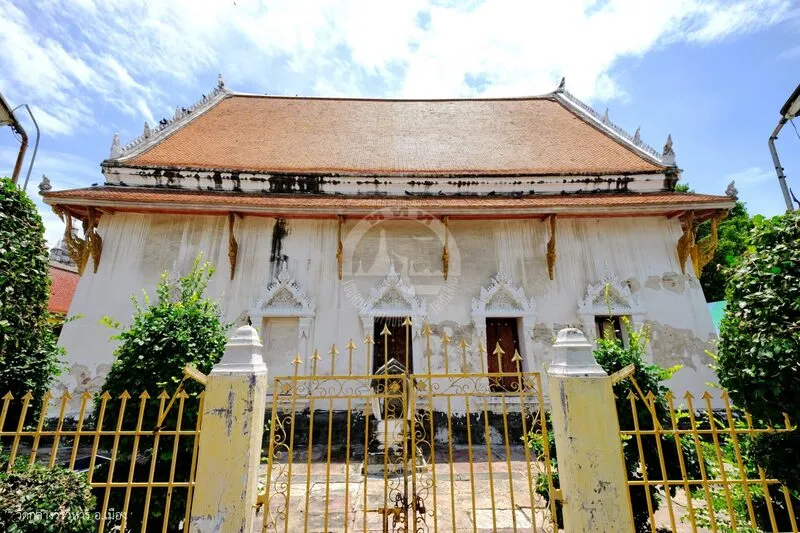
Wat Klang Worawihan is one of the most important historic temples in Samut Prakan. Located in Pak Nam, Mueang Samut Prakan District, this second-class royal monastery dates back to the late Ayutthaya period and preserves a remarkable blend of local history, religious importance, and traditional Thai art. The temple is especially known for its old ordination hall, historic murals, Buddha footprint pavilion, teakwood sermon hall, and its long-standing role as a spiritual center for the Pak Nam community.
For travelers looking beyond the usual Bangkok temple circuit, Wat Klang Worawihan offers a rewarding cultural stop close to the heart of Samut Prakan. It is not simply a place to make merit. It is also a living historical site where the story of Pak Nam, the development of Samut Prakan, and the continuity of Thai Buddhist tradition can still be felt in the layout of the grounds, the architecture, and the active religious life of the monastery.
The temple stands in Pak Nam Subdistrict, one of the oldest urban areas in Samut Prakan. Because it is close to the city shrine, local markets, riverside communities, and several cultural attractions, Wat Klang Worawihan works well as part of a half-day or full-day heritage itinerary. Visitors can come here for quiet worship in the morning, appreciate old Thai mural painting and architecture, and continue on to nearby attractions in the same district without spending too much time on transport.
The history of Wat Klang Worawihan goes back to around 1756 CE during the reign of King Borommakot of Ayutthaya. According to temple tradition, the site began as a small nipa-palm hut used by a monk named Phra Ajarn Su. Local residents developed deep respect for him and eventually joined together to establish a temple at the site. Because the location lay between Wat Nok and Wat Nai, the temple became known as “Wat Klang,” meaning “the middle temple.” Its former name, Wat Takothong, is linked to a local story that a gold ring was found beneath a takho tree while the land was being prepared for construction.
That origin story gives the temple a particularly strong sense of place. Wat Klang Worawihan is not a monument detached from its surroundings. It grew out of community faith, shared land, and collective effort. In the early period, the temple included an ordination hall, a preaching hall, a pond, and small monastic dwellings. After Phra Ajarn Su passed away, another monk, Phra Ajarn Chi from Nakhon Khuean Khan, took over responsibility for the temple.
When Ayutthaya fell, the temple was abandoned for a period, and its history entered a quieter phase. It was later restored during the Thonburi era by Phra Ajarn Da, whose monastic name was Maha Inthachoti. He led the revival of the temple, commissioned new Buddha images, rebuilt monastic structures, and reconstructed the old ordination hall on a larger scale. This phase of recovery was crucial. Without it, Wat Klang might have disappeared like many other temples affected by war and political change.
During the early Rattanakosin era, the temple continued to develop under successive abbots. Major structures were renovated or newly built, and the old ordination hall that survives today is associated with work begun around 1802 CE and later restored in the reign of King Rama III. These developments gave the temple much of the architectural character visitors now admire: refined decorative details, traditional layout planning, and a visual language shaped by royal-era craftsmanship.
Wat Klang Worawihan also enjoyed royal connections in several reigns. King Rama IV traveled here by royal barge to present Kathin robes, and King Rama V later visited as well. During one royal visit in the late 19th century, King Chulalongkorn entered the old ordination hall and viewed sacred relics that had been brought from India. These royal links help explain why the temple became more than a neighborhood monastery. It emerged as a religious landmark of provincial and national significance. In 1916, King Vajiravudh elevated the temple to the status of a second-class royal monastery of the worawihan type.
The artistic and architectural value of the temple is one of its strongest attractions. The old ubosot, or ordination hall, is the spiritual and visual heart of the temple complex. Inside sits a principal Buddha image in the Mara-Vijaya posture. The image is made from laterite, covered with plaster, and gilded. It was moved from an abandoned temple in what is now Chon Buri Province. This alone makes the image important, as it carries the layered history of more than one sacred site.
The murals inside the old ordination hall are among the temple’s most compelling features. They are described as dating to the late Ayutthaya period and depict scenes from the life of the Buddha, the victory over Mara, cosmological themes from the Traiphum tradition, and the episode of the Buddha ascending to Tavatimsa Heaven to teach his mother. On the northern and southern walls, visitors can also see depictions of past Buddhas and assembled celestial beings. Some areas reveal touches of Western perspective, making the murals especially interesting for anyone studying transitional Thai painting styles.
Another important sacred structure is the Buddha Footprint Pavilion, which houses four Buddha footprints. This pavilion gives the temple an additional layer of religious importance and reflects a long-established Thai tradition of venerating symbolic representations of the Buddha. The atmosphere around the pavilion is calm and contemplative, and it is one of the places where visitors often slow down and spend more time in quiet devotion.
The temple grounds also include a beautiful teakwood sermon hall built in the form of a traditional Thai clustered house. Its carved gables and elegant wooden details are a highlight for architecture enthusiasts. Elsewhere on the grounds are a viharn, chedis, a prang, a bell tower, a drum tower, monks’ residences, and the provincial monks’ meeting hall of Samut Prakan. Together these structures show that Wat Klang Worawihan has long functioned not only as a place of worship, but also as an important administrative and communal religious center.
Because the temple remains fully active, a visit here feels different from visiting a preserved ruin or a museum-like monument. Worship ceremonies, merit-making events, and temple functions still take place regularly, which gives the site a lived-in and authentic atmosphere. This continuity is part of what makes the temple so memorable. Visitors are not only looking at history; they are stepping into a historical temple that still serves its community today.
For those interested in the present-day life of the temple, the current abbot is Phra Ratchasamut Watcharachan (Boonsueb Vuṭṭhisaro). This is useful information for pilgrims, researchers, and anyone who may need to contact the monastery for formal visits or temple-related inquiries. It also confirms the temple’s ongoing institutional role within the ecclesiastical structure of Samut Prakan.
Wat Klang Worawihan is also a practical stop for travelers. It works well for visitors who want a cultural experience close to Bangkok but without the crowds found at major capital landmarks. The temple can easily be combined with the Samut Prakan City Pillar Shrine, the Samut Prakan Observation Tower, the Royal Thai Navy Museum, Ancient City, or a wider trip through Pak Nam and nearby riverside neighborhoods.
Travel Information is straightforward. If you are using public transport, take the BTS Sukhumvit Line to Pak Nam Station and continue by local transport to the temple. If you are driving, head into central Pak Nam and continue toward Sri Samut Road and Soi Wat Klang. The temple is close to local community areas, food spots, and several urban cultural attractions, so it is easy to build a flexible itinerary around it. Morning visits are especially pleasant because the weather is cooler and the temple atmosphere is quieter.
Photography lovers will also find plenty to appreciate here, from the temple entrance and historic ubosot to the footprint pavilion and the teakwood buildings. As with any active Buddhist site, modest dress and respectful behavior are recommended, especially inside sacred buildings and around monks or worshippers. Visitors who approach the temple with care will likely find that its beauty lies as much in its atmosphere as in its architecture.
In the wider story of Samut Prakan, Wat Klang Worawihan stands as an important witness to change across centuries. It links the late Ayutthaya era to the Thonburi restoration, the growth of the early Rattanakosin kingdom, and the continued religious life of modern Pak Nam. For anyone searching for a historic temple in Samut Prakan, a meaningful place to make merit, or a lesser-known cultural attraction near Bangkok, Wat Klang Worawihan deserves serious attention.
| Name | Wat Klang Worawihan |
| Location | Pak Nam Subdistrict, Mueang Samut Prakan District, Samut Prakan |
| Address | 10 Moo 1, Wat Klang Road, Pak Nam, Mueang Samut Prakan, Samut Prakan 10270, Thailand |
| Coordinates | 13.592375, 100.599436 |
| Highlights | Late Ayutthaya-era temple, historic ordination hall, murals, Buddha footprint pavilion, teakwood sermon hall, major royal monastery of Samut Prakan |
| History | Founded around 1756 in the late Ayutthaya period, formerly named Wat Takothong, and elevated to a second-class royal monastery in 1916 |
| Name Origin | Its former name, Wat Takothong, comes from a story about a gold ring found beneath a takho tree, while “Wat Klang” refers to its location between Wat Nok and Wat Nai |
| Distinctive Features | Old ubosot, laterite Buddha image, historic murals, Buddha footprint pavilion, traditional teakwood sermon hall, active royal monastery grounds |
| Travel Information | Take the BTS to Pak Nam Station and continue by local transport, or drive into central Pak Nam via Sri Samut Road and Soi Wat Klang |
| Current Status | Open and active as a functioning royal monastery |
| Open Days | Daily |
| Opening Hours | 07:00 AM – 05:00 PM |
| Fees | No general admission fee is shown for regular worship visits |
| Facilities | Temple grounds, religious-use spaces, parking area, nearby shops and local community services |
| Main Areas / Zones | Old ordination hall, new ordination hall, Buddha footprint pavilion, sermon hall, viharn, prang, chedis, bell tower, drum tower, provincial monks’ meeting hall |
| Abbot / Caretaker | Phra Ratchasamut Watcharachan (Boonsueb Vuṭṭhisaro) |
| Main Contact Number | 02-395-3198 |
| Official Website / Official Page | Facebook: Wat Klang Worawihan Phra Aram Luang Samut Prakan |
| Nearby Tourist Attractions | 1. Samut Prakan City Pillar Shrine – 0.4 km 2. Samut Prakan Observation Tower – 1.4 km 3. Royal Thai Navy Museum – 2.5 km 4. Ancient City – 9 km 5. Phi Suea Samut Fort – 12 km |
| Nearby Restaurants | 1. Hia Uan Pork Bone Porridge Since 1982 – 0.2 km 2. Ramita Coffee & Bistro – 0.4 km. Tel. 063-674-6142 3. Come Again Cafe & Restaurant – 0.9 km. Tel. 062-819-5918 4. Sompong Seafood Srinakarin – 4 km. Tel. 02-703-2496, 094-242-8682 5. Khao Moo Daeng Khang San – 0.3 km |
| Nearby Accommodations | 1. Samutprakarn Hotel – 1.4 km. Tel. 02-780-9888 2. Casa Grand Hotel – 1.5 km. Tel. 061-991-1131 3. Baan Paknam Budget Hotel – 1.7 km. Tel. 091-525-1999 4. Emm House – 2.7 km. Tel. 02-380-1192, 096-734-8757 5. The Best Place – 4 km. Tel. 063-625-4978 |
Frequently Asked Questions (FAQ)
Q: Where is Wat Klang Worawihan located?
A: It is in Pak Nam Subdistrict, Mueang Samut Prakan District, Samut Prakan, close to the city shrine and central Pak Nam area.
Q: How old is Wat Klang Worawihan?
A: The temple dates back to around 1756 and is considered a late Ayutthaya-period monastery.
Q: What is the temple most famous for?
A: It is especially known for its old ordination hall, historic murals, Buddha footprint pavilion, teakwood sermon hall, and royal monastery status.
Q: Can I get there by BTS?
A: Yes. You can take the BTS to Pak Nam Station and continue to the temple by local transport.
Q: Is there an entrance fee?
A: No general admission fee is shown for regular worship visits.
Q: Is Wat Klang Worawihan suitable for cultural travelers?
A: Yes. It is a strong choice for travelers interested in Thai history, Buddhist art, temple architecture, and local heritage in Samut Prakan.
 Category: ●Places of Worship
 Group: ●Temple
Last Update : 7 MonthAgo
 Last Update : 7 MonthAgo

 Click to Access the Navigation Map GPS
Wat Klang Worawihan Map
Recommend

 Art, Culture and Heritage
 Historical Sites and Monuments(2)
 Landmarks and Memorials(1)
 Art, Craft Centres, Tradition(9)
 Museums(5)
 Historic Homes and Cities(1)
Temple(30)
 Mosque(1)
 Other Sacred Sites(9)
 Suburban Living
 Local Market(1)
 Floating Market(3)
 Nature and Wildlife
 River, Canal(1)
 Bays and Beaches(2)
 Entertainment and Agricultural
 Zoos and Aquariums(1)
 Animal camps and shows(1)
 Farms, Parks and Ecotourism(1)
 Outdoor and Adventure Activities(1)
 Travel Articles, Recipes
 Travel Review, Food Review(1)


