
lovethailand home >Central Travel Attractions >Lop Buri Travel Attractions > 40 Best Places to Visit in Lop Buri Central Thaila..
TL;DR: 40 Best Places to Visit in Lop Buri Central Thailand, open Daily Opening Hours: 06:00 – 18:00.
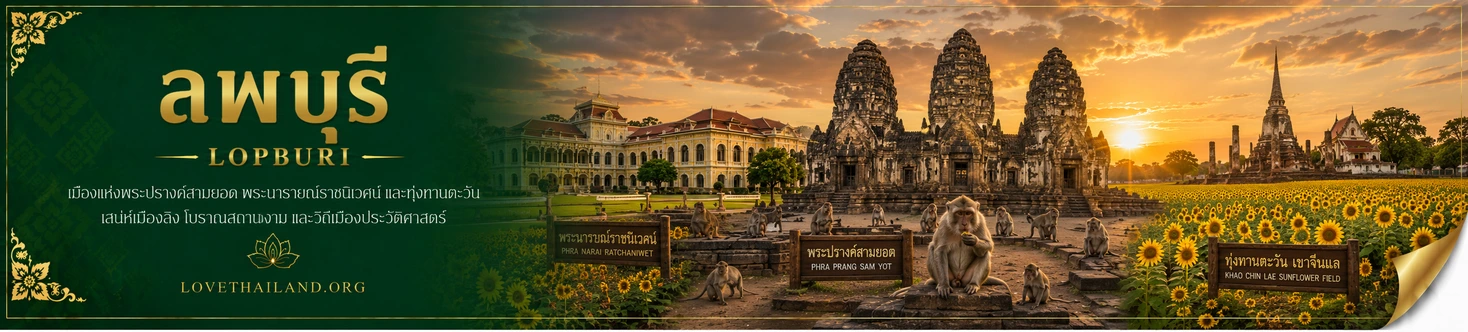
40 Best Places to Visit in Lop Buri Central Thailand
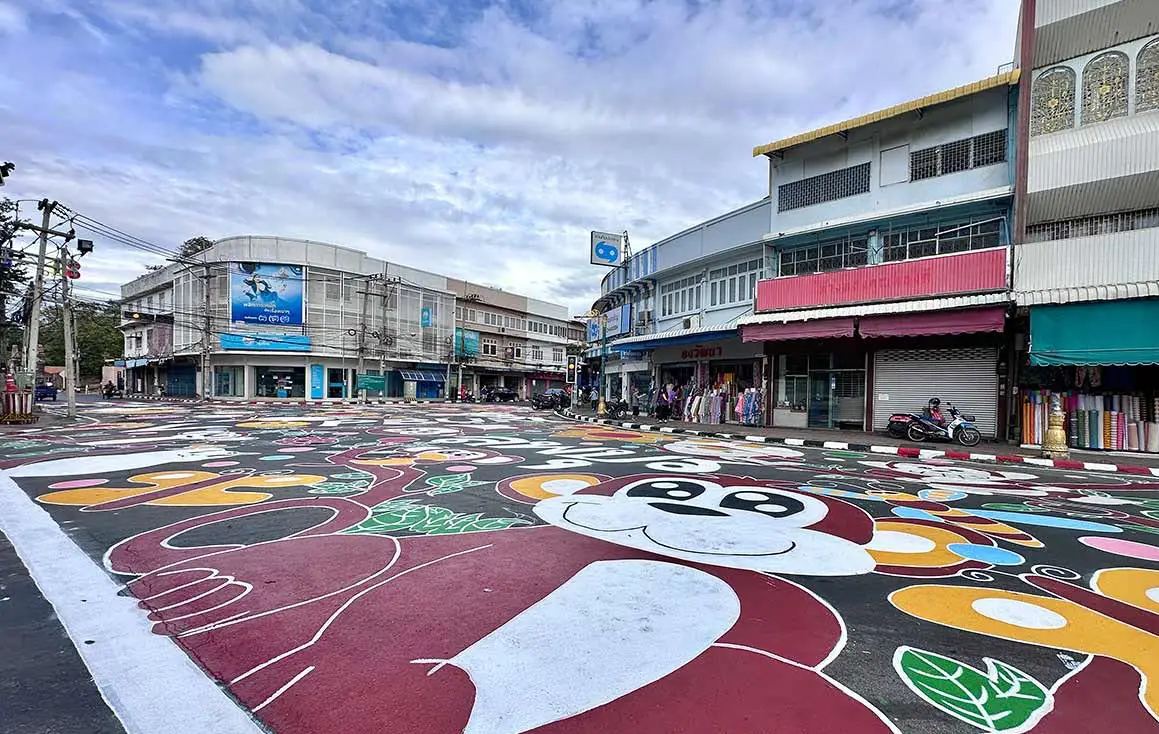
40 Best Places to Visit in Lop Buri, Central Thailand brings together the many sides of one of Central Thailand’s most important historic destinations. Highlights range from Phra Prang Sam Yot, Phra Narai Ratchaniwet, Wat Phra Si Rattana Mahathat, San Phra Kan, and Wichayen House to Pa Sak Cholasit Dam, seasonal sunflower fields, Khao Wongphrachan, waterfalls, natural attractions, traditional communities, and local culture. Travelers with only 1 day should focus on Lop Buri Old Town. With 2–3 days, the itinerary can expand to the sunflower fields, Pa Sak Cholasit Dam, and Khao Wongphrachan. A 4–5 day trip allows more time to explore Chai Badan, Lam Sonthi, Khok Samrong, Ban Mi, and communities outside the provincial center.
Lop Buri lies in the upper part of Central Thailand and offers a far more varied landscape than its historic-city image might suggest. Beyond its plains and agricultural areas, the province has mountain ranges, reservoirs, forests, waterfalls, caves, and natural areas in the east. This diversity makes Lop Buri suitable for history and culture enthusiasts, nature lovers, families, and travelers looking for a relatively easy road trip from Bangkok.
The historic heart of Lop Buri is its Old Town in Mueang Lop Buri District, where traces from several periods coexist. Visitors can discover Khmer artistic influences, the heritage of ancient Lavo, and the prosperity of Lop Buri during the reign of King Narai the Great. Phra Prang Sam Yot, Wat Phra Si Rattana Mahathat, Phra Narai Ratchaniwet, Wichayen House, and San Phra Kan are all located within a relatively compact area, making Lop Buri particularly convenient for travelers who want to explore Thai history without spending long periods traveling between sites.
King Narai the Great played an especially important role in shaping the identity of Lop Buri. He used the city as a second royal capital and as a major center for foreign relations during the 17th century. Traces of that period remain visible at Phra Narai Ratchaniwet, Wichayen House, San Paolo, and several other historic buildings. Lop Buri is therefore one of Thailand’s most rewarding destinations for travelers interested in relations between Siam and the Western world during the Ayutthaya period.
Another characteristic that distinguishes Lop Buri from other historic cities is the population of monkeys living around the Old Town, particularly near Phra Prang Sam Yot and San Phra Kan. The monkeys have long become part of Lop Buri’s identity and are associated with the well-known Monkey Buffet Festival. Visitors should follow local safety advice, avoid carrying visible food that might attract the animals, and keep phones, glasses, bags, and other small belongings secure.
Beyond the Old Town, Lop Buri also offers varied natural landscapes. Khao Wongphrachan is an important destination for pilgrims and travelers who enjoy climbing mountains, while Pa Sak Cholasit Dam provides broad views across a vast reservoir and surrounding agricultural land. Wang Kan Lueang Waterfall Arboretum represents the greener eastern side of the province and offers a completely different atmosphere from Lop Buri’s archaeological attractions.
Toward the end of the year, many travelers associate Lop Buri with its famous sunflower fields, particularly around Khao Chin Lae and other agricultural areas. Sunflowers are seasonal crops, and individual fields do not bloom at exactly the same time or necessarily operate every year. Travelers should therefore check which fields are open and their current flowering conditions before visiting. During the flowering season, broad yellow fields framed by mountains create one of Lop Buri’s most distinctive landscapes.
Lop Buri’s communities are as culturally diverse as its history. The province is home to Thai Phuan, Thai Berng, and agricultural communities across several districts. Traditional mudmee weaving, the local craft of producing Din So Phong white clay, Ban Mi community traditions, and local museums all give travelers more reasons to explore beyond the city center. These communities reveal another side of Lop Buri through language, food, clothing, handicrafts, and customs that continue alongside modern life.
Local food reflects both Central Thai cuisine and the province’s agricultural character. Household dishes in many communities make use of rice, field crops, local vegetables, fish, and seasonal ingredients. Lop Buri is also associated with locally made Din So Phong, woven textiles and mudmee fabrics, and seasonal agricultural products. Stopping at local markets and community areas can therefore add considerably more depth to a trip than visiting major landmarks alone.
Important traditions and cultural events include the King Narai Reign Fair, which is directly connected with Lop Buri’s royal history, and the Monkey Buffet Festival, one of the province’s best-known tourism events. Community traditions also include Buddhist ceremonies, merit-making customs, and cultural practices maintained by local ethnic communities. During major historical festivals, traditional Thai dress and period-style activities further strengthen the atmosphere of Lop Buri Old Town.
For accommodation, first-time visitors will generally find Mueang Lop Buri District the most convenient base, particularly for Phra Prang Sam Yot, Phra Narai Ratchaniwet, King Narai National Museum, and other Old Town attractions. Travelers focusing on Pa Sak Cholasit Dam or eastern Lop Buri can instead consider accommodation around Phatthana Nikhom, Chai Badan, or closer to their chosen route to reduce unnecessary driving back to the city.
Dividing a Lop Buri trip into geographic zones makes travel much more efficient. The Old Town is best for history and culture; Khao Chin Lae and Khok Tum are ideal for sunflower fields and mountain scenery; Phatthana Nikhom works well for Pa Sak Cholasit Dam; and Chai Badan and Lam Sonthi offer waterfalls, forests, caves, and other natural attractions. Travelers with several days should also consider Ban Mi, Khok Salung, and local handicraft communities to experience Lop Buri through its history, landscapes, and everyday culture.
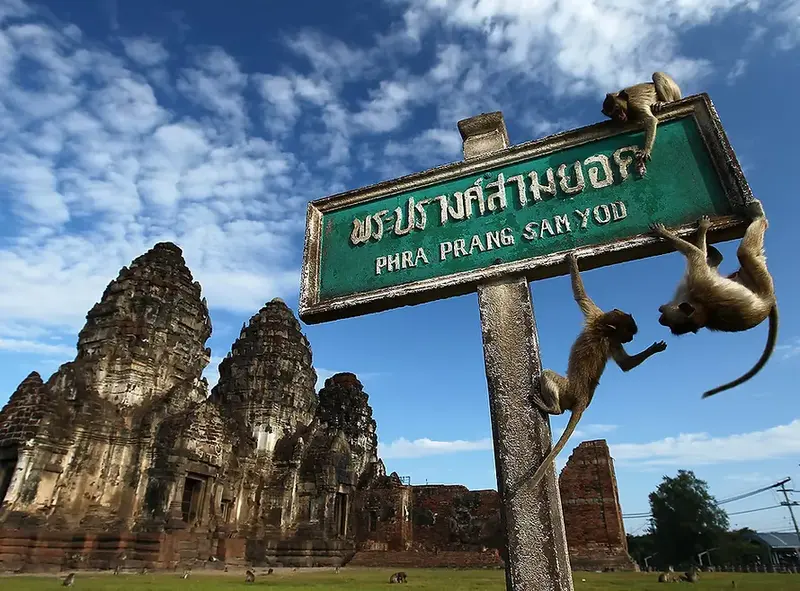
1. Phra Prang Sam Yot is one of the most recognizable symbols of Lop Buri Province. Located in Tha Hin Subdistrict, Mueang Lop Buri District, in the heart of the Old Town, this historic monument is distinguished by 3 connected prangs that reflect Khmer artistic influence and the religious development of ancient Lavo.
Highlights: 3 connected ancient prangs, Khmer-influenced architecture, one of Lop Buri’s most recognizable landmarks, and the large monkey population living around the surrounding Old Town area.
The main structure consists of 3 prangs connected to one another. Their architectural form demonstrates the influence of Khmer art and religious beliefs before the complex was adapted and modified during later periods. The monument therefore allows visitors to see several layers of Lop Buri’s history within a single architectural site.
Phra Prang Sam Yot is also closely associated with the monkeys that inhabit Lop Buri Old Town. Visitors can photograph the monument and observe the animals, but food, plastic bags, glasses, phones, and small belongings should be kept secure. Avoid teasing the monkeys or approaching them unnecessarily.
History enthusiasts should take time to examine the layout of the prangs, construction materials, arches, and their relationship with nearby monuments. From Phra Prang Sam Yot, travelers can easily continue to San Phra Kan, Wat Phra Si Rattana Mahathat, Phra Narai Ratchaniwet, and Wichayen House.
Open Days: Daily Opening Hours: 06:00 – 18:00
Getting There: Phra Prang Sam Yot is located in Tha Hin Subdistrict, Mueang Lop Buri District, close to Lop Buri Railway Station and the Old Town. Travelers from Bangkok can reach Lop Buri by car or train, then continue on foot or by local transport between the main historic attractions.
Map (GPS):Open Google Maps – Phra Prang Sam Yot
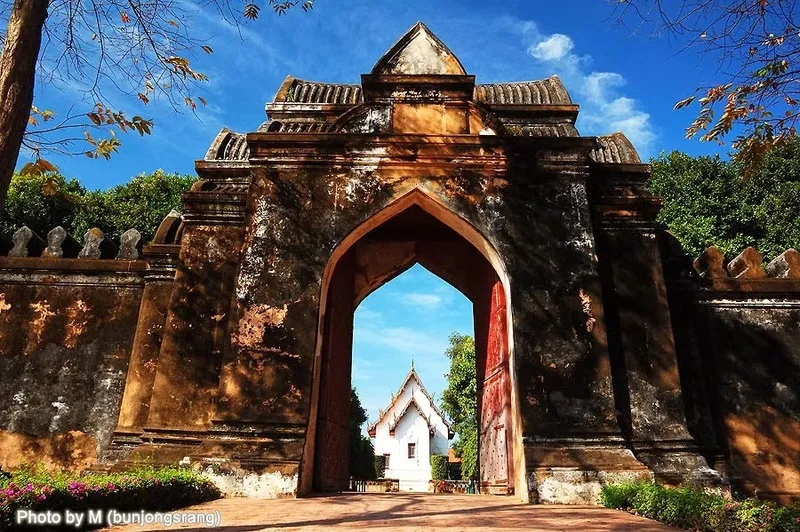
2. Phra Narai Ratchaniwet is an important royal palace in central Lop Buri, located on Sorasak Road in Tha Hin Subdistrict. It was established during the reign of King Narai the Great, when Lop Buri played an important role in royal administration, politics, and international relations.
Highlights: A royal palace from the reign of King Narai the Great, ruins of important royal halls and buildings, palace walls and gateways, architecture reflecting Siam’s contact with Western nations, and the location of King Narai National Museum.
The palace is one of the most important surviving reminders of Lop Buri’s period of exceptional prosperity. King Narai the Great spent several months of each year in Lop Buri and used the city to receive diplomatic missions, conduct trade, and manage international affairs. The buildings within the complex therefore reflect both Thai architectural traditions and foreign influences.
Walking through the grounds reveals walls, royal halls, building ruins, and structural remains that help visitors imagine the scale of the former royal compound. A visit is especially rewarding when combined with King Narai National Museum, where archaeological objects and exhibitions provide deeper context for Lavo and Lop Buri across different historical periods.
Phra Narai Ratchaniwet is also an important setting for cultural activities connected with King Narai the Great. During major historical events, the Old Town becomes particularly atmospheric with traditional Thai dress, historical presentations, and activities highlighting Lop Buri’s heritage.
Open Days: Daily Opening Hours: 09:00 – 16:30
Getting There: The palace is located on Sorasak Road, Tha Hin Subdistrict, Mueang Lop Buri District, within the Old Town and not far from Lop Buri Railway Station. Travelers staying in central Lop Buri can reach surrounding historic attractions on foot or by local transport.
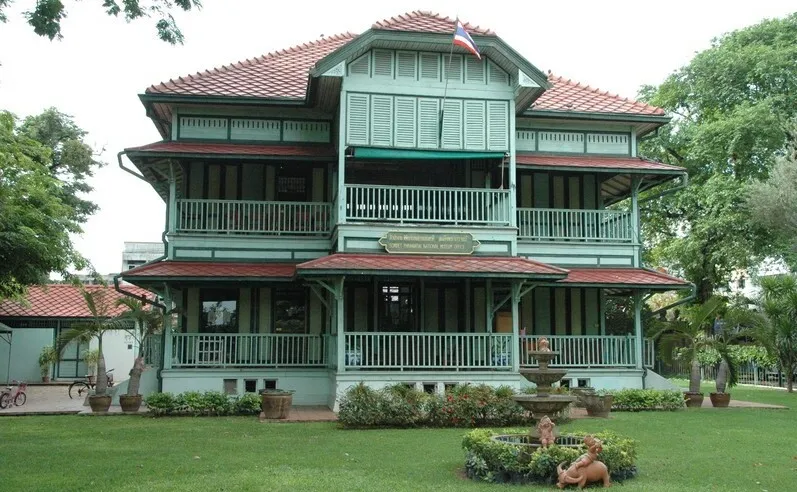
3. King Narai National Museum is located within Phra Narai Ratchaniwet and is one of the most important places for understanding Lop Buri’s history, from prehistoric settlement and ancient Lavo to Khmer influence, the Ayutthaya period, and the city’s prominence during the reign of King Narai the Great.
Highlights: Archaeological objects from Lop Buri and surrounding areas, Buddha images, artworks from several historical periods, archaeological evidence, exhibitions relating to King Narai the Great, and museum buildings within the former royal palace complex.
The museum’s collections bridge the gap between the monuments visible around Lop Buri and the historical stories behind them. Visitors can see that Lop Buri was not prosperous during only one period, but was a long-established settlement with continuous artistic and cultural development over many centuries.
For travelers who have already visited Phra Prang Sam Yot or Wat Phra Si Rattana Mahathat, the museum provides useful context for understanding the relationship between architectural styles, Buddha images, tools, everyday objects, and archaeological discoveries from the region.
The museum can be visited together with Phra Narai Ratchaniwet before continuing on foot or by a short drive to Wichayen House, Wat Phra Si Rattana Mahathat, and other major Old Town attractions.
Open Days: Wednesday – Sunday Opening Hours: 09:00 – 16:00
Getting There: King Narai National Museum is located on Sorasak Road, Tha Hin Subdistrict, Mueang Lop Buri District, within the grounds of Phra Narai Ratchaniwet. Visitors use the same route as the palace and can conveniently explore both attractions during the same visit.
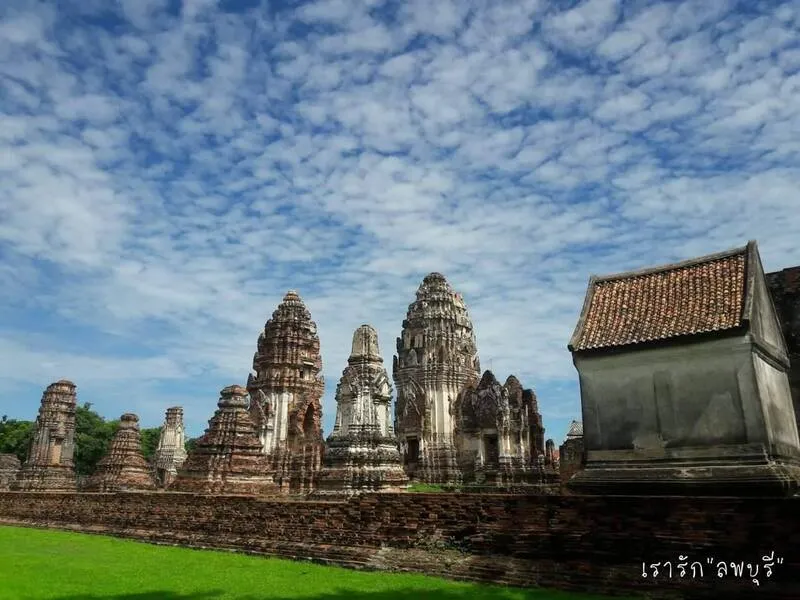
4. Wat Phra Si Rattana Mahathat is one of Lop Buri Old Town’s most important archaeological sites. Located in Tha Hin Subdistrict near the railway station and Phra Narai Ratchaniwet, the temple complex contains monuments from several periods and is an excellent place to study the artistic and religious development of ancient Lavo.
Highlights: A large principal prang, groups of ancient chedis and viharns, architectural elements from different periods, and a central location within Lop Buri’s historic sightseeing route.
The temple grounds contain far more than can be seen from outside, including prangs, chedis, viharns, and building foundations. Walking slowly through the complex allows visitors to notice differences in construction methods and artistic styles created by additions and restorations over different periods.
The principal prang is the most prominent feature of the site and an important example of Lop Buri art. Its form and architectural details reflect both Khmer influence and the subsequent development of architecture in Central Thailand.
Wat Phra Si Rattana Mahathat can easily be combined with Phra Narai Ratchaniwet, King Narai National Museum, Phra Prang Sam Yot, and Wichayen House, making this area suitable for a full-day historical itinerary.
Open Days: Daily Opening Hours: 07:00 – 17:00
Getting There: The temple is located in Tha Hin Subdistrict, Mueang Lop Buri District, close to Lop Buri Railway Station. Train travelers can begin exploring the Old Town from this area, while visitors arriving by car can access the surrounding historic roads directly.
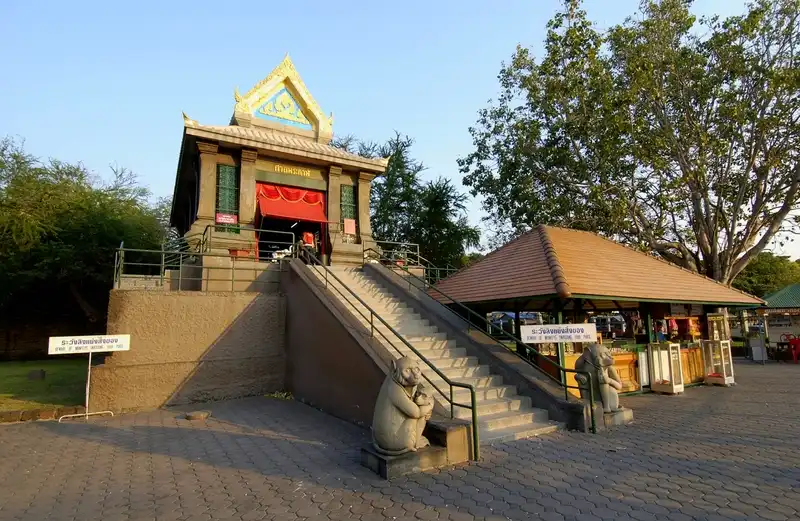
5. San Phra Kan is an important sacred shrine for the people of Lop Buri. Located on Narai Maharat Road close to Phra Prang Sam Yot, the shrine incorporates remains of an older monument while continuing to function as an active place of worship where local residents and visitors come to pay respect.
Highlights: One of Lop Buri’s most revered sacred sites, ancient architectural remains associated with old Lavo, an active place of local worship, and a location directly connected with Phra Prang Sam Yot and Lop Buri’s famous monkeys.
San Phra Kan is a clear example of how ancient history and contemporary belief coexist in Lop Buri. Its older base and architectural elements preserve traces of the past, while the present shrine remains an active center for worship and local religious practice.
Monkeys also inhabit the area around the shrine. Visitors should protect their belongings, particularly food, drinks, glasses, phones, and anything carried openly. Observe the animals from a safe distance and avoid provoking them.
For first-time visitors, San Phra Kan is easy to combine with Phra Prang Sam Yot because the 2 attractions are located very close together. Visiting both reveals 2 dimensions of Lop Buri: its archaeological heritage and the living beliefs that remain part of local life today.
Open Days: Daily Opening Hours: 05:30 – 17:00
Getting There: San Phra Kan is located on Narai Maharat Road near Phra Prang Sam Yot in Mueang Lop Buri District. Travelers arriving by train can walk or take local transport from Lop Buri Railway Station into the Old Town.
Map (GPS):Open Google Maps – San Phra Kan
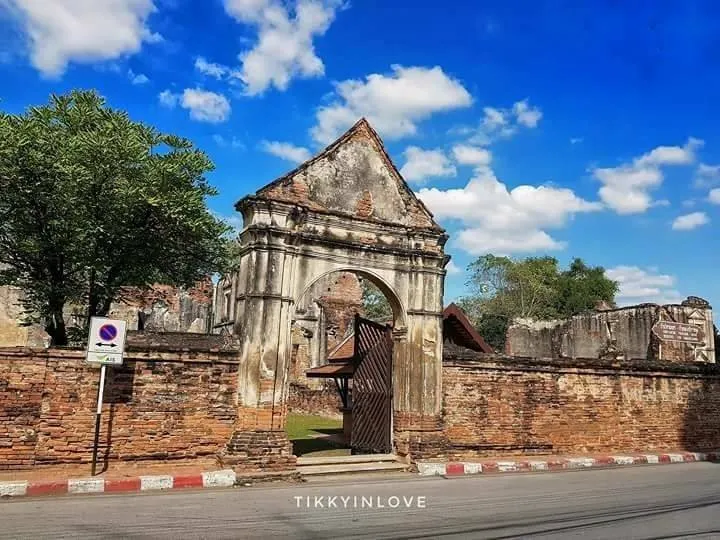
6. Wichayen House (Ban Wichayen) is located on Wichayen Road in Tha Hin Subdistrict. This important group of historic buildings dates from the reign of King Narai the Great and reflects Siam’s close diplomatic and cultural contact with foreign visitors during the period when Lop Buri played a major role in international affairs.
Highlights: Buildings associated with the reception of foreign envoys, Western-influenced architecture, a Christian church, residential and reception structures, and archaeological remains that help explain the lives of foreigners in Lop Buri during the reign of King Narai.
The complex was developed to support activities involving foreigners during the 17th century and is associated with diplomatic missions as well as Constantine Phaulkon, known in Siam as Chao Phraya Wichayen, an influential figure in the court of King Narai the Great.
The architecture is clearly different from conventional Thai temples and royal buildings, with distinctive doors, windows, brick construction, and Western influences. Exploring the site helps visitors understand how Lop Buri functioned as an internationally connected city in Siam during this period.
Wichayen House is best visited together with Phra Narai Ratchaniwet because the 2 sites form important parts of the same historical story surrounding Lop Buri in the reign of King Narai. Wat Phra Si Rattana Mahathat is also easily accessible from this area.
Open Days: Wednesday – Sunday Opening Hours: 07:00 – 17:00
Getting There: Wichayen House is located on Wichayen Road, Tha Hin Subdistrict, Mueang Lop Buri District, close to Phra Narai Ratchaniwet. Visitors can arrive by private car, local transport, or include the site in a walking route through the Old Town.

7. Pa Sak Cholasit Dam is a major dam and reservoir in Lop Buri Province, located around Nong Bua Subdistrict and surrounding areas of Phatthana Nikhom District. It is both an important water-management project and one of the province’s most prominent scenic attractions.
Highlights: Expansive reservoir views, the dam crest, viewpoints, recreation areas, open landscapes, and a sightseeing route that connects with agricultural and natural attractions around Phatthana Nikhom District.
Pa Sak Cholasit Dam plays an important role in water management within the Pa Sak River Basin. It stores water for agriculture and domestic use while also contributing to flood management, giving the site importance in engineering, the regional economy, and environmental management.
For visitors, its appeal lies in the broad open landscape and expansive reservoir views. Travelers can stop to relax, walk around designated areas, and take photographs. The scenery changes throughout the year according to water levels, weather conditions, and the surrounding agricultural landscape.
The dam is suitable for families, couples, groups of friends, and travelers who enjoy relaxed road trips. During periods when nearby sunflower fields are open, both attractions can be combined into the same day.
Open Days: Daily Opening Hours: 08:00 – 17:00
Getting There: From central Lop Buri, drive toward Phatthana Nikhom District and Nong Bua Subdistrict. A private car is the most convenient option. Travelers coming from Bangkok can also plan the dam as the main destination for an eastern Lop Buri itinerary without entering the Old Town first.
Map (GPS):Open Google Maps – Pa Sak Cholasit Dam

8. Lopburi Sunflower Fields are among the province’s best-known seasonal attractions. Sunflower-growing areas are scattered across Lop Buri, with the Khao Chin Lae area around Nikhom Sang Ton-eng and Khok Tum subdistricts in Mueang Lop Buri District being among the best known.
Highlights: Broad fields of yellow sunflowers, mountain and agricultural backdrops, seasonal photography opportunities, and routes that can be combined with Khao Chin Lae and Wat Weluwan.
Sunflowers are agricultural crops that have become closely associated with tourism in Lop Buri. When large fields bloom together, the contrast between yellow flowers, surrounding mountains, and open sky creates one of the province’s most recognizable seasonal landscapes.
A key point to remember is that sunflower tourism is seasonal. Different farms plant at different times, so flowering dates vary from field to field and from year to year. Travelers should check which fields are currently open and blooming during their intended travel dates rather than relying on information from previous seasons.
Morning is generally the most comfortable time for photography because temperatures are lower and the light is softer. Families traveling with children or older adults should bring drinking water, hats, and sun protection because most fields are exposed outdoor agricultural areas.
Open Days: Seasonal, depending on planting cycles at individual fields Opening Hours: Vary according to each field that is open to visitors
Getting There: A useful reference point for the Khao Chin Lae sunflower area is around Nikhom Sang Ton-eng and Khok Tum subdistricts in Mueang Lop Buri District. Traveling by private car is the most convenient option, and visitors should check the exact field currently open before departure because planting locations may change each season.

9. Khao Wongphrachan is located around Wat Khao Wong Phrachan in Huai Pong Subdistrict, Khok Samrong District. The mountain is well known for both its religious significance and the demanding stairway leading upward, attracting visitors who come to pay respect and challenge themselves physically.
Highlights: The long stairway up the mountain, sacred sites at higher elevations, panoramic views, Buddhist pilgrimage traditions, and one of Lop Buri’s most distinctive mountain-climbing experiences.
Khao Wongphrachan is more than a viewpoint. It is a religious landscape where many visitors climb as an act of faith. The journey therefore combines physical exertion with pilgrimage, and the long ascent requires visitors to pace themselves according to their fitness and health.
During the traditional Khao Wongphrachan pilgrimage festival, the area becomes especially busy with large numbers of visitors. Travelers who prefer a quieter atmosphere should consider visiting on ordinary days. Older visitors or anyone with health limitations should carefully assess their condition before attempting the higher sections.
Bring sufficient drinking water, wear secure footwear, and avoid carrying heavy luggage. Climbing during the cooler morning or evening periods can reduce heat-related fatigue, and enough time should be allowed for both the ascent and descent.
Open Days: Daily Opening Hours: The area is accessible throughout the day; recommended climbing periods are 05:00 – 09:00 and 16:00 – 19:00
Getting There: Khao Wongphrachan is located at Wat Khao Wong Phrachan in Huai Pong Subdistrict, Khok Samrong District. From central Lop Buri, drive toward Khok Samrong before following the local road to the temple. A private car is the most convenient option for managing climbing and return times.
Map (GPS):Open Google Maps – Khao Wongphrachan

10. Wang Kan Lueang Waterfall Arboretum is located in Tha Din Dam Subdistrict, Chai Badan District. It is one of Lop Buri’s notable natural attractions and reveals a greener side of the province that contrasts strongly with the archaeological sites of the Old Town. The waterfall and surrounding vegetation make the area suitable for relaxation and exploring the natural environment of eastern Lop Buri.
Highlights: A waterfall surrounded by greenery, natural pools and streams, the landscape of Chai Badan District, family recreation areas, and convenient connections with other natural attractions in eastern Lop Buri.
Wang Kan Lueang has a different character from many waterfalls descending from high mountain slopes. Its water and surrounding landscape are closely associated with local natural water sources, creating a setting of streams, pools, vegetation, and shaded areas suitable for walking and relaxing.
The shaded surroundings make the waterfall popular with families and groups of friends. Swimming should be limited to areas considered safe and visitors should follow all local regulations, particularly during periods of rain or changing water conditions.
Photography enthusiasts can use the flowing water, greenery, and rock formations as natural elements in their compositions. Morning is often more comfortable for exploring, and shoes with good grip are advisable around wet surfaces.
Wang Kan Lueang Waterfall Arboretum works well as a main destination for a Chai Badan itinerary. Travelers with several days can continue to caves, reservoirs, temples, and other natural attractions in eastern Lop Buri without having to return to Mueang Lop Buri every evening.
Open Days: Daily Opening Hours: 08:00 – 18:00
Getting There: The arboretum is located at 164 Moo 4, Tha Din Dam Subdistrict, Chai Badan District, Lop Buri. From central Lop Buri, a private car is recommended because the site is relatively far from the Old Town. Organizing the trip by geographic zone helps reduce unnecessary driving.

11. Khao Chin Lae is a prominent mountain landscape on the eastern side of Mueang Lop Buri District, around Khok Tum and nearby areas. Rising above broad agricultural land, the mountain has become an important backdrop for Lop Buri’s sunflower tourism, particularly toward the end of the year when seasonal fields add vivid color to the surrounding countryside.
Highlights: A distinctive mountain backdrop associated with Lop Buri’s sunflower zone, rural and agricultural scenery, natural photography opportunities, and convenient connections with Wat Weluwan and nearby sunflower fields.
Khao Chin Lae reveals another side of Lop Buri’s geography beyond flat agricultural plains and historic monuments. Its rocky mountain profile contrasts strongly with the surrounding farmland, and the combination of mountain scenery and seasonal flower fields has become one of the province’s most recognizable tourism images.
The area is better suited to scenic driving, photography, and visits to nearby attractions than to serious mountain trekking. Travelers should remain on public routes and avoid entering privately owned agricultural land without permission.
Morning and late afternoon are generally the best times for photography because temperatures are lower and angled light gives the mountain more visual depth. During sunflower season, Khao Chin Lae can easily be combined with nearby flower fields without unnecessary backtracking.
Open Days: Daily Opening Hours: 07:00 – 18:00
Getting There: Khao Chin Lae is in the area near Wat Weluwan and Khok Tum Subdistrict, Mueang Lop Buri District. From central Lop Buri, travel by private car toward Khok Tum and Nikhom Sang Ton-eng. The area can conveniently be combined with Lop Buri’s sunflower route.
Map (GPS):Open Google Maps – Khao Chin Lae

12. King Narai the Great Monument stands at Thep Satri Roundabout on Narai Maharat Road in Thale Chup Son Subdistrict, Mueang Lop Buri District. The monument was built to honor King Narai the Great, the monarch whose reign is deeply connected with Lop Buri’s historical identity.
Highlights: The monument to King Narai the Great, an important landmark near the approach to central Lop Buri, a place where local people pay respect, and a site symbolizing the king’s enduring relationship with the province.
King Narai the Great played a major role in the development of Lop Buri during the Ayutthaya period. He used the city as an important royal residence and administrative center, while also conducting diplomatic and international activities there. His name remains inseparable from Lop Buri’s historical identity.
The monument is therefore more than a city landmark. It provides a symbolic link to Phra Narai Ratchaniwet, Wichayen House, and the many Old Town monuments associated with the same historical period.
Visitors can stop to pay respect either before entering the Old Town or after completing a historical itinerary. It is particularly suitable as an introductory stop for travelers who want to understand Lop Buri through the legacy of King Narai the Great.
Open Days: Daily Opening Hours: Open 24 hours
Getting There: The monument is located at Thep Satri Roundabout on Narai Maharat Road, Thale Chup Son Subdistrict, Mueang Lop Buri District. It stands on a major approach to central Lop Buri and is easily accessible by private car.

13. Prang Khaek Shrine is an ancient monument located near the intersection of Wichayen Road and Surasongkhram Road in Tha Hin Subdistrict, Mueang Lop Buri District. The shrine is an important reminder of the religious and artistic influences that shaped ancient Lavo before the Ayutthaya period.
Highlights: Ancient prangs in the middle of the modern city, Khmer-influenced architecture, a convenient Old Town location, and an important monument for understanding Lop Buri’s pre-Ayutthaya development.
The monument stands in an open urban area beside major roads, creating a striking contrast between ancient architecture and the modern city that has developed around it. This coexistence between archaeological remains and everyday urban life is one of the defining characteristics of Lop Buri Old Town.
Although the site is smaller than Phra Prang Sam Yot or Wat Phra Si Rattana Mahathat, Prang Khaek Shrine has considerable historical value and does not require a long visit. It fits easily into a walking route around central Lop Buri.
Visitors can continue from here to Wichayen House, Phra Narai Ratchaniwet, and Wat Phra Si Rattana Mahathat, creating a compact Old Town itinerary covering several periods of religious and architectural history.
Open Days: Daily Opening Hours: 08:00 – 16:30
Getting There: Prang Khaek Shrine is located near the intersection of Wichayen Road and Surasongkhram Road in Tha Hin Subdistrict, Mueang Lop Buri District. Visitors exploring the Old Town can reach it on foot or by local transport from Phra Narai Ratchaniwet and Wichayen House.
Map (GPS):Open Google Maps – Prang Khaek Shrine
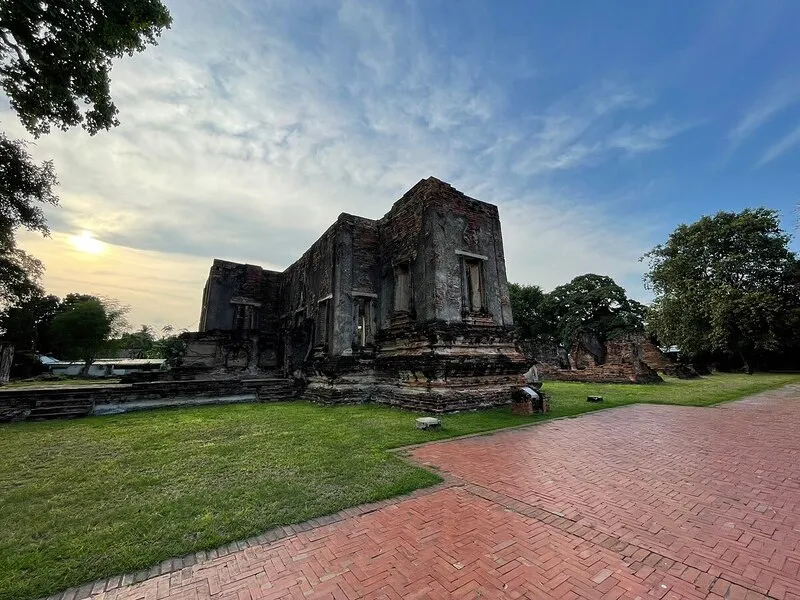
14. Kraison Siharat Pavilion is located in Thale Chup Son Subdistrict, Mueang Lop Buri District. The historic structure is associated with the reign of King Narai the Great and broadens the story of royal Lop Buri beyond the main Phra Narai Ratchaniwet palace complex.
Highlights: A royal pavilion connected with King Narai the Great, the historic Thale Chup Son area, remains of old architecture, and stories associated with astronomy and royal activities in Lop Buri.
Thale Chup Son formed part of Lop Buri’s wider historic landscape. Kraison Siharat Pavilion demonstrates that royal activity was not confined to the main palace in the center of town, but extended into surrounding areas as well.
The site is particularly interesting for travelers who want a deeper understanding of Lop Buri during King Narai’s reign. It helps explain how spaces outside the central palace were used and adds another dimension beyond diplomacy and the reception of foreign envoys.
Kraison Siharat Pavilion can be combined with King Narai the Great Monument and other attractions around Thale Chup Son before travelers return to the main Old Town route.
Open Days: Daily Opening Hours: 08:00 – 16:30
Getting There: The pavilion is in Thale Chup Son Subdistrict, Mueang Lop Buri District. From the Old Town, travel by private car or local transport along the main roads leading toward the Thale Chup Son area.
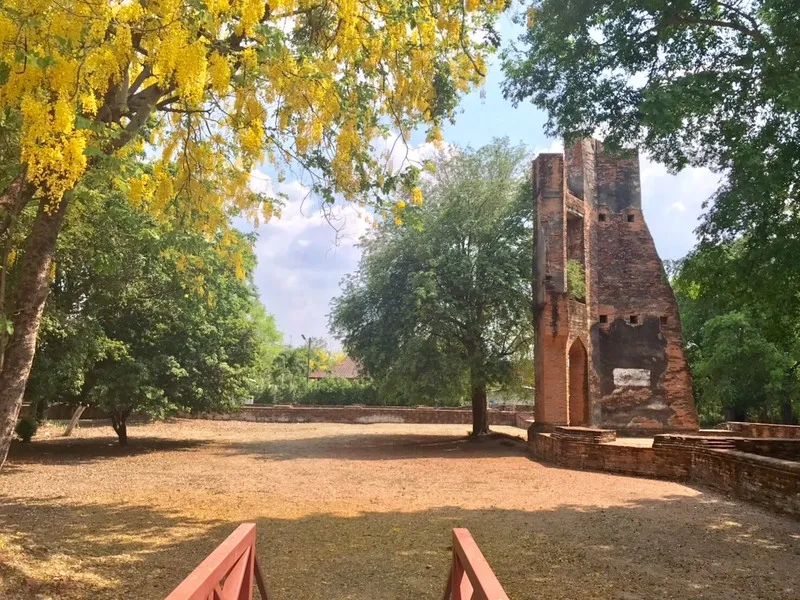
15. Wat San Paolo is an important historic site in Mueang Lop Buri District that reflects the close contact between Siam and Western visitors during the reign of King Narai the Great. Its surviving structures differ considerably from conventional Buddhist temple architecture, making it an important place for understanding Lop Buri as an internationally connected city during the 17th century.
Highlights: Ruins of Christian architecture, Western-style brick construction, connections with missionaries and foreign communities, and stories relating to science and astronomy during the reign of King Narai the Great.
Wat San Paolo reflects a period when the Ayutthaya court maintained extensive contact with European missions. Lop Buri therefore developed foreign residences, religious buildings, and facilities connected with scientific activity, creating a historical landscape unlike that of many other Thai cities.
Surviving brick walls, doors, windows, and structural remains reveal clear Western architectural influence. The site is therefore particularly rewarding for visitors interested in religious history, architecture, diplomacy, and international relations.
Wat San Paolo is best combined with Wichayen House and Phra Narai Ratchaniwet because the 3 sites together provide a clearer picture of Lop Buri’s foreign relations during the reign of King Narai.
Open Days: Daily Opening Hours: 08:30 – 17:30
Getting There: Wat San Paolo is located in Tha Hin Subdistrict, Mueang Lop Buri District, not far from the Old Town. It is easily reached by private car or local transport from Phra Narai Ratchaniwet.
Map (GPS):Open Google Maps – Wat San Paolo

16. Wat Sirichanthanimit Worawihan (Wat Khao Phra Ngam) is located in Khao Phra Ngam Subdistrict, Mueang Lop Buri District. This royal temple occupies a distinctive setting around a mountain and serves as an important center of Buddhist faith for the surrounding community.
Highlights: A temple in a mountain setting, important Buddha images and religious structures, elevated viewpoints, a peaceful atmosphere, and strong cultural importance to the Khao Phra Ngam community.
The landscape around the temple creates an atmosphere very different from the temples of Lop Buri Old Town. Visitors can combine Buddhist worship with views from higher ground, giving the site both religious and scenic appeal.
The temple grounds are relatively extensive and contain several religious areas. Visitors should allow enough time to explore without rushing, especially if they plan to walk to higher sections.
The temple is suitable for Buddhist pilgrims, families, older travelers who prefer the lower areas, and visitors looking for religious attractions beyond the Old Town. Depending on the route, it can be combined with Khao Wongphrachan or other attractions north of central Lop Buri.
Open Days: Daily Opening Hours: 08:00 – 16:30
Getting There: The temple is located in Khao Phra Ngam Subdistrict, Mueang Lop Buri District. From central Lop Buri, drive toward Khao Phra Ngam. A private car is the most convenient option for reaching different parts of the temple grounds.

17. Lop Buri Zoo is located on Naresuan Road in Mueang Lop Buri District. The zoo provides a family-friendly alternative to the province’s historical monuments, temples, and natural attractions.
Highlights: Animal-learning areas, activities for children and families, a location close to central Lop Buri, and a relaxed atmosphere suitable for a break during a sightseeing day.
Lop Buri Zoo has long served as a recreational space for local residents. It is particularly suitable for families that want to balance visits to archaeological sites and museums with a more interactive attraction where children can observe and learn about animals.
Visitors should follow all safety and animal-welfare regulations, avoid feeding animals outside designated areas, refrain from disturbing them, and supervise children carefully throughout the visit.
The zoo can be visited after a morning in the Old Town or used as a family activity on a day when travelers do not plan to drive to more distant districts.
Open Days: Daily Opening Hours: 08:00 – 18:00
Getting There: Lop Buri Zoo is located at 308/96 Moo 3, Naresuan Road, Mueang Lop Buri District, not far from the city center. It can be reached conveniently by private car or local transport.
Map (GPS):Open Google Maps – Lop Buri Zoo
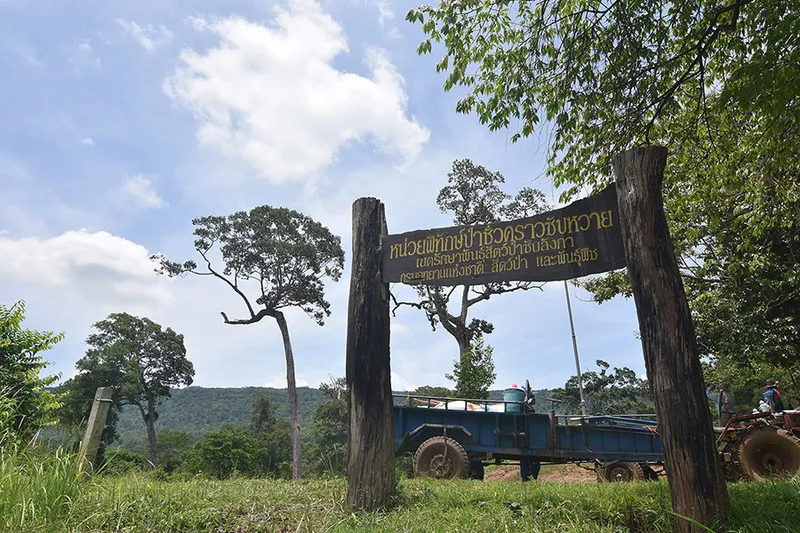
18. Sub Langka Wildlife Sanctuary is located in Kut Ta Phet Subdistrict, Lam Sonthi District, in eastern Lop Buri. This large protected area is important for conserving forest, headwater ecosystems, and diverse wildlife.
Highlights: Natural forest, wildlife ecosystems, mountains and headwater areas, conservation learning, and landscapes that contrast strongly with the plains of central Lop Buri.
Sub Langka clearly demonstrates the natural diversity of Lop Buri. The Lam Sonthi area contains forest and mountain landscapes that provide habitat for wildlife and play an important role in the wider regional ecosystem.
Visiting a wildlife sanctuary differs from visiting a conventional tourist attraction. Access to some areas may be restricted under conservation regulations, and travelers should enter only zones officially open for nature study while following staff instructions carefully.
The sanctuary is best suited to nature enthusiasts, wildlife observers, and travelers interested in conservation rather than casual recreation. Anyone using nature trails should prepare appropriate footwear, drinking water, and equipment suitable for forest conditions.
Open Days: Daily in areas open for nature study Opening Hours: 07:00 – 18:00
Getting There: The sanctuary is located at 45 Moo 7, Kut Ta Phet Subdistrict, Lam Sonthi District, Lop Buri. It is relatively far from central Lop Buri, so traveling by private car and planning a dedicated Lam Sonthi itinerary is the most practical option.
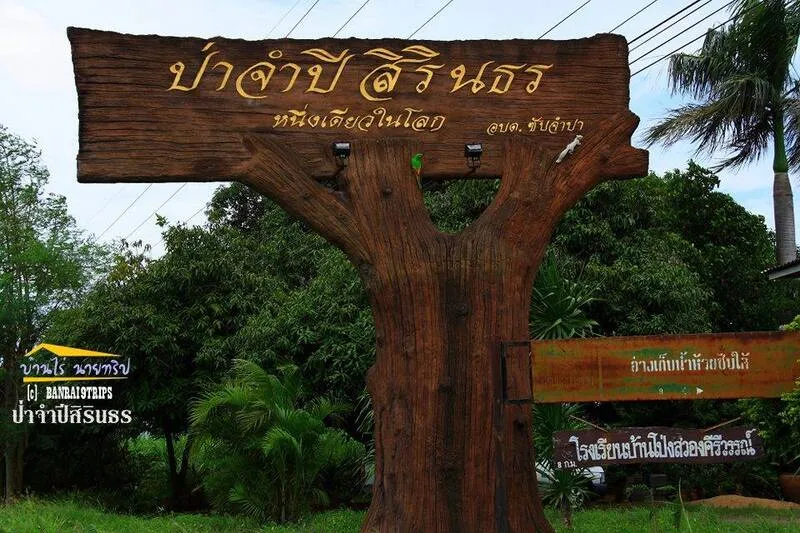
19. Pa Champi Sirindhorn is located around Moo 1 and Moo 7 in Sap Champa Subdistrict, Tha Luang District. The forest is important for botanical conservation and is particularly notable for the Champi Sirindhorn tree and the distinctive ecosystem that supports local biodiversity.
Highlights: Champi Sirindhorn trees, important local plant species, nature-study routes, forest ecosystems, and a convenient location near the ancient city of Sap Champa.
Pa Champi Sirindhorn introduces travelers to Lop Buri’s botanical heritage, offering a very different experience from the historical attractions of the provincial capital. The area is useful for learning about relationships among plant species, local water conditions, and the distinctive environment of Sap Champa.
Nature visitors should walk quietly, avoid collecting plants or disturbing the environment, and remain on routes provided for visitors. Morning visits are generally more comfortable and make it easier to observe plant life before midday temperatures rise.
The forest combines particularly well with the ancient city of Sap Champa. The 2 attractions are in the same general area but offer contrasting experiences centered on botany, ecology, archaeology, and ancient settlement.
Open Days: Daily Opening Hours: 06:00 – 18:00
Getting There: Pa Champi Sirindhorn is located around Moo 1 and Moo 7, Sap Champa Subdistrict, Tha Luang District, Lop Buri. From central Lop Buri, travel by private car toward Tha Luang District. A private vehicle is the most practical option for combining the forest with the ancient city of Sap Champa in the same day.
Map (GPS):Open Google Maps – Pa Champi Sirindhorn

20. Sublek Reservoir is located in Nikhom Sang Ton-eng Subdistrict, Mueang Lop Buri District. Surrounded by mountains and agricultural land, the reservoir is a pleasant place for relaxation, scenic views, and a convenient stop between Khao Chin Lae and Lop Buri’s sunflower areas.
Highlights: Reservoir views, surrounding mountains, open landscapes, attractive morning and evening scenery, natural photography opportunities, and proximity to the sunflower-tourism zone.
Sublek Reservoir presents another landscape within Mueang Lop Buri District, shifting from ancient urban monuments to water, mountains, and agricultural scenery within a relatively short distance. It is therefore a useful place to slow down between historical sightseeing stops.
Morning and evening are the most pleasant times for viewing and photography because temperatures are generally more comfortable and reflections across the water can create attractive scenery. Visitors should use publicly accessible areas and avoid zones restricted for reservoir operations or safety.
The reservoir can be combined with Khao Chin Lae, Wat Weluwan, and seasonal sunflower fields, particularly during the flowering season, creating an easy nature and agricultural-tourism route in a single day.
Open Days: Daily Opening Hours: 08:30 – 16:30
Getting There: Sublek Reservoir is in Nikhom Sang Ton-eng Subdistrict, Mueang Lop Buri District. From central Lop Buri, travel by private car toward Khao Chin Lae and the Nikhom Sang Ton-eng area. A private vehicle is the most convenient choice for connecting several nearby attractions.
Map (GPS):Open Google Maps – Sublek Reservoir
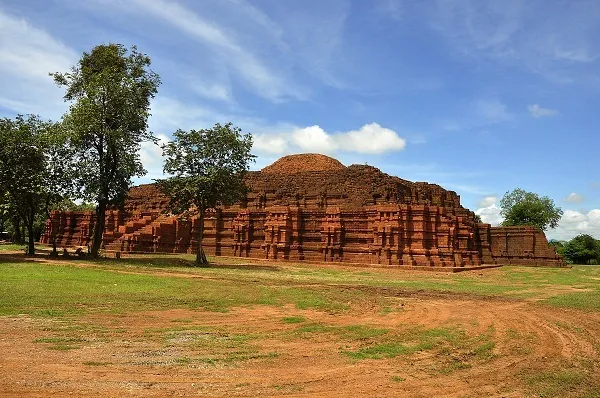
21. The Ancient City of Sap Champa is located in Sap Champa Subdistrict, Tha Luang District. It is one of Lop Buri’s important archaeological sites and provides evidence of an ancient settlement predating both the Lop Buri and Ayutthaya periods. The area has considerable archaeological and historical value and helps explain the development of early communities in Central Thailand.
Highlights: Remains of an ancient settlement, traces of defensive moats and community areas, archaeological evidence, the Sap Champa Museum, and a location that can easily be combined with Pa Champi Sirindhorn.
The Ancient City of Sap Champa demonstrates that Lop Buri’s history extends far beyond ancient Lavo and the reign of King Narai the Great. Archaeological evidence in Tha Luang District reveals an earlier community whose settlement patterns, use of natural resources, and connections with surrounding regions developed over a long period.
Rather than focusing on a single monument, visitors should view the wider landscape of the ancient city. The moat lines, settlement zones, and archaeological discoveries help explain how the former community was organized and how its inhabitants interacted with their environment.
The Ancient City of Sap Champa is best visited together with the local museum and Pa Champi Sirindhorn. These attractions connect archaeology, human settlement, and the natural environment, making the Sap Champa area particularly suitable for a full-day educational trip.
Getting There: The ancient city is located around Moo 7, Sap Champa Subdistrict, Tha Luang District. The Sap Champa Museum can be used as a useful reference point when beginning the visit. Traveling by private car is the most convenient option.
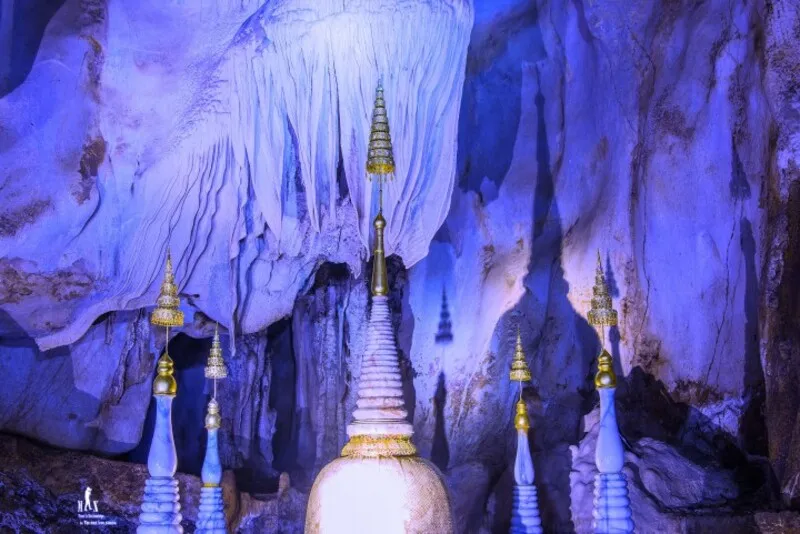
22. Erawan Cave, also known locally as Tham Thewa Phithak, is located in Chong Sarika Subdistrict, Phatthana Nikhom District. This natural attraction adds another dimension to Lop Buri tourism through its limestone mountain and cave landscape, which contrasts with the agricultural plains and reservoirs found nearby.
Highlights: A natural cave, limestone mountain scenery, a peaceful atmosphere, nature-oriented sightseeing, and convenient connections with Pa Sak Cholasit Dam and other attractions in Phatthana Nikhom District.
Exploring a cave offers a very different experience from visiting Lop Buri’s archaeological monuments. Visitors can observe natural geological formations, rock surfaces, and the cave environment created over time by natural processes.
Cave visits require additional care. Shoes with good grip are recommended, and travelers should avoid entering dark, slippery, or restricted sections without appropriate equipment or local guidance. Extra caution is necessary during the rainy season when conditions around cave entrances and pathways may change.
For travelers planning a Phatthana Nikhom itinerary, Erawan Cave can be combined with Pa Sak Cholasit Dam and nearby natural attractions, creating a route that includes reservoir landscapes, mountains, and caves in a single day.
Getting There: Erawan Cave is located in Chong Sarika Subdistrict, Phatthana Nikhom District, Lop Buri. A private car is the most convenient option, and travelers should check current route and weather conditions before visiting during periods of heavy rain.
Map (GPS):Open Google Maps – Erawan Cave

23. Wat Khao Somphot is located at Ban Tao Khanom Chin in Bua Chum Subdistrict, Chai Badan District. The temple stands in a scenic mountain environment and is well suited to travelers who want to combine Buddhist pilgrimage with the peaceful rural landscape of eastern Lop Buri.
Highlights: A temple surrounded by mountains, religious structures and meditation areas, peaceful natural scenery, and a Buddhist pilgrimage route in Chai Badan District.
The mountain setting creates an atmosphere very different from Lop Buri’s urban temples. Visitors can pay respect, explore the grounds, and take a quiet break while surrounded by natural scenery.
The temple is suitable for visitors interested in meditation and Buddhist travel. Modest clothing is recommended, and travelers should avoid making unnecessary noise around meditation areas or spaces being used for religious activities.
Travelers exploring several attractions in Chai Badan can combine Wat Khao Somphot with Wat Tham Khao Prang and Wang Kan Lueang Waterfall Arboretum. Allow sufficient travel time because the attractions are spread across the district.
Open Days: Daily Opening Hours: 07:00 – 20:00
Getting There: Wat Khao Somphot is located at Ban Tao Khanom Chin, Moo 5, Bua Chum Subdistrict, Chai Badan District, Lop Buri. Traveling by private car is the most convenient way to connect the temple with other religious and natural attractions in the district.
Map (GPS):Open Google Maps – Wat Khao Somphot

24. Wat Tham Khao Prang is located in Nikhom Lam Narai Subdistrict, Chai Badan District. It is a religious and natural attraction distinguished by limestone mountains, caves, and large Buddhist structures, making it an appealing destination for travelers who want to explore a different side of Lop Buri beyond the historic city.
Highlights: Large Buddha images and religious structures, limestone mountains and caves, a peaceful setting, photography opportunities, and a Buddhist travel route through Chai Badan District.
The natural landscape is an important part of the temple’s character. Limestone mountains create a dramatic backdrop for the Buddhist structures and give the site a distinctive appearance compared with temples on the Central Plains.
Some parts of the temple may require walking uphill or climbing stairs. Visitors should wear secure footwear and carry drinking water, particularly during hot weather.
Wat Tham Khao Prang can be combined with Wat Khao Somphot and Wang Kan Lueang Waterfall Arboretum, making it suitable for a full-day Chai Badan itinerary that combines Buddhism and nature.
Open Days: Daily Opening Hours: 07:00 – 20:00
Getting There: The temple is located in Nikhom Lam Narai Subdistrict, Chai Badan District, Lop Buri. From central Chai Badan, it is most convenient to continue by private car.
Map (GPS):Open Google Maps – Wat Tham Khao Prang
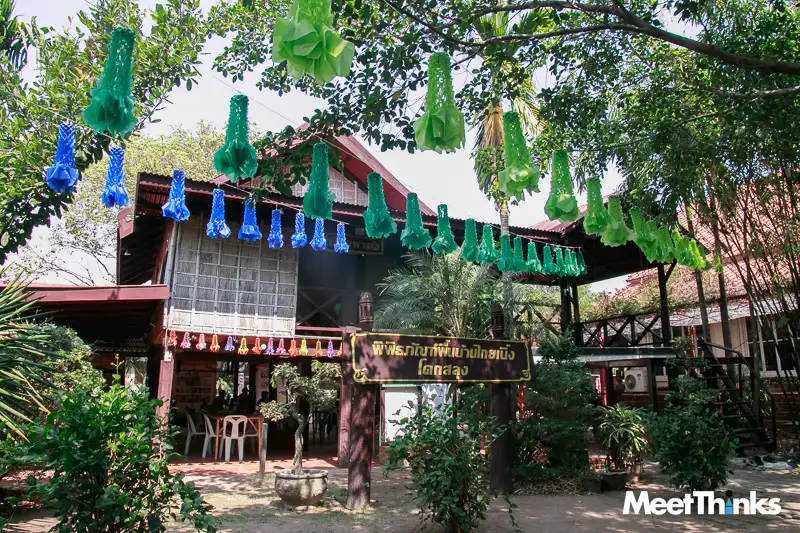
25. Khok Salung Thai Boeng Folk Museum is located in Khok Salung Subdistrict, Phatthana Nikhom District. The museum is an important center for learning about Thai Boeng culture in Lop Buri through traditional ways of life, houses, tools, household objects, language, food, clothing, and community knowledge.
Highlights: Thai Boeng culture, traditional houses and household objects, community knowledge, clothing, food, and stories preserving the identity of the Khok Salung community across generations.
This museum differs from an archaeological museum because everyday life is at the center of the experience. Household objects, agricultural tools, kitchen equipment, textiles, and clothing help explain family structures, occupations, and the social life of the community.
Thai Boeng culture forms an important part of Lop Buri’s ethnic diversity. Visiting Khok Salung therefore reveals a dimension of the province that is very different from the royal palaces and archaeological monuments of the Old Town.
The museum is suitable for families, students, and travelers interested in local culture. Visitors already planning to see Pa Sak Cholasit Dam can conveniently include the museum in the same route to add a cultural element to the trip.
Open Days: Daily Opening Hours: 08:00 – 17:00
Getting There: The museum is located at 99/3 Moo 3, Khok Salung Subdistrict, Phatthana Nikhom District, Lop Buri. Traveling by private car is convenient, and the museum can be combined with Pa Sak Cholasit Dam.
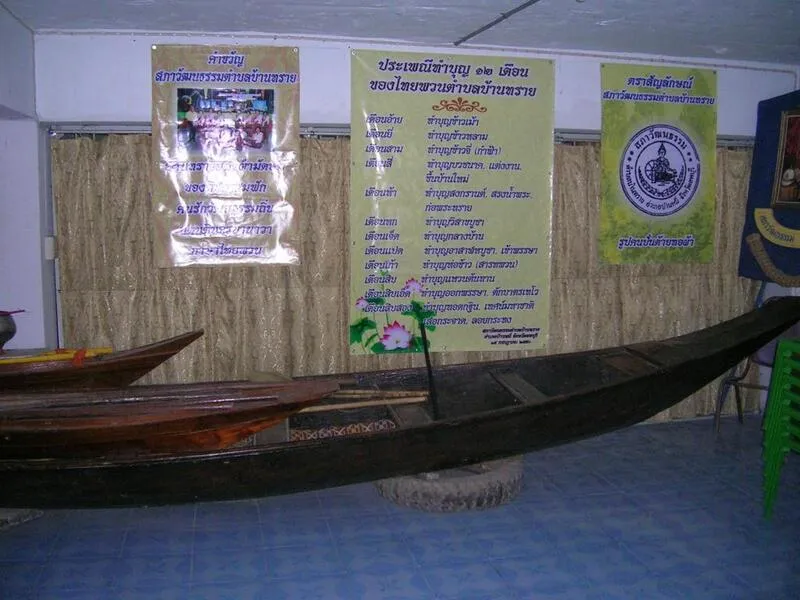
26. Ban Sai Thai Phuan Museum is located within the Wat Ban Sai area in Ban Sai Subdistrict, Ban Mi District. The museum preserves the heritage of the Thai Phuan community, whose language, clothing, weaving traditions, food, and local knowledge form an important part of Ban Mi’s cultural identity.
Highlights: Thai Phuan culture, traditional household objects, woven textiles and clothing, local community history, and knowledge reflecting the identity of Ban Sai and Ban Mi District.
The Thai Phuan community in Lop Buri has maintained many cultural traditions, including language, food, textile weaving, and local customs. The museum helps connect the memories of older generations with younger residents and visitors.
Displayed objects help explain daily life through agricultural work, clothing, household tools, religion, and community activities, giving travelers a deeper understanding of Ban Mi beyond its physical landmarks.
The museum is best combined with Ban Kluai and local mudmee weaving communities in Ban Mi District. Together, these places reveal the close relationship between ethnic identity and traditional handicrafts.
Getting There: Ban Sai Thai Phuan Museum is located within Wat Ban Sai, Moo 2, Ban Sai Subdistrict, Ban Mi District, Lop Buri. A private car is the most convenient option, and contacting the local community before visiting is recommended.

27. Ban Din So Phong is located around the Hin Song Kon community in Thale Chup Son Subdistrict, Mueang Lop Buri District. The village is known for the traditional production of Din So Phong, a distinctive white clay product that has long been associated with Lop Buri.
Highlights: Traditional Din So Phong production, community-based manufacturing techniques, local products, and the story of a craft and occupation passed down within the area.
Din So Phong is familiar to many Thai people and has been used in everyday life as well as in traditional activities. Visiting the production community allows travelers to see that this seemingly simple product requires several stages, including preparing the raw material, filtering it, and processing it into a form suitable for use.
The village is particularly interesting for travelers who enjoy handicrafts and local economies because it shows the direct relationship between local natural resources and community occupations.
Visitors should respect work areas and private property, avoid entering production spaces without permission, and support community producers by purchasing directly from local sales points when available.
Getting There: Ban Din So Phong is located around the Hin Song Kon community in Thale Chup Son Subdistrict, Mueang Lop Buri District, not far from central Lop Buri. A private car is the most convenient way to reach the community.
Map (GPS):Open Google Maps – Ban Din So Phong
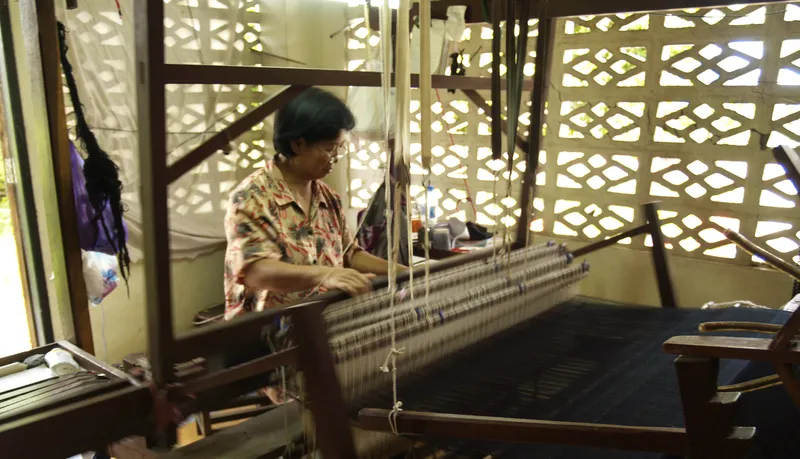
28. Ban Kluai in Ban Kluai Subdistrict, Ban Mi District, is well known for traditional mudmee weaving and the preservation of textile knowledge closely connected with the Thai Phuan community of Ban Mi.
Highlights: Mudmee textiles, traditional weaving, textile patterns, weaving craftsmanship, community life, and local products representing the cultural identity of Ban Mi.
Mudmee weaving requires careful planning of the pattern, tying selected sections of yarn, dyeing, and detailed weaving. Each finished textile therefore represents both skilled craftsmanship and cultural meaning. These fabrics are more than souvenirs; they are part of the memory and identity of the community.
Visitors interested in handicrafts can learn about the weaving process and purchase products directly from local producers. Supporting community textiles helps generate local income and encourages traditional weaving skills to continue into future generations.
Ban Kluai can be combined with Ban Sai Thai Phuan Museum and other cultural sites in Ban Mi District, making this route suitable for travelers who want a deeper understanding of Lop Buri’s ethnic and textile heritage.
Open Days: Daily Opening Hours: Throughout the day
Getting There: Ban Kluai is located in Ban Kluai Subdistrict, Ban Mi District, Lop Buri. From central Lop Buri, travel by private car toward Ban Mi District and combine the visit with nearby Thai Phuan communities.
Map (GPS):Open Google Maps – Ban Kluai

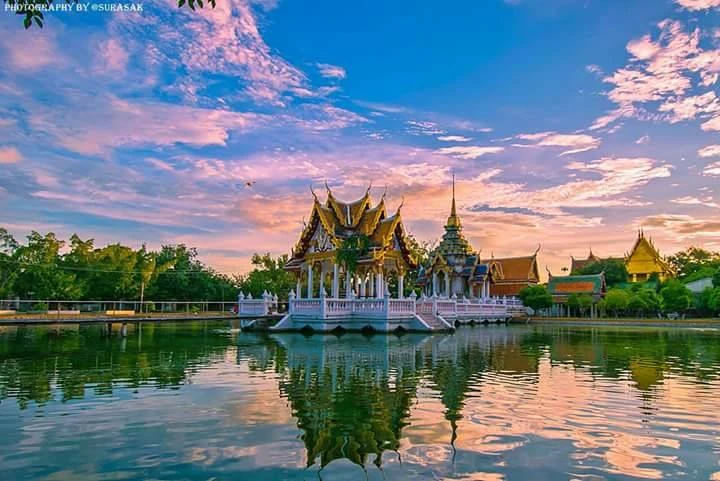
29. Wat Choeng Tha Floating Market is located around Wat Choeng Tha on Prang Sam Yot Road in Tha Hin Subdistrict, Mueang Lop Buri District. The attraction brings together temple grounds, local community life, and a riverside atmosphere, making it a convenient place to pause during a day of Old Town sightseeing.
Highlights: A riverside community atmosphere, Wat Choeng Tha, local food and community products, proximity to the Old Town, and a relaxed setting that contrasts with Lop Buri’s archaeological sites.
The market and surrounding community add an everyday-life dimension to a Lop Buri itinerary. Visitors can experience local food, community products, and the riverside environment while also exploring the temple and nearby historic areas.
The site works well as a late-morning or midday stop during an Old Town itinerary, particularly for travelers who want a break from walking through archaeological sites and are looking for local food or a quieter community atmosphere.
From the market, travelers can easily continue to Phra Narai Ratchaniwet, Wichayen House, and other major attractions in Tha Hin Subdistrict, so there is no need to dedicate a separate day to the market.
Open Days: Daily Opening Hours: 08:00 – 17:00
Getting There: Wat Choeng Tha Floating Market is located at 47 Prang Sam Yot Road, Tha Hin Subdistrict, Mueang Lop Buri District. Visitors can reach it from the Old Town by private car, local transport, or as a stop within a central Lop Buri sightseeing route.
30. Wat Lai is located at Moo 10 in Khao Samo Khon Subdistrict, Tha Wung District. This historic temple is important for its religious heritage, architecture, and the faith of the surrounding community, and is particularly associated with Phra Si Ariya Metteyya traditions.
Highlights: An ancient viharn, historic architecture and stucco decoration, traditions associated with Phra Si Ariya Metteyya, important temple ceremonies, and the atmosphere of an old community in Tha Wung District.
Wat Lai is particularly valuable for its artistic heritage. Architectural elements and decorative work around the viharn reflect both skilled craftsmanship and Buddhist concepts, making the temple rewarding for visitors who enjoy studying historic religious architecture in detail.
Local devotion to Phra Si Ariya Metteyya remains an important part of the temple’s identity and is connected with traditions preserved by the surrounding community. Wat Lai therefore represents both historical artistic value and living cultural heritage.
The temple is suitable for Buddhist travelers and visitors interested in old temples outside central Lop Buri. It can be combined with Khao Samo Khon and nearby attractions in Tha Wung District for a half-day or full-day itinerary.
Open Days: Daily Opening Hours: 08:00 – 16:30
Getting There: Wat Lai is located at Moo 10, Khao Samo Khon Subdistrict, Tha Wung District, Lop Buri. From central Lop Buri, travel by private car toward Tha Wung District before continuing to the Khao Samo Khon area.
Map (GPS):Open Google Maps – Wat Lai
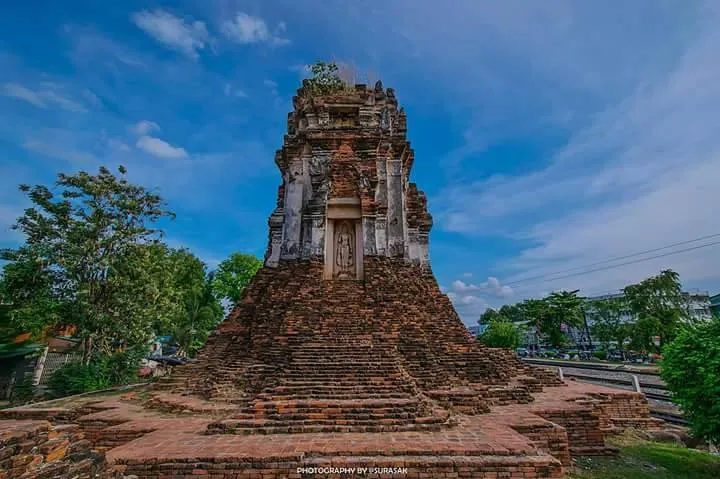
31. Wat Nakhon Kosa is another important archaeological site in Lop Buri Old Town. Located in Tha Hin Subdistrict near San Phra Kan and Lop Buri Railway Station, the temple contains architectural remains from several periods and provides another perspective on the religious development of ancient Lavo.
Highlights: Ancient monuments in the heart of Lop Buri, remains of chedis and religious structures, artistic features representing different periods, and a convenient location within walking distance of Phra Prang Sam Yot, San Phra Kan, and Wat Phra Si Rattana Mahathat.
Wat Nakhon Kosa is significant because it forms part of a broader group of monuments demonstrating the long and continuous use of Lop Buri as an important settlement. Its archaeological remains should therefore be understood in relation to the nearby prangs, shrines, temples, and other historic structures.
Visitors interested in history and archaeology should examine the building foundations, chedis, and surviving construction materials. These elements help reveal how the form and function of religious architecture changed across different periods.
Wat Nakhon Kosa can easily be included in a half-day walking route around the Old Town, allowing travelers to explore several archaeological sites without repeatedly using a vehicle.
Open Days: Daily Opening Hours: 08:00 – 16:30
Getting There: Wat Nakhon Kosa is located in Tha Hin Subdistrict, Mueang Lop Buri District, close to San Phra Kan and Lop Buri Railway Station. It can be reached on foot from nearby Old Town attractions or by local transport.
Map (GPS):Open Google Maps – Wat Nakhon Kosa
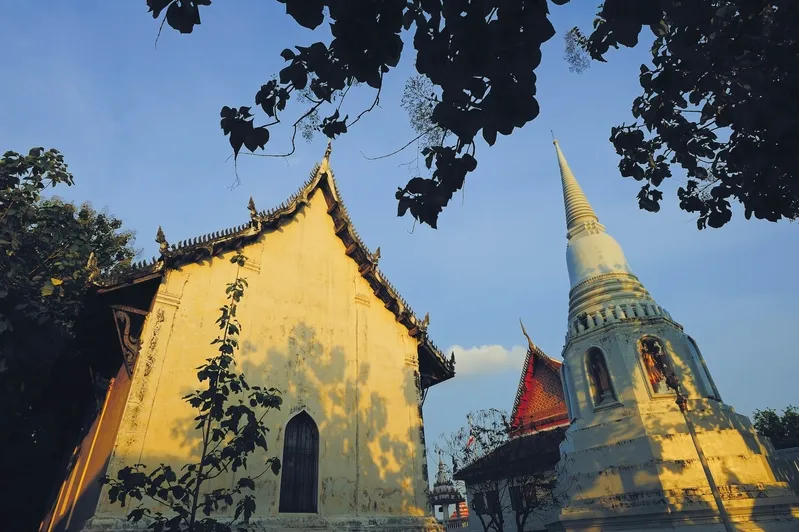
32. Wat Sao Thong Thong is located on French Road in Tha Hin Subdistrict, Mueang Lop Buri District. This historic temple forms part of Lop Buri’s Old Town and is associated with the period when the city maintained extensive contact with foreign communities during the reign of King Narai the Great.
Highlights: A historic religious site in Lop Buri Old Town, architecture connected with the city’s international character during the Ayutthaya period, proximity to Phra Narai Ratchaniwet, and an easy location for walking through the historic district.
Wat Sao Thong Thong helps broaden the story of Lop Buri during the reign of King Narai. The neighborhoods surrounding the royal palace included not only administrative and royal buildings but also religious sites and communities that formed part of everyday urban life.
The temple is best appreciated together with the historic context of French Road, Wichayen House, and Phra Narai Ratchaniwet. Exploring these places as a connected district provides a clearer understanding of the city than visiting each monument in isolation.
The site is suitable for travelers interested in history and architecture as well as visitors who prefer exploring the central Old Town without traveling far between attractions.
Open Days: Daily Opening Hours: 08:00 – 17:00
Getting There: Wat Sao Thong Thong is located on French Road, Tha Hin Subdistrict, Mueang Lop Buri District, near Phra Narai Ratchaniwet and Wichayen House. The temple can be reached easily on foot or by local transport from nearby Old Town attractions.
Map (GPS):Open Google Maps – Wat Sao Thong Thong
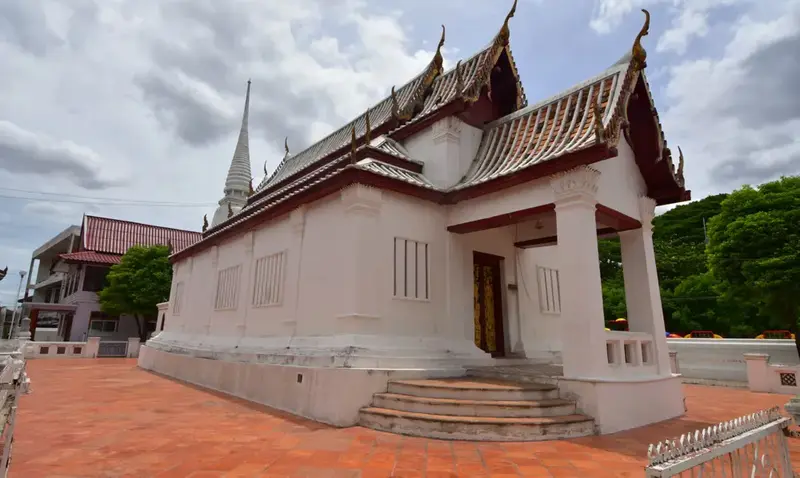
33. Wat Kawitsararam Ratchaworawihan is located on Phetracha Road in Tha Hin Subdistrict, Mueang Lop Buri District. This royal temple is important for both Buddhist worship and local history and adds another dimension to the historic character of Lop Buri Old Town.
Highlights: A royal Buddhist temple, important religious structures, traditional architecture, a historic Old Town setting, and convenient access from Phra Narai Ratchaniwet.
The atmosphere is generally quieter than around major landmarks such as Phra Prang Sam Yot, making the temple suitable for visitors who want to pay respect and appreciate Buddhist architecture at a slower pace.
The temple also demonstrates that Lop Buri’s religious heritage is not limited to archaeological ruins. Active temples continue to play an important role in the spiritual life of the city and its communities.
Wat Kawitsararam Ratchaworawihan is suitable for Buddhist travelers, architecture enthusiasts, and visitors who want an Old Town itinerary combining royal palaces, archaeological remains, and functioning temples.
Open Days: Wednesday – Sunday Opening Hours: 07:00 – 17:00
Getting There: The temple is located on Phetracha Road in Tha Hin Subdistrict, Mueang Lop Buri District, within the historic area. It is easily reached by private car or local transport from Phra Narai Ratchaniwet.

34. Wat Weluwan (Wat Khao Chin Lae) is located in Nikhom Sang Ton-eng Subdistrict, Mueang Lop Buri District, close to Khao Chin Lae and Lop Buri’s sunflower-growing areas. Surrounded by mountain and agricultural scenery, the temple fits naturally into an itinerary around the Khao Chin Lae zone.
Highlights: A Buddhist temple in a mountain setting, peaceful surroundings, views around Khao Chin Lae, proximity to seasonal sunflower fields, and a route combining religious and natural attractions.
Wat Weluwan has a very different atmosphere from the temples of Lop Buri Old Town. The surrounding landscape consists of mountains and agricultural areas, allowing visitors to combine Buddhist worship with countryside scenery.
During sunflower season, the wider area becomes especially attractive because the temple can easily be combined with flower fields and Khao Chin Lae. Morning and late afternoon are particularly pleasant times to explore this part of the province.
Visitors should dress modestly and maintain a respectful atmosphere, particularly around areas being used for Buddhist ceremonies and religious activities.
Open Days: Daily Opening Hours: 08:00 – 17:00
Getting There: Wat Weluwan is located at 1 Moo 7, Nikhom Sang Ton-eng Subdistrict, Mueang Lop Buri District. From central Lop Buri, drive toward the Khao Chin Lae area. The temple can be combined with sunflower fields and Sublek Reservoir.

35. Khao Samo Khon is located in Khao Samo Khon Subdistrict, Tha Wung District. The mountain is important for its natural landscape, local religious traditions, and connections with temples and sacred sites scattered around the area.
Highlights: A prominent mountain rising above the surrounding plains, rural views, religious sites around the mountain, Buddhist pilgrimage opportunities, and proximity to Wat Lai in Tha Wung District.
Khao Samo Khon adds visual variety to Tha Wung’s predominantly agricultural landscape. Its mountain profile rises prominently above the surrounding fields and has long been associated with temples and local religious beliefs.
The area is suitable for travelers who want to combine natural scenery with Buddhist attractions. It can be visited together with Wat Lai and other nearby temples to create a route that includes mountain landscapes and community culture.
Morning and late afternoon are generally more comfortable for sightseeing than midday. Visitors heading to higher areas should use officially accessible routes and take appropriate precautions.
Open Days: Daily Opening Hours: Accessible throughout the day
Getting There: Khao Samo Khon is located in Khao Samo Khon Subdistrict, Tha Wung District, Lop Buri. From central Lop Buri, travel by private car toward Tha Wung District and continue to the Khao Samo Khon area.
Map (GPS):Open Google Maps – Khao Samo Khon

36. Suan Maduea Waterfall is located at Ban Suan Maduea in Huai Khun Ram Subdistrict, Phatthana Nikhom District. This countryside natural attraction is suitable for travelers who want to relax around streams, a waterfall, and the greener landscapes of eastern Lop Buri.
Highlights: A natural waterfall and stream, green surroundings, rural scenery, a relaxing atmosphere, and a nature-oriented route through Phatthana Nikhom District.
The appearance of the waterfall varies according to season and natural water levels. During periods with sufficient rainfall, flowing water and natural pools are more prominent than during the dry season, so the experience can differ considerably throughout the year.
Visitors should be careful around wet rocks, slippery ground, and moving water, particularly after rainfall. All rubbish should be taken away, and the surrounding environment should be left undisturbed.
Suan Maduea Waterfall works best as part of a broader Phatthana Nikhom nature itinerary rather than as a single out-and-back excursion from Lop Buri Old Town.
Getting There: Suan Maduea Waterfall is located at Ban Suan Maduea, Moo 4, Huai Khun Ram Subdistrict, Phatthana Nikhom District, Lop Buri. A private car is the most convenient option, and travelers should check road conditions before visiting during the rainy season.
Map (GPS):Open Google Maps – Suan Maduea Waterfall

37. Tao Ton Waterfall is a natural waterfall surrounded by forest and mountain scenery in Lop Buri. It is suitable for travelers who want to leave the historic-city route behind and experience a quieter natural setting.
Highlights: A natural waterfall, forest surroundings, streams, a peaceful atmosphere, and a relaxing destination for nature-oriented travelers.
The waterfall changes according to rainfall and seasonal water levels. Flow is generally more visible when there has been sufficient rain, while conditions can be considerably drier at other times of the year.
Visitors should take care on slippery rocks and forest surfaces, particularly after rain. Travelers should also take all rubbish away and avoid damaging plants or natural water sources.
Tao Ton Waterfall is best suited to travelers spending several days in Lop Buri who want to include a less mainstream natural attraction in their itinerary.
Open Days: Daily, subject to natural conditions Opening Hours: Recommended visiting time 08:00 – 17:00
Getting There: The waterfall is in a forested and mountainous area of Lop Buri. A private car is the most practical way to reach the area, and current road and weather conditions should be checked before traveling, especially during the rainy season.
Map (GPS):Open Google Maps – Tao Ton Waterfall
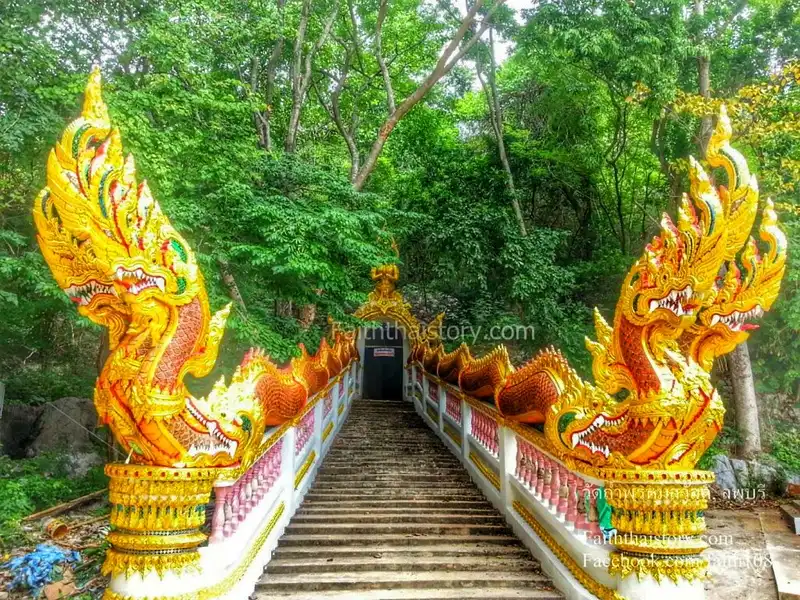
38. Phrommalok Cave is located around Wat Tham Phrommalok in Moo 6, Nong Yai To Subdistrict, Chai Badan District. The attraction combines a natural cave environment with a Buddhist religious setting and is suitable for travelers interested in mountains, caves, and pilgrimage routes.
Highlights: A natural cave, Wat Tham Phrommalok, limestone mountain scenery, a peaceful atmosphere, and a route combining nature with Buddhist travel in Chai Badan District.
The cave and surrounding landscape provide a natural environment very different from Lop Buri’s plains. Visitors should explore carefully and follow guidance from the temple, particularly in areas that are damp, dark, or uneven.
Shoes with good grip are recommended, and travelers should avoid entering deeper sections that are not officially open to visitors. During the rainy season, current conditions should be checked before entering the area.
Phrommalok Cave can be combined with Wat Khao Somphot or Wat Tham Khao Prang to create a Chai Badan itinerary focused on Buddhist sites, caves, and natural landscapes.
Getting There: Phrommalok Cave is located around Wat Tham Phrommalok, Moo 6, Nong Yai To Subdistrict, Chai Badan District, Lop Buri. A private car is the most convenient option, and checking with the temple before traveling is recommended.
Map (GPS):Open Google Maps – Phrommalok Cave

39. Bee Conservation Center is located in Phatthana Nikhom Subdistrict, Phatthana Nikhom District. It is an educational attraction focused on beekeeping, pollinator conservation, and the ecological and agricultural importance of bees.
Highlights: Learning about bees and beekeeping, pollinator ecology, bee-related products, and educational activities suitable for families and students.
Bees play an essential role in pollinating many crops and wild plants. Visiting the center helps travelers understand the relationship between insects, agriculture, and ecosystems rather than viewing bees only as producers of honey.
The center is particularly suitable for children, families, and travelers interested in agricultural learning. Visitors should follow staff instructions carefully whenever approaching active beekeeping areas.
The Bee Conservation Center can be combined with Pa Sak Cholasit Dam and Khok Salung Thai Boeng Folk Museum, creating a Phatthana Nikhom itinerary that includes nature, community culture, and agricultural education.
Open Days: Daily Opening Hours: 08:00 – 16:30
Getting There: The center is located at 280 Soi 24 Sai Tri, Moo 9, Phatthana Nikhom Subdistrict, Phatthana Nikhom District, Lop Buri. A private car is the most convenient way to reach the site.

40. Khajonwit Mushroom Farm is located in Nikhom Sang Ton-eng Subdistrict, Mueang Lop Buri District. This agricultural learning attraction is suitable for visitors interested in mushroom cultivation, production methods, and practical farming knowledge.
Highlights: Mushroom cultivation, production houses, agricultural learning, mushroom-based products, and a convenient location near the Khao Chin Lae and sunflower tourism zone.
Mushroom cultivation requires careful control of humidity, temperature, growing media, and daily management. A farm visit therefore helps travelers better understand food production at both community and commercial levels.
The attraction is suitable for families, students, and visitors interested in agricultural careers because it connects practical mushroom-growing techniques with processing and value-added agricultural products.
Khajonwit Mushroom Farm can be placed in the same itinerary as Khao Chin Lae, Wat Weluwan, Lop Buri’s sunflower fields, and Sublek Reservoir, giving the Nikhom Sang Ton-eng area a combination of natural scenery, Buddhism, and agricultural tourism.
Open Days: Daily Opening Hours: 09:00 – 17:00
Getting There: The farm is located at 71/1 Moo 6, Nikhom Sang Ton-eng Subdistrict, Mueang Lop Buri District, Lop Buri. Traveling by private car is the most convenient option for connecting the farm with nearby attractions.
| Category | Details |
| Lop Buri Old Town Zone | 1. Phra Prang Sam Yot 2. Phra Narai Ratchaniwet 3. King Narai National Museum 4. Wat Phra Si Rattana Mahathat 5. San Phra Kan 6. Wichayen House (Ban Wichayen) 7. King Narai the Great Monument 8. Prang Khaek Shrine 9. Kraison Siharat Pavilion 10. Wat San Paolo 11. Lop Buri Zoo 12. Wat Choeng Tha Floating Market 13. Wat Nakhon Kosa 14. Wat Sao Thong Thong 15. Wat Kawitsararam Ratchaworawihan 16. Ban Din So Phong Best for first-time visitors, history enthusiasts, architecture lovers, cultural travelers, families, and visitors who want to see several attractions without spending much time traveling between sites. |
| Khao Chin Lae and Nikhom Sang Ton-eng Zone | 1. Lopburi Sunflower Fields 2. Khao Chin Lae 3. Sublek Reservoir 4. Wat Weluwan (Wat Khao Chin Lae) 5. Khajonwit Mushroom Farm Best for nature sightseeing, seasonal flower photography, temples surrounded by mountains, and agricultural learning. |
| Phatthana Nikhom Zone | 1. Pa Sak Cholasit Dam 2. Erawan Cave 3. Khok Salung Thai Boeng Folk Museum 4. Suan Maduea Waterfall 5. Bee Conservation Center Suitable for families, nature lovers, travelers interested in local communities, and visitors exploring the area around Pa Sak Cholasit Dam. |
| Chai Badan Zone | 1. Wang Kan Lueang Waterfall Arboretum 2. Wat Khao Somphot 3. Wat Tham Khao Prang 4. Phrommalok Cave Best for travelers who enjoy temples surrounded by nature, waterfalls, caves, mountains, and slower-paced road trips. |
| Lam Sonthi Zone | 1. Sub Langka Wildlife Sanctuary Suitable for nature enthusiasts and travelers interested in forests, wildlife, ecosystems, and conservation. |
| Tha Luang Zone | 1. Pa Champi Sirindhorn 2. The Ancient City of Sap Champa Best for travelers interested in nature, botany, archaeology, and the development of ancient settlements. |
| Ban Mi Zone | 1. Ban Sai Thai Phuan Museum 2. Ban Kluai Suitable for travelers interested in Thai Phuan culture, mudmee textiles, community knowledge, and traditional handicrafts. |
| Tha Wung Zone | 1. Wat Lai 2. Khao Samo Khon Best for Buddhist travelers, visitors interested in historic temples and religious art, and travelers exploring the cultural landscape around Khao Samo Khon. |
| Khok Samrong Zone | 1. Khao Wongphrachan Best for Buddhist pilgrimage, mountain climbing, and panoramic views from higher elevations. |
| Additional Nature and Waterfalls | 1. Tao Ton Waterfall 2. Suan Maduea Waterfall 3. Wang Kan Lueang Waterfall Arboretum 4. Sublek Reservoir 5. Pa Sak Cholasit Dam Suitable for travelers who want a break from historical sightseeing and wish to experience Lop Buri’s varied natural landscapes. |
| Best for Families and Children | Lop Buri Zoo, Pa Sak Cholasit Dam, Bee Conservation Center, Khajonwit Mushroom Farm, Khok Salung Thai Boeng Folk Museum, and King Narai National Museum. |
| Best for History Lovers | Phra Prang Sam Yot, Phra Narai Ratchaniwet, King Narai National Museum, Wat Phra Si Rattana Mahathat, Wichayen House, Wat San Paolo, Prang Khaek Shrine, Wat Nakhon Kosa, and the Ancient City of Sap Champa. |
| Best for Buddhist Pilgrimage | Khao Wongphrachan, Wat Sirichanthanimit Worawihan, Wat Khao Somphot, Wat Tham Khao Prang, Wat Lai, Wat Kawitsararam Ratchaworawihan, Wat Weluwan, and Wat Sao Thong Thong. |
| Best for Nature Lovers | Sub Langka Wildlife Sanctuary, Pa Champi Sirindhorn, Khao Wongphrachan, Khao Chin Lae, Khao Samo Khon, Wang Kan Lueang Waterfall Arboretum, Suan Maduea Waterfall, Tao Ton Waterfall, and Sublek Reservoir. |
| Best for Culture and Community Tourism | Khok Salung Thai Boeng Folk Museum, Ban Sai Thai Phuan Museum, Ban Kluai, Ban Din So Phong, and Wat Choeng Tha Floating Market. |
| Local Food and Products | Central Thai cuisine and community dishes, fish-based dishes, local vegetables and agricultural ingredients, mushroom products, honey and bee products, Ban Mi mudmee textiles, and traditional Din So Phong products from Lop Buri. |
| Important Festivals and Cultural Traditions | King Narai Reign Fair, Monkey Buffet Festival, Khao Wongphrachan pilgrimage traditions, Thai Phuan culture, Thai Boeng culture, mudmee weaving, and Buddhist traditions maintained by communities throughout the province. |
| Recommended Accommodation Areas | Mueang Lop Buri District is the most convenient base for first-time visitors and travelers focusing on the Old Town. Visitors planning to explore Pa Sak Cholasit Dam and Phatthana Nikhom can stay closer to the Phatthana Nikhom area. Travelers spending several days around Chai Badan, Lam Sonthi, and eastern Lop Buri may find Chai Badan a more practical base that reduces unnecessary driving back to the provincial center. |
| 1-Day Lop Buri Itinerary – Old Town | Morning: Wat Phra Si Rattana Mahathat – Phra Prang Sam Yot – San Phra Kan Late Morning: Phra Narai Ratchaniwet – King Narai National Museum Afternoon: Wichayen House – Wat San Paolo – Prang Khaek Shrine Evening: Walk around the Old Town and stop at a local market or restaurant. |
| 1-Day Lop Buri Itinerary – Nature and Sunflowers | Morning: Lopburi Sunflower Fields – Khao Chin Lae Late Morning: Wat Weluwan (Wat Khao Chin Lae) Midday: Lunch around Nikhom Sang Ton-eng or Phatthana Nikhom Afternoon: Sublek Reservoir Evening: Pa Sak Cholasit Dam |
| 1-Day Lop Buri Itinerary – Buddhist Route | Morning: Wat Sirichanthanimit Worawihan (Wat Khao Phra Ngam) Late Morning to Afternoon: Khao Wongphrachan Late Afternoon: Wat Kawitsararam Ratchaworawihan Evening: Pay respect at San Phra Kan and explore Lop Buri Old Town. |
| 2 Days 1 Night in Lop Buri | Day 1: Wat Phra Si Rattana Mahathat – Phra Prang Sam Yot – San Phra Kan – Phra Narai Ratchaniwet – King Narai National Museum – Wichayen House Day 2: Lopburi Sunflower Fields – Khao Chin Lae – Wat Weluwan – Sublek Reservoir – Pa Sak Cholasit Dam |
| 3 Days 2 Nights in Lop Buri | Day 1: Full day exploring Lop Buri Old Town Day 2: Lopburi Sunflower Fields – Khao Chin Lae – Sublek Reservoir – Pa Sak Cholasit Dam – Khok Salung Thai Boeng Folk Museum Day 3: Khao Wongphrachan – Wat Sirichanthanimit Worawihan – nearby temples or communities depending on available time |
| 4 Days 3 Nights in Lop Buri | Day 1: Lop Buri Old Town Day 2: Khao Chin Lae – Lopburi Sunflower Fields – Sublek Reservoir – Pa Sak Cholasit Dam – Khok Salung Day 3: The Ancient City of Sap Champa – Pa Champi Sirindhorn Day 4: Wang Kan Lueang Waterfall Arboretum – Wat Khao Somphot – Wat Tham Khao Prang |
| 5 Days 4 Nights in Lop Buri | Day 1: Lop Buri Old Town and museums Day 2: Khao Chin Lae – Lopburi Sunflower Fields – Sublek Reservoir – Pa Sak Cholasit Dam Day 3: Ban Mi – Ban Sai Thai Phuan Museum – Ban Kluai – Wat Lai – Khao Samo Khon Day 4: The Ancient City of Sap Champa – Pa Champi Sirindhorn – continue to Chai Badan Day 5: Wang Kan Lueang Waterfall Arboretum – Wat Khao Somphot – Wat Tham Khao Prang, or continue farther toward Sub Langka depending on available time and travel conditions |
| Best Way to Get Around | A private car is the most practical option for visiting attractions across several districts. Within Lop Buri Old Town, some sites can be explored on foot. The area is also convenient for travelers arriving by train because Lop Buri Railway Station is close to several major historic attractions. |
| Best Time to Visit | Lop Buri can be visited throughout the year. November to February is generally more comfortable for outdoor sightseeing and also offers a better chance of finding sunflower fields open to visitors. Waterfall and nature trips should be planned according to current rainfall, water levels, and weather conditions. |
Frequently Asked Questions (FAQ)
Q: What are the must-visit attractions in Lop Buri?
A: First-time visitors should begin with Phra Prang Sam Yot, Phra Narai Ratchaniwet, King Narai National Museum, Wat Phra Si Rattana Mahathat, San Phra Kan, and Wichayen House. Travelers with additional time should also consider Pa Sak Cholasit Dam, Khao Wongphrachan, and the seasonal sunflower fields.
Q: What should I visit in Lop Buri if I only have 1 day?
A: The Old Town is the best choice for a 1-day visit. A practical route includes Wat Phra Si Rattana Mahathat, Phra Prang Sam Yot, San Phra Kan, Phra Narai Ratchaniwet, King Narai National Museum, and Wichayen House. These attractions are relatively close together and provide a strong overview of Lop Buri’s history across several periods.
Q: How should I plan a 2-day, 1-night trip to Lop Buri?
A: Spend the first day exploring Lop Buri Old Town. On the second day, visit the sunflower fields, Khao Chin Lae, Wat Weluwan, Sublek Reservoir, and Pa Sak Cholasit Dam. Dividing the trip this way minimizes unnecessary driving while covering both historical and natural attractions.
Q: When is the best time to see sunflower fields in Lop Buri?
A: Sunflower tourism is seasonal and is especially popular toward the end of the year. However, planting and flowering schedules differ between farms, so travelers should always check which fields are currently blooming and open before making the trip.
Q: What should I be careful about when visiting the monkeys near Phra Prang Sam Yot?
A: Keep food, drinks, glasses, phones, bags, and other small belongings secure. Avoid openly carrying food, teasing the monkeys, or trying to touch them. Follow local staff instructions when visiting areas where monkeys are present.
Q: What are the best natural attractions in Lop Buri?
A: Major natural attractions include Khao Wongphrachan, Khao Chin Lae, Khao Samo Khon, Sublek Reservoir, Pa Sak Cholasit Dam, Pa Champi Sirindhorn, Sub Langka Wildlife Sanctuary, Wang Kan Lueang Waterfall Arboretum, Suan Maduea Waterfall, and Tao Ton Waterfall.
Q: What local cultures can I experience in Lop Buri?
A: Lop Buri is home to Thai Phuan communities around Ban Mi and Thai Boeng communities around Khok Salung. The province is also known for mudmee weaving, traditional Din So Phong production, and agricultural communities. Cultural experiences can be found at Ban Sai Thai Phuan Museum, Khok Salung Thai Boeng Folk Museum, Ban Kluai, and Ban Din So Phong.
Q: What are the major festivals and traditions in Lop Buri?
A: The King Narai Reign Fair is one of Lop Buri’s most important cultural events and is directly connected with the province’s royal history. Other important traditions include the Monkey Buffet Festival, the Khao Wongphrachan pilgrimage tradition, and Buddhist and cultural practices maintained by Thai Phuan and Thai Boeng communities.
Q: Where should I stay when visiting Lop Buri?
A: Mueang Lop Buri District is the most convenient choice for first-time visitors because it provides easy access to the Old Town. Travelers focusing on Pa Sak Cholasit Dam and the sunflower areas may prefer accommodation around Phatthana Nikhom, while those exploring several attractions in Chai Badan and eastern Lop Buri may find the Chai Badan area more convenient for reducing travel time.
 Category: ●Travel Articles, Recipes
 Group: ●Travel Review, Food Review
Last Update : 3 WeekAgo
 Last Update : 3 WeekAgo
Recommend

 Art, Culture and Heritage
 Historical Sites and Monuments(5)
 Landmarks and Memorials(3)
 Royal Palace(1)
 Art, Craft Centres, Tradition(7)
 Museums(11)
 Historic Homes and Cities(1)
 Places of Worship
 Temple(25)
 Other Sacred Sites(3)
 Suburban Living
 Village, Community(4)
 Floating Market(1)
 Nature and Wildlife
 National Parks and Marine Reserves(2)
 Mountain (Doi)(3)
 Dam, Reservoir, Lake(4)
 Waterfalls(5)
 Hot Springs(1)
 Caves(2)
 Flower Field(1)
 Entertainment and Agricultural
 Zoos and Aquariums(2)
 Farms, Parks and Ecotourism(4)
 Outdoor and Adventure Activities(1)
Travel Review, Food Review(1)


