
lovethailand home >Central Travel Attractions >Lop Buri Travel Attractions >Muang Lop Buri >Nikhom Sang Ton Eng > Wat Weluwan (Wat Khao Chin Lae)
TL;DR: Wat Weluwan (Wat Khao Chin Lae) is located at 1 Moo 7, Nikhom Sang Ton Eng Subdistrict, Mueang Lopburi District, Lopburi 15000, hours 08:00 - 17:00.
Wat Weluwan (Wat Khao Chin Lae)

Open Days: Daily
Opening Hours: 08:00 - 17:00
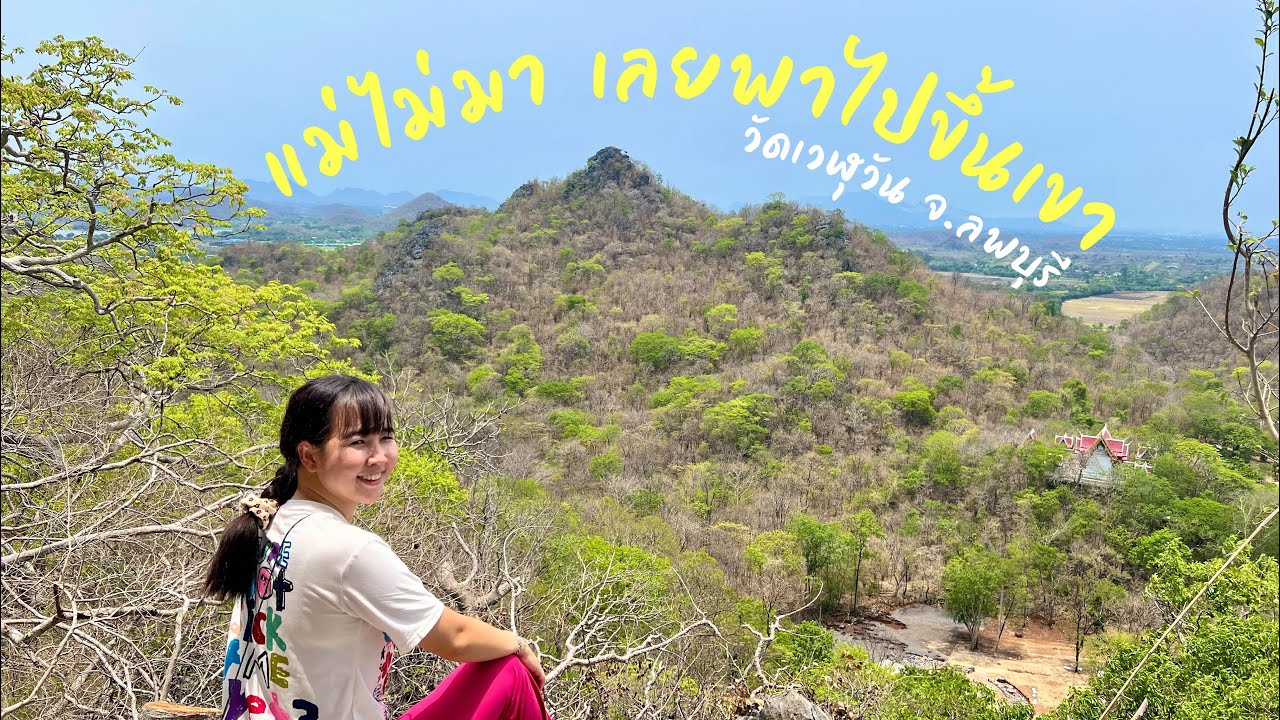
Wat Weluwan (Wat Khao Chin Lae) is a temple located in the middle of Khao Chin Lae Valley in Lopburi Province, and it is one of the temples in the area most distinguished by its peaceful, shady atmosphere and remarkable landscape. The temple is surrounded by mountains on all 4 sides, so visitors immediately feel the difference from temples in urban areas as soon as they arrive. The overall setting is ideal for paying respect, calming the mind, and seeking peace in nature.
The temple is located in Nikhom Sang Ton Eng Subdistrict, Mueang Lopburi District, about 18 kilometers from Lopburi Provincial Hall, and is near Sub Lek Reservoir. The temple grounds lie within Khao Chin Lae Valley, a landscape that is distinctive to Lopburi. This has made the name “Wat Khao Chin Lae” easy for people to remember, and in many cases it is used more widely than the temple’s official name.
Originally, the area where the temple now stands was a dense forest filled with bamboo. Before the temple was established, Luang Por Lee, or Phra Khru Ubali Dhammacharn, came on a wandering pilgrimage and saw that the landscape was highly suitable for founding a monastic retreat because it was peaceful, secluded, and fully embraced by nature. He therefore stopped here and established a monastic residence, which later became the starting point of Wat Weluwan.
The interest of this temple does not lie only in the fact that it was founded by a meditation monk, but is also reflected in the name “Weluwan” itself. The word “Welu” means bamboo, and “wan” means forest. Combined together, they mean “bamboo forest,” which directly corresponds to the original condition of the area that was once thick with bamboo groves. The temple’s name is therefore not only a religious name, but one that is clearly tied to the original landscape of the site.
As the site gradually developed from a monastic residence into a complete temple, the process of requesting royal consecrated boundary status and formally establishing the temple name took place. The name “Wat Weluwan” was suggested by the Supreme Patriarch of Wat Makut Kasatriyaram when he came to lay the foundation stone for the construction of Phra Phuttha Tham Rangsi Muninat Sasada. After that, the authorities formally established the temple name as proposed by the committee. This adds another historical layer that makes Wat Weluwan more significant than an ordinary newly founded rural temple.
From a chronological perspective, the timeline becomes clearer. At first, the area was dense forest in Khao Chin Lae Valley. Then Luang Por Lee arrived on pilgrimage and established a monastic residence. After that, the religious buildings within the temple were gradually developed, including Buddha images, the ordination hall, the library, and the nuns’ residence. Once the temple was fully ready in institutional terms, it formally received royal boundary status and was officially established under the name “Wat Weluwan.” Later, on July 8, 1985, the temple carried out the formal demarcation of its sacred boundary, which was an important milestone in defining the temple’s legal and ecclesiastical status.
The land information of the temple is also highly significant. Wat Weluwan has a legally registered area of 64 rai and 38 square wah. The land was originally requested to be separated from state property associated with the Ministry of Defence and the Treasury Department. Having such a large area allowed the temple to develop into a meditation space fully in harmony with its valley landscape, without feeling crowded, while preserving the sense of being immersed in nature.
A major highlight of Wat Weluwan is its 2 important Buddha images. The first is the large Buddha image built by Luang Por Lee, which serves as the center of faith for people visiting the temple. The second is the Buddha image enshrined on the mountain summit, which adds another spiritual dimension to the temple grounds. Visitors do not simply walk around the lower temple area, but can also go up to worship the Buddha image on the hilltop and enjoy panoramic views of Khao Chin Lae Valley from above.
The experience of going up to the summit is another charm of Wat Khao Chin Lae. The route to the Buddha image on the hill offers not only a physical journey, but also a mental one, like gradually stepping away from the bustle of the outside world. Once at the top, visitors can clearly see the surrounding hills, open fields, and natural landscape of Khao Chin Lae Valley, making it easy to understand why this place was considered ideal for establishing a monastic residence from the very beginning.
Another feature that sets Wat Weluwan apart from ordinary temples is its unusual ordination hall, whose gable is designed in the form of an Indian kudu arch. This kind of architectural style is rarely found in Thai temples, making it a detail that gives the temple its own distinctive identity. It is not remarkable only because of its landscape, but also because of its religious architecture, which differs from typical traditional Thai forms.
The temple also contains a library and a nuns’ residence, reflecting that this is not merely a destination for tourists who come to pay respect or enjoy the scenery, but also a place with a serious role in Buddhist study and meditation practice. The library, with its many Dharma books, strengthens the image of the temple as a place of learning, while the nuns’ residence adds another dimension of contemplative life and ongoing spiritual training.
Today, Wat Weluwan remains a common-class royal-free temple and continues to play a role as a peaceful, secluded place suitable for meditation. The temple grounds are covered with trees and the air is fresh, so people who enjoy visiting nature temples or meditation temples feel relaxed from the moment they step into the area. Being surrounded by mountains and abundant greenery gives this temple a distinctive atmosphere unlike temples in urban areas or temples visited mainly for architectural tourism.
Wat Khao Chin Lae also holds value for the surrounding community as a center of faith and a place for Buddhist activities. Local residents and pilgrims from outside the area often come here to make merit, listen to teachings, and rest the mind, especially those seeking a particularly peaceful environment. For this reason, the temple is often seen as both a religious tourism destination and a place of inner retreat at the same time.
Another reason Wat Weluwan is appealing from a tourism perspective is its location, which connects well with attractions in the Khao Chin Lae and Sub Lek area. These include the Khao Chin Lae sunflower fields, Phu Sub Lek viewpoint, and various restaurants and cafés located not far from the temple. This allows visitors to arrange a half-day or full-day trip, beginning with worship at the temple and enjoying the natural scenery before continuing on to nearby check-in spots and places to eat.
Getting There begins from Lopburi city center by heading toward Nikhom Sang Ton Eng Subdistrict, a distance of about 18 kilometers. The road leading to the temple is fairly convenient for private cars, and as visitors approach the Khao Chin Lae area, the mountain scenery and natural surroundings become increasingly prominent. The temple is near Sub Lek Reservoir, so destinations in the Khao Chin Lae area can also be used as reference points for the journey.
For first-time visitors, the best way to appreciate the charm of this temple is to walk through the grounds slowly. Start with the large Buddha image within the temple, then see the ordination hall with its Indian-style kudu arch, stop by the library and nuns’ residence, and only after that continue up to the summit to pay respect to the Buddha image and enjoy the surrounding views. Following this sequence helps visitors see the spiritual, architectural, and geographical dimensions of Wat Weluwan more fully than a brief stop would allow.
With its history of being founded in a bamboo forest within a mountain valley, its connection with Luang Por Lee, the deeply meaningful naming of the temple, its 2 important Buddha images, its distinctive ordination hall, and its peaceful and secluded atmosphere, Wat Weluwan or Wat Khao Chin Lae is not simply a beautiful temple in Lopburi. It is one of the temples that most clearly reflects the relationship between nature, faith, and meditation practice in the province.
| Place Summary | Wat Weluwan, also known as Wat Khao Chin Lae, is a local temple in Khao Chin Lae Valley, Nikhom Sang Ton Eng Subdistrict, Mueang Lopburi District. It is surrounded by mountains on all 4 sides. The area was originally a bamboo forest before Luang Por Lee arrived on pilgrimage and established a monastic residence there. |
| Highlight | 2 important Buddha images, a Buddha image on the hilltop, an ordination hall with an Indian-style kudu arch gable, a peaceful valley atmosphere, and a meditation setting surrounded by nature. |
| History / Period | It began as a monastic residence established by Luang Por Lee in a bamboo forest. It later developed into Wat Weluwan officially, and the sacred boundary was formally demarcated on July 8, 1985. |
| Latest Abbot / Caretaker | Phra Khru Prakat Silawat |
| Origin of the Name | “Weluwan” means “bamboo forest,” corresponding to the original landscape of the area that was once dense with bamboo. Local people originally called it “Wat Khao Chin Lae” after the name of the valley where the temple is located. |
| Address | 1 Moo 7, Nikhom Sang Ton Eng Subdistrict, Mueang Lopburi District, Lopburi 15000 |
| Travel | The temple is about 18 kilometers from Lopburi Provincial Hall. It is easy to reach from Lopburi city center via Nikhom Sang Ton Eng Subdistrict and is near Sub Lek Reservoir. |
| Current Status | The temple is still active today as a temple and meditation site. Religious activities continue to be held there, and it remains a destination for pilgrims and nature-oriented visitors. |
| Facilities | Library, nuns’ residence, worship area, meditation area |
| Zones | Luang Por Lee’s large Buddha image, hilltop Buddha image, ordination hall, library, nuns’ residence, and the surrounding Khao Chin Lae valley area |
| Nearby Attractions | 1. Khao Chin Lae Sunflower Field – about 2.2 km 2. Sub Lek Reservoir – about 3.1 km 3. Wat Tham Erawan – about 7.8 km 4. Khao Samo Khon – about 13 km 5. Phra Prang Sam Yot – about 16.5 km |
| Nearby Restaurants | 1. Kra Pao & Coffee – about 2.8 km, Tel. 081-901-7495 2. Baan Madam Thai Restaurant Khao Chin Lae – about 2.1 km, Tel. 085-787-3344 3. Anacolly Cafe’ & Bistro – about 3 km, Tel. 096-989-8794 4. Paeng Ram Restaurant – about 2.9 km, Tel. 085-421-1426 5. Khon Kaen Grilled Chicken Lopburi – about 3.7 km, Tel. 093-124-6985 |
| Nearby Accommodations | 1. Baan Hug Khao Chin Lae Lopburi – about 3.3 km, Tel. 094-463-1221 2. Paklop Resort – about 4.9 km, Tel. 086-424-2492 3. The Six Resort – about 8.5 km, Tel. 096-267-1326 4. The Tempo Lopburi – about 8.6 km, Tel. 080-580-5580 5. Lop Buri Inn Hotel – about 11 km, Tel. 036-412-300 |
| Main Contact Number | 036-652404 |
Frequently Asked Questions (FAQ)
Q: Is Wat Weluwan the same place as Wat Khao Chin Lae?
A: Yes. Wat Weluwan is the official name of the temple that local people and many visitors commonly call “Wat Khao Chin Lae,” after the name of the valley where the temple is located.
Q: How far is Wat Khao Chin Lae from Lopburi city?
A: The temple is about 18 kilometers from Lopburi Provincial Hall, and it is easy to reach from Lopburi city center via Nikhom Sang Ton Eng Subdistrict.
Q: What is the most outstanding feature of Wat Weluwan?
A: Its main highlights are its location in the middle of Khao Chin Lae Valley surrounded by mountains on all 4 sides, 2 important Buddha images, and an ordination hall with an Indian-style kudu arch gable, which is rarely seen in Thai temples.
Q: Who founded Wat Weluwan?
A: Luang Por Lee, or Phra Khru Ubali Dhammacharn, arrived on pilgrimage, discovered the site, and established a monastic residence there before it later developed into a full temple.
Q: What does the name “Weluwan” mean?
A: “Weluwan” means “bamboo forest,” which corresponds to the original condition of the area that was once a dense bamboo forest.
Q: What is interesting inside the temple?
A: Inside the temple there is the large Buddha image built by Luang Por Lee, the hilltop Buddha image, the ordination hall, the library, the nuns’ residence, and the peaceful valley atmosphere of the surrounding natural setting.
Q: What kind of trip is Wat Weluwan suitable for?
A: It is suitable for paying respect, meditation practice, relaxation in nature, and combining with other attractions in the Khao Chin Lae and Sub Lek area.
 Category: ●Places of Worship
 Group: ●Temple
Last Update : 7 MonthAgo
 Last Update : 7 MonthAgo
 Click to Access the Navigation Map GPS
Wat Weluwan (Wat Khao Chin Lae) Map
Recommend

 Art, Culture and Heritage
 Historical Sites and Monuments(5)
 Landmarks and Memorials(3)
 Royal Palace(1)
 Art, Craft Centres, Tradition(7)
 Museums(11)
 Historic Homes and Cities(1)
Temple(25)
 Other Sacred Sites(3)
 Suburban Living
 Village, Community(4)
 Floating Market(1)
 Nature and Wildlife
 National Parks and Marine Reserves(2)
 Mountain (Doi)(3)
 Dam, Reservoir, Lake(4)
 Waterfalls(5)
 Hot Springs(1)
 Caves(2)
 Flower Field(1)
 Entertainment and Agricultural
 Zoos and Aquariums(2)
 Farms, Parks and Ecotourism(4)
 Outdoor and Adventure Activities(1)
 Travel Articles, Recipes
 Travel Review, Food Review(1)


