
lovethailand home >Central Travel Attractions >Bangkok Travel Attractions >Pa Sri Charoen >Bang Wa > Siam University
TL;DR: Siam University is located at 38 Phet Kasem Road, Bang Wa, Phasi Charoen, Bangkok 10160, Thailand, open Monday–Saturday (New Student Admissions Center, Building 19, 1st Floor), hours 08:30–16:30 (New Student Admissions Center).
Siam University
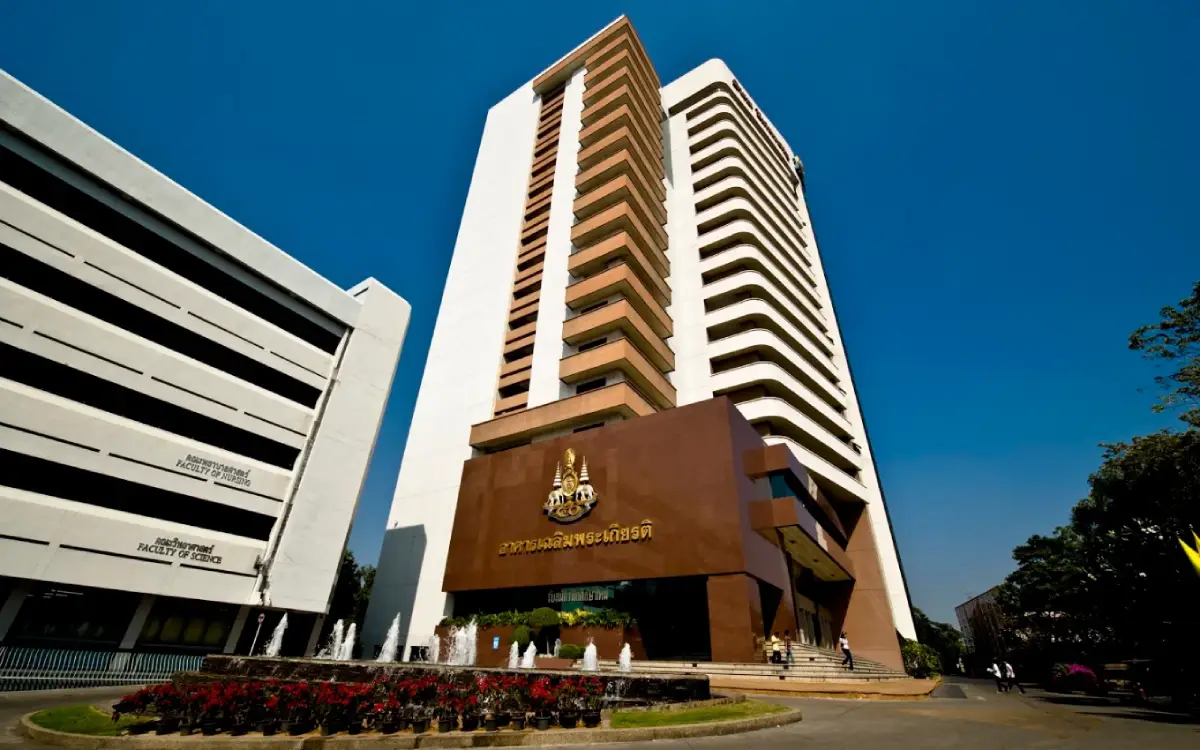
Open Days: Monday–Saturday (New Student Admissions Center, Building 19, 1st Floor)
Opening Hours: 08:30–16:30 (New Student Admissions Center)
Siam University is one of Thailand's long-established private universities, located at 38 Phet Kasem Road, Bang Wa Subdistrict, Phasi Charoen District, Bangkok 10160, Thailand. The institution originated from an educational initiative by Dr. Narong Mongkhonvanit in 1965 and received official permission to operate on September 28, 1973, under the name Siam Technical College. It was subsequently elevated to university status as Siam Technical University in 1986 before adopting the name Siam University in 1989. Today, the university offers higher education from undergraduate through doctoral levels, with academic strengths spanning health sciences, engineering, technology, business administration, liberal arts, communication, and international education. The university also emphasizes sustainable development, academic research, and community engagement. Its location in western Bangkok provides convenient access through Bang Wa Station, an interchange connecting the BTS Skytrain and MRT Blue Line.
Siam University is situated in Bangkok's Thonburi area, a part of the capital with a rich cultural and historical background. Phasi Charoen District contains a mixture of modern commercial developments, traditional canal-side communities, historic Buddhist temples, and residential neighborhoods that have expanded alongside improvements in transportation infrastructure. Phet Kasem Road serves as an important corridor connecting central Bangkok with the city's western districts. This location enables Siam University to function not only as an educational institution but also as an integral part of everyday community life in Bang Wa.
One of the university's distinctive characteristics is the way its higher education environment is integrated into a relatively dense urban setting. The campus contains academic buildings, specialized laboratories, library facilities, student activity spaces, and educational support services. Surrounding the university are restaurants, retail establishments, public transportation networks, and everyday services that support the needs of students, faculty members, and administrative personnel.
The History of Siam University began with the educational vision of Dr. Narong Mongkhonvanit, who recognized the importance of technical and vocational education to Thailand's economic development. During the 1960s, the country was experiencing growth in manufacturing, infrastructure construction, and modern business operations. These developments created an increasing demand for skilled personnel capable of applying technical knowledge in factories, commercial enterprises, and public institutions.
In 1965, Dr. Narong initiated educational activities aimed at developing vocational and technical personnel. His approach emphasized the connection between theoretical instruction and practical training. On September 28, 1973, the institution received official authorization to operate under the name Siam Technical College. This date became a major milestone in the development of the educational institution that would eventually become Siam University.
The institution's earliest academic programs were associated with technical and industrial training, particularly automotive mechanics and electrical engineering technology. These fields corresponded with Thailand's growing need for skilled workers in manufacturing, construction, and public infrastructure development. The institution's educational foundation therefore placed considerable importance on practical competence, the effective use of tools and equipment, and professional responsibility.
As Thailand's economy and industrial sector developed, demand for university-qualified professionals continued to increase. Siam Technical College consequently expanded its academic activities and prepared to provide degree-level education. The institution increasingly emphasized the development of graduates with knowledge in science, engineering, business administration, and other disciplines relevant to national economic and social development.
September 5, 1986, marked another significant turning point when the institution received approval to become a university under the name Siam Technical University. This change in institutional status created opportunities to expand undergraduate education and develop academic standards across a wider range of disciplines.
Following its elevation to university status, the Faculty of Engineering expanded its undergraduate programs. Mechanical Engineering was introduced in the 1986 academic year, followed by Electrical Engineering in 1989. The faculty subsequently developed additional fields, including Computer Engineering, Civil Engineering, and other engineering and technology disciplines. This expansion demonstrated the institution's transition from technical training toward advanced professional education.
On April 24, 1989, the Ministry of University Affairs announced an amendment changing the institution's name to Siam University, effective from the 1989 academic year. The new name reflected a broader institutional identity, recognizing that the university's educational mission was no longer limited to technical disciplines but had expanded to encompass a comprehensive range of academic fields.
The Origin of the Name Siam University is associated with the word "Siam," the historical name of Thailand. The name expresses the university's connection with Thai society and its commitment to developing educated professionals who can contribute to national progress. It therefore reflects both the country's historical identity and the institution's role as a center of knowledge for contemporary society.
After adopting its present name in 1989, Siam University continued expanding its academic offerings. New faculties and programs developed in business administration, information technology, science, liberal arts, law, communication arts, and service-related disciplines. Graduate education also became increasingly important, creating additional opportunities for bachelor's degree graduates and working professionals seeking advanced academic and professional qualifications.
In subsequent years, the university substantially developed its health sciences education. Academic programs were established in Nursing, Pharmacy, Medicine, Dentistry, and Optometry. These disciplines contribute to the development of healthcare professionals whose responsibilities require scientific expertise, precise technical skills, professional ethics, and an understanding of patients as individuals.
The university also strengthened its international orientation through Siam International College and English-language degree programs. Its multicultural learning environment allows Thai and international students to study together, supporting language development, cross-cultural communication, and international professional perspectives. Such skills are increasingly important in hospitality, tourism, international business, and the management of organizations operating across national borders.
The Founder and Important Figures of Siam University have contributed to the development of private higher education in Thailand. Dr. Narong Mongkhonvanit played a central role in establishing the institution and developing its original focus on technical and vocational education. His educational philosophy emphasized the importance of knowledge, professional competence, and a clear sense of purpose in life. One of the guiding ideas associated with his legacy compares a purposeful life to a voyage that requires a compass to establish direction.
In 2026, Siam University's President is Dr. Pornchai Mongkhonvanit, who has played an important role in advancing the university's academic development and sustainability initiatives. In February 2026, he was appointed Chair of the Sustainable University Network of Thailand (SUN Thailand) for the 2026–2027 term. This appointment reflects the growing importance of integrating education, university management, environmental responsibility, and sustainable development objectives.
The University's Philosophy and Guiding Principles are based on the Pali expression "Paññā Narānaṃ Ratanaṃ," meaning "Wisdom Is the Jewel of Humanity." This philosophy emphasizes the value of knowledge and wisdom in developing individuals and society. Siam University consequently aims to cultivate graduates who possess academic knowledge, professional skills, morality, ethical judgment, and the ability to apply their education for the benefit of others.
The University Emblem contains several important elements, including a gear, a map of Thailand, and a sailing boat. These symbols represent progress, the capacity to contribute to national development, and the importance of maintaining a clear direction toward the future. They also connect the institution's present academic identity with its original roots in technical education and its mission to develop skilled professionals for Thailand.
The university's official colors are yellow and brown. Yellow represents wisdom, while brown symbolizes knowledge and expertise. Together, these colors communicate the relationship between acquiring knowledge and applying it effectively in professional practice. The university also uses the elephant as an institutional animal symbol, reflecting an important element of Thailand's history and cultural heritage.
The university's symbolic tree is the Indian Almond Tree (Terminalia catappa), known in Thai as "Ton Hu Kwang." This shade-providing tree is recognized for its broad leaves, which change color with the seasons. The yellow and brown tones of its foliage are associated with the university's official colors. Its role as a symbolic tree also reinforces the relationship between campus greenery, environmental awareness, and sustainable development.
An important sacred figure associated with the university is Phra Witsanukam, the Thai representation of Vishvakarman, traditionally revered as a divine patron of craftsmen, artisans, and engineers. The shrine is situated near the front of the university and has been associated with the institution since the Siam Technical College period. Phra Witsanukam consequently symbolizes the university's technical heritage and its respect for teachers, professional knowledge, and craftsmanship.
University Traditions and Cultural Activities prominently include the annual remembrance of its founder. August 15 is observed as a day of remembrance for Dr. Narong Mongkhonvanit, with commemorative activities organized by the university and affiliated educational institutions. These events express gratitude toward the person who established the foundation of the institution and help preserve a shared sense of history among students, academic staff, employees, and alumni.
On August 15, 2026, commemorative activities honoring Dr. Narong Mongkhonvanit included a wreath-laying ceremony at the founder's monument at Siam Technology College. The event highlighted the historical connections among affiliated educational institutions and the continuing importance of gratitude and respect for those who contributed to educational development.
New-student orientation is another important element of university life. On July 8, 2026, the Faculty of Medicine organized an orientation program for first-year medical students for the 2026 academic year at the Chalermprakiat Building, Building 19. The event introduced the faculty's educational requirements, academic regulations, student development activities, and opportunities for students and parents to meet academic staff and university administrators.
Such activities are particularly important because they help students understand their responsibilities and prepare for professional education. This is especially relevant to healthcare disciplines, where academic standards, communication skills, and professional ethics are essential. Student organizations and orientation activities also contribute to relationships between senior and junior students, teamwork, interpersonal skills, and personal development.
Academic Strengths at Siam University are reflected in the diversity of its disciplines and its emphasis on practice-oriented education. The health sciences group includes the Faculty of Medicine, Faculty of Dentistry, Faculty of Pharmacy, Faculty of Optometry, and Faculty of Nursing. Each professional field requires specialized practical training, laboratory learning, and professional conduct based on established ethical principles.
The Faculty of Medicine aims to develop physicians with knowledge and skills in health promotion, disease prevention, diagnosis, treatment, and rehabilitation. Its educational approach places importance on understanding patients and fulfilling professional responsibilities toward society. The Doctor of Medicine program normally requires six years of study and includes structured clinical education and practical training.
The Faculty of Dentistry prepares dental professionals to provide oral healthcare services, including diagnosis, preventive care, treatment, and oral health promotion for people of different ages. The Doctor of Dental Surgery program requires six years of study and combines biomedical knowledge with highly developed clinical and technical skills.
The Faculty of Pharmacy provides education in Pharmaceutical Care, emphasizing the appropriate use of medicines, patient-centered healthcare, and the application of pharmaceutical knowledge in cooperation with other health professionals. The Faculty of Optometry develops professionals specializing in vision assessment and the evaluation of visual disorders, while the Faculty of Nursing prepares qualified personnel to provide safe and effective care for patients and communities.
Engineering education at Siam University has developed continuously from the institution's original technical training programs. Academic fields include Mechanical Engineering, Electrical Engineering, Civil Engineering, Industrial Engineering, Automotive Engineering, and Data and Artificial Intelligence Engineering. Additional continuing degree programs cover Robotics and Automation Engineering, Electric Vehicle Engineering, and Printing and Packaging Engineering. These fields are directly relevant to infrastructure development, industrial innovation, and emerging technologies.
The Faculty of Information Technology and Faculty of Science contribute to the development of professionals capable of working with digital systems, information, and innovation. Their academic fields include Information Technology, Animation and Creative Media, Digital Business and Technology, Data Science and Computing, and Food Innovation and Entrepreneurship. These disciplines connect higher education with the expansion of Thailand's digital economy and food-related industries.
The Faculty of Business Administration emphasizes Accounting, Finance and Investment, Marketing, Management and Entrepreneurship, and International Business Management. Students are encouraged to apply theoretical knowledge to business analysis and practical decision-making. Meanwhile, the Faculty of Law and Faculty of Political Science develop knowledge concerning legal systems, government, public institutions, and the responsibilities of citizens in society.
The Faculty of Liberal Arts and Faculty of Communication Arts focus on languages, culture, communication, and creative industries. Their academic offerings include Business English Communication, Japanese for Communication, Hotel, Tourism and Hospitality Management, Public Relations, Advertising and Digital Marketing Communication, and Film, Television and Digital Media. These fields prepare students for careers involving organizational communication, media production, hospitality, and service-oriented industries.
Siam International College contributes to the university's multicultural educational environment through international programs in International Business and Service Industry Management. Students develop English-language communication, intercultural understanding, and knowledge of international business practices, enabling them to work effectively in professional settings involving people from different countries.
The College of Music and Performing Arts provides structured education in music and performance, supporting artistic skills, creative development, and professional opportunities in the cultural and entertainment industries. Graduate education, meanwhile, offers opportunities for bachelor's degree holders and working professionals to pursue advanced studies in Management, Engineering, Information Technology, Education, Political Science, and Peace Studies.
Research and Sustainable Development are important components of Siam University's institutional direction. The university supports the application of academic knowledge to economic, social, and environmental challenges while promoting university management practices that align with the United Nations Sustainable Development Goals. These efforts connect teaching, institutional resource management, student activities, and engagement with surrounding communities.
In 2026, Siam University President Dr. Pornchai Mongkhonvanit was selected as Chair of the Sustainable University Network of Thailand for the 2026–2027 term. The role supports collaboration among higher education institutions in environmental management, efficient resource utilization, and the promotion of social responsibility. It also reflects the university's commitment to incorporating sustainability principles into education and institutional development.
The university's research development is also supported by its academic information resources. Siam University Library provides textbooks, academic books, journals, online databases, and systems for accessing institutional research. These resources contribute to student learning across health sciences, engineering, technology, business administration, and other academic disciplines.
The university also maintains digital collections of research and academic publications, including student projects, independent studies, theses, dissertations, and research articles. Making academic work available online improves access to institutional knowledge and encourages scholarly exchange among students, faculty members, researchers, and members of the wider academic community.
Important Places and Facilities on Campus include the main entrance area and the shrine of Phra Witsanukam, which reflects the institution's technical educational origins. The Chalermprakiat Building, Building 19, is used for academic activities and houses the New Student Admissions Center. Other important facilities include the central library, faculty buildings, specialized laboratories, student activity spaces, and areas for sports and recreation.
Academic buildings and laboratories are essential for the university's practice-oriented learning environment. Engineering and health sciences students, in particular, require specialized equipment and facilities to develop professional competence. Laboratory activities help bridge the gap between theoretical instruction and practical experience, allowing students to develop the technical and professional skills required in their future careers.
For Communication Arts students, the university provides learning resources and spaces related to media production and communication, including university media systems and digital laboratories. Science and Information Technology programs emphasize the use of computers, software, and relevant technical equipment. The university library supports research, independent study, and lifelong learning across all academic disciplines.
Connections with the Phasi Charoen Community are another important aspect of Siam University's location. Bang Wa and the surrounding Phasi Charoen canal area contain historic neighborhoods, traditional temples, and distinctive waterside communities. The presence of the university creates relationships between higher education, local businesses, employment, community services, and cultural life. Students and university personnel have opportunities to experience the diversity of Bangkok's western districts through daily activities and engagement with the surrounding community.
The wider Thonburi landscape illustrates the transformation of Bangkok from a city heavily dependent on waterways to a modern metropolitan area connected by roads and urban rail systems. Khlong Bang Luang and Khlong Phasi Charoen remain culturally and historically significant waterways. Studying in the Bang Wa area therefore provides opportunities to explore both modern urban development and the heritage of older canal-side neighborhoods.
Educational and Cultural Tourism around Siam University can be connected with local history, Thai cultural traditions, and canal-side community life. Notable attractions in Phasi Charoen and nearby Thonburi districts include Wat Paknam Phasi Charoen, Baan Silapin (The Artist's House) at Khlong Bang Luang, Wat Kamphaeng Bang Chak, and Wat Khun Chan. These sites reflect different aspects of Buddhist heritage, traditional architecture, local history, and Thai artistic expression. Seacon Bangkae provides a contrasting modern environment for shopping, leisure, and community activities.
Wat Paknam Phasi Charoen is an important Buddhist temple with a long history, recognized for its monumental pagoda and large Buddha image. Baan Silapin, or The Artist's House, is a cultural and creative learning space within a historic canal-side community, where visitors can experience traditional surroundings and artistic activities. Wat Kamphaeng Bang Chak is also significant for its historic architecture and its relationship with the cultural heritage of Thonburi communities.
Visitors interested in exploring Siam University may contact the relevant university office in advance to inquire about campus tours, open house events, educational guidance activities, or opportunities to visit selected academic facilities. Access to professional laboratories and specialized teaching areas may be restricted for reasons of safety, security, and the orderly operation of academic activities.
Getting There is convenient by private car, taxi, public bus, or urban rail services. Siam University is located at 38 Phet Kasem Road, Bang Wa, Phasi Charoen, Bangkok 10160. Passengers using the BTS Silom Line can travel to Bang Wa Station. The same station also serves the MRT Blue Line, providing an important interchange for transportation across Bangkok's western districts.
Travelers from central Bangkok and the eastern side of the Chao Phraya River can use the urban rail network and transfer toward Bang Wa Station. Those traveling from Bang Khae or along Phet Kasem Road can use the MRT Blue Line to reach the university area. The connection between the BTS and MRT systems provides a practical alternative to private vehicles, particularly during periods of heavy road traffic.
Visitors traveling by private car can approach the university via Phet Kasem Road. Checking the traffic direction, available U-turns, and entrance location before arriving is recommended because this major road can become congested during peak hours. Visitors attending special events or meetings should contact the relevant organizer to confirm building locations and parking arrangements in advance.
Contacting Siam University is possible through the Office of Student Admissions and Scholarships at +66 2 868 6000 or the university's main telephone number at +66 2 867 8088. The New Student Admissions Center is located on the first floor of Building 19 and operates from Monday to Saturday, 08:30–16:30. Classroom schedules, library access, and the operating hours of other campus facilities are determined by their respective academic or administrative units.
In conclusion, Siam University is an important institution in the history of private higher education in Thailand. Originating from a vision of technical and vocational training during the 1960s, it developed into Siam Technical College in 1973, was elevated to university status in 1986, and adopted its present name in the 1989 academic year. Over the decades, the institution has expanded to include health sciences, engineering, technology, business, social sciences, and creative disciplines while promoting sustainability and social responsibility. Its location in Bang Wa, with convenient connections to public transportation and the historic communities of Thonburi, reinforces the university's role as both a center of learning and a contributor to Bangkok's continuing urban development.
Siam University Summary Table
| University Name | Siam University (มหาวิทยาลัยสยาม) |
| Institution Type | Private University |
| Address | 38 Phet Kasem Road, Bang Wa, Phasi Charoen, Bangkok 10160, Thailand |
| Educational Origins | 1965 |
| Official Establishment | September 28, 1973, as Siam Technical College |
| University Status Granted | September 5, 1986, as Siam Technical University |
| Renamed Siam University | Announced April 24, 1989; Effective from the 1989 Academic Year |
| Institutional Age | 53 Years from Official Establishment in 1973 to 2026 |
| Founder | Dr. Narong Mongkhonvanit |
| University President in 2026 | Dr. Pornchai Mongkhonvanit |
| University Philosophy | Paññā Narānaṃ Ratanaṃ – Wisdom Is the Jewel of Humanity |
| University Colors | Yellow and Brown |
| Symbolic Tree | Indian Almond Tree (Terminalia catappa) |
| Animal Symbol | Elephant |
| Important Sacred Figure | Phra Witsanukam Near the Main Entrance |
| Academic Strengths | Health Sciences, Engineering, Information Technology, Business Administration, Liberal Arts, Communication Arts, and International Education |
| Faculties and Academic Units | Faculty of Medicine, Faculty of Dentistry, Faculty of Pharmacy, Faculty of Optometry, Faculty of Nursing, Faculty of Engineering, Faculty of Information Technology, Faculty of Science, Faculty of Liberal Arts, Faculty of Communication Arts, Faculty of Business Administration, Faculty of Law, Faculty of Political Science, College of Music and Performing Arts, Siam International College, and Graduate School |
| Important Campus Facilities | Phra Witsanukam Shrine, Chalermprakiat Building (Building 19), Central Library, Faculty Buildings, Laboratories, and Student Activity Areas |
| University Traditions | Dr. Narong Mongkhonvanit Remembrance Day on August 15 and New Student Orientation Activities |
| Admissions Center Open Days | Monday–Saturday |
| Admissions Center Hours | 08:30–16:30, Building 19, 1st Floor |
| Campus Visits | Contact the University in Advance for Campus Tours or Educational Activities; Specialized Laboratories Are Subject to Departmental Access Rules |
| Getting There | BTS Silom Line or MRT Blue Line to Bang Wa Station; Public Bus, Taxi, or Private Car via Phet Kasem Road |
| Nearby Attractions | 1. Wat Paknam Phasi Charoen, Phasi Charoen District 2. Baan Silapin (The Artist's House), Khlong Bang Luang, Phasi Charoen District 3. Wat Kamphaeng Bang Chak, Phasi Charoen District 4. Wat Khun Chan, Thon Buri District 5. Seacon Bangkae, Phet Kasem Road, Phasi Charoen District |
| Nearby Restaurants | 1. Kamrak Riverside Restaurant & Cafe, Phet Kasem Road – Tel. +66 64 519 6615 2. Talay Phao Bang Wa, Phet Kasem Soi 28, Yaek 5 – Tel. +66 92 928 9239 3. Hotpot Man Mala Shabu Buffet, Bang Khae, Phet Kasem Road – Tel. +66 2 059 9544 4. Tid Munz Bang Khae, Phet Kasem Road – Tel. +66 85 587 9731 5. Kin Kan Jang Shabu, Phet Kasem 56 Branch – Tel. +66 61 784 7833 |
| Nearby Accommodations | 1. KANAL BANGKOK, Phet Kasem Road – Tel. +66 86 360 1479 2. About Time Bangkok, Phet Kasem Road – Tel. +66 81 662 9499 3. Bangwa Interchange House, Thoet Thai Road – Tel. +66 98 843 6730 4. A48 Hotel & Residence, Phet Kasem Soi 48 – Tel. +66 2 457 1168 5. 14 Resort, Phet Kasem Soi 35/1 – Tel. +66 2 454 9900 |
| Admissions Telephone | +66 2 868 6000 |
| Main University Telephone | +66 2 867 8088 |
| Official Website | www.siam.edu |
| Current Status in 2026 | Operating University with Published Admissions Information for the 2026 Academic Year |
Siam University Academic Programs and Fields of Study – Academic Year 2026 The following list is based on academic program information published by Siam University's Admissions Office, faculties, and Graduate School, together with admissions information for the 2026 academic year. Some fields are drawn from the university's published academic program catalog. Admission availability for individual programs and application rounds is governed by the relevant faculty's announcements for each academic year.
| Faculty / College | Academic Programs and Fields of Study |
| Faculty of Medicine | Undergraduate and Professional Degrees 1. Doctor of Medicine (M.D.) 2. Bachelor of Science in Occupational Health and Safety |
| Faculty of Dentistry | Professional Degree 1. Doctor of Dental Surgery (D.D.S.) |
| Faculty of Pharmacy | Professional Degree 1. Doctor of Pharmacy (Pharm.D.) in Pharmaceutical Care Combined Educational Pathway2. Doctor of Pharmacy Plus Master of Business Administration (Pharm.D. Plus MBA), Subject to the Published Admission Requirements |
| Faculty of Optometry | Professional Degree 1. Doctor of Optometry (O.D.) |
| Faculty of Nursing | Bachelor's Degree 1. Bachelor of Nursing Science |
| Faculty of Engineering | Bachelor's Degrees 1. Bachelor of Engineering in Mechanical Engineering 2. Bachelor of Engineering in Electrical Engineering 3. Bachelor of Engineering in Civil Engineering 4. Bachelor of Engineering in Data and Artificial Intelligence Engineering 5. Bachelor of Engineering in Automotive Engineering 6. Bachelor of Engineering in Industrial Engineering Continuing Degree Programs7. Bachelor of Industrial Technology in Robotics and Automation Engineering 8. Bachelor of Industrial Technology in Electric Vehicle Engineering 9. Bachelor of Industrial Technology in Printing and Packaging Engineering |
| Faculty of Information Technology | Bachelor's Degrees and Fields of Study 1. Bachelor of Science in Information Technology 2. Bachelor of Science in Animation and Creative Media 3. Digital Technology and Artificial Intelligence for Entrepreneurship 4. Bachelor of Business Administration in Digital Business and Technology |
| Faculty of Science | Bachelor's Degrees and Fields of Study 1. Bachelor of Science in Food Innovation and Entrepreneurship 2. Bachelor of Science in Data Science and Computing 3. Digital Marketing, as Listed in the Faculty's Published Program Information |
| Faculty of Business Administration | Bachelor's Degrees 1. Bachelor of Accountancy 2. Bachelor of Business Administration in Finance and Investment 3. Bachelor of Business Administration in Marketing 4. Bachelor of Business Administration in Management and Entrepreneurship 5. Bachelor of Business Administration in International Business Management |
| Faculty of Liberal Arts | Bachelor's Degrees 1. Bachelor of Arts in Hotel, Tourism and Hospitality Management 2. Bachelor of Arts in Business English Communication 3. Bachelor of Arts in Japanese for Communication |
| Faculty of Communication Arts | Bachelor's Degree 1. Bachelor of Communication Arts, with Majors in Public Relations, Advertising and Digital Marketing Communication, and Film, Television and Digital Media |
| Faculty of Law | Bachelor's Degree 1. Bachelor of Laws (LL.B.) |
| Faculty of Political Science | Bachelor's Degree 1. Bachelor of Political Science in Government |
| College of Music and Performing Arts | Bachelor's Degrees 1. Bachelor of Fine and Applied Arts in Music 2. Bachelor of Fine and Applied Arts in Performing Arts |
| Siam International College | International Bachelor's Degree Programs 1. Bachelor of Business Administration in International Business 2. Bachelor of Business Administration in Service Industry Management |
| Graduate School | Master's Degrees 1. Master of Business Administration (MBA) 2. Master of Engineering in Engineering Management 3. Master of Education in Educational Leadership and Management Innovation 4. Master of Science in Information Technology 5. Master of Political Science in Government 6. Master of Arts in Peace Studies and Diplomacy (International Program) 7. Master of Management in Strategic Management Doctoral Degrees8. Doctor of Philosophy in Management 9. Doctor of Philosophy in Educational Management Innovation 10. Doctor of Philosophy in Information Technology 11. Doctor of Political Science in Government |
Frequently Asked Questions (FAQ)
Q: Where is Siam University located?
A: Siam University is located at 38 Phet Kasem Road, Bang Wa, Phasi Charoen District, Bangkok 10160, Thailand. The campus is conveniently accessible through Bang Wa Station, which connects the BTS Skytrain and MRT Blue Line.
Q: When was Siam University established?
A: The institution's educational origins date to 1965. It was officially established as Siam Technical College on September 28, 1973, and received university status in 1986.
Q: Who founded Siam University?
A: Dr. Narong Mongkhonvanit founded the institution and played a significant role in developing its original technical and vocational education programs.
Q: What are Siam University's opening days and hours?
A: The New Student Admissions Center on the first floor of Building 19 operates Monday–Saturday, from 08:30 to 16:30. Library, classroom, and other facility hours are determined separately by the relevant university departments.
Q: What faculties and colleges does Siam University have?
A: Siam University has faculties in health sciences, engineering, information technology, science, business administration, liberal arts, communication arts, law, and political science, together with Siam International College, the College of Music and Performing Arts, and the Graduate School.
Q: Does Siam University offer Medicine and Dentistry programs?
A: Yes. The university offers Medicine and Dentistry degree programs, alongside programs in Pharmacy, Nursing, and Optometry. Applicants should review the relevant faculty's admission requirements and announcements for their intended academic year.
Q: What is Siam University known for?
A: Siam University is recognized for professional education, health sciences, engineering, technology, business administration, international education, and initiatives supporting sustainable development.
Q: How can I travel to Siam University by train?
A: Take the BTS Silom Line or MRT Blue Line to Bang Wa Station, then continue to the university entrance on Phet Kasem Road using the most suitable route.
Q: Can members of the public visit Siam University?
A: Visitors may contact the university to arrange a campus visit or inquire about open house events. Access to laboratories and specialized educational areas is subject to departmental regulations.
Q: How can I contact Siam University about admissions?
A: Contact the Office of Student Admissions and Scholarships at +66 2 868 6000 or visit www.siam.edu for academic program information and application details.
 Category: ●University
 Group: ●Private University
Last Update : 1 WeekAgo
 Last Update : 1 WeekAgo
 Click to Access the Navigation Map GPS
Siam University Map
Recommend

 Art, Culture and Heritage
 Historical Sites and Monuments(3)
 Landmarks and Memorials(23)
 Royal Palace(13)
 Art, Craft Centres, Tradition(35)
 Museums(59)
 Historic Homes and Cities(3)
 Art Gallery(16)
 Educational Places
 Museum for Study(6)
 Library(4)
 Public university(8)
 Autonomous Universities(8)
 Rajamangala University of Technology(6)
 Rajabhat University(6)
Private University(22)
 Places of Worship
 Temple(72)
 Church(2)
 Mosque(67)
 Other Sacred Sites(8)
 Research and Development
 Royal Project(1)
 Suburban Living
 Village, Community(5)
 Local Market(9)
 Floating Market(2)
 Nature and Wildlife
 River, Canal(3)
 Bays and Beaches(1)
 Other natural attractions(1)
 Entertainment and Agricultural
 Zoos and Aquariums(5)
 Animal camps and shows(5)
 Stadium(9)
 Farms, Parks and Ecotourism(20)
 Amusement Park(1)
 Waterpark(4)
 Theater(7)
 Cinema(1)
 Shopping
 Shopping and Night Market(20)
 Department Store(7)
 Spas and Wellness
 Spas and Wellness(1)
 Restaurant
 Michelin Star(5)
 Accommodation
 Hotel(3)
 Call Customer Service in Tourism
 Call Customer Service in Tourism(1)
 Travel Articles, Recipes
 Travel Review, Food Review(46)
 Royal Thai Desserts and Recipes(56)


