
lovethailand home >Central Travel Attractions >Bangkok Travel Attractions >Phra Nakhon >Talat Yot > Bangkok City Library
TL;DR: Bangkok City Library, Bangkok attractions : Educational Places, Library.
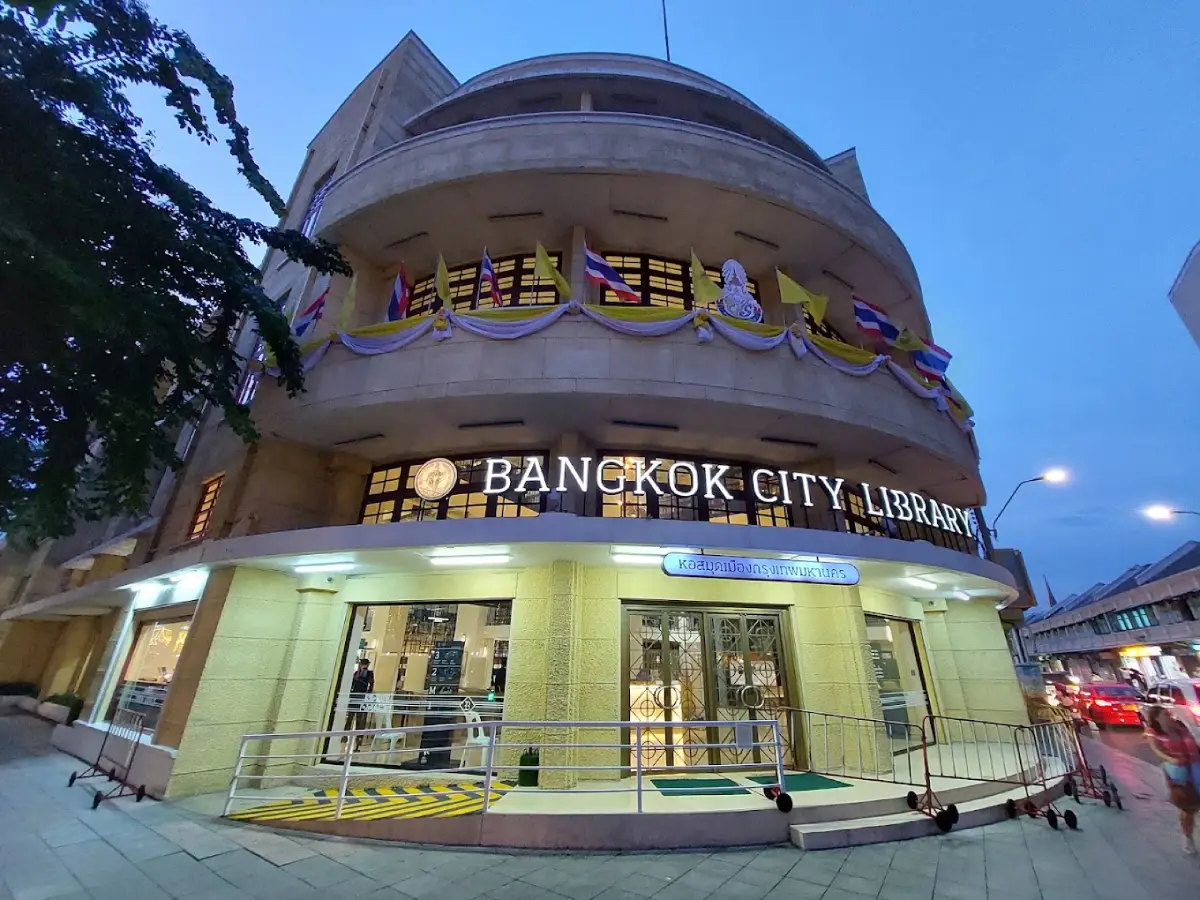
Bangkok City Library
Open Days: Tuesday–Sunday. Closed on Mondays and other closure dates designated by the library.
Opening Hours: Tuesday–Saturday, 08:00–21:00. Sunday and public holidays on which the library operates, 09:00–20:00.
Admission Fee: Free admission and free use of the library's on-site reading areas.
Bangkok City Library is an important public library and learning center in Bangkok, Thailand. It is located at 39, Building C, Ratchadamnoen Klang Road, Talat Yot Subdistrict, Phra Nakhon District, near Khok Wua Intersection, the Democracy Monument, and Khao San Road. The library was established as part of Bangkok's commitment to promoting reading and lifelong learning after UNESCO selected the Thai capital as World Book Capital for 2013. A historic building constructed between 1939 and 1948 was renovated and adapted to accommodate reading areas, research facilities, and creative educational activities. Officially opened on April 28, 2017, the library offers three main floors and a mezzanine, with dedicated areas for children's books, general collections, foreign-language publications, rare books, historical exhibitions, activity rooms, and internet services. Today, Bangkok City Library continues to welcome Thai residents and international visitors without charging an admission fee.
Amid the lively surroundings of Ratchadamnoen Klang Road, one of Bangkok's most historically significant thoroughfares, Bangkok City Library provides a distinctive atmosphere within the old city. Outside, the building is surrounded by traffic, shops, hotels, and popular attractions that draw visitors throughout the day. Inside, however, readers encounter a carefully organized environment with air conditioning, suitable lighting, and study areas designed for concentration. The library offers a quiet place to read, conduct research, or simply spend time learning in the heart of Phra Nakhon.
The library's importance extends far beyond housing a large collection of books. It represents an investment in public education and lifelong learning, providing a place where people can read, research, use digital resources, and participate in educational activities. Its location within Bangkok's historic district makes it accessible to a wide variety of visitors, including schoolchildren, university students, parents, working professionals, researchers, and travelers interested in the city's history and cultural heritage.
The location of Bangkok City Library is one of its principal attractions. Situated at Khok Wua Intersection on Ratchadamnoen Klang Road, it connects naturally with Banglamphu, Khao San Road, the Democracy Monument, and many other landmarks in Phra Nakhon District. The surrounding neighborhood contains historic buildings, temples, museums, long-established restaurants, and communities with distinctive local traditions. A library visit can therefore be combined with an exploration of Bangkok's architectural and cultural history.
The history of Bangkok City Library is closely connected with UNESCO's selection of Bangkok as World Book Capital for 2013. Bangkok became the thirteenth city to receive this designation, which recognizes efforts to promote books, reading, and access to knowledge. The title highlighted the city's commitment to strengthening reading culture, developing literary resources, and expanding educational opportunities for the public.
The concept of a World Book Capital involves more than increasing the number of bookstores or organizing occasional reading events. It emphasizes the long-term development of reading habits, access to books and information, and opportunities for learning in everyday life. Following its selection, the Bangkok Metropolitan Administration introduced a range of projects and activities intended to advance these objectives. One of the most significant initiatives was the creation of a modern city library designed to welcome people from different backgrounds.
The establishment of Bangkok City Library reflected the understanding that a public library should be more than a building for storing books. It should also support independent research, self-directed education, creative activities, and access to information through contemporary technology. This approach helped redefine the library as an active urban learning center rather than a place used exclusively for silent reading.
The Bangkok Metropolitan Administration selected a historic building at Khok Wua Intersection on Ratchadamnoen Klang Road as the library's home. Constructed during the period from 1939 to 1948, the building forms part of the architectural development of Ratchadamnoen during the years surrounding the Second World War. Renovating this structure for use as a library made it possible to preserve important elements of its historical character while adapting the interior to contemporary public needs.
Choosing a building on Ratchadamnoen Klang Road was significant for reasons beyond accessibility. Ratchadamnoen is one of Bangkok's most historically important streets, reflecting major changes in urban development and Thai society during the later Rattanakosin period. The surrounding buildings display different architectural styles and histories of use. Establishing a public library here placed an institution dedicated to knowledge within a setting closely connected to the historical development of the capital.
The renovation project transformed the building's interior to accommodate book collections, information systems, reading facilities, computer-based research, and educational activities. The work had to take account of the existing structure while incorporating utilities and services required by a modern public library. Adapting the historic building in this way allowed it to remain part of daily urban life rather than serving only as an architectural landmark.
By 2016, the Bangkok City Library project had attracted public interest as a major new library preparing to open on Ratchadamnoen Klang Road. Plans included separate areas for children's books, foreign-language publications, electronic resources, exhibitions, and research facilities. The organization of these services reflected an intention to accommodate readers with different interests, educational needs, and methods of learning.
The library began a trial period of public service on April 7, 2017, before its official opening on April 28, 2017. Her Royal Highness Princess Maha Chakri Sirindhorn presided over the opening ceremony. This event marked an important milestone in the development of Bangkok's public learning facilities and represented a lasting outcome of the city's World Book Capital commitments.
Following its official opening, the library became an educational resource for residents of Phra Nakhon and people traveling from other parts of Bangkok. Visitors could choose from general reading, specialized research, and independent study according to their interests. By providing several types of resources and learning environments within one building, the library established an ongoing role in education beyond formal schools and universities.
Bangkok City Library operates under the supervision of the Department of Culture, Sports and Tourism of the Bangkok Metropolitan Administration, with the Library and Learning Section under the Office of Recreation and Learning Promotion involved in Bangkok's public library services. Its responsibilities include managing information resources, reading facilities, educational activities, and building maintenance to ensure that the library remains suitable for public use.
The architecture of Bangkok City Library is another reason the building attracts people interested in history and design. The original structure reflects the influence of Art Deco architecture, a style that played an important role in building design during the first half of the twentieth century. Art Deco architecture is commonly associated with clear geometric forms, balanced proportions, symmetrical arrangements, and decorative details that give buildings a distinctive and orderly appearance.
The building's architectural character also reflects the combination of Western design approaches and details associated with Thai artistic traditions, a feature found in several Bangkok public buildings from a similar period. Architecture of this era was closely connected with the city's transition toward modernity, including the use of reinforced concrete and the adoption of design concepts associated with modern urban development.
The exterior of Bangkok City Library retains the characteristic appearance of a historic building on Ratchadamnoen Klang Road. It contributes to the continuity of the architectural landscape surrounding Khok Wua Intersection. Preserving the old structure while introducing a contemporary library interior gives the building value both as an architectural heritage site and as a functioning public institution. This form of adaptive reuse demonstrates how an existing building can be given a new public purpose without being entirely demolished and rebuilt.
The building has approximately 4,880.38 square meters of usable floor space, arranged across three main floors and a mezzanine level. The interior organization emphasizes lighting, connections between floors, and comfortable environments for reading and learning. Its design therefore combines elements that complement the original architecture with modern features suited to the daily operation of a contemporary library.
The interior design concept also connects light with knowledge and intellectual development. Attention has been given to creating suitable reading conditions through natural light, artificial illumination, and the arrangement of seating areas. Appropriate lighting supports visitors who wish to read and study for extended periods, allowing different parts of the building to function as accessible learning environments rather than exclusively as classrooms or meeting rooms.
Visitors interested in architecture can observe the building's entrances, walls, openings, proportions, and preserved decorative features. At the same time, its interior demonstrates how a historic building can be adapted to accommodate information technology and the activities of modern readers. Exploring Bangkok City Library therefore offers insight into both the architectural history of Ratchadamnoen Road and the development of public educational facilities in contemporary Bangkok.
The first floor of Bangkok City Library serves as the main reception and general-service area. It includes information facilities, book services, and reading spaces suitable for a wide range of visitors. Collections on this level cover subjects such as travel, food, health, and everyday life, allowing visitors to explore useful and accessible topics without needing a specialized research objective.
The travel book collection is particularly interesting for readers who wish to learn about Thailand's historical landmarks, local cultures, and travel destinations. Placing these books in an easily accessible area allows visitors to begin with familiar subjects before exploring more detailed information about history, society, and culture in other sections of the library.
Books about food and health add variety to the first-floor collections because these subjects appeal to readers of different ages. They support everyday learning, covering topics ranging from nutrition and personal well-being to culinary traditions and cooking. Visitors who are not necessarily interested in literary works or academic publications can therefore still find resources relevant to their daily lives.
Newspaper and magazine reading areas are another feature of the first floor, providing access to current affairs and contemporary knowledge. Magazines cover a broad range of subjects and are arranged in areas distinct from the general book collections. These resources are important because reading culture involves not only full-length books but also articles, news, and other publications that help people understand developments in society.
The first floor also includes services and resources intended to support visually impaired visitors and other people with particular information-access needs. These facilities reflect the principle that knowledge should be accessible to different members of the public. Developing an inclusive library requires consideration not only of readers who can use ordinary printed books but also of people who benefit from alternative formats and specialized assistance.
The film screening room and audiovisual learning facilities form another part of the first-floor services. The library includes a small screening room accommodating approximately 40 people. This facility expands learning beyond printed books by providing a setting for films, documentaries, and other audiovisual materials used in educational and cultural activities. Offering several forms of media allows the library to respond to a wider range of interests and learning preferences.
Film can be an effective educational medium for subjects that benefit from images, sound, and chronological storytelling, including history, society, the environment, and contemporary culture. Screenings at the library can encourage discussion and help participants connect what they have watched with books and other resources available in the building.
In 2026, the library continued to host environmental film screenings and learning activities in cooperation with external organizations. One example was a documentary screening scheduled in the first-floor screening room during November. Activities of this kind demonstrate that Bangkok City Library is not limited to book lending. It also serves as a place where people can gather, exchange perspectives, and learn through creative media.
In addition to printed resources and film activities, the first floor offers computers for internet access and electronic information services. Visitors can contact the information desk to follow the procedures for using these facilities. Public computer access is important for people who need to search online sources or use technology for learning without necessarily having their own devices.
The mezzanine floor, also known as the M Floor, is primarily devoted to children and families. It contains books for children and young readers in Thai and other languages. Separating the children's collections from general reading areas makes it easier for younger visitors to discover age-appropriate books and experience reading in a welcoming environment.
The children's collections include picture books, fairy tales, youth literature, and educational publications. Keeping these materials together helps parents select books suitable for their children's reading abilities while giving young readers opportunities to explore their own interests. Such experiences contribute to the development of reading habits and encourage children to regard books as an enjoyable part of everyday life.
The mezzanine also includes space for children's activities, separate from quieter adult study areas. This organization allows families to use the library together without disturbing readers working elsewhere in the building. Children can enjoy books and activities appropriate to their age, while parents can support their learning in a setting designed with family needs in mind.
Introducing children to libraries can support language development, imagination, and the ability to seek information independently. When children encounter different kinds of books, reading can become a familiar and enjoyable activity rather than something associated only with homework or examinations. Bangkok City Library therefore provides families with an additional opportunity to nurture literacy and curiosity from an early age.
The second floor concentrates on reading and research through a broad range of collections, including general-interest books, literature, foreign-language publications, reference works, and materials of historical or cultural value. This level is particularly suitable for people who want to read for extended periods or investigate subjects requiring information from several books.
The literature collection is an important feature of the second floor because literary works reflect human experiences, ideas, and imagination. Novels, short stories, and contemporary literature introduce readers to different perspectives and societies. They also reveal changes in language and storytelling styles. Reading literature therefore offers more than entertainment; it can deepen understanding of history, culture, and human relationships.
Books concerning ASEAN member states and capital cities around the world connect local knowledge with an international perspective. These resources allow readers to explore the history, geography, cultures, and societies of neighboring countries and more distant regions. Their presence ensures that learning at Bangkok City Library extends beyond subjects relating exclusively to Thailand.
The foreign-language collections are valuable for people seeking to read international publications or improve their language skills. School and university students can use these books to develop vocabulary and reading comprehension, while literature enthusiasts can encounter works shaped by different cultural backgrounds. Providing books in multiple languages also reflects Bangkok's character as a city visited and inhabited by people from many countries.
Rare books and Thai funeral memorial books are particularly interesting resources for people researching Thai social history. Such publications frequently preserve information about individuals, families, historical events, traditions, and personal memories that may not appear in ordinary books. Some funeral memorial volumes were produced in limited quantities or printed only once, making them valuable sources for local history and biographical research.
Rare publications are important for studying social change because they preserve the language, ideas, and information considered significant in different historical periods. Researchers can use these materials to compare accounts from different sources and investigate details that may be absent from general history books. Preserving such publications in a public library helps expand access to documentary evidence of cultural and social life.
Contemporary publications, illustrated books, essays, and other writings also reflect the concerns and perspectives of modern society. These materials allow readers to explore social issues, art, culture, and urban change through different formats. By offering both fiction and nonfiction, the library provides opportunities to investigate subjects through a variety of approaches rather than limiting learning to one kind of text.
The multipurpose room on the second floor provides an important venue for educational events. Covering approximately 203 square meters, it can accommodate around 150 participants. It is used for exhibitions, lectures, training sessions, discussions, and creative activities as authorized by the relevant authorities. Facilities include air conditioning, sound equipment, projection systems, and other resources supporting organized events.
Including a multipurpose room within the library allows people to exchange knowledge through direct participation. Activities may involve book discussions, practical training, cultural events, or technology-related learning. Booking the room for an event is a separate service from ordinary reading and study, with applications and conditions governed by the Bangkok Metropolitan Administration.
The third floor is especially important for historical learning and for collections concerning the Thai monarchy and Bangkok's development. Books cover royal biographies, royal writings, royally initiated development projects, royal duties, and the history of the Chakri Dynasty. Exhibitions and documentary materials also help visitors explore the relationships between the monarchy and Thailand's history.
Publications concerning His Majesty King Bhumibol Adulyadej the Great, King Rama IX, form a significant part of the third-floor resources. They include information about his life and development initiatives connected with the well-being of the Thai people. Bringing such publications together allows interested readers to study royal projects and activities through books and educational materials available at the library.
In addition to royal-history resources, the third floor contains materials concerning Bangkok's past and documents associated with different municipal organizations. These resources support the study of the city's development, including government administration, urban planning, transportation, and everyday life in different periods. They are useful for readers interested in local history and the evolution of the Thai capital.
Historical exhibition areas and displays of important documents provide additional ways to learn. Visitors may encounter photographs, narratives, documentary materials, and other exhibits alongside the book collections. Changing exhibitions allow the library to introduce new themes in response to activities and public interests, creating opportunities for returning visitors to discover different subjects over time.
Bangkok's history is a particularly appropriate subject for a city library because the capital has a long and complex past involving diverse communities, religions, architectural traditions, and ways of life. Preserving books about Bangkok in a public institution helps residents learn more about their city while giving visitors an opportunity to understand the historical background of places they plan to explore.
Internet services and digital resources are important components of Bangkok City Library because contemporary learning is not restricted to printed books. The library offers computers, wireless internet access, and electronic resources to support reading and research. Visitors can contact library staff for information about access procedures and the services available.
Digital resources expand the range of information available beyond the publications physically stored on the shelves. They may support searches for articles, documents, and online educational materials. Combining digital services with printed books allows the library to accommodate several ways of learning, including conventional reading, computer-based research, and the use of audiovisual materials.
For schoolchildren and university students, the library's reading areas provide a setting for reviewing lessons, reading textbooks, and preparing for examinations. Quiet study spaces can support concentration, while the different book collections allow students to pursue subjects beyond their immediate coursework. These may include languages, literature, history, social sciences, and general knowledge.
For working professionals and people seeking to develop new skills, the library provides an opportunity to study subjects of personal interest outside their daily responsibilities. Learning of this kind does not have to take place within a formal educational program. It may begin with an interest in management, languages, technology, or culture. Because the library remains open until 21:00 from Tuesday through Saturday, it also provides opportunities for people to read and study after working hours.
For researchers and history enthusiasts, the availability of rare books, funeral memorial publications, and documents about Bangkok provides a valuable starting point for specialized research. Visitors can examine different kinds of publications and compare information relevant to their subjects. These collections are particularly useful for studies of individuals, communities, culture, and the historical development of the city.
Educational activities at Bangkok City Library demonstrate its role as a contemporary learning center. The library organizes activities related to books, reading, films, discussions, and skill development, using its facilities as meeting places for the exchange of knowledge. Such programs allow visitors to learn from specialists and from the experiences of other participants, complementing the opportunities for independent study offered by the library's collections.
In 2026, Bangkok City Library continued to organize and promote activities involving technology and information literacy. One example was a November 2026 event exploring the responsible and critical use of artificial intelligence, held in the second-floor multipurpose room. Activities of this kind show that the library engages with contemporary knowledge and does not limit its educational offerings to literature or publications from the past.
Technology-related educational activities are particularly relevant in an era when online information is part of everyday life. Access to digital tools alone is not enough; people also need the ability to evaluate the reliability of information, verify facts, and use technology appropriately. Public libraries can play an important role in helping communities develop these skills through accessible learning programs.
Film and arts-related activities connect reading with other ways of understanding the world. Watching a documentary about environmental or social issues can encourage participants to explore books and other sources in greater depth. Discussions provide opportunities to exchange ideas and learn from different experiences. By incorporating several forms of media, the library creates a learning environment capable of reaching a wider audience.
Bangkok City Library also provides facilities for training sessions and creative activities that organizations or groups may request permission to use under the Bangkok Metropolitan Administration's regulations. Reserving the multipurpose room for an organized event is different from using ordinary reading areas. The application process includes requirements concerning advance reservations, available space, and the appropriate use of the facilities.
Entering Bangkok City Library is free for members of the public who wish to read or use the designated on-site study areas. Thai visitors can bring their national identification cards for the library's entry registration procedure. International visitors should bring their passports for identification when requested by library staff. Registration helps the library manage its services and maintain an orderly and secure environment.
Visitors who simply wish to read or study inside the building do not need to use the book-borrowing service. Reading books on the premises and borrowing books to take home are separate types of library service. Visitors may select books for on-site reading and return them according to library procedures. Those who wish to borrow books for use outside the library must register for membership and follow the applicable borrowing and return rules.
Library membership is intended for people who want to borrow books and use certain services within Bangkok's public library system. Applicants can contact the service counter and provide the required identification documents, such as a national identification card, student card, school certification, or passport. Membership involves an annual fee based on the applicable membership category and may also require a book deposit. These charges are separate from the free admission and on-site reading services available to ordinary visitors.
Registered members may use the services available under their membership privileges, including borrowing and returning books, reserving publications, receiving assistance with information searches, and accessing certain library resources or activities. Separating membership services from ordinary access allows visitors to choose the services they need without having to become members simply to spend time reading inside the library.
When using the reading areas, visitors should respect the quiet environment and the needs of other readers. Conversations should be kept at a low volume, mobile phones should be silenced, and equipment that creates unnecessary noise should be avoided. Reading, working, and research can take place alongside one another when visitors follow the library's rules and respect shared study spaces.
Visitors carrying bags or other belongings should follow the library's inspection and storage procedures. Certain areas have restrictions on the items that may be brought inside. Eating food within reading areas and using activity rooms are also subject to regulations intended to protect books, equipment, and the cleanliness of the building. These rules help preserve the library's facilities for the benefit of all users.
Facilities at Bangkok City Library include reading areas, tables and chairs, air conditioning, wireless internet access, computers for information searches, a multipurpose room, a film screening room, and designated facilities for visitors with disabilities. The combination of these services allows the building to accommodate both people seeking quiet study and those participating in organized educational activities.
Information published through the Bangkok Metropolitan Administration's public-space reservation system describes the multipurpose room as having air conditioning, a sound system, projection equipment, a whiteboard, and other facilities for organized events. Safety provisions include security systems and firefighting equipment. These resources allow the room to support meetings, lectures, and training sessions with requirements different from those of ordinary reading activities.
For people with disabilities or those requiring assistance, the library provides designated facilities and services in certain areas. These include resources for visually impaired readers and accessibility features associated with its activity spaces. Providing different ways to use the building helps reduce barriers to public learning and supports the principle that access to knowledge should be available to a broad range of people.
Bangkok City Library occupies a historic building whose structure and layout differ from those of a completely new public facility. Wheelchair users and visitors with specific mobility requirements can contact staff for assistance in finding appropriate routes and services. Taking individual accessibility needs into account helps make a visit more convenient and safe.
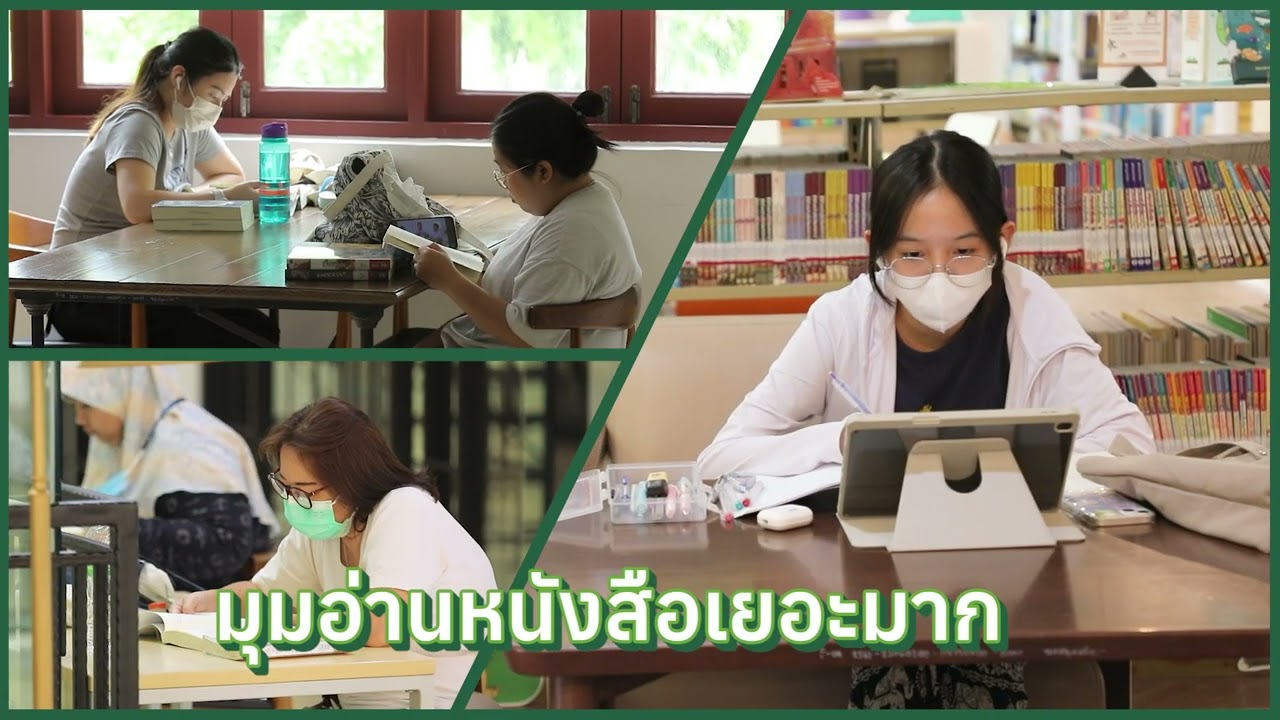
The reading atmosphere at Bangkok City Library is one of its strongest attractions for people seeking a peaceful place to read or work. The interior contains several types of reading areas, from desks suited to concentrated study to spaces for browsing books and exploring subjects of personal interest. Collections are organized across different floors, allowing visitors to choose environments and resources appropriate to their activities.
The library's quiet atmosphere is especially noticeable because of its location near Khao San Road and Ratchadamnoen Klang Road. The surrounding neighborhood is a major tourism destination, with a constant movement of vehicles and pedestrians. Inside the library, however, the environment is dedicated to reading and concentration. This contrast makes the building a meaningful stop during a walking tour of Bangkok's old town, offering more than temporary shelter from the sun or the busy streets.
For architectural photography enthusiasts, the building offers interesting views of a historic Ratchadamnoen structure and its contemporary interior. Photography should respect library rules and the privacy of other visitors, particularly around desks where people are reading or conducting research. Maintaining a quiet environment is important so that sightseeing does not interfere with the building's principal educational purpose.
Who should visit Bangkok City Library? The library serves a wide variety of people. Schoolchildren can read and review lessons, university students and researchers can investigate publications and documents, and working professionals can develop knowledge in subjects that interest them. Parents can introduce their children to books and family-oriented activities, while other visitors can read, study, or spend time in a public learning space without paying an admission fee.
For people interested in Bangkok's history, the library is particularly valuable because it is situated in the historic district and contains publications concerning the city's development and the Chakri Dynasty. Studying these materials before exploring nearby landmarks can deepen visitors' understanding of Phra Nakhon, including the growth of the capital, the construction of important roads, historic buildings, and the roles of different communities in shaping Bangkok's identity.
Literature enthusiasts can explore works by Thai and international authors, contemporary writing, and rare publications. Reading different forms of literature reveals changes in language, narrative techniques, and the subjects considered important during different periods. A library containing many types of books also creates opportunities to discover publications that readers might not otherwise encounter.
Travelers interested in architecture and historic-building conservation can use Bangkok City Library as a starting point for understanding the development of Ratchadamnoen Klang Road. The building demonstrates how historically significant architecture can be adapted for modern public purposes. Walking through the surrounding area also allows visitors to compare buildings from different periods along the same historic thoroughfare.
Getting to Bangkok City Library is possible by public buses serving Ratchadamnoen Klang Road and Khok Wua Intersection, an important transport connection in Phra Nakhon District. Bus routes listed in Bangkok Metropolitan Administration information include 11, 15, 47, 48, 73, 113, 163, 501, and 1-63. Visitors can get off at a convenient stop near Khok Wua Intersection and walk to the library building.
For visitors traveling by MRT Blue Line, Sam Yot Station provides an alternative starting point. From the station, travelers can walk through the historic city toward Ratchadamnoen Klang Road or use a taxi or public bus for the remaining journey. The walking route passes through parts of Bangkok's old town and several important streets, making it suitable for visitors who enjoy exploring the city on foot.
Travelers arriving by BTS Skytrain can connect with other transport services to reach Phra Nakhon District. National Stadium BTS Station is one of the stations mentioned in Bangkok's published transport information. However, the station is not immediately beside the library, so visitors need to continue by bus, taxi, or another suitable form of transportation to reach Ratchadamnoen Klang Road conveniently.
Visitors driving private vehicles can approach Ratchadamnoen Klang Road through major routes connecting with central Bangkok, including Lan Luang Road, Ratchadamnoen Nok Road, and other streets leading into Phra Nakhon. The library is located near the clearly identifiable Khok Wua Intersection. However, traffic and roadside activity in this area can be heavy, so drivers should use authorized parking facilities rather than stopping in locations that obstruct traffic.
Travelers using taxis or app-based ride services can enter Bangkok City Library, Khok Wua Intersection, Ratchadamnoen Klang Road, Phra Nakhon, as their destination. The building is close to Khao San Road and the Democracy Monument. Mentioning Khok Wua Intersection can help drivers identify the correct location, particularly when passengers are unfamiliar with building numbers on Ratchadamnoen Road.
Visitors arriving from areas along the Chao Phraya River can use a suitable boat service and then continue toward Banglamphu and Ratchadamnoen Klang Road on foot or by road transport. Transportation within Phra Nakhon includes buses, taxis, and pedestrian connections. Public transportation is often practical for visitors who want to avoid the parking limitations of Bangkok's historic district.
Parking at Bangkok City Library is limited in comparison with the number of people who may use the facilities. Bangkok Metropolitan Administration reservation information indicates that only a small number of parking spaces are associated with certain organized activities. Visitors arriving primarily to read or study may therefore find buses, taxis, or authorized parking facilities elsewhere in the neighborhood more convenient. This can reduce the difficulty of finding parking near Khok Wua Intersection and Khao San Road.
Attractions near Bangkok City Library include landmarks closely connected with the history of the Thai capital. The Democracy Monument, Khao San Road, Ratchadamnoen Klang Road, and historic sites in Banglamphu are all within the surrounding area. Combining a library visit with nearby sightseeing allows travelers to experience historic architecture, museums, cultural landmarks, and a public learning institution within a connected itinerary.
The Democracy Monument is one of the closest major landmarks. Located on Ratchadamnoen Klang Road, it is associated with the history of Thailand's transition to constitutional government in 1932. Its architecture forms an important part of Bangkok's historic urban landscape and relates to the same broad period of development in which many buildings along Ratchadamnoen were constructed. Walking from the library to the monument allows visitors to connect documentary history with a prominent physical landmark.
Khao San Road is another nearby destination with an atmosphere very different from that of the library. The street is internationally known for accommodation, restaurants, shops, and activities associated with travelers from many countries. Walking between Bangkok City Library and Khao San Road reveals the variety of urban life in Phra Nakhon, moving from a public institution devoted to reading and learning to a lively commercial and tourism district.
The 14 October Memorial is another historically significant site near Ratchadamnoen Klang Road and Khok Wua Intersection. It commemorates the events of October 14, 1973, an important episode in modern Thai history. Visiting the memorial after the library allows people interested in history to connect accounts preserved in books and documents with the physical places associated with those events.
Rattanakosin Exhibition Hall is a cultural learning attraction on Ratchadamnoen Klang Road. Its exhibitions present the history and cultural heritage of the Rattanakosin era through different forms of media and interactive displays. Combining the exhibition hall with Bangkok City Library provides an opportunity to explore the capital's history through both reading and curated exhibitions.
Wat Bowonniwet Vihara is an important Buddhist temple in the Banglamphu district. It has historical connections with Thai Buddhism and the monarchy during the Rattanakosin period. Visiting the temple from the library adds a religious and architectural dimension to a walking tour of the old city. Visitors can explore its atmosphere and examine the artistic features within areas open to the public.
Wat Ratchanatdaram Worawihan and Loha Prasat are other important landmarks in the Ratchadamnoen area. Loha Prasat, also known as the Metal Castle, is particularly remarkable for its distinctive architecture and its connection with the history of Buddhist religious construction during the Rattanakosin period. Including this temple in a library-centered itinerary allows visitors to study different architectural traditions in Phra Nakhon within the same day.
The Giant Swing and Wat Suthat Thepwararam Ratchaworamahawihan are additional destinations that can be reached from the library. The area has historical associations with important ceremonies and the development of Bangkok. Exploring these landmarks together reveals different aspects of the capital, including historical roads, religious institutions, public buildings, and the changing functions of urban spaces across different periods.
Restaurants near Bangkok City Library offer a range of dining options, including traditional Thai cuisine, contemporary Thai food, and vegetarian dishes. Because Khok Wua Intersection lies between Banglamphu and Ratchadamnoen Klang Road, visitors can explore restaurants along Tanao Road, Dinso Road, Chakrabongse Road, and nearby streets. This makes it convenient to arrange a meal before or after spending time at the library.
Methavalai Sorndaeng is a long-established Thai restaurant on Ratchadamnoen Klang Road near the Democracy Monument. It is known for traditional Thai cuisine and an atmosphere associated with Bangkok's past. Visitors who enjoy classic Thai dishes and historic restaurant settings can include it after exploring the library and the architecture of Ratchadamnoen Road.
Krua Apsorn on Dinso Road is another option for travelers interested in traditional Thai and central Thai cuisine. Its menu includes popular dishes such as fluffy crab omelette and Thai curries. Traveling from the library toward Dinso Road also provides an opportunity to observe an older commercial neighborhood and places of interest near Bangkok City Hall.
Vegetarian and vegan visitors can consider Mango Vegetarian & Vegan or Ethos Vegetarian & Vegan, both located around Tanao Road near the Khao San neighborhood. These restaurants focus on plant-based ingredients and dishes suitable for diners who avoid meat, offering alternatives to the traditional Thai restaurants found elsewhere in the historic district.
The Courtyard Restaurant at Baan Chart Hotel is another dining option in Banglamphu. Situated on Chakrabongse Road near Khao San Road, it serves Thai and international dishes and is suitable for groups or families seeking a varied menu. The range of restaurants around the library makes it possible to combine reading, sightseeing, and dining without traveling far from the old town.
Accommodation near Bangkok City Library includes a wide range of options, particularly around Khao San Road, Rambuttri Road, and Ratchadamnoen Klang Road. Staying in this area is convenient for travelers who wish to explore Phra Nakhon's temples, museums, and historic landmarks, especially those who prefer walking between attractions.
Buddy Lodge on Khao San Road is one accommodation option close to the library, suited to travelers who want to stay in a lively tourism neighborhood with many restaurants and activities. Villa Cha-Cha Khaosan Rambuttri is located in the same general district and provides another option for travelers seeking convenient access to attractions in Bangkok's old city.
Tinidee Trendy Bangkok Khaosan is situated in the Rambuttri area and offers another choice close to Khao San Road. Royal Rattanakosin Hotel is located on Ratchadamnoen Klang Road, with convenient access to nearby historical landmarks. The Printing House Poshtel on Dinso Road is suited to travelers who enjoy the atmosphere of the old town and want to walk to temples and historic buildings in the surrounding area.
Choosing accommodation in Phra Nakhon makes it possible to organize a variety of sightseeing routes, from exploring Ratchadamnoen Road and Bangkok City Library to visiting temples, museums, and attractions near the Chao Phraya River. Staying overnight allows travelers to divide their activities across several periods instead of rushing between numerous landmarks in a single day.
A historical walking itinerary connecting Bangkok City Library with nearby attractions can begin with a morning visit to the library to read books or appreciate its architecture. Visitors can then continue to the Democracy Monument and Rattanakosin Exhibition Hall to learn about Bangkok's history. After lunch at a restaurant around Dinso Road, the afternoon can be spent exploring the Giant Swing or Wat Ratchanatdaram. This itinerary is particularly suitable for people interested in Thai history and cultural heritage.
Another itinerary focuses on Banglamphu. Visitors can begin at Bangkok City Library, walk to the 14 October Memorial, continue to Khao San Road, and visit Wat Bowonniwet Vihara before enjoying a meal or taking a break around Rambuttri Road. This route combines a public learning institution, a historical memorial, a Buddhist temple, and a contemporary tourism district within an area that can be explored largely on foot.
Travelers spending several days in Bangkok can include the library in a broader exploration of Rattanakosin Island. Other destinations may include the Bangkok National Museum, Sanam Luang, Wat Phra Kaew, and the Grand Palace. Reading about the history of Bangkok before visiting these places can deepen understanding of the events, individuals, and architectural traditions encountered during the journey.
The best time to visit Bangkok City Library depends on the purpose of the visit. People seeking a quiet environment for extended reading or research may prefer mornings from Tuesday through Saturday. Students and working professionals can also use the library in the evening before its 21:00 closing time on those days. On Sundays, the library operates from 09:00 to 20:00, making it convenient for families and visitors who prefer weekend activities.
Visiting times may also affect the availability of seating. When large numbers of school or university students are using the building, certain reading desks may remain occupied for extended periods. Visitors planning a long study session should allow time to find suitable seating and locate books, particularly when they also intend to use computers or facilities with limited capacity.
For travelers exploring Phra Nakhon during Bangkok's hot weather, the air-conditioned library provides a place to spend time indoors while engaging with books and other educational resources. Including the library between visits to temples or museums creates a comfortable break from walking outside without interrupting the cultural and historical focus of the day.
A visit to Bangkok City Library can last anywhere from a brief architectural exploration to several hours of reading and research. Visitors who primarily want to observe the building and browse the collections may spend approximately 30–60 minutes, while those undertaking serious study can remain longer within the operating hours. There is no fixed recommended duration because the building is designed to accommodate different interests and uses.
The social importance of Bangkok City Library lies in its role as a public institution providing access to knowledge without an admission fee. A learning space in the center of Bangkok helps people who may not have suitable reading facilities at home or who cannot conveniently use private establishments. Making books, desks, and educational resources available to the public supports educational opportunity and quality of life.
Another important contribution is the encouragement of learning beyond formal classrooms. Education does not end when a person completes school or university; it can continue throughout life through reading, skills development, and the exchange of ideas. Bangkok City Library supports this process by providing resources and spaces for people of different ages without restricting participation to a particular curriculum or educational institution.
In the context of urban development, a public library on Ratchadamnoen Klang Road adds diversity to the functions of Phra Nakhon. Bangkok's historic district is not solely a collection of tourist attractions, shops, hotels, and government buildings. It also includes public places dedicated to learning. The continued operation of the library in such a prominent location reflects the importance of knowledge and public cultural services within the city.
The library also creates opportunities for interaction between generations through reading and educational activities. Children and parents can use family-oriented areas, students can research subjects of interest, and adults and older visitors can read or participate in suitable programs. By accommodating these different groups within one institution, Bangkok City Library contributes to the development of a community centered on learning.
For international tourists, Bangkok City Library offers an insight into the reading culture and public educational services of Thailand's capital. Visiting the historic building and exploring its collections allows travelers to discover an aspect of Bangkok beyond its famous temples, palaces, and markets. The library demonstrates that the city also provides public learning spaces serving people from different backgrounds.
Foreign-language books and resources concerning Bangkok help connect readers from different cultures with the history of the city. People interested in Thai history can begin with publications about the Chakri Dynasty and the Rattanakosin period, while literature enthusiasts can explore Thai writing and foreign-language collections. Reading therefore provides a complementary perspective to the experience of visiting historical attractions in person.
Bangkok City Library today continues to operate as a public library and educational activity center, with learning programs and facility schedules published during 2026. Its services include reading areas, children's books, general collections, reference materials, and facilities supporting research. Activity rooms are also used for programs related to knowledge, culture, and contemporary issues.
The continuation of these services demonstrates that Bangkok City Library was not simply a temporary project celebrating the city's World Book Capital title. It has developed into a public institution that residents can use in everyday life. By combining traditional book collections with a variety of educational activities, the library responds to changing social needs while maintaining its central mission of promoting reading and learning.
Another important achievement is the preservation of a historic building on Ratchadamnoen Klang Road through continued public use. A structure with a long architectural history can be adapted to meet contemporary needs without losing its heritage value. By bringing modern library services into an older building, Bangkok City Library demonstrates how an urban architectural landmark can continue to benefit the public.
Visitors to Bangkok City Library encounter a place that brings together several forms of cultural and educational value. Its history as a World Book Capital initiative, its early twentieth-century architecture, its Art Deco influences, its children's facilities, rare-book collections, and contemporary learning activities all contribute to its distinctive character. The library is suitable both for people who simply enjoy reading and for those who wish to understand Bangkok's history and cultural development.
Ultimately, Bangkok City Library is an important public learning institution that contributes to reading culture, quality of life, and the preservation of historic architecture in the Thai capital. From Bangkok's designation as World Book Capital in 2013 to the library's official opening in 2017, the project has developed into a place for research, independent learning, and the exchange of knowledge. With its location on Ratchadamnoen Klang Road, convenient connections to major attractions in Phra Nakhon, free admission, and varied educational resources, Bangkok City Library is a valuable destination for book lovers, students, families, and anyone interested in the history and culture of Bangkok.
| Name | Bangkok City Library |
| Type | Public Library, Learning Center, and Historical and Cultural Learning Resource |
| Location | Ratchadamnoen Klang Road, near Khok Wua Intersection, Phra Nakhon District, Bangkok, Thailand |
| Address | 39, Building C, Ratchadamnoen Klang Road, Talat Yot, Phra Nakhon, Bangkok 10200, Thailand |
| Coordinates | 13.75797, 100.49884 |
| Management | Department of Culture, Sports and Tourism, Bangkok Metropolitan Administration, through the Library and Learning Section of the Office of Recreation and Learning Promotion |
| Project Background | Established as part of Bangkok's initiatives to promote reading and learning following its designation as UNESCO World Book Capital for 2013 |
| Original Building Construction Period | 1939–1948 |
| Official Opening Date | April 28, 2017 |
| Architectural Style | Historic Building Influenced by Art Deco Architecture, Combining Western Design Features with Elements of Thai Artistic Traditions |
| Usable Floor Area | Approximately 4,880.38 Square Meters |
| Building Levels | Three Main Floors and One Mezzanine, Providing Four Levels of Library Services |
| First Floor | Reception and Information Desk, Travel Books, Food and Health Collections, Newspapers, Magazines, Computer Services, Resources for Visually Impaired Visitors, and Film Screening Room |
| Mezzanine Floor | Children's and Young Adult Books, Picture Books, Fairy Tales, and Activity Areas for Children and Families |
| Second Floor | General Collections, Foreign-Language Books, Reference Materials, Literature, Rare Books, Thai Funeral Memorial Books, Research Areas, and Multipurpose Room |
| Third Floor | Royal Biographies, Royal Writings, Royally Initiated Development Projects, Chakri Dynasty History, Bangkok Historical Documents, and Exhibition Areas |
| Multipurpose Room | Located on the Second Floor, Covering Approximately 203 Square Meters and Accommodating Around 150 Participants. Suitable for Authorized Training Sessions, Lectures, Exhibitions, and Creative Activities. |
| Highlights | Historic Ratchadamnoen Architecture, Diverse Reading Areas, Children's Library, Rare Book Collections, Historical Exhibitions, and Public Learning Facilities |
| Facilities | Reading Desks, Air Conditioning, Wireless Internet, Computers, Film Screening Room, Activity Rooms, and Designated Accessibility Facilities |
| Activities | Reading, Research, Digital Learning, Exhibition Viewing, Training Sessions, Educational Discussions, and Scheduled Film Activities |
| Open Days | Tuesday–Sunday. Closed on Mondays and Other Designated Closure Dates. |
| Opening Hours | Tuesday–Saturday: 08:00–21:00 Sunday and Public Holidays When Open: 09:00–20:00 |
| Admission Fee | Free Admission and Free On-Site Reading |
| Library Membership | Annual Membership Fees and Book Deposits Apply According to the Library's Membership Regulations for Borrowing Books. |
| Identification for Entry | Thai National Identification Card for Thai Visitors or Passport for International Visitors, in Accordance with Library Registration Procedures |
| Getting There | Public Buses Serving Khok Wua Intersection and Ratchadamnoen Klang Road; MRT Blue Line to Sam Yot Station Followed by Walking or Connecting Transport; Taxi or App-Based Ride Services |
| Bus Routes | 11, 15, 47, 48, 73, 113, 163, 501, and 1-63, as Listed in Bangkok Metropolitan Administration Transport Information |
| Parking | Limited Parking Availability. Public Transport or Authorized Nearby Parking Facilities Are Practical Alternatives. |
| Current Status | Open to the Public and Continuing Educational Activities in 2026 |
| Telephone | +66 2 282 0680 |
| bkkcitylibrary.staff@gmail.com | |
| Website | https://bangkoklibrary.go.th/web01/ |
| Nearby Tourist Attractions | 1. Khao San Road, Approximately 0.2 km 2. 14 October Memorial, Approximately 0.3 km 3. Democracy Monument, Approximately 0.4 km 4. Wat Bowonniwet Vihara, Approximately 0.7 km 5. Rattanakosin Exhibition Hall, Approximately 0.8 km, Tel. +66 2 621 0044 6. Wat Ratchanatdaram Worawihan and Loha Prasat, Approximately 1.1 km 7. Giant Swing, Approximately 1.2 km |
| Nearby Restaurants | 1. Ethos Vegetarian & Vegan, Approximately 0.4 km, Tel. +66 96 762 9642 2. Mango Vegetarian & Vegan, Approximately 0.4 km, Tel. +66 93 445 1515 3. Methavalai Sorndaeng, Approximately 0.5 km, Tel. +66 2 224 3088 4. The Courtyard Restaurant, Baan Chart Hotel, Approximately 0.6 km, Tel. +66 2 629 0113 5. Krua Apsorn, Dinso Road Branch, Approximately 0.8 km, Tel. +66 80 550 0310 |
| Nearby Accommodations | 1. Buddy Lodge, Khao San Road, Approximately 0.2 km, Tel. +66 2 629 4477 2. Villa Cha-Cha Khaosan Rambuttri, Approximately 0.4 km, Tel. +66 82 804 9599 3. Tinidee Trendy Bangkok Khaosan, Approximately 0.5 km, Tel. +66 2 280 5434 4. Royal Rattanakosin Hotel, Approximately 0.6 km, Tel. +66 2 222 9111 5. The Printing House Poshtel Bangkok, Approximately 0.7 km, Tel. +66 94 934 4848 |
Frequently Asked Questions (FAQ)
Q: Where is Bangkok City Library located?
A: Bangkok City Library is located at 39, Building C, Ratchadamnoen Klang Road, Talat Yot, Phra Nakhon, Bangkok 10200, Thailand. It stands near Khok Wua Intersection, close to the Democracy Monument and Khao San Road.
Q: Is Bangkok City Library still open to the public?
A: Yes. Bangkok City Library remains open to the public in 2026 and continues to organize educational and learning activities. It operates from Tuesday to Sunday and is closed on Mondays and other dates designated by the library.
Q: What are the opening hours of Bangkok City Library?
A: The library opens from 08:00 to 21:00 on Tuesday through Saturday. On Sundays and public holidays when it operates, the opening hours are 09:00–20:00. The library is closed on Mondays.
Q: Is there an admission fee to enter Bangkok City Library?
A: No. Visitors can enter the library and read books in its designated on-site reading areas free of charge. However, people who wish to register as members and borrow books for use outside the library are subject to annual membership fees and book deposits under the library's regulations.
Q: What books and reading areas are available at Bangkok City Library?
A: The library offers three main floors and a mezzanine. The first floor contains travel, food, and health books, magazines, and digital services. The mezzanine is dedicated to children. The second floor features general collections, foreign-language publications, literature, rare books, and an activity room. The third floor contains historical publications, royal biographies, royal writings, and exhibition areas.
Q: What is the history of Bangkok City Library?
A: Bangkok City Library was developed as part of the Bangkok Metropolitan Administration's commitment to promoting reading after Bangkok was designated UNESCO World Book Capital for 2013. A historic building dating from the 1939–1948 period on Ratchadamnoen Klang Road was renovated into a public library, which officially opened on April 28, 2017.
Q: Can international visitors use Bangkok City Library?
A: Yes. International visitors can use Bangkok City Library. They should bring a passport for identification during the library's entry registration process. The library provides foreign-language books and reading areas for the general public.
Q: How can visitors reach Bangkok City Library, and what attractions are nearby?
A: Visitors can take public buses serving Ratchadamnoen Klang Road and get off near Khok Wua Intersection. Another option is to take the MRT Blue Line to Sam Yot Station and continue on foot or by connecting transport. Nearby attractions include Khao San Road, the Democracy Monument, the 14 October Memorial, Wat Bowonniwet Vihara, Rattanakosin Exhibition Hall, and Wat Ratchanatdaram Worawihan.
 Category: ●Educational Places
 Group: ●Library
Last Update : 7 DayAgo
 Last Update : 7 DayAgo
 Click to Access the Navigation Map GPS
Bangkok City Library Map
Recommend

 Art, Culture and Heritage
 Historical Sites and Monuments(3)
 Landmarks and Memorials(25)
 Royal Palace(13)
 Art, Craft Centres, Tradition(36)
 Museums(63)
 Historic Homes and Cities(5)
 Art Gallery(18)
 Museum for Study(6)
Library(5)
 University
 Public university(8)
 Autonomous Universities(8)
 Rajamangala University of Technology(6)
 Rajabhat University(6)
 Private University(22)
 Places of Worship
 Temple(73)
 Church(2)
 Mosque(67)
 Other Sacred Sites(9)
 Research and Development
 Royal Project(1)
 Suburban Living
 Village, Community(7)
 Local Market(19)
 Floating Market(4)
 Nature and Wildlife
 River, Canal(4)
 Bays and Beaches(1)
 Other natural attractions(3)
 Entertainment and Agricultural
 Zoos and Aquariums(5)
 Animal camps and shows(5)
 Stadium(9)
 Farms, Parks and Ecotourism(22)
 Amusement Park(2)
 Waterpark(4)
 Theater(7)
 Cinema(1)
 Shopping
 Shopping and Night Market(28)
 Department Store(189)
 Spas and Wellness
 Spas and Wellness(1)
 Restaurant
 Michelin Star(5)
 Accommodation
 Hotel(3)
 Call Customer Service in Tourism
 Call Customer Service in Tourism(1)
 Travel Articles, Recipes
 Travel Review, Food Review(52)
 Royal Thai Desserts and Recipes(56)


