
lovethailand home >Central Travel Attractions >Bangkok Travel Attractions >Bung Kum >Khlong Kum > Bangkok Sculpture Center
TL;DR: Bangkok Sculpture Center. remains a name frequently referenced within Thailand’s art community, even though its physical space has ceased to operate. It was neither.
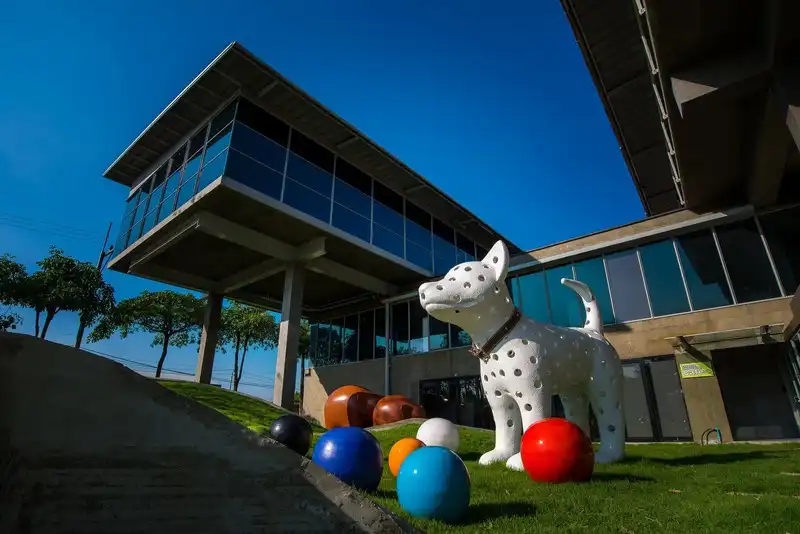
Bangkok Sculpture Center
Status: Permanently closed
Bangkok Sculpture Center remains a name frequently referenced within Thailand’s art community, even though its physical space has ceased to operate. It was neither a museum in the conventional tourism sense nor a commercial gallery. Instead, it was conceived as an institution dedicated to “sustaining” Thai sculpture at a structural level—supporting artists, academic discourse, and the long-term documentation of contemporary sculptural knowledge.
The center was established as a non-profit private art initiative, operating without commercial intent, under the stewardship and management of Sermkhun Khunawong. He played a significant role in advocating for Thai sculpture as both an artistic and scholarly discipline—one that requires sustained accumulation of knowledge rather than short-term exhibition-driven consumption.
During its years of operation, the Bangkok Sculpture Center functioned primarily as a repository for works created by Thai sculptors. Its responsibilities included systematic collection and preservation, as well as the support of academic writing and the dissemination of sculptural knowledge at a depth beyond that of typical exhibition spaces. In this sense, the center acted as a kind of “living archive” of Thai sculpture at a particular moment in time.
The significance of the Bangkok Sculpture Center did not lie in the scale of its premises or the volume of visitors, but rather in its quiet and continuous behind-the-scenes work. Many of the works preserved there were not intended for sale, but instead reflected the evolution of ideas, forms, and techniques across generations of Thai sculptors—holding value as historical documents of contemporary Thai art.
In terms of purpose, the center was founded on the conviction that it could contribute to the advancement of personnel and academic practice in sculpture within Thailand. This mission encompassed support for artists, the cultivation of intellectual space, and the integration of art with broader social and knowledge-based contexts—dimensions often overlooked in art systems driven primarily by market forces.
At present, the Bangkok Sculpture Center has ceased operations as an exhibition venue and activity hub. There is no verified information confirming that the sculpture collections or archives formerly under its care have been relocated to a permanent alternative site. This absence of confirmation should be recorded as fact, in order to preserve accuracy and credibility in the documentation of Thailand’s contemporary art history.
Nevertheless, the closure of the physical space does not signify the end of its intellectual legacy. The work carried out by the Bangkok Sculpture Center continues to influence artists, scholars, and cultural practitioners in subsequent generations—particularly in its emphasis on preservation, process-oriented value, and the understanding of sculpture as a body of knowledge rather than merely an object of display.
Seen in a broader context, the Bangkok Sculpture Center represents a distinct chapter in the narrative of Thai art history. Even though its original space can no longer be accessed, it remains worthy of reference, citation, and remembrance—as an example of an art institution grounded in principle and commitment, rather than in trends or commercial return.
| Project Name | Bangkok Sculpture Center |
| Type | Non-profit private art initiative |
| Founder / Director | Sermkhun Khunawong |
| Primary Role | Collection and preservation of Thai sculpture; support for academic research and dissemination of sculptural knowledge |
| Current Status | Permanently closed |
| Collection Note | No verified information regarding relocation or permanent public display elsewhere |
Frequently Asked Questions (FAQ)
Q: Is the Bangkok Sculpture Center still open to the public?
A: No. The Bangkok Sculpture Center has permanently closed and no longer operates as a public exhibition space.
Q: Where were the sculpture collections relocated?
A: There is no verified information confirming that the collections were relocated to any permanent exhibition venue.
Q: Why is the Bangkok Sculpture Center important to Thai art history?
A: It played a crucial role in supporting artists, academic research, and the long-term documentation of Thai sculpture at a structural and institutional level.
Q: Is it relevant for art history studies?
A: Yes. It serves as an important case study of a non-profit private art institution driven by ideology and long-term commitment rather than commercial mechanisms.
 Category: ●Art, Culture and Heritage
 Group: ●Art, Craft Centres, Tradition
Last Update : 9 MonthAgo
 Last Update : 9 MonthAgo
 Click to Access the Navigation Map GPS
Bangkok Sculpture Center Map
Recommend

 Historical Sites and Monuments(3)
 Landmarks and Memorials(23)
 Royal Palace(13)
Art, Craft Centres, Tradition(35)
Royal Palace(13)
Art, Craft Centres, Tradition(35)
 Museums(59)
 Historic Homes and Cities(3)
 Art Gallery(16)
 Educational Places
 Museum for Study(6)
 Library(4)
 Places of Worship
 Temple(72)
 Church(2)
 Mosque(67)
 Other Sacred Sites(8)
 Research and Development
 Royal Project(1)
 Suburban Living
 Village, Community(5)
 Local Market(9)
 Floating Market(2)
 Nature and Wildlife
 River, Canal(3)
 Bays and Beaches(1)
 Other natural attractions(1)
 Entertainment and Agricultural
 Zoos and Aquariums(5)
 Animal camps and shows(5)
 Stadium(9)
 Farms, Parks and Ecotourism(20)
 Amusement Park(1)
 Waterpark(4)
 Theater(7)
 Cinema(1)
 Shopping
 Shopping and Night Market(20)
 Department Store(7)
 Spas and Wellness
 Spas and Wellness(1)
 Restaurant
 Michelin Star(5)
 Accommodation
 Hotel(3)
 Call Customer Service in Tourism
 Call Customer Service in Tourism(1)
 Travel Articles, Recipes
 Travel Review, Food Review(37)
 Royal Thai Desserts and Recipes(56)


