
lovethailand home >Central Travel Attractions >Bangkok Travel Attractions >Phra Nakhon >Wang Burapha Phirom > Yodpiman River Walk Bangkok
TL;DR: Yodpiman River Walk Bangkok is located at 390/17 Ban Mo Road, Wang Burapha Phirom, Phra Nakhon, Bangkok 10200, Thailand, open Daily, hours 9:00 AM – 9:00 PM. Restaurants and special activities within the complex follow.
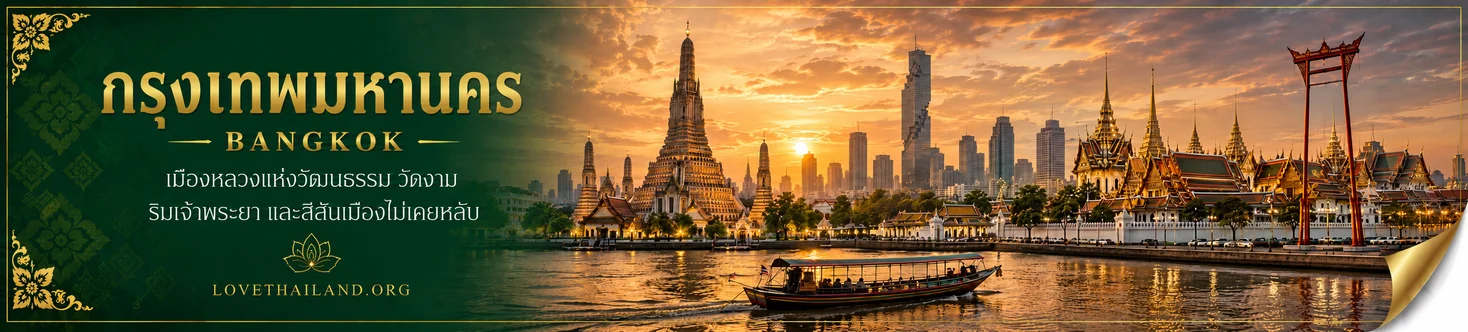
Yodpiman River Walk Bangkok
Open Days: Daily
Opening Hours: 9:00 AM – 9:00 PM. Restaurants and special activities within the complex follow their individual operating schedules.
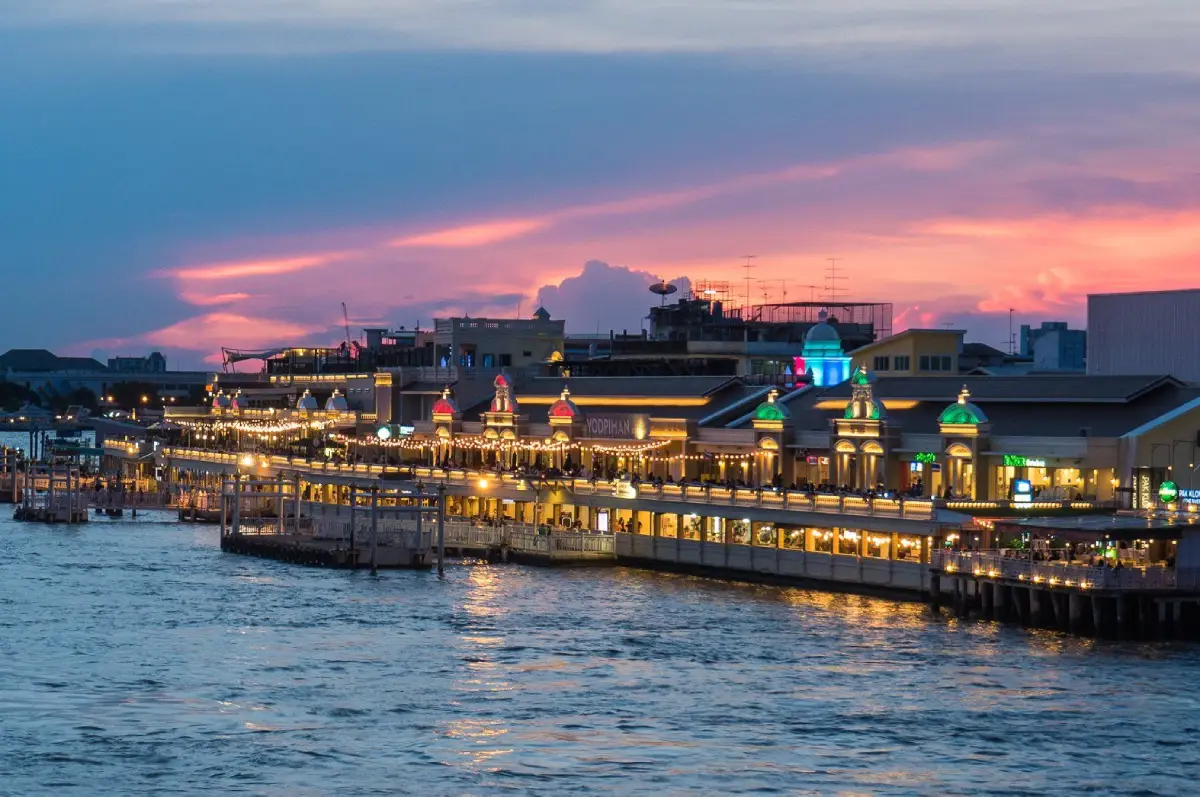
Yodpiman River Walk is a riverside shopping and leisure complex in Bangkok's historic Pak Khlong Talat district, located at 390/17 Ban Mo Road, Wang Burapha Phirom, Phra Nakhon, Bangkok 10200, Thailand. The development is distinguished by six three-storey buildings featuring Neoclassical and Colonial-inspired architecture, arranged along the Chao Phraya River. It includes an approximately 300-metre riverside promenade, restaurants, shops, viewing areas and a pier connecting the complex with river transport and tourist activities. The general public areas open daily from 9:00 AM to 9:00 PM, and entry is free. The development remains operational in 2026 following renovations and its reopening in late 2025. Visitors can enjoy views of the Chao Phraya River, Memorial Bridge, Wat Kalayanamit, Wat Arun and Santa Cruz Church, while exploring the adjacent Pak Khlong Talat Flower Market. The complex is accessible by the MRT Blue Line via Sanam Chai Station, followed by a walk through Atsadang Road or Chakkraphet Road.
One of Yodpiman River Walk's principal attractions is its relationship with the Chao Phraya River, which has shaped Bangkok's daily life for centuries. Standing on the riverside promenade, visitors can watch passenger ferries, cross-river boats, sightseeing vessels and other watercraft moving along the river throughout the day. On the opposite bank, historic Thonburi communities contain important Buddhist temples and other religious buildings. These surroundings make Yodpiman more than a conventional retail destination. The experience includes encountering an urban landscape in which the river continues to function as both a transportation corridor and a culturally significant public space.
The development stands in Wang Burapha Phirom, part of Bangkok's historic Phra Nakhon district. This neighborhood has been associated with trade, transportation and urban expansion since the early Rattanakosin period. Its surroundings contain flower markets, traditional shophouses, floral-supply businesses, restaurants, religious buildings and several river piers. Ban Mo Road, Chakkraphet Road, Atsadang Road and Sanam Chai Road form important connections between commercial streets and the Chao Phraya. Together, these elements give the area the character of an old commercial district where activities on land and water continue to operate alongside one another.
Pak Khlong Talat has long been an important center for trading fresh flowers, vegetables, fruit and other products. Its name refers to the location of a market near a canal mouth, reflecting the waterways once used to transport merchandise from agricultural areas into Bangkok. When boats were more important than motor vehicles for transporting goods, riverfront and canal-side sites were particularly valuable for trade and distribution. Although wholesale activities adapted as roads and modern logistics developed, Pak Khlong Talat retained its reputation as one of the capital's best-known flower-market districts.
The creation of Yodpiman River Walk was closely connected with the idea of adapting a historic riverside trading area into a contemporary leisure and commercial destination. The complex first opened in November 2014, following the redevelopment of buildings and riverfront space with an architectural identity inspired by Bangkok's historical setting. Areas were allocated for restaurants, retail businesses and services, while the river-facing side was developed as a promenade and viewing area. This approach allowed a neighborhood rooted in traditional commerce to accommodate tourism, dining and recreational activities throughout the day and evening.
The architectural direction reflects an intention to connect contemporary retail uses with the atmosphere of old Bangkok's riverside districts. The buildings were designed and adapted with Neoclassical and Colonial-inspired details, including arched openings, light-colored walls, decorative columns and regularly arranged windows and entrances. These features evoke the appearance of historic commercial streets through a modern architectural interpretation. It is therefore important to distinguish the contemporary development of Yodpiman River Walk from the considerably older history of Pak Khlong Talat and the traditional commercial buildings surrounding it.
Yodpiman Market Company Limited is associated with operating the development and its shopping-center business, with contact information published through the Chao Phraya River Tourism Association. Managing this type of riverside complex involves organizing commercial spaces, maintaining utilities, cleaning public areas, looking after pedestrian routes and coordinating events. The presence of a pier alongside restaurants and leisure areas also creates operational requirements involving the movement of passengers and the differing schedules of shops, boats and other activities.
Following its original opening, Yodpiman River Walk became known for its river views and its convenient connection with Pak Khlong Talat. The complex later underwent a period of renovation between 2023 and 2025 before reopening on November 1, 2025. The improvements brought the riverside promenade and pier-related facilities back into use, supporting renewed activities. In 2026, restaurants and public events were again taking place within the development, including a major festival celebrating flowers, art and creative culture.
What differentiates Yodpiman River Walk from shopping centers in Bangkok's modern business districts is the way its buildings relate directly to the river. One side connects with the streets and traditional market neighborhood, while the other opens onto a continuous waterfront promenade. Visitors can move from the busy flower market, where products are regularly loaded and unloaded, into a more open environment overlooking the Chao Phraya and historic architecture on the Thonburi bank. This contrast within a short walking distance provides a combination of commerce, recreation and urban sightseeing.
The development contains six principal three-storey buildings arranged along the waterfront. Ground-level areas accommodate shops and pedestrian circulation, while upper floors can be used for restaurants and other businesses according to the individual tenants. Connecting the buildings creates a coherent architectural composition, while the repeated openings and arches contribute to the visual rhythm of the complex. The relationship between the shopfronts and the riverside walkway is essential to the overall design, allowing commercial spaces to interact with the open riverfront.
Neoclassical influences are expressed through symmetry and the repetition of architectural elements. Arched openings, decorative columns and regularly spaced windows create an orderly appearance along the building façades. Colonial-inspired detailing contributes an old-world atmosphere without reproducing one specific historic building in its entirety. This approach is consistent with modern waterfront developments that seek to acknowledge their historical surroundings while accommodating contemporary restaurants, retail businesses and visitor services.
The buildings' light-colored façades make their arches, window frames and decorative features clearly visible. Afternoon sunlight creates shadows along columns and projecting surfaces, while evening illumination highlights the architectural forms from a different perspective. The buildings consequently appear different throughout the day, even though the underlying architectural arrangement remains unchanged. Their open relationship with the river ensures that the wider cityscape remains an important part of the setting.
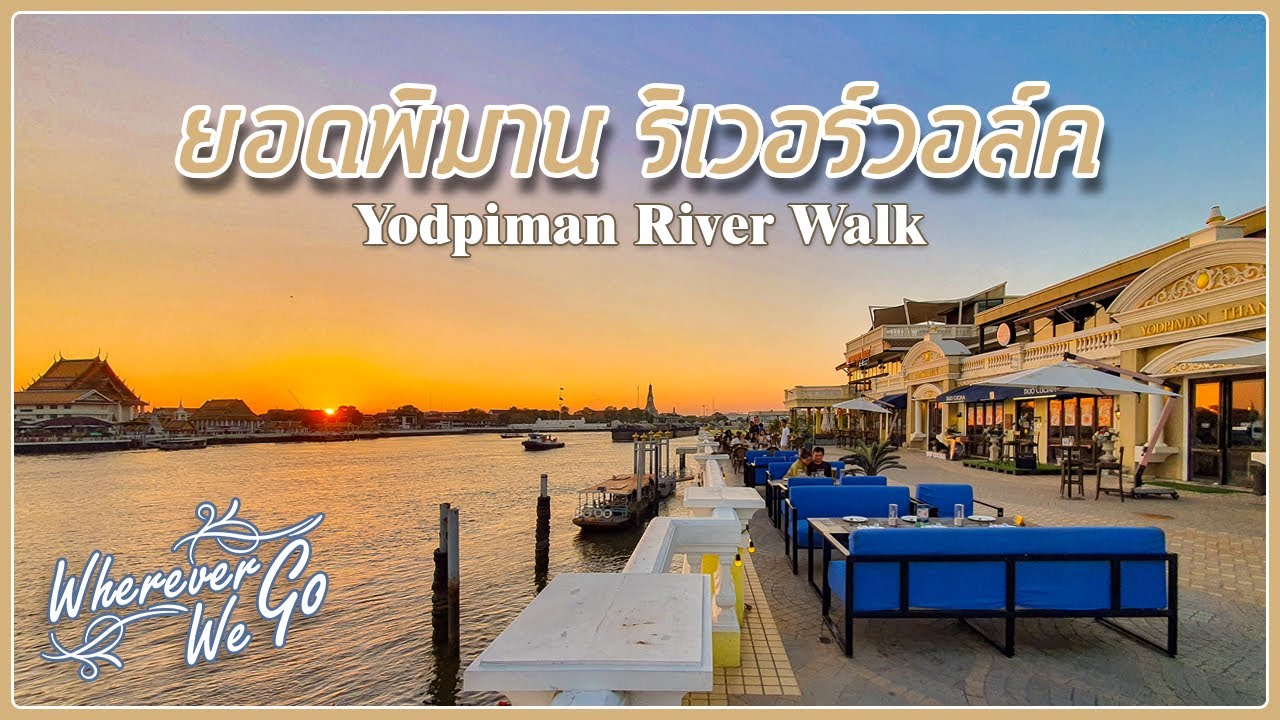
The approximately 300-metre riverside promenade is Yodpiman River Walk's most defining feature. It provides continuous access to the river view rather than limiting visitors to looking through restaurant windows. Railings separate the pedestrian route from the water, and the walkway connects shops, restaurants and the pier area. Moving along its length reveals changing perspectives of temples, the bridge and boats traveling along the Chao Phraya, allowing visitors to experience the waterfront at close range.
The length of the promenade means that riverside views are not confined to a single photographic viewpoint. Walking from one end to the other changes the relationship between Memorial Bridge, old Thonburi buildings, temple roofs and river piers. Even small changes in position can reveal a different perspective, with some locations offering broad views along the river and others emphasizing the details of nearby buildings and passing boats.
Memorial Bridge, also known as Saphan Phut, is one of the principal landmarks visible from the complex. It was built to connect the Phra Nakhon and Thonburi sides of Bangkok during a period of significant modernization in the city's road and infrastructure systems. Its opening in 1932 was associated with the celebration of the 150th anniversary of the Rattanakosin capital. The bridge therefore has both transportation and historical importance. From Yodpiman River Walk, its steel structure can be seen crossing the Chao Phraya, illustrating Bangkok's transition from a city heavily dependent on boats toward one increasingly connected by roads.
The area around Memorial Bridge also illustrates the everyday connections between communities on the two riverbanks. The bridge allowed people to move between the sides of the city without depending on ferries for every journey. Nevertheless, riverboats and piers continued to serve important functions. Seeing the bridge together with boats passing beneath it demonstrates how Bangkok's transportation network has incorporated different systems rather than completely abandoning water transport as roads and bridges expanded.
Wat Kalayanamit Woramahawihan stands on the Thonburi side of the Chao Phraya and is an important religious landmark visible from the Yodpiman waterfront. Founded during the reign of King Rama III, the temple contains a large Buddha image known as Phra Phuttha Trai Rattana Nayok, commonly called Luang Pho To or Sam Po Kong. Devotion to the image is closely connected with Thai-Chinese communities. From the Phra Nakhon bank, the temple's rooflines and surrounding buildings form part of a historic riverside landscape, reflecting the relationship between religious institutions and settlement in the Kudi Chin area.
Santa Cruz Church is another major architectural landmark visible across the river. It stands within Kudi Chin, a historic Thonburi community with links to Catholics of Portuguese descent dating back to the Thonburi period. The present church building incorporates Western-influenced architectural features, especially its prominent dome and roofline rising above surrounding houses. Its proximity to Buddhist temples makes this section of the Chao Phraya an excellent example of the religious and cultural diversity that has existed in Bangkok for generations.
Wat Arun Ratchawararam is another major landmark within the broader Chao Phraya panorama. Its central prang is decorated with ceramics and porcelain fragments, a distinctive feature of early Rattanakosin artistic traditions. The temple stands farther north along the river, so the view depends on the visitor's position and the surrounding waterfront buildings. Traveling along the river provides additional opportunities to appreciate the prang and its associated religious architecture from the water.
The Chao Phraya River makes a visit to Yodpiman River Walk different from walking through an ordinary public park. Its appearance changes continuously with water levels, weather and the movement of boats. During the morning, river traffic reflects everyday transportation and commercial activity. In the late afternoon, sunlight changes the colors of nearby buildings and the water. After sunset, lights from piers, bridges and buildings on both banks create a distinctive nighttime cityscape.
Yodpiman Pier connects the shopping complex with Bangkok's river transportation network. The pier is located beside the waterfront promenade and accommodates boat services or water-related activities according to individual operators' schedules. At certain times it is used by sightseeing vessels and dinner cruises as a passenger boarding point. Its position allows passengers to combine a river journey with dining or waterfront sightseeing without leaving the Pak Khlong Talat neighborhood.
River tourism on the Chao Phraya takes several forms. Some vessels operate as scheduled passenger services stopping at designated piers, while others provide daytime sightseeing trips or evening dinner cruises. The use of Yodpiman Pier depends on the route and schedule of each boat operator. Consequently, not every vessel passing the development can be boarded or disembarked from at this particular pier.
Evening dinner cruises are closely associated with the complex's waterfront atmosphere. Their routes may pass prominent sites such as Wat Arun, the Grand Palace and various bridges along the Chao Phraya. Some operators use Yodpiman Pier as a check-in or boarding location. These cruises have their own prices and boarding schedules, which are separate from the free public access to Yodpiman River Walk's promenade.
The operation of the pier also reflects Pak Khlong Talat's historical position as a transportation hub. In earlier periods, large quantities of agricultural products arrived by river and canal before being moved onward by carts and, later, motor vehicles. Today, the waterfront increasingly accommodates passenger travel and tourism rather than primarily handling cargo. The area therefore retains its association with the river even though the purposes of waterfront activities have changed.
Restaurants within Yodpiman River Walk make use of the Chao Phraya panorama as a central feature. Some offer tables facing the water and historic buildings across the river, providing an atmosphere different from that of fully enclosed shopping malls. Diners can choose among Thai and international cuisines, while certain establishments combine air-conditioned rooms with outdoor seating. Waterfront dining contributes to the development's evening appeal, particularly when buildings and bridges begin to illuminate after sunset.
NAGIYA Yodpiman Riverwalk is a Japanese restaurant occupying an upper-floor location within the development. Its dining format is particularly suited to groups, emphasizing grilled skewers, hotpots and a range of Japanese dishes. The restaurant provides riverside seating and private dining rooms according to its layout. Its principal appeal lies in combining Japanese dining with views of the Chao Phraya and Thonburi's historic waterfront, creating an experience distinct from Japanese restaurants inside conventional shopping malls.
NAGIYA's grilled skewers include different kinds of meat and other ingredients cooked over direct heat, while its hotpot selections are suitable for sharing among several people. Different broths and seasonings create variety within the meal. Fish and seafood dishes are also included according to the current menu. The availability of separate dining rooms makes the restaurant suitable for family gatherings and special occasions as well as ordinary evening meals.
RosSamran is a Thai riverside restaurant within Yodpiman River Walk, located along Atsadang Road. Its culinary approach draws on traditional Thai flavors and ingredients while presenting dishes through contemporary dining techniques and arrangements. Views toward the river and important buildings on the Thonburi bank form part of the restaurant's setting. Dining here therefore connects Thai culinary traditions with the cultural landscape of old Bangkok.
RosSamran emphasizes carefully composed Thai meals and combinations of flavors, using herbs, spices and ingredients associated with different regional culinary traditions. This approach encourages guests to spend time appreciating the details of each dish rather than simply having a quick individual meal. The dining experience is enhanced by the surrounding waterfront, which remains visible throughout the meal.
Hinata at Yodpiman is another Japanese restaurant within the complex. It offers Japanese dishes with an emphasis on ingredient quality and a structured dining experience, including seafood and cooked selections according to its menu. Its setting is associated with views of the Chao Phraya River, allowing guests to combine Japanese cuisine with the architectural and waterfront atmosphere of Bangkok's historic district.
The presence of different restaurant concepts gives Yodpiman River Walk a variety of dining options. Visitors interested in Thai cuisine can choose a carefully presented meal featuring traditional flavors, while Japanese food enthusiasts can find both group-oriented dining and more specialized restaurant experiences. This diversity reflects the character of a modern riverside development that relies not only on retail businesses but also on dining and scenic surroundings to attract visitors.
Beyond the complex itself, the Tha Tien neighborhood farther north contains additional restaurants connected to Yodpiman through Maha Rat Road and Sanam Chai Road. Supanniga Eating Room Tha Tien is a riverside Thai restaurant inspired by family recipes and dishes from different parts of Thailand. Its setting provides views across the Chao Phraya toward Wat Arun. Visitors exploring Pak Khlong Talat and Tha Tien can therefore encounter different expressions of Thai cuisine within the same historic riverside district.
Eat Sight Story Deck is located in the Tha Tien area near Maha Rat Road and the river. It serves food and drinks in a setting overlooking Wat Arun on the opposite bank. The restaurant is associated with accommodation in Tha Tien, another of Bangkok's historic trading neighborhoods. A meal here can be connected with visits to Wat Pho, Tha Tien Market and the riverfront without traveling to another part of the city.
Retail spaces at Yodpiman River Walk accommodate different kinds of businesses, including souvenirs, handicrafts, fashion products and certain community-made goods. The mix of tenants can change over time. The important distinction is that Yodpiman functions as a contemporary retail setting immediately beside a wholesale flower market with very different trading practices. Within a small area, visitors can observe commercial diversity ranging from the large-scale purchase of fresh flowers to the selection of gifts and meals overlooking the Chao Phraya.
Handicrafts and community products represent ways of bringing local knowledge and craftsmanship into urban retail settings. Many handmade products depend on skills maintained through families or communities. Retail space within a riverside complex can provide opportunities for customers to encounter products originating from different parts of Thailand. Travelers from other provinces and overseas can also discover items reflecting traditional materials and methods of production within Bangkok's historic city center.
Multipurpose areas within Yodpiman River Walk can accommodate cultural activities, creative events and festivals organized by the development or external partners. The relationship between indoor rooms, open spaces and the river enables different forms of programming. Some events focus on merchandise displays and artistic installations, while others use the waterfront promenade as a backdrop for activities directly connected with Bangkok's historic landscape.
The Bangkok Flower Festival, held from September 18 to 27, 2026, was an important example of Yodpiman River Walk being used for creative cultural activities. It brought together flowers, art, design, food and participatory experiences connected with Pak Khlong Talat's identity. The event featured indoor flower displays, exhibitions, photographic installations, craft activities and experiences involving ingredients derived from flowers. It introduced the flower-trading neighborhood as a contemporary cultural destination while retaining its established role as an important wholesale market.
The 2026 festival also included floral artwork, food and decorative merchandise, and culinary experiences inspired by flowers. Projection-based visual presentations and illuminated displays were incorporated into parts of the program. Its afternoon-to-evening schedule allowed visitors to experience both the flower exhibits and changing river views. The event was closely connected with the reputation of Pak Khlong Talat and created opportunities for flower-related businesses to interact with Bangkok's creative community.
The festival charged THB 150 per person under the organizer's terms during the event dates. This was entirely separate from Yodpiman River Walk's ordinary free access to the public promenade. Special-event ticketing demonstrates that the complex can accommodate activities with specific admission arrangements in addition to its everyday role as an open riverside destination. Visitors to the regular shopping and promenade areas are not required to purchase admission tickets for a festival that has already ended.
Immediately beside Yodpiman River Walk, Pak Khlong Talat is one of Bangkok's principal destinations for fresh flowers. Shops trade in roses, orchids, chrysanthemums, jasmine and numerous other flowers used for bouquets and ceremonies. Visitors can observe the sorting, trimming, bundling and arranging of flowers for sale. The atmosphere belongs to a functioning commercial market rather than an attraction created solely to display flowers for photography.
Fresh flowers play an important role in Thai daily life through religious offerings, expressions of respect, decorative arrangements and gifts for significant occasions. Jasmine is often used for garlands and devotional offerings, while roses and other flowers are selected according to the occasion and the intention of the giver. The flower market therefore contributes to cultural activities beyond the sale of attractive merchandise. Its customers include temples, shrines, hotels, event organizers and families needing flowers for everyday and ceremonial purposes.
Trading activity at Pak Khlong Talat changes throughout the day. The late-night and early-morning hours are particularly important for receiving deliveries and preparing large quantities of flowers for distribution. During the day, customers purchase flowers for personal use, bouquets and event arrangements. In the evening, illuminated stalls create a different atmosphere from the early-morning wholesale activity. Moving between the flower market and Yodpiman River Walk provides an opportunity to experience two distinct uses of adjoining urban space.
Yodpiman Flower Market is another flower-trading area associated with the wider Pak Khlong Talat district and located near the riverside development. Its principal function is the sale of flowers to individual buyers and businesses preparing them for different occasions. The flower market and Yodpiman River Walk therefore serve complementary purposes. One concentrates on commercial flower distribution, while the other provides shopping, dining, leisure and river views to people visiting the same district.
The diversity of flowers available in Pak Khlong Talat also reflects the transport networks connecting agricultural producers with the capital. Some flowers come from growing areas in central Thailand, while others originate in cooler highland regions and require transportation arrangements that maintain freshness. Once products reach the market, they are sorted and sold onward to florists, hotels, temples and event venues. These activities reveal the relationship between agricultural production and the everyday needs of an urban population.
The surrounding neighborhood also contains shops selling materials for flower arranging, including wrapping paper, ribbons, pots, containers and decorative accessories. The concentration of these businesses near the flower merchants allows the district to serve both customers buying flowers for immediate use and professional florists preparing arrangements for clients. This commercial specialization gives Pak Khlong Talat a strong economic identity supported by related products and services.
Despite standing next to one another, Pak Khlong Talat and Yodpiman River Walk offer different experiences. Flower-market visitors are often engaged in purchasing merchandise, comparing prices and moving products between shops and delivery vehicles. The riverside promenade, by contrast, provides a place to slow down, enjoy food and appreciate the cityscape. The neighboring destinations therefore allow visitors to experience an active commercial economy and a modern leisure development during the same outing.
Morning at Yodpiman River Walk differs considerably from the evening atmosphere. Sunlight illuminates the façades and river, while commercial activity continues in nearby Pak Khlong Talat. This period reveals architectural details and the connections between market streets and river piers clearly. Although some restaurants have not yet opened, the waterfront remains attractive because of passing boats and the historic landmarks on both riverbanks.
From late morning through the afternoon, the promenade receives stronger sunlight and visitors arriving from nearby attractions such as Museum Siam, Wat Pho and Tha Tien. Some stop for a meal, while others enjoy the river before continuing their sightseeing. Bangkok's daytime heat can be substantial, particularly during the hot season, making covered restaurant areas and shaded spaces important for comfort.
Late afternoon is one of the most visually appealing periods at Yodpiman River Walk. As sunlight becomes softer, the river and buildings across the water change color according to atmospheric conditions. Walking along the promenade provides different views of Memorial Bridge and the vessels traveling through the evening light. It is also a pleasant setting for dining and observing the surroundings at a more relaxed pace.
After dark, lighting along the buildings and shopfronts gives the riverside a different character. Reflections from Thonburi's waterfront, Memorial Bridge and the boats moving through the river create an illuminated urban panorama. Some sightseeing vessels carry decorative lights, adding movement and color to the scene. These surroundings have contributed to the development's reputation as a dining and evening sightseeing destination, although individual restaurant hours may extend beyond the general operating hours of the complex.
Photography at Yodpiman River Walk is particularly interesting because several kinds of visual elements appear together. Light-colored buildings and arches provide architectural subjects, while the river railing creates leading lines toward the water. Historic temples and churches on the opposite bank supply a culturally significant background. Photographs taken at different times can reveal changes in the relationship between natural light, artificial illumination and the river landscape.
For an Old Bangkok walking itinerary, Yodpiman River Walk offers a convenient connection between several important attractions. It lies between Pak Khlong Talat, Memorial Bridge and routes leading toward Sanam Chai Road. Visitors interested in traditional commerce can explore the flower market before reaching the riverfront. Those interested in temples and history can continue toward Wat Pho or cross to Thonburi's historic religious sites. This makes the development a natural part of a half-day or full-day exploration of the old city.
Museum Siam is a nearby attraction devoted to history and culture, housed in a historic building on Sanam Chai Road. Its exhibitions explore Thai identity through social history, language, food, clothing and other cultural subjects. Interactive presentations and multimedia encourage visitors to engage with the material rather than viewing only static displays of historic objects. Combining Museum Siam with Yodpiman River Walk allows travelers to explore both interpreted urban history and the river landscape that contributed to Bangkok's development.
Museum Siam's building formerly served a government function before being adapted into a cultural learning institution. Its reuse illustrates the conservation of architectural heritage through contemporary activities. Although the museum operates very differently from a riverside shopping center, both places demonstrate how historic urban environments can accommodate new functions while remaining connected with the cultural setting of their neighborhoods.
Wat Phra Chetuphon Wimon Mangkhalaram, commonly known as Wat Pho, is an important Buddhist temple in Phra Nakhon not far from Yodpiman River Walk. The complex contains the famous Reclining Buddha, important royal chedis, an ordination hall and artistic features associated with the Rattanakosin period. Wat Pho is also internationally recognized for its contribution to traditional Thai medicine and massage education. A visit provides insight into Buddhism, history, architecture and traditional knowledge.
Wat Pho's Reclining Buddha is approximately 46 metres long and is an important religious image depicting the Buddha in a reclining posture. Its feet are decorated with auspicious symbols associated with Buddhist tradition. Surrounding structures and artworks introduce visitors to the artistic and religious history of Thailand. Visiting Wat Pho and Yodpiman River Walk on the same day brings together a major religious landmark and an active riverside commercial neighborhood.
Wat Arun Ratchawararam stands on the Thonburi bank opposite the historic city and has an important place in the history of Thonburi and early Rattanakosin. Its monumental central prang, decorated with ceramic and porcelain elements, is one of Bangkok's most recognizable architectural symbols. The grounds also contain an ordination hall, other religious buildings and important artistic features. Travelers can connect a visit from the Yodpiman area through the river transport network, using services that stop at the appropriate piers on the day of travel.
Wat Prayurawongsawat Worawihan, also called Wat Prayoon, is a major royal temple near Memorial Bridge on the Thonburi side. Its distinctive architecture includes Phra Borommathat Maha Chedi, an important large stupa, and Khao Mo, a landscaped area incorporating an artificial hill, ponds and smaller architectural features. Founded during the reign of King Rama III, the temple is associated with the development of early Rattanakosin Thonburi. It can be connected with a visit to Yodpiman River Walk through a route crossing Memorial Bridge.
The great stupa of Wat Prayoon illustrates Buddhist architectural and religious traditions during the Rattanakosin period. Khao Mo offers a contrasting atmosphere through its arrangement of rocks, water and smaller structures. A visit therefore combines religious architecture with a distinctive landscaped environment. The experience complements the urban and river views available at Yodpiman River Walk.
Kudi Chin is a historic riverside community on the Thonburi bank, shaped by the settlement of different cultural groups, especially Thai people of Portuguese descent associated with Santa Cruz Church. The neighborhood contains narrow pedestrian lanes, older houses, local bakeries and community learning spaces. Khanom Farang Kudi Chin, a traditional baked sweet, reflects the community's inherited culinary practices. Exploring the neighborhood adds everyday life and food history to a journey focused on religious buildings and the Chao Phraya River.
Santa Cruz Church remains a spiritual center for the Catholic community of Kudi Chin. Its Western-influenced architecture and interior arrangement for religious services distinguish it from nearby Buddhist temples. The coexistence of the church, Wat Kalayanamit and Chinese religious sites demonstrates how people from different backgrounds have lived within the same waterfront district. The neighborhood's history reflects the influence of trade, migration and settlement on Bangkok's cultural identity.
Wat Kalayanamit is particularly significant to people interested in Thai-Chinese history. The temple houses the large Buddha image Phra Phuttha Trai Rattana Nayok, widely venerated under the name Sam Po Kong. Its location by the river recalls the importance of piers and waterways to earlier communities. Viewing the temple from Yodpiman River Walk before crossing to visit it reveals the relationship between a religious site and the commercial waterfront on the opposite bank.
Tha Tien Market is another historic commercial district connected with Yodpiman through Maha Rat Road and Sanam Chai Road. Its renovated shophouses contain traditional dried-food businesses, local restaurants and contemporary enterprises. Tha Tien's history is associated with river trading during the early Rattanakosin period, giving it similarities with Pak Khlong Talat as a former center of water-based commerce. Visiting both neighborhoods illustrates how trading areas have developed different specializations and functions over time.
The Memorial Bridge area also provides connections to older commercial districts on the Phra Nakhon side, including Ban Mo, Phahurat and Sampeng. Ban Mo is known for electrical and specialist retail businesses, while Phahurat is associated with fabric trading and Bangkok's Indian community. Sampeng remains an important wholesale district selling many types of merchandise. Exploring these neighborhoods demonstrates that Yodpiman River Walk stands within a broader network of commercial areas, each possessing its own history and specialties.
Atsadang Road is an important route connecting Pak Khlong Talat with streets near the historic city moat and other parts of Phra Nakhon. It enables visitors to approach the development by land rather than exclusively by boat. Shops, commercial buildings and market connections line the surrounding streets. The transition from a busy trading road to the open riverside promenade illustrates the diversity of environments within Bangkok's old commercial districts.
Chakkraphet Road provides another route toward Pak Khlong Talat and Memorial Bridge. It connects important shopping areas in southern Phra Nakhon and is served by public transport in the surrounding neighborhood. Approaching Yodpiman River Walk through this corridor allows visitors to observe working commercial streets before reaching the riverside viewing areas. The route is therefore part of the wider experience of historic Bangkok's market culture.
The MRT Blue Line provides a convenient rail connection to Pak Khlong Talat. Sanam Chai Station is the most useful station for nearby attractions including Museum Siam and the historic streets around Sanam Chai Road. From the station, visitors can walk toward Atsadang Road, Ban Mo Road and the flower market before reaching Yodpiman River Walk. This route passes different kinds of historic commercial buildings and is practical for travelers who prefer not to drive into narrow Old Bangkok streets.
Passenger boats on the Chao Phraya offer another way to reach the waterfront. Certain express-boat and tourist-boat services stop at piers around Pak Khlong Talat or Memorial Bridge according to their routes. Access to Yodpiman Pier itself depends on the service and schedule of the individual operator. Travelers arriving from other places along the river can use a suitable nearby pier and continue on foot into the complex.
River transport connects numerous important landmarks, including piers serving Wat Arun, Tha Tien, Memorial Bridge and older trading districts farther south. Traveling by boat provides views of temples, bridges and riverside communities from a perspective very different from walking along the streets. Arriving at Yodpiman River Walk by water establishes a direct connection with the transport system that was central to the area's trading history.
Drivers can approach the development from Chakkraphet Road or Atsadang Road, using Pak Khlong Talat and Memorial Bridge as landmarks. The surrounding streets can be busy with delivery vehicles and market traffic, particularly when flower merchants are receiving and distributing products. Parking and passenger drop-off arrangements depend on authorized facilities in the immediate area. Walking from an appropriate parking location into the complex is consistent with the layout of the historic district.
Taxi passengers and users of app-based transport can enter Yodpiman River Walk, Ban Mo Road, Phra Nakhon, as their destination. The most convenient drop-off point depends on the road approach and current traffic conditions. Certain streets are used continuously for commercial deliveries, so reaching the pedestrian areas may involve a short walk from an authorized stopping location.
Visitors exploring on foot can connect Yodpiman River Walk with Sanam Chai Station, Museum Siam, the flower market and Memorial Bridge. The same route offers several distinct environments, including museum architecture, trading streets, floral displays and an open waterfront. Walking between them reveals how the city's canals, roads and river have influenced the development of historic Bangkok over time.
During the hot season, the riverside receives considerable sunlight, especially in the afternoon. Covered restaurant areas and air-conditioned dining rooms provide sheltered places to spend time. As the sun begins to set, changing weather and river breezes create a different atmosphere along the promenade. The late-afternoon period is consequently particularly popular with visitors interested in waterfront views.
The rainy season gives the development a different character. Clouds and passing showers can quickly change the colors of the sky and the Chao Phraya River. Some sections of the promenade are open to the weather, while parts of the adjoining buildings and restaurants provide shelter. Such changes are characteristic of Bangkok's tropical climate and demonstrate the close relationship between urban life and seasonal conditions.
Architecture enthusiasts can study the relationship between Yodpiman River Walk's six buildings and its public spaces. The design uses arches and decorative columns to establish a continuous visual rhythm, while the riverfront promenade links commercial interiors with open surroundings. These elements show how shopping developments can incorporate places for recreation and public activity alongside retail functions.
For people interested in urban history, Yodpiman provides a useful viewpoint for considering the relationship between Pak Khlong Talat, Memorial Bridge and Thonburi's historic neighborhoods. These places developed through different transportation and commercial needs. Pak Khlong Talat became a center for agricultural and flower distribution, Memorial Bridge facilitated road movement between the riverbanks, and Thonburi retained religious sites founded during different historical periods. Seeing them together helps explain the development of Bangkok across several eras.
The surrounding neighborhood is equally relevant to visitors interested in community life because it remains a working marketplace. Merchants receive goods, arrange flowers, maintain shops and deliver products to customers according to commercial schedules. Customers include private buyers and businesses purchasing flowers for events or resale. The market's activity therefore depends on the everyday demand for its products, not solely on tourist arrivals. This continuing commercial role helps preserve Pak Khlong Talat's identity as riverside tourism develops.
Yodpiman River Walk contributes to the local economy by connecting several kinds of business activity. Restaurants and retailers benefit from people arriving to explore the flower market or use river services. Meanwhile, visitors who come for riverside dining may continue into neighboring streets to buy flowers or use other local businesses. This relationship allows traditional commercial activities and modern visitor-oriented enterprises to serve overlapping audiences while retaining different functions.
The use of waterfront space for festivals also creates new relationships between the neighborhood and its visitors. The 2026 flower festival demonstrated how a product central to the local economy could become the subject of artistic and cultural experiences. Food businesses, craftspeople and creative organizers participated in activities connected with flowers. Yodpiman River Walk consequently demonstrated a role beyond shopping and sightseeing by providing a setting in which the identity of Pak Khlong Talat could be expressed through contemporary cultural events.
Walking along the promenade and taking photographs do not require customers to purchase merchandise. The general public areas of Yodpiman River Walk are open without a normal admission charge, allowing residents and visitors to enjoy the riverfront. Expenses arise when guests order food, buy goods, book special services or attend events with separately priced tickets. The complex therefore accommodates different ways of using the waterfront, from simple walks to complete dining and leisure experiences.
Families with children can watch different kinds of boats and examine the historic buildings visible from the riverside promenade. Railings separate the pedestrian areas from the water. The setting also creates opportunities for conversations about transportation, commerce and the landmarks on the opposite bank. Children can experience the river as an active part of the city rather than simply a scenic feature viewed from a distance.
Older visitors can use restaurant seating and designated resting areas without needing to walk the entire promenade at once. Connecting passages and shops provide different opportunities for spending time in the complex. Access to upper floors and some pier areas depends on the arrangements and facilities operating at the time. Visitors with limited mobility can therefore use the areas suited to their walking and access requirements.
Parts of the complex provide access suitable for wheelchair users or people who find stairs difficult. However, individual restaurants, upper-level spaces and pier facilities may have different access arrangements. Accessibility consequently depends on the exact destination within the development and the routes available on the day. The layout of the relevant shop or pier area is an important consideration when planning movement through the complex.
Visitors interested in culture can connect Yodpiman River Walk with historic temples and religious buildings on the Thonburi side during the same day. The nearby stretch of the Chao Phraya contains Buddhist temples and a Catholic church associated with several historic communities. Crossing Memorial Bridge or using appropriate boat services allows travelers to move between the riverbanks. Returning to Pak Khlong Talat in the evening then introduces the contrasting atmosphere of a working flower market and riverside dining.
Food enthusiasts can explore a wide range of dining experiences around Pak Khlong Talat and Tha Tien. These include waterfront restaurants, establishments within old shophouses and practical food businesses serving workers in the market district. The choice ranges from meals accompanied by river views to traditional neighborhood dining. Different restaurant formats give the area culinary variety within a relatively compact section of old Bangkok.
Accommodation near Yodpiman River Walk ranges from small hotels in the flower-market district to riverside boutique hotels near Tha Tien and guesthouses close to Wat Pho or Museum Siam. These locations are convenient for travelers exploring Phra Nakhon's historical attractions and using the MRT or riverboats. Staying in the old city also allows visitors to experience the flower market in the morning and return to the river promenade in the evening without repeatedly crossing Bangkok.
Art Hotel Sanamchai is located within the Yodpiman River Walk development at 390/17 Ban Mo Road. It offers private rooms and shared accommodation with basic facilities for travelers. Its principal advantage is proximity to both the flower market and the riverside promenade, allowing guests to encounter the neighborhood at different times of day. The property suits visitors interested in walking around old Bangkok and using public transport to reach major cultural landmarks.
Riva Arun Bangkok is a boutique riverside hotel on Maha Rat Road near Tha Tien. Its relatively small-scale accommodation features a design influenced by Chinese and Colonial architectural details. The hotel is particularly known for views toward Wat Arun and the Chao Phraya, together with elevated dining facilities overlooking the old city. Guests can explore Wat Pho, Museum Siam and Pak Khlong Talat through the surrounding historic streets.
Sala Rattanakosin Bangkok is another boutique hotel on Maha Rat Road beside the Chao Phraya. River-facing rooms and dining spaces offer views of Wat Arun across the water. The property stands in a historic neighborhood containing temples, restaurants and narrow streets. Its setting appeals to travelers wanting to experience Bangkok's riverfront at different times of day while exploring Tha Tien and Pak Khlong Talat.
Aurum The River Place is a small hotel in the Tha Tien neighborhood, situated in Soi Pansuk near Maha Rat Road and the Chao Phraya. It provides accommodation for visitors seeking convenient access to Phra Nakhon's historic attractions. Its location near Wat Pho and walking routes toward Sanam Chai Station allows travelers to continue into Pak Khlong Talat. Those exploring temples and museums during the day can return to the Yodpiman waterfront in the evening.
Inn A Day is a small hotel on Maha Rat Road with a design concept connected to the older commercial character of Tha Tien. Its rooms and dining venues are associated with views of the Chao Phraya and Wat Arun. The location suits travelers who prefer to stay in the old city and move between nearby attractions on foot. Yodpiman River Walk is accessible through Maha Rat Road and the Pak Khlong Talat neighborhood.
Chetuphon Gate is a small accommodation property near an entrance to Wat Pho, on Pratu Nokyung Alley in Phra Nakhon. Its principal advantage is proximity to an important Buddhist temple and the surrounding Tha Tien walking routes. Guests can explore Wat Pho, continue to Museum Siam and proceed toward Pak Khlong Talat and Yodpiman River Walk. The property is suited to visitors who prioritize historic sightseeing over the extensive facilities of a large hotel.
Accommodation choices depend on the principal activities of the trip. Travelers interested in the flower market and riverside scenery can stay near Yodpiman or Ban Mo Road, while those concentrating on Wat Pho, the Grand Palace and museums may prefer hotels near Maha Rat Road or Sanam Chai Road. These locations are connected through the old city's pedestrian routes and public transport services operating nearby.
Yodpiman River Walk is also relevant to the study of urban development and the creative economy. It demonstrates how an old riverside trading environment can accommodate modern activities without becoming disconnected from the active flower market beside it. Restaurants, a pier and festival spaces allow the complex to serve different audiences, while the Chao Phraya and historic landmarks on both banks remain central to its identity.
Viewed in the context of Pak Khlong Talat's history, the development represents one stage in the long transformation of the district. Goods were once brought into Bangkok primarily by waterways, later distributed through road-based wholesale networks, and today the neighborhood also accommodates tourism and creative activities. Yodpiman River Walk forms part of that process by introducing new uses alongside an established market that continues serving Bangkok's daily commercial needs.
The complex's appeal does not come solely from architecture inspired by the past. It also comes from the opportunity to experience the city's history through an authentic landscape. The Chao Phraya, Memorial Bridge, Wat Kalayanamit, Santa Cruz Church and Pak Khlong Talat all have their own historical significance. Seeing and exploring them within the same district reveals how trade, settlement, religion and transportation have shaped Bangkok through several centuries.
An evening walk at Yodpiman River Walk offers a combination of the flower market's continuing commercial activity and the more relaxed atmosphere of the riverside. As lights illuminate the shops and sightseeing boats pass, the neighborhood takes on a different character from the early-morning hours when flower deliveries are underway. Returning at different times therefore offers changing experiences shaped by light, local trading activity and the way people use the waterfront.
Getting There: Take the MRT Blue Line to Sanam Chai Station and continue on foot toward Pak Khlong Talat via Atsadang Road or Chakkraphet Road. River passengers can use services stopping near Memorial Bridge or Pak Khlong Talat and walk to the development, according to the piers and routes currently operated. Drivers can approach via Chakkraphet Road or Atsadang Road, using Pak Khlong Talat as the main landmark. Yodpiman River Walk is located at 390/17 Ban Mo Road, Wang Burapha Phirom, Phra Nakhon, Bangkok 10200, Thailand. Its public areas are open daily from 9:00 AM to 9:00 PM with free admission. Yodpiman Market Company Limited can be contacted on +66 2 623 6640.
Yodpiman River Walk Bangkok is a riverside shopping and leisure development within the historic Pak Khlong Talat flower-market district, connecting traditional commerce with contemporary tourism. Originally opened in 2014 and reopened following renovation in late 2025, the complex consists of six three-storey Neoclassical and Colonial-inspired buildings, an approximately 300-metre Chao Phraya promenade, restaurants, retail spaces, event areas and a pier. Its views include Memorial Bridge, Wat Kalayanamit, Santa Cruz Church and the river corridor leading toward Wat Arun. Immediately beside Pak Khlong Talat and close to Museum Siam, Wat Pho, Wat Prayoon and Kudi Chin, it offers access to Bangkok's history, architecture, food culture and traditional commerce within a connected sightseeing district. The venue has also hosted creative events such as the 2026 Bangkok Flower Festival, while its regular riverside promenade remains freely accessible during published operating hours.
| Place Name | Yodpiman River Walk Bangkok |
| Type | Chao Phraya Riverside Shopping Complex, Scenic Promenade, Restaurants, Retail and Creative Event Destination |
| Address | 390/17 Ban Mo Road, Wang Burapha Phirom, Phra Nakhon, Bangkok 10200, Thailand |
| Operator | Yodpiman Market Company Limited |
| Original Opening | November 2014 |
| Major Renovation | Closed for Renovation During 2023–2025 and Reopened on November 1, 2025 |
| Architecture | Neoclassical and Colonial-Inspired Design, with Details Referencing Old Bangkok's Historic Atmosphere |
| Buildings | Six Interconnected Three-Storey Buildings Arranged Along the Chao Phraya River |
| Riverside Promenade | Approximately 300 Metres Long |
| Main Areas and Facilities | 1. Six Retail and Service Buildings 2. Chao Phraya Riverside Promenade 3. Riverside Restaurants 4. Upper-Floor Dining Areas 5. Shops and Souvenir Retail Areas 6. Handicraft and Community-Product Spaces 7. Multipurpose Event and Festival Areas 8. Viewing Areas Facing Historic Bridges and Thonburi Religious Landmarks 9. Pier and Passenger Areas 10. Connections to Pak Khlong Talat and Ban Mo Road |
| Open Days | Daily |
| Opening Hours | 9:00 AM – 9:00 PM for the General Public Areas; Individual Restaurants May Operate Different Hours |
| Admission | Free for the General Public Areas and Riverside Promenade |
| Additional Charges | Food, Drinks, Merchandise, Sightseeing Cruises and Special Events Are Priced Separately by Their Operators |
| Major Event in 2026 | Bangkok Flower Festival, September 18–27, 2026, 3:00 PM–10:00 PM; Admission THB 150 Per Person for That Completed Event Only |
| Scenic Views | Memorial Bridge, Wat Kalayanamit, Santa Cruz Church, Thonburi's Historic Waterfront and the Chao Phraya River; Parts of Wat Arun May Be Visible from Selected Viewpoints |
| Pier | Yodpiman Pier, Serving Operators Using the Pier According to Their Schedules, Including Selected Sightseeing Cruises |
| Nearest MRT Station | Sanam Chai Station, MRT Blue Line; Continue on Foot into Pak Khlong Talat |
| Boat Access | Yodpiman Pier or Suitable Piers Near Memorial Bridge, Depending on the Boat Service and Operating Route |
| Driving Access | Via Chakkraphet Road or Atsadang Road, Continuing toward Pak Khlong Talat and Ban Mo Road |
| Suggested Visit Duration | Approximately 30–60 Minutes for the Riverside Walk, or 2–3 Hours Including Dining and Pak Khlong Talat |
| Current Status | Operating, with Restaurants and Events Active in 2026 |
| Contact Telephone | +66 2 623 6640 |
| Website | https://www.yodpimanriverwalk.com/ |
| Nearby Attractions | 1. Pak Khlong Talat Flower Market – Adjacent to the Development, around Chakkraphet Road and Ban Mo Road 2. Yodpiman Flower Market – Within the Neighboring Flower-Market District, Tel. +66 2 623 6851 3. Memorial Bridge (Saphan Phut) – Near the Development; Memorial Bridge Pier Is Approximately 275 Metres on Foot from Yodpiman Pier 4. Museum Siam – 4 Sanam Chai Road, Approximately a 10-Minute Walk from the Area, Tel. +66 2 225 2777 5. Wat Pho – 2 Sanam Chai Road, Approximately a 10–15-Minute Walk, Tel. +66 83 057 7100 6. Wat Prayurawongsawat Worawihan – Prachathipok Road, Thonburi; Accessible via Memorial Bridge, Tel. +66 2 466 1693 7. Wat Kalayanamit Woramahawihan – Thonburi Riverside, Across the Chao Phraya; Accessible by Suitable River Transport 8. Santa Cruz Church and Kudi Chin Community – Thonburi, near Wat Kalayanamit 9. Tha Tien Market – Maha Rat Road and Soi Tha Tien, Historic Phra Nakhon 10. Wat Arun – Chao Phraya Riverside, Thonburi; Accessible through River Transport Connections |
| Nearby Restaurants | 1. NAGIYA Yodpiman Riverwalk – Inside the Complex, Second Floor, Distance 0 km, Tel. +66 80 823 7727 2. RosSamran – Inside the Complex, Atsadang Road, Distance 0 km, Tel. +66 92 503 5995 3. Hinata at Yodpiman – Inside the Complex, Distance 0 km, Tel. +66 98 886 9917 4. Supanniga Eating Room Tha Tien – 392/25–26, Soi Phenphat 2, Maha Rat Road, Tel. +66 92 253 9251 5. Eat Sight Story Deck – 47–49 Soi Tha Tien, Maha Rat Road, Tel. +66 83 988 8735 6. Dining Venues at Inn A Day – 61 Maha Rat Road, Tha Tien, Tel. +66 2 221 0577 |
| Nearby Accommodations | 1. Art Hotel Sanamchai – Inside the Development, 390/17 Ban Mo Road, Distance 0 km, Tel. +66 61 910 2288 2. Riva Arun Bangkok – 392/25–28 Maha Rat Road, Tha Tien, Tel. +66 2 221 1188 3. Sala Rattanakosin Bangkok – 39 Maha Rat Road, Tel. +66 81 936 1388 4. Aurum The River Place – 394/27–29 Soi Pansuk, Tha Tien, Tel. +66 2 622 2248 5. Inn A Day – 61 Maha Rat Road, Tel. +66 2 221 0577 6. Chetuphon Gate – 370–372 Soi Pratu Nokyung, near Wat Pho, Tel. +66 83 988 8736 |
Frequently Asked Questions (FAQ)
Q: Where is Yodpiman River Walk located?
A: Yodpiman River Walk is located at 390/17 Ban Mo Road, Wang Burapha Phirom, Phra Nakhon, Bangkok 10200, Thailand, beside the Chao Phraya River and the Pak Khlong Talat flower-market district, close to Memorial Bridge.
Q: Is Yodpiman River Walk still open in 2026?
A: Yes. The development reopened following renovation in late 2025, and restaurants and public events continued operating within the complex in 2026.
Q: What are Yodpiman River Walk's opening hours?
A: The general public areas open daily from 9:00 AM to 9:00 PM. Individual restaurants and events may have separate schedules extending beyond these hours.
Q: Is there an admission fee for Yodpiman River Walk?
A: No. General entry to the complex and its riverside promenade is free. Restaurants, merchandise, sightseeing cruises and special events charge separately according to their operators.
Q: What are the main attractions at Yodpiman River Walk?
A: Highlights include six three-storey Neoclassical and Colonial-inspired buildings, an approximately 300-metre riverfront promenade, restaurants, shops, a pier and views toward Memorial Bridge, Wat Kalayanamit and Santa Cruz Church.
Q: Are Yodpiman River Walk and Pak Khlong Talat the same place?
A: They are neighboring but distinct destinations. Pak Khlong Talat is a working flower market selling fresh flowers and floral supplies, while Yodpiman River Walk is a riverside shopping, dining and leisure complex.
Q: How do I get to Yodpiman River Walk by MRT or boat?
A: Take the MRT Blue Line to Sanam Chai Station and walk through the Pak Khlong Talat area toward Ban Mo Road. Alternatively, use a boat service stopping near Memorial Bridge or Pak Khlong Talat and walk to the complex from the appropriate pier.
Q: What attractions are near Yodpiman River Walk?
A: Nearby attractions include Pak Khlong Talat, Memorial Bridge, Museum Siam, Wat Pho, Tha Tien Market, Wat Prayoon, Wat Kalayanamit, Santa Cruz Church, Kudi Chin and Wat Arun. They can be connected through walking routes, bridge crossings and river services operating in the area.
 Category: ●Shopping
 Group: ●Department Store
Last Update : 2 WeekAgo
 Last Update : 2 WeekAgo
 Click to Access the Navigation Map GPS
Yodpiman River Walk Bangkok Map
Recommend

 Art, Culture and Heritage
 Historical Sites and Monuments(3)
 Landmarks and Memorials(25)
 Royal Palace(13)
 Art, Craft Centres, Tradition(36)
 Museums(63)
 Historic Homes and Cities(5)
 Art Gallery(18)
 Educational Places
 Museum for Study(6)
 Library(5)
 University
 Public university(8)
 Autonomous Universities(8)
 Rajamangala University of Technology(6)
 Rajabhat University(6)
 Private University(22)
 Places of Worship
 Temple(73)
 Church(2)
 Mosque(67)
 Other Sacred Sites(9)
 Research and Development
 Royal Project(1)
 Suburban Living
 Village, Community(7)
 Local Market(20)
 Floating Market(4)
 Nature and Wildlife
 River, Canal(4)
 Bays and Beaches(1)
 Other natural attractions(3)
 Entertainment and Agricultural
 Zoos and Aquariums(5)
 Animal camps and shows(5)
 Stadium(9)
 Farms, Parks and Ecotourism(22)
 Amusement Park(2)
 Waterpark(4)
 Theater(7)
 Cinema(4)
 Shopping and Night Market(29)
Department Store(262)
 Spas and Wellness
 Spas and Wellness(1)
 Restaurant
 Michelin Star(5)
 Accommodation
 Hotel(3)
 Call Customer Service in Tourism
 Call Customer Service in Tourism(1)
 Travel Articles, Recipes
 Travel Review, Food Review(52)
 Royal Thai Desserts and Recipes(56)


