
lovethailand home >South Travel Attractions >Satun Travel Attractions >Thung Wa >Thung Wa > Satun UNESCO Global Geopark
TL;DR: Satun UNESCO Global Geopark, open Satun Geopark Sites Follow The Conditions Of Each Individual Attraction / Satun, hours Satun Geopark Museum 08.00 – 18.00.
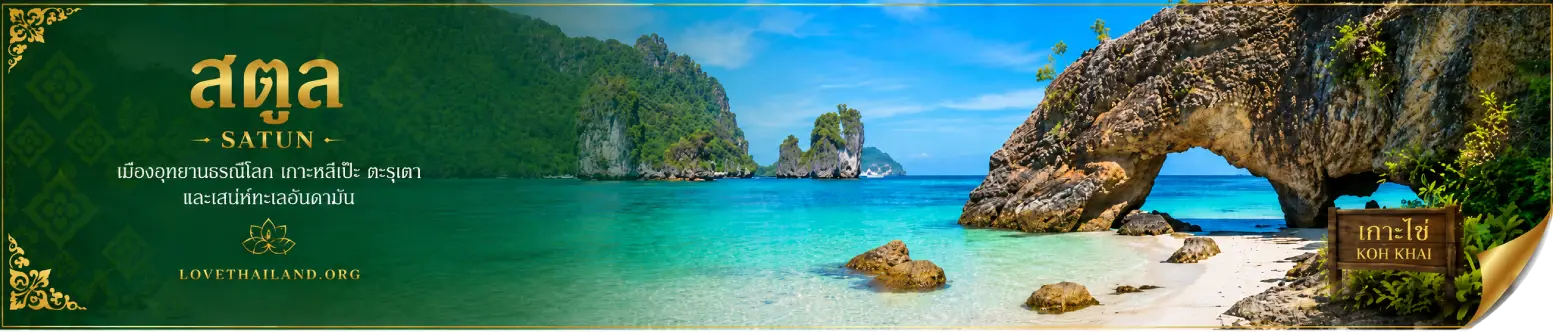
Satun UNESCO Global Geopark
Open Days: Satun Geopark Sites Follow The Conditions Of Each Individual Attraction / Satun Geopark Museum Opens Daily
Opening Hours: Satun Geopark Museum 08.00 – 18.00
Satun UNESCO Global Geopark is a world-recognised geological heritage area in Satun Province and Thailand’s first UNESCO Global Geopark. A key learning gateway is located in Thung Wa Subdistrict, Thung Wa District, where visitors can begin with Satun Geopark Museum and nearby learning sites before exploring caves, limestone mountains, waterfalls, coastal communities, islands, and fossil locations across the province. Satun Geopark is not a single gated park with one entrance. It is a wide living landscape that connects geology, ecology, archaeology, culture, community products, and sustainable tourism across several districts of Satun.
The defining story of Satun UNESCO Global Geopark is the story of land that was once an ancient sea hundreds of millions of years ago. Over immense geological time, marine sediments, ancient life forms, limestone formations, tectonic uplift, erosion, and tropical weathering shaped the mountains, caves, cliffs, islands, beaches, waterfalls, and fossil sites seen today. This makes Satun Geopark feel like a large open-air natural museum where Earth history can be read through real rocks, real fossils, and real landscapes.
Satun Geopark is important because it connects geological heritage with local life. Its value does not come only from old rocks or fossils, but from the way local communities, public agencies, researchers, guides, schools, and tourism operators work together to protect these resources and turn them into learning opportunities. The geopark concept is not about separating people from nature. It is about helping people understand the value of their landscape and use responsible tourism to support conservation, education, and community development.
The geopark covers four areas of Satun Province: Thung Wa District, Manang District, La-ngu District, and part of Mueang Satun District. Its area is about 2,597 square kilometers. Within this wide landscape are geological sites, learning sites, ecological sites, cultural places, community product areas, and other attractions. Its international significance comes from abundant Palaeozoic marine fossils and continuous marine sedimentary rock sequences that help explain early life and ancient environmental change in this part of Southeast Asia.
A geopark is more than a tourist attraction. It is an area with important geological heritage, managed together with conservation, education, interpretation, sustainable tourism, and local development. In the broader geopark system, development can be understood through four levels: local geopark, provincial geopark, national geopark, and global geopark. A local geopark begins with valuable geological resources in a community area. A provincial geopark requires wider recognition and management. A national geopark requires stronger standards and administration. A global geopark must meet UNESCO criteria and continue to be evaluated over time.
UNESCO Global Geopark status is not a permanent label without review. Geoparks are revalidated to ensure that geological conservation, public education, sustainable tourism, and community participation remain active. This means Satun Geopark must continue improving interpretation, conservation, visitor management, community participation, and the protection of geosites. The status encourages long-term responsibility, not only promotion.
The modern story of Satun Geopark became especially clear after important fossil discoveries in the area, including Stegodon fossils found in Wang Kluai Cave, now known as Tham Le Stegodon. This discovery helped stimulate wider geological study in Satun and encouraged cooperation between government agencies, academic specialists, local authorities, and communities. Satun Geopark was recognised as a national geopark in 2016 and became a UNESCO Global Geopark in 2018.
The international geological importance of Satun Geopark comes from continuous marine sedimentary rock sequences from the Cambrian to the Permian periods. Fossils found in the area include trilobites, brachiopods, stromatolites, conodonts, graptolites, tentaculites, and nautiloids. These fossils tell the story of ancient marine life, changing sea environments, and the long evolution of life on Earth before the appearance of humans.
Cambrian trilobites on Tarutao Island are among the oldest fossil records in the Thai-Malay Peninsula. Red stromatolites and volcanic ash layers also help geologists understand the age and sequence of ancient environments. These features make Satun Geopark far more than a scenic travel area. It is a landscape that helps scientists, students, and travelers understand the deep history of the Earth.
Tham Le Stegodon is one of the best-known attractions in Satun Geopark. It is a limestone cave with a stream running through it and a cave route of about 4 km. The cave became famous because of Stegodon fossil discoveries and other ancient animal remains. Today it combines adventure, fossil learning, cave ecology, local guiding, and community-based tourism. Visits must be coordinated with the local operators or site caretakers because access depends on water level, safety conditions, visitor limits, and daily management.
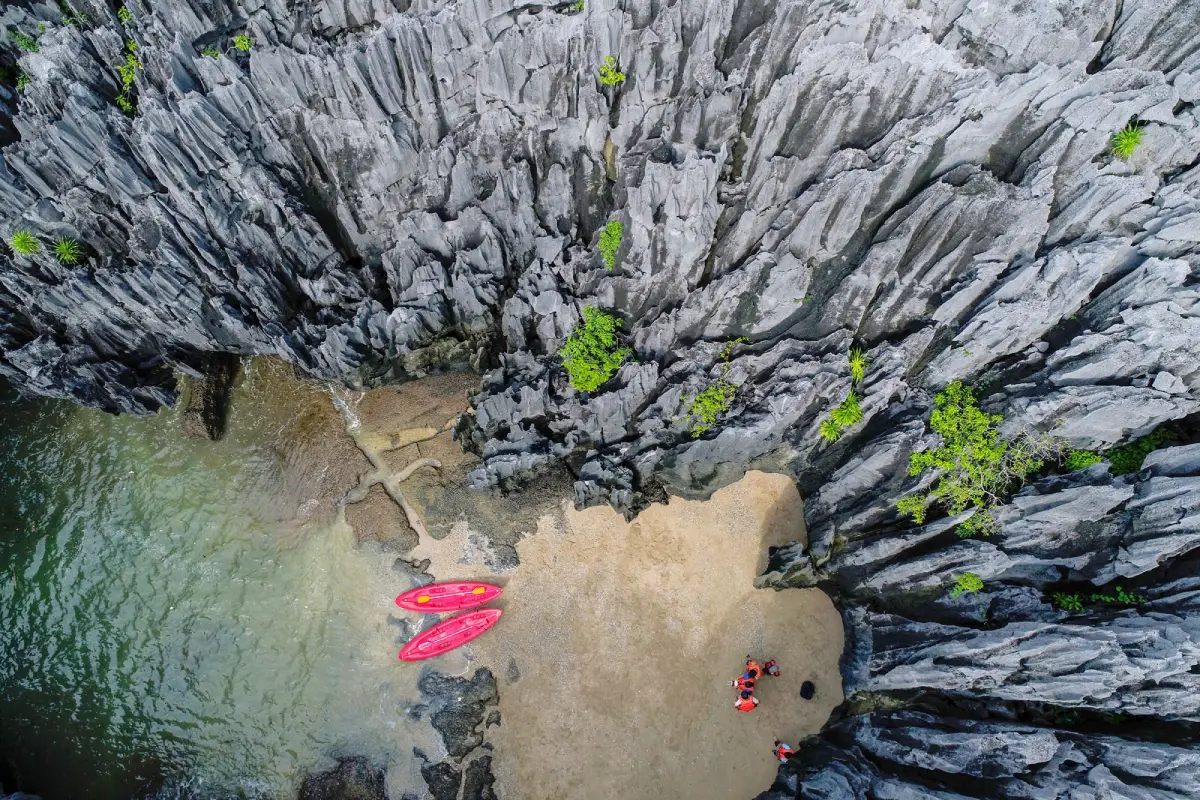
Prasat Hin Panyod is another outstanding geosite. Located around Ko Khao Yai, it is a spectacular marine karst landscape where limestone has been shaped into sharp pinnacles resembling a natural stone castle. Sea caves, narrow passages, and a hidden lagoon make the site one of Satun’s most memorable geotourism experiences. Visitors usually explore the area by boat and kayak under local guidance, making the experience both scenic and educational.
Thung Wa District is one of the most important gateways to Satun Geopark. It contains Satun Geopark Museum, Thung Wa Ancient Elephant Museum, Tham Le Stegodon, Khao Nang Dam Public Park, Tha Oi Viewpoint, Than Plio Waterfall, and several community learning sites. For first-time visitors, Thung Wa is the most practical place to begin because it offers both interpretation and real landscapes within a short travel radius.
Satun Geopark Museum in Thung Wa is a useful first stop. The museum serves as a geological learning center and displays fossil specimens found in Satun Province. It helps visitors understand how Satun was once connected with ancient marine environments, what different fossils reveal about past life, and why the area received UNESCO recognition. Seeing the museum before visiting caves or islands makes the rest of the trip easier to understand.
Satun Geopark is also rich in ecology and culture. The area includes limestone mountains, rainforests, waterfalls, mangroves, beaches, islands, and coastal waters. Local communities include agricultural villages, fishing villages, Buddhist communities, Muslim communities, and sea-linked cultural groups such as the Urak Lawoi. A visit to the geopark is therefore not only about rocks and fossils. It is also about food, local products, oral traditions, community knowledge, and the way people live with the landscape.
Travel experiences in Satun Geopark are diverse. Sea-focused travelers can visit Ko Lipe, Ko Adang, Ko Rawi, Ko Hin Ngam, Ko Khai, and Tarutao islands. Cave-focused travelers can visit Tham Le Stegodon, Phu Pha Phet Cave, Chet Khot Cave, and Urai Thong Cave. Nature travelers can explore Than Plio Waterfall, Wang Sai Thong Waterfall, mangrove routes, and limestone landscapes. Community-focused travelers can visit Tha Oi, Su-Ngai U-Pe, Ban Tha Kham Khwai, and local product areas connected with geopark storytelling.
The strongest way to experience Satun Geopark is to connect the sites rather than treating each stop separately. When visitors start at the museum, they can better understand why Tham Le Stegodon matters, how Prasat Hin Panyod was formed, why Ko Hin Ngam has smooth dark stones, and how coastal communities help protect their natural resources. This turns the trip from ordinary sightseeing into a deeper journey through Earth history and local life.
For a one-day itinerary in Thung Wa, visitors can begin with Satun Geopark Museum or Thung Wa Ancient Elephant Museum, continue to Tham Le Stegodon by pre-arranged visit, and end the day at Tha Oi Viewpoint or Thung Wa Old Town. This route combines fossils, cave geology, mangroves, water routes, and community atmosphere in one day. It is suitable for travelers who want a compact but meaningful introduction to the geopark.
For a two-day itinerary, the first day can focus on Thung Wa and Manang, including the museum, Tham Le Stegodon, Phu Pha Phet Cave, and Wang Sai Thong Waterfall. The second day can continue to La-ngu and the coast, including Pak Bara Beach, Mu Ko Phetra National Park, Prasat Hin Panyod, or island routes in the Andaman Sea. This approach gives a fuller picture of caves, limestone, waterfalls, mangroves, beaches, islands, and community tourism.
Families should begin with easy learning sites such as Satun Geopark Museum, Thung Wa Ancient Elephant Museum, old-town areas, and short nature stops. More demanding activities such as cave trips, kayaking, snorkeling, rafting, or long boat travel should be selected according to age, health, weather, tide, and safety guidance. This makes the trip more comfortable and helps children learn without being rushed or exposed to unsuitable activities.
Satun Geopark is also suitable for schools, universities, and study groups. The landscape can function as a large outdoor classroom where geology, biology, ecology, environmental science, geography, tourism management, community development, and cultural studies can be learned together. Students can see fossils, rock layers, caves, waterfalls, mangroves, and community interpretation in real settings, making the subject more concrete than classroom learning alone.
For photographers, Satun Geopark offers strong visual variety. The area includes dark cave passages with natural light, kayaks among limestone pinnacles, black rounded stones on Ko Hin Ngam, emerald water at limestone waterfalls, mangrove canals, old community streets, and fossil displays. Photography should be done responsibly. Do not touch fossils, move stones, damage cave walls, step on fragile areas, or disturb wildlife and local activities.
Responsible travel is essential in Satun Geopark because many sites are fragile. Fossils, rock layers, stalactites, stalagmites, mangrove roots, coral reefs, and coastal habitats cannot be easily replaced once damaged. Visitors should avoid writing on cave walls, collecting rocks or fossils, leaving rubbish, feeding animals, damaging corals, or entering restricted areas. Following the guidance of officers and community guides helps protect the sites and keeps travel safe.
In terms of access, Thung Wa Subdistrict is a practical starting point for understanding Satun Geopark. Travelers can arrive from Trang along the Trang–Satun route or from Satun town through La-ngu toward Thung Wa. Once in Thung Wa, it is best to begin at the museum or a local information point before selecting nearby sites. Because the geopark covers a wide area, travel time, weather, tide, and each site’s management conditions should be considered before planning the route.
Opening hours and fees differ from site to site because Satun Geopark is a large area made up of many attractions under different caretakers. Satun Geopark Museum provides a useful time reference, but cave trips, kayaking, island routes, snorkeling, rafting, national park areas, and community-based activities may require separate booking, entrance fees, boat fees, guide fees, or safety checks. Planning ahead is the best way to avoid missed activities.
Satun UNESCO Global Geopark is therefore suitable for many types of travelers. Nature lovers can explore caves, waterfalls, mangroves, beaches, islands, and limestone hills. History-of-life enthusiasts can study fossils older than 500 million years. Community travelers can learn about local products, food, traditions, and the relationship between people and landscape. Meaningful travel here comes from seeing beauty and understanding why it matters.
Getting There to Satun UNESCO Global Geopark depends on the part of the geopark being visited. For a practical first visit, travel to Thung Wa District in Satun Province by using the Trang–Satun road or by traveling from Satun town through La-ngu toward Thung Wa. Start at Satun Geopark Museum or nearby learning sites, then continue to Tham Le Stegodon, Thung Wa Ancient Elephant Museum, Tha Oi Viewpoint, Than Plio Waterfall, Phu Pha Phet Cave, Pak Bara Beach, or Prasat Hin Panyod depending on time, season, tide, and the chosen activity.
In summary, Satun UNESCO Global Geopark allows travelers to understand Satun beyond beaches and islands. It brings together ancient marine fossils, Palaeozoic rock layers, limestone caves, waterfalls, islands, mangroves, old towns, and local communities that help protect their natural heritage. Beginning in Thung Wa gives visitors a clear introduction before exploring the wider geopark across Manang, La-ngu, and Mueang Satun. For travelers seeking beauty, knowledge, conservation value, and local meaning, Satun Geopark is one of the most important destinations in southern Thailand.
| Name | Satun UNESCO Global Geopark |
| Learning Gateway | Satun Geopark Museum, Thung Wa Subdistrict, Thung Wa District, Satun 91120, Thailand |
| Coverage Area | Thung Wa District, Manang District, La-ngu District, and part of Mueang Satun District |
| Area Size | About 2,597 Square Kilometers |
| Reference Coordinates | 7.098611, 99.825833 |
| Current Status | Listed as a current UNESCO Global Geopark in Thailand |
| UNESCO Designation Year | 2018 |
| Importance | Thailand’s first UNESCO Global Geopark, known for ancient marine fossils, Palaeozoic rock sequences, karst landscapes, caves, waterfalls, islands, and local conservation-based communities |
| Distinctive Features | Limestone mountains, fossil sites, caves, sea karst, tufa waterfalls, mangroves, beaches, islands, and cultural landscapes |
| Site Types | Geological sites, learning sites, ecological sites, cultural sites, community product areas, and nature attractions |
| Major Attractions | Tham Le Stegodon, Phu Pha Phet Cave, Chet Khot Cave, Wang Sai Thong Waterfall, Than Plio Waterfall, Prasat Hin Panyod, Ko Khai, Ko Hin Ngam, Tarutao Island, Ko Adang, Ko Lipe, and Pak Bara Beach |
| Open Days | Satun Geopark sites follow the conditions of each individual attraction / Satun Geopark Museum opens daily |
| Opening Hours | Satun Geopark Museum 08.00 – 18.00 / individual sites have different conditions |
| Fees | There is no single combined entrance fee for the whole geopark. Fees, activity costs, boat fees, guide fees, and national park charges depend on each individual site and caretaker. |
| Caretaker / Related Agencies | Satun Geopark network, Satun Province, Department of Mineral Resources, local administrative organizations, local communities, and site-specific caretakers |
| Thung Wa Learning Site Contact | Satun Geopark Museum Tel. 074-789-317 |
| satungeopark@gmail.com | |
| Official Website / Official Channel | Satun Geopark website and UNESCO Global Geoparks information |
| Travel Information | Travel to Thung Wa District by the Trang–Satun road or from Satun town through La-ngu toward Thung Wa. Begin at Satun Geopark Museum or nearby learning sites before continuing to individual attractions. |
| Nearby Tourist Attractions | 1. Thung Wa Ancient Elephant Museum, about 1 km 2. Thung Wa Old Town, about 1 km 3. Tham Le Stegodon, about 6 km 4. Tha Oi Viewpoint, about 7 km 5. Khao Nang Dam Public Park, about 4 km 6. Khuan Khong Pitcher Plant Garden, about 8 km 7. Than Plio Waterfall, about 17 km 8. Phu Pha Phet Cave, about 45 km 9. Pak Bara Beach, about 45 km 10. Prasat Hin Panyod, about 70 km including boat route |
| Nearby Restaurants | 1. Tori’s Bakery House, about 1 km, Tel. 081-541-1880 2. So Daeng Thung Wa, about 2 km, Tel. 062-057-2603 3. Flying Fish, about 3 km, Tel. 093-555-0946 4. Bike’coffee Thungwa, about 4 km, Tel. 089-597-5618 5. Krua Masaya Halal Food, about 3 km 6. Restaurant Kampung Kampung, about 4 km |
| Nearby Accommodations | 1. Thung Wa Resort, about 2 km, Tel. 087-837-6331 2. Captain Resort, about 3 km, Tel. 097-985-9904 3. Baan Rai Homestay Godon, about 6 km, Tel. 080-544-8528 4. Thung Wa Homestay Godon, about 6 km 5. Nava Nelayan Homestay, about 30 km, Tel. 099-616-5062 6. The Chevalley Beach Resort, about 35 km, Tel. 062-238-5858 |
Frequently Asked Questions (FAQ)
Q: Where is Satun UNESCO Global Geopark located?
A: Satun UNESCO Global Geopark is located in Satun Province, southern Thailand. It covers Thung Wa District, Manang District, La-ngu District, and part of Mueang Satun District, with an important learning gateway in Thung Wa.
Q: Why is Satun Geopark important?
A: It is Thailand’s first UNESCO Global Geopark and is known for ancient marine fossils, Palaeozoic rock sequences, limestone landscapes, caves, waterfalls, islands, and communities connected with conservation.
Q: Is Satun Geopark open every day?
A: Satun Geopark is a wide area made up of many individual sites, so opening conditions depend on each attraction. Satun Geopark Museum in Thung Wa opens daily from 08.00 to 18.00.
Q: Where should first-time visitors begin?
A: First-time visitors should begin at Satun Geopark Museum or Thung Wa Ancient Elephant Museum to understand fossils, rock layers, and the overall story before visiting caves, islands, or community sites.
Q: What are the major attractions in Satun Geopark?
A: Major attractions include Tham Le Stegodon, Phu Pha Phet Cave, Chet Khot Cave, Wang Sai Thong Waterfall, Than Plio Waterfall, Prasat Hin Panyod, Ko Khai, Ko Hin Ngam, Tarutao Island, Ko Adang, Ko Lipe, and Pak Bara Beach.
Q: Is Satun Geopark suitable for families?
A: Yes. Families can start with museums, old-town areas, and easy nature stops. Activities such as caves, kayaking, snorkeling, and rafting should be selected according to age, health, weather, tide, and safety advice.
Q: Is there an entrance fee for Satun Geopark?
A: There is no single combined entrance fee for the entire geopark. Some individual sites may charge entrance fees, activity fees, boat fees, guide fees, or national park fees depending on the caretaker.
Q: What should visitors be careful about when visiting Satun Geopark?
A: Visitors should not collect rocks or fossils, write on cave walls, leave rubbish, disturb wildlife, damage coral reefs, or enter restricted areas. Always follow guidance from officers and local community guides.
 Category: ●Entertainment and Agricultural
 Group: ●Farms, Parks and Ecotourism
Last Update : 1 MonthAgo
 Last Update : 1 MonthAgo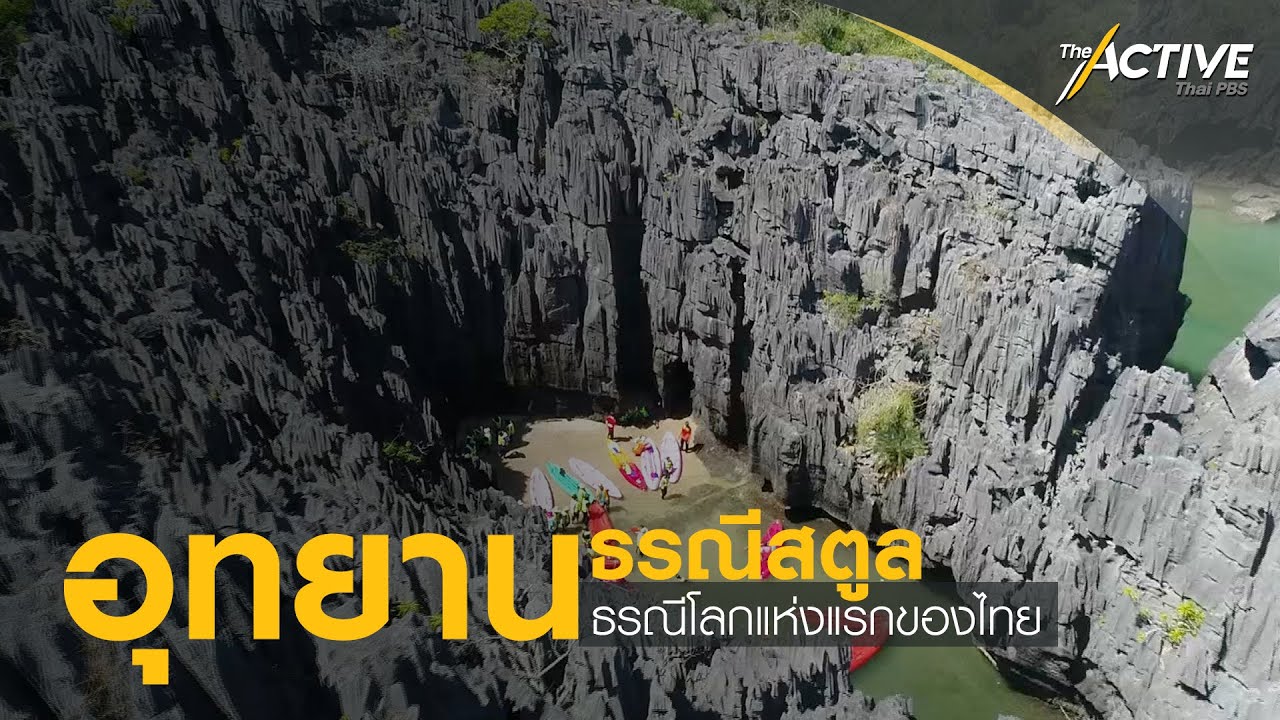
 Click to Access the Navigation Map GPS
Satun UNESCO Global Geopark Map
Gellery
Recommend

 Art, Culture and Heritage
 Historical Sites and Monuments(1)
 Landmarks and Memorials(1)
 Art, Craft Centres, Tradition(5)
 Museums(3)
 Places of Worship
 Temple(3)
 Mosque(27)
 Suburban Living
 Village, Community(1)
 Local Market(2)
 Nature and Wildlife
 National Parks and Marine Reserves(7)
 Mountain (Doi)(1)
 Dam, Reservoir, Lake(2)
 Waterfalls(9)
 Hot Springs(1)
 Caves(9)
 Bays and Beaches(10)
 Islands(16)
 Other natural attractions(5)
 Zoos and Aquariums(1)
Farms, Parks and Ecotourism(4)
Zoos and Aquariums(1)
Farms, Parks and Ecotourism(4)
 Outdoor and Adventure Activities(1)
 Travel Articles, Recipes
 Travel Review, Food Review(1)


