
lovethailand home >South Travel Attractions >Ranong Travel Attractions >Ka Poe >Bang Hin > Khlong Nakha Wildlife Sanctuary
TL;DR: Khlong Nakha Wildlife Sanctuary is located at Kapoe And Suk Samran Areas, Ranong Province, open Open For Contact And Nature Study Visits By Prior Permission, hours 08.30 – 16.30.
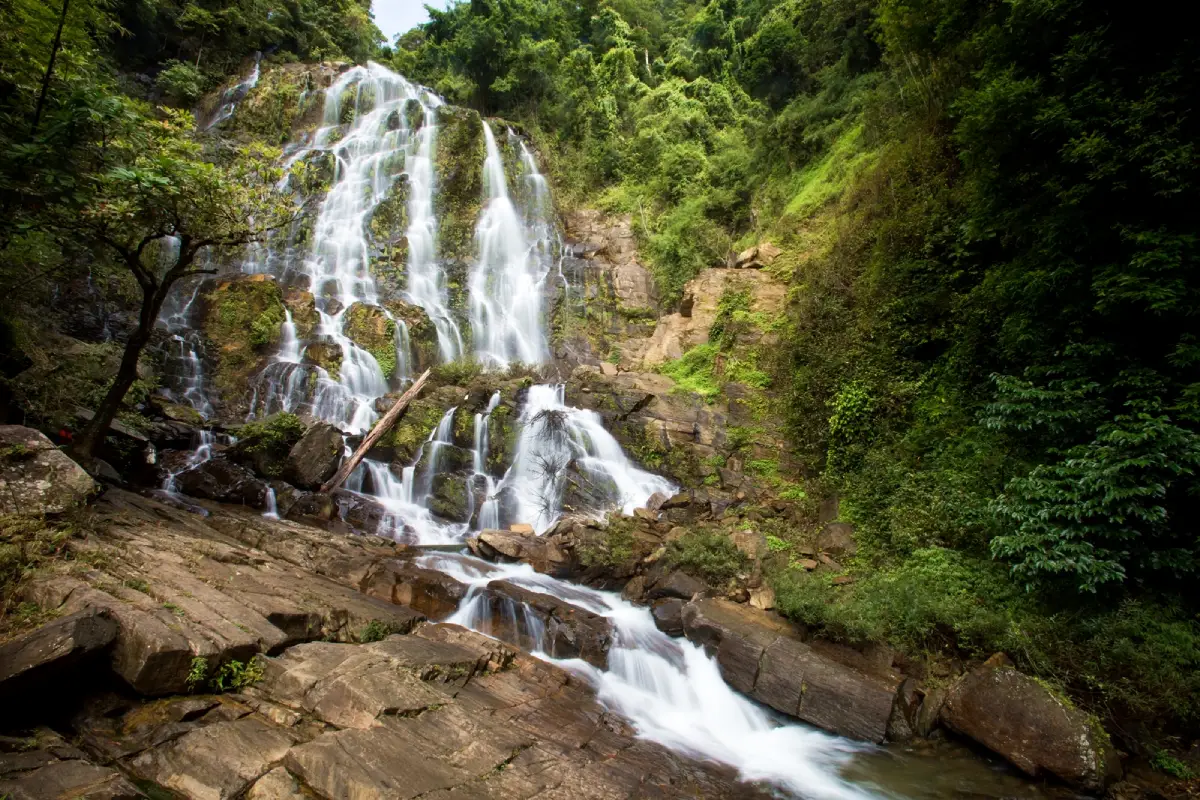
Khlong Nakha Wildlife Sanctuary
Open Days: Open For Contact And Nature Study Visits By Prior Permission
Opening Hours: 08.30 – 16.30
Khlong Nakha Wildlife Sanctuary in Ranong Province is one of the most important and ecologically rich evergreen rainforest areas in southern Thailand. Located in the Kapoe and Suk Samran areas of Ranong, the sanctuary covers around 331,456 rai and forms part of a larger forest landscape connected with Khlong Saeng Wildlife Sanctuary in Surat Thani and Si Phang Nga National Park in Phang Nga. It is not a free-access tourist attraction in the same way as a national park. Instead, it is a protected wildlife sanctuary where nature-study visits, trekking routes, waterfalls and overnight camping must be arranged under official permission and staff supervision.
The value of Khlong Nakha lies in its role as a living rainforest, wildlife habitat and watershed. The sanctuary contains steep mountain ranges, headwater streams, waterfalls, dense tropical forest and fragile habitats for many protected species. Visitors who enter this landscape are not simply visiting a scenic forest; they are entering a conservation area where human access must be controlled to protect wildlife, stream ecosystems and rare plants.
The main access route to the sanctuary follows Highway 4 on the Kapoe–Phang Nga route. From Kapoe District, drive south for about 25 kilometres toward Phang Nga. Near kilometre markers 685–686, turn left following the sanctuary sign and continue about 200 metres to the office area. Although the office can be reached from Phetkasem Road, inner forest areas such as waterfall routes, streams and camping zones cannot be entered independently. Visitors must contact officials and follow sanctuary regulations.
The sanctuary landscape is defined by steep forested mountains such as Khao Langkha Tuek, Khao Phra Mi, Khao Nakha, Khao Pho Ta Luang Kaeo and Khao Mueang Chon. These mountains form important headwaters for local streams. Water from the forest flows through Khlong Nakha and surrounding communities before continuing toward lower areas and coastal ecosystems. This makes the sanctuary important not only for wildlife, but also for local water security, agriculture and community life.
The main forest type is humid tropical evergreen forest. Large trees, rattans, bamboo, wild bananas, ferns, mosses, epiphytes and understory plants grow densely in the moist environment. The forest remains green through much of the year, supported by Ranong’s high rainfall and numerous streams. The atmosphere is strongly shaped by flowing water, bird calls, insects, wet rocks and thick vegetation, giving visitors a direct experience of a southern Thai rainforest.
Khlong Nakha is also an active wildlife protection area. Recent official conservation work has involved patrols, wildlife crime prevention and field operations related to elephants and other wildlife. Records and reports from the area mention wildlife such as wild elephants, gaur, sambar deer and protected primates. These signs confirm that Khlong Nakha is a functioning habitat, not merely a scenic forest. Responsible behaviour is therefore essential: visitors must not disturb animals, feed wildlife, leave rubbish, make excessive noise or leave approved routes.
One of the most important natural highlights of Khlong Nakha is Phlap Phlueng Than, locally known in Ranong as Ya Chong. This rare aquatic plant grows in clean, flowing streams of the upper southern region, especially in Ranong and Phang Nga. It usually appears in clear streams with continuous water flow and moderate depth. Its white flowers bloom most beautifully around November and December. Bamboo rafting to see Phlap Phlueng Than along Khlong Nakha is therefore not only a scenic community activity, but also a direct lesson in stream conservation.
Ban Fai Tha in Nakha Subdistrict is closely linked with Khlong Nakha conservation tourism. The community sits near the edge of the sanctuary and has an ecosystem suitable for Phlap Phlueng Than. Its community tourism identity is built around bamboo rafting and learning about the blooming aquatic plants of Khlong Nakha. This route helps visitors understand how forest, water, rare plants and local livelihoods depend on one another.
The most adventurous destination in the sanctuary is Sai Rung La-ong Dao Waterfall. This large waterfall is hidden deep in the rainforest and is known for its dramatic spray. When sunlight passes through the mist created by falling water, rainbow colours appear in the forest, giving the waterfall its poetic name. Reaching the waterfall requires serious trekking, stream crossings, camping and staff guidance. It is not a short casual waterfall walk.
The Sai Rung La-ong Dao route opens seasonally. In 2026, the nature-study and camping route was announced to reopen from 1 June onward. Visitors must submit a permission request in advance, provide participant information, identification copies and emergency contact numbers, and wait for official confirmation. The route is suitable for physically prepared travelers, experienced trekkers or visitors willing to follow strict conservation and safety conditions.
Costs for the Sai Rung La-ong Dao route include the sanctuary entry fee, guide team fees, individual staff guide fees, porter fees if required and vehicle transfer to the trailhead. These costs support safety management and conservation control because the route lies deep in the forest, without shops or ordinary tourist facilities. Local staff knowledge is essential for safety, route management and environmental protection.
The trekking route generally involves walking from the vehicle drop-off point through rainforest, dirt tracks, streamside rock paths and multiple water crossings before reaching the camp area. From the camp, the trail continues toward the waterfall through steeper terrain. Some sections require ropes or careful scrambling. Visitors must be prepared with non-slip footwear, leech socks, waterproof bags, headlamps, personal medication, camping gear and a realistic level of fitness.
Visitors who prefer a lighter nature experience can focus on community-based activities connected with Khlong Nakha, such as bamboo rafting to see Phlap Phlueng Than and learning about stream ecology. These activities are less physically demanding than the deep waterfall trek but still reveal the core meaning of the area: clean headwater streams, forest protection, local knowledge and community income based on conservation rather than extraction.
The best time to visit depends on the activity. For Phlap Phlueng Than, November to December is the key blooming period. For Sai Rung La-ong Dao Waterfall, the rainy season into early cool season gives strong water flow and lush forest conditions, but safety must always come first because water levels, slippery paths and flash-flood risk can change quickly. General nature-study visits should be planned for days with suitable weather and confirmed permission.
Khlong Nakha Wildlife Sanctuary should not be approached as an unplanned roadside stop. Wildlife sanctuaries are protected by law and require permission for nature study, camping and access to controlled areas. Applicants must provide names, dates, objectives and control measures to prevent damage to the sanctuary. This process protects both visitors and the forest.
The sanctuary’s watershed function is one of its most important roles. Streams from the forest feed Khlong Nakha and nearby communities. Forest quality directly affects water quality, agriculture, local fisheries and community livelihoods. Khlong Nakha is therefore not only a place for wildlife; it is also a natural foundation for people living around the forest.
Travelers entering the forest should prepare carefully. The terrain is humid, slippery and physically demanding in many areas. Trails may cross streams, pass through wet rocks and encounter leeches or insects during the rainy season. Essential items include drinking water, light but sufficient food, waterproof packing, a headlamp, personal medicine, rain protection, a personal rubbish bag and shoes suitable for wet stone and stream walking.
Important rules include no hunting, no wildlife disturbance, no collecting plants, fungi, orchids, rocks or living organisms, no littering, no fires outside designated points, no walking away from approved routes and strict compliance with staff instructions. Rainforest ecosystems can be damaged by small actions. Staying on the route and keeping waste out of the forest are basic responsibilities.
Khlong Nakha can be combined with nearby nature and community routes. Ban Fai Tha and Phlap Phlueng Than rafting offer a community-based conservation experience. Hat Praphat, Ban Thale Nok and Laem Son National Park add beach, coastal forest and community tourism. Baan Rai I Arun, Kapoe routes and Namtok Ngao National Park can extend the itinerary toward rainforest, mountain and local food destinations. Travelers should plan routes according to distance, weather and permission requirements.
Getting There is easiest by private car, rental car or chartered van. From Ranong town, take Highway 4 south toward Kapoe and Phang Nga. From Kapoe District, continue for about 25 kilometres to kilometre markers 685–686, then turn left following the sign and continue about 200 metres to the sanctuary office. Travelers coming from Phang Nga or Khura Buri can follow Highway 4 north toward Suk Samran and Kapoe. Because the area is remote and controlled, advance coordination with sanctuary staff is essential.
Overall, Khlong Nakha Wildlife Sanctuary is one of Ranong’s most valuable protected natural areas. It combines dense rainforest, mountain watersheds, clear streams, Phlap Phlueng Than, Sai Rung La-ong Dao Waterfall, rare wildlife, community conservation and active forest protection. A visit here is not only about seeing nature; it is about understanding how forest, water, wildlife, communities and conservation depend on one another. Travelers who come with respect, preparation and permission will experience one of the deepest natural dimensions of Ranong.
| Name | Khlong Nakha Wildlife Sanctuary |
| Place Type | Wildlife Sanctuary, Evergreen Rainforest, Watershed Forest, Nature-Study Area And Southern Thailand Wildlife Conservation Zone |
| Location | Kapoe And Suk Samran Areas, Ranong Province |
| Office Access Route | Highway 4, around kilometre markers 685–686, then about 200 metres from the main road following the sanctuary sign |
| Area Size | About 331,456 Rai |
| Responsible Agency | Department Of National Parks, Wildlife And Plant Conservation / Protected Area Regional Office 4 (Surat Thani) |
| Sanctuary Chief / Responsible Officer | Sarawut Phalayasut |
| Contact Number | 077-874-210 |
| Email For Sai Rung La-Ong Dao Waterfall Requests | 2567klongnaka@gmail.com |
| Highlights | Dense Evergreen Rainforest, Sai Rung La-Ong Dao Waterfall, Phlap Phlueng Than Aquatic Plants, Khlong Nakha Bamboo Rafting, Wildlife, Mountain Watersheds And Ban Fai Tha Conservation Community |
| Important Mountains | Khao Langkha Tuek, Khao Phra Mi, Khao Nakha, Khao Pho Ta Luang Kaeo And Khao Mueang Chon |
| Important Ecosystems | Evergreen Rainforest, Headwater Streams, Riparian Forest, Phlap Phlueng Than Habitat, Waterfalls And Wildlife Habitats |
| Key Plant | Phlap Phlueng Than, Locally Called Ya Chong, A Rare Aquatic Plant Blooming Most Prominently From November To December |
| Wildlife Associated With The Area | Wild Elephants, Gaur, Sambar Deer, Macaques, Birds And Various Protected Wildlife Species Living In The Rainforest And Conservation Corridors |
| Main Zones | Sanctuary Office, Ranger Stations, Evergreen Forest, Sai Rung La-Ong Dao Waterfall Route, Khlong Nakha Stream Area, Phlap Phlueng Than Habitat And Ban Fai Tha Community |
| Recommended Activities | Permitted Nature Study, Seasonal Trekking, Designated Overnight Camping, Bamboo Rafting To See Phlap Phlueng Than, Watershed Learning And Wildlife Conservation Study |
| Current Status | Active Wildlife Sanctuary With Ongoing Staff Operations. Nature-Study Access And Overnight Stays Require Permission Under Sanctuary Conditions. |
| Open Days | Open For Contact And Nature Study Visits By Prior Permission |
| Opening Hours | 08.30 – 16.30 |
| Fees | The Sai Rung La-Ong Dao Waterfall Route Has A 40-Baht Sanctuary Entry Fee, With Additional Costs For Staff Guides, Vehicle Transfer, Porters Or Permitted Activity Arrangements. |
| Permission Requirement | Nature Study In Wildlife Sanctuaries Requires An Application With Visitor Names, Dates, Objectives And Measures To Prevent Damage To The Area. |
| Best Time To Visit | Phlap Phlueng Than Blooms Around November–December. Sai Rung La-Ong Dao Waterfall Opens According To Seasonal Sanctuary Announcements. |
| Visitor Etiquette | No Hunting, Wildlife Disturbance, Plant Or Fungi Collection, Littering, Unauthorized Fires Or Walking Outside Approved Routes. Follow Staff Instructions At All Times. |
| Travel Information | From Kapoe District, follow Highway 4 toward Phang Nga for about 25 km to kilometre markers 685–686, then turn left and continue about 200 metres to the office. Private car, rental car or chartered van is recommended. |
| Nearby Tourist Attractions | 1. Sai Rung La-Ong Dao Waterfall, inside Khlong Nakha Wildlife Sanctuary 2. Ban Fai Tha And Phlap Phlueng Than Bamboo Rafting, about 5–10 km 3. Hat Praphat / Hat Hin Thung, about 25 km 4. Ban Thale Nok, about 30 km 5. Laem Son National Park And Hat Bang Ben, about 35–40 km 6. Baan Rai I Arun, Kapoe District, about 35 km 7. Namtok Ngao National Park, about 70 km |
| Nearby Restaurants | 1. Areerah Muslim Food, Suk Samran District, about 20 km, Tel. 083-390-7470 2. JP Coffee, Kamphuan Subdistrict, about 20 km, Tel. 098-691-3553 3. Krua Suk Samran, about 20 km, Tel. 077-893-186 4. Baan Rai I Arun Restaurant, about 35 km, Tel. 096-938-2981 5. Restaurant At Ranong Resort And Laguna, about 40 km, Tel. 077-843-141, 089-587-9247 |
| Nearby Accommodations | 1. I-In Resort, Suk Samran District, about 20 km, Tel. 077-844-040 2. Ranong PK Guest House And Studio, about 22 km, Tel. 094-331-6969 3. Baan Natacha, Suk Samran District, about 20 km 4. Suan-Lung-Vorn Ranong Glamping, about 30 km, Tel. 084-148-9338 5. Baan Rai I Arun, Kapoe District, about 35 km, Tel. 096-938-2981 6. SS Kapoe Resort, about 40 km, Tel. 085-797-4746 7. DD Resort Kapoe, about 40 km, Tel. 080-610-1733, 082-808-9951 |
Frequently Asked Questions (FAQ)
Q: Where is Khlong Nakha Wildlife Sanctuary located?
A: Khlong Nakha Wildlife Sanctuary is located in the Kapoe and Suk Samran areas of Ranong Province. The main access route follows Highway 4 around kilometre markers 685–686, then turns toward the sanctuary office for about 200 metres.
Q: Can visitors enter Khlong Nakha Wildlife Sanctuary freely like a national park?
A: No. It is a wildlife sanctuary, not a free-access national park attraction. Nature-study visits, trekking and overnight stays require official permission and staff supervision.
Q: What are the main highlights of Khlong Nakha Wildlife Sanctuary?
A: The main highlights are dense evergreen rainforest, Sai Rung La-Ong Dao Waterfall, Phlap Phlueng Than aquatic plants, headwater streams, rare wildlife and community-based conservation tourism at Ban Fai Tha.
Q: Does Sai Rung La-Ong Dao Waterfall require advance booking?
A: Yes. The waterfall route requires advance permission because it is located deep in the forest, has safety limitations, requires staff guides and has controlled visitor numbers.
Q: When does Phlap Phlueng Than bloom in Khlong Nakha?
A: Phlap Phlueng Than, locally called Ya Chong, blooms most prominently during the late rainy to early cool season, especially from November to December.
Q: Are there fees for visiting Khlong Nakha Wildlife Sanctuary?
A: Some permitted routes have fees. The Sai Rung La-Ong Dao Waterfall route has a 40-baht sanctuary entry fee, with additional costs for staff guides, vehicle transfer, porters or approved activity arrangements.
Q: How should visitors prepare before entering Khlong Nakha?
A: Visitors should contact officials in advance, prepare physically, wear non-slip shoes, pack waterproof bags, bring a headlamp, personal medication, a personal rubbish bag and follow all staff instructions.
Q: What nearby places can be combined with Khlong Nakha Wildlife Sanctuary?
A: Nearby places include Ban Fai Tha, Hat Praphat, Ban Thale Nok, Laem Son National Park, Baan Rai I Arun and Namtok Ngao National Park, depending on travel time and weather.
Tel : 077828174
 Tel : 077828174
 Category: ●Nature and Wildlife
 Group: ●National Parks and Marine Reserves
Last Update : 2 WeekAgo
 Last Update : 2 WeekAgo
 Click to Access the Navigation Map GPS
Khlong Nakha Wildlife Sanctuary Map
Recommend

 Art, Culture and Heritage
 Historical Sites and Monuments(4)
 Landmarks and Memorials(1)
 Royal Palace(1)
 Art, Craft Centres, Tradition(4)
 Educational Places
 Educational Gardens, Farm(1)
 Places of Worship
 Temple(12)
 Other Sacred Sites(2)
 Suburban Living
 Village, Community(2)
National Parks and Marine Reserves(6)
Village, Community(2)
National Parks and Marine Reserves(6)
 Mountain (Doi)(4)
 Waterfalls(15)
 Hot Springs(3)
 Caves(4)
 River, Canal(2)
 Bays and Beaches(10)
 Islands(8)
 Other natural attractions(3)


