
lovethailand home >South Travel Attractions >Phatthalung Travel Attractions >Muang Phatthalung >Lam Pam > Wang Kao-Wang Mai
TL;DR: Wang Kao-Wang Mai is located at Aphai Aphirak Road, Lam Pam Subdistrict, Mueang Phatthalung District, Phatthalung Province, open Wednesday - Sunday, hours 08:30 - 16:30.

Wang Kao-Wang Mai
Open Days: Wednesday - Sunday
Opening Hours: 08:30 - 16:30
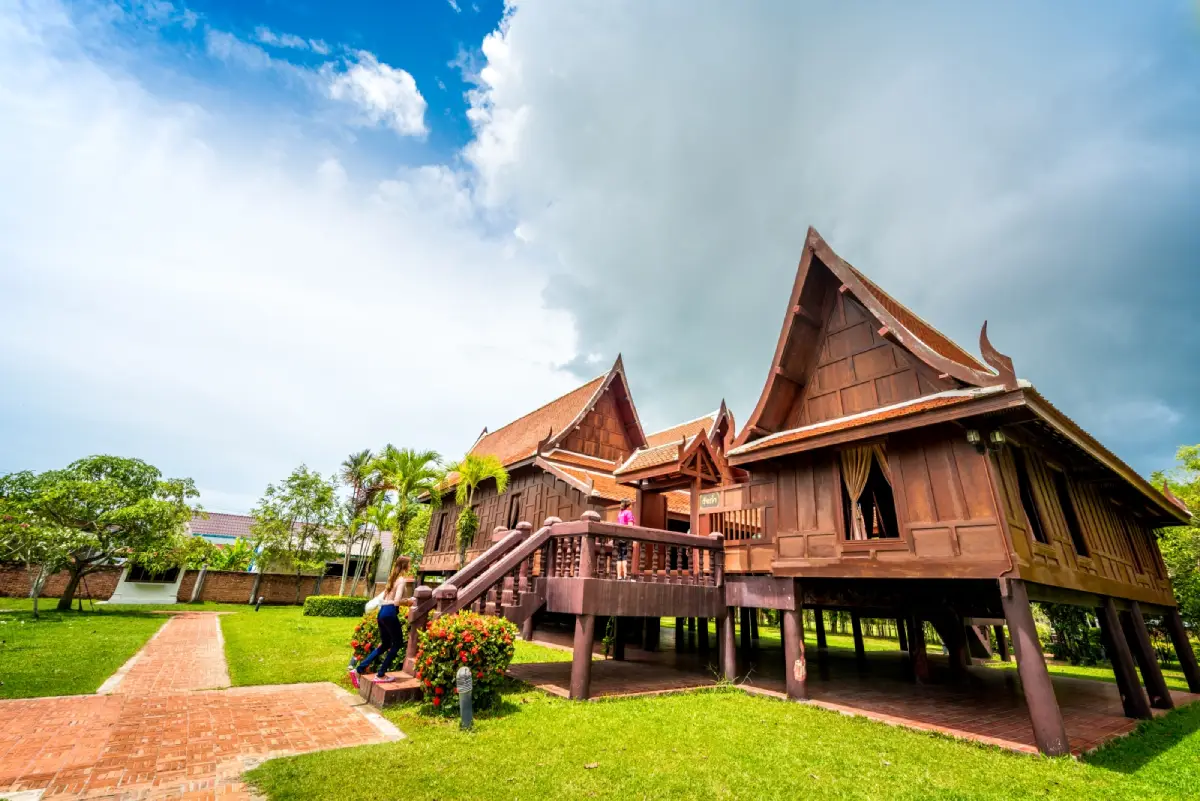
The Governor’s Palace of Phatthalung, also known as Wang Kao-Wang Mai, is one of the province’s most important historical landmarks. Located at 146 Moo 4, Aphai Aphirak Road, Lam Pam Subdistrict, Mueang Phatthalung District, close to Wat Wang and Lam Pam Canal, the palace was once both the administrative office and residence of Phatthalung’s former governors. Today, it has been preserved as a national historic site and opened to visitors who want to learn about Phatthalung’s local history, traditional Thai wooden architecture, the lifestyle of provincial rulers, and the role of Lam Pam in the development of the old city.
The site is widely known as Wang Kao-Wang Mai because it consists of 2 important groups of buildings within the same compound: the Old Palace and the New Palace. Both are wooden Thai houses that reflect the status, authority, and lifestyle of Phatthalung’s ruling families before the administrative reforms of the modern Thai state. The Old Palace is associated with Phraya Aphai Borirak, also known as Phraya Phatthalung Noi Chantarojwong, while the New Palace is associated with Phraya Aphai Borirak Chakrawichit Phiphitphakdi, or Net Chantarojwong, a later governor of Phatthalung.
Phatthalung moved its city center several times in the past according to geography, security, political conditions, and transport routes. Important historical sites include Khok Mueang Bang Kaeo, Khuan Rae, Khao Chai Buri, Tha Samet, Ban Muang, and Lam Pam. Lam Pam became important because it was connected to waterways and Songkhla Lake, allowing officials, goods, documents, and people to move by boat. The location of the Governor’s Palace near Lam Pam Canal therefore reflects the central role of water in the old urban system of Phatthalung.
The Old Palace is a wooden Thai house associated with Phraya Aphai Borirak (Noi Chantarojwong), a governor of Phatthalung. Its architecture combines characteristics of central Thai and southern Thai wooden houses. The building is raised on stilts, constructed mainly from wood, and assembled with wooden pegs or wedges rather than nails. This method demonstrates traditional carpentry knowledge and shows how local builders created houses that were strong, elegant, and suitable for the humid climate of southern Thailand.
A major feature of the Old Palace is its twin Thai-style main house. The layout includes sleeping rooms, a hall, a small terrace, and a kitchen area connected in a practical sequence. This arrangement reflects the domestic life of a governor’s household, including private living space, reception space, cooking areas, and daily-use areas. The raised structure also allowed air to circulate under the house and helped reduce moisture, which was important in the southern climate.
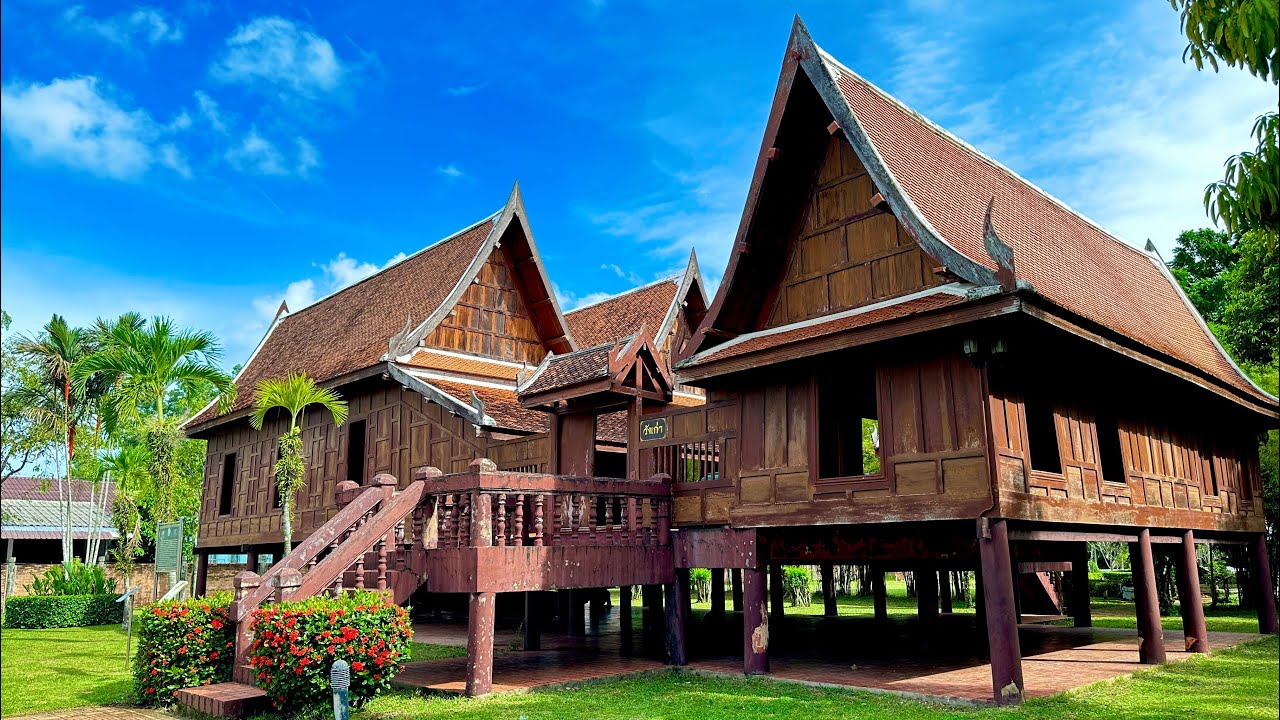
The New Palace stands south of the Old Palace and close to Lam Pam Canal. For this reason, local people have also called it Wang Mai Chai Khlong, or the New Palace by the canal. It was built in 1889 by Phraya Aphai Borirak Chakrawichit Phiphitphakdi, or Net Chantarojwong, the son of Phraya Phatthalung. The New Palace consists of 5 raised wooden Thai houses arranged around a central courtyard, giving visitors a clear view of how a large elite residence was planned in the past.
The New Palace includes the main residence, sleeping houses, a kitchen house, and smaller houses arranged around the central space. The main building served as the residence of the governor and his family. It also included a hall that could be used for official matters or receiving visitors. The verandas and open central space linked the houses together, showing how a governor’s residence could function as both a family home and an administrative space.
The architectural details of the New Palace are especially interesting. The buildings are raised wooden Thai houses with clay-tile roofs. The window panels include decorative patterns such as flowing vine designs and traditional motifs. The gable of the main building features a rising-sun design. These details show that the palace was not only a practical residence, but also a statement of dignity, authority, and refined craftsmanship.
After the old governor system came to an end and Phatthalung’s administration changed, the palaces gradually lost their original role as the governor’s residence and office. Later, descendants of the Chantarojwong family gave the property to the state. The New Palace was registered as a historic site on 31 May 1983, while the Old Palace was registered on 16 July 1992. The Fine Arts Department has since been responsible for preservation, restoration, and management of the site as an important historical learning space.
The transfer of the palace compound to public care was highly significant. It ensured that these large wooden houses, directly connected with local governance and Phatthalung’s ruling family, would remain available for future generations. Without preservation, the buildings could have deteriorated, disappeared, or been altered beyond recognition. The Governor’s Palace is therefore both a former family property and a public heritage site of Phatthalung and Thailand.
Inside the palace compound, visitors can learn about Phatthalung’s governors, the Chantarojwong family, old photographs, furniture, and objects connected with the history of the palace. The collection is not as large as that of a major museum, but the value lies in the authentic buildings, spatial layout, and atmosphere of a former governor’s residence. Visitors learn through the architecture and the place itself, not only through objects displayed in cases.
Another important feature is the Phatthalung boat, an old boat connected with water-based government communication in the Songkhla Lake area. This boat helps explain the importance of Lam Pam Canal and the lake as communication routes before road transport became dominant. Displaying the boat in the palace compound allows visitors to understand the relationship between the palace, local administration, and the water geography of Phatthalung.
The Thai pavilion by the water and the Lam Pam Canal side area are also worth visiting. They help visitors see why the New Palace was built near the canal. Water was not merely a scenic background. It was a route for official communication, local movement, and daily life. Looking toward the canal from the palace area makes it easier to understand how geography shaped settlement and governance in old Phatthalung.
For visitors interested in architecture, the Governor’s Palace is an excellent place to study southern Thai wooden houses. It shows the use of timber, raised floors, ventilation, house planning, terraces, carved wooden details, and adaptation to the local environment. Its beauty does not come from excessive decoration. It comes from the balance of function, craft, and dignified traditional Thai design.
The palace also helps explain the role of provincial governors before Thailand’s administrative reforms. A governor was not simply a local officer. He was responsible for maintaining order, collecting revenue, managing local affairs, communicating with the central government, and dealing with neighboring towns. The palace was therefore both a private residence and a public administrative center. This dual role is still visible in the layout of the buildings.
Compared with other attractions in Phatthalung, the Governor’s Palace is distinctive because it preserves the history of local government through surviving wooden architecture. Phatthalung is known for natural attractions such as Khao Ok Thalu, Thale Noi, and Lam Pam, as well as cultural arts such as Nang Talung and Nora. The Governor’s Palace adds another important layer by showing the province’s political and administrative heritage.
The site is suitable for general travelers, families, students, history learners, architecture enthusiasts, and anyone planning a meaningful city route in Phatthalung. A visit does not require a full day, but it gives travelers a much clearer understanding of the city. It is especially valuable when combined with Wat Wang, Saen Suk Lam Pam Beach, Wat Khuha Sawan, and other places connected with old Lam Pam.
Getting There is convenient by private car, rental car, or local transport. From Phatthalung city, travel toward Lam Pam Subdistrict for about 6 km. The palace is located on Aphai Aphirak Road near Wat Wang. Travelers arriving by train can get off at Phatthalung Railway Station and continue by local transport to Lam Pam. The route can be combined with Saen Suk Lam Pam Beach, Lam Pam floating market, Wat Wang, and lakefront attractions nearby.
The best time to visit is in the morning or early afternoon, when visitors have enough time to walk through the Old Palace, the New Palace, the canal area, the Thai pavilion, and the Phatthalung boat display. A typical visit may take around 45 minutes to 1 hour. Those who want to study the architectural details and information panels should allow more time.
Visitors should walk carefully because the buildings are old wooden structures with raised floors. Do not climb on architectural parts, sit on restricted areas, touch displayed objects without permission, write on wooden surfaces, make loud noise, or enter closed zones. Respecting the rules helps preserve the historic site for future visitors.
The Governor’s Palace of Phatthalung makes local history tangible through real buildings, real spaces, and traces of life from the age of provincial governors. Walking from the Old Palace to the New Palace reveals the continuity of the ruling family, the relationship between home and administration, the role of Lam Pam Canal, and the elegance of traditional Thai wooden construction. This is not merely an old house. It is evidence of a period when Phatthalung was governed through local rulers and waterways still shaped the life of the city.
For anyone who wants to understand Phatthalung in depth, the Governor’s Palace should be included in the itinerary. It connects nature, history, architecture, water geography, and political heritage in one place. A visit here shows that Phatthalung is not only about Thale Noi, Khao Ok Thalu, and local food. It is also a province with a deep administrative history and a beautifully preserved wooden heritage that deserves careful study and conservation.
| Name | Governor’s Palace of Phatthalung (Wang Kao-Wang Mai) |
| Location | Aphai Aphirak Road, Lam Pam Subdistrict, Mueang Phatthalung District, Phatthalung Province |
| Address | 146 Moo 4, Aphai Aphirak Road, Lam Pam Subdistrict, Mueang Phatthalung District, Phatthalung 93000, Thailand |
| Coordinates | 7.6232513, 100.1435772 |
| Highlights | Old Palace, New Palace, traditional wooden Thai houses, 5-house palace group, Thai pavilion by the water, Lam Pam Canal, Phatthalung boat, and the history of Phatthalung governors |
| History | The Old Palace is associated with Phraya Aphai Borirak or Phraya Phatthalung Noi Chantarojwong. The New Palace was built in 1889 by Phraya Aphai Borirak Chakrawichit Phiphitphakdi, or Net Chantarojwong |
| Distinctive Features | Raised wooden Thai houses assembled with wooden pegs or wedges. The Old Palace combines central and southern Thai house styles, while the New Palace consists of 5 wooden Thai houses around a central courtyard |
| Importance | Former administrative office and residence of Phatthalung governors, and an important historic site for studying local governance and traditional Thai wooden architecture in southern Thailand |
| Historic Registration | The New Palace was registered as a historic site on 31 May 1983, and the Old Palace was registered on 16 July 1992 |
| Responsible Agency | Fine Arts Department |
| Open Days | Wednesday - Sunday |
| Opening Hours | 08:30 - 16:30 |
| Admission Fee | Thai visitors 10 baht / foreign visitors 50 baht |
| Facilities | Toilets, shops, parking, and walking areas inside the historic site |
| Main Zones / Areas | Old Palace, New Palace, main residence, kitchen house, central terrace, Thai pavilion by the water, Lam Pam Canal area, Phatthalung boat, and display areas with old photographs and furniture |
| Local Conservation Contact | Phatthalung Local Natural and Cultural Environment Conservation Unit, Tel. 0-7461-3023 |
| Travel Information | From Phatthalung city, travel toward Lam Pam Subdistrict for about 6 km. The palace is on Aphai Aphirak Road near Wat Wang. Visitors can travel by private car, rental car, or local transport from Phatthalung Railway Station |
| Nearby Tourist Attractions | 1. Wat Wang, about 0.1 km 2. Saen Suk Lam Pam Beach, about 2 km 3. Lam Pam Floating Market, about 2 km 4. Wat Pa Lilai, about 3 km 5. Phraya Thukkharat (Chuai) Monument, about 5 km 6. Wat Khuha Sawan, about 7 km 7. Khao Ok Thalu, about 8 km |
| Nearby Restaurants | 1. Lam Pam Seafood, about 1 km, Tel. 081-957-3437, 095-641-4569 2. Kiang Talay Terrace Lam Pam, about 2 km, Tel. 088-752-9532, 096-820-6679 3. Chai Daen Restaurant Lam Pam, about 2 km, Tel. 080-140-1245 4. Itim Phad Chailai Lam Pam Floating Market, about 2 km, Tel. 061-328-8328 5. Lanna Waterside Phatthalung, about 8 km, Tel. 084-062-3334 |
| Nearby Accommodations | 1. Sor Ruean Mai Homestay, about 1 km, Tel. 094-320-1510 2. Saeree Resort, about 2 km, Tel. 084-860-8287 3. Rimlay Park Resort, about 8 km, Tel. 061-381-2564, 093-719-5686 4. City Park Hotel Phatthalung, about 6 km, Tel. 074-613-516 5. The Centris Hotel Phatthalung, about 7 km, Tel. 074-616-555 6. Siva Royal Hotel, about 8 km, Tel. 074-673-999 |
Frequently Asked Questions (FAQ)
Q: Where is the Governor’s Palace of Phatthalung located?
A: It is located at 146 Moo 4, Aphai Aphirak Road, Lam Pam Subdistrict, Mueang Phatthalung District, Phatthalung Province, near Wat Wang and Lam Pam Canal.
Q: What days is the palace open?
A: The palace is open from Wednesday to Sunday, from 08:30 to 16:30.
Q: What is the admission fee?
A: The admission fee is 10 baht for Thai visitors and 50 baht for foreign visitors.
Q: What is the difference between the Old Palace and the New Palace?
A: The Old Palace is associated with Phraya Aphai Borirak or Phraya Phatthalung Noi Chantarojwong and combines central and southern Thai house styles. The New Palace was built in 1889 by Phraya Aphai Borirak Chakrawichit Phiphitphakdi, or Net Chantarojwong, and consists of 5 wooden Thai houses near Lam Pam Canal.
Q: Why is the Governor’s Palace important?
A: It was once the administrative office and residence of Phatthalung governors and remains an important historic site for studying local governance and traditional Thai wooden architecture.
Q: What can visitors see inside the palace compound?
A: Visitors can see the Old Palace, the New Palace, traditional wooden Thai houses, the 5-house palace group, a Thai pavilion by the water, the Phatthalung boat, the Lam Pam Canal area, old photographs, furniture, and architectural details.
Q: How can visitors get there?
A: From Phatthalung city, travel toward Lam Pam Subdistrict for about 6 km. The palace is located on Aphai Aphirak Road near Wat Wang and can be reached by private car, rental car, or local transport from Phatthalung Railway Station.
Q: What nearby attractions can be visited on the same trip?
A: Nearby attractions include Wat Wang, Saen Suk Lam Pam Beach, Lam Pam Floating Market, Wat Pa Lilai, Phraya Thukkharat Monument, Wat Khuha Sawan, and Khao Ok Thalu.
 Category: ●Art, Culture and Heritage
 Group: ●Historic Homes and Cities
Last Update : 2 MonthAgo
 Last Update : 2 MonthAgo
 Click to Access the Navigation Map GPS
Wang Kao-Wang Mai Map
Recommend

 Historical Sites and Monuments(1)
 Landmarks and Memorials(1)
 Art, Craft Centres, Tradition(6)
Historic Homes and Cities(1)
 Educational Places
 Educational Gardens, Farm(1)
 University
 Autonomous Universities(1)
 Places of Worship
 Temple(25)
 Other Sacred Sites(4)
 Research and Development
 Royal Project(2)
 Suburban Living
 Village, Community(3)
 Nature and Wildlife
 National Parks and Marine Reserves(3)
 Mountain (Doi)(4)
 Dam, Reservoir, Lake(7)
 Waterfalls(16)
 Hot Springs(2)
 Caves(12)
 River, Canal(5)
 Bays and Beaches(6)
 Islands(2)
 Other natural attractions(4)
 Entertainment and Agricultural
 Farms, Parks and Ecotourism(4)
 Travel Articles, Recipes
 Travel Review, Food Review(1)


