
lovethailand home >South Travel Attractions >Pattani Travel Attractions >Khok Pho >Khok Pho > Lak Phra (Chak Phra)
TL;DR: Lak Phra (Chak Phra), open The main tradition is observed on the first waning day of the 11th lunar month, hours Event hours depend on each temple, host community, and annual schedule.
Lak Phra (Chak Phra)
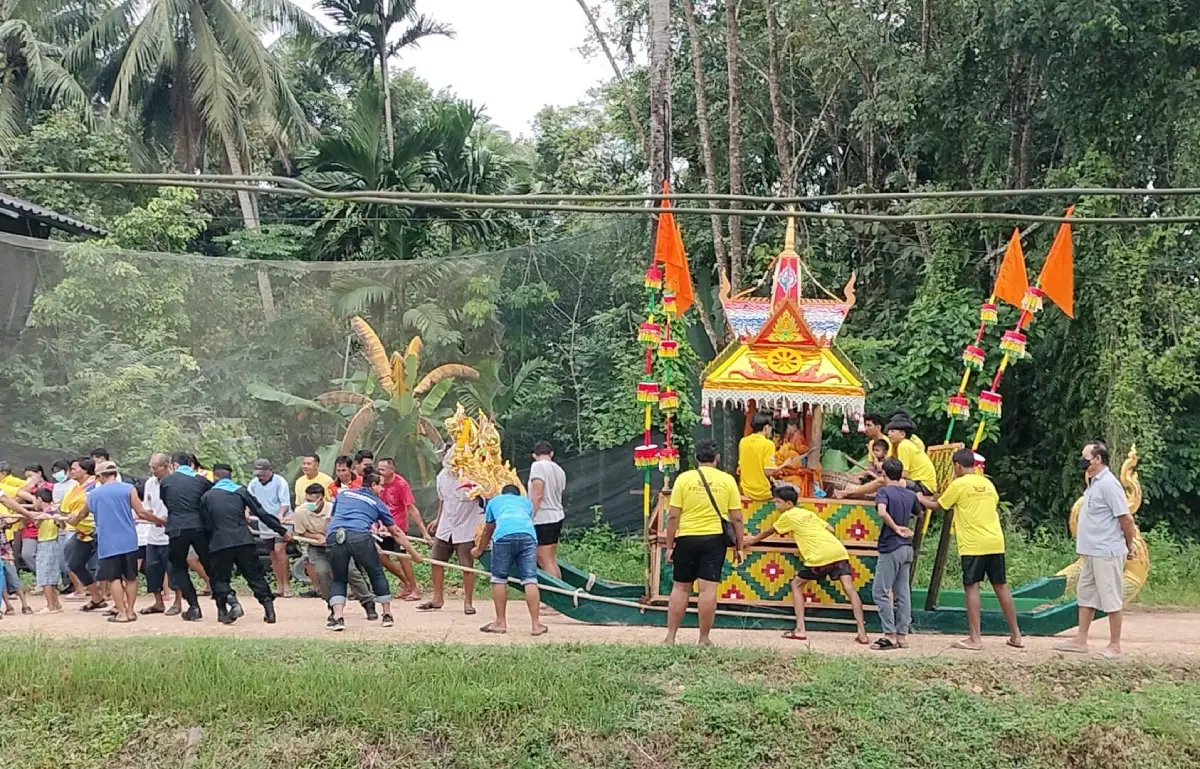
Open Days: The main tradition is observed on the first waning day of the 11th lunar month, one day after the end of Buddhist Lent; extended festival dates vary by annual announcement
Opening Hours: Event hours depend on each temple, host community, and annual schedule
Chak Phra or Lak Phra Pattani is an important Buddhist tradition in Pattani and southern Thailand. It is held after the end of Buddhist Lent, traditionally on the first waning day of the 11th lunar month. The essence of the tradition is the invitation of a revered Buddha image onto a decorated pavilion or ceremonial float called phanom phra, which is then pulled along roads or waterways by local communities. The tradition combines religious devotion, craftsmanship, music, food, communal labour, and southern Thai cultural identity.
In Pattani, the tradition is especially visible in Khok Pho District, where the annual Chak Phra festival has become one of the province’s major Buddhist cultural events. The main gathering area is the multi-purpose ground in front of Khok Pho District Office. Decorated ceremonial floats from many temples gather there for worship, celebration, contests, cultural performances, local product fairs, and community activities that continue for several days according to each year’s official schedule.
The meaning of Chak Phra is rooted in Buddhist tradition. It recalls the moment when the Buddha returned from Tavatimsa Heaven after teaching his mother. Devotees welcomed him with great joy and honoured him by carrying or pulling a decorated pavilion bearing the Buddha image. In southern Thailand, this belief developed into a communal procession in which people pull the phanom phra together, allowing others along the route to make merit, offer food, and pay respect.
The names Lak Phra and Chak Phra refer to the same tradition. Lak Phra emphasizes the act of pulling the float or boat, while Chak Phra is widely used in several southern provinces and especially in Khok Pho, Pattani. Both names express the same central act: moving the Buddha image through the community so that people can join in merit-making after Buddhist Lent.
Preparation begins well before the festival. Temples repair or build their ceremonial floats, prepare the phanom phra, decorate the pavilion, prepare musical instruments, re-cover or tune phon drums, and gather villagers to help. A single ceremonial float requires monks, novices, lay supporters, local craftsmen, young people, and community volunteers. The float is therefore not merely a vehicle. It is a collective work of faith and local art.
The phon drum is one of the key sounds of the southern Chak Phra tradition. Temples may prepare 2 drums: one with a deep tone and one with a higher tone. Preparing a phon drum requires knowledge of wood, skin, tension, and sound balance. In the days leading up to the festival, temples beat the drums to announce that the festival is approaching and to energize the community.
The phanom phra or ceremonial pavilion is the artistic heart of the float. It is built to enshrine the Buddha image and is decorated with tiered roofing, chofah, bai raka, hang hong, floral and geometric patterns, colourful paper, reflective materials, and small flags. The top is often slender and bright, catching sunlight as the float moves. The beauty of the pavilion reflects the devotion and craftsmanship of the temple community.
There are 2 main forms of Chak Phra: land processions and water processions. A land float is built on a wheeled platform, cart, or vehicle and decorated to resemble a boat, often with naga forms at the front and rear. A water procession uses a real boat or boats tied together, with a pavilion placed on top and pulled along rivers or canals. The form depends on the geography and traditions of each community.
The Buddha image placed on the float is called phra lak, the Buddha image for the pulling procession. Some communities associate the image with the posture of requesting rain, reflecting the southern belief that Chak Phra is linked not only with merit-making but also with seasonal rain, agriculture, and abundance. The tradition therefore connects Buddhist faith with everyday life, farming, water, and hope for prosperity.
A symbolic food of the festival is tom bai kaphor, sticky rice cooked with coconut milk and wrapped in kaphor palm leaves. Villagers prepare it 1 or 2 days before the festival. The wrapping method, known locally as thaeng tom, requires skill to fold and tighten the leaves into a neat triangular shape. The cooked tom is offered to the Buddha image, hung on the float, shared among relatives, and used in local games such as sat tom in some areas.
On the full moon day of the 11th lunar month, which is the end of Buddhist Lent, villagers prepare the Buddha image by cleansing it, changing its robe, and holding a worship ceremony. Temples complete the float decorations during the night so that everything is ready for the next morning. At dawn on the first waning day, the Buddha image is invited onto the pavilion, monks join the procession, musicians prepare their instruments, and villagers pull the float out of the temple.
Along the route, people may join the pulling, make offerings, or hang tom on the float. In many communities, ceremonial floats from several temples gather at a common site before the monks’ midday meal. This gives devotees a chance to offer food to monks from different temples and to see many beautifully decorated floats in one place. The gathering becomes both a religious ceremony and a social festival.
In Pattani, older accounts connect the land procession with several temples in Khok Pho, Nong Chik, and nearby districts, as well as temples in the border area of Songkhla. Floats from different temples traditionally moved toward the Khok Pho District Office area, where they gathered for worship, celebration, and contests. This route reflects the network of Buddhist communities in southern Pattani and nearby Songkhla.
Khok Pho’s annual Chak Phra event has developed into a large cultural festival. It includes float worship, float contests, religious ceremonies, cultural shows, local product fairs, and community activities. Recent editions have also been combined with the Pattani Local Culture and Product Fair, helping promote temple craftsmanship, local food, OTOP products, and the cultural identity of the district.
Water-based Chak Phra in Pattani has a different atmosphere. In riverside communities, boats are decorated with a pavilion and pulled along waterways such as the Yamu River toward community gathering points. Boats gather for worship, almsgiving, communal meals, boat races, water games, singing, and local celebrations. This version of the tradition preserves the relationship between Buddhism, river communities, and older ways of life.
Activities related to Chak Phra include boat races, float contests, phon drum contests, sat tom games, cultural performances, and night celebrations. These activities make the tradition more than a religious procession. It becomes a full community festival that builds pride, friendship, and cooperation among villages and temples.
The tradition has changed over time. Some land floats now use modified vehicles instead of older wooden sleds. Decoration materials may include foam, paper, plastic, lights, and modern reflective materials. Some water processions use long-tail boats or motorboats instead of traditional rowing. These changes allow the tradition to survive in modern conditions while preserving the main principles: inviting the Buddha image, making merit, pulling the float, and gathering the community.
Getting There to the Khok Pho Chak Phra event is convenient from Pattani city. Take Highway 42 toward Khok Pho District for about 26 kilometres, then proceed to the area in front of Khok Pho District Office. During the festival, traffic and parking can be crowded, so visitors should allow extra time and check annual announcements before traveling. Visitors arriving by train can get off at Pattani Railway Station, locally known as Khok Pho Station, and continue by local transport.
Visitors should dress respectfully and behave appropriately. Do not climb on the ceremonial floats, do not touch the Buddha image or pavilion without permission, do not block the pulling ropes or procession route, and avoid disturbing monks or devotees who are making merit. Photography is welcome in many public areas, but visitors should avoid entering ritual spaces too closely and should respect local instructions.
In summary, Chak Phra or Lak Phra Pattani is a post-Buddhist Lent tradition that brings together Buddhist faith, decorated ceremonial floats, phon drums, kaphor-leaf rice offerings, local contests, temple-community cooperation, and the shared identity of southern Thai Buddhists. The Khok Pho festival is especially important because it has grown from a local religious procession into one of Pattani’s major annual cultural events, preserving a living heritage that continues to connect temples, communities, and generations.
| Tradition Name | Chak Phra / Lak Phra Pattani |
| Main Area In Pattani | Khok Pho District, Pattani Province, especially the multi-purpose ground in front of Khok Pho District Office |
| Festival Period | Traditionally held on the first waning day of the 11th lunar month, one day after the end of Buddhist Lent; extended celebration dates vary by annual announcement |
| Latest Confirmed Event | The 76th Khok Pho Chak Phra Festival and the 25th Pattani Local Culture and Product Fair in 2025 were held from 3 – 14 October 2025 |
| End Of Buddhist Lent 2026 | Monday, 26 October 2026. The Chak Phra tradition follows on the next day according to tradition, but visitors should check the annual Khok Pho event announcement |
| Type | Southern Thai tradition, Buddhist post-Lent merit-making event, and community cultural festival |
| Significance | A Buddhist tradition in which a revered Buddha image is placed on a decorated ceremonial float and pulled by villagers for merit-making, devotion, and community unity |
| Main Forms | 1. Land Chak Phra, using a decorated land float or vehicle 2. Water Chak Phra, using a decorated boat or raft on rivers and canals |
| Main Elements | Phra lak Buddha image, phanom phra pavilion, ceremonial float or boat, phon drums, gong, ching, chap, pulling ropes, kaphor-leaf rice, and the community procession |
| Traditional Food | Tom bai kaphor, sticky rice cooked with coconut milk and wrapped in kaphor palm leaves, used as an offering and shared among families |
| Main Activities | Float worship, tom offerings, float contests, phon drum contests, boat races, sat tom games, cultural performances, local product fairs, and night celebrations |
| Admission Fee | No general admission fee is publicly listed for attending the public tradition; expenses depend on event activities, vendors, and annual arrangements |
| Travel Information | From Pattani city, take Highway 42 to Khok Pho District for about 26 km, then proceed to the area in front of Khok Pho District Office. Allow extra time for traffic during the festival |
| Caretaker / Event Contact | Khok Pho District, Buddhist institutions, Khok Pho District Cultural Council, Khok Pho Chak Phra Festival Committee, and related local authorities |
| Main Contact Number | Khok Pho Subdistrict Municipality, Tel. 0-7343-2006 / Khok Pho Police Station, Tel. 073-431025 / Pattani Provincial Cultural Office, Tel. 073-460064 |
| Visitor Etiquette | Dress respectfully, do not climb on floats, do not touch the Buddha image or pavilion without permission, do not obstruct pulling ropes or processions, and follow officers’ instructions |
| Nearby Tourist Attractions | 1. King Rama VII Pavilion, about 0.5 km 2. Pattani Railway Station or Khok Pho Railway Station, about 1 km 3. Wat Si Maha Pho, about 1 km 4. Wat Chang Hai, about 10 km 5. Phong Phong Waterfall, about 15 km 6. Sai Khao Waterfall National Park, about 30 km |
| Nearby Restaurants | 1. GREAT COFFEE KOKPHO, about 0.5 km 2. Krua Che Khu, about 1 km, Tel. 061-2972755 3. Krua Chomchan Khok Pho, about 5 km, Tel. 081-9693276 4. Kao Ee Daeng Khok Pho, about 3 km, Tel. 093-6658592 5. Restaurants Around Khok Pho Market, about 1 – 2 km |
| Nearby Accommodations | 1. Rungtawan Resort Khok Pho, about 2 km, Tel. 073-330668 2. Chomchan Resort Khok Pho, about 5 km, Tel. 073-431849, 081-9693276 3. Southern View Hotel Pattani, about 28 km, Tel. 073-450570-72 4. Park View Resort Pattani, about 29 km, Tel. 073-335100 5. C.S. Pattani Hotel, about 30 km, Tel. 073-335093-4, 073-336090 |
Frequently Asked Questions (FAQ)
Q: When is Chak Phra or Lak Phra Pattani held?
A: It is traditionally held one day after the end of Buddhist Lent, on the first waning day of the 11th lunar month. Extended celebrations and contests depend on each year’s official schedule.
Q: Where should visitors see Chak Phra in Pattani?
A: Khok Pho District is the main place to experience the tradition, especially the multi-purpose ground in front of Khok Pho District Office where ceremonial floats gather.
Q: Why is Chak Phra important?
A: It is a post-Buddhist Lent tradition in which a Buddha image is placed on a decorated float and pulled by villagers for merit-making, devotion, and community unity.
Q: What is the difference between land Chak Phra and water Chak Phra?
A: Land Chak Phra uses a decorated wheeled float or vehicle pulled along roads, while water Chak Phra uses a decorated boat or raft pulled along rivers or canals.
Q: What is tom bai kaphor?
A: It is sticky rice cooked with coconut milk and wrapped in kaphor palm leaves. It is used as an offering, hung on the ceremonial float, and shared during the festival.
Q: What can visitors see at the Khok Pho Chak Phra Festival?
A: Visitors can see float worship, beautifully decorated ceremonial floats, float contests, phon drum activities, cultural performances, local fairs, and merit-making ceremonies.
Q: How can visitors travel to the Khok Pho event?
A: From Pattani city, take Highway 42 toward Khok Pho District for about 26 kilometres, then continue to the area in front of Khok Pho District Office.
Q: How should visitors behave during the festival?
A: Visitors should dress respectfully, avoid climbing on floats, avoid touching the Buddha image or pavilion without permission, avoid blocking the pulling ropes, and follow local officers’ instructions.
 Category: ●Art, Culture and Heritage
 Group: ●Art, Craft Centres, Tradition
Last Update : 2 WeekAgo
 Last Update : 2 WeekAgo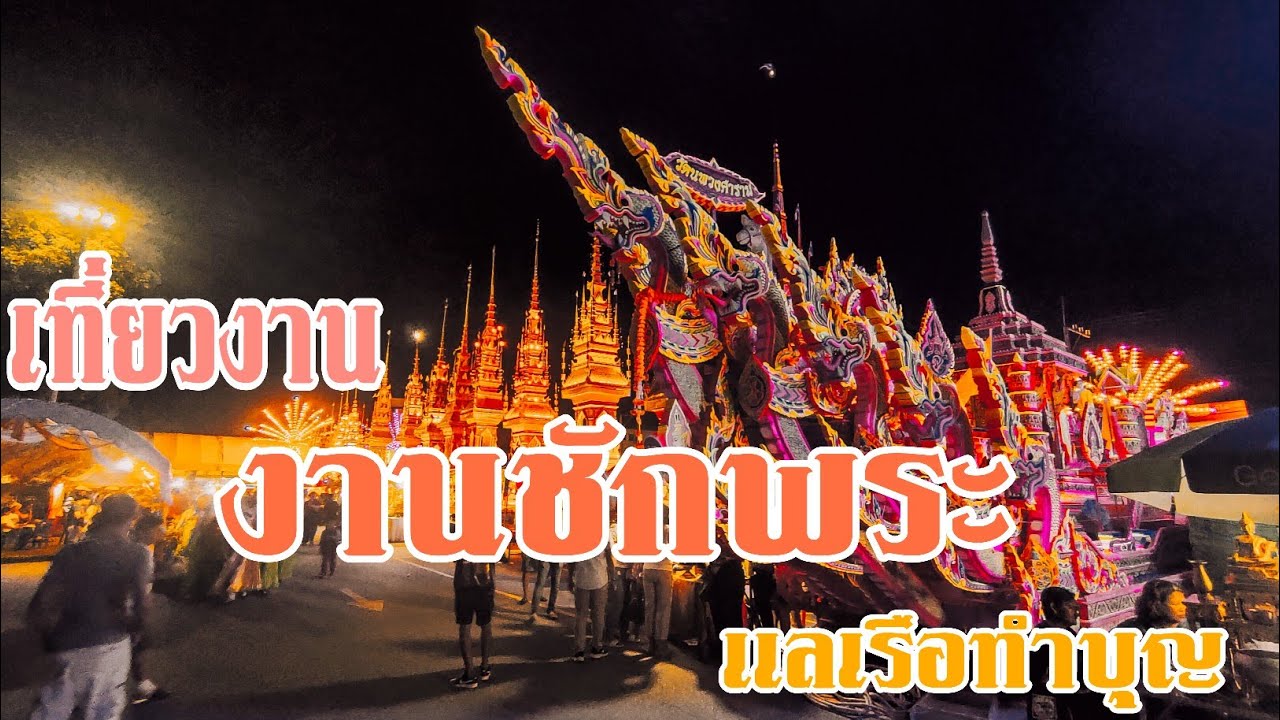

 Historical Sites and Monuments(3)
 Landmarks and Memorials(7)
 Royal Palace(2)
Art, Craft Centres, Tradition(7)
Royal Palace(2)
Art, Craft Centres, Tradition(7)
 Historic Homes and Cities(1)
 Educational Places
 Museum for Study(1)
 Training Center(1)
 Places of Worship
 Temple(13)
 Mosque(5)
 Other Sacred Sites(4)
 Research and Development
 Royal Project(2)
 Suburban Living
 Village, Community(5)
 Local Market(2)
 Nature and Wildlife
 National Parks and Marine Reserves(2)
 Mountain (Doi)(3)
 Waterfalls(3)
 River, Canal(2)
 Bays and Beaches(13)
 Islands(2)
 Other natural attractions(1)
 Entertainment and Agricultural
 Farms, Parks and Ecotourism(1)
 Travel Articles, Recipes
 Travel Review, Food Review(1)
 Southern Food Menu, Southern Food Recipes(3)


