
lovethailand home >South Travel Attractions >Pattani Travel Attractions >Ya Ring >Ya Mu > Yaring Old Palace
TL;DR: Yaring Old Palace is located at Village No. 2, Yamu Subdistrict, Yaring District, Pattani Province, open Daily, hours 08:00 – 17:00.
Yaring Old Palace
Open Days: Daily
Opening Hours: 08:00 – 17:00
Yaring Old Palace, also known as Wang Yaring or the Palace of the Yaring City Lord, is one of the most important historic buildings in Pattani Province. It is located in Village No. 2, Yamu Subdistrict, Yaring District, Pattani Province, about 13 – 20 kilometres from Pattani city depending on the route. The palace was built around 1895 during the late reign of King Rama V by Phraya Phiphit Senamatyathibodi Si Surasongkhram, the ruler of Yaring. It is therefore both a former city lord’s residence and an important physical record of the old Malay-Pattani administrative world during Thailand’s transition into modern provincial governance.
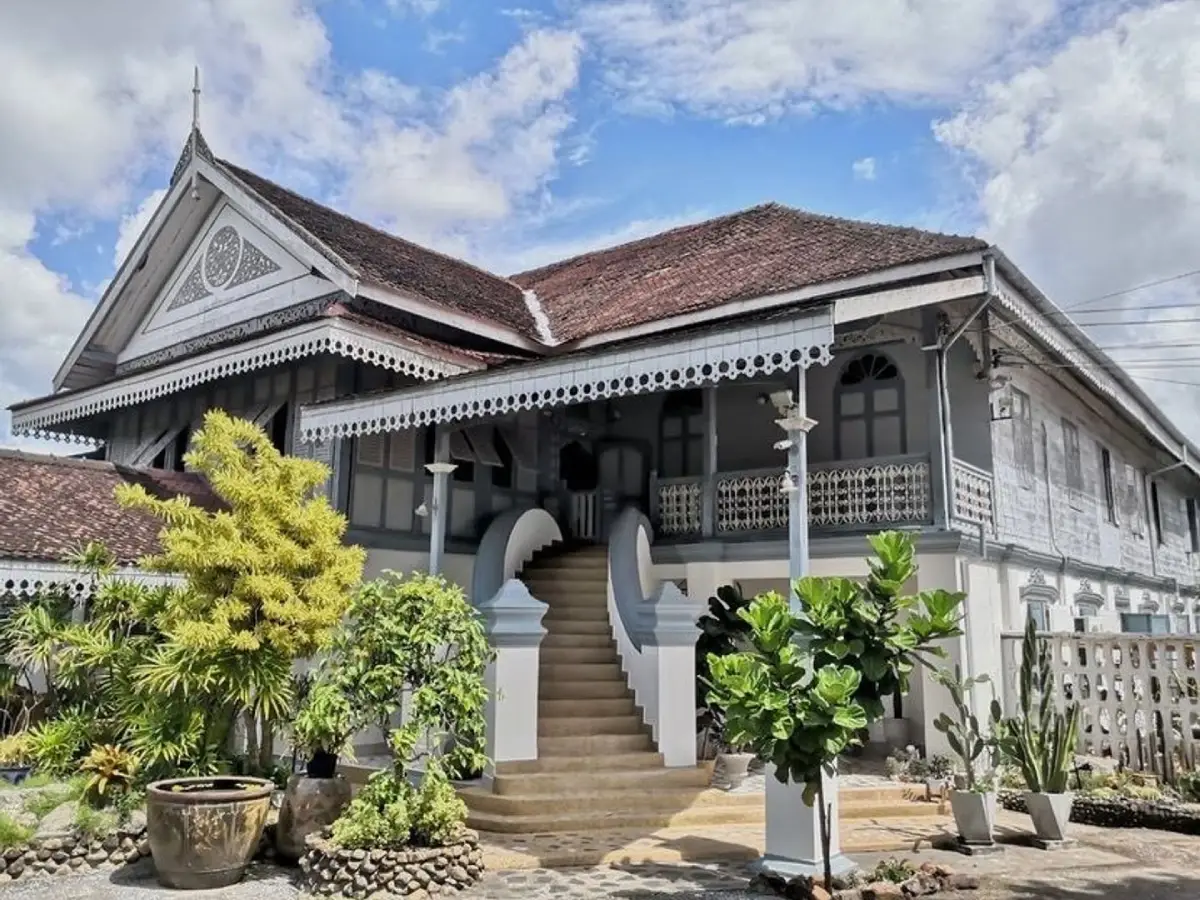
The palace is striking because of its 2-storey half-concrete, half-wooden structure. Curved staircases rise to the upper verandas on both sides, and doors from the veranda open into a large central hall that resembles a local audience chamber. This hall once served as a reception room, a place for official matters, and a central space of the Yaring ruler’s residence. The building is not monumental in size, but it is rich in architectural character and historical meaning.
The significance of Yaring Old Palace is best understood through the history of the 7 old Pattani towns: Yaring, Saiburi, Nong Chik, Chabang Tiko, Raman, Yala, and Ra-ngae. These towns were governed by local rulers and maintained political relations with the central Siamese state through administrative and tributary systems. Yaring Palace was therefore not just a private house. It was a centre of local authority, family life, reception, and cultural expression in one of Pattani’s important old towns.
Phraya Phiphit Senamatyathibodi Si Surasongkhram, the builder of the palace, was a major figure in Yaring history. The construction of the palace in 1895 reflects the position of Yaring’s ruler during a period when Siam was reorganising provincial administration. The palace stands at the intersection of local Malay authority and the emerging modern administrative structure of the late nineteenth century.
The building is arranged in a U-shaped plan. The lower floor is a concrete or open under-floor area, while the upper floor is primarily wooden and used for important residential and official functions. The large central hall on the upper level served as the heart of the building. Rooms on both sides were used by the ruler, family members, and descendants. This arrangement allowed the palace to function as both an official residence and a family home.
Architecturally, Yaring Old Palace combines Malay, Javanese, and European influences. The concrete-and-wood structure gives the building stability while remaining suitable for Pattani’s warm and humid climate. The European-style curved staircases create a formal and elegant entrance. Coloured glass panels add light and visual character, while wooden ventilation panels and carved gables show the refined craftsmanship of local and regional artisans.
The carved wooden details are among the most memorable features of the palace. The fretwork on the gables, ventilation panels, balcony edges, and railings gives the building its delicate appearance. Floral and geometric motifs create beauty while also supporting ventilation. This combination of artistry and practical climate response is one of the reasons the palace remains an outstanding example of southern Thai-Malay architecture.
The twin curved staircases are one of the palace’s visual signatures. They lead gracefully from the front area up to the upper veranda and into the main hall. When viewed from the front courtyard, the building conveys the impression of a residence, a palace, and a local seat of authority at the same time. This balance is what makes Yaring Old Palace different from ordinary old wooden houses.
The upper floor was socially important. It was where the ruler received guests, discussed administrative matters, and conducted important household and official activities. The main hall connects to rooms on both sides, creating a flexible interior for ceremony, reception, family life, and governance. This arrangement shows how local palaces in the Malay-Pattani world could combine official and domestic functions within one building.
The lower floor, with its open and airy character, helped the building adapt to the southern climate. Raised living areas are common in Thai and Malay houses because they reduce moisture, allow airflow, and create a natural hierarchy of space. At Yaring Palace, this practical design is combined with formal architectural expression, producing a building that is both functional and dignified.
Yaring Old Palace remains valuable because it is still cared for by the descendants of its original family. It is not a fully public museum separated from local life. Visitors should therefore contact the descendants or local caretakers before entering the interior, especially for group visits, photography, or detailed study. This makes the visit more personal and respectful, but it also means travelers should treat the site as both heritage and a living family space.
The area around the palace is shaded and calm, with mature trees that reinforce the quiet atmosphere of the old residence. The relationship between the wooden building, veranda, under-floor space, ventilation panels, and surrounding greenery shows how traditional architecture worked with the tropical environment. Walking around the palace helps visitors understand not only the building itself, but also the way people of status lived in southern coastal towns in the past.
The interior is associated with old objects, photographs, ceramics, household items, and traces of the former city lord’s family life. These elements make the palace more than a beautiful structure. They allow visitors to imagine reception rituals, domestic life, dress, hospitality, and taste among Pattani’s local elite from the late Rama V period into the early twentieth century.
The palace is also connected with Rong Ngeng, a traditional performance culture of Malay Pattani that flourished in courtly and elite contexts. Music, dance, language, and manners associated with the palace show that Yaring Palace was not only a political residence, but also a space where local culture was preserved and performed. Studying the palace therefore opens a path into Pattani’s architecture, history, performance culture, and Malay identity.
The language used within the palace also had distinctive features. Some words differed from ordinary Malay usage and were connected with Kelantanese cultural and family links. This shows that Yaring Palace was a cultural world of its own, with particular forms of address, vocabulary, hierarchy, and etiquette preserved among the descendants of the old ruling family.
As a travel destination, Yaring Old Palace is ideal for visitors interested in Pattani history, old architecture, Malay-Muslim culture, and the history of the 7 Pattani towns. It should not be treated as a quick photo stop. The best experience comes from observing the curved staircases, carved woodwork, coloured glass, ventilation panels, main hall, veranda, and the surrounding Yamu community context.
On arrival, visitors should begin by observing the building from the front to understand its proportions and symmetry. The curved staircases guide the eye toward the upper veranda, while the carved details under the eaves and around the gables reveal the skill of the craftsmen. If permitted to enter, visitors should walk carefully, avoid touching old objects, and follow the instructions of the caretaker.
Getting There is convenient by private car, motorcycle, or local transport. From Pattani city, travel toward Yaring District, then continue into Yamu Subdistrict and Soi Phiphit Rat Bamrung. The palace lies within the community area of Yaring. The journey usually takes about 20 – 30 minutes under normal traffic conditions, depending on the starting point and route.
Travelers without private vehicles can use local transport or the Yaring transport queue from Pattani city, then continue to Yamu Subdistrict. Because the palace is within a community and near the road locally known as Thanon Na Wang, asking residents for Wang Yaring or the old city lord’s palace is usually practical. Interior visits should be arranged in advance because the building remains under family care and is not a fully public museum.
A suitable Yaring heritage route can begin at Yaring Old Palace, then continue to Masjid Rayo Fatoni, the Yamu community area, and the old Yaring town zone. Visitors who want to combine history with coastal scenery can continue to Bang Pu Tourism Community, Talo Kapo Beach, Ban Dato Ancient Cemetery, and Laem Tachi. This route connects palace history with coastal communities, mangroves, old cemeteries, and Pattani Bay.
Yaring Old Palace can also be combined with wider Pattani cultural sites such as Chao Mae Lim Ko Niao Shrine, Pattani Central Mosque, Krue Se Mosque, and Barahom community. This helps visitors understand Pattani as a multicultural province where Malay-Muslim, Chinese, Thai Buddhist, and coastal community histories exist side by side.
For architectural photography, morning or late afternoon light is usually best. The softer light helps reveal the carved wooden patterns, railings, veranda details, and colour of the building. Photography should remain within the area permitted by the caretaker. Visitors should not photograph private rooms, family items, or people without permission.
What makes Yaring Old Palace worth preserving is the completeness of both building and memory. It preserves the U-shaped plan, European-style curved staircases, Malay and Javanese woodwork, coloured glass, main hall, and the atmosphere of a local ruler’s residence from the late Rama V period. When read as part of the history of Yaring, the palace becomes one of Pattani’s most meaningful living heritage sites.
In summary, Yaring Old Palace brings together the history of the 7 old Pattani towns, Malay-Javanese-European architecture, the residence of a local ruler, Rong Ngeng performance culture, palace language, and the memory of the Yamu community. Travelers who want to understand Pattani beyond beaches and major mosques should include Yaring Old Palace in their route. It is a living witness to Yaring’s past and one of the clearest surviving examples of Pattani’s old ruling-house heritage.
| Name | Yaring Old Palace / Wang Yaring / Palace Of The Yaring City Lord |
| Location | Village No. 2, Yamu Subdistrict, Yaring District, Pattani Province |
| Address | Soi Phiphit Rat Bamrung, Yamu Subdistrict, Yaring District, Pattani 94150, Thailand |
| Coordinates | 6.8556733, 101.3761947 |
| Type | Former city lord’s palace, historical site, architectural heritage site, and Malay-Muslim cultural landmark |
| Highlights | A 2-storey half-concrete, half-wooden palace with twin curved staircases, a large audience-like hall, and carved details combining Malay, Javanese, and European influences |
| History | Built around 1895 during the late reign of King Rama V by Phraya Phiphit Senamatyathibodi Si Surasongkhram, the ruler of Yaring |
| Name Origin | Named for its role as the old palace of the Yaring ruler and as a preserved residence of the ruling family in Yamu |
| Architectural Features | U-shaped plan, concrete lower floor, wooden upper floor, coloured glass panels, ventilation panels, carved wooden gables, European-style curved staircases, and local-Javanese decorative craftsmanship |
| Main Areas / Zones | Front courtyard, twin curved staircases, upper veranda, central hall, side rooms, lower open floor, and surrounding garden |
| Visiting Information | Contact the descendants or caretakers before entering the interior, especially for group visits, photography, or detailed study |
| Travel Information | From Pattani city, travel toward Yaring District, then continue to Yamu Subdistrict and Soi Phiphit Rat Bamrung. The palace is about 13 – 20 km from Pattani city, depending on the route |
| Current Status | Maintained by the descendants of the original family and still preserved as an important cultural attraction of Yaring District |
| Open Days | Daily |
| Opening Hours | 08:00 – 17:00 |
| Caretaker / Local Contact | Descendants of the palace family, Yamu Subdistrict Municipality, and local authorities in Yaring District |
| Main Contact Number | Palace Visit Enquiry, Tel. 061-2349537 / Yamu Subdistrict Municipality, Tel. 086-3660257 / Yaring Transport Queue, Tel. 084-1222862 |
| Visitor Etiquette | Ask permission before entering the interior, do not touch old objects, do not climb on the structure, do not photograph private areas without permission, and behave respectfully |
| Nearby Tourist Attractions | 1. Masjid Rayo Fatoni, about 1 km 2. Yamu Community And Old Yaring Town Area, about 1 km 3. Bang Pu Tourism Community, about 7 km 4. Talo Kapo Beach, about 12 km 5. Ancient Ban Dato Cemetery, about 13 km 6. Laem Tachi, about 16 km |
| Nearby Restaurants | 1. Deleaf Corner, Thanon Na Wang, about 0.5 km, Tel. 073-491057 2. Phee Oom Crab Fried Rice, Wang Chao Mueang Yaring, about 0.5 km 3. Phee Oom Crab Fried Rice, Yaring Branch, about 2 km, Tel. 081-9637371 4. Local Restaurants In Yaring Market Area, about 1 – 2 km 5. Seafood And Local Restaurants Around Talo Kapo Beach, about 12 km |
| Nearby Accommodations | 1. Taman Resort Laem Pho, about 15 km, Tel. 088-5963203 2. Samilan Homestay Laem Pho, about 15 km, Tel. 098-0646023 3. Baan Suan Rim Nam Hotel Pattani, about 17 km 4. Southern View Hotel Pattani, about 19 km, Tel. 073-450570-72 5. C.S. Pattani Hotel, about 20 km, Tel. 073-335093-4, 073-336090 |
Frequently Asked Questions (FAQ)
Q: Where is Yaring Old Palace located?
A: It is located in Village No. 2, Yamu Subdistrict, Yaring District, Pattani Province, in Soi Phiphit Rat Bamrung.
Q: Why is Yaring Old Palace important?
A: It was built around 1895 during the late reign of King Rama V by Phraya Phiphit Senamatyathibodi Si Surasongkhram and is one of the key surviving heritage sites of the old Pattani towns.
Q: Is Yaring Old Palace open to visitors?
A: It is listed as open daily from 08:00 to 17:00. Visitors should contact the descendants or caretakers before entering the interior, especially for group visits.
Q: What are the coordinates of Yaring Old Palace?
A: The coordinates are 6.8556733, 101.3761947.
Q: What are the main architectural features?
A: The palace is a 2-storey half-concrete, half-wooden building with a U-shaped plan, twin European-style curved staircases, a large audience-like hall, coloured glass, ventilation panels, and carved woodwork combining Malay, Javanese, and European influences.
Q: How can visitors get there from Pattani city?
A: Travel from Pattani city toward Yaring District, then continue to Yamu Subdistrict and Soi Phiphit Rat Bamrung. The route can be done by private car, motorcycle, or local transport.
Q: What nearby places can be visited on the same trip?
A: Nearby places include Masjid Rayo Fatoni, Yamu community, Bang Pu Tourism Community, Talo Kapo Beach, Ancient Ban Dato Cemetery, and Laem Tachi.
Q: How should visitors behave at the palace?
A: Visitors should ask permission before entering, speak respectfully, avoid touching old objects, avoid climbing on the structure, and avoid photographing private areas or people without permission.
 Category: ●Art, Culture and Heritage
 Group: ●Royal Palace
Last Update : 4 WeekAgo
 Last Update : 4 WeekAgo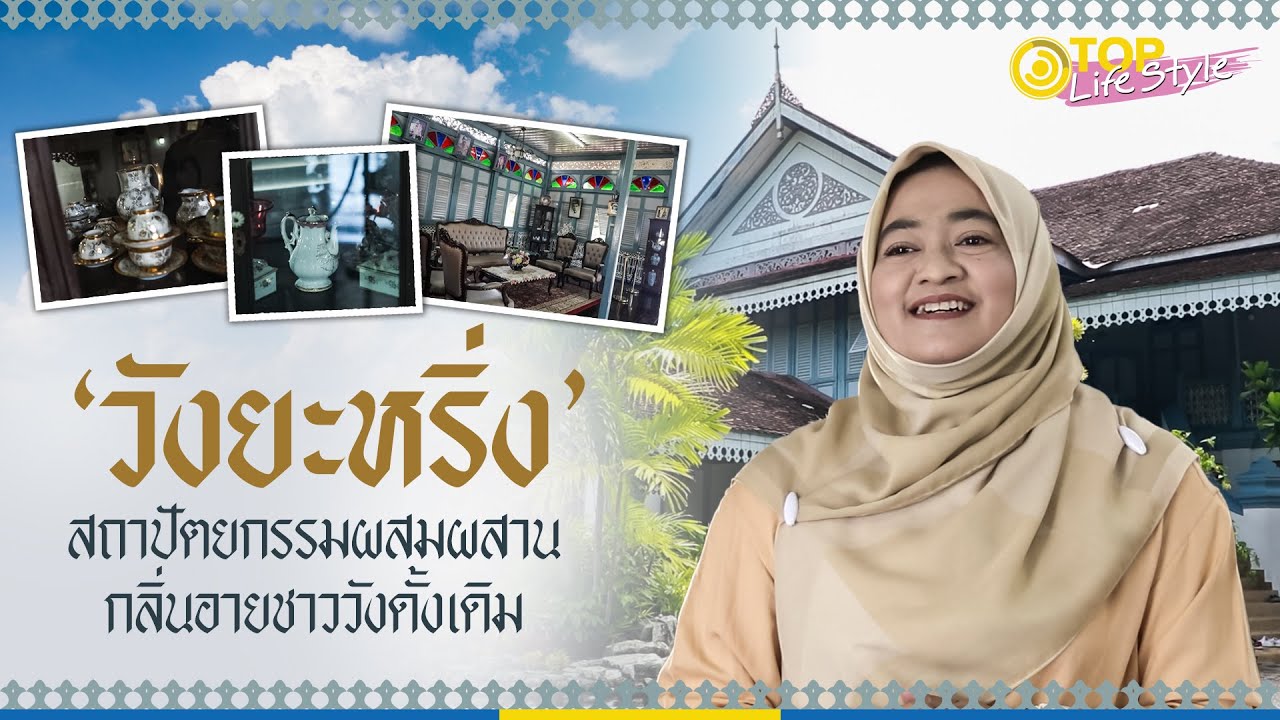
 Click to Access the Navigation Map GPS
 Historical Sites and Monuments(3)
 Landmarks and Memorials(7)
Royal Palace(2)
Landmarks and Memorials(7)
Royal Palace(2)
 Art, Craft Centres, Tradition(7)
 Historic Homes and Cities(1)
 Educational Places
 Museum for Study(1)
 Training Center(1)
 Places of Worship
 Temple(13)
 Mosque(5)
 Other Sacred Sites(4)
 Research and Development
 Royal Project(2)
 Suburban Living
 Village, Community(5)
 Local Market(2)
 Nature and Wildlife
 National Parks and Marine Reserves(2)
 Mountain (Doi)(3)
 Waterfalls(3)
 River, Canal(2)
 Bays and Beaches(13)
 Islands(2)
 Other natural attractions(1)
 Entertainment and Agricultural
 Farms, Parks and Ecotourism(1)
 Travel Articles, Recipes
 Travel Review, Food Review(1)
 Southern Food Menu, Southern Food Recipes(3)


