
lovethailand home >Northeastern Travel Attractions >Ubon Ratchathani Travel Attractions >Muang Ubon Ratchathani >Pathum > Wat Burapharam
TL;DR: Wat Burapharam is located at Burapha Nai Road / Phalo Rang Rit Road, around Soi Burapha Nai 1, Nai Mueang Subdistrict, Mueang Ubon Ratchathani District, Ubon, open Daily, hours 08.30 – 16.30.
Wat Burapharam
Open Days: Daily
Opening Hours: 08.30 – 16.30
Wat Burapharam in Ubon Ratchathani, also known locally as Wat Burapha, is an important historic Buddhist temple in the old urban area of Ubon Ratchathani. Located around Burapha Nai Road and Phalo Rang Rit Road in Mueang Ubon Ratchathani District, the temple is significant as an active place of worship, a registered historic site, and a deeply meaningful location in the history of Thai meditation practice. Wat Burapharam is closely associated with several renowned masters of the Vipassana and forest meditation tradition, including Phra Ajahn Seeta Chayaseno, Phra Ajahn Sao Kantasilo, Phra Ajahn Mun Bhuridatto, Phra Ajahn Lee Dhammadharo, and Phra Ajahn Sing Khantiyagamo. For international visitors interested in Thai Buddhism, this temple offers a rare opportunity to understand how Ubon Ratchathani became one of the important centres of meditation practice in northeastern Thailand.
The importance of Wat Burapharam comes from its connection with serious Buddhist practice. In the past, the eastern edge of Ubon Ratchathani was quieter than the modern city seen today. This area was suitable for meditation, and Phra Ajahn Seeta Chayaseno regularly came here to practise Vipassana. Prince Sapphasitthiprasong, the royal commissioner of the Isan region at that time, had deep faith in Phra Ajahn Seeta and supported the establishment of the temple for him. Wat Burapharam was therefore born from devotion to a meditation master and from the wish to create a proper place for mental cultivation in Ubon Ratchathani.
The temple was established in 1893 during the late Rattanakosin period. Its name reflects its original location to the east of the city. In Thai, burapha means east. Wat Burapharam therefore refers to a temple on the eastern side of old Ubon Ratchathani. Although the surrounding area has changed from a quiet outer zone into part of the modern city, the temple still preserves its contemplative character. It remains a place where visitors can pay respect to the great meditation teachers, study local religious architecture, and reflect on the spiritual history of the city.
Phra Ajahn Seeta Chayaseno is one of the central figures in the history of Wat Burapharam. He was an important meditation teacher who helped lay the foundation for the northeastern Vipassana tradition. Through him, the temple became linked with Phra Ajahn Sao Kantasilo and Phra Ajahn Mun Bhuridatto. In 1915, Phra Ajahn Mun travelled from Wat Boromniwat in Bangkok to Ubon Ratchathani and studied meditation at Wat Burapharam. This event gives the temple a major place in the early history of the Thai forest meditation tradition. A visit here therefore helps travelers understand the formative period before this tradition spread widely across Thailand.
When people speak about the Isan meditation lineage, Wat Burapharam is often mentioned alongside other important Ubon Ratchathani temples such as Wat Liap and Wat Si Ubon Rattanaram. Ubon Ratchathani was not only a provincial city; it was also a centre of Buddhist learning, monastic discipline, and meditation practice. Several important monks studied, stayed, or practised in this area. Wat Burapharam is one of the clearest places where this spiritual history remains visible. It allows visitors to see how a city temple could become connected with the forest meditation tradition, even before many teachers became associated with remote forest monasteries.
One of the most important structures inside Wat Burapharam is the old sim, or ordination hall. This historic building is associated with the early religious life of the temple and the development of local Buddhist architecture. The old sim is not large or grand in the way some major temple halls are. Its value lies in its local form and historical meaning. It reflects the architecture of Isan Buddhist communities: modest, practical, and shaped by local materials and craft knowledge. The base, wall structure, and remaining architectural elements show the character of regional temple building in Ubon Ratchathani.
The old sim has been conserved and protected by a shelter so that visitors can still see its remaining structure. This conservation is important because many traditional Isan sim buildings have disappeared over time as temples replaced them with newer structures. Wat Burapharam therefore preserves a valuable example of local religious architecture within the city. The building helps visitors understand how earlier communities built sacred spaces with brick, lime, timber, clay, and natural materials. It is not only an old building; it is a record of local craftsmanship and Buddhist community life.
Inside the old sim are images of five revered meditation masters: Phra Ajahn Seeta Chayaseno, Phra Ajahn Sao Kantasilo, Phra Ajahn Mun Bhuridatto, Phra Yannawisit or Luang Pu Thong Chandasiri, and Phra Sutthithammarangsi Khampiramethachan or Luang Pu Lee Dhammadharo. These images are deeply respected by Buddhist devotees. For visitors, they form the spiritual heart of the temple. They allow the memory of the meditation lineage to remain present in a physical place connected with that history.
Paying respect to the meditation masters at Wat Burapharam is different from visiting a temple only for architecture or photography. Visitors stand in a place directly connected with the early development of meditation practice in northeastern Thailand. The names of Phra Ajahn Sao and Phra Ajahn Mun are not only names in Buddhist books. They are connected with real places, teachers, discipline, walking meditation, forest practice, and the transmission of Dhamma through lived experience. Wat Burapharam makes this lineage easier to understand because it brings the history of the teachers into a concrete setting.
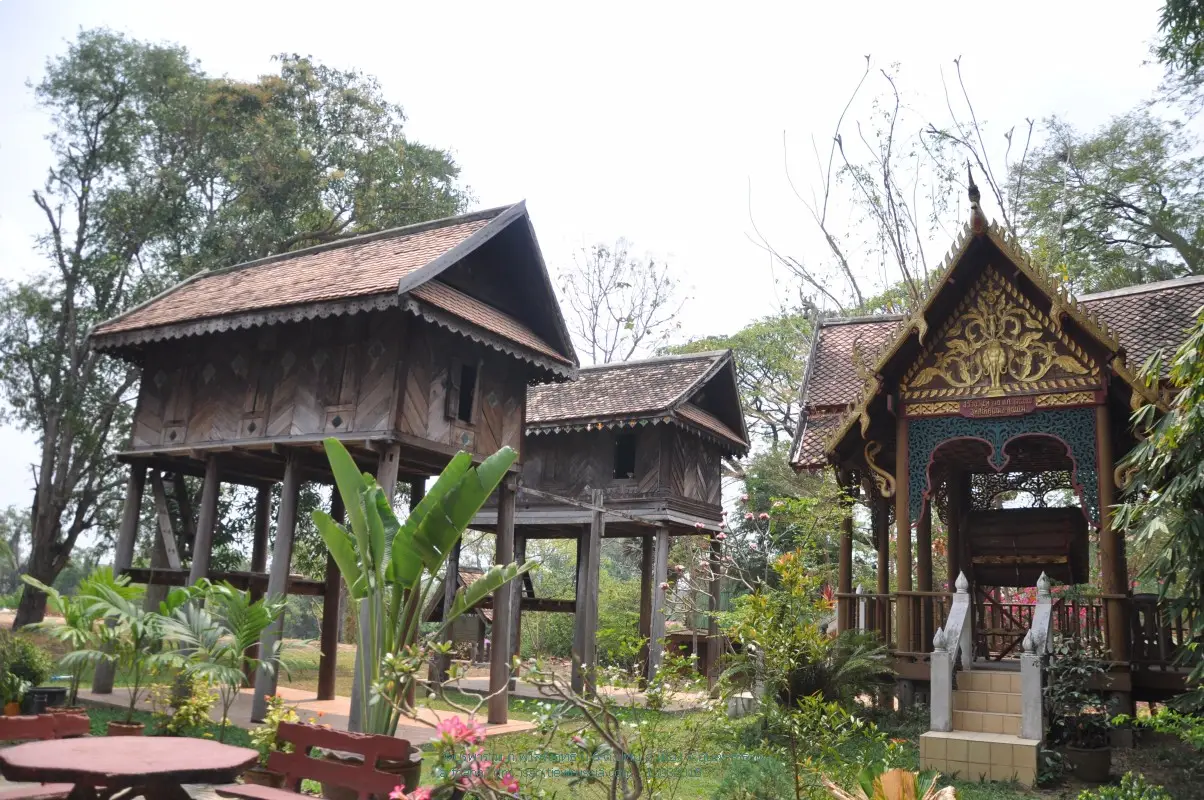
Another major historic feature of the temple is the pair of Ho Trai, or Buddhist scripture halls. These two wooden buildings were built to store palm-leaf manuscripts, folded books, Buddhist scriptures, and other religious texts. Their design is especially interesting because they stand as a pair, raised on wooden posts, with a connecting platform between them. The buildings have gabled roofs, diagonal wooden wall patterns, and decorative elements that reflect local wood craftsmanship. The Ho Trai pair demonstrates how Buddhist communities protected sacred knowledge through architecture.
A scripture hall is more than a storage room. In traditional Buddhist culture, scriptures preserve doctrine, ethics, language, ritual practice, and community memory. Building a Ho Trai required careful attention to air circulation, humidity, insects, and durability. At Wat Burapharam, the elevated wooden form helped protect religious manuscripts and allowed the structure to function in the local climate. For foreign visitors, this is an important point: the beauty of the building is inseparable from its purpose. It was built to preserve knowledge.
The atmosphere of Wat Burapharam is quiet and restrained. Although it is located in the city, the temple still offers a sense of calm. Visitors can walk from the main worship area to the old sim, the Ho Trai pair, and the area where the meditation masters are enshrined. The site is not large, but it rewards slow observation. Those who read the signs, look carefully at the architectural details, and connect the structures with the history of the meditation teachers will gain much more from the visit than those who only pass through quickly.
Wat Burapharam is suitable for several types of travelers. Buddhist devotees come to pay respect to the great meditation masters. History lovers come to understand the religious development of Ubon Ratchathani. Architecture enthusiasts come to study the old sim and the paired scripture halls. Foreign visitors interested in Buddhism come to learn about the Thai forest meditation tradition in a real historical setting. The temple is especially rewarding for travelers who prefer meaningful cultural sites rather than highly commercialized attractions.
For travelers following the path of Phra Ajahn Mun Bhuridatto, Wat Burapharam is an essential stop in Ubon Ratchathani. His visit to the temple in 1915 is an important part of his early training. The temple helps visitors see the beginning of a spiritual journey that later shaped one of the most influential meditation lineages in modern Thai Buddhism. It also shows how teachers, disciples, city temples, forest retreats, and regional networks were connected in the formation of the tradition.
Wat Burapharam should be experienced as a place of learning, not only as a visual attraction. The temple’s key value is the combination of meditation history and registered historic architecture. Visitors should look at the old sim, observe the bases, walls, shelter structure, and the setting of the Ho Trai pair. They should also take time to pay respect to the images of the masters and consider why these figures remain so deeply respected. This approach turns a short temple visit into a meaningful encounter with Buddhist history.
Geographically, Wat Burapharam is connected with the old Mun River landscape. The temple stands near an older course of the river, and the southern area of the temple is related to former waterways and wetland conditions. This landscape helps explain why the area was once suitable for meditation. Ubon Ratchathani grew in relation to the Mun River, and temples such as Wat Burapharam formed part of that cultural landscape. Even though the modern city has changed the surroundings, the older geography still gives meaning to the temple’s history.
Wat Burapharam is open daily and admission is free. The visiting hours used here are 08.30 to 16.30, which are suitable for daytime visits to the historic structures. Morning is a good time for a quieter atmosphere, while the afternoon can be combined with nearby old-city sites. Visitors should remember that this is an active Buddhist temple as well as a historic site. Respectful behaviour is expected at all times.
Visitors should dress modestly, keep their voices low, avoid touching historic structures or sacred images without permission, and stay out of restricted areas. Photography is generally appropriate in outdoor spaces, but it should not disturb monks, worshippers, or meditation practitioners. Because the temple is associated with the meditation tradition, quietness and restraint are especially important. A respectful visit helps preserve both the physical heritage and the spiritual atmosphere of the temple.
Getting There is easy because Wat Burapharam is located in central Ubon Ratchathani. From Thung Si Mueang, travelers can take Phalo Rang Rit Road eastward for about 2 km and enter the Burapha Nai area. The temple can be reached by private car, taxi, local hired vehicle, songthaew, or ride-hailing service. From Ubon Ratchathani International Airport, the trip usually takes around 15 minutes depending on traffic. From Ubon Ratchathani Railway Station in Warin Chamrap District, travelers can cross the Mun River into the city and continue to the temple.
A practical cultural route can begin at Wat Burapharam, then continue to Wat Tai Phrachao Yai Ong Tue, Wat Maha Wanaram, Wat Chaeng, Wat Thung Si Mueang, Thung Si Mueang, and Ubon Ratchathani National Museum. This route gives visitors a broad picture of the old city: meditation history, important Buddha images, local architecture, old sim buildings, scripture halls, and provincial history. Because most of these places are located within the city, they can be combined easily in one day.
For international visitors, Wat Burapharam is one of the most meaningful places in Ubon Ratchathani for understanding the Thai forest meditation tradition. Although the temple is now in an urban area, it was once connected with a quieter edge of the city suitable for Vipassana practice. The presence of major meditation masters in the temple’s history shows that the forest tradition did not develop in isolation from city temples. It grew through teachers, disciples, places of practice, and networks of learning. Wat Burapharam makes this history visible.
Wat Burapharam is therefore a valuable stop for travelers who want to understand Ubon Ratchathani more deeply. It may not be the largest or most visually dramatic temple in the province, but it carries exceptional spiritual and historical weight. The old sim, paired Ho Trai, registered historic structures, and images of the meditation masters all tell the story of a city that became a centre of Buddhist practice. A visit here is not only a temple visit; it is a way of reading the religious history of Ubon Ratchathani through place, architecture, and lineage.
| Name | Wat Burapharam / Wat Burapha Ubon Ratchathani |
| Location | Burapha Nai Road / Phalo Rang Rit Road, around Soi Burapha Nai 1, Nai Mueang Subdistrict, Mueang Ubon Ratchathani District, Ubon Ratchathani Province |
| Address | Burapha Nai Road, Nai Mueang, Mueang Ubon Ratchathani, Ubon Ratchathani 34000, Thailand |
| Coordinates | 15.231285, 104.874310 |
| Highlights | An important temple in the Isan Vipassana meditation lineage, with an old sim, paired Ho Trai, and images of five revered meditation masters |
| History | A Dhammayut temple established in 1893 during the late Rattanakosin period. Prince Sapphasitthiprasong supported the establishment of the temple for Phra Ajahn Seeta Chayaseno. In 1915, Phra Ajahn Mun Bhuridatto came to study Vipassana here. |
| Name Origin | Burapha means east, referring to the temple’s original location on the eastern side of old Ubon Ratchathani. |
| Distinctive Features | A temple connected with major Thai meditation masters, registered historic structures, an old Isan sim, paired wooden scripture halls, and a calm atmosphere within the city |
| Travel Information | From Thung Si Mueang, take Phalo Rang Rit Road eastward for about 2 km toward Soi Burapha Nai 1 or Burapha Nai Road. The temple is accessible by private car, taxi, songthaew, local hired vehicle, or ride-hailing service. |
| Current Status | Open To Visitors And Still Used As An Active Buddhist Temple In Central Ubon Ratchathani |
| Open Days | Daily |
| Opening Hours | 08.30 – 16.30 |
| Fees | Free Admission |
| Facilities | Temple parking area, worship areas, historic-site information panels, walkways around the old sim and paired Ho Trai, restrooms, and merit-making areas |
| Main Areas / Zones | Old Sim Of Wat Burapharam Paired Ho Trai Hall Or Area Enshrining The Meditation Masters Main Buddha Worship Area Protective Shelter Over The Historic Structure Merit-Making Area And Temple Grounds Old Mun River Landscape Area |
| Caretaker | Wat Burapharam And The Fine Arts Department For Registered Historic Components |
| Important Meditation Masters Connected With The Temple | Phra Ajahn Seeta Chayaseno Phra Ajahn Sao Kantasilo Phra Ajahn Mun Bhuridatto Phra Ajahn Lee Dhammadharo Phra Ajahn Sing Khantiyagamo |
| Main Contact Number | 045-241-714 |
| Nearby Tourist Attractions | 1. Wat Tai Phrachao Yai Ong Tue, About 1.6 km 2. Wat Tai Riverside Area, About 1.8 km 3. Wat Maha Wanaram, About 2 km 4. Wat Chaeng Ubon Ratchathani, About 2 km 5. Wat Thung Si Mueang, About 2.3 km 6. Ubon Ratchathani National Museum, About 2.5 km |
| Nearby Restaurants | 1. Sabaidee New Day, Burapha Nai Road, About 0.3 km, Tel. 061-994-4546, 089-356-4519 2. Made-To-Order By Khun Nuch, Burapha Nai Road, About 0.7 km, Tel. 098-173-5652 3. Oshi Fast Food, Burapha Road, About 1 km, Tel. 096-367-5512 4. Hukikuni Coffee Bar And Restaurant, About 2 km, Tel. 098-282-1888 5. The Outside Inn, About 2 km, Tel. 088-581-2069, 088-731-3964 6. Guay Jub Ubon, About 2 km, Tel. 087-074-0499 |
| Nearby Accommodations | 1. The Outside Inn, About 2 km, Tel. 088-581-2069, 088-731-3964 2. Laithong Hotel, About 2 km, Tel. 045-264-271-3 3. T3 House, About 2 km, Tel. 045-244-911 4. YUU Hotel & Cafe, About 2.5 km, Tel. 085-614-1111 5. Sunee Grand Hotel & Convention Center, About 3 km, Tel. 045-352-900 |
Frequently Asked Questions (FAQ)
Q: Where is Wat Burapharam located?
A: Wat Burapharam is located around Burapha Nai Road and Phalo Rang Rit Road in Nai Mueang Subdistrict, Mueang Ubon Ratchathani District, Ubon Ratchathani Province.
Q: What are the opening hours of Wat Burapharam?
A: The temple is open daily from 08.30 to 16.30.
Q: Is there an admission fee?
A: No. Admission to Wat Burapharam is free.
Q: Why is Wat Burapharam important?
A: Wat Burapharam is important because it is connected with the early development of the Isan Vipassana and Thai forest meditation lineage, especially through Phra Ajahn Seeta Chayaseno, Phra Ajahn Sao Kantasilo, and Phra Ajahn Mun Bhuridatto.
Q: What can visitors see inside Wat Burapharam?
A: Visitors can see the old sim, paired Ho Trai, images of five revered meditation masters, information panels, and the quiet atmosphere of an active Buddhist temple in the city.
Q: How is Wat Burapharam connected with Phra Ajahn Mun?
A: Phra Ajahn Mun Bhuridatto came to Wat Burapharam in 1915 to study Vipassana, making the temple an important place in the early history of the Thai forest meditation tradition.
Q: How long should visitors spend at Wat Burapharam?
A: Visitors should allow around 45 minutes to 1 hour to pay respect to the meditation masters, see the old sim, and view the paired Ho Trai.
Q: What nearby attractions can be visited after Wat Burapharam?
A: Nearby attractions include Wat Tai Phrachao Yai Ong Tue, Wat Maha Wanaram, Wat Chaeng, Wat Thung Si Mueang, Thung Si Mueang, and Ubon Ratchathani National Museum.
 Category: ●Places of Worship
 Group: ●Temple
Last Update : 2 MonthAgo
 Last Update : 2 MonthAgo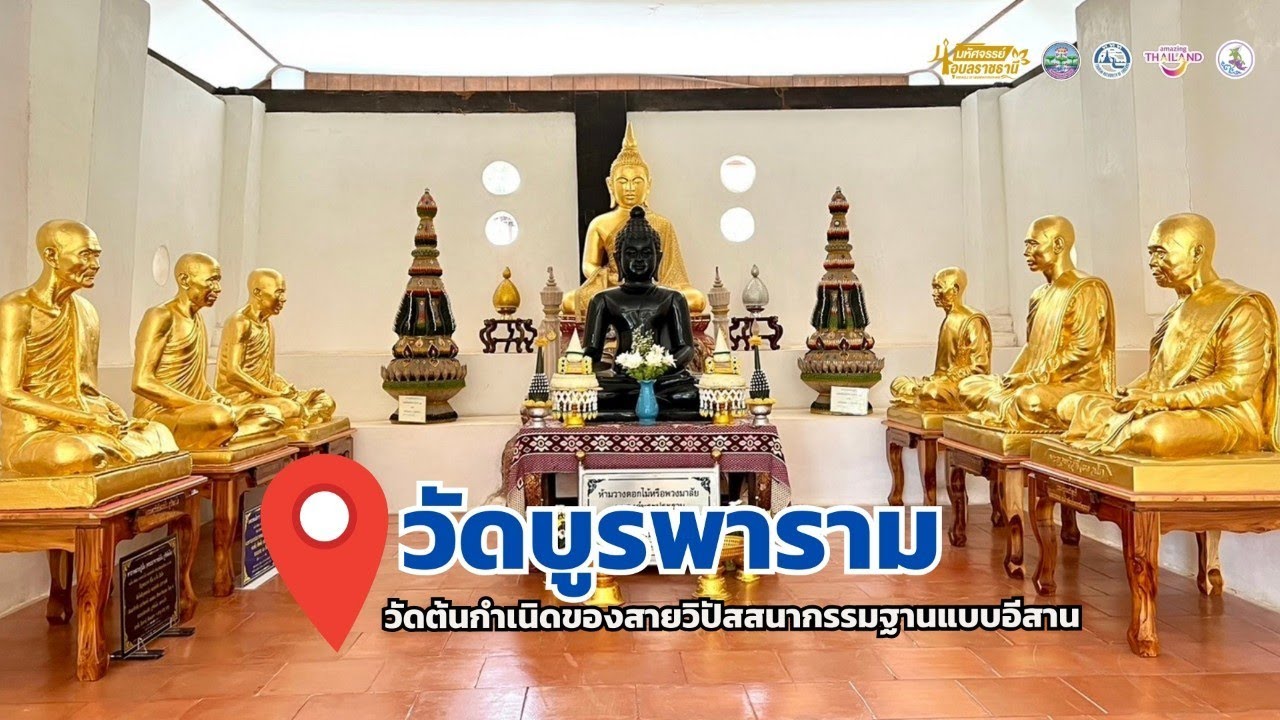
 Click to Access the Navigation Map GPS
Wat Burapharam Map
Recommend

 Art, Culture and Heritage
 Historical Sites and Monuments(5)
 Landmarks and Memorials(2)
 Royal Palace(1)
 Art, Craft Centres, Tradition(7)
 Museums(3)
Temple(37)
Museums(3)
Temple(37)
 Other Sacred Sites(4)
 Research and Development
 Royal Project(2)
 Suburban Living
 Village, Community(2)
 Local Market(4)
 Nature and Wildlife
 National Parks and Marine Reserves(5)
 Mountain (Doi)(6)
 Dam, Reservoir, Lake(8)
 Waterfalls(12)
 Hot Springs(1)
 Caves(2)
 River, Canal(11)
 Bays and Beaches(8)
 Islands(2)
 Other natural attractions(6)
 Entertainment and Agricultural
 Zoos and Aquariums(1)
 Animal camps and shows(1)
 Farms, Parks and Ecotourism(1)


