
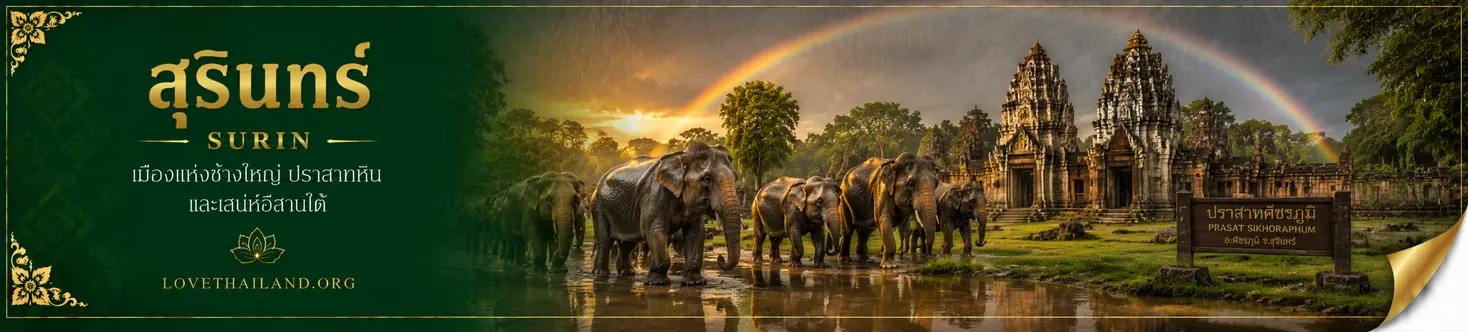
lovethailand home >Northeastern Travel Attractions >Surin Travel Attractions >Muang Surin >Che Niyong > Surin National Museum
TL;DR: Surin National Museum is located at 214 Moo 13, Surin – Chong Chom Road, Chaniang Subdistrict, Mueang Surin District, Surin Province 32000, open Wednesday – Sunday and public holidays, hours 09.00 – 16.00.
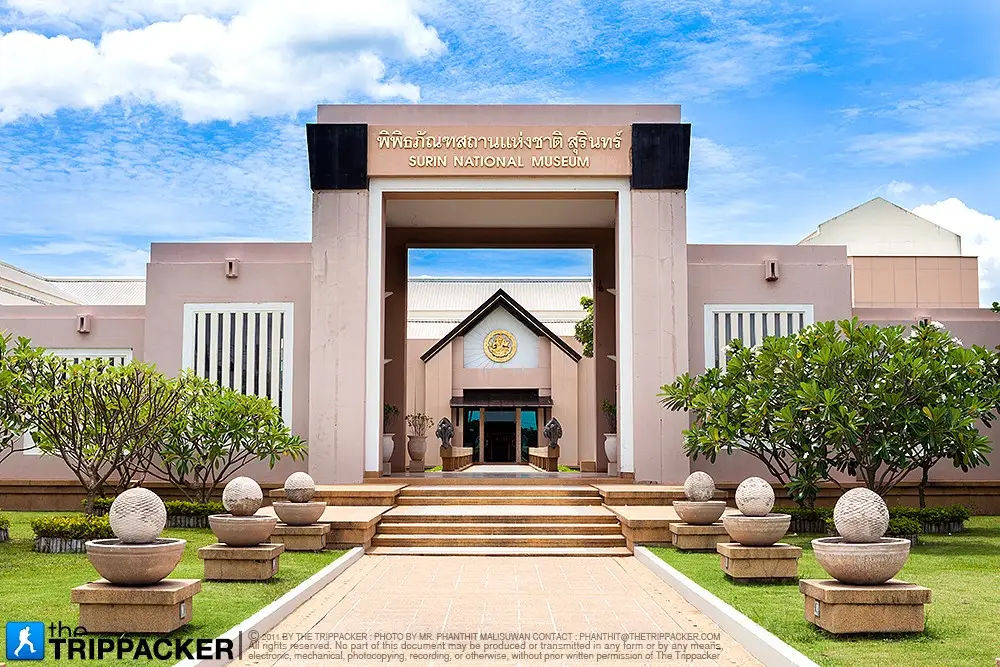
Surin National Museum
Open Days: Wednesday – Sunday and public holidays
Opening Hours: 09.00 – 16.00
Surin National Museum is the main provincial learning center for understanding Surin from the past to the present. Located at 214 Moo 13, Surin – Chong Chom Road, Chaniang Subdistrict, Mueang Surin District, Surin Province, the museum presents the province through natural history, archaeology, city history, ethnography, and outstanding local cultural heritage. For visitors who want to understand Surin beyond its well-known images of elephants, silk, Khmer ruins, and local festivals, this museum is the most complete starting point.
Surin National Museum is not merely a place where ancient objects are stored. It is a carefully organized cultural institution that explains how the province developed through geography, natural resources, ancient settlement, Dvaravati culture, Khmer culture, Ayutthaya and Lan Xang connections, local administration, ethnic diversity, and living heritage. Its permanent exhibitions, artifacts, models, photographs, maps, and interpretive displays allow visitors to see Surin as a layered cultural landscape rather than a single-theme destination.
The museum’s strength lies in its complete narrative of Surin. Visitors do not encounter isolated artifacts without context. Instead, they see how nature, people, history, politics, economy, society, ethnicity, and local wisdom interact with one another. This makes the museum useful for general travelers, students, teachers, researchers, cultural tourists, and international visitors who want to understand lower northeastern Thailand in a deeper and more structured way.
The museum complex is divided into 4 main buildings. Building 1 serves as the entrance hall and walkway, welcoming visitors into the museum atmosphere. Building 2 is the educational section, consisting of a meeting room, activity room, reception room, and library. Building 3 is the exhibition and office building, containing the permanent exhibition rooms, temporary exhibition space, and staff offices. Building 4 is the museum storage and conservation building, including the antiquities storage rooms and conservation laboratory.
This architectural division shows that Surin National Museum functions as more than a visitor attraction. It includes public learning spaces, exhibition areas, educational facilities, academic work areas, and conservation spaces. While most visitors experience the exhibition rooms, the museum also carries out the important behind-the-scenes work of preserving, documenting, protecting, and interpreting cultural objects for future generations.
The permanent exhibitions are organized into 5 major themes: natural history, archaeology, city history, ethnography, and outstanding provincial heritage. This arrangement gives visitors a clear route for understanding Surin. The journey begins with the physical environment and natural resources, then moves to ancient human settlement, the historical formation of the province, the ethnic communities that shape local society, and the living heritage that continues to define Surin today.
The natural history section explains the physical foundation of Surin Province. It presents the province’s geography, climate, geology, soil science, and natural resources such as land, water, forests, wildlife, and protected areas. This section is important because the character of Surin’s culture and economy cannot be understood without the natural environment that supports agriculture, settlement, food systems, and rural life.
Rice and rice farming are also highlighted in the natural history section. Surin is strongly associated with agriculture, and rice has shaped both the economy and cultural life of the province. The exhibition does not treat rice merely as food. It presents rice as a connection between soil, water, labor, family, ritual, and community. In this sense, rice is both an economic crop and a cultural foundation of rural Surin life.
The archaeology section takes visitors back to the development of people in Surin from the prehistoric period. Evidence found in the province dates back around 2,000 – 1,500 years. This section shows that Surin is not only a modern border province, but an area with long-standing human settlement, tool-making, ritual activity, and cultural exchange since ancient times.
One of the most striking displays in the archaeology section is the reconstruction of prehistoric life and the secondary burial ritual. This type of burial practice reflects beliefs about death, ancestors, and the relationship between the living and the dead in ancient society. Through this display, visitors can understand that archaeology is not simply the study of old objects; it is a way of entering the beliefs, values, and social structures of past communities.
The archaeology section also presents Dvaravati culture, dating from around the 12th – 13th Buddhist centuries, and Khmer culture, dating from around the 12th – 18th Buddhist centuries. Artifacts and artworks found in Surin demonstrate the province’s connection with broader cultural networks in mainland Southeast Asia. These objects reveal links in religion, art, political influence, and ancient routes of communication.
As the exhibition moves toward the Ayutthaya and Lan Xang cultural period around the 24th Buddhist century, the story of Surin becomes clearer as a historical community connected with larger political and cultural worlds. The archaeological narrative therefore does not end with ancient objects. It shows continuity from prehistoric communities to later historical settlements, making Surin a place where many layers of culture have overlapped through time.
The city history section presents the development of Surin as a province whose founding story is closely associated with the Kui people and the capture of a royal white elephant in the Ayutthaya period. This story is central to the formation of Surin’s identity. It also explains why elephants became one of the strongest symbols of the province and why Surin remains known nationally and internationally as a land of elephants.
Surin’s city history also includes changes in administration, from earlier local systems to the monthon administrative reforms and later the democratic era. This section helps visitors understand that Surin’s history is not isolated from the broader history of the Thai state. It is connected with regional administration, modernization, economic change, and the transformation of provincial society.
The museum also presents Surin’s economic and social history, including the arrival of the railway, early trading markets, population growth, education, and urban development. The arrival of the railway was especially important because it linked Surin to other regions, making the movement of goods, people, and ideas easier. The city gradually changed from a local center into a province connected to modern transportation and trade networks.
The ethnography section is one of the museum’s most valuable areas because Surin is a province of ethnic diversity. The exhibition presents major groups living in the province, including the Kui, Khmer, Lao, and Thai Khorat people. These groups are not shown only as names. Their houses, clothing, tools, photographs, drawings, customs, ceremonies, and daily ways of life are presented to help visitors understand the distinct identity of each community.
The Kui people are especially important in Surin’s history because of their knowledge of elephants. Their ability to catch, train, care for, and live with elephants is central to the identity of the province. Kui elephant knowledge includes not only practical skill but also language, ritual, belief, teacher lineages, and the deep relationship between people and large animals. This section is essential for understanding why Surin is known as an elephant province.
The Khmer people in Surin are known for weaving, silverwork, music, and folk performance. Khmer-Surin culture appears through Thai-Khmer language, family rituals, local ceremonies, silk weaving, silver ornaments, kantruem music, ream dance, and many forms of folk performance. This part of the exhibition helps visitors understand Surin as a place where Thai, Khmer, Kui, Lao, and other local cultural traditions have interacted for generations.
The Lao and Thai Khorat communities also contribute to the social fabric of Surin. Their settlement history, agricultural life, language, and customs help complete the picture of Surin as a multicultural province. The museum functions as a shared space where visitors can see that Surin’s identity does not come from one single group. It has been formed through long-term coexistence and exchange among different cultural roots.
The outstanding provincial heritage section presents Surin’s most widely recognized cultural heritage. These include silver ornament making, silk weaving, folk performing arts, ream dances, jariang singing, kantruem music, and elephant-keeping traditions. This section clearly connects the past with the present because many of these traditions are still practiced in communities, festivals, performances, and local economies.
Silverwork, known locally in relation to prakuem beads and ornaments, is one of Surin’s distinguished crafts. Surin silverwork is admired for its refined patterns, technical skill, and cultural meaning. It is not only decorative. It is connected with dress, status, belief, ethnic identity, and local craftsmanship. The museum’s presentation of silverwork reveals the precision of local artisans and the continuing value of handmade cultural objects.
Surin silk is another outstanding heritage of the province. Local weaving communities preserve techniques, patterns, colors, and production knowledge that reflect generations of skill. The museum’s presentation of silk connects the finished textile with mulberry cultivation, silkworm raising, silk reeling, dyeing, weaving, ritual use, and the role of women in household and community life. Silk is therefore both a tangible craft and a living cultural record.
Surin’s folk performing arts, including ream, jariang, and kantruem music, reflect the power of language, rhythm, movement, and community memory. Kantruem music plays a role in ceremonies, festivals, and local entertainment. Ream and jariang performances use local language, song, gesture, and instruments to express emotion, belief, humor, and social life in lower Isan.
Elephant keeping is one of the strongest cultural identities of Surin. The museum presents a reconstructed scene of an old elephant-keeping village, allowing visitors to understand the long relationship between people and elephants. Elephant culture in Surin is not limited to tourism. It is connected with the Kui people, ritual belief, city history, provincial identity, and the wider national image of Surin.
When visitors move through the museum in sequence, they see that Surin is not defined by one single theme. Its natural environment supported settlement and agriculture. Archaeology reveals ancient communities. City history explains the formation of power and society. Ethnography reveals the diversity of people. Outstanding heritage shows how traditions continue into the present. This layered presentation makes the museum especially valuable.
Surin National Museum is therefore an ideal first stop before exploring the province. It provides context for visiting Wat Burapharam, Surin City Pillar Shrine, Huai Saneng Reservoir, Ban Tha Sawang Silk Weaving Village, Khmer ruins in the districts, or the Elephant Study Center at Ban Ta Klang. After seeing the museum, these destinations become more meaningful because visitors understand the historical and cultural background behind them.
For students, the museum is a complete learning resource outside the classroom. It supports the study of history, social studies, geography, archaeology, art, local culture, and community identity. The exhibition rooms allow learners to see real evidence rather than only reading from textbooks. The library, meeting room, and activity spaces also support group learning and educational activities.
For international travelers, Surin National Museum makes Surin easier to understand. It explains the relationship between Thai, Khmer, Kui, Lao, and lower-Isan local cultures. Visitors interested in Khmer civilization can see archaeological connections. Those interested in ethnic communities can learn about cultural diversity. Those interested in elephants can understand the historical roots of Surin as an elephant province. Those interested in craft can appreciate the value of Surin silk and silverwork.
The museum atmosphere is calm and suitable for careful viewing. General visitors should allow at least 1 – 2 hours, while those who want to read and study each section in detail should allow 2 – 3 hours. The best route is to begin with natural history, then continue to archaeology, city history, ethnography, and outstanding provincial heritage. This order helps visitors understand Surin from its environmental base to its living cultural identity.
Getting There to Surin National Museum is convenient from Surin city. Take Surin – Chong Chom Road, also known along the Surin – Prasat direction, toward Chaniang Subdistrict. The museum is about 5 – 7 km from the city center and can be reached by private car, rental car, or local hired transport. It can also be connected with routes to Prasat District, Chong Chom, and other cultural destinations in Surin.
Travelers arriving by train or interprovincial bus can first reach Surin city, then continue to the museum by local transport or rental car. A private vehicle is the most practical option for visitors who want to visit several places in one day, such as the museum in the morning, a restaurant in the city at lunchtime, and Wat Burapharam, the City Pillar Shrine, or Ban Tha Sawang Silk Weaving Village in the afternoon.
Visitor etiquette is straightforward. Dress appropriately, keep your voice low, do not touch the exhibits, avoid flash photography where it is not allowed, do not eat inside the exhibition rooms, and follow staff instructions. A museum is a place that protects cultural heritage, and respectful behavior helps preserve both the objects and the learning atmosphere for all visitors.
One of the museum’s most important values is that it connects Surin’s past with its present. Many living traditions, such as elephant culture, silk weaving, silverwork, kantruem music, and local ceremonies, are rooted in geography, ethnicity, settlement, trade, and belief systems that developed over long periods. The museum helps visitors connect historical evidence with the living culture they may encounter elsewhere in the province.
As a cultural travel destination, Surin National Museum should be placed at the beginning of a Surin itinerary. It gives visitors the background needed to understand why Surin contains Khmer archaeological traces, Thai-Khmer cultural traditions, Kui elephant communities, gold-brocaded silk, silver ornaments, and many local ceremonies in a single province. Walking through the museum is like opening a cultural map before exploring the province itself.
Surin National Museum firmly preserves the knowledge, memory, and cultural evidence of the province. Visitors can see the natural environment that supported human life, the archaeology that proves the province’s ancient roots, the city history that explains its development, the ethnic diversity that gives it many cultural voices, and the outstanding heritage that continues into the present. It is more than a provincial museum. It is a gateway to understanding Surin as an important cultural province of lower northeastern Thailand.
For travelers who want a meaningful Surin journey, this museum should not be overlooked. Every exhibition room helps answer how Surin developed, who its people are, what cultures shaped the province, and why it became known for elephants, silk, silverwork, folk music, and archaeological history. A visit here gives the rest of a Surin trip greater depth, knowledge, and respect for the cultural roots of the area.
| Name | Surin National Museum / Phiphitthaphanthasathan Haeng Chat Surin |
| Location | 214 Moo 13, Surin – Chong Chom Road, Chaniang Subdistrict, Mueang Surin District, Surin Province 32000 |
| Address | Surin National Museum, 214 Moo 13, Surin – Chong Chom Road, Chaniang Subdistrict, Mueang Surin District, Surin Province 32000 |
| Highlights | A complete learning center for Surin’s history, natural history, archaeology, ethnography, and cultural heritage, including the Kui, Khmer, Lao, and Thai Khorat communities, silk weaving, silverwork, folk music, and elephant culture |
| History | Established as a provincial national museum to collect, preserve, and present the story of Surin from the past to the present through natural history, archaeology, city history, ethnography, and living cultural heritage |
| Name Origin | The name refers to the national museum of Surin Province, created as an official cultural learning center for the province’s heritage |
| Distinctive Features | The museum presents Surin through environmental foundations, ancient communities, Dvaravati and Khmer cultures, city formation, ethnic diversity, silk weaving, silverwork, folk performance, and elephant traditions |
| Travel Information | From Surin city, follow Surin – Chong Chom Road or the Surin – Prasat direction toward Chaniang Subdistrict. The museum is about 5 – 7 km from the city center and is suitable for private cars, rental cars, or local hired transport |
| Current Status | Open to visitors and operating as Surin Province’s official learning center for art, culture, history, archaeology, and ethnography |
| Open Days | Wednesday – Sunday and public holidays |
| Opening Hours | 09.00 – 16.00 |
| Fees | No Admission Fee |
| Facilities | Entrance hall, permanent exhibition rooms, temporary exhibition room, meeting room, activity room, reception room, library, office area, antiquities storage, conservation laboratory, toilets, and parking area |
| Main Areas / Zones | 1. Building 1: Entrance Hall And Walkway 2. Building 2: Education Section, Meeting Room, Activity Room, Reception Room, And Library 3. Building 3: Exhibition And Office Building, Permanent Exhibition, Temporary Exhibition, And Staff Offices 4. Building 4: Museum Storage, Antiquities Storage, And Conservation Laboratory 5. Natural History Exhibition 6. Archaeology Exhibition 7. City History Exhibition 8. Ethnography Exhibition 9. Outstanding Provincial Heritage Exhibition |
| Caretaker | Fine Arts Department, Ministry Of Culture, through Surin National Museum |
| Main Contact Number | 044-513-272, 044-513-274 |
| Official Website | https://www.finearts.go.th/surinmuseum |
| Nearby Tourist Attractions | 1. Huai Saneng Reservoir, about 4 km 2. Wat Burapharam, about 6 km 3. Surin City Pillar Shrine, about 6 km 4. Phraya Surin Phakdi Si Narong Changwang Monument, about 7 km 5. Ban Tha Sawang Silk Weaving Village, about 17 km |
| Nearby Restaurants | 1. Mozern Restaurant Surin, about 5 km, Tel. 084-995-6492 2. Sawasdee Surin, about 6 km, Tel. 085-637-7707 3. Seoul Bar - Cafe & Bistro Surin, about 6 km, Tel. 080-959-7942 4. Chertom Surin, about 7 km, Tel. 098-997-7916 5. Tao Bin Surin Changwang Monument Branch, about 7 km, Tel. 097-964-5588, 062-224-8283 |
| Nearby Accommodations | 1. Slive Hotel Surin, about 5 km, Tel. 044-060-322, 044-060-323 2. Sorin Boutique Hotel, about 6 km, Tel. 044-060-188 3. Thong Tarin Hotel, about 6 km, Tel. 044-514-281 4. Maneerote Hotel Surin, about 7 km, Tel. 044-514-569 5. Martina Hotel Surin, about 8 km, Tel. 044-713-555, 044-713-655 |
Frequently Asked Questions (FAQ)
Q: Where is Surin National Museum located?
A: Surin National Museum is located at 214 Moo 13, Surin – Chong Chom Road, Chaniang Subdistrict, Mueang Surin District, Surin Province 32000.
Q: When is Surin National Museum open?
A: The museum is open Wednesday – Sunday and on public holidays from 09.00 to 16.00.
Q: Is there an admission fee?
A: No. Surin National Museum has no admission fee.
Q: What are the main exhibitions at Surin National Museum?
A: The museum presents 5 main themes: natural history, archaeology, city history, ethnography, and outstanding provincial heritage.
Q: Who should visit Surin National Museum?
A: The museum is suitable for general travelers, students, teachers, researchers, cultural tourists, and international visitors who want to understand Surin’s history and ethnic diversity.
Q: How long should visitors spend at the museum?
A: General visitors should allow at least 1 – 2 hours, while those who want to read the exhibitions in detail should allow 2 – 3 hours.
Q: How do visitors get from Surin city to the museum?
A: Follow Surin – Chong Chom Road or the Surin – Prasat direction toward Chaniang Subdistrict. The museum is about 5 – 7 km from the city center and can be reached by private car, rental car, or local hired transport.
Q: What nearby places can be visited with Surin National Museum?
A: Nearby places include Huai Saneng Reservoir, Wat Burapharam, Surin City Pillar Shrine, Phraya Surin Phakdi Si Narong Changwang Monument, and Ban Tha Sawang Silk Weaving Village.
Tel : 044513358
 Tel : 044513358
 Category: ●Art, Culture and Heritage
 Group: ●Museums
Last Update : 2 MonthAgo
 Last Update : 2 MonthAgo
 Click to Access the Navigation Map GPS
Surin National Museum Map
Recommend

 Historical Sites and Monuments(11)
 Landmarks and Memorials(2)
 Art, Craft Centres, Tradition(5)
Museums(1)
Art, Craft Centres, Tradition(5)
Museums(1)
 Places of Worship
 Temple(15)
 Other Sacred Sites(1)
 Suburban Living
 Village, Community(9)
 Local Market(1)
 Nature and Wildlife
 National Parks and Marine Reserves(2)
 Mountain (Doi)(2)
 Dam, Reservoir, Lake(6)
 Waterfalls(1)
 River, Canal(2)
 Other natural attractions(4)
 Entertainment and Agricultural
 Farms, Parks and Ecotourism(2)


