
lovethailand home >Northeastern Travel Attractions >Surin Travel Attractions >Muang Surin >Muang Thi > Prasat Mueang Thi
TL;DR: Prasat Mueang Thi is located at Inside Wat Chom Sutthawat, Ban Mueang Thi, Mueang Thi Subdistrict, Mueang Surin District, Surin Province, open Daily, hours No Specific Hours Stated.
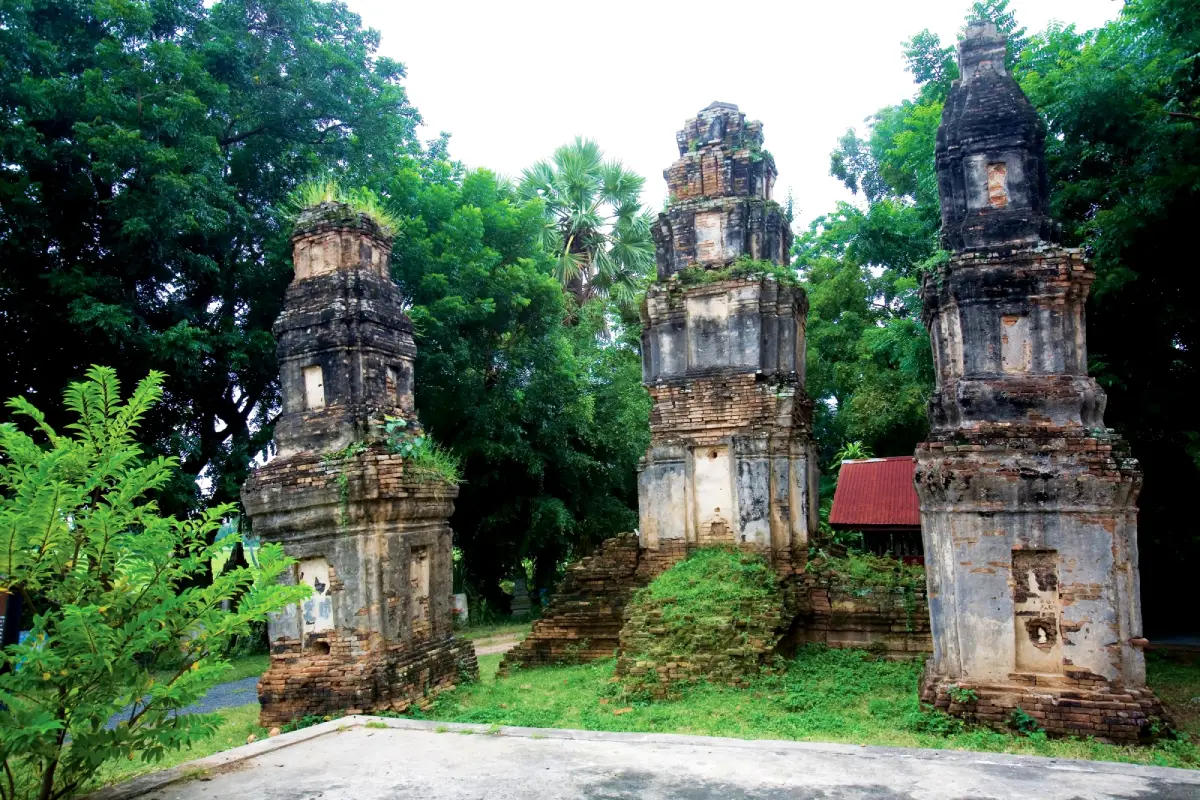
Prasat Mueang Thi
Open Days: Daily
Opening Hours: No Specific Hours Stated
Prasat Mueang Thi in Surin Province is a small but historically meaningful ancient monument located inside Wat Chom Sutthawat in Ban Mueang Thi, Mueang Thi Subdistrict, Mueang Surin District. The site is open daily with no admission fee and is one of the most accessible cultural stops for travelers who want to understand Surin beyond its better-known Khmer ruins. Instead of presenting itself as a grand restored monument, Prasat Mueang Thi offers a quieter experience: weathered brick towers, a living temple environment, and a local community that continues to preserve the memory of the place through religious and cultural activities.
The main attraction of Prasat Mueang Thi is its group of brick-and-plaster towers built on a shared base. The original layout consisted of 5 towers: one central tower and 4 corner towers. Today, only 3 towers remain visible: the main central tower, the northeastern corner tower, and the southwestern corner tower. Even in its partially ruined state, the layout still allows visitors to understand the original composition of the monument. The central tower once served as the symbolic core of the sacred space, while the surrounding corner towers helped define the balance and ritual order of the complex.
The central tower is the largest structure in the group. It has a slender profile, a square indented plan, and stairways on all 4 sides. The main chamber is solid and no longer functions as an open sanctuary, although traces suggest that the structure may once have had an entrance. The upper part rises in 3 receding tiers that imitate the body of the tower, while the top has broken away over time. These features make Prasat Mueang Thi different from many large stone Khmer monuments in Surin. It is not defined by massive sandstone blocks or richly carved lintels, but by the overall form of old brick architecture adapted and reinterpreted in a later local context.
The remaining subsidiary towers are smaller than the central tower but share a similar slender form and indented square plan. When viewed together, the 3 surviving towers clearly show the relationship between the main tower and its companions. The sight of these brick towers standing among trees, temple buildings, and community spaces gives Prasat Mueang Thi a distinctive atmosphere. It is not an isolated archaeological site separated from everyday life. It remains part of a living temple where local people come to make merit, attend ceremonies, and maintain their connection with the heritage of Ban Mueang Thi.
Historically, scholars have explained the age and development of Prasat Mueang Thi through 2 main interpretations. One interpretation considers the slender architectural form of the towers together with the history of Mueang Thi during the late Ayutthaya period. This view connects the monument with Khmer and Kuy communities who settled in the area and may have built or extended the monument while reviving the memory of earlier Khmer civilization. Another interpretation sees the site as an older Khmer religious place that was later modified during the late Ayutthaya period by local communities living in the area.
The value of Prasat Mueang Thi therefore does not depend on a single fixed construction date. Its importance lies in the way it preserves the cultural landscape of Mueang Thi, a community shaped by Khmer, Kuy, Lao, and other local traditions of the southern Isan region. The monument demonstrates how the idea of building sacred towers did not simply disappear after the great age of Angkor. Instead, it continued to be remembered, reinterpreted, and adapted by later communities who lived in borderland cultural zones such as Surin.
In terms of sacred symbolism, the layout of a central tower surrounded by corner towers reflects an ancient concept of ritual space in which the center carries special meaning. The central sanctuary functions as the symbolic axis, while the surrounding towers help organize and define the sacred boundary. Prasat Mueang Thi does not have the kind of inscription or decorative sculpture that allows a precise dating like some larger monuments, but its plan and surviving architectural elements still reveal important ideas about religion, community memory, and local artistic practice.
The towers were built with brick and plaster, giving the monument a texture that changes beautifully with the light. In the morning or late afternoon, the old brick surfaces, traces of plaster, broken edges, and recessed corners become especially visible. Travelers interested in photography, architecture, or archaeological details will appreciate the way the structure records time on its surface. The main tower is the best-preserved visual anchor of the site and clearly displays the overall character of the ancient brick monument.
Prasat Mueang Thi has not been fully restored. Some parts are supported by steel braces, and the monument is under the care of the Fine Arts Department. The surrounding area has been maintained and kept clean, making it suitable for respectful visits. Travelers should avoid climbing onto the base, touching old brickwork unnecessarily, or moving any fragments found around the site. Every piece of the structure is part of the historical record, and careful behavior helps preserve the monument for the local community and future visitors.
The atmosphere around Prasat Mueang Thi is one of its strongest qualities. Because the monument stands inside Wat Chom Sutthawat, visitors experience not only an ancient ruin but also a working local temple. The setting includes religious buildings, open temple grounds, shaded areas, and spaces used by the community. This combination allows travelers to see how an ancient monument can remain meaningful within a living religious environment. A slow visit is recommended: walk around the towers, observe their arrangement, look at the brickwork, and consider how the ancient structure relates to the temple landscape of today.
To the southwest of the towers is an ancient pond associated with the site. Although it is not the main photo spot, the pond adds important context to the cultural landscape. Many ancient religious sites in Thailand and Southeast Asia are connected with water, both for ritual purposes and practical community use. At Prasat Mueang Thi, the presence of this pond helps visitors understand that the monument was not an isolated tower group. It belonged to a broader landscape that included water, sacred architecture, paths, and settlement areas.
For travelers interested in Khmer and local heritage sites in Surin, Prasat Mueang Thi is a useful starting point. It is close enough to Surin city for a short excursion and can be combined with other cultural attractions such as Surin National Museum, Wat Burapharam, Surin City Pillar Shrine, and Prasat Sikhoraphum. Visiting Prasat Mueang Thi first helps travelers understand a smaller community-based monument before comparing it with larger or more extensively restored sites elsewhere in the province.
When local cultural events are held at Prasat Mueang Thi, the role of the monument becomes even clearer. The annual cultural preservation activities organized in the area aim to promote local history, raise awareness of cultural heritage, and strengthen cultural tourism in Mueang Thi. These events may include rituals, cultural performances, exhibitions, and participation by local authorities and residents. In this sense, Prasat Mueang Thi is not merely a silent ruin. It remains a place through which the community expresses identity, memory, and pride.
Visitors should remember that this is both an archaeological monument and a temple area. Dress politely, keep noise low, and be considerate of monks and local residents who come to the temple for religious purposes. If taking photographs, avoid standing or climbing on fragile parts of the monument. Because some structural sections are still supported by steel braces, close physical contact with the old brickwork should be avoided. Responsible travel is essential here, as the site’s modest scale makes it especially vulnerable to careless behavior.
The best time to visit is in the morning or late afternoon, when the weather is milder and the light brings out the texture of the brick towers. During the rainy season, the surrounding greenery makes the site look fresh and atmospheric, but visitors should be careful of slippery ground. During the cool season, the site can be easily included in a full-day cultural route around Surin city and nearby districts. The visit itself usually does not take long, but the meaning of the site becomes richer when travelers take time to read the landscape rather than treat it only as a quick photo stop.
Getting There from Surin city is straightforward by private car, rental car, or hired local transport. Take Highway 226 on the Surin–Sikhoraphum route toward Mueang Thi Subdistrict. The distance from Surin city is about 18–19 km. After reaching Mueang Thi, turn into Thetsaban 2 Lane in Ban Mueang Thi and continue for about 400 m to Wat Chom Sutthawat, where the towers are located. Travelers without a private vehicle can start from Surin city and hire local transport for a round trip.
A practical 1-day itinerary can begin with Prasat Mueang Thi in the morning. Spend around 30–60 minutes walking around the towers, taking photographs, and observing the structure. After that, return to Surin city to visit Surin National Museum, Wat Burapharam, and the City Pillar Shrine. Travelers who want to focus on ancient monuments can continue toward Prasat Sikhoraphum, a better-known archaeological site with clearer decorative and artistic features. This route provides a balanced view of local heritage, temple culture, and Khmer-influenced architecture in Surin.
Prasat Mueang Thi is suitable for several types of visitors: cultural travelers, students, photographers, history enthusiasts, and those looking for a lesser-known destination near Surin city. Its strengths are accessibility, free entry, peaceful surroundings, and deep local context. It is not a place of dramatic grandeur, but it rewards attentive visitors with a strong sense of continuity between past and present. The old brick towers, steel supports, temple setting, and community activities together form a meaningful cultural experience.
Overall, Prasat Mueang Thi helps tell the story of Surin at the community level. The province is not defined only by large monuments or nationally famous attractions. It also contains smaller historical sites embedded in local villages and temple grounds. These places preserve the everyday relationship between people, faith, architecture, and memory. For travelers who want to understand Surin more deeply, Prasat Mueang Thi is a worthwhile stop that adds texture and context to any cultural journey through the province.
| Name | Prasat Mueang Thi |
| Location | Inside Wat Chom Sutthawat, Ban Mueang Thi, Mueang Thi Subdistrict, Mueang Surin District, Surin Province |
| Address | Ban Mueang Thi, Village No. 1, Mueang Thi Subdistrict, Mueang Surin District, Surin Province 32000, Thailand |
| Coordinates | Latitude 14.8884188, Longitude 103.6471454 |
| Highlights | A group of brick-and-plaster towers built on a shared base; originally 5 towers, with 3 remaining today inside Wat Chom Sutthawat |
| History | Associated with ancient Khmer cultural traces and later additions during the late Ayutthaya period by Khmer and Kuy communities in the Mueang Thi area |
| Distinctive Features | The central tower is large and slender, with an indented square plan, stairways on all 4 sides, a solid tower body, 3 receding upper tiers, and a broken top |
| Key Evidence | Three surviving brick-and-plaster towers, shared base, tower body, architectural traces, and broken upper sections |
| Travel Information | From Surin city, take Highway 226 on the Surin–Sikhoraphum route for about 18–19 km, turn into Thetsaban 2 Lane in Ban Mueang Thi, and continue about 400 m to Wat Chom Sutthawat |
| Current Status | Open daily; not fully restored; some parts are supported by steel braces and the monument is under the care of the Fine Arts Department |
| Open Days | Daily |
| Opening Hours | No Specific Hours Stated |
| Fees | No Admission Fee |
| Facilities | Temple grounds, nearby parking area, walking space around the monument, and religious areas within Wat Chom Sutthawat |
| Main Areas / Zones | Central tower, subsidiary towers, shared base, Wat Chom Sutthawat temple grounds, and an ancient pond southwest of the monument |
| Caretaker | The ancient monument is under the care of the Fine Arts Department and is located within Wat Chom Sutthawat |
| Abbot Of Wat Chom Sutthawat | Phra Khru Sutthirattanaphon |
| Heritage Information Contact | Surin National Museum, Tel. 044-513274 |
| Nearby Tourist Attractions | 1. Surin National Museum, about 21 km 2. Wat Burapharam Royal Temple, about 19 km 3. Surin City Pillar Shrine, about 19 km 4. Prasat Sikhoraphum, about 20 km 5. Huai Saneng Reservoir, about 25 km |
| Nearby Restaurants | 1. Som Tam Tor Bor Ubon, Surin 1 Branch, Surin–Sikhoraphum Road, about 16 km, Tel. 081-977-4086 2. Chom Yut Tom Saep, about 18 km, Tel. 093-627-4856 3. Sawasdee Surin, about 19 km, Tel. 085-637-7707 4. My Tea Surin, about 19 km, Tel. 085-856-0940, 086-466-6941 5. Mosel Restaurant Surin, about 22 km, Tel. 084-995-6492 |
| Nearby Accommodations | 1. Martina Hotel Surin, about 18 km, Tel. 044-713-555 2. The Wood Surin, about 19 km, Tel. 063-023-7999 3. Thongtarin Hotel, about 19 km, Tel. 044-514-281, 044-514-282, 044-514-283 4. Slive Hotel Surin, about 18 km 5. Sorin Boutique Hotel, about 20 km |
Frequently Asked Questions (FAQ)
Q: Where is Prasat Mueang Thi located?
A: Prasat Mueang Thi is located inside Wat Chom Sutthawat in Ban Mueang Thi, Mueang Thi Subdistrict, Mueang Surin District, Surin Province.
Q: Is Prasat Mueang Thi open every day?
A: Yes. The site is open daily, with no specific opening hours stated by the official source.
Q: Is there an admission fee for Prasat Mueang Thi?
A: No. Prasat Mueang Thi does not charge an admission fee.
Q: What makes Prasat Mueang Thi interesting?
A: Its main feature is a group of brick-and-plaster towers built on one shared base. The original layout had 5 towers, and 3 remain today.
Q: What historical period is Prasat Mueang Thi associated with?
A: The site is associated with ancient Khmer cultural traces and later additions during the late Ayutthaya period by Khmer and Kuy communities in the area.
Q: How do I get to Prasat Mueang Thi from Surin city?
A: Take Highway 226 on the Surin–Sikhoraphum route for about 18–19 km, turn into Thetsaban 2 Lane in Ban Mueang Thi, and continue about 400 m to Wat Chom Sutthawat.
Q: How long should I spend at Prasat Mueang Thi?
A: Around 30–60 minutes is enough for a careful visit, including walking around the towers, taking photos, and observing the temple setting.
Q: What attractions can I visit after Prasat Mueang Thi?
A: Nearby options include Surin National Museum, Wat Burapharam, Surin City Pillar Shrine, Prasat Sikhoraphum, and Huai Saneng Reservoir.
 Category: ●Art, Culture and Heritage
 Group: ●Historical Sites and Monuments
Last Update : 2 MonthAgo
 Last Update : 2 MonthAgo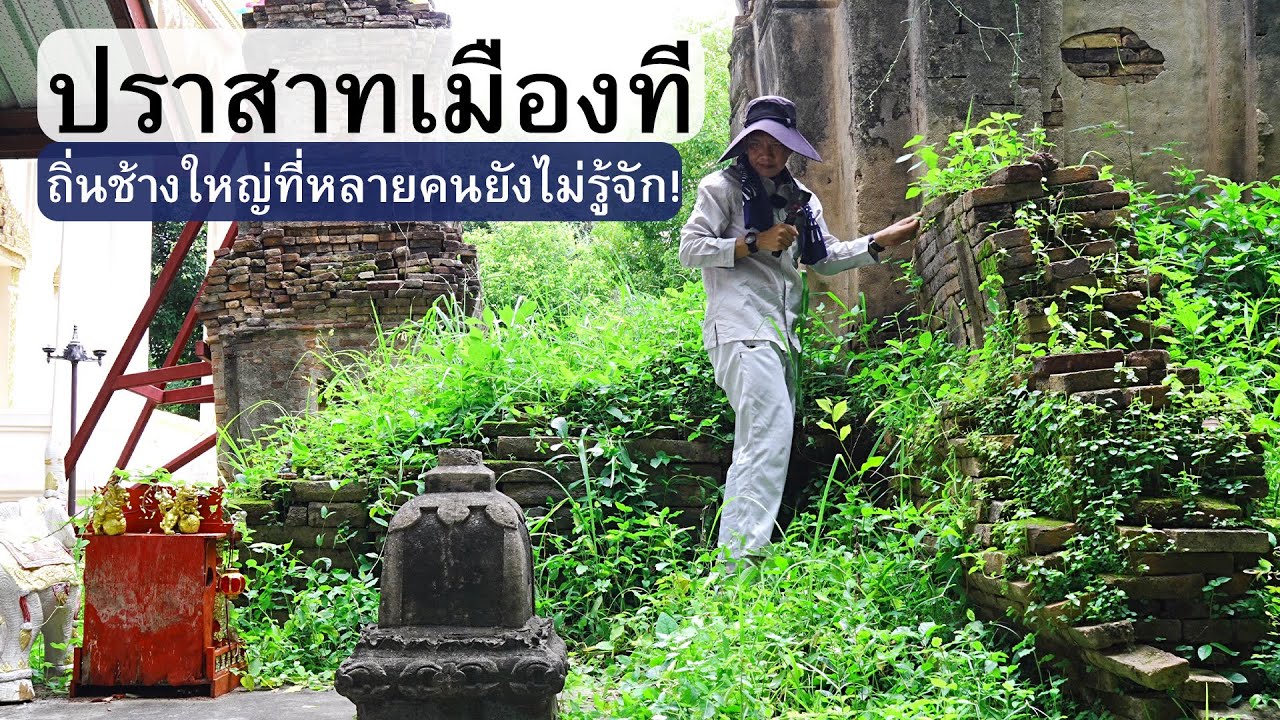
 Click to Access the Navigation Map GPS
Prasat Mueang Thi Map
Recommend
 Historical Sites and Monuments(11)
 Landmarks and Memorials(2)
 Art, Craft Centres, Tradition(5)
 Museums(1)
 Places of Worship
 Temple(15)
 Other Sacred Sites(1)
 Suburban Living
 Village, Community(9)
 Local Market(1)
 Nature and Wildlife
 National Parks and Marine Reserves(2)
 Mountain (Doi)(2)
 Dam, Reservoir, Lake(6)
 Waterfalls(1)
 River, Canal(2)
 Other natural attractions(4)
 Entertainment and Agricultural
 Farms, Parks and Ecotourism(2)


