
lovethailand home >Northeastern Travel Attractions >Surin Travel Attractions >Sang Kha >Dom > Prasat Phum Pon
TL;DR: Prasat Phum Pon is located at Ban Phum Pon, Dom Subdistrict, Sangkha District, Surin Province, open Daily, hours No Specific Hours Stated.
Prasat Phum Pon
Open Days: Daily
Opening Hours: No Specific Hours Stated
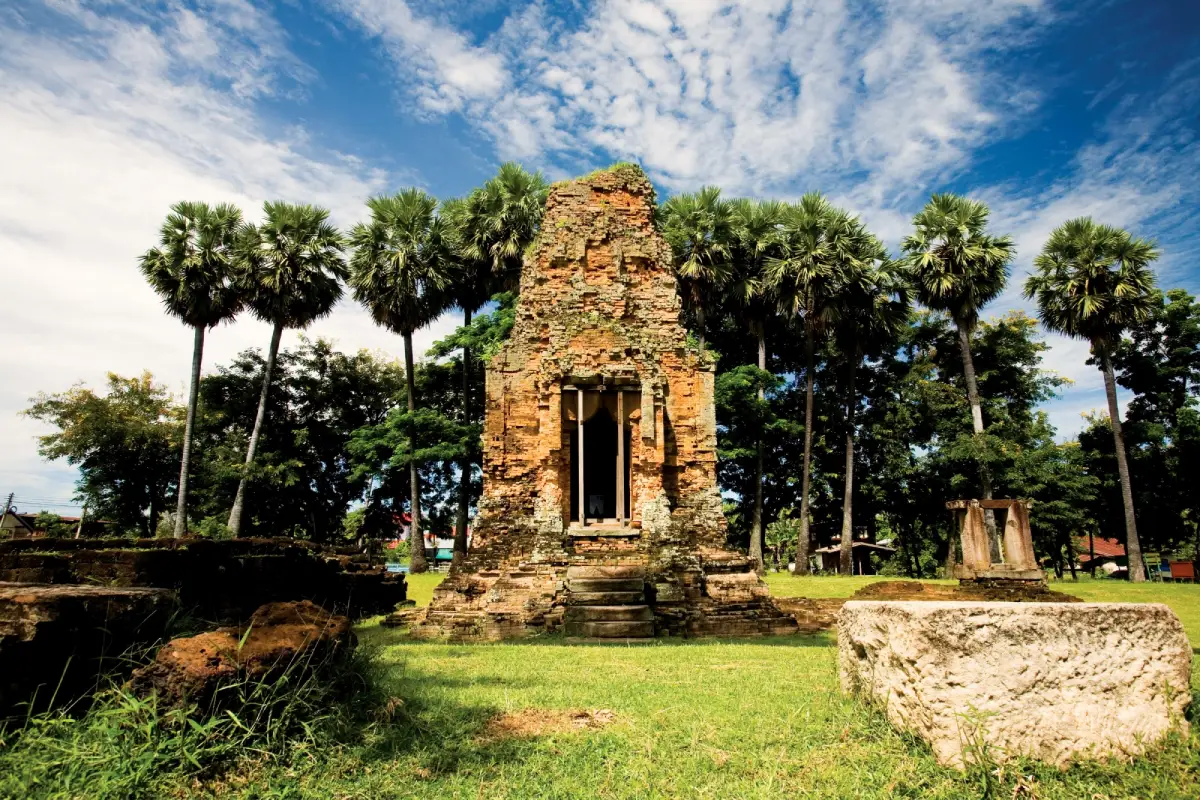
Prasat Phum Pon in Surin Province is one of the oldest and most valuable Khmer monuments in Thailand. It is located in Ban Phum Pon, Dom Subdistrict, Sangkha District, Surin Province, within an ancient community landscape where evidence of human settlement dates back to the late prehistoric period. The community later developed into an important early Khmer settlement around the late 12th to early 13th Buddhist centuries. The site consists of 3 brick sanctuaries and 1 laterite building base, aligned from north to south and facing east. Prasat Phum Pon is open daily, has no admission fee, and is a major destination for travelers who want to understand the earliest phase of Khmer architecture in Thailand.
The significance of Prasat Phum Pon lies in the great age of its main brick sanctuary and the northern brick sanctuary. These structures belong to the early Khmer artistic tradition before the Angkor period. Their date, around the 12th–13th Buddhist centuries, makes the site older than many better-known Khmer monuments in southern Isan. Prasat Phum Pon is therefore essential for understanding how Khmer architecture and religious culture developed in the region before later periods such as Angkor Wat, Bayon, and the more elaborate stone sanctuaries of northeastern Thailand.
The monument stands within the cultural landscape of Ban Phum Pon, where ancient moats, embankments, ponds, reservoirs, and settlement traces surround the sanctuary area. These features show that the sanctuary was not isolated. It was the ritual center of a community with planned water management, agricultural land, settlement areas, and sacred space. Water played an important role in daily life, agriculture, ritual practice, and religious symbolism.
The large brick sanctuary is the most important structure at the site. It was built without visible mortar in the early Khmer technique and has a square plan, a low base, a rectangular sanctuary body, and a single entrance on the eastern side. The other sides are closed walls, following the design of early Khmer sanctuaries. Among all the buildings at the site, the main brick tower remains the most complete. Although the upper section has partly collapsed and only some roof tiers remain, the original architectural form can still be read clearly.
Above the eastern entrance, below the pediment area, there is a carved scrolling foliage motif related to Indian post-Gupta artistic influence. This detail helps date the monument and connect Prasat Phum Pon with pre-Angkor Khmer art. It reflects the transmission of Indian artistic ideas into mainland Southeast Asia before Khmer art developed into its later monumental styles.
Inside the central chamber of the large brick sanctuary is an important ritual feature known as a somasutra, or sacred water channel. It is connected with the original pedestal of the main image and runs through the wall at floor level. The presence of this somasutra confirms the role of Prasat Phum Pon as a Hindu Shaivite sanctuary. Although the original Shiva linga or main cult image is no longer present, the water channel clearly preserves evidence of the ritual function of the building.
In Hindu Shaivite worship, the Shiva linga represents Shiva. During ritual practice, sacred water was poured over the linga and flowed out through the somasutra. This water carried religious meaning and was used as part of ritual purification and blessing. The somasutra at Prasat Phum Pon therefore gives the site a strong religious identity. It shows that the monument was not merely an architectural structure, but a place of active worship dedicated to Shiva.
The northern brick sanctuary is also important for dating the site. Today it survives only as a base, doorway frame, and some wall remains. However, sandstone door colonnettes and a carved sandstone lintel were found there. The lintel shows a hybrid creature associated with an arched composition and oval medallions. This sculptural style is linked with Prei Kmeng-style Khmer art, around 1180–1250 BE. These finds support the early dating of the monument and demonstrate its importance in the study of pre-Angkor art.
The smaller central brick sanctuary and the laterite base to the south were built in a later phase. This means that Prasat Phum Pon has at least 2 historical layers. The earliest phase belongs to the pre-Angkor brick sanctuaries, while later additions were constructed after the main sanctuary had already been established. This layered development gives Prasat Phum Pon exceptional archaeological value, because visitors can see more than one construction phase within the same sacred compound.
Excavation at the site uncovered a fragment of a Pallava-script Sanskrit inscription, dating to around the 12th–13th Buddhist centuries. This inscription is one of the most important pieces of evidence for the age and historical significance of the site. Important artifacts from Prasat Phum Pon, including lintels, inscription fragments, and sandstone door colonnettes, are preserved and displayed at Surin National Museum, where they can be studied in a proper conservation environment.
Prasat Phum Pon has been restored by the Fine Arts Department. Today, the monument is stable enough for visitors and the surrounding landscape is accessible for walking and photography. Visitors can observe the brick sanctuaries, the laterite base, the water landscape, and the living community of Ban Phum Pon in one visit. The site is peaceful, open, and especially valuable for people interested in archaeology and early Khmer civilization.
About 500 m northeast of the sanctuary is a large rectangular baray, or ancient reservoir, in the Khmer cultural tradition. A baray was more than a pond. It was a major water-management feature made by building embankments in low-lying areas to store water for the community. Its presence near the sanctuary confirms that Ban Phum Pon was once an organized settlement with a significant water system and sacred landscape.
In addition to the large baray, the Ban Phum Pon area includes several traditional ponds: Sa Lamchiak, Sa Ta, Sa Kanal, Sa Trao, and Sa Prue. These water features are part of the cultural landscape connected with settlement, agriculture, ritual, and local legend. Sa Lamchiak is especially important because it is linked to the local legend of Neang Doh Thom, one of the most famous stories associated with Prasat Phum Pon.
The legend of Neang Doh Thom gives Prasat Phum Pon a strong cultural identity. In Khmer, the word “phum” means village or land, while “pon” is associated with hiding or concealment. Together, the name evokes the idea of a hidden land or secret settlement. Local tradition tells the story of Princess Si Chan, known as Neang Doh Thom, who was connected with the ancient hidden city of Phum Pon. This story remains a central part of local memory and is performed during the annual cultural event at the site.
The annual cultural event “Suebsan Tamnan Prasat Phum Pon” is an important community festival in Dom Subdistrict and Sangkha District. It includes light-and-sound performances, local cultural shows, and storytelling related to Neang Doh Thom. Through this event, Prasat Phum Pon is not only an archaeological site, but also a living cultural space where the community expresses identity, history, and pride.
A good visit should begin by viewing the overall alignment of the 4 structures from north to south. After that, walk closer to the large brick sanctuary to observe the old brickwork, eastern doorway, scrolling foliage motif, and somasutra inside the chamber. Visitors should then walk around the other building remains and view the surrounding water landscape. This sequence helps explain the monument as both a sacred structure and the center of an ancient community.
Visitors interested in Khmer art should pay attention to the construction technique. The brickwork at Prasat Phum Pon reflects an early method in which bricks were laid tightly and precisely without the type of modern mortar visible in later construction. Sandstone was used for elements that required fine carving, such as lintels, door colonnettes, and ritual components. This combination of brick, sandstone, and laterite explains the technical intelligence of early Khmer builders.
For travelers interested in religious history, Prasat Phum Pon is especially important as an early Hindu Shaivite sanctuary in Thailand. Even though the original cult image is missing, the somasutra and architectural layout confirm the sanctuary’s ritual purpose. A visit to the site helps explain how Hindu belief, Indian artistic influence, and early Khmer political and religious culture entered the southern Isan region.
Prasat Phum Pon is also an excellent place to study ancient settlement patterns. The surrounding moats, embankments, reservoirs, and ponds demonstrate the planning of a community that understood water management and sacred geography. The settlement was not accidental. It was carefully located, organized, and centered around a religious monument that connected human life, water, ritual, and power.
The best time to visit is in the morning or late afternoon, when the sunlight brings out the texture of the old brick surfaces. During the rainy season, the surrounding landscape becomes green and the water features are more visible. Around April, the community holds the annual cultural event related to the legend of Prasat Phum Pon, making it a good time for travelers who want to experience both the monument and local culture.
Getting There from Surin city is straightforward. Take Highway 2077 on the Surin–Sangkha route for about 50 km, then continue toward Buachet District on Highway 2124 for about 12 km until reaching Ban Phum Pon. The route is suitable for private cars, rental cars, and local hired vehicles. From Sangkha town, travel toward Dom Subdistrict and Ban Phum Pon; the distance from Sangkha town is about 12 km.
Prasat Phum Pon can be visited as a half-day or full-day trip. Travelers leaving Surin city in the morning can spend about 1–2 hours at the monument, then stop for food in Sangkha District or continue to nearby attractions such as Prasat Yai Ngao, Wat Khao Sala Atulathanacharoen, Pha Manao, or the Chong Chom Border Market. This route combines early Khmer archaeology, nature, local culture, and southern Surin travel.
Dining and accommodation options are available in Sangkha District and Surin city. Restaurants and cafes around Sangkha include DG Food & Drink, Baan Aum Cafe, Isan Shabu Sangkha, Muat Ya Restaurant, and PunThai Coffee Sangkha 2. Nearby accommodation options include 289home Daily Rooms in Ban Dom, Malinee Hotel, Manee Sangkha Hotel, and hotels in Surin city for travelers who prefer more services and transport options.
Visitors should treat Prasat Phum Pon with respect. Dress appropriately, do not climb on the ancient structures, do not move bricks, sandstone pieces, or laterite blocks, do not write on the monument, do not litter, and respect the surrounding community. Every brick and stone is part of historical evidence that has survived for more than a thousand years.
For international visitors, Prasat Phum Pon is one of the clearest places in Thailand to understand early Khmer civilization before Angkor. The site brings together pre-Angkor Khmer architecture, early brick sanctuary construction, Pallava-Sanskrit inscription evidence, Shaivite Hindu worship, ancient water management, and living local legend. It shows that southern Isan was connected with the Khmer cultural world long before the famous monuments of Angkor Wat and Bayon.
Compared with other Khmer monuments in Surin, Prasat Phum Pon stands out for its age and pre-Angkor character. It differs from Prasat Sikhoraphum, which is known for its 5 towers and Shiva Nataraja lintel; from Prasat Ban Phluang, famous for refined Baphuon-style sandstone carving; and from Prasat Ban Chang Pi or Prasat Mueang Thi, which are Arokayasala hospital sanctuaries from the reign of King Jayavarman VII. Prasat Phum Pon is therefore a crucial starting point for understanding the chronological development of Khmer monuments in Surin.
Prasat Phum Pon is more than an old Khmer monument. It is a place where architecture, religion, inscription evidence, water systems, local legend, and the living community of Ban Phum Pon meet. The large brick sanctuary standing in the village landscape gives visitors a direct sense of deep time. Every brick line, building base, water source, and legend contributes to a story that connects the ancient past with the present. For travelers interested in history and culture, Prasat Phum Pon is one of the most important destinations in Surin Province.
| Name | Prasat Phum Pon |
| Location | Ban Phum Pon, Dom Subdistrict, Sangkha District, Surin Province |
| Address | Ban Phum Pon, Dom Subdistrict, Sangkha District, Surin Province 32150, Thailand |
| Coordinates | Latitude 14.548072, Longitude 103.876578 |
| Highlights | One of Thailand’s oldest pre-Angkor Khmer monuments, with 3 brick sanctuaries, 1 laterite base, a somasutra, Pallava-Sanskrit inscription evidence, and ancient water systems around the community |
| History | Late 12th to early 13th Buddhist centuries, associated with early Khmer culture before Angkor and the reign of King Jayavarman I |
| Distinctive Features | Three brick sanctuaries and one laterite building base aligned north–south; the main sanctuary is built of unmortared brick, has a square plan, faces east, and contains a somasutra in the central chamber |
| Key Evidence | Somasutra in the main sanctuary, Pallava-script Sanskrit inscription fragment, sandstone lintels, sandstone door colonnettes, scrolling foliage motif, and the ancient baray northeast of the monument |
| Travel Information | From Surin city, take Highway 2077 on the Surin–Sangkha route for about 50 km, then continue toward Buachet District on Highway 2124 for about 12 km to Ban Phum Pon |
| Current Status | Open daily as a Fine Arts Department-restored ancient monument and an important cultural site of Ban Phum Pon community |
| Open Days | Daily |
| Opening Hours | No Specific Hours Stated |
| Fees | No Admission Fee |
| Facilities | Walking area around the monument, photo spots, surrounding community area, ancient water landscape, and parking areas around the village |
| Main Areas / Zones | Large brick sanctuary, northern brick sanctuary, central brick sanctuary, southern laterite base, ancient monument courtyard, large baray, Sa Lamchiak, Sa Ta, Sa Kanal, Sa Trao, and Sa Prue ponds |
| Monument Caretaker | Fine Arts Department through Surin National Museum and the 10th Regional Office of Fine Arts, Nakhon Ratchasima, together with Dom Subdistrict Administrative Organization and Ban Phum Pon community |
| Main Contact Number | Dom Subdistrict Administrative Organization, Tel. 044-060-346 Surin National Museum, Tel. 044-513-274 TAT Surin Office, Tel. 044-514-447 to 8 |
| Nearby Tourist Attractions | 1. Ban Phum Pon Baray And Ancient Ponds, about 1 km 2. Prasat Yai Ngao, Sangkha District, about 23 km 3. Wat Khao Sala Atulathanacharoen, Buachet District, about 28 km 4. Pha Manao, Kap Choeng District, about 35 km 5. Chong Chom Border Market, Kap Choeng District, about 50 km 6. Surin National Museum, about 62 km |
| Nearby Restaurants | 1. DG Food & Drink Sangkha, about 13 km, Tel. 087-127-8249 2. Baan Aum Cafe Sangkha, about 13 km, Tel. 084-589-5364 3. Isan Shabu Sangkha, about 13 km, Tel. 090-906-4833, 090-197-5228 4. Muat Ya Restaurant Sangkha, about 13 km, Tel. 081-579-3898, 082-369-1196, 087-253-4019 5. PunThai Coffee Sangkha 2, about 14 km, Tel. 093-321-5835 |
| Nearby Accommodations | 1. 289home Daily Rooms, Ban Dom, about 7 km, Tel. 094-282-3246, 099-328-9289 2. Malinee Hotel Sangkha, about 13 km, Tel. 082-871-4444, 093-358-5066 3. Manee Sangkha Hotel, about 16 km, Tel. 081-669-8111, 091-887-0666 4. Thon Koon Resort Surin, about 55 km, Tel. 089-722-8690, 088-799-8519, 086-820-6441 5. Martina Hotel Surin, about 63 km, Tel. 044-713-555, 044-713-655 |
Frequently Asked Questions (FAQ)
Q: Where is Prasat Phum Pon located?
A: Prasat Phum Pon is located in Ban Phum Pon, Dom Subdistrict, Sangkha District, Surin Province.
Q: Is Prasat Phum Pon open every day?
A: Yes. Prasat Phum Pon is open daily, with no specific official opening hours stated.
Q: Is there an admission fee for Prasat Phum Pon?
A: No. There is no admission fee to visit the ancient monument.
Q: Why is Prasat Phum Pon important?
A: Prasat Phum Pon is one of Thailand’s oldest pre-Angkor Khmer monuments and an important early Hindu Shaivite sanctuary in southern Isan.
Q: How many ancient structures are there at Prasat Phum Pon?
A: The site consists of 3 brick sanctuaries and 1 laterite building base, making a total of 4 ancient structures.
Q: What important evidence was found at Prasat Phum Pon?
A: Important evidence includes the somasutra, a Pallava-script Sanskrit inscription fragment, sandstone lintels, sandstone door colonnettes, and the ancient baray and pond system around the community.
Q: How do I travel from Surin city to Prasat Phum Pon?
A: Take Highway 2077 on the Surin–Sangkha route for about 50 km, then continue on Highway 2124 toward Buachet District for about 12 km to Ban Phum Pon.
Q: How long should I spend at Prasat Phum Pon?
A: Around 1–2 hours is suitable for walking around the brick sanctuaries, laterite base, somasutra, ancient ponds, baray, and Ban Phum Pon community landscape.
 Category: ●Art, Culture and Heritage
 Group: ●Historical Sites and Monuments
Last Update : 2 MonthAgo
 Last Update : 2 MonthAgo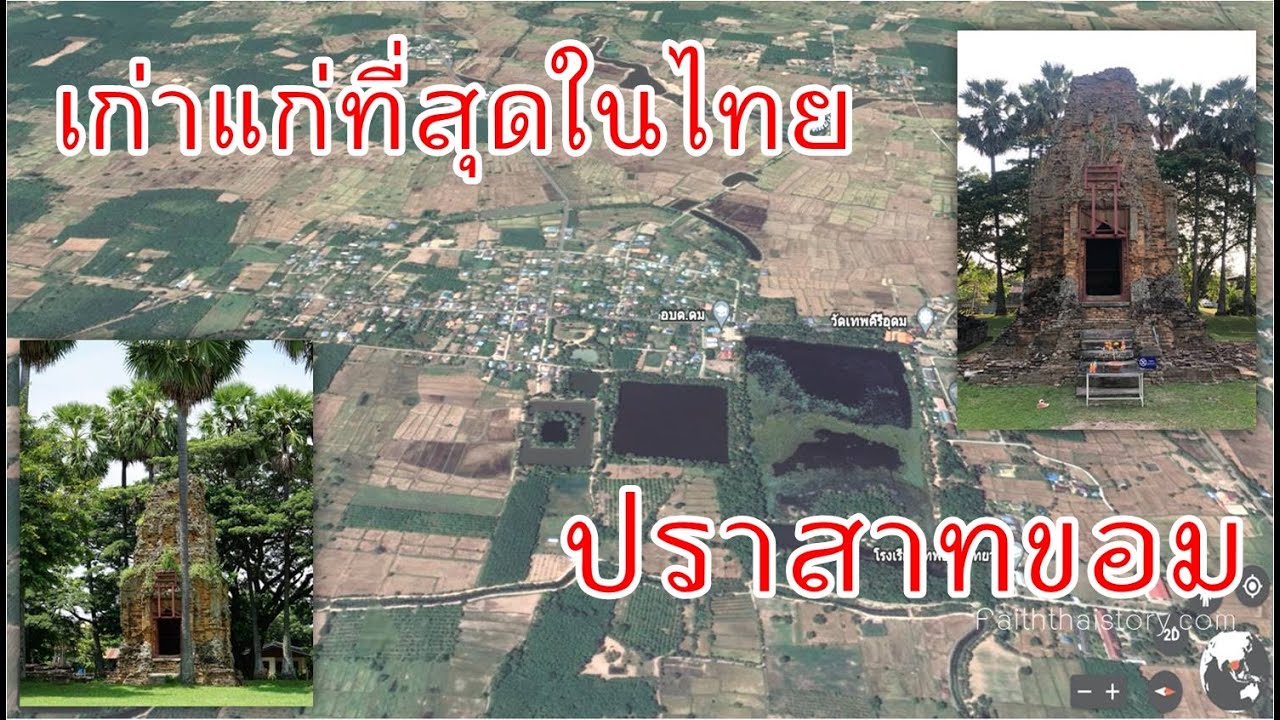
 Click to Access the Navigation Map GPS
Prasat Phum Pon Map
Recommend
 Historical Sites and Monuments(11)
 Landmarks and Memorials(2)
 Art, Craft Centres, Tradition(5)
 Museums(1)
 Places of Worship
 Temple(15)
 Other Sacred Sites(1)
 Suburban Living
 Village, Community(9)
 Local Market(1)
 Nature and Wildlife
 National Parks and Marine Reserves(2)
 Mountain (Doi)(2)
 Dam, Reservoir, Lake(6)
 Waterfalls(1)
 River, Canal(2)
 Other natural attractions(4)
 Entertainment and Agricultural
 Farms, Parks and Ecotourism(2)


