
lovethailand home >Northeastern Travel Attractions >Sakon Nakhon Travel Attractions >Song Dao >Tha Sila > Pha Phak Wan Prehistoric Rock Paintings
TL;DR: Pha Phak Wan Prehistoric Rock Paintings is located at Ban Phu Takham, Tha Sila Subdistrict, Song Dao District, Sakon Nakhon Province, open Daily, outside the annual conservation closure from 1 March to 30 June, hours 08.00 – 16.30.

Pha Phak Wan Prehistoric Rock Paintings
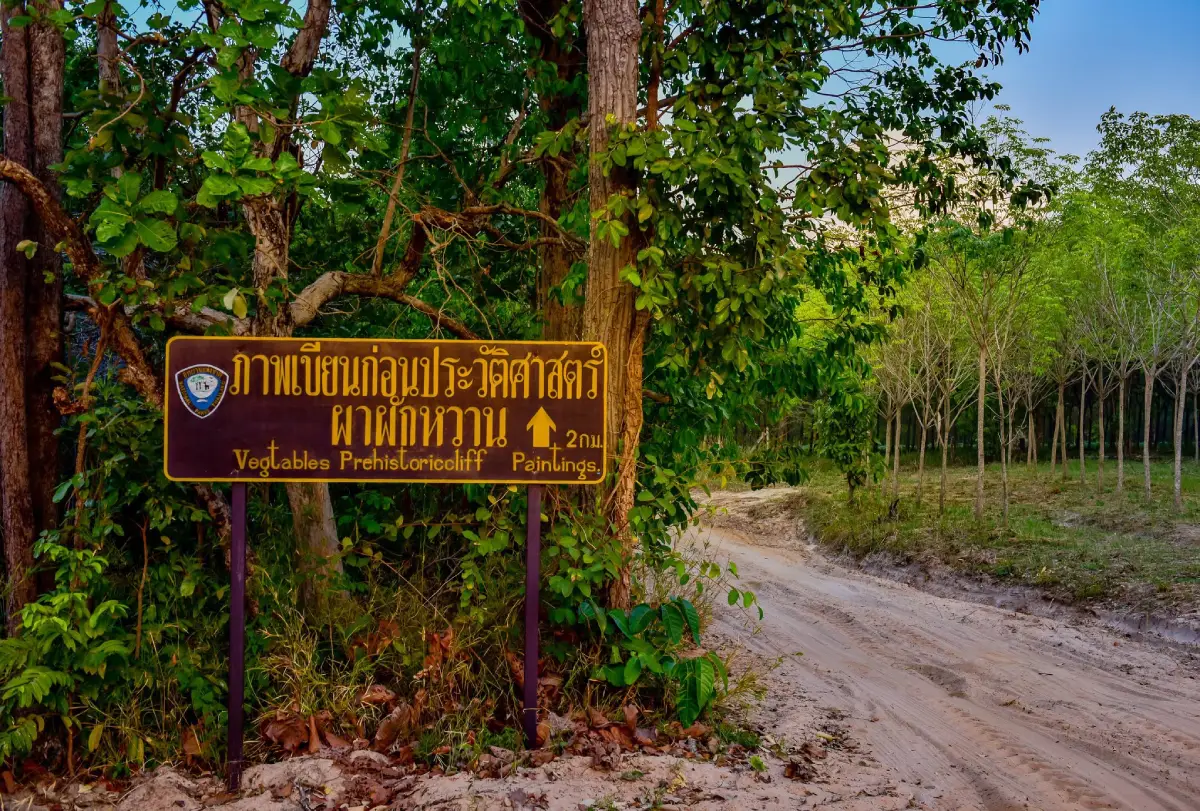
Open Days: Daily, outside the annual conservation closure from 1 March to 30 June
Opening Hours: 08.00 – 16.30
Pha Phak Wan Prehistoric Rock Paintings in Sakon Nakhon Province are among the most important prehistoric rock art sites inside Phu Pha Lek National Park. The site is located at Ban Phu Takham, Tha Sila Subdistrict, Song Dao District, about 18 km from the national park headquarters. Its highlight is a group of red paintings on a large sandstone boulder, dated to approximately 3,600 years ago. The figures appear to show human forms, often described as women standing in a row and holding one another by the shoulders. For foreign travelers interested in archaeology, ancient art, forest landscapes, and the early human story of northeastern Thailand, Pha Phak Wan is a highly meaningful destination.
Pha Phak Wan is not simply a small archaeological stop hidden in the forest. It is a cultural trace that opens a window into the beliefs, social life, and symbolic world of people who lived thousands of years ago in what is now Song Dao District, Sakon Nakhon Province. Prehistoric rock paintings are a significant type of archaeological evidence in northeastern Thailand, alongside habitation sites, burial sites, pottery, stone tools, and other material remains. Unlike tools or ceramics, rock paintings reveal something more directly connected with expression, movement, memory, ritual, and collective identity. The paintings at Pha Phak Wan show that early communities in this region observed their world, gathered in groups, and used natural rock surfaces to record meaning through visual symbols.
The paintings are located on one side of a large sandstone boulder. The boulder rises about 12 meters from the ground and measures approximately 17 x 12 x 11 x 8 meters. The painted surface is on the eastern side, about 5 meters above ground level. This elevated position makes the paintings visible while helping to protect them from direct contact. The use of red pigment is also significant, as red is commonly found in prehistoric rock art across Thailand and Southeast Asia. The color is visually strong and long-lasting, but it also carries symbolic associations with life, energy, ritual, and remembrance. At Pha Phak Wan, the red figures still speak across thousands of years through simple but powerful lines.
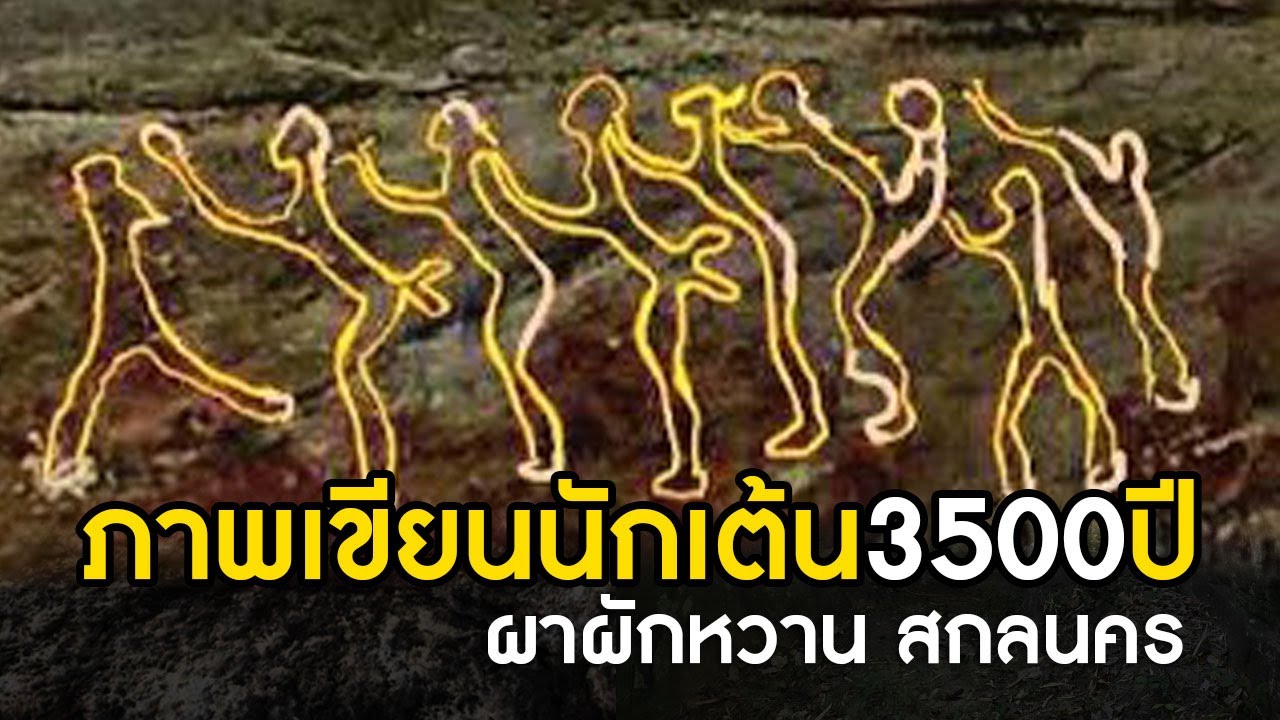
The composition of the paintings can be divided into 2 main groups. The upper group shows a solidly painted human figure with a hairstyle resembling a bob cut. The figure stands with legs apart, slightly bent, with both arms raised in a curved gesture and the hands spread outward. This posture has been interpreted as a person leading or directing the rhythm of a performance. The lower group consists of outline-style human figures, with 8 figures in total and 5 figures standing in a row facing the same direction. Their bent posture, raised arms, and arranged formation suggest a group dance, ritual movement, or coordinated communal activity. The raised hair or tied hair at the back adds a sense of motion, making the figures feel lively rather than static.
The spatial arrangement of the 2 groups is especially interesting. The ancient artist used the rock surface and empty space to separate near and far positions. The lower group appears closer to the viewer, while the upper figure stands apart and higher on the surface, as if directing or observing the movement below. This shows an understanding of visual composition, storytelling, and the organization of figures within a natural surface. Although the paintings were created long before written records, they communicate movement and collective action clearly. This is one of the reasons why Pha Phak Wan is such an important cultural site: the images are simple, yet they carry a strong narrative presence.
The estimated age of approximately 3,600 years places Pha Phak Wan within a period when human communities in this region were developing more complex tools, settlements, social relationships, and belief systems. Archaeological objects such as stone tools and pottery tell us about technology and daily life, but rock paintings tell us about gestures, symbols, ceremonies, and the human imagination. The Pha Phak Wan paintings therefore help complete the story of early communities in northeastern Thailand. They show not only survival, but also communication, creativity, and shared meaning.
The name “Pha Phak Wan” reflects the close connection between the rock formation and the local natural environment. “Pha” means cliff or rock face, while “Phak Wan” refers to a familiar edible forest plant known in Thai local culture. The name feels deeply rooted in the landscape, combining rock, forest, and community memory. The site lies within Phu Pha Lek National Park, a protected area of sandstone mountains, cliffs, forest trails, waterfalls, rock terraces, and scenic viewpoints. A visit to Pha Phak Wan should therefore be understood as a journey into an ancient landscape where people, forest, stone, and belief once formed a single living environment.
Phu Pha Lek National Park covers approximately 252,898 rai, or about 404 square kilometers, across parts of Sakon Nakhon, Udon Thani, and Kalasin provinces. The park forms part of the Phu Phan mountain range, with elevations ranging from around 200 to 695 meters above sea level. Its landscape includes dry dipterocarp forest, mixed deciduous forest, dry evergreen forest, grassland, rock terraces, and cliff areas. The mountains also serve as important watersheds. This mixture of sandstone terrain, forest, and seasonal resources would have offered ancient communities shelter, travel routes, food sources, and ritual spaces. For that reason, the Pha Phak Wan paintings should be read together with the surrounding landscape, not as isolated images on a rock.
Because the paintings seem to show a group of people in coordinated movement, they are highly valuable for cultural interpretation. The row of figures holding one another by the shoulders suggests a shared activity rather than individual action. Their bent posture and forward-reaching arms create a sense of rhythm, movement, and performance. The scene may relate to hunting rituals, fertility ceremonies, seasonal events, initiation rites, or communal gatherings. While the exact meaning cannot be stated with certainty, the power of the image lies in its unmistakable focus on people acting together. It is a rare visual record of collective human behavior from a time before written history.
The strongest impression of Pha Phak Wan is that prehistoric people did not live only for survival. They also lived within systems of meaning. They chose a large rock wall as a place of memory, selected a visible position, used durable red pigment, and placed human figures at the center of the image. The painting functions almost like a public record made for the community and for the landscape itself. When visitors stand before the site today, they are not simply looking at old markings. They are looking at one of the oldest surviving forms of human communication in the region.
Visiting Pha Phak Wan requires more care than visiting an ordinary viewpoint. Ancient rock paintings are vulnerable to humidity, dust, smoke, touching, scratching, vibration, and careless behavior. Visitors should view the paintings from a suitable distance, avoid touching the rock surface, never write or carve on the stone, avoid spraying water, and avoid climbing close to the painted area. The safest way to protect the paintings is to keep a respectful distance. The site is a shared cultural heritage of the local community, Sakon Nakhon Province, and Thailand as a whole. Once damaged, a prehistoric painting cannot be restored to its original state.
Pha Phak Wan is located within Phu Pha Lek National Park and is open to visitors during the park’s operating hours, from 08.00 to 16.30. The site is subject to an annual conservation closure from 1 March to 30 June, allowing the natural environment and sensitive areas to recover. Outside that closure period, travelers can plan a visit according to the open season. Before departure, contacting the park directly is the most practical way to confirm road conditions, weather, access rules, and any site-specific notices for the day of travel.
Admission follows the entrance fee structure of Phu Pha Lek National Park. Thai adults pay 20 baht, Thai children pay 10 baht, foreign adults pay 100 baht, and foreign children pay 50 baht. Vehicle fees are charged separately, including 20 baht for motorcycles and 30 baht for cars. Travelers who bring their own tents pay a camping area fee of 30 baht per person per night. The national park also provides accommodation and camping areas during the operating season of each zone. Because some zones may close seasonally for conservation, overnight visitors should confirm availability with the park before traveling.
Getting to Pha Phak Wan is most convenient by private car, rental car, or hired local transport. From Udon Thani, take Highway 22 toward Sakon Nakhon. At kilometer marker 95, turn right onto the Ban Tai–Don Som Hong rural road. Continue to the Ban Phon Sawang junction at around kilometer marker 17, then turn right onto the Ban Phon Sawang–Phu Pha Lek road for about 6 km to reach the national park headquarters. From there, continue toward Ban Phu Takham in Tha Sila Subdistrict, where the Pha Phak Wan rock painting site is located.
The distance from the park headquarters to Pha Phak Wan is about 18 km. The route passes rural communities, forested areas, and mountain terrain in Song Dao District. Visitors should allow enough travel time, especially during the rainy season when some sections may become slippery or affected by runoff. Morning is the best time to visit because the temperature is more comfortable, the light is softer, and there is enough time to continue to other attractions in Phu Pha Lek National Park, such as Dan Hin Lan Man Pla, Kao Chan Waterfall, Pha Dong Ko, Pha Nam Chok, and Ho Song Dao.
The site is a natural outdoor area, not an indoor museum. Visitors should wear comfortable walking shoes with good grip and bring drinking water, a hat, sun protection, and any necessary medication. Some parts of the access route may include soil, rock, and natural paths. It is important to stay on designated paths and avoid walking off-trail. Families traveling with children, elderly visitors, or anyone unfamiliar with forest terrain should check with park officers about current route conditions before entering the area.
Beyond the prehistoric paintings, Phu Pha Lek National Park offers many natural highlights. Pha Suriyan and Pha Dong Ko provide impressive viewpoints over the Phu Phan mountain range. Pha Nam Chok offers wide views toward Huai Huat Reservoir and distant landscapes in Udon Thani and Khon Kaen. Dan Hin Lan Man Pla is known for unusual rock formations and open stone terraces. Kao Chan Waterfall is a seasonal natural attraction with a greener atmosphere during the wet period, while Ho Song Dao is associated with night-sky viewing from the highlands. These surrounding attractions make Pha Phak Wan part of a broader full-day route through archaeology and nature.
Lan Usa Sawan is another notable area in Phu Pha Lek National Park. It is a highland plain with woodland, rock outcrops, grassland, and seasonal wildflowers. Small plants such as dusita flowers and other local wildflowers appear according to season, creating a natural garden-like landscape. When combined with Pha Phak Wan, this wider environment shows that Phu Pha Lek is both a natural and cultural landscape. Travelers can experience forest ecology, geological formations, viewpoints, waterfalls, and prehistoric heritage within one protected area.
Pha Phak Wan is also an excellent educational site for families, schools, university groups, and travelers interested in local history. The paintings make prehistoric history easier to understand because visitors can see real ancient art in its original landscape. The row of human figures raises questions about ancient rituals, group identity, dance, pigment, tools, landscape use, and the relationship between people and nature. Learning at the actual site creates a deeper understanding than reading about prehistoric art only in books.
For many travelers, Sakon Nakhon is known for Phra That Choeng Chum, Nong Han Lake, forest meditation temples, and Phu Thai culture. Pha Phak Wan expands that story much further back in time. It shows that the Sakon Nakhon area has cultural traces that predate written history by thousands of years. A visit to Pha Phak Wan therefore adds depth to any Sakon Nakhon itinerary, connecting Buddhist heritage and living culture with the prehistoric roots of human settlement in the upper northeast.
Photography at Pha Phak Wan should focus on the rock surface, the surrounding forest, the general atmosphere, and the wider setting rather than close contact with the painting. Using a zoom lens or taking photos from a respectful distance is more appropriate than standing too close. The beauty of the site lies not only in the red figures but also in the texture of the sandstone, the shadows on the rock, the forest background, and the feeling of deep time. Together, these elements create a strong sense of ancient presence and fragile heritage.
Travelers planning to stay overnight can choose accommodation in Song Dao District, Sawang Daen Din District, or within the national park when park accommodation and camping areas are open. Staying closer to the park makes it easier to visit in the morning, while staying in Sawang Daen Din provides more access to restaurants, shops, and general travel services. Travelers who prefer full convenience may stay in Sakon Nakhon city or Udon Thani and visit as a day trip, but they should allow additional driving time.
Food options near Pha Phak Wan and Phu Pha Lek National Park include the park cafe, local eateries in Song Dao, and restaurants in Sawang Daen Din. Since Pha Phak Wan is located in a natural area, carrying drinking water and light snacks is practical, but visitors should take all waste back out of the site. Eating directly near the painted rock surface should be avoided to prevent litter, insects, odors, and moisture from disturbing the archaeological environment.
From a conservation perspective, Pha Phak Wan depends heavily on responsible visitors. The prehistoric pigment on the rock cannot be recreated once damaged. Scratching, touching, writing, or climbing near the paintings can permanently harm evidence that has survived for thousands of years. Respectful travel is therefore part of the experience itself. Every visitor plays a role in preserving this ancient record for future generations.
The most suitable travel seasons are the open period after the annual conservation closure and the cool season. During the rainy season, the forest becomes greener, waterfalls are more active, and the landscape feels fresh. During the cool season, the weather is more comfortable for walking and viewpoint visits. The hot season is still possible for travel, but visitors should avoid the strongest midday heat and bring enough drinking water.
In conclusion, Pha Phak Wan Prehistoric Rock Paintings are an important archaeological and natural attraction in Sakon Nakhon Province. Located within Phu Pha Lek National Park in Song Dao District, the site preserves red rock paintings approximately 3,600 years old on a large sandstone boulder. The figures appear to show people in a coordinated group movement, possibly linked with dance, ritual, or communal activity. Open during the national park’s operating season, Pha Phak Wan offers foreign travelers a rare opportunity to encounter the prehistoric human story of northeastern Thailand in the middle of a protected mountain landscape.
| Name | Pha Phak Wan Prehistoric Rock Paintings |
| Location | Ban Phu Takham, Tha Sila Subdistrict, Song Dao District, Sakon Nakhon Province |
| Address | Tha Sila Subdistrict, Song Dao District, Sakon Nakhon 47190, Thailand |
| Coordinates | 17.245801, 103.441352 |
| Highlights | Red prehistoric rock paintings, approximately 3,600 years old, showing human figures standing in a row and holding one another by the shoulders |
| History | Prehistoric period, approximately 3,600 years old, representing ancient rock art created by early communities in northeastern Thailand |
| Name Origin | “Pha” means cliff or rock face, while “Phak Wan” is a local name associated with the natural environment of the area |
| Distinctive Features | The paintings are located on the eastern side of a large sandstone boulder, about 5 meters above ground level, and include both solid-painted and outline-style human figures |
| Key Evidence | The upper figure appears to raise both arms as if directing rhythm, while the lower group includes 8 human figures, with 5 standing in a row in a dance-like posture |
| Travel Information | From Udon Thani, take Highway 22 toward Sakon Nakhon. At kilometer marker 95, turn onto the Ban Tai–Don Som Hong road, continue to Ban Phon Sawang junction, then follow the Ban Phon Sawang–Phu Pha Lek road for about 6 km to the park headquarters before continuing toward Ban Phu Takham. |
| Current Status | Open during Phu Pha Lek National Park operating hours, outside the annual conservation closure from 1 March to 30 June |
| Open Days | Daily, outside the annual conservation closure |
| Opening Hours | 08.00 – 16.30 |
| Fees | Thai adults 20 baht, Thai children 10 baht Foreign adults 100 baht, foreign children 50 baht Motorcycle 20 baht, car 30 baht Camping area fee for visitors bringing their own tent: 30 baht/person/night |
| Facilities | National park headquarters, accommodation, camping area, parking, toilets, and visitor service areas in zones that are open |
| Main Areas / Zones | 1. Pha Phak Wan rock painting wall 2. Large sandstone boulder area 3. Natural trail to the painting site 4. Phu Pha Lek National Park headquarters 5. National park accommodation and camping zone during open periods 6. Nearby park attractions such as Kao Chan Waterfall, Dan Hin Lan Man Pla, Pha Dong Ko, Pha Nam Chok, and Ho Song Dao |
| Caretaker / Related Authorities | Phu Pha Lek National Park, Department of National Parks, Wildlife and Plant Conservation National Park Chief: Mr. Rangsan Laopha |
| Main Contact Number | Phu Pha Lek National Park, Tel. 0 4270 7513, 09 5917 2887, 042-727003 National Parks Office, Tel. 0 2562 0760-2 |
| Official Website / Official Page | Phu Pha Lek National Park and the official national park accommodation reservation system of the Department of National Parks, Wildlife and Plant Conservation |
| Nearby Tourist Attractions | 1. Dan Hin Lan Man Pla, about 6 km 2. Phu Pha Lek National Park headquarters, about 18 km 3. Kao Chan Waterfall, Phu Pha Lek National Park, about 18 km 4. Pha Dong Ko, about 23 km 5. Pha Nam Chok, about 24 km 6. Wat Tham Aphai Damrongtham or Wat Tham Phuang, about 28 km 7. Ho Song Dao, Phu Pha Lek National Park, about 24 km |
| Nearby Restaurants | 1. Enoa Cafe, Phu Pha Lek National Park, about 18 km 2. Ban Suan Swetkamol, about 45 km, Tel. 094-227-1431, 042-721-652 3. Kokhun Khun Ek Sawang Daen Din, about 47 km, Tel. 042-722-266 4. Kafae Ban Suan Phop Ploy, about 47 km, Tel. 086-305-0358 5. Ban Suan Phop Ploy, about 47 km, Tel. 099-158-2489, 086-305-0358 6. See Stars & Forest Resort Restaurant / Cafe, about 49 km, Tel. 042-722-188 |
| Nearby Accommodations | 1. Phu Pha Lek National Park accommodation and camping area, about 18 km, Tel. 0 4270 7513, 09 5917 2887, 042-727003 2. Harary Family Apartments, about 39 km 3. Rachiga Hotel Grand Resort, about 43 km, Tel. 093-420-6198 4. Chuanthanapanya Resort, about 45 km 5. See Stars & Forest Resort, about 49 km, Tel. 042-722-188 6. Pa Sak Resort Sawang Daen Din, about 48 km |
Frequently Asked Questions (FAQ)
Q: Where are the Pha Phak Wan Prehistoric Rock Paintings located?
A: They are located at Ban Phu Takham, Tha Sila Subdistrict, Song Dao District, Sakon Nakhon Province, inside Phu Pha Lek National Park, about 18 km from the park headquarters.
Q: How old are the Pha Phak Wan rock paintings?
A: The paintings are approximately 3,600 years old and belong to the prehistoric rock art tradition of northeastern Thailand.
Q: What do the Pha Phak Wan paintings show?
A: They show red human figures on a sandstone wall, including one figure that may be directing rhythm and a group of figures standing in a row in a dance-like or ritual posture.
Q: Is Pha Phak Wan open all year?
A: Pha Phak Wan is open during Phu Pha Lek National Park operating hours, outside the annual conservation closure from 1 March to 30 June.
Q: What is the entrance fee for Pha Phak Wan?
A: The site follows Phu Pha Lek National Park fees: Thai adults 20 baht, Thai children 10 baht, foreign adults 100 baht, and foreign children 50 baht. Vehicle fees are charged separately.
Q: How can travelers get to Pha Phak Wan?
A: The most convenient route starts from Udon Thani via Highway 22 toward Sakon Nakhon, then turns toward Ban Tai–Don Som Hong, Ban Phon Sawang, Phu Pha Lek National Park headquarters, and onward to Ban Phu Takham.
Q: What should visitors prepare before visiting Pha Phak Wan?
A: Visitors should wear suitable walking shoes, bring drinking water, a hat, and sun protection, stay on designated paths, avoid touching the rock paintings, and take all waste back out of the area.
Q: What nearby attractions can be visited with Pha Phak Wan?
A: Nearby attractions include Dan Hin Lan Man Pla, Kao Chan Waterfall, Pha Dong Ko, Pha Nam Chok, Ho Song Dao, and Wat Tham Aphai Damrongtham in Song Dao District.
 Category: ●Art, Culture and Heritage
 Group: ●Historical Sites and Monuments
Last Update : 4 MonthAgo
 Last Update : 4 MonthAgo
 Click to Access the Navigation Map GPS
Pha Phak Wan Prehistoric Rock Paintings Map
Recommend
 Historical Sites and Monuments(9)
 Landmarks and Memorials(2)
 Royal Palace(1)
 Art, Craft Centres, Tradition(8)
 Museums(3)
 Educational Places
 Educational Gardens, Farm(2)
 University
 Public university(1)
 Rajamangala University of Technology(1)
 Rajabhat University(1)
 Places of Worship
 Temple(18)
 Church(2)
 Other Sacred Sites(4)
 Research and Development
 Royal Project(3)
 Suburban Living
 Village, Community(7)
 Nature and Wildlife
 National Parks and Marine Reserves(4)
 Mountain (Doi)(3)
 Dam, Reservoir, Lake(14)
 Waterfalls(4)
 Caves(4)
 River, Canal(9)
 Bays and Beaches(1)
 Islands(1)
 Other natural attractions(5)
 Entertainment and Agricultural
 Zoos and Aquariums(1)
 Farms, Parks and Ecotourism(4)
 Outdoor and Adventure Activities(1)
 Shopping
 Department Store(2)
 Travel Articles, Recipes
 Travel Review, Food Review(1)


