
lovethailand home >Northeastern Travel Attractions >Sakon Nakhon Travel Attractions >Phang Khon >Rae > Sakon Nakhon Agricultural Research And Training In..
TL;DR: Sakon Nakhon Agricultural Research And Training Institute, Sakon Nakhon attractions : Educational Places, Educational Gardens, Farm.

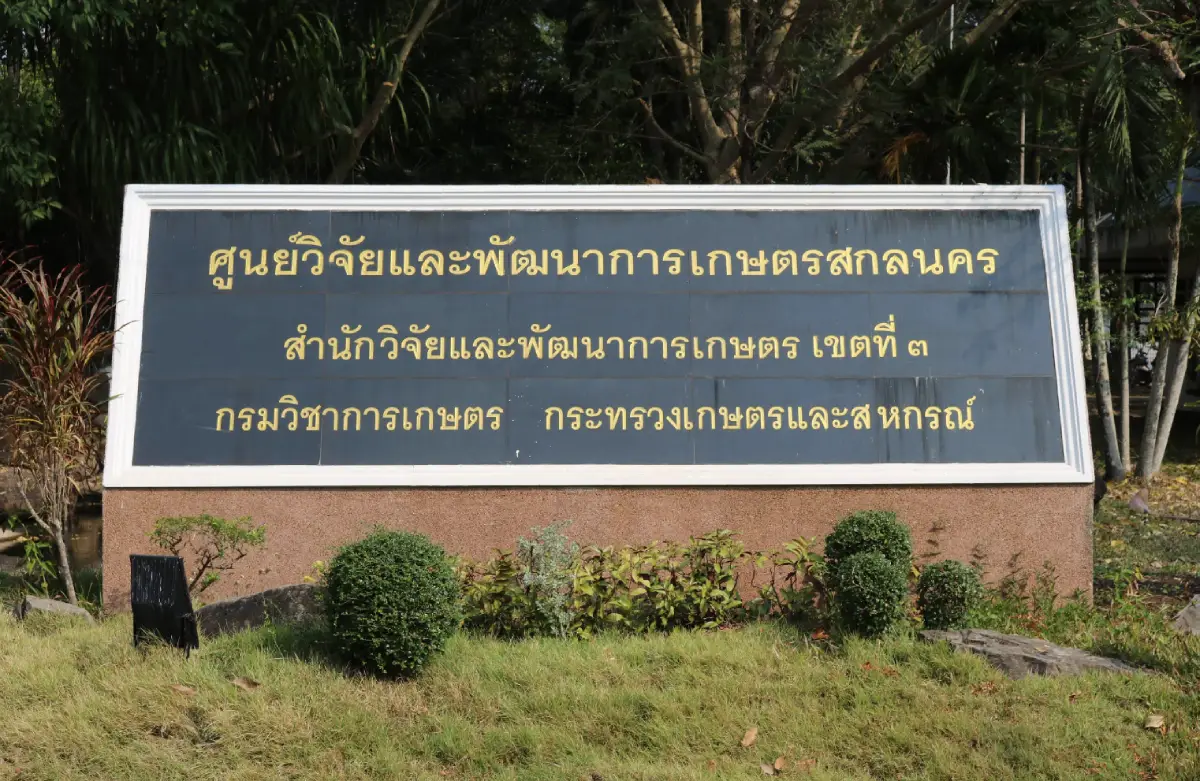
Sakon Nakhon Agricultural Research And Training Institute
Open Days: Monday - Friday For Official Contact, Academic Visits, And Pre-Arranged Educational Programs
Opening Hours: 08.30 - 16.30
Sakon Nakhon Agricultural Research And Training Institute, now connected with the Faculty of Natural Resources at Rajamangala University of Technology Isan, Sakon Nakhon Campus, is one of the important agricultural learning and research sites in Phang Khon District, Sakon Nakhon Province. The place began as an agricultural research and training base designed to support experimentation, farmer training, technology transfer, and local agricultural product development in Northeastern Thailand. Today, its legacy continues through the university’s Faculty of Natural Resources and the Research, Academic Services And Testing Center, which support education, research, academic services, testing, agricultural innovation, food processing, animal science, plant science, fisheries, natural products, and community-based development.
The value of this place lies in its ability to connect university research with the real needs of local communities. Sakon Nakhon is a province rich in agricultural resources, local fruits, livestock, food culture, craft production, and community knowledge. An agricultural research and training center in Phang Khon therefore provides an important bridge between knowledge creation and practical use. Farmers, students, community enterprises, researchers, and visitors can understand how agricultural products are studied, improved, processed, and transformed into higher-value local products. The site shows that modern agriculture is not limited to fields and farms. It also involves laboratories, processing rooms, product design, food safety, quality control, and local economic development.
The historical foundation of the site began in the late 1980s, when the plan to establish Sakon Nakhon Agricultural Research And Training Institute was developed on public livestock-land in Rae Subdistrict, Phang Khon District. The area was considered suitable for agricultural experimentation and research, and the project was expected to directly support local livelihoods and agricultural education. The institute was later integrated into the Rajamangala educational structure. After the establishment of Rajamangala University of Technology, the former institute evolved into the Faculty of Natural Resources, with missions in education, research, academic services, and cultural preservation.
This transformation did not remove the agricultural identity of the place. Instead, it expanded the mission. The former research and training institute became part of a university system offering agricultural and natural-resource education in areas such as plant science, animal science, fisheries, food science and technology, natural health and beauty products, landscape technology, Thai traditional medicine, and advanced animal production. This development reflects the evolution of a local agricultural research base into an area-based university unit that applies science, technology, and innovation to community development.
The original description of the institute as a complete agricultural research and technology-transfer center still captures the core character of the site. Its work covers local agricultural research, product processing, farmer support, and the transfer of knowledge from experts to practical users. A complete agricultural system begins with raw material production, continues through crop and animal management, moves into harvesting and quality selection, then develops into food processing, packaging, product standards, and market adaptation. This is the kind of integrated agricultural thinking that gives the site its continuing relevance.
One of the products strongly associated with the institute’s former reputation is mao, or mak mao, a local fruit found in Sakon Nakhon and the Phu Phan mountain area. Mao fruit has a distinctive sour-sweet flavor and dark color. It can be processed into several products such as mao wine, mao juice, fruit drinks, jam, ice cream, baked products, and other foods. This fruit is a good example of how a local resource can be developed into value-added agricultural products through research and food technology. Instead of being limited to seasonal consumption, mao can become a distinctive product identity of Sakon Nakhon.
The development of mao products requires more than simple cooking. It involves knowledge of fruit varieties, ripeness, color retention, flavor balance, fermentation, food safety, preservation, packaging, and product standards. Through research and training, local fruits can move from household-level use to community enterprise products with better quality and wider market potential. For visitors interested in agricultural processing, mao products show how local identity and applied science can work together.
The original information also mentions canned insect products, another example of turning local food culture into a research-based product. Edible insects have long been part of Northeastern Thai food culture. Processing insects into canned products involves nutrition, alternative protein, food safety, sterilization, packaging, shelf life, and consumer acceptance. This type of work shows how local eating traditions can be developed into standardized products through food science. It also reflects the wider potential of local food resources in the modern bioeconomy.
The site is also connected with dairy cattle, beef cattle, and pig farms. These areas reflect the animal-science foundation of the Faculty of Natural Resources. A teaching and demonstration farm allows students and visitors to learn about breeding, animal nutrition, health, housing, waste management, milk production, meat production, and food safety. Livestock farming is not only about keeping animals. It requires biology, veterinary knowledge, farm management, economics, environmental control, and responsible production practices.
The dairy farm component is especially useful for understanding the connection between research and smallholder farmers. Dairy farmers need practical knowledge about feed, herd health, barn management, milking, milk quality, and cost reduction. A university farm can serve both as a student learning site and a demonstration area for farmers. Local research is important because recommendations must fit the climate, resources, and farm conditions of the region. This gives agricultural education direct value for local communities.
Beef cattle and pig production further broaden the livestock-learning system. Modern animal production requires careful management of breeds, feeding, growth, disease prevention, housing, odor, wastewater, and consumer safety. Demonstration farms help learners see how theory becomes practice. They also show that livestock products are connected with broader questions of health, environment, and responsible food production.
Plant science is another important part of the agricultural identity of the area. Research and teaching in plant science may involve local crops, economic plants, food crops, medicinal plants, organic farming systems, soil management, water management, pest control, and postharvest handling. When connected with food technology and natural products, local plants can be developed into food, health, cosmetic, and craft-based products. This makes the faculty and research center important not only for farming, but also for local product innovation.
Food technology is the key that turns agricultural raw materials into valuable products. Mao products, fruit drinks, jams, processed foods, and local products all require scientific understanding of microorganisms, food chemistry, sensory quality, packaging, shelf life, and safety standards. This is where agricultural production connects with entrepreneurship. A local raw material can become a marketable product when processing knowledge, quality control, and product design are applied correctly.
Training has always been part of the institute’s meaning. Agricultural training should not be limited to lectures. It works best when learners can see real plots, real farms, real equipment, real laboratories, and real products. The university environment provides this combination. Farmers, students, and community groups can learn through demonstrations, observation, practice, and discussion with specialists. This makes the site an effective learning environment for agriculture and local product development.
For educational tourism, this is a destination for people who want to understand agriculture as a knowledge system. Visitors do not come only to take photographs. They come to understand how crops, animals, food processing, research, and community development are connected. The site is especially valuable for students, teachers, farmers, community enterprises, food processors, and travelers interested in the practical side of local agricultural innovation.
Visitors who want to study the site should contact the Faculty of Natural Resources or the Research, Academic Services And Testing Center in advance. This is a working university area, not a fully open tourist attraction where every area can be entered freely at all times. Advance coordination allows staff to arrange the right learning route, farm visit, demonstration plot, or laboratory visit according to the purpose of the group. This is especially important for livestock farms, experimental plots, and laboratory areas, where safety, hygiene, and teaching schedules must be respected.
Getting There is straightforward from Sakon Nakhon city. Take Highway 22 on the Sakon Nakhon - Udon Thani route toward Phang Khon District. The distance is about 55 - 60 km, and the journey usually takes around 1 hour to 1 hour 15 minutes. The site is within Rajamangala University of Technology Isan, Sakon Nakhon Campus, near the Phang Khon - Waritchaphum road area. Visitors using online maps should search for the Faculty of Natural Resources, Rajamangala University of Technology Isan Sakon Nakhon Campus, to match the current institutional name.
The older route description mentioning the local road between Hang Hong and Ban Khamin reflects earlier local references to the area. For current visitors, the practical destination is Rajamangala University of Technology Isan, Sakon Nakhon Campus, in Phang Khon District. Using the current name of the faculty and campus helps avoid confusion and makes it easier to coordinate with the responsible office.
The campus contains several areas related to agricultural education and research, including faculty offices, teaching buildings, plant experimental areas, livestock-learning areas, food technology laboratories, natural product areas, academic-service facilities, and the Research, Academic Services And Testing Center. These zones show how the legacy of the original research and training institute continues within the current university structure. The site supports students, researchers, farmers, community groups, and outside visitors.
Educational activities depend on the schedule and readiness of the university units. Possible learning topics include mao fruit processing, local agricultural product development, dairy cattle, beef cattle, pig production, plant management, animal feed, food processing, community product development, and product testing. A clear objective helps staff select the most suitable content and area for each visiting group.
For general travelers, this place should be viewed as an agricultural learning site rather than a casual open attraction. Its strength lies in content, knowledge, and links with local agricultural products. Visitors interested in local food, mao products, livestock, agricultural education, and the role of universities in community development will gain the most value from a visit. It explains how academic institutions help develop local products and support rural economies.
For international visitors, the site offers a clear view of agricultural research and training in Northeastern Thailand. It shows that Isan is not only a region of temples, culture, and landscapes, but also a region of agricultural innovation. Mao fruit products and livestock farms are examples of how local resources can be studied, processed, and developed through university knowledge. This makes the site useful for travelers interested in agriculture, food innovation, rural development, and community-based education.
Visitors should follow safety and conduct rules because many areas are active workspaces. Farms require hygiene control. Experimental plots contain crops and equipment that must be protected. Laboratories contain tools and materials requiring careful handling. Visitors should dress politely and practically for agricultural areas, avoid touching animals, tools, products, or samples without permission, and follow staff instructions throughout the visit.
The surrounding travel route can be connected with several places in Phang Khon, Phanna Nikhom, Waritchaphum, and Mueang Sakon Nakhon. Those interested in Dhamma and cultural travel can continue to the Ajahn Fan Acharo Museum at Wat Pa Udom Somphon or return to Sakon Nakhon city to visit Wat Phra That Choeng Chum Worawihan and Nong Han Lake. Those interested in agricultural and natural routes can connect to Nam Un Dam, Phu Phan, and other nearby learning destinations. This makes the institute a meaningful stop within a wider Sakon Nakhon travel route.
Food and accommodation are available around Phang Khon District. Visitors can use local restaurants, cafés, noodle shops, and small hotels or resorts in the district. Staying in Phang Khon is convenient for study visits, while staying in Sakon Nakhon city is also practical for travelers who want a broader city itinerary. Group visitors should plan meals and accommodation in advance, especially during university events, training programs, student-admission periods, or public holidays.
Historically, Sakon Nakhon Agricultural Research And Training Institute is important because it formed a key foundation for agricultural education and research in the Rajamangala Sakon Nakhon area. In the present, its value continues through the Faculty of Natural Resources and academic-service work that supports local development. The site shows how research can support local products, how agricultural knowledge can serve communities, and how traditional resources can be improved with science and technology.
Overall, this is a valuable learning site for understanding Sakon Nakhon beyond temples, lakes, and mountain scenery. It tells the story of agriculture, research, food processing, mao fruit, livestock, academic training, and local product development. It also shows that Phang Khon is more than a stop on the Sakon Nakhon - Udon Thani route. It is an educational district with a long agricultural knowledge base. For visitors who want to understand the agricultural and research identity of Sakon Nakhon, this site deserves a focused and well-coordinated visit.
| Place Name | Sakon Nakhon Agricultural Research And Training Institute / Faculty Of Natural Resources, Rajamangala University Of Technology Isan, Sakon Nakhon Campus |
| Main Location | Rajamangala University Of Technology Isan, Sakon Nakhon Campus, Phang Khon District, Sakon Nakhon Province |
| Address | Faculty Of Natural Resources, 205 Moo 10, Rae Subdistrict, Phang Khon District, Sakon Nakhon 47160, Thailand |
| Site Character | An Agricultural Education, Research, Training, And Academic-Service Area Connected With Plant Science, Animal Science, Fisheries, Food Technology, Natural Products, Thai Traditional Medicine, And Community Technology Transfer |
| Highlights | Agricultural Research And Training, Mao Fruit Processing, Dairy Cattle, Beef Cattle, Pig Farm Learning Areas, Plant And Animal Science, Food Technology Laboratories, Local Product Development, And Academic Services |
| History / Importance | Originated From The Plan To Establish Sakon Nakhon Agricultural Research And Training Institute In Phang Khon District As A Base For Agricultural Research, Training, And Technology Transfer. The Area Later Developed Into The Faculty Of Natural Resources Under Rajamangala University Of Technology Isan, Sakon Nakhon Campus |
| Name Origin | The Former Name Reflects The Site’s Original Mission In Agricultural Research And Training; The Current Related Unit Is The Faculty Of Natural Resources At Rajamangala University Of Technology Isan, Sakon Nakhon Campus |
| Travel Information | From Sakon Nakhon City, Take Highway 22 Toward Phang Khon District. The Distance Is About 55 - 60 km, And The Journey Usually Takes Around 1 Hour To 1 Hour 15 Minutes |
| Current Status | Operating As A University Education, Research, And Academic-Service Area. Visits To Farms, Experimental Plots, Laboratories, Or Specific Learning Areas Require Advance Coordination With The Responsible Unit |
| Open Days | Monday - Friday For Official Contact, Academic Visits, And Pre-Arranged Educational Programs |
| Opening Hours | 08.30 - 16.30 |
| Fees | No Admission Fee For General Contact Or Educational Visits Under The Unit’s Conditions; Specific Training Courses Follow The University’s Announced Registration Fees |
| Facilities | Office Buildings, Teaching Buildings, Laboratories, Experimental Plots, Demonstration Farms, Academic-Service Areas, Parking, Restrooms, Campus Food Areas, And Staff Coordination By Relevant Units |
| Main Areas / Zones | Faculty Of Natural Resources Office And Teaching Buildings Plant Science Experimental Areas Dairy Cattle, Beef Cattle, And Pig Farm Learning Areas Animal Science And Fisheries Areas Food Technology Laboratories Natural Product And Agricultural Processing Areas Research, Academic Services And Testing Center Training And Technology Transfer Areas |
| Caretaker / Responsible Agencies | Rajamangala University Of Technology Isan, Sakon Nakhon Campus; Faculty Of Natural Resources; And The Research, Academic Services And Testing Center |
| Current Administrators | Asst. Prof. Dr. Chaweng Sarnklong, Vice President For Sakon Nakhon Campus Asst. Prof. Pichet Wetwitthan, Dean Of The Faculty Of Natural Resources Ms. Chuthamat Tee-aram, Head Of The Research, Academic Services And Testing Center |
| Contact Numbers | Rajamangala University Of Technology Isan, Sakon Nakhon Campus Tel. 0-4277-2285 Faculty Of Natural Resources Tel. 0-4277-1440 Research, Academic Services And Testing Center Tel. 0-4277-2393 |
| Visitor Guidelines | Contact The Responsible Unit In Advance Before Visiting Farms, Experimental Plots, Or Laboratories; Dress Properly For Agricultural Areas; Do Not Touch Animals, Equipment, Raw Materials, Experimental Products, Or Tools Without Permission; And Follow Staff Instructions |
| Nearby Tourist Attractions | 1. Phang Khon Market And Phang Khon Town, About 3 km 2. Phang Khon Si Champa Municipality Area, About 4 km 3. Phra Ajahn Fan Acharo Hospital, About 20 km 4. Ajahn Fan Acharo Museum At Wat Pa Udom Somphon, About 22 km 5. Nam Un Dam, About 24 km 6. Wat Tham Kham / Thesaka Chedi Thesarangsi Memorial, About 45 km 7. Wat Phra That Choeng Chum Worawihan, Mueang Sakon Nakhon, About 60 km |
| Nearby Restaurants | 1. ICow Cafe & Eatery, About 3 km, Tel. 097-165-9826 2. Ma Gin Ni, About 3 km, Tel. 095-669-6622 3. Chanai Phochana, About 4 km, Tel. 042-771-057 4. Kuai Tiao Champ, About 4 km, Tel. 089-566-9795 5. Bo Tok Kung Khrua Pa Ouan, About 5 km, Tel. 061-060-9269 6. Jungle Cafe Phanna Nikhom Branch, About 25 km, Tel. 092-984-1412 |
| Nearby Accommodations | 1. Thi Phak Phang Khon, About 3 km, Tel. 097-918-8007 2. Phang Khon Inn Hotel, About 4 km, Tel. 065-578-9125 3. Chan Mueang Resort Phang Khon, About 5 km, Tel. 089-943-1601 4. Inn Day Hotel, About 5 km, Tel. 094-624-7981 5. Pa Fan Resort, About 6 km, Tel. 094-857-2581 6. Cho Fa Klang Thung Resort, About 8 km, Tel. 062-510-0260 |
Frequently Asked Questions (FAQ)
Q: What is Sakon Nakhon Agricultural Research And Training Institute today?
A: Its former role and area are now connected with Rajamangala University Of Technology Isan, Sakon Nakhon Campus, especially the Faculty Of Natural Resources and the Research, Academic Services And Testing Center.
Q: Where is it located?
A: It is located in the Rajamangala University Of Technology Isan, Sakon Nakhon Campus area in Phang Khon District. The Faculty Of Natural Resources is at 205 Moo 10, Rae Subdistrict, Phang Khon District, Sakon Nakhon 47160, Thailand.
Q: What are the opening days and hours?
A: The responsible university units are open for official contact and pre-arranged educational visits from Monday to Friday, 08.30 - 16.30.
Q: Is there an admission fee?
A: There is no admission fee for general contact or educational visits under the unit’s conditions. Specific training courses follow the registration fees announced by the university.
Q: What can visitors learn there?
A: Visitors can learn about agricultural research, mao fruit processing, dairy cattle, beef cattle, pig farms, plant science, animal science, food technology, natural products, and academic services for local communities.
Q: Why are mao fruit products important?
A: Mao is a local fruit associated with Sakon Nakhon and the Phu Phan area. It can be processed into wine, juice, ice cream, jam, baked products, and other foods, making it an example of local agricultural value creation.
Q: Do visitors need to contact the university before visiting farms or laboratories?
A: Yes. Visits to farms, experimental plots, or laboratories require advance coordination because these areas are active teaching, research, and production spaces with safety and hygiene requirements.
Q: What nearby places can visitors see after the study visit?
A: Nearby places include Phang Khon Market, Ajahn Fan Acharo Museum at Wat Pa Udom Somphon, Nam Un Dam, Wat Tham Kham, Wat Phra That Choeng Chum Worawihan, and other attractions in Sakon Nakhon.
Tel : 042711460
 Tel : 042711460
 Category: ●Educational Places
 Group: ●Educational Gardens, Farm
Last Update : 2 WeekAgo
 Last Update : 2 WeekAgo
 Click to Access the Navigation Map GPS
Sakon Nakhon Agricultural Research And Training Institute Map
Recommend

 Art, Culture and Heritage
 Historical Sites and Monuments(9)
 Landmarks and Memorials(2)
 Royal Palace(1)
 Art, Craft Centres, Tradition(8)
 Museums(3)
Educational Gardens, Farm(2)
Museums(3)
Educational Gardens, Farm(2)
 Places of Worship
 Temple(18)
 Church(2)
 Other Sacred Sites(4)
 Research and Development
 Royal Project(3)
 Suburban Living
 Village, Community(7)
 Nature and Wildlife
 National Parks and Marine Reserves(4)
 Mountain (Doi)(3)
 Dam, Reservoir, Lake(14)
 Waterfalls(4)
 Caves(4)
 River, Canal(9)
 Bays and Beaches(1)
 Islands(1)
 Other natural attractions(5)
 Entertainment and Agricultural
 Zoos and Aquariums(1)
 Farms, Parks and Ecotourism(4)
 Outdoor and Adventure Activities(1)


