
lovethailand home >Northeastern Travel Attractions >Roi Et Travel Attractions >Muang Roi Et >Nai Muang > Bun Phawet Roi Et Festival
TL;DR: Bun Phawet Roi Et Festival, Roi Et attractions : Art, Culture and Heritage, Art, Craft Centres, Tradition.
Bun Phawet Roi Et Festival
Open Days: Held Annually During The First Week Of March; In 2026, The Festival Took Place From March 6 – 8, 2026
Opening Hours: Participation Times Follow The Official Daily Event Schedule
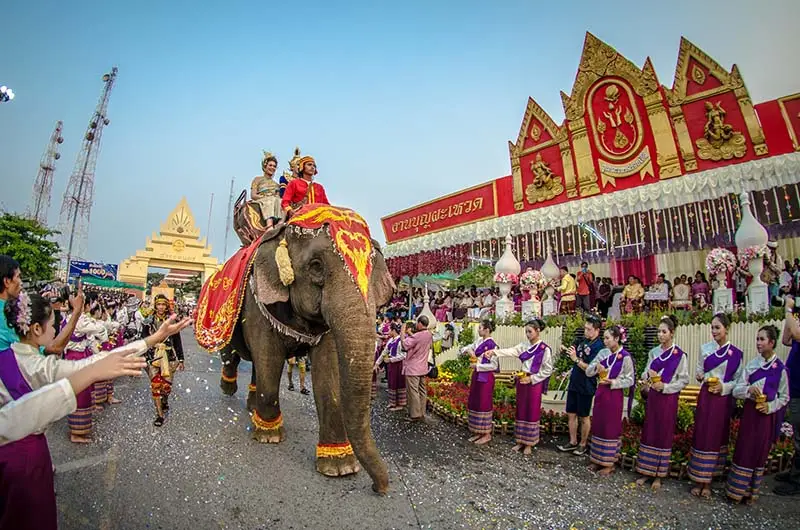
Bun Phawet Roi Et Festival, officially known in Roi Et as “Mahathan Barami Bun Phawet Roi Et,” is one of the most meaningful Buddhist and cultural festivals in northeastern Thailand. It is also widely known as Bun Mahachat, the great merit-making tradition centered on the recitation of the Vessantara Jataka. In Roi Et Province, the festival is held annually during the first week of March, with the main venues around Somdet Phra Srinagarindra Park Roi Et, Saket Nakhon Plaza, the central island of Bueng Phlan Chai, Ho Wot 101 Tower, and the area around the Roi Et City Pillar Shrine. For foreign travelers, this festival is one of the best opportunities to experience Isan culture in a living public setting: Buddhist devotion, merit-making, generosity, storytelling, folk procession, local food, flowers, music, and community pride all come together in the heart of the city.
Bun Phawet is not simply a tourist event or a parade. It is a major Buddhist merit-making festival rooted in the Isan tradition known as Hit Sip Song, the twelve-month cycle of local religious and cultural practices. The word “Phawet” comes from Phra Wet, or Vessantara, the final human birth of the Bodhisattva before becoming the Buddha. The story of Prince Vessantara is deeply associated with dana parami, the perfection of giving. Because of this, the festival focuses on generosity, charity, sacrifice, listening to sermons, and sharing merit with others. In Roi Et, these values are expressed on a city scale through public ceremonies, processions, decorated spaces, free or shared food, and community participation.
For visitors arriving in Roi Et during the festival period, the city feels noticeably different. The area around Bueng Phlan Chai, Ho Wot 101, and Somdet Phra Srinagarindra Park becomes a cultural stage. Districts, temples, schools, government agencies, private groups, and local communities work together to decorate the city, prepare offerings, create processional displays, and present episodes from the Vessantara Jataka. The result is a festival that belongs to the whole city rather than a single temple. This is why Bun Phawet Roi Et is especially valuable for travelers who want to understand local culture through real participation and public life.
The timing of Bun Phawet is closely connected with the seasonal atmosphere of Isan. Traditionally, the festival is held between the third and fifth lunar months, when flowers such as dok chik and dok chan begin to bloom. These flowers are used to decorate sermon halls, ritual spaces, processions, and festival areas. Their colors are more than decoration; they symbolize devotion, renewal, and the collective preparation of the community. In Roi Et, floral decoration is one of the visual highlights of the festival, especially around Ho Wot 101 and the main public spaces in the city center.
One of the most important features of the Roi Et festival is the grand procession known as the Mahathan Barami procession. This procession presents the Vessantara Jataka in 13 chapters, or kand. Each part of the procession represents a different episode in the story, using costumes, floats, symbolic objects, music, dance, and local creativity. Visitors do not need to understand every detail of the Buddhist text to appreciate the procession. The visual storytelling, community energy, and ceremonial atmosphere make the story accessible even to those who are seeing it for the first time.
The Vessantara Jataka is a major Buddhist narrative about ultimate generosity. Prince Vessantara gives away wealth, possessions, and even what is most precious to him in order to fulfill the perfection of giving. In the context of Bun Phawet, the story encourages people to reflect on selflessness, compassion, and the value of sharing. The procession, sermon, offerings, and shared food all return to this same central idea. This makes the festival spiritually coherent: what visitors see, hear, eat, and participate in is connected to the theme of generosity.
The festival begins with preparation and gathering, known in the Isan language as wan hom bun. The word “hom” means to gather or come together. On this day, local Buddhists prepare the venue, decorate sermon spaces, arrange flowers, candles, incense, popped rice, ritual offerings, and symbolic items. The preparation itself is part of the merit-making. It shows the communal nature of Isan religious life, where people are not just spectators but helpers, hosts, donors, cooks, decorators, and participants.
Khao Phan Kon, or the thousand rice-ball offerings, is another important ritual element. Offerings such as flowers, popped rice, incense, candles, and food are prepared in symbolic numbers connected with the merit of the Mahachat sermon. Large flags are traditionally set in 8 directions, while small shrines may be arranged for spirits, hungry ghosts, mara, and unseen beings. This reflects the wider worldview of traditional Isan Buddhism, where merit-making extends beyond the human community to ancestors, spirits, and all beings. For foreign travelers, this is a good example of how Buddhist practice, local belief, and community ritual coexist in Isan culture.
The Phawet cloth, or pha phawet, is a long narrative cloth depicting the life and story of Prince Vessantara from the first chapter to the final chapter. It is commonly hung around the sermon hall or ritual area during the festival. The cloth functions like a visual scripture. It allows people to follow the story through images while listening to the Mahachat sermon. This makes the festival both religious and artistic. It preserves Buddhist literature in a form that local communities can see, explain, teach, and pass on to younger generations.
The invitation of Phra Upakhut is one of the festival’s distinctive ritual elements. According to local belief, Phra Upakhut is a powerful enlightened monk who protects the festival from danger, obstacles, misfortune, and disruptive forces. The ritual symbolically invites Phra Upakhut from the navel of the sea to protect the merit-making ceremony. For visitors, the Phra Upakhut procession is important because it marks the festival as sacred space. It transforms the city area into a protected field of merit where people gather to give, listen, pray, and celebrate.
The Mahachat sermon is the spiritual center of Bun Phawet. A widely held belief is that those who listen to all 13 chapters of the Mahachat sermon within one day, while doing good deeds, receive great merit. Because of this belief, many people attend the sermon with deep concentration, sometimes staying through long hours of chanting and preaching. The sermon turns Buddhist literature into a shared public experience. It is not only a religious lecture; it is a community act of listening, remembering, and renewing moral values together.
The phrase often associated with the festival is “eat khao pun, make merit at Bun Phawet, and listen to the Mahachat sermon.” Khao pun, or fermented rice noodles similar to Thai khanom chin, has become one of the food symbols of Bun Phawet in Roi Et. During the festival, people commonly share food, offer noodles, and welcome visitors with generosity. Eating khao pun at the festival is not merely a meal. It is part of the atmosphere of giving, hospitality, and shared merit. For travelers, this is one of the easiest ways to feel included in the event.
The main festival area in Roi Et is highly convenient because it is located in the city center. Somdet Phra Srinagarindra Park, Bueng Phlan Chai, Ho Wot 101, Saket Nakhon Plaza, and the City Pillar Shrine are all close to one another. This allows visitors to enjoy the festival while also exploring key city landmarks. The public park, central lake, ceremonial plaza, and modern observation tower together create a strong sense of place. Roi Et uses its city center as a cultural venue, making the festival visually impressive and easy to access.
Saket Nakhon Plaza plays an important role in major ceremonies and processional activities. It is connected with the symbolic city identity of Roi Et and is close to Bueng Phlan Chai. During Bun Phawet, the plaza becomes a gathering point for officials, participants, procession groups, and spectators. The wide open space allows the festival to expand beyond a temple compound and become part of the civic life of Roi Et. This is one reason why Bun Phawet Roi Et feels large, public, and inclusive.
Ho Wot 101 is another major landmark connected with the festival atmosphere. The tower is inspired by the wot, a traditional Isan musical instrument, and has become one of the modern symbols of Roi Et. During the festival season, the area around Ho Wot 101 is decorated and used as an important gathering and activity space. Travelers can combine the festival with a visit to the tower for city views, making it possible to understand Roi Et from both ground-level cultural activity and a high panoramic viewpoint.
Bueng Phlan Chai adds a natural and civic dimension to the festival. The lake is the city’s central public space, used for walking, exercise, family activities, and public events. During Bun Phawet, the lake area becomes a background for processions, ceremonies, food sharing, and cultural displays. The water, gardens, walking paths, and central island soften the intensity of the festival and give visitors places to rest between activities. This balance between ritual and relaxation makes the Roi Et festival especially pleasant to experience.
For photography, Bun Phawet Roi Et offers many strong visual moments. The procession of 13 Jataka chapters, the Phra Upakhut procession, floral decorations, pha phawet cloth, offerings, traditional costumes, local dancers, and the crowds around Bueng Phlan Chai all provide meaningful images. The best photographs are not only beautiful but also respectful. Visitors should avoid blocking processions, stepping into ceremonial zones at inappropriate times, or photographing monks and ritual participants in disruptive ways.
Because this is a Buddhist and community festival, visitors should dress and behave respectfully. Light, modest clothing is suitable because March in northeastern Thailand is usually hot. Visitors should bring drinking water, a hat or umbrella, and comfortable walking shoes. When entering sermon or ritual areas, it is polite to speak softly, avoid interrupting the ceremony, and be mindful of local participants. The festival is festive, but it is still rooted in religious devotion.
Getting There is straightforward. Travelers with private cars can navigate to Bueng Phlan Chai, Ho Wot 101, Somdet Phra Srinagarindra Park Roi Et, or Saket Nakhon Plaza. During major festival days, extra time should be allowed for traffic and parking because the city center becomes busy. Travelers using public transport can arrive at Roi Et Bus Terminal and continue by local taxi, tuk-tuk, or other city transport to the Bueng Phlan Chai area. From Roi Et Airport, visitors can travel into the city center and use Ho Wot 101 or Bueng Phlan Chai as the main point of orientation.
The best time to visit depends on the experience desired. Morning is suitable for religious ceremonies, merit-making, and a calmer atmosphere. Afternoon is good for processional activities and public gatherings. Evening is ideal for walking around decorated spaces, visiting nearby restaurants, taking photos of Ho Wot 101, and enjoying the festival atmosphere around the lake. Visitors interested in the grand procession should arrive early enough to find a safe viewing spot before the procession begins.
There is no general admission fee to join the public festival area, watch the procession, and experience the main atmosphere of Bun Phawet Roi Et. Travelers should prepare personal expenses for food, drinks, transportation, accommodation, and any private services they choose to use nearby. The open nature of the festival reflects its merit-making spirit: the event is designed for broad public participation, including local residents, families, students, elderly people, visitors from other provinces, and foreign travelers.
Food is an important part of the experience. Around Bueng Phlan Chai and central Roi Et, travelers can find restaurants, noodle shops, cafes, local snacks, and lakeside dining options. During the festival, food sharing and khao pun are part of the cultural atmosphere. Visitors who want to eat comfortably before or after the procession can use the nearby restaurant area around the lake and city center. Carrying drinking water is recommended because the weather can be hot in March.
Accommodation in central Roi Et is convenient for festival visitors. Staying near Bueng Phlan Chai, Ho Wot 101, or the city center makes it easier to attend morning ceremonies, return for afternoon processions, and enjoy evening activities without long travel times. During the festival period, booking accommodation in advance is practical because demand near the city center can be higher than usual. Hotels around the lake and central business area are suitable for both Thai and foreign travelers.
For foreign travelers, Bun Phawet Roi Et is a valuable introduction to Isan culture because it combines multiple elements in one event: Buddhism, oral storytelling, Jataka literature, community generosity, flowers, music, processions, traditional dress, local food, and public space. Even visitors unfamiliar with Buddhist scriptures can understand the main theme: people gather to celebrate generosity, listen to a sacred story, share food, make merit, and renew community bonds.
Bun Phawet also helps travelers understand how traditions survive in modern cities. In Roi Et, the festival is not hidden in a remote village or limited to a temple compound. It occupies the symbolic heart of the city. Government offices, public parks, modern landmarks, old beliefs, and Buddhist ceremonies all appear together. This makes the festival an excellent example of living heritage: traditional values continue to function in a contemporary urban setting.
The emotional strength of the festival comes from participation. Local people do not only watch; they prepare, decorate, cook, chant, donate, carry offerings, join processions, host visitors, and listen to sermons. This collective participation gives the festival its depth. It is a time for relatives to return home, communities to work together, and younger generations to see cultural practices performed in public. For travelers, observing this shared effort is one of the most memorable parts of the festival.
In summary, Bun Phawet Roi Et is more than an annual festival. It is a major expression of Isan Buddhist culture, generosity, civic identity, and community continuity. It turns Roi Et city center into a field of merit and cultural storytelling. Travelers who visit during the first week of March can experience one of the province’s most important traditions through processions, sermons, flowers, food, and public participation. For anyone seeking a deeper understanding of Roi Et, Bun Phawet is one of the most meaningful events to witness.
| Name / Festival | Mahathan Barami Bun Phawet Roi Et Festival |
| Location | Somdet Phra Srinagarindra Park Roi Et, Saket Nakhon Plaza, Central Island Of Bueng Phlan Chai, Ho Wot 101 Tower, And The Area Around Roi Et City Pillar Shrine, Mueang Roi Et District, Roi Et Province |
| Address | Nai Mueang Subdistrict, Mueang Roi Et District, Roi Et 45000, Thailand |
| Highlights | Isan Buddhist Mahachat festival, grand Mahathan Barami procession, 13 chapters of the Vessantara Jataka, Mahachat sermon, Phra Upakhut procession, Khao Phan Kon offerings, Pha Phawet cloth, floral decorations, and khao pun food sharing |
| History | A traditional Isan merit-making festival in the Hit Sip Song cycle, based on the Mahachat sermon and the Vessantara Jataka. Roi Et holds the festival annually during the first week of March. |
| Name Origin | “Phawet” comes from Phra Wet, or Vessantara. Bun Mahachat refers to the great merit-making festival centered on the Mahachat sermon. |
| Importance | A major Buddhist and cultural festival emphasizing generosity, sacrifice, community unity, merit-making, and the preservation of Isan traditions |
| Main Rituals | Wan Hom Bun preparation, ritual offerings, Khao Phan Kon, flags in 8 directions, Pha Phawet cloth, Phra Upakhut procession, 13-chapter Mahachat sermon, and Mahathan Barami procession |
| Travel Information | Travel by private car to Bueng Phlan Chai, Ho Wot 101, or Somdet Phra Srinagarindra Park Roi Et. Public-transport travelers can arrive at Roi Et Bus Terminal and continue by local taxi, tuk-tuk, or city transport to the festival area. |
| Current Status | An annual Roi Et provincial festival that continues to be held. In 2026, the 36th edition took place from March 6 – 8, 2026. |
| Open Days | Held annually during the first week of March; in 2026, the festival took place from March 6 – 8, 2026 |
| Opening Hours | Participation times follow the official daily event schedule |
| Fees | No general admission fee for the public festival area, procession viewing, and general atmosphere |
| Facilities | Ceremonial areas, activity plaza, walking paths around Bueng Phlan Chai, procession viewing areas, nearby restaurants, city-center hotels, rest areas, and connections to nearby attractions |
| Main Areas / Zones | 1. Saket Nakhon Plaza 2. Somdet Phra Srinagarindra Park Roi Et 3. Central Island Of Bueng Phlan Chai 4. Phra Phutthodom Plaza 5. Area Around Roi Et City Pillar Shrine 6. Ho Wot 101 Tower 7. Mahathan Barami Procession Route 8. Dok Sabang Decoration And Cultural Booth Areas |
| Caretaker / Organizers | Roi Et Province, Roi Et Municipality, Roi Et Provincial Cultural Office, government agencies, private organizations, and the people of Roi Et Province |
| Main Contact Number | Roi Et Municipality, Tel. 043-511222 Roi Et Provincial Public Relations Office, Tel. 043-516506 |
| Official Website / Official Page | roietmunicipal.go.th, roiet.prd.go.th |
| Nearby Tourist Attractions | 1. Bueng Phlan Chai, about 0 km 2. Roi Et City Pillar Shrine, about 0.1 km 3. Ho Wot 101 Tower, about 0.3 km, Tel. 043-511222 4. Saket Nakhon Gate, about 0.5 km 5. Roi Et National Museum, about 1 km 6. Wat Bueng Phlan Chai, about 1 km 7. Wat Buraphaphiram, about 1 km |
| Nearby Restaurants | 1. Lakeview Restaurant, about 0.3 km, Tel. 093-320-8126 2. Nai Chui Vintage Pork Noodle, about 0.6 km, Tel. 093-638-8323 3. Khao Pun Sen Sot Phlan Chai, about 1 km, Tel. 091-760-2846 4. Emperor Congee Branch 1, Bueng Phlan Chai, about 1 km, Tel. 081-964-5851 5. Sit Rim, about 1 km, Tel. 098-278-4482 6. White House Cafe & Studio, about 3 km, Tel. 085-028-9495 |
| Nearby Accommodations | 1. Rueanrimnam Hotel, about 1 km, Tel. 043-518-967 2. Saket Nakhon Hotel, about 1 km, Tel. 043-511-741 3. The Premium Residence, about 2 km, Tel. 043-518-655 4. 101 Hotel, about 2 km, Tel. 043-513-999, 065-119-6999 5. HOP INN Roi Et, about 2 km, Tel. 02-080-2222 6. The Rice Hotel, about 2 km, Tel. 043-519-999 |
Frequently Asked Questions (FAQ)
Q: When is Bun Phawet Roi Et Festival held?
A: Roi Et holds Bun Phawet annually during the first week of March. In 2026, the festival took place from March 6 – 8, 2026.
Q: Where is Bun Phawet Roi Et Festival held?
A: The main festival area is around Somdet Phra Srinagarindra Park Roi Et, Saket Nakhon Plaza, the central island of Bueng Phlan Chai, Ho Wot 101 Tower, and the Roi Et City Pillar Shrine area.
Q: What is Bun Phawet?
A: Bun Phawet is an Isan Buddhist Mahachat festival focused on listening to the Vessantara Jataka, making merit, sharing food, and honoring the perfection of giving.
Q: Is there an admission fee for Bun Phawet Roi Et Festival?
A: There is no general admission fee for the public ceremony areas, procession viewing, and general festival atmosphere. Visitors should prepare personal expenses for food, drinks, transportation, and accommodation.
Q: What are the main highlights of the festival?
A: Highlights include the Mahathan Barami procession, the 13 chapters of the Vessantara Jataka, the Phra Upakhut procession, the Mahachat sermon, Pha Phawet cloth, Khao Phan Kon offerings, Dok Sabang decorations, and khao pun food sharing.
Q: Why do people listen to the Mahachat sermon in one day?
A: According to Buddhist belief, listening to all 13 chapters of the Mahachat sermon within one day while doing good deeds brings great merit connected with the generosity of Prince Vessantara.
Q: Can visitors reach the festival without a private car?
A: Yes. Travelers can arrive at Roi Et city center by public transport and continue by local taxi, tuk-tuk, or other city transport to Bueng Phlan Chai and the festival area.
Q: How should travelers prepare for Bun Phawet Roi Et Festival?
A: Visitors should dress respectfully, bring drinking water, a hat or umbrella, allow extra travel time on procession days, respect sermon and ritual areas, and keep the festival grounds clean.
 Category: ●Art, Culture and Heritage
 Group: ●Art, Craft Centres, Tradition
Last Update : 2 MonthAgo
 Last Update : 2 MonthAgo
Recommend

 Historical Sites and Monuments(3)
 Landmarks and Memorials(5)
Art, Craft Centres, Tradition(2)
Landmarks and Memorials(5)
Art, Craft Centres, Tradition(2)
 Museums(1)
 Educational Places
 Educational Gardens, Farm(3)
 Places of Worship
 Temple(35)
 Other Sacred Sites(6)
 Suburban Living
 Village, Community(1)
 Local Market(1)
 Nature and Wildlife
 National Parks and Marine Reserves(1)
 Mountain (Doi)(2)
 Dam, Reservoir, Lake(8)
 Waterfalls(1)
 Flower Field(1)
 River, Canal(4)
 Entertainment and Agricultural
 Zoos and Aquariums(1)
 Stadium(1)
 Farms, Parks and Ecotourism(5)
 Shopping
 Shopping and Night Market(1)


