
lovethailand home >Northeastern Travel Attractions >Nakhon Ratchasima Travel Attractions >Muang Nakhon Ratchasima >Nai Muang > Korat Museum
TL;DR: Korat Museum is located at Building 10, 2nd Floor, Office of Arts and Culture, Nakhon Ratchasima Rajabhat University, open Monday – Friday, except holidays announced by Nakhon Ratchasima Rajabhat, hours 09.00 – 15.00.
Korat Museum
Open Days: Monday – Friday, except holidays announced by Nakhon Ratchasima Rajabhat University
Opening Hours: 09.00 – 15.00
Korat Museum, officially known in Thai as Phiphitthaphan Mueang Nakhon Ratchasima, is one of the most important cultural and historical learning centers in Nakhon Ratchasima Province. It is located on the second floor of Building 10, Office of Arts and Culture, Nakhon Ratchasima Rajabhat University, at 340 Suranarai Road, Nai Mueang Subdistrict, Mueang Nakhon Ratchasima District. The museum presents the long development of Khorat from prehistoric settlements in the upper Mun River basin to the Dvaravati period, Lopburi period, Ayutthaya period, Rattanakosin period, the rise of Nakhon Ratchasima as a major city of Northeastern Thailand, and the living cultural identity of the Khorat people.
For international travelers who want to understand Khorat beyond its modern city image, Korat Museum is an excellent starting point. Nakhon Ratchasima is often known as the gateway to Isan, a transportation hub, a food city, and the city of Thao Suranari, but its deeper story stretches much further back in time. Inside this museum, visitors can follow a carefully arranged narrative that connects archaeology, ancient communities, religious influence, Khmer culture, city planning, warfare, local wisdom, performing arts, and vernacular architecture. The result is a compact but meaningful introduction to one of Thailand’s most historically layered provincial cities.
The museum is especially useful because it explains Khorat in chronological order. Visitors do not need to be specialists in Thai history to follow the story. The exhibition gradually answers important questions: who lived in this region before written history, why the upper Mun River basin is archaeologically important, how Dvaravati culture reached this area, how Khmer influence shaped the landscape of Northeastern Thailand, why Nakhon Ratchasima became a strategic frontier city during the Ayutthaya period, why Thao Suranari remains central to Khorat identity, and what local cultural treasures continue to represent the province today. Walking through the museum feels like reading the city through objects, maps, models, images, and architectural spaces.
Korat Museum is administered by the Office of Arts and Culture of Nakhon Ratchasima Rajabhat University. This office plays a central role in conserving, promoting, and sharing national and local arts and culture. It preserves cultural objects, historical materials, traditional knowledge, and intellectual heritage connected to the people of Nakhon Ratchasima. The museum is therefore more than an exhibition hall. It is a cultural knowledge center that links the university, local communities, students, teachers, researchers, and the general public.
The museum developed from an earlier cultural hall established in 1980, when the Office of Arts and Culture was still the Cultural Center of Nakhon Ratchasima Teachers College. The first head of the center, Acting Sub Lt. Thaworn Subongkot, used rooms 514 and 515 to collect and preserve antiquities, art objects, and cultural items entrusted to the institution by local communities. Some objects were also acquired to support educational display. This early stage is important because it shows the close relationship between the university and the community. The objects were not merely old things; many represented trust, memory, and cultural responsibility passed from local people to an educational institution.
Over time, the cultural hall moved and developed in response to changing institutional needs. In the mid-1980s, the office and exhibition spaces were relocated, and the display areas became more structured. Exhibitions began to present local treasures of Khorat, Thai identity, traditional occupations, and antiquities. Later, when Building 1 was developed as a cultural hall, the exhibition model was improved with a stronger focus on the history of Nakhon Ratchasima. This earlier display became the foundation for the current Korat Museum.
A major turning point came in 2013, when Nakhon Ratchasima Rajabhat University approved a project to create a new cultural exhibition space in Building 10, a former science and technology building. The exhibition content was redesigned based on the earlier cultural hall but expanded to present the historical development of Nakhon Ratchasima more clearly. The museum was then named Korat Museum and developed under the concept of looking back into the past while appreciating the city of Nakhon Ratchasima. The project was completed in April 2014, and the museum has since become a key cultural learning center in the city.
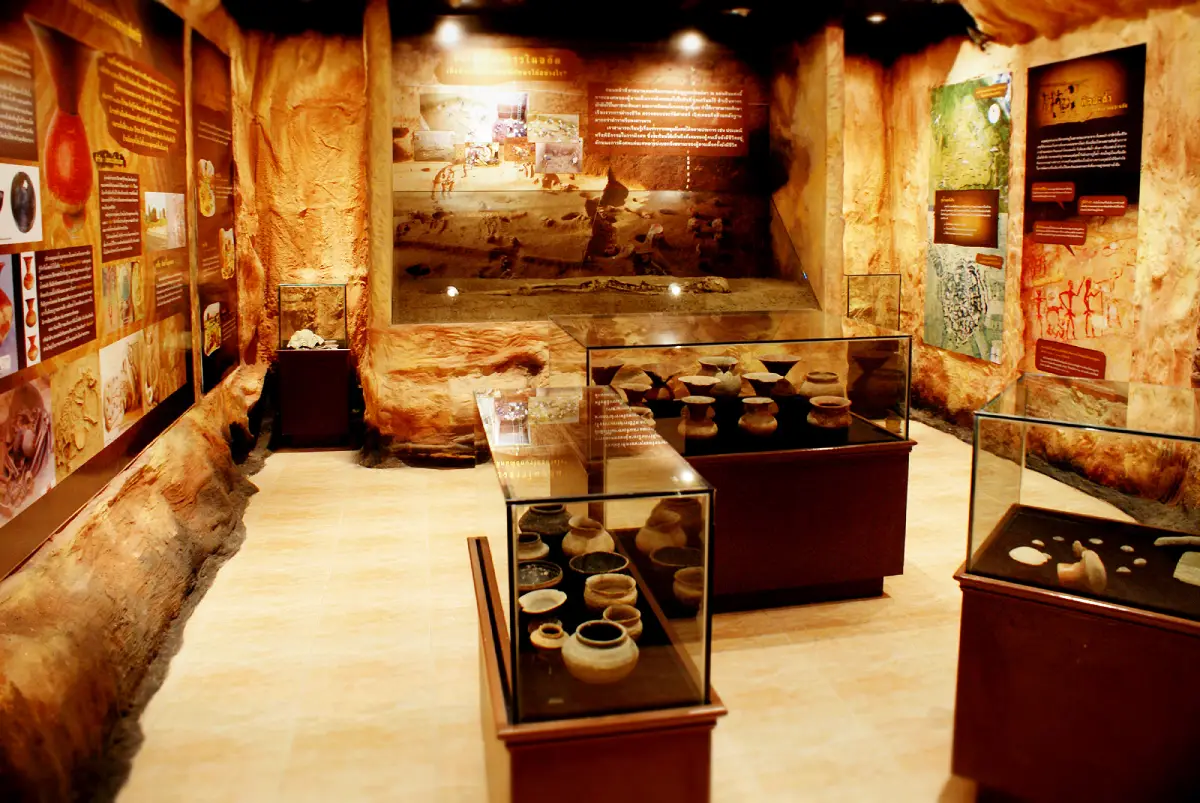
The first major exhibition area introduces the origins of civilization in the Khorat region. It focuses on prehistoric human evidence in the upper Mun River basin, especially in Nakhon Ratchasima Province. This section helps visitors understand that long before the name Khorat or Nakhon Ratchasima appeared in written history, people had already lived, worked, buried their dead, used tools, made pottery, created rituals, and formed communities in this landscape. Archaeological evidence such as skeletons, pottery, stone tools, cave paintings, moats, and earthen ramparts helps make the prehistoric past visible and understandable.
The prehistoric section is particularly meaningful because it explains how we can understand human life before writing existed. Burial sites, tools, pottery, ornaments, and settlement patterns reveal information about food, social organization, beliefs, technology, and environment. Important archaeological sites in the province, including Ban Prasat, Ban Non Wat, and the prehistoric paintings of Khao Chan Ngam in Sikhio District, help show why the upper Mun River basin has attracted continuous archaeological study. For foreign visitors, this section provides an important reminder that Northeastern Thailand has a deep human history that predates many well-known historical kingdoms.
The Dvaravati room presents the early historical communities of the region, especially Mueang Sema in Sung Noen District. Around the 12th Buddhist century onward, Dvaravati cultural influence spread into this part of Northeastern Thailand. Buddhism and Brahmanism arrived through contact with Indian-influenced cultural networks, but local traditions did not disappear immediately. Some older burial customs continued, such as extended supine burials with offerings for the dead. This section is valuable because it shows a cultural transition from prehistoric communities to early towns with religious art, inscriptions, and more complex social structures.
The Dvaravati section also shows how Khorat was part of a wider regional network. Ancient city plans, moats, religious sites, inscriptions, and sandstone Buddha images demonstrate that the communities of this area were connected with religious and cultural developments in central Thailand and the broader Mun and Chi river basins. Visitors can see that local society absorbed outside influences while maintaining elements of earlier beliefs. This makes the cultural identity of Khorat layered and complex rather than simple or one-dimensional.
The Lopburi period room introduces Khmer cultural influence in Northeastern Thailand from approximately the 16th to 19th Buddhist centuries. This period greatly affected the art, architecture, religion, and landscape of the region. The exhibition helps explain why lower Isan has many stone sanctuaries, why ancient cities were often planned in geometric forms, why large reservoirs known as baray were built, and why Khmer-style pottery, sculptures, and religious buildings remain important historical evidence. The story also links visitors to Phimai, one of the most important Khmer-influenced sites in Thailand.
This section is useful for travelers who plan to visit Phimai Historical Park, because it provides background before seeing the actual stone sanctuary. The museum explains that the name Phimai appears in historical inscriptions in forms associated with Vimaya or Vimayapura. Understanding this context allows visitors to see Phimai not merely as a beautiful monument, but as part of a wider religious, political, and artistic world that once connected Khorat with Khmer civilization and Mahayana Buddhist traditions.
The Ayutthaya period room is one of the most important parts of the museum for understanding the formation of Nakhon Ratchasima as a strategic city. During the Ayutthaya period, Nakhon Ratchasima became a second-class city with a major role in defending the kingdom from threats from the Khmer, Lao, and Vietnamese directions. It also functioned as a major administrative center controlling forested frontier areas. In the reign of King Narai the Great, the city was strengthened with fortifications influenced by Western military design and became an important frontier city of Ayutthaya.
The story of Nakhon Ratchasima in the Ayutthaya period helps visitors understand that the city was not built only as a settlement. It was planned as a defensive and administrative stronghold. City walls, gates, fortifications, and urban layout reflected military and political purposes. Remaining features and memories in the present city, such as Chumphon Gate and the old city area, become more meaningful after visiting this room. Travelers can then walk through modern Khorat with a clearer sense of how the old fortified city shaped the present urban landscape.
The Rattanakosin period room presents Nakhon Ratchasima as a major city of military and administrative importance. In the early Rattanakosin period, King Rama I elevated Nakhon Ratchasima to the status of a major city. Its governor held high rank, and the city played an important role in governing inner Northeastern territories. This section also connects to the heroic story of Khun Ying Mo, later honored as Thao Suranari, whose role in the events of 1826 became central to the collective memory and identity of Khorat people.
The museum’s presentation of Thao Suranari is not only about one historical figure. It also helps explain the relationship between city, people, war, solidarity, and public memory. The event at Thung Samrit in 1826 became a foundation of local pride. Today, the Thao Suranari Monument near Chumphon Gate is not just a landmark but a spiritual and cultural center for local residents. This section helps foreign visitors understand why people in Khorat pay such deep respect to Ya Mo and why her monument remains one of the most important symbols of the province.
The Metropolis of Isan room presents Nakhon Ratchasima during the reign of King Rama V, a period of major administrative reform. As Western imperial powers expanded influence in Southeast Asia, Siam reorganized provincial administration through the monthon system. Nakhon Ratchasima became a strategic base for central authority in the Northeast and developed new roles in governance, communication, and military organization. The city gradually transformed from an old frontier stronghold into a modern regional center.
This section also presents the development of Nakhon Ratchasima as a sports city. The construction of sports facilities to celebrate the 333rd anniversary of Nakhon Ratchasima in 2004, followed by the city hosting the SEA Games and ASEAN Para Games in 2007–2008, marked an important step in the city’s modern identity. Khorat became not only a historical city, but also a regional metropolis associated with education, sport, culture, and modern urban development.
The Local Treasures of Khorat room brings the story closer to daily life and local pride. It presents cultural elements that have long been associated with Khorat, such as Muay Korat, hang krarok silk, trishaw culture, ramthon dance, Korat songs, and other local treasures remembered in older provincial slogans. This room shows that the identity of a city does not exist only in walls, battles, or rulers. It also lives in language, music, textiles, performance, foodways, occupations, humor, and shared memory.
Korat songs are especially important because they represent a distinctive oral tradition of the province. They rely on memory, quick wit, poetic exchange, rhyme, and the local Korat accent. As a form of oral literature, Korat song reveals the creativity and linguistic intelligence of local performers. The museum helps younger generations and visitors recognize this performance tradition as an important part of Khorat identity, especially because it remains connected with local ceremonies, public events, and the cultural memory surrounding Thao Suranari.
Beyond the indoor exhibitions, the museum includes Ruean Pho Khong, also known as Ruean Korat, an outdoor learning space dedicated to local architecture and traditional wisdom. This two-storey wooden house with an open ground floor demonstrates the design intelligence of local Khorat builders. Its structure responds to climate, ventilation, family life, storage, social space, and everyday living patterns. Seeing the house in real space gives visitors a much clearer understanding of vernacular architecture than photographs or models alone could provide.
Ruean Pho Khong is valuable because it explains traditional Khorat life through architecture. The open lower floor, timber construction, room arrangement, and surrounding spaces reflect how people lived with local weather, materials, and community practices. The area also supports cultural activities such as Songkran events, bai si su khwan ceremonies, religious activities, academic talks, and outdoor cultural programs. For travelers interested in architecture, this is one of the most distinctive parts of the museum.
Ruean Pho Khong has also received formal recognition for architectural conservation. It was awarded an outstanding architectural conservation award in 2018 by the Association of Siamese Architects under Royal Patronage. The development of Ruean Pho Khong as a learning center for the vernacular architecture of the Tai Korat ethnic group was also recognized for its contribution to cultural heritage preservation. This makes the house more than an additional museum area; it is a real cultural artifact that encourages the preservation of other traditional Khorat houses.
In 2022, Korat Museum collaborated with the National Electronics and Computer Technology Center, or NECTEC, to apply Museum Pool, a network-based museum information management system, to serve visitors at Ruean Pho Khong. This digital development is important because it helps organize museum data, support access to cultural knowledge, and connect local museum content with broader digital learning systems. It also shows that the museum is not fixed in the past, but continues to improve its interpretation and information management for contemporary audiences.
The museum’s location inside Nakhon Ratchasima Rajabhat University gives it a distinctive atmosphere. Visitors experience an educational campus, a cultural office, an exhibition space, and a public learning area in one visit. Around Building 10, the cultural courtyard and Chumphon Gate replica help create a sense of historical place. The museum visit is therefore not only about walking through indoor displays; it is also about entering a university space dedicated to preserving local heritage and strengthening cultural pride.
For students, teachers, and educational groups, Korat Museum is highly suitable for field trips. Its content connects with Thai history, archaeology, art history, local wisdom, folk culture, urban development, and regional identity. A visit can support many learning topics, including prehistoric archaeology, Mueang Sema, Dvaravati culture, Khmer influence, Ayutthaya frontier cities, Thao Suranari, King Rama V’s reforms, Korat songs, and vernacular housing. Students gain not only information, but also a stronger sense of how historical knowledge is preserved through objects and places.
For general travelers, the museum is an excellent first stop before exploring Khorat city. After visiting the museum, nearby landmarks such as the Thao Suranari Monument, Chumphon Gate, Wat Sala Loi, Wat Phayap, and Maha Weerawong National Museum become easier to understand. Instead of seeing these places as isolated attractions, visitors can connect them with the broader history presented in the museum. This makes travel in central Nakhon Ratchasima more meaningful and coherent.
For foreign travelers, Korat Museum helps explain Nakhon Ratchasima in a clear and structured way. The city is not only a modern urban center in Northeastern Thailand. It is also connected with prehistoric communities, Dvaravati culture, Khmer influence, the Ayutthaya frontier system, Rattanakosin history, local identity, folk performance, and vernacular architecture. Visiting the museum helps international readers and travelers understand that Isan has deep historical complexity and that Khorat is a key gateway to understanding this region.
Visitors should allow at least 1.5 to 2 hours for the museum. This gives enough time to explore the main exhibition rooms, read the explanations, take photographs in permitted areas, and walk through Ruean Korat without rushing. Those with a deeper interest in local history may want to spend longer. The most meaningful route is to follow the chronological order of the exhibitions, beginning with the origins of civilization and ending with local treasures and the vernacular house.
Visitors should dress politely, keep their voices low, avoid bringing food or drinks into the exhibition areas, and refrain from touching objects unless permitted. Smoking is not allowed inside the building, and visitors should not write, scratch, or mark any objects or surfaces. Group visits should contact the museum at least 3 working days in advance if they require guided interpretation. These basic rules help protect cultural objects and maintain a respectful learning environment.
Getting There is convenient because the museum is located in central Nakhon Ratchasima inside Nakhon Ratchasima Rajabhat University on Suranarai Road. Visitors traveling by private car can set the destination to Nakhon Ratchasima Rajabhat University and go to Building 10, Office of Arts and Culture. From the railway station or bus terminal, travelers can take a taxi, local transport, or ride-hailing service to the university. The museum is only a short distance from the Thao Suranari Monument and Chumphon Gate area, making it suitable for a half-day cultural route in the city.
A recommended one-day route in central Khorat can begin at Korat Museum in the morning to understand the historical background of the city. Afterward, visitors can continue to the Thao Suranari Monument and Chumphon Gate, then visit Wat Phayap or Wat Sala Loi. In the afternoon, they can explore Maha Weerawong National Museum or an art space in the city, and finish with local food in central Nakhon Ratchasima. This route is ideal for travelers who want a thoughtful cultural experience rather than a rushed sightseeing trip.
Although Korat Museum is located inside a university, it is open to the general public during operating hours. Visitors do not need to be students or university staff. Since there is no admission fee, the museum is an accessible public cultural space for families, schools, researchers, local residents, and travelers. It is a place where people can rediscover Khorat through artifacts, architecture, stories, and community memory.
In summary, Korat Museum is one of the most worthwhile cultural attractions in Nakhon Ratchasima. It brings together the long history of the city from prehistoric times to the modern period, presents the development of Khorat in an easy-to-follow structure, includes Ruean Korat as a living architectural learning space, and is supported by the academic and cultural mission of Nakhon Ratchasima Rajabhat University. For anyone who wants to understand Khorat beyond the surface, this museum offers a clear, rich, and memorable introduction to the heart of the city.
| Name | Korat Museum / Nakhon Ratchasima City Museum |
| Location | Building 10, 2nd Floor, Office of Arts and Culture, Nakhon Ratchasima Rajabhat University |
| Address | 340 Suranarai Road, Nai Mueang Subdistrict, Mueang Nakhon Ratchasima District, Nakhon Ratchasima 30000, Thailand |
| Coordinates | 14.98764, 102.10729 |
| Highlights | A cultural museum presenting Khorat’s history from prehistoric communities to Dvaravati, Lopburi, Ayutthaya, Rattanakosin, modern Isan metropolis, local treasures, and Ruean Korat |
| History | Developed from a cultural hall established in 1980 and later redesigned as Korat Museum in Building 10 under the concept of appreciating Nakhon Ratchasima through a journey into the past |
| Name Origin | The name reflects the museum’s role as a place that tells the story of Nakhon Ratchasima, or Khorat, through history, cultural objects, local wisdom, and community memory |
| Distinctive Features | Chronological exhibitions, cultural objects, city history interpretation, local identity displays, and Ruean Korat as an outdoor vernacular architecture learning space |
| Travel Information | Located in central Nakhon Ratchasima inside Nakhon Ratchasima Rajabhat University on Suranarai Road; accessible by private car, taxi, local transport, or ride-hailing service from the railway station or bus terminal |
| Current Status | Open to the general public during operating hours as a cultural learning center of Nakhon Ratchasima Rajabhat University and Nakhon Ratchasima Province |
| Open Days | Monday – Friday, except holidays announced by Nakhon Ratchasima Rajabhat University |
| Opening Hours | 09.00 – 15.00 |
| Fees | No Admission Fee |
| Facilities | Guided interpretation for groups with advance notice, cultural library, indoor exhibitions, Ruean Korat outdoor learning area, cultural courtyard, and spaces for arts and cultural activities |
| Main Areas / Zones | 1. Introductory Room 2. Origins of Civilization Room 3. Dvaravati Period Room 4. Lopburi Period Room 5. Ayutthaya Period Room 6. Rattanakosin Period Room 7. Metropolis of Isan Room 8. Local Treasures of Khorat Room 9. Ruean Pho Khong / Ruean Korat 10. Mae Man Granary and Traditional Waterwheel |
| Caretaker | Office of Arts and Culture, Nakhon Ratchasima Rajabhat University / Director: Asst. Prof. Phitakchai Chatchai |
| Main Contact Number | 044-009-009 Ext. 1011, 044-253-097 |
| Official Website / Official Page | www.koratmuseum.com / Facebook: พิพิธภัณฑ์เมืองนครราชสีมา Korat Museum |
| Nearby Tourist Attractions | 1. Wat Sala Loi, about 2 km 2. Wat Phayap, about 2 km 3. Thao Suranari Monument and Chumphon Gate, about 2 km, Tel. 044-243-798 4. Maha Weerawong National Museum, about 3 km 5. Central Korat, about 3 km 6. Terminal 21 Korat, about 4 km |
| Nearby Restaurants | 1. Krua Chai Phat NRRU Korat, about 0.2 km, Tel. 093-946-2665 2. VT Namnueng Rajabhat Branch, about 0.5 km, Tel. 082-414-2111 3. Khao Tom Cho Duang Chai Branch 2, about 0.5 km, Tel. 065-694-1565 4. Vegetarian Restaurant near NRRU, about 0.5 km, Tel. 044-256-060 5. Rabieng Kaew Korat Restaurant, about 4 km, Tel. 044-267-765, 064-528-2880 |
| Nearby Accommodations | 1. Thap Kaeo Poshtel City Center Korat, about 0.2 km, Tel. 044-251-107, 093-327-5679 2. Qlosest Hotel, about 1 km, Tel. 061-425-4289 3. Anakin Boutique Hotel, about 2 km 4. Viva Central Korat, about 3 km, Tel. 065-993-5999 5. Romyen Garden Place, about 4 km, Tel. 044-285-816-7, 098-105-7978 |
Frequently Asked Questions (FAQ)
Q: Where is Korat Museum located?
A: Korat Museum is located on the 2nd floor of Building 10, Office of Arts and Culture, Nakhon Ratchasima Rajabhat University, 340 Suranarai Road, Nai Mueang Subdistrict, Mueang Nakhon Ratchasima District.
Q: What days and hours is Korat Museum open?
A: The museum is open Monday to Friday from 09.00 to 15.00, except holidays announced by Nakhon Ratchasima Rajabhat University.
Q: Is there an admission fee?
A: No. Korat Museum is open to the public with no admission fee during operating hours.
Q: What are the main exhibition zones inside Korat Museum?
A: The museum includes the Introductory Room, Origins of Civilization Room, Dvaravati Period Room, Lopburi Period Room, Ayutthaya Period Room, Rattanakosin Period Room, Metropolis of Isan Room, Local Treasures of Khorat Room, and Ruean Korat outdoor learning area.
Q: Why is Ruean Pho Khong or Ruean Korat important?
A: Ruean Pho Khong is an outdoor learning space that presents Khorat vernacular architecture, local wisdom, and traditional ways of living through a real two-storey wooden house with an open ground floor.
Q: How long should visitors spend at Korat Museum?
A: Visitors should allow at least 1.5 to 2 hours to explore the exhibition rooms, read the displays, take photos in permitted areas, and visit Ruean Korat without rushing.
Q: How can travelers get to Korat Museum?
A: Travelers can go by private car, taxi, local transport, or ride-hailing service to Nakhon Ratchasima Rajabhat University on Suranarai Road, then proceed to Building 10, Office of Arts and Culture.
Q: What nearby attractions can be visited after Korat Museum?
A: Nearby places include Wat Sala Loi, Wat Phayap, Thao Suranari Monument, Chumphon Gate, Maha Weerawong National Museum, Central Korat, and Terminal 21 Korat.
Tel : 044009009 # 1013 # 1010
 Tel : 044009009 # 1013 # 1010
 Fax : 044253097
 Fax : 044253097
 Category: ●Art, Culture and Heritage
 Group: ●Museums
Last Update : 2 MonthAgo
 Last Update : 2 MonthAgo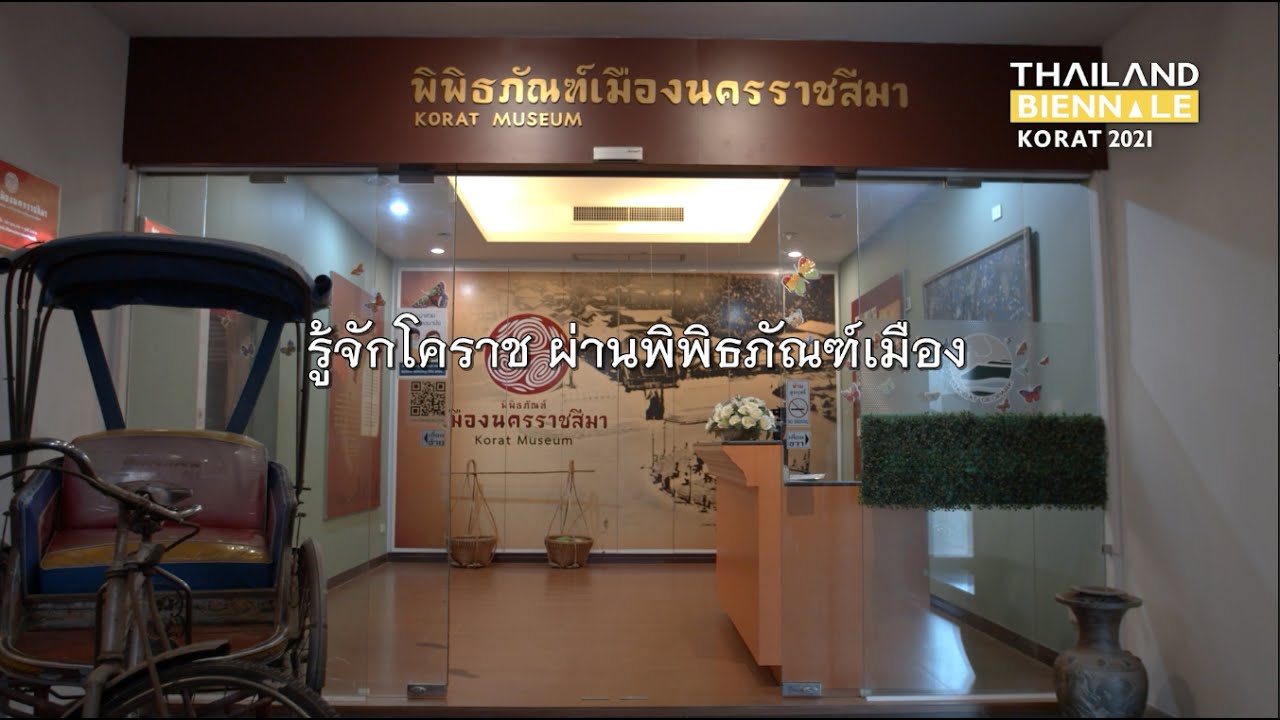
 Click to Access the Navigation Map GPS
Korat Museum Map
Recommend

 Historical Sites and Monuments(20)
 Landmarks and Memorials(5)
 Art, Craft Centres, Tradition(7)
Museums(6)
Art, Craft Centres, Tradition(7)
Museums(6)
 Art Gallery(1)
 Educational Places
 Educational Gardens, Farm(4)
 Places of Worship
 Temple(29)
 Mosque(1)
 Other Sacred Sites(6)
 Research and Development
 Royal Project(3)
 Suburban Living
 Village, Community(6)
 Local Market(4)
 Floating Market(1)
 Nature and Wildlife
 National Parks and Marine Reserves(3)
 Mountain (Doi)(5)
 Dam, Reservoir, Lake(8)
 Waterfalls(9)
 Hot Springs(1)
 Caves(2)
 Flower Field(1)
 River, Canal(8)
 Bays and Beaches(2)
 Other natural attractions(3)
 Entertainment and Agricultural
 Zoos and Aquariums(1)
 Animal camps and shows(1)
 Farms, Parks and Ecotourism(21)
 Waterpark(2)
 Outdoor and Adventure Activities(6)
 Shopping
 Shopping and Night Market(2)
 Travel Articles, Recipes
 Travel Review, Food Review(6)


