
lovethailand home >Northeastern Travel Attractions >Mukdahan Travel Attractions >Nong Sung >Nong Sung Tai > Wat Phu Chok Ko (Wat Banphot Kiri)
TL;DR: Wat Phu Chok Ko (Wat Banphot Kiri) is located at Phu Chok Ko, Ban Waeng, Moo 3, Nong Sung Tai Subdistrict, Nong Sung District, Mukdahan Province, Thailand, open Daily, hours 08:00 – 17:00.
Wat Phu Chok Ko (Wat Banphot Kiri)
Open Days: Daily
Opening Hours: 08:00 – 17:00
Wat Phu Chok Ko, officially known as Wat Banphot Khiri in Mukdahan Province, is a mountain forest monastery closely associated with the Thai Forest Tradition and the lineage of Luang Pu Mun Bhuridatta. The temple stands on Phu Chok Ko at Ban Waeng, Nong Sung Tai Subdistrict, Nong Sung District. It was the long-term residence of Luang Pu La Khemapatto, a highly respected meditation master whose life and teachings remain important to Buddhists in Mukdahan and throughout northeastern Thailand. After his death, the Khemapatta Chedi was constructed in an inverted-bell form to enshrine his ashes. Its upper level contains a museum presenting his biography, teachings, personal monastic requisites and a lifelike figure of the master. The temple welcomes pilgrims, meditation practitioners and respectful travelers every day without an admission fee.
The monastery’s official name, Wat Banphot Khiri, is directly related to its setting because both banphot and khiri refer to a mountain or elevated landscape. Local people, however, generally call it Wat Phu Chok Ko after the mountain on which it stands. Forest, natural rocks, steep slopes and distance from the main settlement give the temple a character very different from that of a community monastery on level ground. Traffic and village noise gradually fade as visitors approach the upper religious area.
Wat Phu Chok Ko is located in Ban Waeng, Nong Sung Tai Subdistrict, approximately 19 kilometres south of central Nong Sung District. The final approach passes through rural communities and the cultural landscape of Mukdahan’s Phu Thai population before climbing Phu Chok Ko. Visitors can reach the upper temple by ascending approximately 260 steps or by following a longer alternative route around the mountain. The two approaches allow travelers to select a route appropriate for their physical condition, age and available time.
The significance of the temple extends beyond the Khemapatta Chedi. Its identity developed through the relationship between mountain, cave, forest, wandering monks, Ban Waeng villagers and the life of Luang Pu La. The mountain had already been used for secluded practice before the master established his long residence. Understanding the monastery therefore requires attention to meditation history and community support, rather than treating the site only as a viewpoint or a photogenic mountain attraction.
Temple registration records state that Wat Banphot Khiri was formally established in 1932 and received its royal grant of consecrated boundary in 1985. The local historical account published by the Mukdahan Provincial Office of Buddhism begins an important phase of activity in 1941, when Phra Ajarn Khao travelled to practise at Phu Ko Cho Cave. The different dates indicate that formal temple recognition and the development of the mountain meditation community occurred through several historical stages.
Phra Ajarn Khao selected the cave because its seclusion, rock formations and surrounding woodland were suitable for contemplative practice. He encouraged the people of Ban Waeng to create a white stucco Buddha image in front of the cave. The image marked the place as more than a temporary shelter for a wandering monk. It became a shared religious site maintained by the local community.
Other forest monks later stayed or spent the rains retreat on the mountain. Travel for wandering monks at that time depended largely on forest paths, cart tracks and walking. A suitable site required water, a cave or rock shelter, sufficient seclusion and a village within a practical alms-round distance. Phu Chok Ko possessed these conditions and consequently became part of the wider network of forest meditation locations in northeastern Thailand.
Late in 1957, villagers from Ban Waeng invited Luang Pu La Khemapatto, then staying at Phu Kao in Nong Sung District, to reside at Phu Chok Ko. He travelled with Phra Tan, a newly ordained monk originally from Ban Waeng. The villagers constructed simple monk residences on level ground behind the cave. This invitation changed the site from a place visited periodically by wandering monks into a stable meditation monastery with a resident teacher.
The first residences were modest structures made with materials available in the area and provided only what was necessary for monastic life. This simplicity reflected the discipline of forest monks, who avoided unnecessary comfort, limited possessions and concentrated their time on meditation. Villagers provided food, basic shelter and labour, while the monks offered moral teaching, ceremonies and spiritual guidance.
Luang Pu La Khemapatto was born La Sawetwong on Monday, 14 February 1911, at Ban Kut Sa in Mak Khaeng District, Udon Thani Province. He was the youngest of 8 children. His father was Khun Sawetwong and his mother was Phaeng Sawetwong. The family farmed rice, and his early life was closely connected with agricultural work, seasonal change and dependence on nature. These experiences later supported the practical simplicity of forest monastic life.
He attended school through the second primary level before leaving to help his family. During childhood, he had opportunities to assist wandering monks passing through the area. Their disciplined lives and commitment to practice encouraged his interest in the monastic path. At approximately 18 years of age, he became a novice. He later received full ordination according to local custom but subsequently disrobed and returned temporarily to lay life.
Experiences of change, separation and dissatisfaction during lay life deepened his understanding of impermanence and suffering. In 1943, he ordained again in the Mahanikaya tradition at Wat Yang, with Phra Khru Khun as preceptor. During his first rains retreat, he applied himself to doctrinal study and passed the intermediate level of the Nak Tham examination.
On 15 February 1945, he was reordained into the Dhammayuttika tradition at Wat Pho Somphon in Udon Thani. Phra Thamma Chedi, Chum Bandhulo, then holding the title Phra Thep Kawi, served as preceptor. He was subsequently instructed to train under Luang Pu Bunmi Chalittho. This transition placed him more directly within the disciplined network of the Thai Forest Tradition.
After the rains retreat of 1946, Luang Pu La followed Ajahn Maha Bua Ñanasampanno into forests and mountains for secluded practice. Wandering in this tradition was not undertaken as adventure or sightseeing. It trained the mind to face fear, hunger, physical discomfort and uncertainty. Monks maintained mindfulness in all postures, depended upon alms for food and used only the shelter available to them.
During these journeys, Luang Pu La met Ajahn Fan Acharo at Ban Phai Cave. Ajahn Fan supported and encouraged his practice. Luang Pu La later returned to pay respect to Luang Pu Mun Bhuridatta at Wat Pa Ban Nong Phue Na Nai in Sakon Nakhon Province and had the opportunity to serve the great meditation master closely.
Training near Luang Pu Mun had a decisive influence on Luang Pu La. Luang Pu Mun emphasised exact observance of discipline, mindfulness, investigation of body and mind, and freedom from attachment to wealth, status and praise. Luang Pu La developed profound gratitude toward his teachers and retained their practical instructions as the foundation of his own monastic conduct.
When Luang Pu Mun died in 1949, Luang Pu La assisted with duties connected to the memorial and cremation. He then followed Luang Pu Thes Thesarangsi into seclusion and travelled to southern Thailand, including Phuket, Phang Nga and Trang. Practising in environments very different from the northeastern forests strengthened his adaptability and his ability to maintain discipline independently of location.
Luang Pu La later returned to the Northeast and stayed at Wat Ban Huai Sai, also known as Wat Wiwek Watthanaram, in Khamcha-i District of Mukdahan. Ajahn Maha Bua was residing there, and Luang Pu La remained with him for 3 rains retreats. This period consolidated his meditation, discernment and ability to work through difficulties arising within the mind.
After the invitation from Ban Waeng villagers in late 1957, Luang Pu La moved to Phu Chok Ko and remained closely associated with Wat Banphot Khiri for the rest of his life. He did not seek to construct a grand institution. Development proceeded gradually, providing only the buildings necessary for practice, monastic duties and the reception of sincere students.
His teachings were direct and practical. Listeners were repeatedly encouraged to examine their own actions, speech and mind rather than search for answers only in external objects. He emphasised moral discipline, vigilance, awareness of thought and continuous practice. The purpose of meditation was not to produce excitement or supernatural fascination, but to understand attachment and reduce the causes of suffering.
Luang Pu La lived with few possessions and maintained the restrained habits expected of a forest monk. Construction within the temple was directed primarily toward meditation and essential monastic functions. Villagers respected him because the simplicity of his daily conduct corresponded closely with what he taught.
He also served Ban Waeng and surrounding communities as a source of spiritual guidance. People came to him when facing family conflict, illness, grief and anxiety. He did not remove their difficulties for them, but used Buddhist principles to help each person recognise causes and consequences, regain mindfulness and accept what could not be controlled.
During the decades he lived at Phu Chok Ko, monks, novices and lay practitioners came to study with him. The monastery became a destination for people interested in the practical lineage of Luang Pu Mun. Visitors were expected to respect the temple schedule, limit unnecessary conversation and use the mountain’s seclusion to observe their own minds.
In his final years, Luang Pu La suffered the illnesses of an ageing body but continued to live simply and wished to avoid unnecessary burden for his disciples. He died peacefully on 19 January 1996 at the age of 84 years and 11 months. Before his death, he requested that funeral rites last only 3 days and that cremation be conducted simply. This instruction was consistent with a life free from concern for elaborate ceremony.
His disciples and Ban Waeng residents continued to preserve his teachings and memory. The temple holds an annual commemoration on 18–19 January, including merit-making, Dhamma teaching and meditation. The second day corresponds to the anniversary of his death and normally attracts the largest number of pilgrims.
Travelers attending the annual event should plan in advance because parking and mountain access can become crowded. Older visitors should consider using the alternative road instead of the stairs and should arrive before the principal ceremonies begin. Anyone wishing to practise or stay overnight must contact the monastery beforehand because space and facilities are limited.
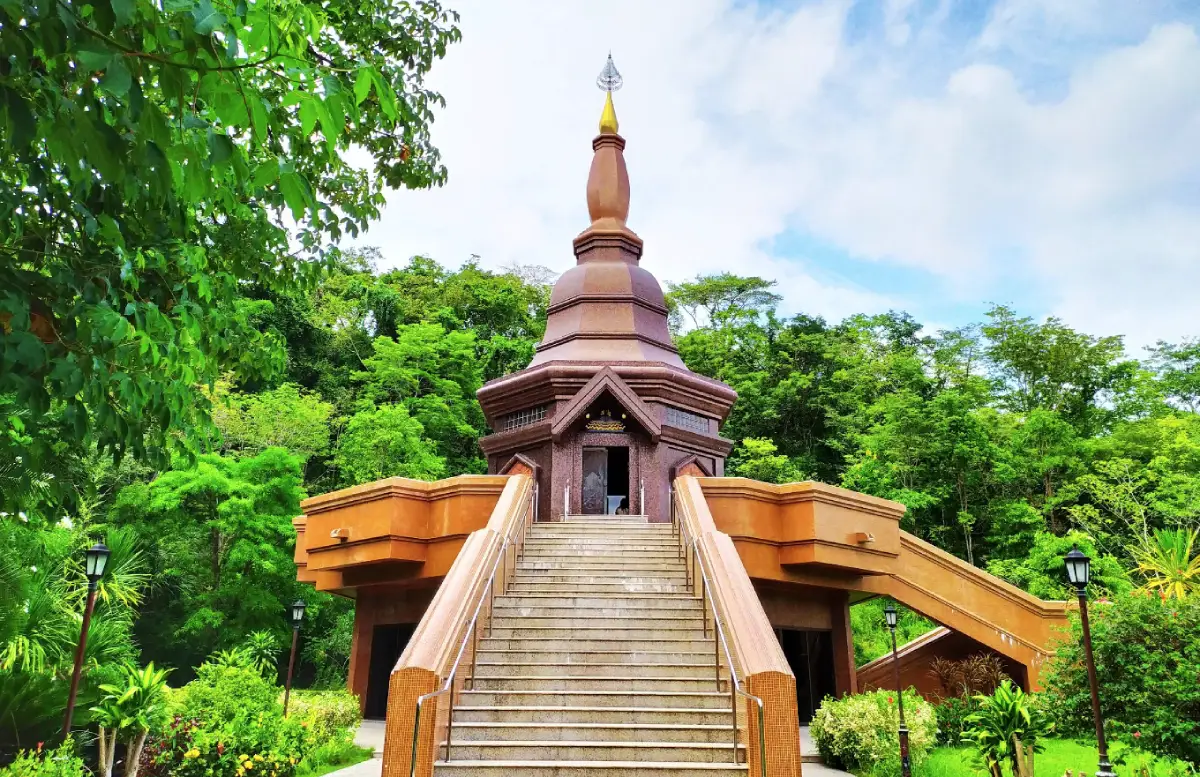
Following Luang Pu La’s death, disciples cooperated in constructing the Khemapatta Chedi to enshrine his ashes and preserve his history. The name derives from his monastic epithet Khemapatto, associated with spiritual security and peaceful liberation. The chedi was completed in 1999, approximately 3 years after his death.
The structure uses an inverted-bell form above an elevated base, rising through progressively reduced sections toward the finial. Bell-shaped stupas have long been used to enshrine relics, the remains of respected teachers and objects worthy of remembrance. The curve of the bell gives the monument a calm and visually stable character.
The Khemapatta Chedi rises more than 22 metres. Its light-toned surfaces and decorative tiles make it visible against the surrounding forest. Restrained color allows the form to remain more important than elaborate surface ornament. Morning and late-afternoon light change the apparent depth and brightness of the structure.
Luang Pu La’s ashes are enshrined within the chedi. Buddhist respect for such remains does not identify the teacher as a god. The relics act as reminders of virtue, effort and the impermanence of the physical body. Pilgrims are therefore encouraged to recollect his conduct and apply the teachings rather than approach the shrine only to request material benefits.
The upper level functions as a museum presenting his biography and religious work. Displays include personal monastic requisites, robes, an alms bowl, documents and other objects connected with his life. Their value lies partly in showing that a meditation monk could live with very few possessions while devoting decades to training and teaching.
A lifelike figure, often described as a wax representation of Luang Pu La, is installed inside the museum. It helps younger generations who never met him visualise the teacher. The figure should be understood as an interpretive memorial rather than an object that must be touched to receive sacred power. Respectful bowing and serious study of his teachings are more appropriate.
Museum visitors should silence phones, avoid flash, never touch display cases or personal objects and refrain from rearranging anything for photographs. Dividing large groups into smaller units prevents congestion and preserves quiet for pilgrims who are paying respect.
The best-known approach is the staircase of approximately 260 steps rising along the mountain slope. Walking the stairs gradually separates the visitor from the everyday environment below. A steady pace is safer than rushing. People with heart conditions, breathing difficulties or knee problems should avoid forcing themselves to complete the staircase.
A longer alternative route allows visitors to avoid the steep stairs. Depending on current road conditions and temple traffic arrangements, vehicles may reach parking areas closer to the upper complex. Drivers should use low gears, reduce speed, avoid blocking narrow sections and watch carefully for descending vehicles, especially during rain or annual ceremonies.
Phu Ko Cho Cave is directly associated with the early meditation history of the site. Visitors should remain quiet, avoid creating echoes, never write on rock surfaces and leave stones and objects in their existing positions. The white stucco Buddha in front of the cave records the cooperation between Phra Ajarn Khao and Ban Waeng villagers.
The landscape includes natural rock formations, trees and steep mountain surfaces. Several areas provide views across agricultural land, villages and surrounding hills. Travelers must remain within safe viewing areas and should not climb rocks without protective railings or enter forest paths reserved for monastic practice.
The principal areas include the entrance and parking zone, 260-step staircase, alternative mountain route, cave and white Buddha, monk residences, ceremonial courtyard, Khemapatta Chedi, upper museum, ash-enchrinement area, meditation grounds and landscape viewpoints. Signs distinguishing public areas from monastic residences must be observed.
The latest published temple information from 2025 identifies Phra Somkhit Suddhacitto as the abbot. The monastery remains active with resident monks and regular Buddhist observances. The abbot’s responsibilities include monastic administration, care of temple property, forest preservation, coordination of the annual Luang Pu La memorial and reception of practitioners.
The temple is open daily from 08:00 to 17:00 and charges no admission fee. Visitors may donate voluntarily toward maintenance of the monastery and Khemapatta Chedi. Anyone intending to see the upper museum should arrive well before closing because access may be coordinated with temple duties and daily security arrangements.
Visitors should dress respectfully, covering shoulders and wearing trousers or skirts of suitable length. Hats should be removed inside the chedi and worship areas. Shoes must be removed where indicated. Feet should not be pointed toward Buddha images, the memorial figure or the enshrined ashes.
Wat Phu Chok Ko remains a meditation monastery. Conversation should be kept to a minimum around the cave, monk residences, practice paths and museum. Monks should not be photographed closely without permission. Anyone wishing to ask for guidance or make an offering should first inquire about an appropriate time.
Exterior photography is possible when paths remain unobstructed and visitors do not climb religious structures. Flash should not be used in the museum. Tripods, professional lighting, drones and commercial filming require prior permission because noise and equipment can disturb meditation and compromise monastic privacy.
Older visitors should consider the alternative mountain route and travel with assistance. Wheelchair access to some upper outdoor areas may be possible by vehicle, but the museum, chedi and different levels remain dependent on actual conditions. Children require close supervision around stairs, steep edges and natural rocks.
Drinking water, suitable footwear and personal medicine should be carried. Slippery sandals are inappropriate for the staircase. Rain creates moss, wet leaves and surface runoff, while the hot season can make the climb physically demanding. Morning and later afternoon are preferable.
November through February is generally the most comfortable season. Mountain mornings can be cool and windy, and a light outer layer is useful during the January memorial. The rainy season creates lush forest scenery but requires greater caution because of rain, mist, slippery roads and reduced visibility.
Getting There from central Nong Sung requires traveling approximately 19 kilometres south toward Nong Sung Tai Subdistrict and Ban Waeng. The final access road climbs Phu Chok Ko for approximately 3 kilometres and contains curves and steep sections. Vehicle brakes, tires and fuel should be checked before the ascent.
From Mukdahan city, follow Highway 12 toward Khamcha-i District and continue toward Nong Sung and Nong Sung Tai. Navigation should use the full destination name, “Wat Banphot Khiri, Phu Chok Ko, Ban Waeng,” because another temple called Wat Phu Chok Ko Noi Prasit Songtham is also located in Nong Sung District.
A private car, rental vehicle or hired driver is the most practical transport because public services to Ban Waeng and the mountain road are limited. Travelers using a hired vehicle should agree on fare, waiting time and return arrangements in advance. Offline maps are useful because mobile reception can vary on rural roads.
A half-day visit can begin in the morning and allocate 2–3 hours for the ascent, Khemapatta Chedi, museum, cave and viewpoints. Lunch can be taken in Nong Sung, followed by a visit to the OTOP Nawatwithi community of Ban Waeng to experience local products and Phu Thai culture.
A full-day route may connect Wat Phu Chok Ko with Wat Tham Chan Khru Phu Hin Tang, Wat Dan Phra In, the Isan Literary Botanical Garden or Wat Pha Phayom. Travelers continuing toward Nikhom Kham Soi can visit the Mukdahan wind-farm viewpoint and Good View Cafe. Organising the route geographically reduces unnecessary driving.
Ban Waeng is associated with Phu Thai culture and has been developed as an OTOP Nawatwithi tourism community. Local products, handicrafts, food and community activities present the daily life of residents. Purchasing directly from villagers distributes travel income more effectively within the area.
Restaurants are dispersed across Nong Sung, Khamcha-i and Nikhom Kham Soi. Nong Sung Beef Steak Restaurant reflects the district’s reputation for cattle products. Good View Cafe and the restaurant at Isaan Country Retreat are practical for travelers continuing toward the wind farm and Nikhom Kham Soi. Groups should telephone in advance.
Nearby accommodation consists largely of small resorts, guesthouses and rural retreats. Noi Khan Tae Resort and Baan Bua Resort are positioned along the connecting district routes. Thai House-Isaan Guesthouse and Isaan Country Retreat provide quieter countryside settings. Rooms should be booked early for the 18–19 January memorial period.
Staying inside a forest monastery is not equivalent to using commercial accommodation. Permission is required, and guests must follow temple schedules, dress respectfully, avoid alcohol and entertainment, and assist with cleanliness. Only essential personal belongings should be brought.
Meditation and walking practice must take place only in permitted areas. Visitors should never enter monk residences or private paths without approval. Beginners can sit quietly, observe breathing and reduce phone use without attempting complex ritual. The fundamental purpose of a meditation monastery is to stop and observe one’s own mind.
The mountain’s silence depends upon everyone’s cooperation. Loud conversation, music, littering, feeding animals and writing on rocks quickly damage the atmosphere. Waste should be carried out or placed in designated containers, and stones, plants and natural materials should remain in the forest.
Fire prevention is essential. Cigarette ends, incense and any hot material must never be discarded in woodland. Incense and candles should be used only in designated places. Forest and mountain are not decorative surroundings; they are part of the seclusion that makes meditation possible.
For students of the Thai Forest Tradition, Wat Phu Chok Ko connects several major teachers, including Luang Pu Mun Bhuridatta, Luang Pu Thes Thesarangsi, Ajahn Fan Acharo, Ajahn Maha Bua Ñanasampanno, Luang Pu Bunmi Chalittho and Luang Pu La Khemapatto. The tradition was transmitted through shared residence, service to teachers, listening to Dhamma and personal practice rather than through isolated reputation.
For architecture enthusiasts, the Khemapatta Chedi illustrates the late-20th-century development of memorial structures for meditation masters. Its inverted-bell form refers to traditional stupa architecture, while the museum interior represents a modern concern with preserving biography, documents and personal objects. The building simultaneously functions as chedi, museum and pilgrimage shrine.
Families can use the visit to discuss simplicity, perseverance and respect. The small number of possessions in the museum demonstrates a life based on reduced personal needs. The staircase also provides an opportunity to teach children to recognise physical limits, rest appropriately and remain with slower companions.
People who are not Buddhist are welcome when they behave respectfully. Participation in all rituals is unnecessary. Removing shoes, remaining quiet and avoiding contact with exhibits are sufficient. The monastery can be understood as part of Thai cultural history and the living heritage of Mukdahan communities.
Respect for Luang Pu La should not be limited to requesting blessings or seeking sacred objects. His reputation rests upon disciplined practice, freedom from attachment to status, gratitude toward teachers and consistency between teaching and conduct. Reading the displays and applying the principle of vigilance gives the pilgrimage greater meaning.
Wat Phu Chok Ko is living religious heritage. Monks continue to reside there, meditation continues, the annual memorial remains active and Ban Waeng villagers participate in its care. Tourism must not displace these primary functions. Some areas may close temporarily for ceremonies, monastic duties or maintenance, and visitors should adjust accordingly.
The temple brings together the history of wandering monks, the cave and white Buddha, Luang Pu La’s biography, the Khemapatta Chedi, personal requisites, forest, rocks and Ban Waeng community life. A visit of at least 2–3 hours provides a deeper understanding than a rapid photograph beside the chedi.
Standing near the Khemapatta Chedi and looking toward the forest reveals the relationship between landscape and forest practice. The mountain demands physical effort, silence makes personal thoughts more noticeable, and the master’s few possessions demonstrate that peace is not necessarily produced by acquiring more, but by reducing what is unnecessary.
Wat Phu Chok Ko is appropriate for pilgrims, students of forest Buddhism, architecture enthusiasts, meditation practitioners and travelers interested in the landscapes of Nong Sung District. A respectful pace, sufficient time and protection of the monastery’s silence allow the visit to become more meaningful than ordinary sightseeing.
| Name | Wat Phu Chok Ko / Wat Banphot Khiri |
| Type | Mountain forest monastery associated with the meditation lineage of Luang Pu Mun Bhuridatta |
| Location | Phu Chok Ko, Ban Waeng, Moo 3, Nong Sung Tai Subdistrict, Nong Sung District, Mukdahan Province, Thailand |
| Address | 211 Moo 3, Ban Waeng, Nong Sung Tai, Nong Sung, Mukdahan 49160, Thailand |
| Map Reference | Plus Code 99FG+27J, Nong Sung Tai, Nong Sung, Mukdahan |
| Formal Establishment | Temple records list its establishment in 1932 and a royal consecrated boundary granted in 1985 |
| Meditation-Site History | An important phase began in 1941 when Phra Ajarn Khao practised at Phu Ko Cho Cave and encouraged Ban Waeng villagers to create a white stucco Buddha |
| Important Meditation Master | Luang Pu La Khemapatto, a forest meditation master in the lineage of Luang Pu Mun Bhuridatta |
| Luang Pu La’s Birth | 14 February 1911 at Ban Kut Sa, Mak Khaeng District, Udon Thani Province |
| Arrival at Phu Chok Ko | Late 1957, after Ban Waeng villagers invited him from the Phu Kao area of Nong Sung District |
| Date of Death | 19 January 1996, aged 84 years and 11 months |
| Khemapatta Chedi | Inverted-bell chedi rising more than 22 metres, completed in 1999 to enshrine Luang Pu La’s ashes |
| Upper Museum | Displays the master’s biography, work, personal monastic requisites, documents and a lifelike wax representation |
| Highlights | Khemapatta Chedi, enshrined ashes, Luang Pu La Museum, monastic requisites, memorial figure, Phu Ko Cho Cave, white Buddha, 260-step staircase, forest and natural rocks |
| Abbot | Phra Somkhit Suddhacitto, according to temple information updated in 2025 |
| Resident Monks | The 2025 Kathin record listed 6 resident monks |
| Main Areas / Zones | 1. Entrance and parking area 2. Mountain staircase with approximately 260 steps 3. Alternative mountain route 4. Phu Ko Cho Cave and white Buddha 5. Khemapatta Chedi and ash-enchrinement area 6. Upper Luang Pu La Museum 7. Ceremonial courtyard 8. Meditation and walking-practice areas 9. Monk residences and restricted monastic zone 10. Forest, rocks and landscape viewpoints |
| Annual Memorial | 18–19 January each year, with 19 January marking the anniversary of Luang Pu La’s death |
| Open Days | Daily |
| Opening Hours | 08:00 – 17:00 |
| Admission Fee | Free admission; voluntary donations for temple and chedi maintenance are welcome |
| Main Staircase | Approximately 260 steep steps; secure footwear is recommended |
| Alternative Access | A longer route avoids the main staircase and may provide vehicle access to upper parking depending on current road conditions |
| Facilities | Parking, staircase, alternative mountain road, rest areas, worship courtyard and museum inside the Khemapatta Chedi |
| From Nong Sung | Travel approximately 19 kilometres south toward Nong Sung Tai and Ban Waeng, then enter the Phu Chok Ko mountain road |
| From Mukdahan City | Follow Highway 12 toward Khamcha-i, continue to Nong Sung and Nong Sung Tai, and proceed to Ban Waeng |
| Recommended Visit Duration | Approximately 2–3 hours, including the climb, chedi, museum, cave and landscape areas |
| Recommended Visiting Time | 08:00–10:30 or 14:30–16:30; November through February is the most comfortable season |
| Contact | Email: banphothkiri.phuchorkor@gmail.com |
| Visitor Etiquette | Dress respectfully, remain quiet, remove shoes where required, avoid flash in the museum, never touch memorial objects, do not enter monk residences without permission and leave rocks and plants in place |
| Nearby Tourist Attractions | 1. Ban Waeng OTOP Nawatwithi Community, approximately 3 km 2. Wat Tham Chan Khru Phu Hin Tang, approximately 4 km 3. Wat Dan Phra In, approximately 6 km 4. Isan Literary Botanical Garden, approximately 9 km 5. Wat Pha Phayom, approximately 24 km 6. Mukdahan Wind-Farm Viewpoint and Good View Cafe, approximately 28 km |
| Nearby Restaurants | 1. Nong Sung Beef Steak Restaurant, approximately 18 km, Tel. 094-894-5048 2. Good View Cafe at Mukdahan Wind Farm, approximately 28 km, Tel. 064-325-5289 3. Isaan Country Retreat Restaurant, approximately 31 km, Tel. 080-250-6096, 095-345-0339 4. Thai House-Isaan Restaurant, approximately 33 km, Tel. 090-843-2970 5. Khak Doe Suan Yang Cafe, Khamcha-i, approximately 38 km, Tel. 096-828-7747 6. Jui Moo Kratha, Khamcha-i, approximately 40 km, Tel. 089-812-1378 |
| Nearby Accommodations | 1. Noi Khan Tae Resort, approximately 15 km, Tel. 085-144-1680, 081-071-2796 2. Baan Bua Resort, Nikhom Kham Soi, approximately 18 km, Tel. 084-921-6027, 042-681-018 3. Thai House-Isaan Guesthouse, approximately 27 km, Tel. 090-843-2970 4. Thantara Pool Villas near the wind farm, approximately 28 km, Tel. 064-325-5289 5. Isaan Country Retreat, approximately 31 km, Tel. 080-250-6096, 095-345-0339 |
Frequently Asked Questions (FAQ)
Q: Are Wat Phu Chok Ko and Wat Banphot Khiri the same temple?
A: Yes. Wat Banphot Khiri is the official name, while Wat Phu Chok Ko is the name commonly used by local residents after the mountain on which the temple stands.
Q: Where is Wat Phu Chok Ko located?
A: The temple is on Phu Chok Ko at Ban Waeng, Moo 3, Nong Sung Tai Subdistrict, Nong Sung District, Mukdahan Province, approximately 19 kilometres south of central Nong Sung.
Q: What are the opening hours and admission fee?
A: The temple is open daily from 08:00 to 17:00. Admission is free, and voluntary donations toward maintenance of the monastery and Khemapatta Chedi are welcome.
Q: How many steps lead up to the temple?
A: The main mountain staircase has approximately 260 steps. Visitors who cannot manage the stairs can use a longer alternative route that may provide vehicle access to the upper parking area, depending on road conditions.
Q: Why is the Khemapatta Chedi important?
A: The inverted-bell chedi rises more than 22 metres and was completed in 1999 to enshrine the ashes of Luang Pu La Khemapatto. Its upper level contains a museum with his biography, monastic requisites and memorial figure.
Q: When did Luang Pu La begin living at Phu Chok Ko?
A: He moved to Phu Chok Ko in late 1957 after Ban Waeng villagers invited him from the Phu Kao area. He developed the monastery and taught practitioners there for the remainder of his life.
Q: When is the annual Luang Pu La memorial?
A: The memorial is held on 18–19 January each year. The second day marks the anniversary of Luang Pu La’s death, and visitors should confirm the annual schedule and parking arrangements before attending.
Q: How long should travelers allow for a visit?
A: Allow approximately 2–3 hours for the mountain ascent, Khemapatta Chedi, museum, cave and landscape areas without rushing.
 Category: ●Places of Worship
 Group: ●Temple
Last Update : 2 MonthAgo
 Last Update : 2 MonthAgo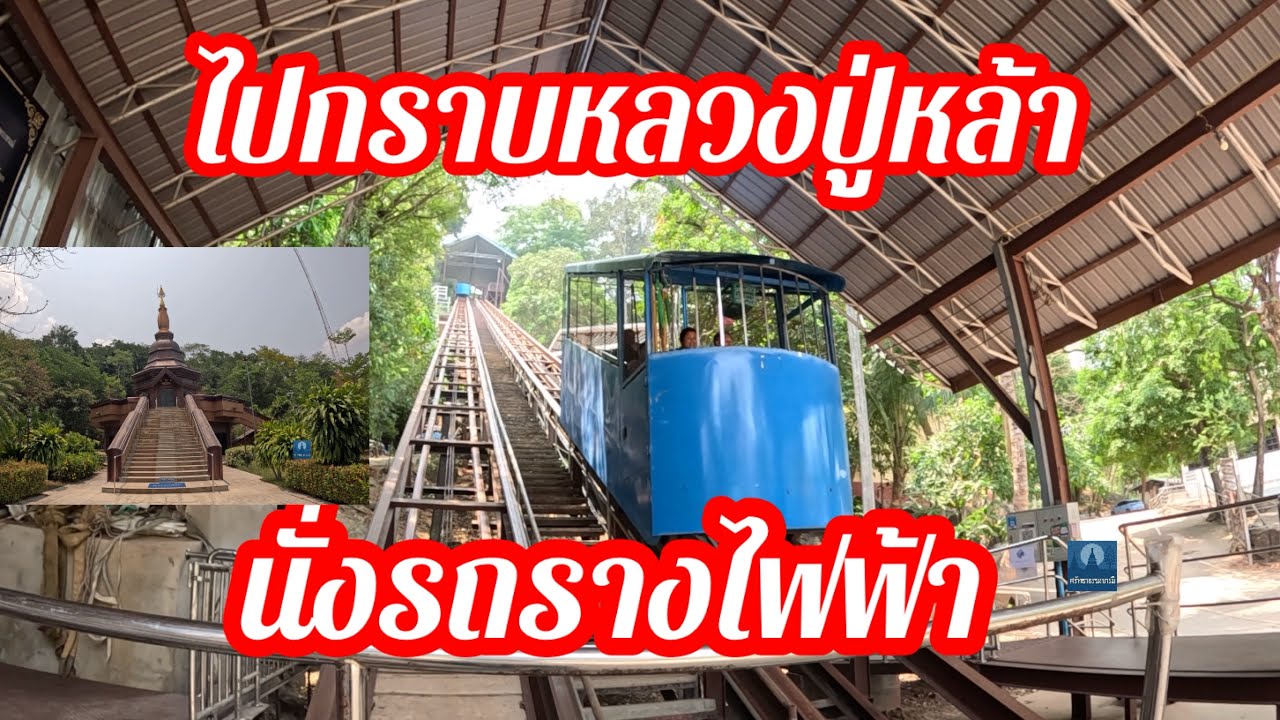
 Click to Access the Navigation Map GPS
Wat Phu Chok Ko (Wat Banphot Kiri) Map
Recommend

 Art, Culture and Heritage
 Historical Sites and Monuments(2)
 Landmarks and Memorials(3)
 Art, Craft Centres, Tradition(2)
 Museums(1)
Temple(17)
Museums(1)
Temple(17)
 Other Sacred Sites(3)
 Suburban Living
 Village, Community(4)
 Local Market(2)
 Nature and Wildlife
 National Parks and Marine Reserves(4)
 Mountain (Doi)(5)
 Dam, Reservoir, Lake(3)
 Waterfalls(5)
 Caves(2)
 River, Canal(2)
 Bays and Beaches(1)
 Other natural attractions(1)
 Entertainment and Agricultural
 Farms, Parks and Ecotourism(1)


