
lovethailand home >Northeastern Travel Attractions >Buri Ram Travel Attractions >Chaloem Phrakiat >Charoen Suk > Khao Angkhan Temple (Wat Khao Angkhan)
TL;DR: Khao Angkhan Temple (Wat Khao Angkhan) is located at Ban Charoen Suk, Charoen Suk Subdistrict, Chaloem Phra Kiat District, Buri Ram Province, open Daily, hours 08.00 – 18.00.
Khao Angkhan Temple (Wat Khao Angkhan)
Open Days: Daily
Opening Hours: 08.00 – 18.00
Wat Khao Angkhan, also known as Wat Khao Phra Angkhan, is a remarkable Buddhist temple in Ban Charoen Suk, Charoen Suk Subdistrict, Chaloem Phra Kiat District, Buri Ram Province. It stands on Khao Angkhan, an extinct volcano near Phanom Rung Historical Park. The temple is known for its unusual red-brick-style ordination hall, Dvaravati-period boundary stones, Buddhist murals with English descriptions, rows of seated Buddha images, a large reclining Buddha, and a powerful combination of Buddhist faith, ancient art, local legend, and volcanic landscape.
Wat Khao Angkhan is one of the most distinctive cultural and spiritual attractions in Buri Ram Province. Located on Khao Angkhan, an extinct volcano in Ban Charoen Suk, Charoen Suk Subdistrict, Chaloem Phra Kiat District, the temple is often visited together with Phanom Rung Historical Park and Prasat Muang Tam. What makes this temple memorable is not only its striking architecture, but also the way it brings together Buddhist devotion, archaeology, local legend, ancient boundary stones, and the geological story of a volcano that has long fallen silent.
Khao Angkhan is an ancient volcanic hill formed from basaltic lava. The mountain rises from the surrounding plain and preserves visible traces of volcanic activity, including lava dome formations and collapsed crater features. For travelers, this natural setting gives the temple a special atmosphere. Unlike temples located in towns or flat lowlands, Wat Khao Angkhan feels rooted in the earth itself. The road gradually rises toward the temple, and by the time visitors arrive, the sense of entering a sacred hilltop space is already clear.
The temple area is important because archaeological evidence suggests that this hilltop was used as a sacred Buddhist site long before the present temple buildings were constructed. The most significant evidence is the group of basalt boundary stones, known in Thai as bai sema. These stones belong to the Dvaravati cultural period and are decorated with carved images of human figures, stupas, lotus motifs, dharma wheels, and other Buddhist symbols. Some carvings also show influence from early Khmer art, making the site especially valuable for understanding the cultural connections of the lower northeastern region of Thailand.
Boundary stones in Buddhist tradition were used to mark sacred ritual space. Their presence on a mountain is particularly meaningful because it suggests that Khao Angkhan was regarded as a sacred landscape, not simply a natural hill. In many ancient cultures, mountains were seen as powerful places between the earthly and spiritual worlds. At Wat Khao Angkhan, visitors can still feel this layered meaning: the mountain, the boundary stones, the Buddhist images, and the present-day temple all occupy the same sacred terrain.
Local legend adds another dimension to the site. The name Khao Phra Angkhan is connected with the belief that the Buddha’s ashes, or phra angkhanthat, were once enshrined on this mountain. Whether approached as legend, faith, or local memory, the story gives the temple deep emotional significance for Buddhist visitors. Many people come not only to see architecture and ancient stones, but also to pay respect, make merit, and experience the calm atmosphere of a place associated with sacred relic tradition.
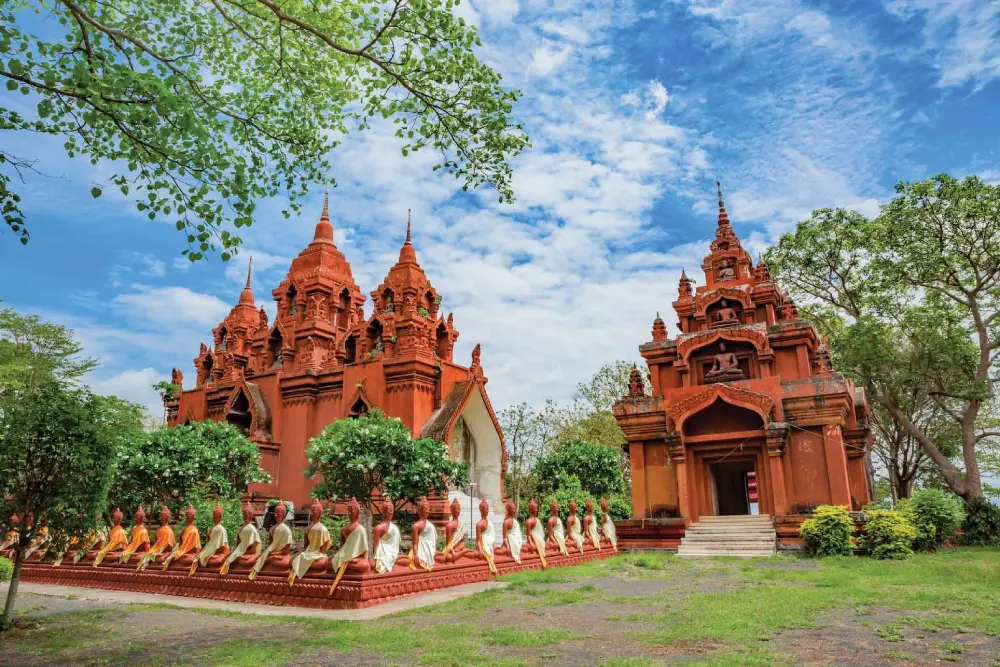
The main ordination hall is the architectural highlight of the temple. Built in a striking red-brick tone, the hall combines multiple artistic influences, including Thai, Khmer-inspired, and other Buddhist architectural elements. Its form is unusual and visually powerful. From the outside, the building looks both ancient and contemporary, as if it has grown out of the volcanic hill itself. Decorative details, arches, Buddha images, and the reddish surfaces create a strong identity that makes Wat Khao Angkhan one of the most photogenic temples in Buri Ram.
Inside the ordination hall, visitors can see mural paintings telling stories from Buddhist literature and the Jataka tales. One of the most traveler-friendly features is the presence of English descriptions beside the murals. This makes the temple more accessible to foreign visitors who may not be familiar with Thai Buddhist stories. Instead of simply admiring the colors and forms, international travelers can follow the meaning behind the paintings and better understand the moral lessons, symbolism, and narrative structure of Buddhist art.
Around the ordination hall are rows of seated Buddha images. Their repeated forms create a calm and rhythmic visual experience, surrounding the temple building with an atmosphere of devotion. Many visitors walk slowly around the hall, paying respect, taking photographs, and observing the architectural details. This area is one of the best places to feel the quiet spiritual character of the temple. It is also a useful spot for travelers who want to take photographs while still respecting the sacred environment.
Another major highlight is the large reclining Buddha located in the temple grounds. The reclining posture represents serenity, release, and the final stage of the Buddha’s life in Buddhist tradition. At Wat Khao Angkhan, the reclining Buddha is one of the first important sacred images that many visitors notice after arriving. It is a popular place for worship, prayer, and photography, but visitors should always behave respectfully, keep their voices low, and avoid inappropriate poses near sacred images.
Other important areas within the temple include the replica Buddha footprint, Naga-protected Buddha images, sacred pavilions, areas associated with the ancient boundary stones, and rest areas for visitors. Together, these features make the temple more than a quick photo stop. It is a layered cultural site where travelers can learn about Thai Buddhism, Dvaravati art, local legend, Khmer artistic influence, and the volcanic landscape of Buri Ram.
Wat Khao Angkhan is especially suitable for travelers who enjoy cultural routes. It can be combined with Phanom Rung Historical Park, Prasat Muang Tam, Ban Khok Mueang ancient community, and other attractions in southern Buri Ram. Phanom Rung presents the grandeur of Khmer-Hindu architecture, while Wat Khao Angkhan reveals Buddhist sacred space on an ancient volcano. Visiting both places in the same trip gives travelers a much deeper understanding of the religious and cultural landscape of the region.
Getting There is easiest by private car, rental car, or a car with driver. From Buri Ram city, take the Buri Ram – Nang Rong – Ban Tako – Ban Ta Pek route, which is also the route toward Phanom Rung Historical Park. After reaching Ban Ta Pek, turn right toward Lahan Sai District for about 13 km, then turn right again at the junction leading to Wat Khao Angkhan for about 7 km. The temple is about 20 km from Phanom Rung Historical Park. The final road climbs toward the hill, so travelers should drive carefully, especially during rain or after heavy rainfall.
For visitors staying in Nang Rong, the temple can be visited as part of a one-day route covering Phanom Rung, Wat Khao Angkhan, and Prasat Muang Tam. Starting early in the morning is recommended because the weather is cooler and there is enough time to explore each site without rushing. Late afternoon is also a beautiful time to visit the temple because the warm light enhances the red color of the buildings and makes the hilltop atmosphere more dramatic.
Temple etiquette is important. Visitors should dress modestly, covering shoulders and knees, and remove shoes before entering religious buildings. They should avoid touching ancient stones or climbing on religious structures. Photography is usually possible in outdoor areas, but it should be done respectfully. Inside the ordination hall, visitors should be quiet and avoid disturbing people who are praying or meditating.
For families and students, Wat Khao Angkhan is an excellent educational stop. The site connects several subjects: geography through its volcanic origin, history through Dvaravati boundary stones, art through Buddhist murals and architecture, religion through sacred images and legends, and English learning through mural descriptions. This makes the temple useful not only for tourism, but also for cultural education.
Travelers should bring drinking water, sun protection, and comfortable footwear. Some areas are exposed to sunlight, and the temple grounds require walking between different points of interest. Shoes that are easy to remove are helpful because visitors need to take them off before entering sacred buildings. Those traveling with elderly visitors should allow extra time and choose parking areas that reduce unnecessary walking.
In summary, Wat Khao Angkhan is one of Buri Ram’s most meaningful temples for travelers seeking more than a standard sightseeing stop. It offers ancient boundary stones, Buddhist murals, distinctive architecture, sacred images, a large reclining Buddha, and a dramatic volcanic setting. For anyone visiting Phanom Rung Historical Park, adding Wat Khao Angkhan to the itinerary creates a richer and more complete journey through the spiritual, artistic, and geological heritage of southern Isan.
| Name | Wat Khao Angkhan / Wat Khao Phra Angkhan |
| Location | Ban Charoen Suk, Charoen Suk Subdistrict, Chaloem Phra Kiat District, Buri Ram Province |
| Address | Charoen Suk Subdistrict, Chaloem Phra Kiat District, Buri Ram Province 31170, Thailand |
| Coordinates | 14.43490, 102.28303 |
| Highlights | A hilltop temple on an extinct volcano, featuring a red-toned ordination hall, Dvaravati boundary stones, Buddhist murals with English descriptions, rows of Buddha images, and a large reclining Buddha |
| History | The Khao Angkhan area preserves evidence of an ancient Buddhist sacred site through Dvaravati-period boundary stones dating roughly from the 12th – 16th Buddhist centuries, later developed into the present temple on the extinct volcanic hill |
| Name Origin | The name Khao Phra Angkhan is associated with the local legend of the Buddha’s ashes and the belief in the mountain as a sacred Buddhist landscape |
| Distinctive Features | Located on an extinct basaltic volcano with ancient boundary stones, distinctive temple architecture, sacred Buddha images, and views of the surrounding landscape |
| Main Areas / Zones | 1. Ordination Hall Zone 2. Dvaravati Boundary Stone Zone 3. Seated Buddha Image Zone Around The Hall 4. Large Reclining Buddha Zone 5. Buddhist Mural Zone Inside The Ordination Hall 6. Replica Buddha Footprint And Sacred Image Zone |
| Abbot / Caretaker | Phra Khru Phanom Thammaphinan |
| Current Status | Active Buddhist temple under the Maha Nikaya order and a major cultural, historical, and spiritual attraction in Buri Ram Province |
| Open Days | Daily |
| Opening Hours | 08.00 – 18.00 |
| Fees | No Admission Fee |
| Facilities | Parking area, worship areas, pavilions, rest areas, toilets, and walking areas around the temple |
| Main Contact Number | 093-529-5671 |
| Travel Information | From Buri Ram, take the Buri Ram – Nang Rong – Ban Tako – Ban Ta Pek route toward Phanom Rung. At Ban Ta Pek, turn right toward Lahan Sai for about 13 km, then turn right again for about 7 km to Wat Khao Angkhan. |
| Nearby Tourist Attractions | 1. Phanom Rung Historical Park, about 20 km 2. Prasat Muang Tam, about 28 km 3. Ban Khok Mueang Ancient Community, about 29 km 4. Kuti Ruesi Nong Bua Rai, about 24 km 5. Lam Nang Rong Dam, about 38 km |
| Nearby Restaurants | 1. Krua Anong Phanom Rung, about 20 km, Tel. 08-9945-8089, 08-9847-6539 2. Som Tam Krua Warin Phanom Rung, about 20 km 3. Kai Yang Suan Saeng Sawang Near Phanom Rung, about 29 km, Tel. 087-421-6170 4. Jing Nam Kha Mu Nang Rong, about 39 km, Tel. 044-631-473, 081-790-4808 5. Laksana Kha Mu Branch 2 Nang Rong, about 39 km, Tel. 044-631-319 |
| Nearby Accommodations | 1. Phanomrung Hostel & Linn Chan Cafe, about 21 km, Tel. 061-539-4965 2. Phanomrungpuri Hotel Nang Rong, about 40 km, Tel. 044-632-222, 086-336-6618 3. Socool Grand Hotel Nang Rong, about 39 km, Tel. 044-632-333, 080-488-1888 4. Nang Rong Hotel, about 40 km, Tel. 044-631-014 5. Hotel de l’amour Buriram, about 42 km, Tel. 044-651-555, 098-102-7809 |
Frequently Asked Questions (FAQ)
Q: Where is Wat Khao Angkhan located?
A: Wat Khao Angkhan is located in Ban Charoen Suk, Charoen Suk Subdistrict, Chaloem Phra Kiat District, Buri Ram Province, on the extinct volcanic hill known as Khao Angkhan.
Q: What is Wat Khao Angkhan famous for?
A: The temple is famous for its unusual red-toned ordination hall, Dvaravati boundary stones, Buddhist murals with English descriptions, rows of seated Buddha images, and a large reclining Buddha.
Q: Is Wat Khao Angkhan located on a volcano?
A: Yes. The temple stands on Khao Angkhan, an extinct basaltic volcano with ancient geological features and a sacred hilltop landscape.
Q: Why are the boundary stones at Wat Khao Angkhan important?
A: The boundary stones are important archaeological evidence of an ancient Buddhist sacred site from the Dvaravati period. They are carved with Buddhist symbols such as human figures, stupas, lotus motifs, and dharma wheels.
Q: What are the opening hours of Wat Khao Angkhan?
A: The temple is open daily from 08.00 to 18.00.
Q: Is there an admission fee at Wat Khao Angkhan?
A: No. There is no admission fee, but visitors may make donations according to their faith.
Q: Who is the abbot of Wat Khao Angkhan?
A: The abbot is Phra Khru Phanom Thammaphinan.
Q: What attractions can be visited near Wat Khao Angkhan?
A: Nearby attractions include Phanom Rung Historical Park, Prasat Muang Tam, Ban Khok Mueang Ancient Community, Kuti Ruesi Nong Bua Rai, and Lam Nang Rong Dam.
 Category: ●Places of Worship
 Group: ●Temple
Last Update : 3 MonthAgo
 Last Update : 3 MonthAgo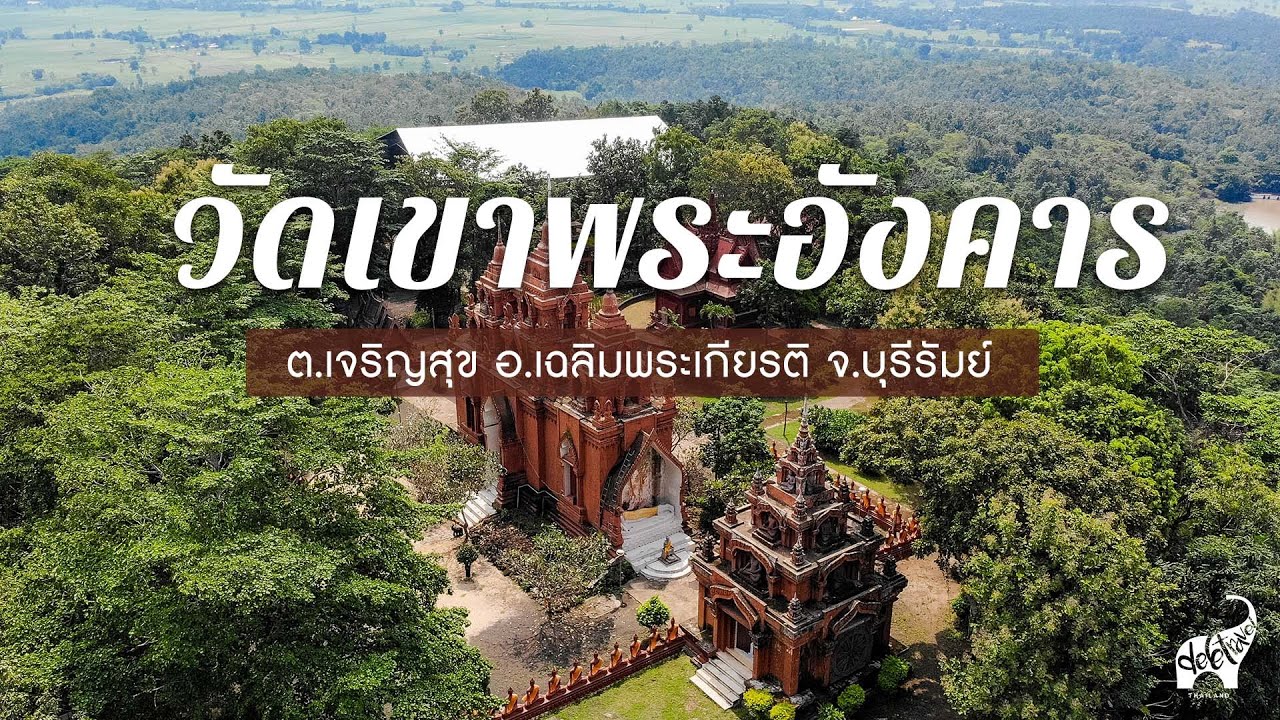
 Click to Access the Navigation Map GPS
Khao Angkhan Temple (Wat Khao Angkhan) Map
Recommend

 Art, Culture and Heritage
 Historical Sites and Monuments(14)
 Landmarks and Memorials(2)
 Art, Craft Centres, Tradition(6)
 Museums(3)
 Educational Places
 Museum for Study(1)
Temple(74)
Museum for Study(1)
Temple(74)
 Other Sacred Sites(5)
 Suburban Living
 Village, Community(3)
 Nature and Wildlife
 National Parks and Marine Reserves(2)
 Mountain (Doi)(1)
 Dam, Reservoir, Lake(14)
 River, Canal(1)
 Bays and Beaches(1)
 Other natural attractions(2)
 Entertainment and Agricultural
 Animal camps and shows(1)
 Stadium(2)
 Farms, Parks and Ecotourism(2)
 Waterpark(1)


