
lovethailand home >Central Travel Attractions >Pathum Thani Travel Attractions >Klong Luang >Khlong Hok > Rajamangala University of Technology Thanyaburi
TL;DR: Rajamangala University of Technology Thanyaburi, open Monday – Friday (Administrative Office Services), hours 08:30 – 16:30. (มหาวิทยาลัยเทคโนโลยีราชมงคลธัญบุรี), commonly known as RMUTT, is a public university specializing in professional higher education.
Rajamangala University of Technology Thanyaburi
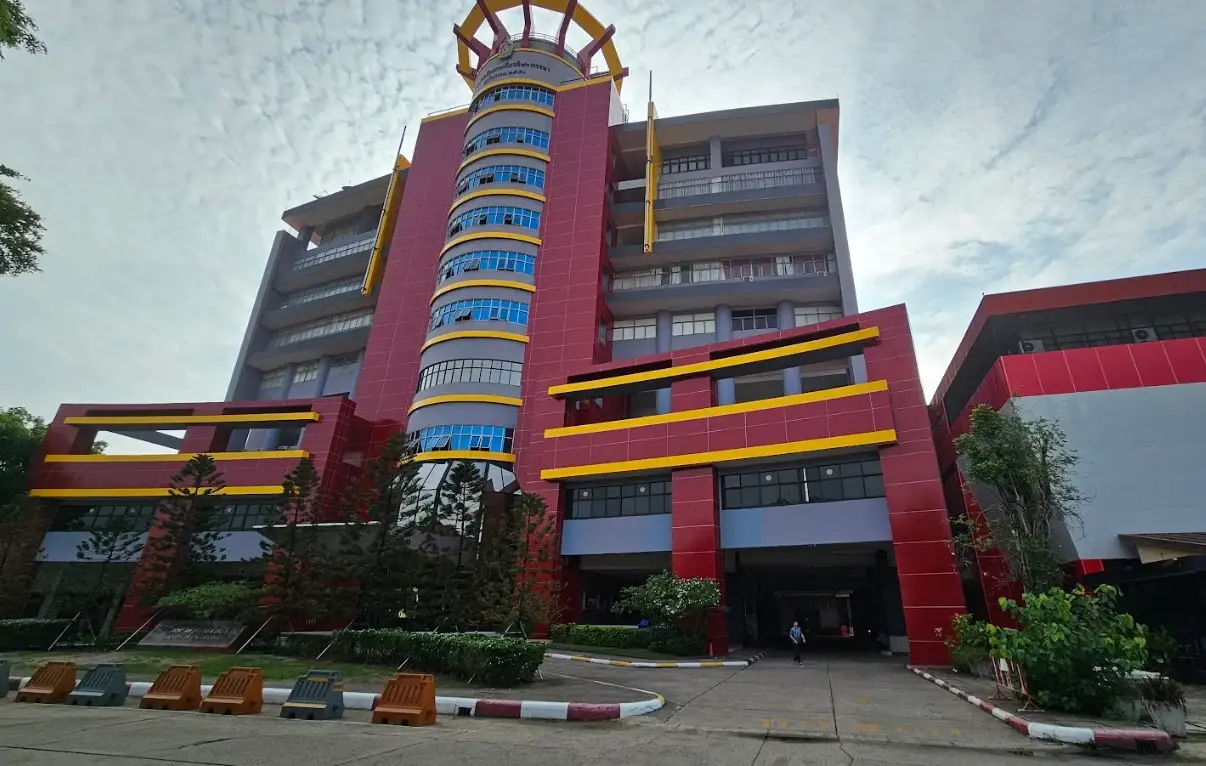
Open Days: Monday – Friday (Administrative Office Services)
Opening Hours: 08:30 – 16:30
Rajamangala University of Technology Thanyaburi (มหาวิทยาลัยเทคโนโลยีราชมงคลธัญบุรี), commonly known as RMUTT, is a public university specializing in professional higher education, applied science, technology, and innovation. Its principal campus is located at 39 Moo 1, Rangsit–Nakhon Nayok Road, Khlong Hok, Khlong Luang District, Pathum Thani Province, Thailand. The university traces its institutional origins to the College of Technology and Vocational Education, established on February 27, 1975. The institution subsequently became the Rajamangala Institute of Technology before Rajamangala University of Technology Thanyaburi was legally established on January 18, 2005. Today, RMUTT provides education at both its Khlong 6 campus and its separate Rangsit Center. Its academic disciplines include engineering, technical education, business administration, science, agricultural technology, home economics, mass communication technology, fine arts, architecture, liberal arts, integrative medicine, and nursing. The university is particularly recognized for its commitment to practical professional education and the application of research and innovation to industrial and community needs.
The university occupies an important position in the history of Thai higher education because its origins are closely related to the movement to expand degree-level opportunities for vocational students. Rather than beginning as an entirely new institution created on an undeveloped campus, it emerged from efforts to reform professional education so that vocational learners could gain qualifications comparable to those available through general academic education. This history remains central to RMUTT's identity and its emphasis on producing graduates equipped with both theoretical knowledge and practical skills.
The principal campus is situated in the Khlong 6 area of Pathum Thani, a region historically associated with farming communities, irrigation canals, and agricultural development across the Rangsit plain. The area was once dominated by rice fields and rural settlements before the expansion of Rangsit–Nakhon Nayok Road, industrial development, educational institutions, and residential neighborhoods transformed its character. Establishing a major technology-focused educational center here helped connect the region's agricultural heritage with modern professional education and industrial growth.
The campus extends across a large landscaped area containing academic buildings, administrative offices, laboratories, an auditorium, sports facilities, student residences, gardens, ponds, and open spaces. These facilities accommodate different forms of learning, from lectures and scientific experiments to engineering practice, artistic production, and student activities. Lotus imagery appears prominently throughout the university's landscape, particularly in sculptures, institutional symbols, and architectural features associated with the development of knowledge and wisdom.
Understanding the university's history requires examining the structure of Thai vocational education before 1975. At that time, many students pursuing vocational qualifications faced limited opportunities to continue their studies at degree level. The educational system often separated professional training from university pathways, creating an imbalance in the opportunities available to different groups of learners. On January 9, 1974, students from several vocational institutions joined together to request reforms from the Ministry of Education that would allow professional education to extend to degree level.
The movement contributed to changes in educational policy and the establishment of the College of Technology and Vocational Education on February 27, 1975, under the College of Technology and Vocational Education Act B.E. 2518. The new institution was tasked with providing vocational teacher education, professional studies at different qualification levels, technological research, and academic services to society. This development created a more structured path from vocational training into higher education and helped establish the foundations of the modern Rajamangala university system.
In its early years, the College of Technology and Vocational Education did not possess a central degree-level campus where its faculties could operate together. Teaching activities were distributed among several institutions, while administrative coordination was conducted through limited facilities at the Thewet campus in Bangkok. This arrangement created practical difficulties involving administration, the shared use of educational resources, communication among faculties, and the development of new infrastructure. The institution consequently sought a larger site where its higher education activities could be brought together.
One of the important administrators during the early period was Sawasdi Chaiyakuna, who was appointed acting rector on March 28, 1976, and later received a royal appointment as rector on June 12, 1980. The institution's early leadership was responsible for developing a national system of degree-level professional education while coordinating teaching activities across geographically separated locations.
In 1984, during the administration of Professor Anan Kruakaew, the college received an allocation of government land from the Treasury Department for the development of a central degree-level educational campus in Pathum Thani. The land included areas along western Khlong 6 and the northern side of Khlong Rangsit, with a combined area of approximately 720 rai. Obtaining this land was a major turning point because it made it possible to plan an integrated campus with adequate room for teaching buildings, laboratories, administration, and future expansion.
The development of the site was complicated by the presence of local residents and farming families who had long used the land. College representatives and lecturers undertook a series of discussions with community leaders and affected households to explain the plans and seek cooperation. The negotiations continued for more than a year before the institution could proceed with substantial site preparation. This period demonstrates that the development of the university was closely linked to the surrounding agricultural community and the wider transformation of the landscape.
Construction of the central educational campus began in earnest during the 1987 fiscal year. Work included preparing the land, developing internal roads, installing utility systems, and building academic facilities. Because the site was situated in a low-lying agricultural region closely connected with irrigation canals, the project had to consider drainage and the physical characteristics of the landscape. The transformation of farmland into an educational campus was therefore a substantial infrastructure undertaking.
June 7, 1988, became an important date in the institution's history when Princess Maha Chakri Sirindhorn, representing King Bhumibol Adulyadej, presided over the foundation stone laying ceremony for the College of Technology and Vocational Education's central degree-level campus at Khlong 6. The ceremony marked the formal development of the site that would later become the main campus of Rajamangala University of Technology Thanyaburi.
During the same occasion, Princess Maha Chakri Sirindhorn planted a Suwan Lotus tree in the area now known as Anan Rangsan Plaza, near the university's symbolic sculpture. This event later became closely associated with the university's identity. The Suwan Lotus was designated the official university tree in remembrance of the royal occasion and as a symbol of the cultivation of wisdom.
On September 15, 1988, King Bhumibol Adulyadej graciously bestowed the name Rajamangala Institute of Technology upon the College of Technology and Vocational Education. The royal name carries the meaning of a technological institution blessed by the monarchy. It subsequently became the shared historical identity of the Rajamangala institutions. September 15 remains a significant commemorative day for university personnel, students, and graduates, reflecting the importance of the royally bestowed name.
The transformation into the Rajamangala Institute of Technology strengthened the institution's identity as a major provider of technological and professional higher education. Practical learning remained a central priority, while its academic disciplines expanded through engineering, technical education, business administration, fine arts, science, and other applied professional fields. The institution sought to develop graduates capable of working effectively in technical and professional environments.
Further educational reform followed the National Education Act of 1999. Changes to the higher education system created a framework for reorganizing the Rajamangala Institute of Technology into separate universities. Under the Rajamangala University of Technology Act B.E. 2548 (2005), nine Rajamangala universities of technology were established, including Rajamangala University of Technology Thanyaburi. The university recognizes January 18, 2005, as its foundation date under this new legal status.
The university's historical timeline therefore includes several distinct milestones: the creation of the College of Technology and Vocational Education in 1975, the allocation of land for the central campus in 1984, the foundation stone ceremony and royal naming in 1988, and the establishment of RMUTT as a university in 2005. These dates should not be confused with one another. The year 1975 marks the origins of its predecessor institution, while 2005 marks the formal establishment of the present university.
As of 2026, the rector of Rajamangala University of Technology Thanyaburi is Associate Professor Dr. Sommai Piwsa-ad, who received a royal appointment for another term effective June 2, 2025. The university's contemporary administrative priorities include educational quality, personnel development, research, innovation, and cooperation with public and private organizations. These areas are essential to preparing graduates and institutions for changes in technology, industry, and the wider economy.
The university emblem incorporates a circular arrangement of eight lotus petals, symbolizing the Noble Eightfold Path and the cultivation of wisdom. Its design includes the royal insignia of King Rama IX, a royal crown, and the number nine. The emblem expresses pride in the Rajamangala name and the connection between academic development, ethical principles, and the university's royal historical associations.
The official university color is Royal Blue, a deep shade of blue identified by the university as color code #162B75. It is used in institutional communications and design materials, helping create a recognizable visual identity for students, personnel, and alumni.
The university's designated tree is the Suwan Lotus, scientifically known as Gustavia gracillima. It is a flowering shrub or small tree with attractive pink blossoms. Its significance is tied to the royal foundation stone ceremony in 1988, when Princess Maha Chakri Sirindhorn planted a tree at the new campus. The species subsequently became an enduring symbol of the university's history and the growth of knowledge.
A prominent golden lotus sculpture is another important feature of the campus. Its ascending and overlapping forms express perseverance, learning, and the gradual achievement of knowledge. The lotus also appears in the university emblem and the architectural design of its Buddhist shrine, creating a common symbolic language throughout the campus.
The Phra Phuttha Phiriyamongkhon Shrine is an important religious and architectural landmark. It houses Phra Phuttha Phiriyamongkhon, the university's principal Buddha image, cast in a traditional nine-metal alloy with a lap width of 45 inches. Designed by Bamrungsak Kongsuk, the Buddha image incorporates concepts of mindfulness, concentration, and wisdom. The upper part of the image recalls a lotus bud, while its artistic characteristics draw inspiration from the Chiang Saen tradition and Indian Gupta art.
The shrine was designed around the Buddhist concept of cultivating wisdom through perseverance. Lotus forms and other architectural elements represent the development of understanding through successive stages. The structure combines traditional Thai architectural features with a carefully conceived symbolic composition. The surrounding grounds serve as a quiet setting for religious observance and reflection by members of the university community.
The Lotus Museum is among the most distinctive educational attractions at Rajamangala University of Technology Thanyaburi. Established in 2000, it developed as a plant-conservation project associated with a royal initiative. In 2003, the museum joined the Plant Genetic Conservation Project under the royal initiative of Princess Maha Chakri Sirindhorn. Its responsibilities include collecting, conserving, cultivating, and researching lotus varieties while increasing public awareness of the importance of preserving plant genetic resources.
The museum initially collected approximately 40 lotus varieties and later expanded to more than 100 varieties, according to its institutional history. Its collection includes sacred lotus, tropical water lilies, hardy water lilies, Victoria water lilies, and rare Thai varieties. The museum occupies approximately 18 rai and functions as a living collection, a botanical learning space, and a center for research and conservation.
What makes the Lotus Museum especially interesting is the opportunity to observe the diversity of plants commonly grouped under the Thai word bua, or lotus. Species and varieties differ in leaf size, flower structure, flowering habits, and growth conditions. Some develop large floating leaves, while others produce flowers above the water surface. The collection introduces visitors to aquatic botany, plant classification, ecological relationships, and the preservation of valuable biological resources.
The Lotus Museum is located inside the main campus near Gate 2. Its published visiting hours are Monday through Friday from 08:30 to 16:30, excluding weekends and public holidays. Visitors interested in detailed botanical information or group study tours should contact the museum in advance to arrange an appropriate visit.
The RMUTT Hall of Fame is another important institutional learning resource. Located within the university's administrative complex, it preserves information about the university's history, achievements, and institutional development. Admission is restricted to authorized visitors, so arrangements must be made with the responsible department. The Hall of Fame is valuable for understanding the transformation from the College of Technology and Vocational Education into the modern university.
The Rajamangala Thanyaburi Art Gallery, situated within the Faculty of Fine and Applied Arts, supports artistic exhibitions and cultural learning. The gallery provides opportunities to encounter creative work and academic activities connected with fine arts and design. Its published service hours are Monday through Friday from 08:30 to 16:30, excluding public holidays. Exhibition schedules and access arrangements should be checked with the faculty.
The Office of Academic Resources and Information Technology provides important facilities for teaching and research. Its library and information technology building offers academic resources, spaces for independent study, digital information services, and research databases. These services help students strengthen their ability to locate, evaluate, and use information beyond the content taught in classrooms and laboratories.
Rajamangala Auditorium and Anan Rangsan Plaza are important locations for institutional ceremonies and community activities. The landscaped plaza connects the university's lotus imagery with its historical and ceremonial identity. It is therefore relevant not only as an open space but also as a setting associated with significant events in the development of the university.
RMUTT operates through 12 faculties across its Khlong 6 campus and Rangsit Center. The engineering and science faculties emphasize technical competence and research, while the faculties of business, communication, arts, architecture, and liberal arts connect professional knowledge with economic, cultural, and social applications. The Faculty of Technical Education prepares professionals capable of teaching and training in technological subjects, while the faculties of Integrative Medicine and Nursing contribute to health-related education.
The Faculty of Engineering has a long history tracing its origins to the Faculty of Engineering Technology in 1975. It adopted the name Faculty of Engineering in 1994. Its disciplines include civil engineering, electrical engineering, mechanical engineering, industrial engineering, computer engineering, chemical engineering, materials engineering, and specialized fields associated with food, agriculture, irrigation, and water management. Teaching emphasizes technical laboratories and equipment that help students apply engineering theory to practical problems.
The Faculty of Technical Education is important for preparing vocational teachers and specialists who can transfer technological knowledge within educational and industrial settings. Its fields cover mechanical, electrical, industrial, and computer engineering, manufacturing technology, and educational technology. The faculty combines technical expertise with teaching methods and the development of instructional systems and materials.
The Faculty of Science and Technology provides education in mathematics, statistics, computer science, data analysis, chemistry, biology, physics, and food-related sciences. The increasing use of large-scale data systems, digital technology, and automation makes these fields especially relevant to modern industry and scientific research. Students develop analytical skills and learn methods that can be applied across technical and professional environments.
The Faculty of Business Administration prepares students in areas such as marketing, management, finance, international business, accountancy, and logistics. These fields are essential to the operation of contemporary organizations, particularly those integrating digital technology into business processes. Business education also supports students interested in entrepreneurship and the creation of new enterprises.
The Faculty of Mass Communication Technology combines communication studies with the technologies used to produce and distribute media. Its fields include photography and filmmaking, digital printing and packaging, broadcasting, multimedia, advertising and public relations, and digital media. Changes in online platforms and audience behavior have increased the importance of professionals who can create content and communicate effectively through contemporary media.
The Faculty of Fine and Applied Arts provides education in painting, Thai art, visual arts, art education, communication design, product design, interior design, fashion, dance, and music. The faculty demonstrates that the university's emphasis on applied professional education extends beyond engineering and industrial technology to creative and cultural professions. Its teaching connects artistic skills with design processes and the practical production of creative work.
The Faculty of Home Economics Technology supports professional education related to food and nutrition, textiles and clothing, home economics, and applied creative skills. These disciplines are closely connected with Thai food culture, textile production, craft traditions, and the service economy. They provide pathways for developing products and professional capabilities based on both modern knowledge and local cultural resources.
The Faculty of Architecture teaches architectural and interior architectural design, combining creative work with knowledge of buildings, construction technology, and the needs of users. Students learn to analyze sites, develop design concepts, and communicate architectural proposals. These skills are increasingly important as the built environment must respond to environmental concerns, technological change, and evolving patterns of daily life.
The Faculty of Liberal Arts provides programs in languages, tourism, hotel management, aviation services, and physical education. These disciplines contribute to professional communication and the development of personnel for service industries. The university's Rajabongkod Hotel, located in the Khlong 6 campus area, is associated with hospitality training and accommodation services, providing a practical context for service-related learning.
The Faculty of Agricultural Technology and the Faculty of Integrative Medicine have major teaching facilities at RMUTT's separate Rangsit Center, located at 2 Phahonyothin 87 Soi 2, Prachathipat, Thanyaburi District, Pathum Thani. This center is part of the same university but has a different address from the main Khlong 6 campus. The distinction is important for students and visitors because classes and academic activities may be distributed between locations. Agricultural Technology students, for example, may attend general education courses at Khlong 6 during the early stages of their studies.
The Faculty of Agricultural Technology covers crop production, animal science, fisheries, landscape technology, and food technology. Its teaching is connected with agricultural production, practical fieldwork, experimentation, and the use of resources in farming and food-related industries. These areas contribute to the development of agricultural productivity and professional capabilities.
The Faculty of Integrative Medicine develops education involving applied traditional Thai medicine, health and beauty studies, and health product innovation. These fields connect traditional knowledge with scientific methods and contemporary health-related products. The faculty represents the university's expansion into professional areas concerned with healthcare and quality of life.
The Faculty of Nursing was established in 2015 and began offering its nursing program in the 2018 academic year. It aims to develop nursing graduates with professional knowledge and the ability to apply technology and innovation in healthcare. Its development further expanded the range of disciplines offered by a university historically associated with engineering, technology, and industrial education.
Graduate education is another important part of RMUTT's academic mission. Its postgraduate curriculum records include fields relating to engineering, management, business administration, educational technology, and applied sciences. Master's and doctoral study provides opportunities for professionals to develop specialized knowledge, undertake research, and apply advanced concepts to industrial and educational problems.
Research and innovation activities address manufacturing technology, automation, materials, energy, food technology, product design, digital communication, and health sciences. The university's applied orientation places particular value on work that can contribute to industrial processes, practical technologies, or the development of useful products and services. Such research supports RMUTT's position as an institution working at the intersection of academic knowledge, industry, and society.
Partnerships with businesses and professional organizations provide further opportunities for experiential learning. Internships, cooperative education, joint research, and industry-based projects allow students to encounter practical challenges and develop professional skills. Employers can contribute technical problems and identify emerging workforce requirements, while the university can provide academic expertise relevant to production and innovation.
Academic services to surrounding communities involve the transfer of knowledge and professional skills. Activities may include technical training, product development, entrepreneurship support, and the application of technologies to local needs. In Pathum Thani, where agricultural activities coexist with industrial and residential development, RMUTT's broad academic disciplines provide opportunities to address challenges requiring knowledge from several fields.
The anniversary of the royal bestowal of the name Rajamangala is an important university tradition observed on September 15. On September 15, 2026, RMUTT organized a commemorative ceremony and the presentation of Rajamangala recognition awards at Rajamangala Auditorium. University administrators, lecturers, personnel, and students participated in the event, reflecting the continuing significance of the institution's shared history and the recognition of contributions to society.
January 18 is also significant as the university's foundation anniversary. Other important events include royal graduation ceremonies, professional skills competitions, student development activities, and academic and cultural programs organized by individual faculties. These occasions strengthen the relationship among students, staff, alumni, and the wider university community.
Wai khru ceremonies and orientation activities form part of the broader educational culture of the university. In a technology-focused institution, respect for teachers is closely connected with the transmission of practical knowledge, professional skills, and safe working practices. Traditional educational ceremonies therefore coexist with contemporary approaches to technical training and research.
Buddhist observances and merit-making activities are associated with the Phra Phuttha Phiriyamongkhon Shrine. The shrine provides a place for reflection and religious activities within a campus devoted to science and technology. Its presence illustrates the relationship between professional education, cultural identity, and the values of personal development.
For visitors interested in educational travel, RMUTT combines natural, cultural, historical, and technological attractions within one university environment. The Lotus Museum is valuable for learning about aquatic plants and plant conservation. The art gallery provides opportunities to encounter creative work, while the shrine and golden lotus sculpture illustrate the university's artistic and symbolic identity. The Hall of Fame offers an institutional history perspective for visitors who have obtained permission to enter.
Access requirements differ among university facilities. Although the Lotus Museum and some exhibition spaces have published visitor hours, classrooms, laboratories, research facilities, and the Hall of Fame follow separate regulations. Groups planning educational visits should contact the relevant department before arriving, particularly when a visit requires specialized explanations or access to facilities normally used for teaching and research.
The surrounding area of Pathum Thani provides additional opportunities for science and cultural learning. The National Science Museum in the Khlong 5 area is an important destination for interactive scientific exhibitions and educational activities. Temples and communities along Rangsit–Nakhon Nayok Road also reflect the region's history of settlement, agriculture, and canal-based development. These places can complement a visit focused on nature, culture, and technology.
Getting There is possible by private car, public transport, minivan, and taxi. Rangsit–Nakhon Nayok Road is the principal approach to the Khlong 6 campus. Travelers from Bangkok can use Phahonyothin Road or the Don Mueang Tollway toward Rangsit before continuing along Rangsit–Nakhon Nayok Road. Those coming from Nakhon Nayok or areas farther east can approach the university along the same road in the direction of Pathum Thani.
The university provides information about a minivan service connecting the Rangsit area with RMUTT. The service has a pickup point opposite Future Park Rangsit and a university stop near Gate 3, close to the Faculty of Technical Education. This connection is useful for students and visitors traveling through the Rangsit public transport hub. Passengers should confirm current schedules and fares before departure.
Travelers using the SRT Red Line can reach Rangsit Station and continue by local bus, minivan, or taxi along Rangsit–Nakhon Nayok Road. Those traveling to RMUTT's Rangsit Center should use its separate address in Prachathipat, Thanyaburi District. The Rangsit Center and Khlong 6 main campus are not interchangeable destinations, and choosing the correct location is particularly important for admissions appointments and faculty visits.
Drivers should also identify the appropriate campus gate. The Lotus Museum is associated with Gate 2, while the university's published minivan information refers to a stop near Gate 3. Checking the destination building and access point can help avoid unnecessary travel within the campus. Visitors attending major ceremonies should allow extra time for traffic on Rangsit–Nakhon Nayok Road.
General administrative office hours are Monday through Friday, 08:30 to 16:30, excluding public holidays. These hours should not be interpreted as the opening times of every campus facility. Libraries, museums, restaurants, auditoriums, and academic events may follow different schedules. Applicants and students requiring registration services should contact the Office of Academic Promotion and Registration for arrangements relevant to their needs.
Rajamangala University of Technology Thanyaburi is an important example of the development of professional higher education in Thailand. Its history extends from the vocational student movement of 1974 and the establishment of the College of Technology and Vocational Education in 1975, through the development of the Khlong 6 campus and the royal naming of the Rajamangala Institute of Technology in 1988, to the university's legal establishment in 2005. Each stage reflects an effort to recognize professional knowledge, expand educational opportunity, and prepare graduates for practical work. Today, the university continues to connect technology, research, innovation, culture, and public service while preserving an institutional identity rooted in the value of applied learning.
| University Name | Rajamangala University of Technology Thanyaburi (RMUTT) |
| Thai Name | มหาวิทยาลัยเทคโนโลยีราชมงคลธัญบุรี |
| Institution Type | Public University Specializing in Professional and Technological Higher Education |
| Khlong 6 Main Campus Address | 39 Moo 1, Rangsit–Nakhon Nayok Road, Khlong Hok, Khlong Luang District, Pathum Thani 12120, Thailand |
| Rangsit Center Address | 2 Phahonyothin 87 Soi 2, Prachathipat, Thanyaburi District, Pathum Thani 12130, Thailand |
| Province | Pathum Thani |
| Predecessor Institution Established | February 27, 1975 |
| Foundation Stone Ceremony | June 7, 1988 |
| Royal Naming Day | September 15, 1988 |
| University Foundation Date | January 18, 2005 |
| University Age | 21 Years as of 2026 |
| Important Early Administrators | Sawasdi Chaiyakuna and Professor Anan Kruakaew |
| Rector in 2026 | Associate Professor Dr. Sommai Piwsa-ad |
| Name Origin | Rajamangala Is a Royally Bestowed Name Referring to a Technological Institution Blessed by the Monarchy; Thanyaburi Identifies the Historical Area Associated with the Campus. |
| University Color | Royal Blue |
| University Tree | Suwan Lotus (Gustavia gracillima) |
| University Emblem | Rajamangala Emblem Featuring Eight Lotus Petals, the Royal Insignia of King Rama IX, and a Royal Crown |
| Faculties | Technical Education, Agricultural Technology, Home Economics Technology, Mass Communication Technology, Business Administration, Science and Technology, Engineering, Fine and Applied Arts, Liberal Arts, Architecture, Integrative Medicine, and Nursing |
| Educational Locations | Khlong 6 Main Campus and Rangsit Center, with Agricultural Technology and Integrative Medicine Based at the Rangsit Center |
| Academic Strengths | Engineering, Industrial Technology, Technical Education, Business, Science, Digital Media, Arts, Agriculture, Food Technology, and Health Sciences |
| Important Campus Landmarks | Lotus Museum, Phra Phuttha Phiriyamongkhon Shrine, Golden Lotus Sculpture, Anan Rangsan Plaza, RMUTT Hall of Fame, Rajamangala Thanyaburi Art Gallery, Academic Resources and Information Technology Building, and Rajamangala Auditorium |
| Important Events and Traditions | Rajamangala Royal Naming Day on September 15, University Foundation Anniversary on January 18, Royal Graduation Ceremonies, and Academic and Cultural Events |
| Administrative Open Days | Monday – Friday, Excluding Public Holidays |
| Administrative Opening Hours | 08:30 – 16:30 |
| Lotus Museum Opening Hours | Monday – Friday, 08:30 – 16:30, Closed on Weekends and Public Holidays |
| Visitor Access | Public Facilities and Museums Are Accessible According to Their Published Schedules. The Hall of Fame, Laboratories, and Restricted Areas Require Authorization. |
| Facilities | Classrooms, Laboratories, Libraries, Auditorium, Student Residences, Sports Facilities, Food Services, Gardens, Museum, Art Gallery, and Professional Training Facilities |
| Getting There | Via Rangsit–Nakhon Nayok Road to Khlong 6, by Private Car, Taxi, or Minivan from the Rangsit Area; SRT Red Line Passengers Can Transfer to Road Transport at Rangsit Station. |
| Learning Attractions On or Near Campus | 1. Lotus Museum, On Campus, Tel. +66 2 549 3043 2. Rajamangala Thanyaburi Art Gallery, Faculty of Fine and Applied Arts 3. Phra Phuttha Phiriyamongkhon Shrine, On Campus 4. RMUTT Hall of Fame, Administration Building, Tel. +66 2 549 3013 5. National Science Museum, Khlong Ha, Tel. +66 2 577 9999 |
| Nearby Restaurants and Cafés | 1. Krua Khum Kaew, Khlong 6, Tel. +66 81 835 6225 2. Yang Noey RMUTT, Tel. +66 95 480 1888 3. Coffee Compass, Khlong 6, Tel. +66 99 337 7108 4. Shinoda Japanese Restaurant, Khlong 6, Tel. +66 2 128 0860 5. Tony Steak, Khlong 6, Tel. +66 90 987 5786 |
| Accommodation On or Near Campus | 1. Rajabongkod Hotel, On Campus, Tel. +66 2 549 4940–44 2. Infinity Suite, Khlong 6, Tel. +66 98 691 8995 3. BE LOFT, Khlong 6, Tel. +66 99 080 7755 4. 37 Resort, Khlong 6, Tel. +66 81 190 0900 5. Gen C Apartment, Khlong 6, Tel. +66 98 242 6936 |
| Public Relations Telephone | +66 2 549 4990–92 |
| Admissions Telephone | +66 2 549 3613–15 |
| Rangsit Center Telephone | +66 2 549 3050 |
| Official University Website | https://www.rmutt.ac.th |
| Official Admissions Website | https://apply.rmutt.ac.th |
| Current Status | Operating as a Public University in the 2026 Academic Year |
Academic Programs and Fields of Study at Rajamangala University of Technology Thanyaburi, Academic Year 2026 (B.E. 2569)
| Faculty of Technical Education | Undergraduate and Professional Study Fields 1. Technical Education in Mechanical Engineering 2. Technical Education in Industrial Engineering 3. Technical Education in Electrical Engineering 4. Technical Education in Electronics and Automation Engineering 5. Technical Education in Computer Engineering 6. Learning Innovation and Information Technology 7. Construction Management Technology 8. Manufacturing Technology 9. Mechatronics Engineering 10. Intelligent Electronics 11. Digital Technology for Education 12. Educational Technology and Communication Graduate Study Fields Listed in Curriculum Records 1. Learning Technology and Innovation 2. Curriculum Innovation and Learning Management 3. Educational Administration 4. Mechatronics Engineering |
| Faculty of Agricultural Technology (Rangsit Center) | Undergraduate Fields Identified in 2026 Admissions 1. Crop Production 2. Landscape Technology 3. Animal Science 4. Fisheries 5. Food Technology 6. Food Technology (Continuing Program) Graduate Study Field Listed in Curriculum Records 1. Agricultural Innovation and Technology |
| Faculty of Home Economics Technology | Undergraduate Fields 1. Textiles and Clothing 2. Food and Nutrition 3. Home Economics 4. Creative Crafts in Home Economics 5. Early Childhood Education |
| Faculty of Mass Communication Technology | Undergraduate Fields 1. Photography and Film Technology 2. Digital Printing and Packaging Technology 3. Television and Radio Broadcasting Technology 4. Multimedia Technology 5. Advertising and Public Relations Technology 6. Digital Media Technology |
| Faculty of Business Administration | Undergraduate Fields 1. Marketing 2. Management 3. Business Computing 4. Finance 5. International Business Administration 6. Logistics and Supply Chain Management 7. Accountancy 8. Economics Graduate Study 1. Master of Business Administration 2. Doctoral Study in Business Administration, as Listed by the Faculty |
| Faculty of Science and Technology | Undergraduate Fields 1. Applied Mathematics 2. Applied Statistics 3. Computer Science 4. Information Technology and Digital Communication 5. Big Data Analysis and Management 6. Applied Chemistry 7. Applied Biology 8. Applied Physics 9. Food Science and Technology Management Graduate Study Fields Listed in Curriculum Records 1. Applied Chemistry 2. Biotechnology 3. Materials Technology and Innovation |
| Faculty of Engineering | Undergraduate Fields 1. Civil Engineering 2. Environmental Engineering 3. Electrical Engineering 4. Mechanical Engineering 5. Industrial Engineering 6. Innovative Textile Engineering 7. Electronics and Telecommunications Engineering 8. Computer Engineering 9. Chemical Engineering 10. Materials Engineering 11. Agro-Industrial Engineering 12. Irrigation Engineering and Water Management 13. Food Engineering 14. Aircraft Electronics Engineering 15. Railway Systems Engineering Master's-Level Fields Listed in Curriculum Records 1. Electrical Engineering 2. Civil Engineering 3. Industrial and Manufacturing Engineering 4. Mechanical Engineering 5. Chemical Engineering 6. Materials Engineering Doctoral-Level Fields Listed in Curriculum Records 1. Engineering 2. Electrical Engineering 3. Energy and Materials Engineering |
| Faculty of Fine and Applied Arts | Undergraduate Fields 1. Painting 2. Thai Art 3. Visual Arts 4. Art Education 5. Communication Design 6. Product Design 7. Contemporary Product Design Innovation 8. Interior Design 9. Fashion Design 10. Thai Dance Education 11. Thai Music 12. Western Music Education |
| Faculty of Liberal Arts | Undergraduate Fields 1. Tourism 2. English for Communication 3. Hotel Management 4. Aviation Service Industry 5. Physical Education |
| Faculty of Architecture | Undergraduate Fields 1. Architecture 2. Interior Architecture Master's Degree Program Announced for 2026 1. Creative Innovative Architecture for Sustainability |
| Faculty of Integrative Medicine (Rangsit Center) | Undergraduate Programs 1. Applied Thai Traditional Medicine 2. Health and Beauty 3. Health Product Innovation |
| Faculty of Nursing | Undergraduate Program 1. Bachelor of Nursing Science |
Frequently Asked Questions (FAQ)
Q: Where is Rajamangala University of Technology Thanyaburi located?
A: The university's principal campus is located at 39 Moo 1, Rangsit–Nakhon Nayok Road, Khlong Hok, Khlong Luang District, Pathum Thani Province, Thailand. It also operates a separate Rangsit Center in Prachathipat, Thanyaburi District.
Q: What are the opening days and hours of Rajamangala University of Technology Thanyaburi?
A: General administrative office services operate Monday through Friday from 08:30 to 16:30, excluding public holidays. Libraries, museums, teaching activities, and individual facilities may follow different schedules.
Q: When was Rajamangala University of Technology Thanyaburi established?
A: The university was established on January 18, 2005. Its predecessor, the College of Technology and Vocational Education, was founded on February 27, 1975.
Q: Who founded Rajamangala University of Technology Thanyaburi?
A: The university developed from the government-established College of Technology and Vocational Education. Important early administrators included Sawasdi Chaiyakuna and Professor Anan Kruakaew. The present university was established under the Rajamangala University of Technology Act B.E. 2548 (2005).
Q: What is Rajamangala University of Technology Thanyaburi known for?
A: The university specializes in practical professional education, engineering, technical education, applied science, business, creative arts, agricultural technology, and health sciences. It emphasizes the application of knowledge to real-world problems.
Q: When is the Lotus Museum at RMUTT open?
A: The Lotus Museum is located near Gate 2 of the main campus and is open Monday through Friday from 08:30 to 16:30. It is closed on weekends and public holidays.
Q: Does Rajamangala University of Technology Thanyaburi have a Rangsit Center?
A: Yes. Its Rangsit Center is located at 2 Phahonyothin 87 Soi 2, Prachathipat, Thanyaburi District, Pathum Thani. The Faculty of Agricultural Technology and Faculty of Integrative Medicine have major teaching activities there.
Q: How can I reach Rajamangala University of Technology Thanyaburi from Rangsit?
A: Travelers can take a car, taxi, or minivan from the Future Park Rangsit area along Rangsit–Nakhon Nayok Road to Khlong 6. Those using the SRT Red Line can travel to Rangsit Station and continue by local transportation.
 Category: ●University
 Group: ●Rajamangala University of Technology
Last Update : 3 DayAgo
 Last Update : 3 DayAgo
 Click to Access the Navigation Map GPS
Rajamangala University of Technology Thanyaburi Map
Recommend

 Art, Culture and Heritage
 Historical Sites and Monuments(2)
 Landmarks and Memorials(1)
 Art, Craft Centres, Tradition(2)
 Museums(11)
 Art Gallery(1)
 Educational Places
 Museum for Study(1)
 Library(1)
 Training Center(1)
 Public university(2)
Rajamangala University of Technology(1)
 Rajabhat University(1)
 Private University(7)
 Places of Worship
 Temple(44)
 Mosque(1)
 Other Sacred Sites(1)
 Research and Development
 Royal Project(1)
 Suburban Living
 Local Market(2)
 Floating Market(3)
 Nature and Wildlife
 River, Canal(1)
 Entertainment and Agricultural
 Animal camps and shows(1)
 Stadium(2)
 Amusement Park(1)
 Waterpark(1)
 Travel Articles, Recipes
 Travel Review, Food Review(1)


