
lovethailand home >North Travel Attractions >Nakhon Sawan Travel Attractions >Muang Nakhon Sawan >Nakhon Sawan Tok > Nakhon Sawan Rajabhat University
TL;DR: Nakhon Sawan Rajabhat University, open Monday – Saturday (Office of Academic Promotion and Registration, both the City, hours 08:30 – 16:30 (Closed on Sundays, public holidays, and university-designated.
Nakhon Sawan Rajabhat University
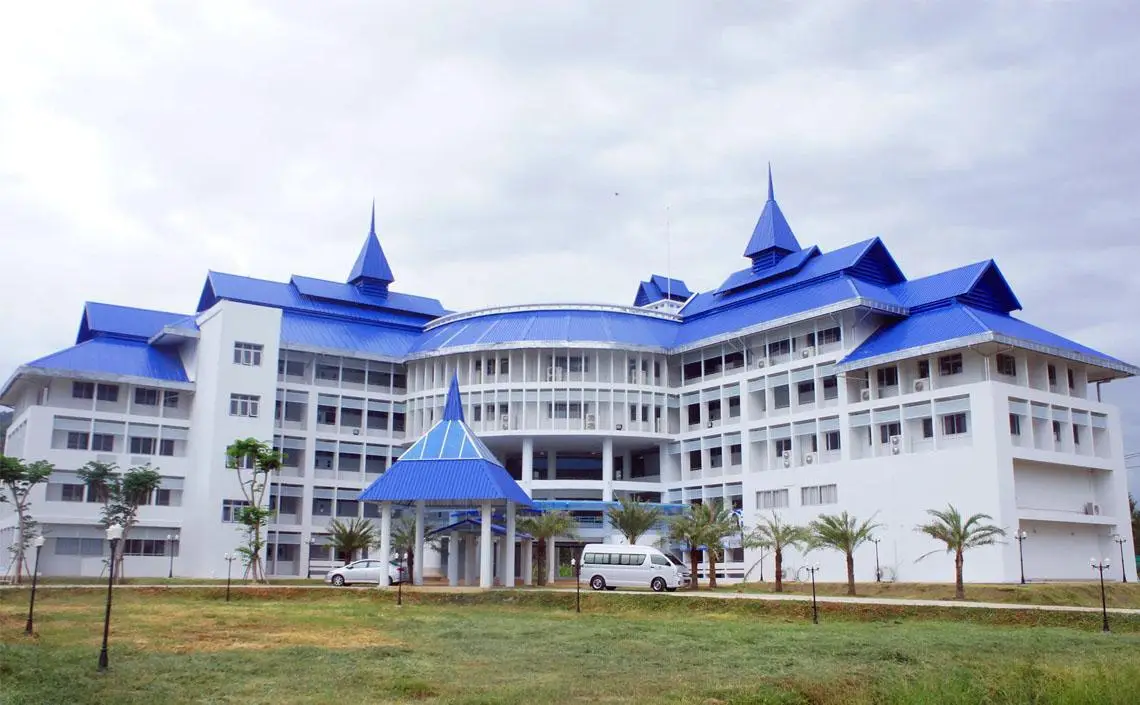
Open Days: Monday – Saturday (Office of Academic Promotion and Registration, both the City Campus and Yan Mattri Education Center)
Opening Hours: 08:30 – 16:30 (Closed on Sundays, public holidays, and university-designated holidays)
Nakhon Sawan Rajabhat University (NSRU) is a public university with a significant place in the history of Thai education and regional development in Nakhon Sawan Province. Established on August 15, 1922, as the Nakhon Sawan Provincial Agricultural Teacher Training School, the institution evolved through several stages, including a teacher training school, teachers college, and Rajabhat Institute, before officially becoming Nakhon Sawan Rajabhat University on June 15, 2004. Today, the university operates educational facilities at its city campus on Sawan Withi Road in Mueang Nakhon Sawan District and at Yan Mattri Education Center in Phayuha Khiri District. It offers academic programs across a broad range of disciplines, including education, humanities, social sciences, science, technology, business administration, agriculture, engineering, and nursing. Alongside teaching, the university undertakes research, teacher preparation, workforce development, and community-oriented innovation. With more than a century of institutional history, Nakhon Sawan Rajabhat University serves as an important center of higher education connecting academic development with the social, cultural, and economic needs of Thailand's upper Central Region.
Nakhon Sawan Province has long played an important role in transportation, commerce, and communication between Central and Northern Thailand. Its geographical position at the confluence of the Ping and Nan rivers, where the Chao Phraya River begins, has contributed to the province's economic, social, and cultural diversity. The development of education in this region has therefore been significant not only for Nakhon Sawan residents but also for communities throughout neighboring provinces. Nakhon Sawan Rajabhat University emerged within this historical and geographical setting, gradually becoming an essential institution for expanding access to higher education and preparing qualified professionals for regional development.
The university's origins date to August 15, 1922, when the Nakhon Sawan Provincial Agricultural Teacher Training School was established. The institution admitted students who had completed primary education and provided a two-year teacher training program under the Ministry of Public Instruction. Its principal mission was to prepare elementary teachers for Thailand's expanding educational system. Sawat Kanhanet, who was later granted the noble title Khun Kanhanet Sueksakon, served as the school's first headmaster. The institution's original name reflected an educational philosophy that connected teacher preparation with agricultural knowledge, an approach closely aligned with the livelihoods and economic conditions of Thai communities during the early twentieth century.
In 1929, the school relocated to the Khao Kop area, between Wat Khao Chong Lom and Khao Kop School, under the leadership of Headmaster Kasem Phumphuang. However, in 1932, the elementary teacher training school was dissolved and merged with a teacher training institution in Phra Nakhon Si Ayutthaya Province. Although this marked an interruption in the institution's early development, agricultural and vocational education subsequently returned to Nakhon Sawan, laying the groundwork for the restoration and expansion of local educational opportunities.
In 1934, the Special Agricultural Primary School was established on the former school grounds to provide agricultural education and practical training. The institution admitted students who had completed Prathom 4 or Prathom 5 and offered a two-year curriculum. Approximately 80 students enrolled during the initial period, with Charun Suwannamat serving as headmaster. The reopening reflected the importance of agricultural knowledge in Nakhon Sawan and the wider region, where farming remained central to local livelihoods and economic activity.
In 1936, Nakhon Sawan Province received authorization to establish a provincial teacher training program, sharing facilities with the Special Agricultural Primary School. Teaching conditions were initially constrained by a shortage of classrooms and instructional buildings. Some lessons had to be conducted in a dining hall temporarily adapted for educational use. Despite these limitations, the school continued to develop, demonstrating the commitment of local educators and administrators to expanding teacher education and establishing a lasting foundation for academic development in the province.
A major transformation occurred in 1955 when the Ministry of Education reorganized the teacher training system and adopted the name Nakhon Sawan Teacher Training School. The institution began admitting students to its Certificate in Education program, known in Thai as Por Kor Sor, with Phrom Pringthong serving as headmaster. During this period, educational buildings and supporting facilities were gradually expanded to accommodate increasing student enrollment. In 1960, Toem Chanthachum became headmaster and introduced a rural teacher training initiative that allowed student teachers to gain practical experience in villages and local schools. This approach encouraged future teachers to understand rural communities and the practical challenges facing education outside major urban centers.
On May 23, 1968, Nakhon Sawan Teacher Training School was elevated to Nakhon Sawan Teachers College. The college offered both Certificate in Education and Higher Certificate in Education programs, with Prathan Chanthacharoen serving as director. This transition represented a decisive step in the institution's growth from a teacher training school into a more advanced educational establishment capable of delivering higher-level professional instruction and supporting the systematic development of the teaching profession.
In 1974, the college expanded opportunities for advanced teacher education and established its demonstration school, initially offering kindergarten education. The Teachers College Act of 1975 subsequently provided the legal framework for teachers colleges to offer bachelor's degree programs in education. Alongside the preparation of professional teachers, the institution participated in adult education and professional development activities for educational personnel. These developments gradually extended its responsibilities beyond classroom instruction to encompass educational services and community engagement.
During the late 1970s and throughout the 1980s, Nakhon Sawan Teachers College expanded its academic offerings to include bachelor's degree and diploma programs in education, science, and liberal arts. Academic fields such as Thai language, English, social studies, general science, music, agriculture, and other emerging disciplines became part of its broader educational development. This gradual diversification marked an important transition from an institution devoted primarily to teacher preparation into a multidisciplinary college serving the changing educational and professional needs of Thai society.
Another major milestone came on February 14, 1992, when His Majesty King Bhumibol Adulyadej the Great, King Rama IX, graciously bestowed the name Rajabhat Institute upon Thailand's teachers colleges. A formal ceremony acknowledging the royal designation followed on March 6, 1992. The Rajabhat Institute Act of 1995 subsequently established the institutions' official legal status. For Nakhon Sawan, this transformation marked the beginning of a broader academic mission encompassing multidisciplinary higher education, research, academic services, and the preservation and development of local knowledge and culture.
Between the late 1980s and early 2000s, the institution continued to develop its academic infrastructure, including classroom buildings, science facilities, and library resources. One significant development was the Bannaratchanakharin Building, which received its royal name on August 8, 2002. The building became an important symbol of the university's investment in information resources and academic learning. During the same period, the institution expanded graduate-level educational opportunities and strengthened its academic cooperation with organizations outside the university.
June 15, 2004, marked another defining moment in the institution's history. Under the Rajabhat University Act of 2004, Nakhon Sawan Rajabhat Institute was officially elevated to Nakhon Sawan Rajabhat University. University status provided a broader administrative framework under a university council and greater opportunities to develop higher education, research, and academic services. Following this transformation, the university continued expanding programs in law, education, science, business administration, and engineering while developing master's and doctoral degree programs to meet growing professional and academic demand.
In 2006, the university introduced doctoral-level studies in education and developed academic cooperation with educational institutions in Nanning, People's Republic of China. These partnerships supported student exchanges and opportunities for international language and cultural learning. International academic cooperation contributed to the university's development beyond its traditional regional role while reinforcing its continuing responsibility to educate graduates and promote sustainable community development in Thailand.
As the institution developed into a modern university, expansion of its educational facilities became essential to accommodate increasing academic activities, laboratories, classrooms, and student services. The city campus on Sawan Withi Road remains closely associated with the institution's historical identity, while Yan Mattri Education Center provides additional space for academic development and modern infrastructure. The education center accommodates teaching buildings, meeting facilities, student activities, and specialized learning environments associated with technology, agriculture, and other disciplines. Operating at more than one educational location enables the university to organize teaching and academic activities according to the requirements of different fields of study.
The university's academic structure includes the Faculty of Education, Faculty of Humanities and Social Sciences, Faculty of Science and Technology, Faculty of Management Science, Faculty of Agricultural Technology and Industrial Technology, and Faculty of Nursing. The Faculty of Nursing represents a more recent development during 2025–2026, accompanied by preparations for undergraduate nursing education. The expansion into nursing reflects the increasing importance of healthcare workforce development and the need to prepare professionals capable of supporting public health services and community well-being.
The Faculty of Education represents the university's historical foundations particularly clearly, as teacher preparation has remained an important mission since 1922. Its academic programs cover educational disciplines relevant to Thailand's school system, including elementary education, early childhood education, mathematics, Thai, English, Chinese, general science, social studies, computer education, physical education, health education, and art education. In addition to academic coursework, professional teaching practice and cooperation with schools form essential components of teacher development, helping student teachers gain direct experience of different learning environments and community contexts.
The Faculty of Humanities and Social Sciences contributes to education and research concerning human behavior, languages, law, politics, society, history, and culture. Programs associated with history, Thai language, English, community and social development, political science, law, music, and performing arts prepare graduates for a wide range of professions and community development activities. Historical and cultural studies are especially relevant to Nakhon Sawan and the upper Central Region, where local traditions, multicultural communities, and regional heritage provide valuable subjects for academic investigation and cultural preservation.
The Faculty of Science and Technology provides education in scientific analysis, experimentation, and the practical application of modern technology. Its academic fields include computer science, information technology, mathematics and data science, environmental science, industrial chemistry, health-related sciences, occupational health and safety, and sports science. These disciplines combine theoretical understanding with practical skills, preparing graduates for employment in government agencies, private enterprises, industrial organizations, research institutions, and technology-based professions.
The Faculty of Management Science focuses on developing professionals in business administration, accounting, economics, communication arts, tourism and hospitality, digital business, and digital marketing. These academic fields respond to changes in the modern economy, including the growing importance of technology in business management, consumer communication, and the creation of value-added goods and services. Tourism-related education is particularly relevant to Nakhon Sawan because of the province's role as a regional transportation center and its potential for cultural and nature-based tourism.
The Faculty of Agricultural Technology and Industrial Technology combines agricultural knowledge, food production, design, and engineering. Its educational fields include agriculture, food technology and nutrition, railway transportation engineering, mechanical engineering, industrial electrical engineering, electric vehicle engineering, logistics engineering, industrial technology, and creative design. This combination reflects the university's adaptation to both its agricultural heritage and the requirements of modern industry, where technological innovation, efficient production, and sustainable resource management are increasingly important.
Graduate education at Nakhon Sawan Rajabhat University encompasses fields such as education, educational administration, curriculum and instruction, educational management and leadership, political science, public administration, English, Thai language, mathematics education, and business administration. Master's and doctoral programs support professionals seeking advanced subject knowledge, research capabilities, academic qualifications, and leadership skills. Individual programs may offer different study plans and admission pathways, making it important for prospective graduate students to review the specific qualifications, schedules, and requirements established by each program.
The university's philosophy emphasizes its role as a force for national development through the advancement of local communities toward international standards. Under its revised strategic plan for 2023–2027, updated in 2025, the university seeks to become an institution that drives innovation for communities and develops a highly competent workforce for sustainable development. This vision emphasizes future-oriented education, place-based research, innovation ecosystems, teacher development, and institutional management capable of responding effectively to social, technological, and economic change.
The university's student identity emphasizes good character and discipline, dedication to learning and work, technological competence, and a spirit of volunteer service. These values reflect an educational philosophy that extends beyond academic achievement to include responsibility, adaptability, professional capability, and meaningful participation in society. The university's institutional identity also emphasizes innovation in teacher education and the development of local communities toward international engagement in accordance with the principles of Thailand's Sufficiency Economy Philosophy.
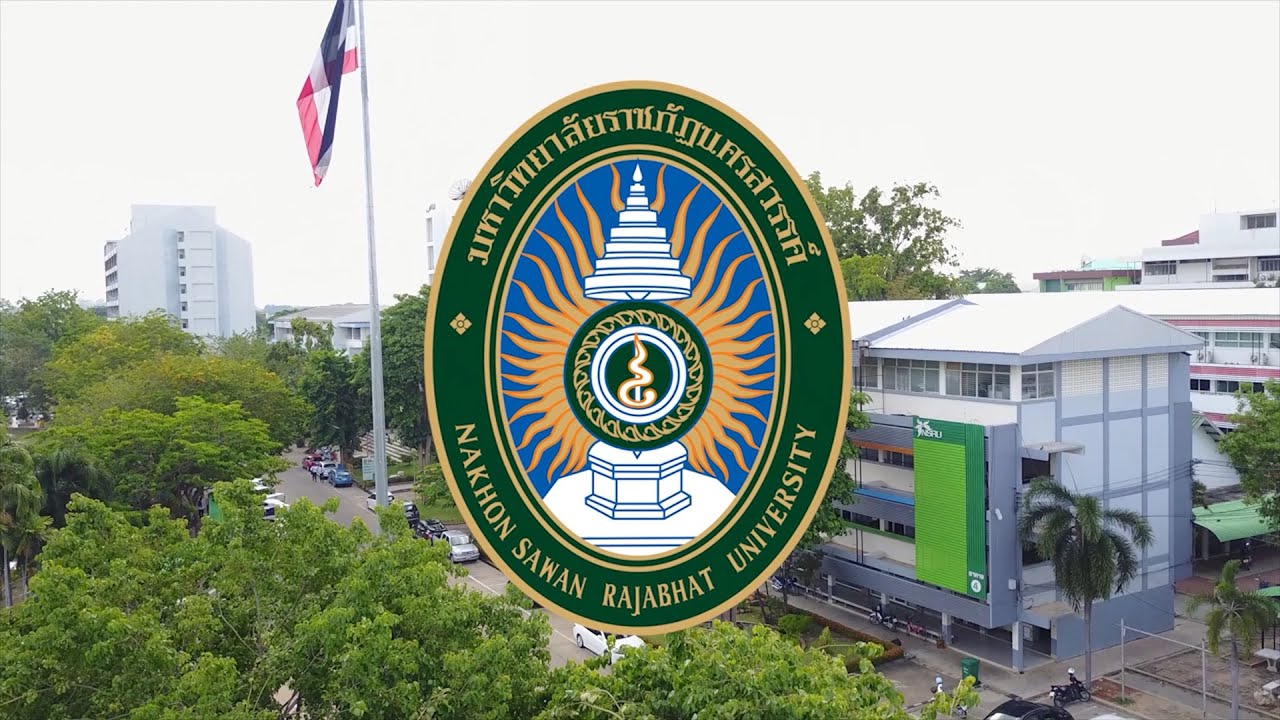
The university emblem incorporates the royal seal of King Rama IX, a symbol shared across Thailand's Rajabhat universities and closely associated with their historical development. The colors represented in the emblem convey meanings relating to the monarchy, nature and the environment, local arts and culture, wisdom, and the purity of academic thought. Nakhon Sawan Rajabhat University's institutional colors are green and yellow. Green symbolizes the richness and abundance of nature, while yellow represents intellectual prosperity and the development of knowledge.
The Payom flower, commonly associated with the fragrant flowering tree Shorea roxburghii, is the university's official flower. Its symbolic importance dates back to earlier periods of the institution's history, making it part of the collective memory and identity of the university community. The Payom flower is also incorporated into visual symbols used alongside the abbreviation NSRU, representing the shared identity and lasting connections among students, faculty members, staff, and alumni.
One of the university's important religious and cultural symbols is the Buddha image known as Phra Phuttha Sapphanyu Borom Khru Prachanat Sangkharat Uthit, which serves as the university's principal Buddha image. A replica is also enshrined at Yan Mattri Education Center. The image depicts the Buddha in the Gandhararatha posture, commonly associated in Thai Buddhist tradition with the invocation of rain. Its presence reflects the relationship between education, Buddhist beliefs, artistic traditions, and the cultural heritage of the local community.
The history of the principal Buddha image is also connected with Somdet Phra Ariyavongsagatanana (Pun Punnasiri), a former Supreme Patriarch of Thailand, and with the university community's inherited cultural memories. The image is also known by traditional names including Luang Pho Phra Sapphanyu and Somdet Fa Chaeng. These names are associated with local accounts concerning the weather and changes in the sky during the casting ceremony. Such narratives form part of the institution's cultural memory and demonstrate how religious devotion and historical storytelling remain connected to the university's identity.
University traditions and ceremonies reflect both Thailand's educational heritage and its wider cultural practices. The Wai Khru ceremony, in which students express gratitude and respect toward their teachers, represents the enduring importance of teachers in Thai society. Activities commemorating the institution's anniversary on August 15 provide opportunities to recognize its history and the contributions of educators and administrators who helped shape its development. The university has also organized cultural activities associated with Songkran, Thailand's traditional New Year festival, along with events promoting relationships among students, university personnel, alumni, and surrounding communities.
The Office of Arts and Culture plays a role in connecting the university's academic responsibilities with the preservation of cultural heritage, local history, and traditional community knowledge. Nakhon Sawan is home to a diverse cultural landscape, particularly in the Pak Nam Pho community, where traditions reflect the interactions of different ethnic and cultural groups. Academic work in the humanities and social sciences helps students understand the historical foundations of these communities while encouraging greater appreciation of cultural resources, local identity, and traditional knowledge.
For visitors interested in educational tourism, the university offers an environment shaped by academic buildings, modern architecture, student activity spaces, and institutions dedicated to learning. The Bannaratchanakharin Building is an important landmark in the development of the university's library facilities, while the Office of Academic Resources and Information Technology supports education and access to information resources. Access to libraries, study facilities, and specialized spaces by external visitors is subject to the regulations and service hours of the responsible university departments.
Yan Mattri Education Center is distinguished by its spacious educational grounds and buildings supporting different academic disciplines. Facilities associated with political science, law, music, agricultural technology, and food technology illustrate the diversity of educational fields developed by the university. Agricultural research and practical training areas also maintain a connection with the institution's historical roots in agricultural teacher education. Visits to laboratories, research facilities, and specialized teaching areas should be arranged directly with the responsible departments to ensure appropriate access and safety.
Research and innovation play an important role in the university's contribution to regional development. Nakhon Sawan and neighboring provinces include agricultural communities, service businesses, industrial activities, and extensive educational networks. Connecting expertise in science, technology, management, and education with the needs of these communities forms a central part of the university's mission. Areas such as agricultural and food product development, improvements in production efficiency, digital skills development, and educational innovation reflect the potential applications of knowledge generated by the university's faculties and research units.
Academic services and community engagement further distinguish Nakhon Sawan Rajabhat University from institutions focused exclusively on classroom instruction. Cooperation with local schools, communities, and public and private organizations helps the university identify practical challenges and develop educational responses to community needs. These partnerships also give students opportunities to apply academic knowledge to real social situations. In this respect, the university continues an educational tradition that can be traced to earlier rural teacher training initiatives, which emphasized understanding local communities as an essential component of professional education.
As a public university in Nakhon Sawan Province, the institution also contributes to the economic and professional development of the wider region. Its activities include preparing teachers for schools across the upper Central Region, educating professionals in business and service industries, developing scientific and technological expertise, and supporting workforce development in fields relevant to contemporary industry. University education therefore connects directly with employment opportunities, professional advancement, innovation, and broader social development.
Prospective students should carefully consider their preferred field of study, degree level, study format, and campus location before applying. Since the university operates educational facilities at more than one location, teaching arrangements and departmental offices may differ depending on the program. Certain programs also provide admission pathways for graduates holding higher vocational certificates or for students seeking credit transfers from previous studies. Academic offerings, admissions requirements, and enrollment schedules may change between academic years, so applicants should consult the latest official admissions announcements issued by the Office of Academic Promotion and Registration.
Getting There to the city campus of Nakhon Sawan Rajabhat University is convenient from central Nakhon Sawan via Sawan Withi Road. The university's main address is 398 Moo 9, Nakhon Sawan Tok Subdistrict, Mueang Nakhon Sawan District, Nakhon Sawan Province, Thailand. Travelers arriving from other provinces can first reach Nakhon Sawan city and then continue to the campus by private vehicle, taxi, or suitable local transportation. Those visiting Yan Mattri Education Center should instead use the destination in Yan Mattri Subdistrict, Phayuha Khiri District, Nakhon Sawan Province. Since the city campus and education center are located in different areas, visitors should confirm the correct faculty, building, or administrative office before beginning their journey.
Visitors who need to contact university offices, inquire about admissions, or arrange educational study visits should communicate with the relevant department in advance, particularly when meeting rooms, laboratories, or restricted facilities are involved. The Office of Academic Promotion and Registration provides services at both the city campus and Yan Mattri Education Center from Monday to Saturday, 08:30–16:30, and is closed on Sundays. Public holidays, university-designated holidays, and special announcements may affect these arrangements. Other university buildings, academic departments, and library facilities maintain their own access regulations and service schedules.
Beyond its educational significance, the university is situated in a province with a variety of cultural and natural attractions. The Nakhon Sawan area includes riverside landmarks, Buddhist temples, scenic viewpoints, public parks, and places associated with the beginning of the Chao Phraya River. Students, families, and visitors can combine university-related activities with opportunities to explore local history and regional culture. A visit to Nakhon Sawan Rajabhat University can therefore provide an introduction not only to higher education in the province but also to the distinctive geographical and cultural identity of the surrounding community.
From its establishment in 1922 to 2026, Nakhon Sawan Rajabhat University has completed 104 years of institutional history. Its transformation from a small agricultural teacher training school into a multidisciplinary public university reflects the evolution of Thailand's education system over more than a century. Although academic programs, educational technologies, and administrative structures have changed considerably, the institution's enduring mission remains rooted in expanding educational opportunities, preparing qualified teachers and professionals, advancing academic knowledge, and applying education and innovation to the development of local communities and Thai society.
| University Name | Nakhon Sawan Rajabhat University (NSRU) |
| University Type | Public Rajabhat University |
| Main Campus Address | 398 Moo 9, Sawan Withi Road, Nakhon Sawan Tok Subdistrict, Mueang Nakhon Sawan District, Nakhon Sawan 60000, Thailand |
| Yan Mattri Education Center | Yan Mattri Subdistrict, Phayuha Khiri District, Nakhon Sawan 60130, Thailand |
| City Campus Coordinates | 15.688306, 100.107640 |
| Yan Mattri Education Center Coordinates | 15.539210, 100.125490 |
| Original Establishment Date | August 15, 1922 |
| University Establishment Date | June 15, 2004 |
| Institutional Age | 104 years as of 2026, calculated from the establishment of the original institution |
| Former Names and Development | Agricultural Teacher Training School → Special Agricultural Primary School → Nakhon Sawan Teacher Training School → Nakhon Sawan Teachers College → Nakhon Sawan Rajabhat Institute → Nakhon Sawan Rajabhat University |
| Important Early Historical Figure | Sawat Kanhanet (Khun Kanhanet Sueksakon), the first headmaster of the original teacher training school |
| University President | Assistant Professor Dr. Chairat Pranee (2026) |
| University Philosophy | A university serving as a driving force for national development through the advancement of local communities toward international standards |
| Student Identity | Good character and discipline, dedication to learning and work, technological competence, and a spirit of volunteer service |
| University Colors | Green and Yellow |
| University Flower | Payom Flower (Shorea roxburghii) |
| Principal Buddha Image | Phra Phuttha Sapphanyu Borom Khru Prachanat Sangkharat Uthit |
| Faculties | 1. Faculty of Education 2. Faculty of Humanities and Social Sciences 3. Faculty of Science and Technology 4. Faculty of Management Science 5. Faculty of Agricultural Technology and Industrial Technology 6. Faculty of Nursing |
| Degree Levels | Bachelor's, Master's, and Doctoral Degrees, depending on the academic program |
| Important Buildings and Academic Units | Bannaratchanakharin Building, Office of Academic Resources and Information Technology, Office of Arts and Culture, Office of Academic Promotion and Registration, Research and Development Institute, and Yan Mattri Education Center |
| Academic Promotion and Registration Office Days | Monday – Saturday at both the City Campus and Yan Mattri Education Center; closed on Sundays and university-designated holidays |
| Academic Promotion and Registration Office Hours | 08:30 – 16:30 |
| Campus Visits and Study Tours | Visitors should contact the responsible university department before entering specialized facilities, laboratories, libraries, or designated activity areas |
| Getting There | The City Campus is accessible via Sawan Withi Road in central Nakhon Sawan. Yan Mattri Education Center is located in Yan Mattri Subdistrict, Phayuha Khiri District. Visitors should verify the correct campus and building before traveling |
| Tourist Attractions in Nakhon Sawan City | 1. Utthayan Sawan (Sawan Park) 2. Wat Khiri Wong 3. Nakhon Sawan City Observation Tower 4. Pasan, the Landmark at the Beginning of the Chao Phraya River 5. Wat Woranat Banphot (Wat Khao Kop) |
| Restaurants in Nakhon Sawan City | 1. S Cafe & Bistro 2. Baan Isan Restaurant 3. E-Tan Riverside Restaurant 4. Kham Nueng Restaurant & Studio 5. Lab Baan Kik Kam Kin Mueang |
| Hotels in Nakhon Sawan City | 1. The Paradiso JK Design Hotel 2. P.A. Thani Hotel 3. B2 Nakhon Sawan Premier Hotel 4. HOP INN Nakhon Sawan 5. Aramis Hotel Nakhonsawan |
| Main University Telephone | +66 56 219100–29 |
| Academic Promotion and Registration Contact | +66 56 219100, Extensions 1200, 1204, 1206, or 1208; Mobile: +66 97 924 5217 |
| Official Website | https://www.nsru.ac.th |
| Current Status | Operating as a public university and offering academic programs during the 2026 academic year |
Academic Programs and Fields of Study at Nakhon Sawan Rajabhat University, Academic Year 2026 (B.E. 2569)
| Faculty / Academic Unit | Degree Programs and Fields of Study |
| Faculty of Education | Bachelor's Degree Programs 1. Bachelor of Education – Elementary Education 2. Bachelor of Education – Early Childhood Education 3. Bachelor of Education – Mathematics 4. Bachelor of Education – Computer Education 5. Bachelor of Education – Physical Education 6. Bachelor of Education – Chinese Language Education 7. Bachelor of Education – Thai Language Education 8. Bachelor of Education – English Language Education 9. Bachelor of Education – General Science Education 10. Bachelor of Education – Art Education 11. Bachelor of Education – Social Studies Education 12. Bachelor of Education – Health Education Master's Degree Programs 1. Master of Education – Educational Management and Leadership 2. Master of Education – Educational Administration 3. Master of Education – Computer Education 4. Master of Education – Physical Education and Exercise Science 5. Master of Education – Curriculum and Instruction Doctoral Degree Programs 1. Doctor of Education – Educational Administration 2. Doctor of Education – Curriculum and Instruction 3. Doctor of Philosophy – Educational Management and Leadership |
| Faculty of Humanities and Social Sciences | Bachelor's Degree Programs 1. Bachelor of Education – Music Education 2. Bachelor of Laws 3. Bachelor of Political Science – Local Government 4. Bachelor of Political Science – Politics and Government 5. Bachelor of Political Science – Public Administration 6. Bachelor of Science – Geography and Geoinformatics 7. Bachelor of Fine Arts – Music and Performing Arts Innovation 8. Bachelor of Arts – Community and Social Development 9. Bachelor of Arts – History 10. Bachelor of Arts – Thai Language 11. Bachelor of Arts – English Language 12. Bachelor of Arts – English for Business Communication (International Program) Master's Degree Programs 1. Master of Public Administration – Public and Private Management 2. Master of Political Science 3. Master of Arts – Teaching English 4. Master of Arts – Thai Language for Modern Communication Doctoral Degree Programs 1. Doctor of Public Administration – Public and Private Management 2. Doctor of Political Science |
| Faculty of Science and Technology | Bachelor's Degree Programs 1. Bachelor of Science – Elderly Health Rehabilitation and Management 2. Bachelor of Science – Mathematics and Data Science 3. Bachelor of Science – Industrial Chemistry 4. Bachelor of Science – Multimedia Technology and Animation 5. Bachelor of Science – Information Technology 6. Bachelor of Science – Computer Science 7. Bachelor of Science – Sports Science and Health Promotion 8. Bachelor of Science – Medical and Industrial Sciences (Medical and Industrial Biology / Medical and Industrial Physics) 9. Bachelor of Science – Environmental Science 10. Bachelor of Science – Occupational Health and Safety 11. Bachelor of Arts – Home Economics 12. Bachelor of Public Health Master's Degree Programs 1. Master of Science – Mathematics Education |
| Faculty of Management Science | Bachelor's Degree Programs 1. Bachelor of Communication Arts 2. Bachelor of Business Administration – Business, Human Resource and Organizational Management 3. Bachelor of Business Administration – Digital Marketing 4. Bachelor of Business Administration – Digital Business and Technology 5. Bachelor of Accountancy 6. Bachelor of Arts – Tourism and Hospitality 7. Bachelor of Economics – Economics for Modern Trade Business Management Master's Degree Programs 1. Master of Business Administration Doctoral Degree Programs 1. Doctor of Philosophy – Business Administration |
| Faculty of Agricultural Technology and Industrial Technology | Bachelor's Degree Programs 1. Bachelor of Science in Technical Education – Product and Graphic Design 2. Bachelor of Science – Agriculture, Plant Production Technology 3. Bachelor of Science – Agriculture, Animal Production Technology 4. Bachelor of Science – Agriculture, Aquaculture Technology 5. Bachelor of Science – Food Technology and Nutrition 6. Bachelor of Engineering – Railway Transportation Engineering 7. Bachelor of Engineering – Mechanical Engineering 8. Bachelor of Engineering – Industrial Electrical Engineering 9. Bachelor of Engineering – Electric Vehicle Engineering 10. Bachelor of Engineering – Logistics Engineering 11. Bachelor of Fine Arts – Creative Design for Business 12. Bachelor of Industrial Technology – Industrial Technology, Energy Management Technology in Industry (Two-Year Continuing Program) 13. Bachelor of Industrial Technology – Industrial Technology (Two-Year Continuing Program) |
| Faculty of Nursing | Bachelor's Degree Programs 1. Bachelor of Nursing Science |
Frequently Asked Questions (FAQ)
Q: Where is Nakhon Sawan Rajabhat University located?
A: The main campus is located at 398 Moo 9, Sawan Withi Road, Nakhon Sawan Tok Subdistrict, Mueang Nakhon Sawan District, Nakhon Sawan Province, Thailand. The university also operates Yan Mattri Education Center in Phayuha Khiri District.
Q: What days and hours is Nakhon Sawan Rajabhat University open?
A: The Office of Academic Promotion and Registration operates from Monday to Saturday, 08:30–16:30, at both the city campus and Yan Mattri Education Center. It is closed on Sundays and university-designated holidays. Other departments and campus facilities may follow different schedules.
Q: When was Nakhon Sawan Rajabhat University established?
A: The institution was originally established on August 15, 1922, as an agricultural teacher training school. It officially became Nakhon Sawan Rajabhat University on June 15, 2004, under the Rajabhat University Act of 2004.
Q: Who was the first headmaster of the institution?
A: Sawat Kanhanet, later granted the noble title Khun Kanhanet Sueksakon, was the first headmaster of the original agricultural teacher training school established in 1922.
Q: How many faculties does Nakhon Sawan Rajabhat University have?
A: The university has 6 faculties: the Faculty of Education, Faculty of Humanities and Social Sciences, Faculty of Science and Technology, Faculty of Management Science, Faculty of Agricultural Technology and Industrial Technology, and Faculty of Nursing.
Q: Does Nakhon Sawan Rajabhat University offer master's and doctoral degrees?
A: Yes. The university offers graduate programs in several academic fields, including educational administration, curriculum and instruction, political science, public administration, Thai language, English, mathematics education, and business administration. Admission qualifications and study plans depend on the individual program.
Q: Does Nakhon Sawan Rajabhat University have more than one campus?
A: Yes. The university operates its principal city campus on Sawan Withi Road and Yan Mattri Education Center in Phayuha Khiri District. Students and visitors should confirm which location houses their faculty, classroom, or administrative office before traveling.
Q: Can international travelers and members of the public visit Nakhon Sawan Rajabhat University?
A: Visitors may contact the appropriate university department to inquire about campus visits, educational study tours, or access to specific facilities. Entry to laboratories, academic buildings, libraries, and specialized areas is subject to university regulations and the approval of the responsible department.
 Category: ●University
 Group: ●Rajabhat University
Last Update : 1 WeekAgo
 Last Update : 1 WeekAgo
 Click to Access the Navigation Map GPS
Nakhon Sawan Rajabhat University Map
Recommend

 Art, Culture and Heritage
 Historical Sites and Monuments(3)
 Landmarks and Memorials(4)
 Art, Craft Centres, Tradition(9)
 Museums(3)
 Educational Places
 Museum for Study(1)
 Autonomous Universities(2)
Rajabhat University(1)
 Private University(2)
 Places of Worship
 Temple(34)
 Other Sacred Sites(5)
 Research and Development
 Royal Project(1)
 Suburban Living
 Village, Community(4)
 Local Market(2)
 Floating Market(1)
 Nature and Wildlife
 National Parks and Marine Reserves(3)
 Mountain (Doi)(3)
 Dam, Reservoir, Lake(6)
 Waterfalls(3)
 Caves(8)
 River, Canal(6)
 Other natural attractions(3)
 Entertainment and Agricultural
 Zoos and Aquariums(2)
 Animal camps and shows(1)
 Farms, Parks and Ecotourism(6)
 Accommodation
 Hotel(1)
 Travel Articles, Recipes
 Travel Review, Food Review(3)


