
lovethailand home >North Travel Attractions >Nakhon Sawan Travel Attractions >Muang Nakhon Sawan >Pak Nam Pho > Pak Nam Pho Chinese Opera Tradition
TL;DR: Pak Nam Pho Chinese Opera Tradition is located at Pak Nam Pho Area, Mueang Nakhon Sawan District, Nakhon Sawan Province.
Pak Nam Pho Chinese Opera Tradition
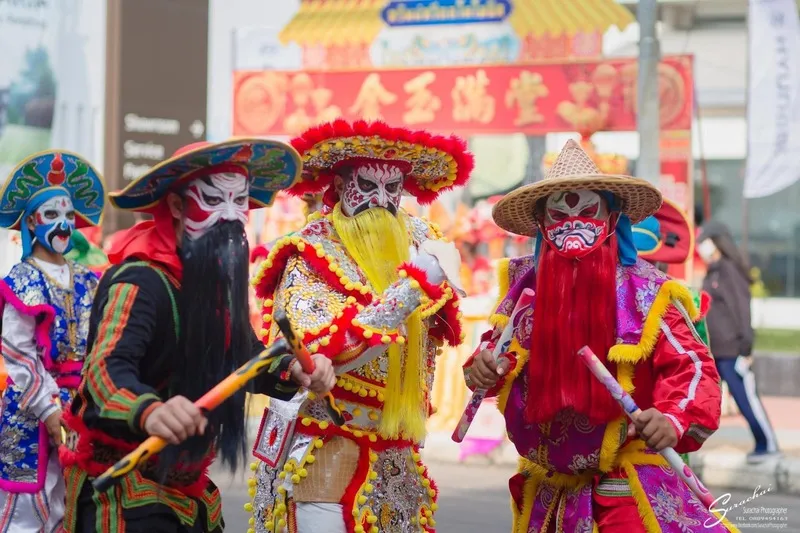
Event Days: Held Annually During The Chinese New Year Festival
Event Period: For 2025–2026, The Festival Is Held From 10–21 February 2026
The Pak Nam Pho Chinese Opera Tradition is an important part of the Nakhon Sawan Chinese New Year Festival and the Pak Nam Pho God and Goddess Procession. It is a Chinese performing art that has long been connected with the Thai-Chinese community in Pak Nam Pho, Nakhon Sawan Province. This tradition is not only about watching opera for entertainment; it is also linked to shrine worship, gratitude to deities, community faith, and the preservation of Chinese cultural roots in Nakhon Sawan.
Pak Nam Pho is an old riverside trading area in Nakhon Sawan city. Chinese immigrants who settled in this area brought with them shrine culture, language, food, trade traditions, rituals, and performing arts. Over time, these elements blended with local Thai life and created the distinctive cultural identity of Pak Nam Pho. Chinese opera is one of the clearest symbols of this Thai-Chinese heritage.
In the past, Chinese opera performances were often staged near shrines, community spaces, or important festival areas during religious events and Chinese New Year. In the Pak Nam Pho context, opera is closely connected with the worship of the local god and goddess. Many devotees regard opera as a form of performance offered to the deities, an act of gratitude, and a way to ask for blessings for families, shops, and the whole community.
The Pak Nam Pho Chinese opera tradition is strongly associated with Chao Pho Thepharak-Chao Mae Thapthim Shrine and Chao Mae Na Pha Shrine, which are major spiritual centers for the local community. During Chinese New Year, visitors come to pay respect at the shrines, watch the deity procession, see the golden dragon, lion dances, Eng Ko, Pa Bu, and enjoy Chinese opera within the festive atmosphere of Nakhon Sawan.
Chinese opera is a distinctive art form that combines singing, spoken dialogue, stylized movement, music, costume, color, and symbolic performance. The stories often come from Chinese literature, legends, historical tales, heroic narratives, deity stories, and moral dramas. Common themes include loyalty, gratitude, justice, courage, family duty, and moral integrity. Audiences therefore receive both entertainment and ethical reflection.
One of the most striking features of Chinese opera is its colorful costume and elaborate makeup. Facial colors and patterns often indicate the personality and role of each character, such as loyalty, bravery, cunning, nobility, or humor. Costumes also help identify social status and character type, including emperors, officials, warriors, heroines, scholars, or comic characters.
Music is another powerful element of Chinese opera. Traditional Chinese instruments, drums, cymbals, and vocal melodies guide the mood of each scene. Battle scenes, sorrowful moments, comic episodes, and sacred scenes are all shaped by rhythm and sound. Audiences familiar with opera can often sense the emotional direction of the story through music and vocal style.
In Pak Nam Pho, Chinese opera is not separate from the Chinese New Year festival. It is part of the overall cultural experience. Visitors can pay respect at shrines, watch the god and goddess procession, enjoy golden dragon and lion performances, explore food stalls, and watch opera performances in the evening. This makes the festival more lively and different from watching a performance in a formal theater.
Food and festival stalls are also part of the charm of the Pak Nam Pho Chinese opera tradition. Visitors can enjoy auspicious Chinese and Thai-Chinese foods such as khanom kheng, khanom thian, zongzi, noodles, fish balls, roasted duck, char siu, vegetarian dishes, and local Nakhon Sawan specialties. Lanterns, red and gold decorations, Chinese music, and the aroma of food create a vibrant cultural street atmosphere.
The importance of Pak Nam Pho Chinese opera lies in its role as a bridge between generations. Many older community members grew up watching opera during shrine festivals, while younger people may encounter it through the Chinese New Year event, cultural activities, or online media. Keeping opera as part of the festival helps this traditional art form remain visible in contemporary society.
In terms of religion and belief, opera offered to deities reflects the deep relationship between art and faith. Local people do not see it only as entertainment. They see it as an offering, an act of merit, and a form of respect toward the guardian deities. This gives the performance a deeper meaning than ordinary stage entertainment because it is connected with auspicious belief and community devotion.
Socially, the tradition strengthens community unity. The festival requires cooperation from shrines, foundations, organizing committees, shop owners, youth groups, elders, local agencies, and residents. Preparing the event each year becomes a shared process that reinforces identity and helps preserve continuity across generations.
Economically and culturally, the Pak Nam Pho Chinese opera tradition attracts visitors to Nakhon Sawan during Chinese New Year. Travelers come not only to watch opera but also to explore the city, visit shrines, see the Pak Nam Pho deity procession, enjoy local food, and buy local products. The festival therefore supports restaurants, hotels, shops, and other services in the area.
Today, the Pak Nam Pho Chinese opera tradition continues to adapt. Promotion through online media, festival livestreams, social platforms, and cultural tourism activities helps younger audiences discover the value of Chinese opera. These modern tools allow the tradition to reach people beyond the local community while preserving its role within the festival.
Getting There to the Pak Nam Pho Chinese opera tradition is convenient via Nakhon Sawan city. Travelers can arrive by private car, interprovincial bus, or train, then continue to the Pak Nam Pho area, the main venue of the Chinese New Year festival. During the event, some roads may be closed for processions and activities, so visitors should check the latest schedule, parking information, and travel routes before departure.
Visitors who want to watch Chinese opera should check the performance schedule in advance because showtimes and opera troupes may vary each year. For the fullest experience, combine the opera performance with shrine worship, the Pak Nam Pho deity procession, the golden dragon, Chinese cultural displays, and local food exploration.
The Pak Nam Pho Chinese opera tradition is more than a stage performance. It is a living cultural heritage that brings together faith, Chinese performing arts, food, Chinese New Year celebration, and community life. Visitors to Nakhon Sawan during Chinese New Year can experience lights, music, festival food, and the devotion of the local Thai-Chinese community in one place.
In summary, the Pak Nam Pho Chinese opera tradition is one of the key cultural elements of the Nakhon Sawan Chinese New Year Festival. It preserves Chinese opera, honors the Pak Nam Pho god and goddess, strengthens community identity, and supports cultural tourism in Nakhon Sawan in a distinctive and meaningful way.
| Tradition Name | Pak Nam Pho Chinese Opera Tradition |
| Location | Pak Nam Pho Area, Mueang Nakhon Sawan District, Nakhon Sawan Province |
| Event Period | Held annually during Chinese New Year. For 2025–2026, the festival is held from 10–21 February 2026 |
| Highlights | Chinese opera offered to deities, shrine worship, Pak Nam Pho god and goddess procession, golden dragon, lion dances, and festival food stalls |
| Importance | A Chinese performing art preserved by the Thai-Chinese community of Pak Nam Pho and an important part of the Nakhon Sawan Chinese New Year Festival |
| Important Shrines | Chao Pho Thepharak-Chao Mae Thapthim Shrine and Chao Mae Na Pha Shrine |
| Main Activities | Watching Chinese opera, shrine worship, deity procession, golden dragon, lion dances, Eng Ko, Pa Bu, and exploring festival food stalls |
| Food Highlights | Khanom Kheng, khanom thian, zongzi, noodles, fish balls, roasted duck, char siu, Chinese food, and local Nakhon Sawan dishes |
| Travel Information | Travel to Nakhon Sawan city by private car, bus, or train, then continue to the Pak Nam Pho area, the main festival venue |
| Visitor Tips | Check the latest opera schedule and Chinese New Year program, arrive early, and allow extra travel time because some roads may be closed during the festival |
| Current Status | Still preserved as part of the Pak Nam Pho Chinese New Year Festival and the cultural heritage of Nakhon Sawan’s Thai-Chinese community |
Frequently Asked Questions (FAQ)
Q: What Is The Pak Nam Pho Chinese Opera Tradition?
A: It is a Chinese opera tradition performed during the Pak Nam Pho Chinese New Year Festival in Nakhon Sawan, closely connected with shrine worship and the Thai-Chinese community.
Q: Where Is The Pak Nam Pho Chinese Opera Tradition Held?
A: It is held in the Pak Nam Pho area of Mueang Nakhon Sawan District, the main area of the Nakhon Sawan Chinese New Year Festival.
Q: When Is The Pak Nam Pho Chinese Opera Tradition Held?
A: It is held during Chinese New Year every year. For 2025–2026, the festival runs from 10–21 February 2026.
Q: Why Is Chinese Opera Performed During The Festival?
A: Chinese opera is performed as an offering to the deities, a way to show respect, and a cultural practice that preserves Chinese performing arts in the local Thai-Chinese community.
Q: What Else Can Visitors See Besides Chinese Opera?
A: Visitors can see the Pak Nam Pho god and goddess procession, golden dragon, lion dances, Eng Ko, Pa Bu, Chinese cultural performances, food stalls, and Chinese New Year celebrations.
Q: How Should Visitors Prepare Before Attending?
A: Visitors should check the latest festival and opera schedule, choose a suitable day, wear comfortable shoes, and allow extra travel time because some roads may be closed.
Q: Who Is This Tradition Suitable For?
A: It is suitable for travelers interested in Thai-Chinese culture, Chinese opera, Chinese New Year festivals, shrine traditions, festival food, and cultural tourism in Nakhon Sawan.
 Category: ●Art, Culture and Heritage
 Group: ●Art, Craft Centres, Tradition
Last Update : 5 MonthAgo
 Last Update : 5 MonthAgo
Recommend

 Historical Sites and Monuments(3)
 Landmarks and Memorials(4)
Art, Craft Centres, Tradition(9)
Landmarks and Memorials(4)
Art, Craft Centres, Tradition(9)
 Museums(3)
 Educational Places
 Museum for Study(1)
 Places of Worship
 Temple(34)
 Other Sacred Sites(4)
 Research and Development
 Royal Project(1)
 Suburban Living
 Village, Community(4)
 Local Market(2)
 Floating Market(1)
 Nature and Wildlife
 National Parks and Marine Reserves(3)
 Mountain (Doi)(3)
 Dam, Reservoir, Lake(6)
 Waterfalls(3)
 Caves(8)
 River, Canal(6)
 Other natural attractions(3)
 Entertainment and Agricultural
 Zoos and Aquariums(2)
 Animal camps and shows(1)
 Farms, Parks and Ecotourism(6)
 Accommodation
 Hotel(1)
 Travel Articles, Recipes
 Travel Review, Food Review(3)


