
lovethailand home >North Travel Attractions >Nakhon Sawan Travel Attractions >Muang Nakhon Sawan >Pak Nam Pho > Phra Chao Phor Chao Mae at Pak Nam Pho
TL;DR: Phra Chao Phor Chao Mae at Pak Nam Pho is located at Mueang Nakhon Sawan District, Nakhon Sawan Province. Highlights include God and goddess procession, golden dragon, lion dances, Eng Ko, Pa Bu, Chinese cultural parades, and Chinese New Year celebrations.
Phra Chao Phor Chao Mae at Pak Nam Pho
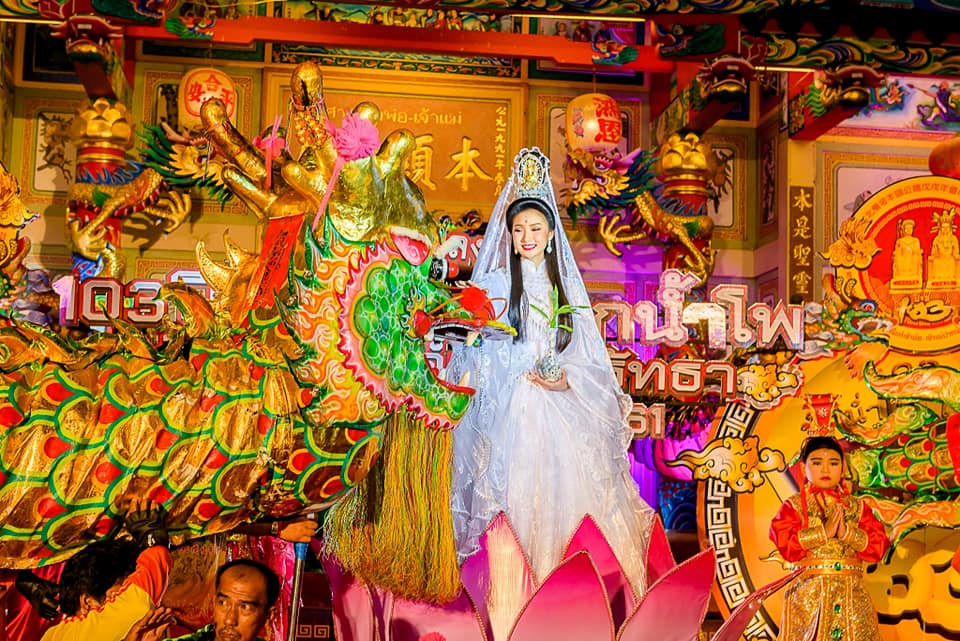
Event Days: Held Annually During The Chinese New Year Festival
Event Period: For 2025–2026, The Event Is Held From 10–21 February 2026
The Pak Nam Pho God And Goddess Procession, also known as the Nakhon Sawan Chinese New Year Festival, is one of the most important cultural traditions in Nakhon Sawan Province. It is widely recognized as one of Thailand’s most famous Chinese New Year celebrations. The festival reflects the faith of the Thai-Chinese community in Pak Nam Pho toward the sacred guardian deities, while also expressing the relationship between Chinese culture, riverside life, and the identity of Nakhon Sawan as the gateway to the Chao Phraya River.
Pak Nam Pho has long been an important trading town and riverside community. People of different backgrounds settled here, especially Chinese immigrants who traveled along the river routes and played a major role in the local economy. Their faith in shrines, guardian deities, and auspicious rituals became deeply connected with everyday life and eventually developed into one of the city’s most important annual traditions.
The heart of the Pak Nam Pho procession is the ceremonial invitation of the sacred god and goddess images to move through the city. This allows residents and visitors to pay respect, ask for blessings, and receive auspicious energy during the Chinese New Year. Local devotees believe that the deities protect the city, ward off misfortune, support prosperity, and bring peace and happiness to families throughout the year.
The faith surrounding the Pak Nam Pho god and goddess is closely connected with important local shrines, especially Chao Pho Thepharak-Chao Mae Thapthim Shrine and Chao Mae Na Pha Shrine. These shrines are spiritual centers for the Pak Nam Pho community. People visit them to pray for safety, business success, health, family well-being, and good fortune.
The tradition began as a religious and community practice of the Thai-Chinese residents before expanding into a major annual festival with religious, cultural, economic, and tourism dimensions. In the early period, the procession mainly brought the deities through different routes in the city so that people could pay respect. Later, more cultural performances were added, including the golden dragon procession, lion dances, Eng Ko, Pa Bu, deity processions, youth parades, and other Chinese cultural displays.
The Pak Nam Pho procession includes both daytime and nighttime parades. The daytime procession emphasizes devotion, worship, and the participation of people along the streets. The nighttime procession is known for colorful lights, dragon and lion performances, Chinese music, cultural displays, and beautifully decorated processions. This is one of the most popular highlights for tourists visiting Nakhon Sawan during Chinese New Year.
One of the strongest symbols of the festival is the Pak Nam Pho golden dragon procession. In Chinese culture, the dragon represents power, prosperity, good fortune, and auspicious energy. The golden dragon performance is therefore not only an impressive show but also a symbolic expression of community faith and hope for a prosperous new year.
In addition to the golden dragon, lion dances, Eng Ko, Pa Bu, deity processions, children’s parades, youth performances, and Chinese cultural shows add liveliness to the festival. These processions reflect cultural transmission across generations because many participants are local residents, students, artists, and devotees who spend time training and preparing for the event.
During the Pak Nam Pho Chinese New Year Festival, Nakhon Sawan city becomes filled with celebration. Streets are decorated with lanterns, red and gold colors, and auspicious Chinese symbols. Visitors come to worship at shrines, watch the procession, enjoy local food, buy souvenirs, and join festival activities. The event is therefore a religious celebration, a cultural tradition, and a tourism festival that supports the local economy.
The Pak Nam Pho procession also has strong social value. It is made possible by the cooperation of shrines, foundations, organizing committees, Thai-Chinese communities, government agencies, private organizations, schools, shops, and local residents. Everyone contributes to the preparation, procession management, hospitality, and preservation of this long-standing tradition.
In terms of belief, the people of Pak Nam Pho respect the deities as guardians of the city. Carrying the deity images along the procession route symbolically spreads blessings throughout the community. Households, shops, and residents often set up offering tables, light incense, present fruits and sweets, and pay respect as the procession passes by.
For travelers, the Pak Nam Pho procession is a valuable opportunity to experience Chinese culture in Thailand at close range. It is not only a parade but also a living expression of shrine faith, community cooperation, Chinese performance traditions, and the multicultural character of Nakhon Sawan.
Getting There to the Pak Nam Pho procession is convenient through Nakhon Sawan city. Travelers can arrive by private car, interprovincial bus, or train, then continue to the Pak Nam Pho area in the city center. During the festival, some roads may be closed for procession routes, so visitors should check the latest schedule, traffic updates, parking areas, and recommended viewing points before traveling.
Visitors who want to watch the procession should arrive early, especially on the nighttime parade days when crowds are large. It is best to choose a safe viewing spot, wear comfortable shoes, bring drinking water, and keep personal belongings secure. Those traveling with children or elderly family members should plan resting points and meeting points in advance.
This tradition shows that Nakhon Sawan is not only known for natural attractions and the origin of the Chao Phraya River. It is also home to a strong Thai-Chinese cultural identity. The Pak Nam Pho God and Goddess Procession is therefore an essential experience for visitors who want to explore Nakhon Sawan through faith, culture, community life, and local celebration.
In summary, the Pak Nam Pho God and Goddess Procession brings together devotion, auspicious belief, Chinese performing arts, and community cooperation. It fills the city with life during Chinese New Year and remains one of the most important cultural festivals of Nakhon Sawan and Thailand.
| Tradition Name | Pak Nam Pho God And Goddess Procession / Nakhon Sawan Chinese New Year Festival |
| Location | Mueang Nakhon Sawan District, Nakhon Sawan Province |
| Main Event Area | Pak Nam Pho area, Nakhon Sawan city, and procession routes within Nakhon Sawan Municipality |
| Event Period | Held annually during Chinese New Year. For 2025–2026, the event is held from 10–21 February 2026 |
| Highlights | God and goddess procession, golden dragon, lion dances, Eng Ko, Pa Bu, Chinese cultural parades, and Chinese New Year celebrations |
| Importance | An important Thai-Chinese tradition in Nakhon Sawan and one of Thailand’s most famous Chinese New Year festivals |
| Important Shrines | Chao Pho Thepharak-Chao Mae Thapthim Shrine and Chao Mae Na Pha Shrine |
| Belief | Devotees believe the deities protect the city, ward off danger, bring auspicious blessings, and support community prosperity |
| Travel Information | Travel to Nakhon Sawan city by private car, bus, or train, then continue to the Pak Nam Pho area in the city center |
| Visitor Tips | Check the latest schedule, choose a viewing point in advance, arrive early, wear comfortable shoes, and allow extra travel time due to road closures |
| Current Status | Held annually and promoted as one of Nakhon Sawan Province’s major cultural festivals |
| Official Website / Page | Pak Nam Pho God And Goddess Procession Foundation and Nakhon Sawan Chinese New Year official channels |
Frequently Asked Questions (FAQ)
Q: What Is The Pak Nam Pho God And Goddess Procession?
A: It is Nakhon Sawan’s major Chinese New Year tradition, featuring the ceremonial procession of sacred deities, golden dragon performances, lion dances, and Chinese cultural parades.
Q: Where Is The Festival Held?
A: It is held in Nakhon Sawan city, especially in the Pak Nam Pho area and along procession routes within Nakhon Sawan Municipality.
Q: When Is The Pak Nam Pho Procession Held?
A: It is held annually during Chinese New Year. For 2025–2026, the event takes place from 10–21 February 2026.
Q: What Are The Main Highlights Of The Festival?
A: Major highlights include the god and goddess procession, the golden dragon, lion dances, Eng Ko, Pa Bu, Chinese cultural parades, and the festive atmosphere of Nakhon Sawan’s Chinese New Year celebration.
Q: Why Are The Pak Nam Pho Deities Important?
A: They are spiritual guardians of the Pak Nam Pho community, believed to protect the city, bring good fortune, and support prosperity.
Q: How Should Visitors Prepare For The Festival?
A: Visitors should check the latest schedule, arrive early, choose a safe viewing point, wear comfortable shoes, and allow extra time because some roads may be closed.
Q: Who Is This Festival Suitable For?
A: It is suitable for travelers interested in Thai-Chinese culture, local traditions, Chinese New Year celebrations, shrine processions, photography, and cultural tourism in Nakhon Sawan.
 Category: ●Art, Culture and Heritage
 Group: ●Art, Craft Centres, Tradition
Last Update : 5 MonthAgo
 Last Update : 5 MonthAgo

 Historical Sites and Monuments(3)
 Landmarks and Memorials(4)
Art, Craft Centres, Tradition(9)
Landmarks and Memorials(4)
Art, Craft Centres, Tradition(9)
 Museums(3)
 Educational Places
 Museum for Study(1)
 Places of Worship
 Temple(34)
 Other Sacred Sites(4)
 Research and Development
 Royal Project(1)
 Suburban Living
 Village, Community(4)
 Local Market(2)
 Floating Market(1)
 Nature and Wildlife
 National Parks and Marine Reserves(3)
 Mountain (Doi)(3)
 Dam, Reservoir, Lake(6)
 Waterfalls(3)
 Caves(8)
 River, Canal(6)
 Other natural attractions(3)
 Entertainment and Agricultural
 Zoos and Aquariums(2)
 Animal camps and shows(1)
 Farms, Parks and Ecotourism(6)
 Accommodation
 Hotel(1)
 Travel Articles, Recipes
 Travel Review, Food Review(3)


