
lovethailand home >Central Travel Attractions >Bangkok Travel Attractions >Sai Mai >Khlong Thanon > North Bangkok University (Saphan Mai Campus)
TL;DR: North Bangkok University (Saphan Mai Campus) is located at Khlong Thanon, Sai Mai District, Bangkok, Thailand, open Monday–Sunday (Saphan Mai Campus Library; Closed on Public Holidays), hours 08:30–17:30 (Saphan Mai Campus Library).
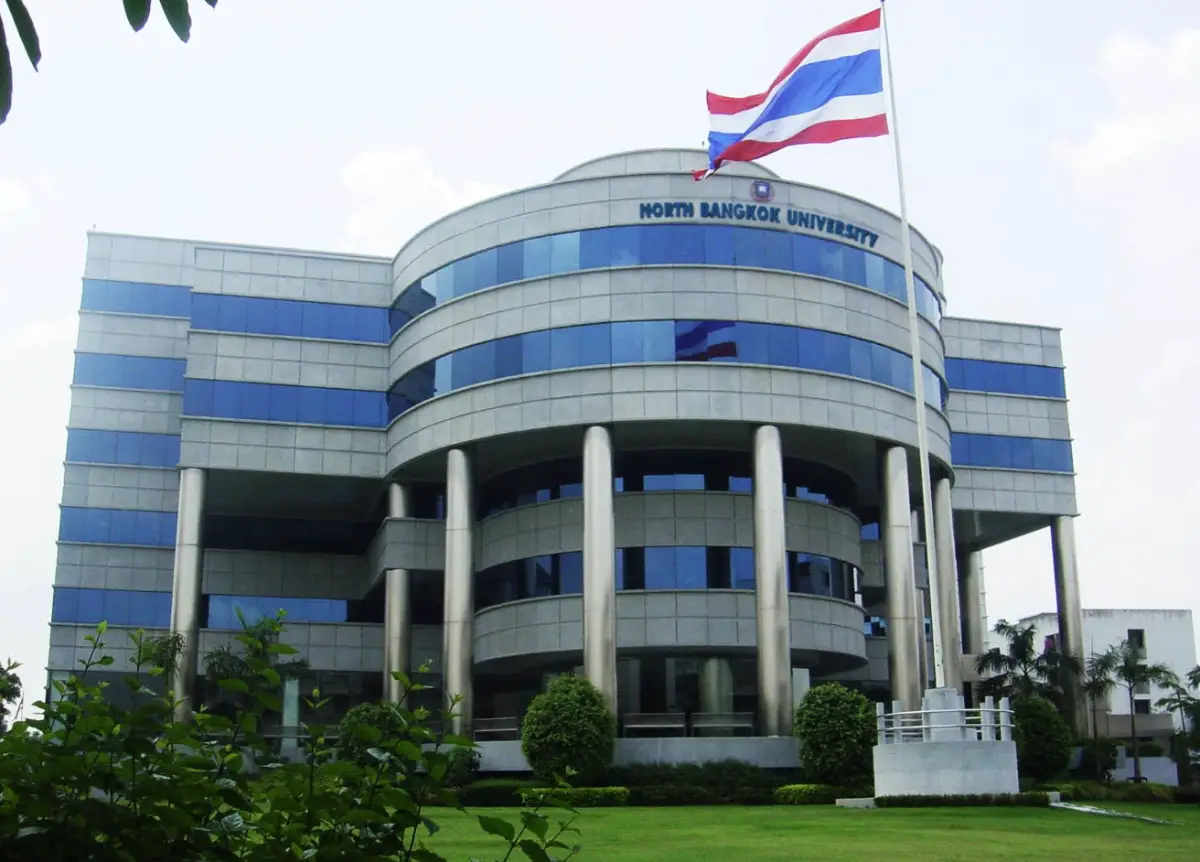
North Bangkok University (Saphan Mai Campus)
Open Days: Monday–Sunday (Saphan Mai Campus Library; Closed on Public Holidays)
Opening Hours: 08:30–17:30 (Saphan Mai Campus Library)
North Bangkok University – Saphan Mai Campus is the original campus of North Bangkok University, a private higher education institution in Bangkok, Thailand. Located at 6/999 Soi Phahonyothin 52, Phahonyothin Road, Khlong Thanon, Sai Mai District, Bangkok 10220, the campus represents the starting point of the university's educational history. The institution received official authorization to establish a private higher education college on October 31, 2000, and began teaching its first students in the 2001 academic year. Its founding vision emphasized academic knowledge, professional competency, ethics, personal responsibility, and the ability to apply education to changing social and economic conditions. The institution expanded to a second campus in Rangsit in 2008 and was granted university status on June 22, 2010. Today, Saphan Mai continues to serve as an important center for university administration, graduate education, information technology, education, nursing, research, and academic activities within northern Bangkok.
North Bangkok University has developed its identity around professional education and practical readiness. Rather than viewing education solely as the acquisition of theoretical knowledge, the institution emphasizes the integration of academic understanding, technical capabilities, personal ethics, and professional skills. This approach can be seen across its academic fields, including business administration, digital technology, education, liberal arts, communication arts, political science, and nursing. The university also provides laboratories, educational technology, and student facilities that help learners connect classroom instruction with real-world applications.
The Saphan Mai Campus is situated within Soi Phahonyothin 52, a well-established urban neighborhood in northern Bangkok. Saphan Mai forms part of a busy commercial and residential corridor connecting the Bang Khen and Sai Mai districts. The surrounding area contains fresh markets, shops, schools, hospitals, residential communities, and public transportation services. The campus therefore operates within an urban environment where students can access essential services while engaging with the economic and social life of the surrounding community.
The name Saphan Mai identifies the neighborhood in which the campus is located, rather than a separate institution. The area takes its commonly used name from Saphan Sukoranakhaseni, a bridge associated with the development of this part of northern Bangkok. Over time, Saphan Mai became a recognizable commercial district along Phahonyothin Road. Using the neighborhood name for the campus distinguishes it from the university's Rangsit Campus in Pathum Thani Province and helps visitors identify the correct location.
The history of North Bangkok University began on October 31, 2000, when Thailand's Ministry of Education granted permission to establish the private higher education institution. Initially operating as North Bangkok College, the institution was created to produce graduates with a combination of academic competence, practical skills, ethical judgment, and the ability to contribute to national development. Its educational philosophy responded to a changing economy in which professional knowledge and technological adaptability were becoming increasingly important.
The 2001 academic year marked the beginning of teaching at Saphan Mai. As the university's first location, the campus provided the initial foundation for academic administration, curriculum development, faculty recruitment, classroom instruction, and student services. These early years were particularly important for establishing institutional practices and building relationships with organizations and communities in northern Bangkok.
On May 30, 2003, the institution received a significant royal honor when Her Royal Highness Princess Maha Chakri Sirindhorn, then holding that royal title, presided over its official opening ceremony at Saphan Mai Campus. The event became an important milestone in the institution's early history and a meaningful occasion for its administration, lecturers, staff, and students.
During the following years, the college continued developing its academic programs, physical facilities, and educational support systems. The Saphan Mai Campus became the foundation for this expansion, providing the teaching spaces, administrative offices, and student services needed to support a growing institution. The college's development reflected its continuing commitment to producing graduates equipped for professional employment and further study.
In 2008, the institution expanded its educational operations by establishing the Rangsit Campus on Rangsit–Nakhon Nayok Road in Bueng Yitho, Thanyaburi District, Pathum Thani Province. This expansion increased its capacity to accommodate students and develop new teaching facilities, libraries, laboratories, and recreational spaces. The two-campus structure subsequently became an important characteristic of North Bangkok University's educational operations.
Another major milestone followed on June 22, 2010, when the institution received official permission to change its status from a college to a university under the name North Bangkok University. This transition reflected the institution's academic growth and its expanding responsibilities in education, research, academic services, and the preservation of arts and culture.
Several dates are essential to understanding the university's development. The year 2000 marks its official establishment, 2001 marks the beginning of teaching at Saphan Mai, 2003 marks the royal opening ceremony, 2008 represents expansion to Rangsit, and 2010 marks the recognition of university status. As of October 2026, the institution has more than 25 years of educational history and has completed 16 years under university status.
Assistant Professor Dr. Sitthiporn Prawatrungruang serves as President of North Bangkok University. Working alongside academic and administrative leaders, the university's management oversees institutional development, educational quality, academic services, research, student affairs, and partnerships with external organizations. These functions support the university's ability to adapt to changing professional and educational requirements.
The name North Bangkok University reflects the geographical identity of the institution's original campus in northern Bangkok. This part of the metropolitan area connects Sai Mai, Bang Khen, Don Mueang, and nearby Pathum Thani. Although the institution serves students from other parts of Thailand and abroad, its name preserves a clear relationship with the area in which it began operating.
The university's official colors are blue and white. Blue represents academic excellence, professional expertise, and competence, while white symbolizes morality, ethical conduct, discipline, and responsibility. Together, the two colors communicate the institution's emphasis on developing graduates who combine professional ability with sound values.
Its institutional symbolism also incorporates a Chaiyaphruek floral motif associated with honor, morality, and achievement. The banyan tree serves as the university's symbolic tree, representing strength, stability, protection, and the shared community of students, graduates, and staff. These symbols reinforce the relationship between academic achievement, ethical development, and institutional belonging.
The university's symbolic banyan tree is associated with the Saphan Mai Campus and stands near its cultural facilities. Beyond its environmental value, the tree serves as an expression of the university's identity and its commitment to developing a supportive educational community. The surrounding spaces connect nature, cultural traditions, and everyday campus life.
The Saphan Mai Campus includes several important academic and administrative buildings. The Rector's Office Building functions as a central location for university administration and educational services. It accommodates administrative offices, graduate education facilities, academic departments, library services, computer facilities, and other student support functions. Its importance extends beyond office administration because it connects many aspects of the university's educational operations.
Other academic buildings contain classrooms, laboratories, seminar rooms, and collaborative learning spaces. The facilities support both theoretical instruction and practical activities across multiple disciplines. Students use these spaces for lectures, group work, technical training, and academic presentations, reflecting the university's broader emphasis on applied learning and professional development.
The campus also includes cultural and religious facilities associated with the university's commitment to Thai traditions. A replica of Phra Phuttha Chinnarat, one of Thailand's revered Buddha images, is enshrined within the university's religious and cultural complex. This area provides an important connection between academic life and the cultural values reflected in Thai education.
The 80th Birthday Anniversary Commemorative Building is another important campus facility. It provides spaces for futsal, basketball, volleyball, fitness activities, and student events. The presence of dedicated sports facilities enables students to maintain physical well-being, participate in organized competitions, and develop teamwork and leadership through recreational activities.
Sports form an important element of university life. North Bangkok University supports athletic training, competitions, and student participation in different sports. These activities contribute to student development while creating shared experiences among university teams, faculty members, alumni, and supporters.
Student accommodation is available within the university's campus environment. Residential facilities have been developed for students arriving from other provinces and those seeking convenient access to classes and activities. Male and female accommodation areas are organized separately, with everyday services such as food outlets, convenience shopping, and laundry facilities contributing to the residential environment.
The Saphan Mai Campus Library is located on the fifth floor of the Rector's Office Building. It supports study, academic research, and independent learning through printed collections, electronic books, online library services, and digital information resources. The university publishes library opening hours of Monday to Sunday, 08:30–17:30, excluding public holidays. These hours apply specifically to the campus library and should not be confused with the schedules of all university offices or buildings.
The role of a contemporary academic library extends beyond conventional book lending. Digital databases, research resources, electronic publications, and independent study facilities are increasingly important to university education. Access to these resources helps students locate relevant evidence, examine academic literature, and develop the research skills required for advanced learning and professional practice.
Other facilities at Saphan Mai include dining areas, bookshops, student service offices, a medical room, recreational spaces, and a prayer room located on the sixth floor of Building 2. The prayer facility accommodates Muslim students and staff, reflecting the university's provision of space for members of its community with different religious backgrounds.
The Faculty of Information Technology and Digital Innovation is one of the academic units associated with the Saphan Mai Campus. Its educational fields include information technology, digital innovation, software development, network systems, digital business, and creative media. These disciplines prepare students to understand technological infrastructure and apply digital tools to business, communication, and social needs.
Within Information Technology and Digital Innovation, students can explore specialist areas involving software innovation and artificial intelligence. These cover software development, data science, systems analysis and design, software quality, and the application of AI technologies. Another specialist area focuses on digital innovation technologies, including networking, the Internet of Things, cloud computing, and information security.
Digital Innovation and Media Arts brings together creative skills and technology. Its fields include digital media production, two-dimensional and three-dimensional animation, digital modeling, visual communication design, advertising, and multimedia content. The combination of artistic creativity and technological competence is relevant to industries such as digital entertainment, design, media production, and the creative economy.
The Faculty of Education is another significant academic unit. It provides education-related fields including early childhood education, physical education and sports science, sports and recreation, and educational technology and innovation. Graduate-level programs address curriculum and instruction, educational administration, and educational administration and leadership, supporting teachers and education professionals seeking advanced qualifications.
The university identifies Saphan Mai as the teaching location for its graduate program in Educational Administration and Leadership. Curriculum and Instruction also has published weekend study arrangements. These offerings demonstrate how Saphan Mai serves working teachers, school administrators, and other professionals who wish to pursue advanced study while maintaining their careers.
The Faculty of Nursing Science also maintains its contact and educational facilities at Saphan Mai. Its Bachelor of Nursing Science program combines health science, professional nursing knowledge, clinical ethics, and patient-centered care. The educational approach incorporates practical training, simulated clinical learning, digital technologies, and the development of professional responsibility toward individuals, families, and communities.
Graduate education at North Bangkok University includes master's, doctoral, and graduate diploma programs. Its academic areas encompass business administration, human capital development, English language studies, public administration, educational administration, curriculum and instruction, physical education, sports, and recreation. These programs serve graduates seeking advanced academic knowledge as well as professionals developing leadership, research, and specialist competencies.
The university also offers international education through programs taught in English and Chinese. International degree offerings include management, information technology and digital innovation, Teaching English to Speakers of Other Languages (TESOL), educational administration, and sports-related fields. These programs support cross-cultural communication and provide opportunities for Thai and international students to study in a multicultural academic environment.
Prospective students should distinguish between university-wide academic offerings and the programs delivered at a particular campus. North Bangkok University operates at Saphan Mai and Rangsit, together with a study center in Nonthaburi. Some programs are associated with a specific campus, while others have different study arrangements. Confirming the campus and program schedule is therefore an important part of the admissions process.
Research and academic services are another area of institutional activity. North Bangkok Poll, the university's public opinion research center, maintains its contact office at Saphan Mai Campus. The center conducts surveys and publishes research on social conditions, economic issues, political opinions, education, and public concerns. Its work applies survey methodology and data analysis to matters relevant to society and public discussion.
During 2026, North Bangkok Poll published surveys on contemporary issues including the Bangkok gubernatorial election, public attitudes toward firearm regulation, the energy implications of data center development, and concerns about flood management. These activities demonstrate the university's contribution to public knowledge through empirical research and the communication of survey findings.
The university also supports collaboration between academic departments and external organizations. The Faculty of Information Technology and Digital Innovation has promoted Work Integrated Learning initiatives, connecting academic instruction with practical work experience and cooperation with industry partners. Such activities provide a framework for students to apply classroom knowledge to the professional environment and better understand the skills expected by employers.
Cultural traditions and student activities remain part of the university experience. Orientation activities, welcoming events, teacher-appreciation ceremonies, and degree-conferral ceremonies contribute to campus identity. The traditional Thai Wai Khru ceremony holds particular significance because it expresses respect for teachers and students' commitment to learning. The university has documented Wai Khru ceremonies for undergraduate students at Saphan Mai, together with events for graduate and special-program students.
The university's cultural responsibilities also include preserving and promoting Thai arts and traditions. Its academic-service and cultural activities have encompassed exhibitions, competitions, cooperation with outside organizations, and encouragement of traditional Thai clothing on appropriate occasions. Such activities introduce students to cultural knowledge while helping them develop respect for Thailand's artistic and social heritage.
From an educational tourism perspective, Saphan Mai Campus is particularly interesting because of its historical role as the university's original location. The Rector's Office Building, library, cultural and religious facilities, student residential areas, and anniversary sports building represent different dimensions of the institution's development. Visitors interested in educational institutions, academic architecture, or university history can gain valuable context from these facilities, although access to classrooms, laboratories, and restricted areas requires permission.
The surrounding Saphan Mai neighborhood also offers places of cultural and community interest. Ying Charoen Market is one of the best-known commercial landmarks, while Wat Rat Niyomtham, locally known as Wat Nong Phak Chi, and Wat Ko Suwannaram provide opportunities to experience Buddhist temples associated with local communities. Aviation enthusiasts can also explore the Royal Thai Air Force's aviation heritage sites in the wider Don Mueang area.
Ying Charoen Market is particularly important to local daily life. Its range of fresh produce, prepared food, ingredients, household goods, and market stalls reflects the commercial character of Saphan Mai. For university students and visitors, the market and surrounding shops provide convenient access to meals and everyday necessities while offering an opportunity to observe a working Bangkok neighborhood beyond the city's main tourist districts.
Public transport accessibility has improved substantially with the extension of Bangkok's BTS Sukhumvit Line to northern Bangkok. Saphan Mai BTS Station connects the neighborhood with the broader Skytrain network. From the station, travelers can continue toward the campus by local transport along Soi Phahonyothin 52, making it possible to reach the university without relying entirely on a private vehicle.
Getting There: Visitors traveling by car can follow Phahonyothin Road to the Saphan Mai neighborhood and enter Soi Phahonyothin 52, continuing toward North Bangkok University's Saphan Mai Campus. For public transport, take the BTS Sukhumvit Line to Saphan Mai Station and continue by motorcycle taxi, taxi, or another available local service. Public buses also operate along Phahonyothin Road, with transport connections around Ying Charoen Market. Travelers should check the latest routes and service arrangements before departure.
Students and visitors who intend to contact admissions, academic registration, graduate programs, or individual departments should use the university's Saphan Mai contact number, +66 2 972 7200. Office service hours, academic timetables, and library opening times are not necessarily identical. Arranging appointments directly with the relevant department is particularly important for visitors attending special activities, examinations, or academic consultations.
In conclusion, North Bangkok University's Saphan Mai Campus occupies an important place in the institution's history. It was the location where teaching began in 2001 and where the official opening ceremony took place in 2003. The campus subsequently became part of a larger institution that expanded to Rangsit in 2008 and achieved university status in 2010. Today, Saphan Mai continues to contribute to higher education through academic programs, university administration, research, cultural activities, and professional development. Its location within a dynamic northern Bangkok community adds another dimension to its educational and social significance.
| Campus Name | North Bangkok University – Saphan Mai Campus |
| Institution Type | Private University Campus |
| Location | Khlong Thanon, Sai Mai District, Bangkok, Thailand |
| Address | 6/999 Soi Phahonyothin 52, Phahonyothin Road, Khlong Thanon, Sai Mai, Bangkok 10220, Thailand |
| Official Establishment Authorization | October 31, 2000 |
| First Academic Year | 2001, at Saphan Mai Campus |
| Official Opening Ceremony | May 30, 2003 |
| Rangsit Campus Expansion | 2008 |
| University Status Granted | June 22, 2010 |
| Institutional Age as of October 26, 2026 | 25 Years Since Establishment Authorization; 16 Years as a University |
| University President | Assistant Professor Dr. Sitthiporn Prawatrungruang |
| University Colors | Blue and White |
| Symbolic Tree | Banyan Tree |
| Educational Philosophy | Academic Excellence, Moral Integrity, and Technological Leadership |
| Degree Levels | Bachelor's, Graduate Diploma, Master's, and Doctoral Programs, Subject to Program and Campus Arrangements |
| Key Academic Units at Saphan Mai | Rector's Office, Graduate School, Faculty of Information Technology and Digital Innovation, Faculty of Education, Faculty of Nursing Science, International College, and Student Support Offices |
| University Faculties and Colleges | Information Technology and Digital Innovation, Business Administration, Liberal Arts, Communication Arts, Political Science, Education, Nursing Science, Graduate School, and International College, with Teaching Arrangements Across Multiple Locations |
| University Study Locations | Saphan Mai Campus, Bangkok; Rangsit Campus, Pathum Thani; and Nonthaburi Study Center |
| Important Campus Facilities | Rector's Office Building, Academic Buildings, Cultural and Religious Facilities, 80th Birthday Anniversary Commemorative Building, Campus Library, Student Dormitories, and Sports Areas |
| University Buddha Image | Replica of Phra Phuttha Chinnarat |
| Research and Academic Services | North Bangkok Poll and Research Activities in Education, Digital Technology, Society, and Professional Disciplines |
| University Traditions and Events | Student Orientation, Wai Khru Ceremonies, Cultural Activities, Sports, Academic Conferences, and Degree-Conferral Ceremonies |
| Campus Library Open Days | Monday–Sunday (Closed on Public Holidays) |
| Campus Library Opening Hours | 08:30–17:30 |
| Library Location | 5th Floor, Rector's Office Building |
| Facilities | Library, Classrooms, Laboratories, Computer Center, Student Accommodation, Dining Outlets, Bookshops, Medical Room, Prayer Room, Sports Facilities, and Parking Areas |
| Campus Visits | Educational Visits and Access to Restricted Areas Require Prior Coordination and Compliance with University Regulations |
| Getting There | Via Phahonyothin Road and Soi Phahonyothin 52, or BTS Saphan Mai Station with an Onward Local Transport Connection |
| Nearby Attractions and Educational Sites | 1. Ying Charoen Market, Saphan Mai 2. Wat Rat Niyomtham (Wat Nong Phak Chi) 3. Wat Ko Suwannaram 4. Royal Thai Air Force Aviation Park 5. Royal Thai Air Force and National Aviation Museum |
| Nearby Restaurants | 1. Auntie Thongkam Boat Noodle, Soi Phahonyothin 52 — Tel. +66 82 546 1446 2. Mae Thongdee Boat Noodle, Soi Phahonyothin 52 — Tel. +66 89 672 3842 3. Tam Yua Mueang Loei Kor, Soi Phahonyothin 52 — Tel. +66 94 194 9362 4. Jok Bangkok, North Bangkok University Branch 5. Jintana Beef Noodle, Soi Phahonyothin 54 — Tel. +66 2 521 4040 |
| Nearby Hotels and Apartments | 1. Poolsin Apartment, Soi Phahonyothin 52 — Tel. +66 61 978 8747 2. 54 Place Hotel, Soi Phahonyothin 54 — Tel. +66 62 342 9000 3. 48 Ville Donmuang Airport, Soi Phahonyothin 48 4. The Royal Bee Aparthotel, Soi Phahonyothin 69 5. Chom's House at Sapanmai, Soi Phahonyothin 69/1 — Tel. +66 81 836 0326 |
| Saphan Mai Campus Telephone | +66 2 972 7200 |
| Official LINE Account | @northbkk |
| Official Website | https://www.northbkk.ac.th/ |
| Current Status | Operating Campus of North Bangkok University, with Academic Activities in 2026 |
Academic Programs and Fields of Study at North Bangkok University, Academic Year 2026
| Faculty / College | Published Academic Programs and Fields of Study |
| Faculty of Information Technology and Digital Innovation | Bachelor's Degree 1. Information Technology and Digital Innovation 2. Digital Innovation and Media Arts 3. Digital Business Technology 4. Safety Engineering Selected Specializations Software Innovation and Artificial Intelligence, Digital Innovation Technology, Digital Media and Animation, and Innovative Media Arts |
| Faculty of Business Administration | Bachelor's Degree 1. Accountancy 2. Digital Marketing 3. Management 4. Logistics and Supply Chain Management Graduate Degrees 1. Master of Business Administration in Management 2. Doctor of Philosophy in Management |
| Faculty of Liberal Arts | Bachelor's Degree 1. Aviation Business and Service Innovation 2. Business Chinese 3. Thai for Communication 4. International Business English 5. Hotel Management and Culinary Arts 6. Tourism and Event Management 7. Teaching English to Speakers of Other Languages (TESOL) Master's Degree 1. Master of Arts in English Language Studies 2. Master of Arts in Business and Human Capital Development Doctoral Degree 1. Doctor of Philosophy in English Language Studies 2. Doctor of Philosophy in Business and Human Capital Development |
| Faculty of Communication Arts | Bachelor's Degree 1. Digital Communication Arts Major Areas Digital Film and Radio–Television, and Marketing Communication and Digital Content |
| Faculty of Political Science | Bachelor's Degree 1. Public Administration 2. Law 3. Politics and Government Graduate Degrees 1. Master of Public Administration in Public and Private Management 2. Doctor of Philosophy in Public Administration |
| Faculty of Education | Bachelor's Degree 1. Early Childhood Education 2. Physical Education and Sports Science 3. Sports, Physical Education, and Recreation 4. Educational Technology and Innovation Graduate Diploma 1. Graduate Diploma in Teaching Profession Master's Degree 1. Curriculum and Instruction 2. Educational Administration 3. Educational Administration and Leadership 4. Physical Education, Sports, and Recreation Doctoral Degree 1. Educational Administration 2. Educational Administration and Leadership 3. Physical Education, Sports, and Recreation |
| Faculty of Nursing Science | Bachelor's Degree 1. Bachelor of Nursing Science |
| International College | Bachelor's Degree 1. Bachelor of Business Administration in Management 2. Bachelor of Science in Information Technology and Digital Innovation 3. Bachelor of Arts in Teaching English to Speakers of Other Languages (TESOL) Master's Degree 1. Master of Business Administration in Management 2. Master of Education in Educational Administration and Leadership 3. Master of Arts in Physical Education, Sports, and Recreation Doctoral Degree 1. Doctor of Philosophy in Management 2. Doctor of Philosophy in Educational Administration and Leadership 3. Doctor of Philosophy in Physical Education, Sports, and Recreation |
Frequently Asked Questions (FAQ)
Q: Where is North Bangkok University Saphan Mai Campus located?
A: It is located at 6/999 Soi Phahonyothin 52, Phahonyothin Road, Khlong Thanon, Sai Mai District, Bangkok 10220, Thailand.
Q: What are the opening hours of North Bangkok University Saphan Mai Campus?
A: The Saphan Mai Campus Library operates Monday through Sunday, from 08:30 to 17:30, excluding public holidays. Administrative departments and other campus facilities may follow different schedules.
Q: When was North Bangkok University established?
A: The institution received its establishment authorization on October 31, 2000, began teaching in the 2001 academic year, and became a university on June 22, 2010.
Q: Are Saphan Mai Campus and Rangsit Campus part of the same university?
A: Yes. Both campuses belong to North Bangkok University. Saphan Mai Campus is located in Bangkok, while Rangsit Campus is situated in Thanyaburi District, Pathum Thani Province.
Q: Can visitors reach Saphan Mai Campus by BTS Skytrain?
A: Yes. Take the BTS Sukhumvit Line to Saphan Mai Station and continue by local transport along Soi Phahonyothin 52 to reach the campus.
Q: Which faculties are located at North Bangkok University's Saphan Mai Campus?
A: Academic units associated with Saphan Mai include the Faculty of Information Technology and Digital Innovation, Faculty of Education, Faculty of Nursing Science, Graduate School, and International College. Program delivery locations vary by course.
Q: Does North Bangkok University provide student accommodation?
A: Yes. Student accommodation is available within the university's campus environment, with separate residential arrangements for male and female students and basic support services.
Q: What is North Bangkok University known for?
A: The university emphasizes professionally oriented education combining academic knowledge, ethical development, technology, and practical skills. Its academic fields include information technology, education, business, liberal arts, political science, communication arts, and nursing.
 Category: ●University
 Group: ●Private University
Last Update : 1 WeekAgo
 Last Update : 1 WeekAgo

 Click to Access the Navigation Map GPS
North Bangkok University (Saphan Mai Campus) Map
Recommend

 Art, Culture and Heritage
 Historical Sites and Monuments(3)
 Landmarks and Memorials(23)
 Royal Palace(13)
 Art, Craft Centres, Tradition(35)
 Museums(59)
 Historic Homes and Cities(3)
 Art Gallery(16)
 Educational Places
 Museum for Study(6)
 Library(4)
 Public university(8)
 Autonomous Universities(8)
 Rajamangala University of Technology(6)
 Rajabhat University(6)
Private University(22)
 Places of Worship
 Temple(72)
 Church(2)
 Mosque(67)
 Other Sacred Sites(8)
 Research and Development
 Royal Project(1)
 Suburban Living
 Village, Community(5)
 Local Market(9)
 Floating Market(2)
 Nature and Wildlife
 River, Canal(3)
 Bays and Beaches(1)
 Other natural attractions(1)
 Entertainment and Agricultural
 Zoos and Aquariums(5)
 Animal camps and shows(5)
 Stadium(9)
 Farms, Parks and Ecotourism(20)
 Amusement Park(1)
 Waterpark(4)
 Theater(7)
 Cinema(1)
 Shopping
 Shopping and Night Market(20)
 Department Store(7)
 Spas and Wellness
 Spas and Wellness(1)
 Restaurant
 Michelin Star(5)
 Accommodation
 Hotel(3)
 Call Customer Service in Tourism
 Call Customer Service in Tourism(1)
 Travel Articles, Recipes
 Travel Review, Food Review(43)
 Royal Thai Desserts and Recipes(56)


