
lovethailand home >Central Travel Attractions >Bangkok Travel Attractions >Bang Kapi >Hua Mak > Assumption University of Thailand (AU)
TL;DR: Assumption University of Thailand (AU), open Monday – Friday (Institute for English Language Education Office, Suvarnabhumi, hours 08:30 – 12:00 and 13:00 – 16:30 (IELE Office Hours, Not General Public Access.
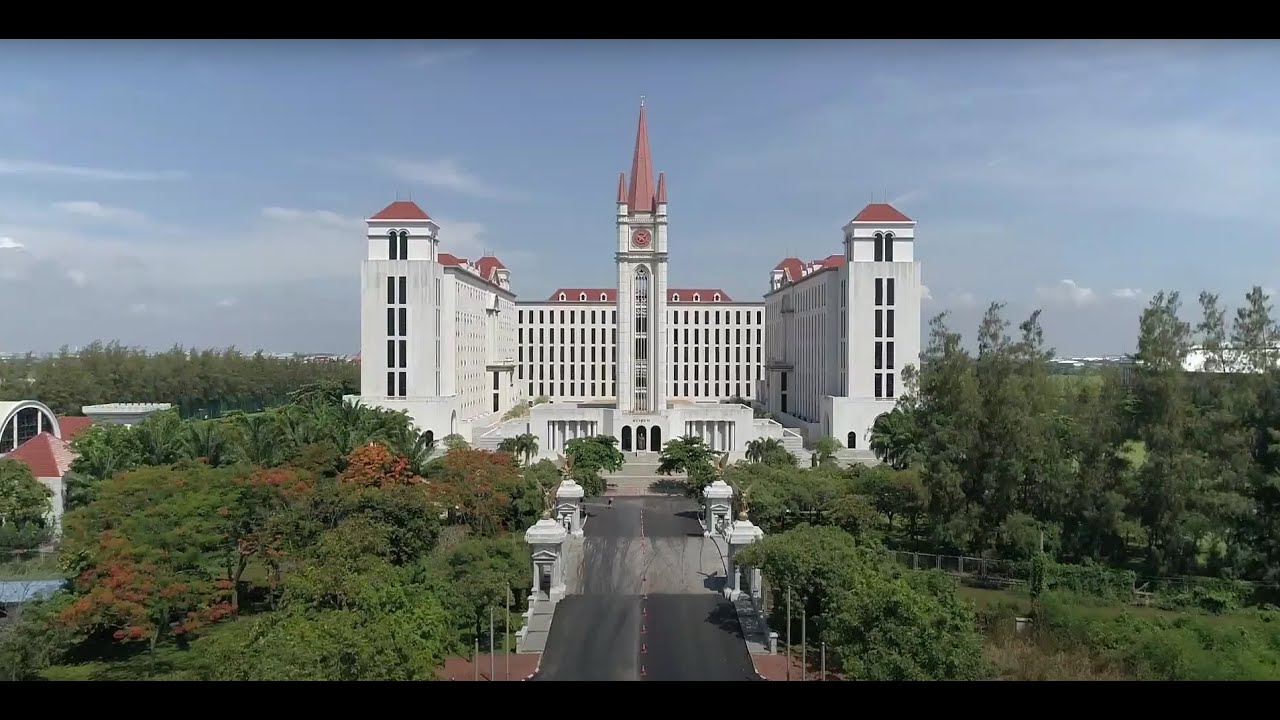
Assumption University of Thailand (AU)
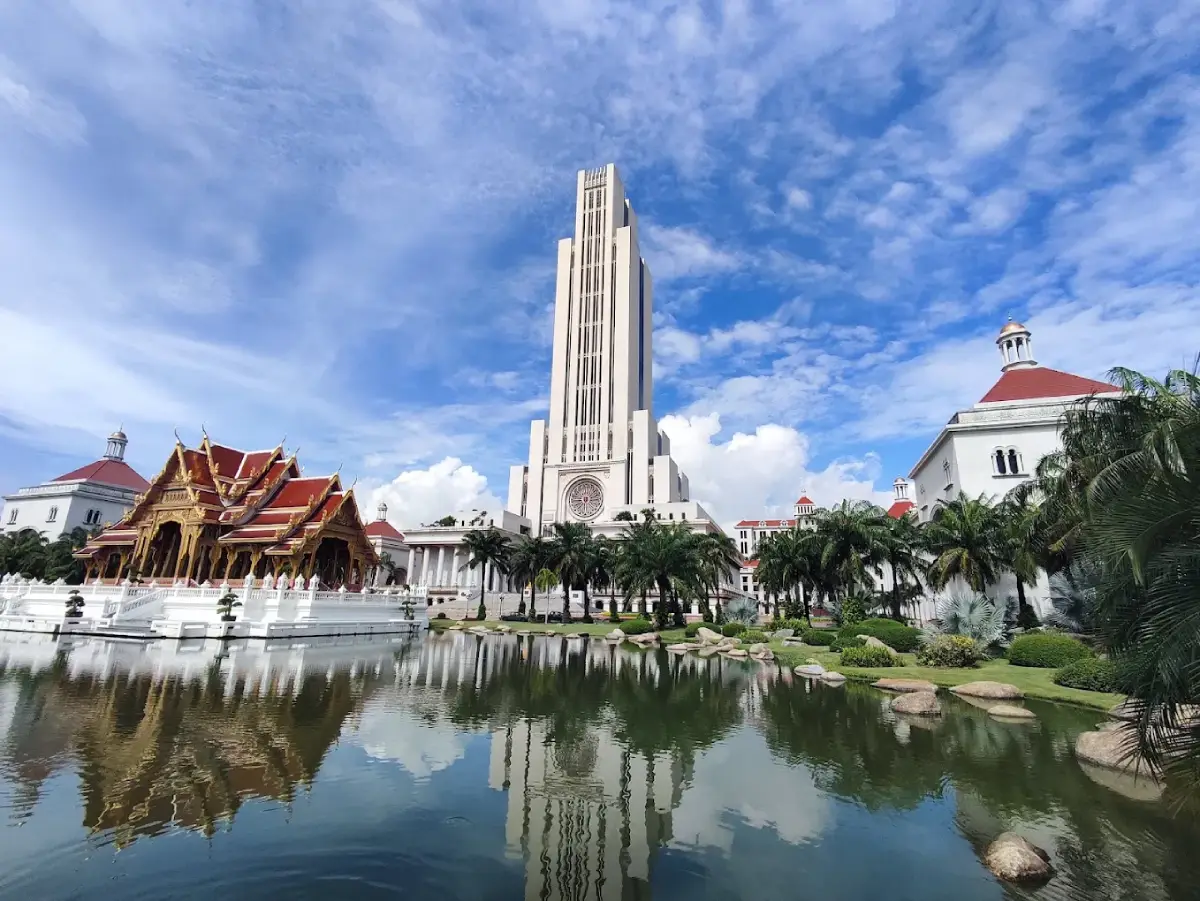
Open Days: Monday – Friday (Institute for English Language Education Office, Suvarnabhumi Campus)
Opening Hours: 08:30 – 12:00 and 13:00 – 16:30 (IELE Office Hours, Not General Public Access Hours for All Campus Buildings)
Assumption University of Thailand (AU), widely known by its former name and abbreviation ABAC, is a private Catholic university with an educational history dating back to 1969. The university currently operates two principal campuses: Hua Mak Campus at 592/3 Ramkhamhaeng Soi 24, Hua Mak, Bang Kapi District, Bangkok 10240, and Suvarnabhumi Campus at 88 Moo 8, Bang Na–Trat Road, Km 26, Bang Sao Thong Subdistrict, Bang Sao Thong District, Samut Prakan 10570. Assumption University is particularly associated with international education and the use of English as the principal medium of instruction in its international programs. Its academic offerings include bachelor's, master's, and doctoral education in business, engineering, technology, communication, architecture, design, languages, music, nursing, food technology, and law. The Suvarnabhumi Campus is especially famous for its distinctive architecture, led by the monumental Cathedral of Learning, one of Thailand's recognizable university landmarks.
Assumption University is administered by the Brothers of St. Gabriel, a Catholic religious congregation following the educational tradition of Saint Louis Marie de Montfort. The congregation has been involved in education in Thailand since 1901, emphasizing intellectual development alongside ethical responsibility, service, and concern for others. This educational heritage continues to influence the university's philosophy, which seeks to develop students' knowledge, professional abilities, moral judgment, and capacity to participate in an international community.
The university's two campuses offer notably different environments. Hua Mak Campus is the historic urban home of the institution, set within Bangkok's busy Ramkhamhaeng neighborhood. Suvarnabhumi Campus, by contrast, occupies a large landscaped site in Samut Prakan, with academic buildings, residences, sports facilities, lakes, and open gardens. Its broad avenues, white buildings, red-tiled roofs, and prominent central towers reflect a campus design intended to integrate learning, student life, recreation, and community activities.
Distinguishing the two campuses is particularly important for visitors. The Cathedral of Learning, John XXIII Conference Center, and Saint Louis Marie de Montfort Chapel are located at Suvarnabhumi Campus in Bang Sao Thong, Samut Prakan, rather than at Hua Mak Campus in Bangkok. Visitors attending graduate classes, administrative appointments, or specialized academic activities should verify the campus and building identified in their appointment details before traveling.
The history of Assumption University began with a plan to expand the educational opportunities available to students of the Assumption schools and Assumption Commercial College. The Brothers of St. Gabriel sought to create a pathway through which students completing commercial and vocational education could continue to higher study in business. This vision led to the establishment of Assumption School of Business (ASB) in 1969.
Brother Bernard Mary, an educational administrator associated with Assumption Commercial College, played an important role in initiating Assumption School of Business. Formal instruction began on June 2, 1969, with an initial enrollment of 53 students. The institution focused on business education, reflecting Thailand's increasing need for individuals with advanced commercial and management knowledge. Beginning with a relatively small student body, it gradually developed the academic and administrative foundations of a private higher education institution.
In 1972, the school was upgraded to a private college under the name Assumption Business Administration College, abbreviated ABAC. June 16, 1972, marked its accreditation as a degree-granting private college. The abbreviation ABAC became deeply embedded in Thai public awareness and remains widely used even though the institution has officially operated under the name Assumption University since 1990.
Rev. Bro. Prathip Martin Komolmas became one of the most influential figures in the university's development. In April 1972, he was instrumental in utilizing land at Hua Mak for the construction of ABAC's academic facilities. The first building was later named the Saint Philip and Bernard Building. His contribution extended far beyond the physical campus, encompassing the expansion of international academic programs, educational administration, and the eventual creation of the university's extensive campus in Samut Prakan.
Rev. Bro. Sompong Jirananda became the institution's first president in 1972 and served until 1974. The early administration established important systems for student services, teaching, and college management. Subsequent presidents included Wanphen Nophaket and Professor Dr. Choop Kanchanaprakorn, before Rev. Bro. Prathip Martin Komolmas assumed the presidency in 1979.
During the mid-1970s, ABAC strengthened academic activities and student organizations. In 1974, the institution established social volunteer and Rotaract activities that encouraged responsibility, service, and cooperation among students. De Montfort Hall was built in 1975, and an intensive English course was introduced in 1976 to prepare students for an educational environment where English was increasingly important.
English-language education became a defining characteristic of ABAC during a period when relatively few international higher education options were available in Thailand. Students developed listening, speaking, reading, and writing skills so that they could study business and professional subjects using English-language academic resources. This emphasis helped the college develop programs linked to international commerce and multicultural professional environments.
In 1979, ABAC introduced business computer education, an important development during the early expansion of computing into corporate administration. The institution also promoted business ethics, emphasizing that commercial achievement should be accompanied by responsibility and integrity. The combination of business, technology, and ethical reflection became an enduring feature of its academic identity.
Throughout the 1980s, ABAC expanded into additional disciplines. Its arts faculty introduced Business English and Business French in the 1986 academic year, followed by Business Chinese and Business Japanese. Nursing education and graduate study in philosophy and religion developed in 1988. These additions helped transform the college from an institution focused mainly on business into a more comprehensive center of higher education.
On May 22, 1990, Assumption Business Administration College was formally granted university status and became Assumption University. The transition recognized the institution's academic development and its growing responsibilities in education, research, professional training, and international cooperation.
In 1990, the university developed academic units in science and technology and engineering, responding to the growing need for technical expertise in business and industry. Law and communication arts followed in 1992, providing pathways into legal practice, corporate communication, media, and the creative industries.
As the institution expanded, the original Hua Mak campus faced limitations in available space for new facilities and student life. The university therefore began planning a larger campus in Samut Prakan, selecting land in Bang Sao Thong where academic buildings, residences, gardens, and sports facilities could be developed within an integrated master plan. The project would eventually embody the concept of a University in a Park.
Construction of the Cathedral of Learning began on July 15, 1994, and was completed on July 15, 2000. The building became the architectural centerpiece of the new campus. Its imposing vertical form and design elements inspired by Western institutional and religious architecture express the university's commitment to intellectual aspiration and the relationship between knowledge and spiritual values.
On February 10, 1995, the new educational site was officially approved as Bang Na Campus. In 1997, the university further developed architecture education, while construction advanced on facilities such as King David Hall and the Sala Jaturamuk Paijit Thai pavilion. Residential accommodation and other student amenities were also developed as part of the larger campus plan.
Between 1998 and 2001, the campus grew through the construction of residential halls, including Queen of Sheba Hall and King Solomon Hall, a clock tower and museum facilities, and the John XXIII Conference Center. The buildings were planned to support a community combining academic study, residence, conferences, religious activities, and everyday student life.
The first teaching activities at the new campus took place on March 17, 2000. On June 27, 2002, Her Royal Highness Princess Maha Chakri Sirindhorn formally inaugurated Bang Na Campus and the Cathedral of Learning, marking a major milestone in the development of Assumption University.
Another significant addition was the Saint Louis Marie de Montfort Chapel, completed in 2002. The chapel provides a setting for Catholic worship, religious ceremonies, and activities associated with the university's spiritual heritage. Its distinctive architecture and location within the landscaped campus contribute to the institution's visual and cultural identity.
Additional facilities followed, including the John Paul II Sports Center, AU Mall, information technology buildings, and the Aquatic Center, constructed in 2004. These developments strengthened the campus's capacity to support academic life, recreation, accommodation, and services within a single university environment.
In 2007, the university renamed Bang Na Campus as Suvarnabhumi Campus, reflecting its location in the eastern Bangkok metropolitan region and its relationship with the wider Suvarnabhumi area. The former name ABAC Bangna remains familiar in everyday usage, but Suvarnabhumi Campus is the official name used by the university today.
The university continued to expand its teaching facilities during the 2000s, including dedicated buildings for communication arts, architecture and design, management and economics, engineering, science, and technology. These spaces provided the specialized classrooms, studios, and laboratories required by an increasingly diverse set of academic disciplines.
In 2015, the Confucius Institute was formally established at Suvarnabhumi Campus, strengthening the university's work in Chinese language education and cultural exchange. The institute helped promote opportunities for Thai, Chinese, and international students to participate in language learning and activities associated with Chinese cultural traditions.
Important figures in Assumption University's history include Brother Bernard Mary, who helped initiate Assumption School of Business; Rev. Bro. Sompong Jirananda, the first president; and Rev. Bro. Prathip Martin Komolmas, who played a central role in developing ABAC into an international university and realizing the Suvarnabhumi Campus project.
Rev. Bro. Prathip Martin Komolmas served as president from 1979 to 2002. His educational vision emphasized English, technology, international academic standards, and the application of knowledge to wider society. The development of a large, distinctive, residential university campus remains one of his most visible institutional legacies.
University leadership in 2026 is headed by Rev. Bro. Sirichai Fonseka, f.s.g., Ph.D., President of Assumption University. Working with academic and administrative leaders, he oversees educational quality, academic programs, research, student affairs, and international cooperation. Both Hua Mak and Suvarnabhumi remain active university campuses.
The meaning of the name Assumption University is closely connected with the Catholic belief in the Assumption of the Blessed Virgin Mary into Heaven. Mary occupies an important place in the spiritual tradition of the Brothers of St. Gabriel. The university also draws on the idea of Sedes Sapientiae, the Seat of Wisdom, linking its Christian heritage with the pursuit of knowledge.
The university's Latin motto is Labor Omnia Vincit, commonly translated as “Work Conquers All” or “Hard Work Overcomes Every Obstacle.” It expresses the belief that perseverance, discipline, and responsible effort are fundamental to personal development. The idea of Lux Veritas, the Light of Truth, also forms part of the institution's educational philosophy.
Assumption University's coat of arms is based on the emblem of the Brothers of St. Gabriel. Its elements include a boat traveling through a challenging sea, representing life's difficulties; the DS cross, associated with Divinity and Science; the letters A.M. and white lilies, reflecting Alma Mater and purity; and a star symbolizing spiritual hope. Together within a shield, these symbols express the university's emphasis on knowledge, perseverance, ethical character, and spiritual purpose.
The university's symbolic tree is the Asoke Tree, associated with greenery, shade, growth, and a welcoming educational environment. The Suvarnabhumi Campus incorporates landscaped gardens and rows of trees that soften the appearance of its large buildings and provide places for students to walk, rest, and interact.
Traditions and cultural activities at Assumption University reflect both its Catholic foundation and its place within Thai society. Significant activities include the annual Assumption Day celebration, the Crowning Ceremony honoring Mary, the Thai Wai Khru ceremony, student leadership ceremonies, and intercultural events involving students from different countries.
Assumption Day is one of the university's most meaningful annual celebrations. August 15 marks the Catholic feast of the Assumption of the Blessed Virgin Mary. Assumption University has a history of organizing institutional celebrations of this feast since 2001, including Holy Mass, community gatherings, and a ceremony of placing a crown on Mary's image in front of the Cathedral of Learning.
On August 14, 2026, Assumption University celebrated Assumption Day at Suvarnabhumi Campus. Activities began with Holy Mass at Saint Louis Marie de Montfort Chapel and continued with the Crowning Ceremony outside the Cathedral of Learning. The celebration preserved an important part of the university's religious and historical identity while bringing together a community representing different backgrounds.
The traditional Thai Wai Khru ceremony connects the university's international environment with Thai cultural values. In 2026, the university organized a ceremony in which students expressed gratitude and respect toward their teachers through floral offerings, a student pledge, and words of encouragement from academic leaders. The event emphasized responsibility, gratitude, and the relationship between learning and mentorship.
Student leadership is celebrated through appointment and badge presentation ceremonies. In July 2026, a ceremony at the John Paul XXIII Conference Hall, Suvarnabhumi Campus, recognized student organization leaders and representatives. Such events encourage leadership, teamwork, community service, and responsible participation in university life.
Intercultural learning is also visible through events connected with traditions from different countries. In September 2026, the university hosted a Mid-Autumn Festival and Confucius Institute celebration, bringing students and staff together through language, music, traditional arts, and cultural exchange. Activities of this kind support mutual understanding within the international campus community.
Important landmarks at Suvarnabhumi Campus center on the Cathedral of Learning, or CL Building. Its grand staircase, monumental entrance, tall central tower, and carefully organized architectural composition make it the campus's most recognizable structure. The building accommodates educational and administrative facilities while serving as a powerful visual symbol of the university's academic aspirations.
The Cathedral of Learning features architectural elements associated with Western institutional traditions, including high windows, large columns, monumental arches, and carefully decorated interior spaces. Its combination of formal symmetry and symbolic design makes it especially interesting to visitors studying university architecture and the expression of cultural and spiritual ideas through buildings.
The Clock Tower and University Museum are important parts of Suvarnabhumi Campus. The tower contributes to the formal design of the central campus area, while university collections and historical displays provide opportunities to learn about the institution and the Brothers of St. Gabriel.
Bro. Martin's Collection is located on the sixth floor of the Cathedral of Learning within the university library. It preserves books, writings, gifts, historical materials, and objects associated with Rev. Bro. Prathip Martin Komolmas. The collection is particularly valuable for understanding the development of ABAC and the intellectual vision behind the university's expansion.
Saint Louis Marie de Montfort Chapel is a Catholic place of worship on Suvarnabhumi Campus, set within the university's landscaped grounds. It hosts religious ceremonies and activities connected with the institution's moral and spiritual mission. The chapel is an important setting for Assumption Day and represents a distinctive element of Thailand's Catholic educational heritage.
Sala Jaturamuk Paijit is a traditional Thai pavilion within the university grounds. Its architectural character contrasts with the Western-inspired academic buildings, expressing the coexistence of Thai artistic heritage and international educational culture. It contributes to the distinctive landscape of Suvarnabhumi Campus.
John XXIII Conference Center serves as a venue for major university events, seminars, academic meetings, and student leadership activities. Its capacity and facilities support gatherings involving students, faculty members, international visitors, and external organizations.
John Paul II Sports Center and the Aquatic Center provide opportunities for physical education, recreation, and competitive sports. These facilities support student well-being, discipline, cooperation, and athletic development as part of the university's wider educational environment.
AU Mall and other student services are integrated into daily campus life, offering places to eat, shop, and access practical services. These facilities are especially useful for students living on campus, enabling academic and residential life to function within the same community.
Student residence halls at Suvarnabhumi Campus are another defining feature of the university. They allow students to live close to their classes, activities, recreational spaces, and everyday services. Residential life can strengthen friendships across academic disciplines and nationalities while encouraging independence and personal responsibility.
Hua Mak Campus remains important as the university's historic home and a location associated with graduate education and academic administration. Significant buildings include the Saint Philip and Bernard Building, constructed during the institution's early development, De Montfort Hall, St. Gabriel's Building, and St. Louis Hall. The campus also contains academic support services and offices serving students and university personnel.
Comparing Hua Mak and Suvarnabhumi offers an insight into the institution's historical evolution. Hua Mak represents the era in which ABAC grew as an urban business college in Bangkok. Suvarnabhumi represents the next stage: a purpose-built international university integrating academic buildings, student residences, religious spaces, sports facilities, and landscaped open areas.
Academic strengths at Assumption University include English-medium education, international communication, intercultural learning, and professionally oriented programs. Important disciplines include international business, engineering, information technology, creative communication, architecture, design, biotechnology, nursing, and law. Academic learning is supported by projects, practical training, and activities intended to help students apply theoretical understanding to professional situations.
Martin de Tours School of Management and Economics continues the university's longstanding tradition of business education. Its published 2026 undergraduate programs cover Business Administration, Business Economics, Accountancy, Design and Digital Innovation, Sustainable Business Management, Global Hospitality Management, and Family Business Management and Innovation. The Business Administration degree includes major areas such as Marketing, Finance and Risk Management, Digital Business Management, Real Estate, and Global Business Management.
Theodore Maria School of Arts specializes in languages and international business communication. Its programs include International Business Language and English-Chinese for Digital Communication, with language concentrations in English, French, Chinese, and Japanese for international business. These fields prepare students for communication across cultures and professional work in internationally connected organizations.
Albert Laurence School of Communication Arts emphasizes creative media, advertising, brand communication, public relations, communication design, and event production. Its 2026 offerings include Creative Commercial Communication and Creative Communication Design, with concentrations involving digital media, image management, content creation, gamification, digital imagery, and graphic design.
Vincent Mary School of Engineering, Science and Technology offers programs in Electrical and Computer Engineering, Mechatronics Engineering and Artificial Intelligence, Aeronautic Engineering, New Energy Automotive Engineering, Computer Science, and Applied Informatics. The aeronautic engineering degree has pathways related to commercial pilot licensing and aircraft maintenance engineering.
Montfort del Rosario School of Architecture and Design provides education in Architecture, Interior Design, and Art and Design. The Art and Design program includes concentrations in Art and Creative Entrepreneurship and Product Design, connecting creative practice with contemporary technology, spatial planning, and product development.
Bernadette de Lourdes School of Nursing Science offers the Bachelor of Nursing Science, preparing students for professional healthcare. Nursing education requires scientific knowledge, practical skills, effective patient communication, ethical responsibility, and supervised clinical experience in accordance with professional requirements.
Theophane Venard School of Food Biotechnology and Innovation provides education in Food Technology. This field relates to food science, product development, food safety, and innovation in the modern food industry, preparing graduates with relevant applied scientific knowledge.
Louis Nobiron School of Music offers Music Entrepreneurship, a program connecting musical knowledge and creative abilities with business development and management in the music industry. The curriculum reflects the relationship between artistic practice and the commercial environment of contemporary music.
Thomas Aquinas School of Law offers a Thai-language Bachelor of Laws program. The language and professional requirements of this course differ from those of the university's international programs. Legal education provides an academic foundation in rights, obligations, civil and criminal law, business law, and the justice system.
Graduate education at Assumption University spans business, management, technology, computer science, psychology, education, language teaching, philosophy, religion, food biotechnology, and healthcare innovation. The university's graduate studies directory contains master's and doctoral degree listings, including weekday, weekend, professional, and international collaborative pathways. Applicants should use the admissions announcement applicable to their intended intake to confirm availability and requirements.
In business-related graduate study, the university publishes several MBA formats, including Fast Track, Digital Track, and bilingual English-Chinese options. These pathways reflect the needs of professionals managing organizations in the digital economy. Additional graduate fields include investment analysis, organizational development, hospitality and tourism, management, and information technology management.
Graduate study in science, technology, and education includes Computer Science, Innovation Engineering, Educational Administration and Leadership, Curriculum and Instruction, Counseling Psychology, and English Language Teaching. These fields connect advanced research with professional practice and institutional development.
Research and innovation are important components of the university's academic mission. Assumption University supports international collaboration in information technology, management, and emerging industries. In 2026, it participated in initiatives relating to new-energy vehicle technology and technical training at Suvarnabhumi Campus, helping connect engineering education with changing industrial requirements.
The Confucius Institute and academic partnerships with overseas institutions also support international engagement. Students benefit from opportunities involving foreign languages, intercultural activities, and academic exchange. The university has also developed postgraduate collaboration and double-degree pathways that connect higher education in Thailand with institutions abroad.
Community engagement varies according to the location of each campus. Hua Mak connects with the busy urban communities of Bang Kapi and Ramkhamhaeng, where commercial activity, transport, housing, and educational services are concentrated. Suvarnabhumi Campus is connected with the Bang Sao Thong and Bang Bo areas of Samut Prakan, including residential communities, industry, local services, and businesses serving students and university personnel.
Educational tourism and campus visits at Assumption University are particularly appealing to people interested in Catholic educational history, university architecture, and international higher education. Visitors to the Cathedral of Learning can study a monumental academic building that uses architectural form to convey spiritual and intellectual meaning. Those interested in the university's history can explore the institution's development from ABAC to AU through its historical landmarks and collections.
Architecture enthusiasts can also examine the contrast between Suvarnabhumi Campus's Western-inspired academic structures and its traditional Thai pavilion, gardens, and open spaces. This combination expresses the university's attempt to bring education, culture, spirituality, and student life together within a carefully designed landscape.
Access to conference rooms, classrooms, laboratories, residence halls, archives, and other specialized facilities is governed by university policies. Visitors planning educational tours or group visits should contact the university's public relations office or admissions department in advance. Access during a public event does not necessarily mean that all campus buildings are open for unrestricted visits.
Getting to Assumption University's Suvarnabhumi Campus is possible by private vehicle, taxi, or other road transport services. Drivers can follow Bang Na–Trat Road toward Km 26 and enter Bang Sao Thong District in Samut Prakan. The official address is 88 Moo 8, Bang Na–Trat Road, Km 26, Bang Sao Thong, Samut Prakan 10570. Visitors should confirm the designated entrance and parking arrangements, especially when attending large academic or ceremonial events.
Travelers arriving at Suvarnabhumi Airport can continue by taxi or private transport using roads connected to the Bang Na–Trat corridor. Those relying on public transport should consult the university's current shuttle and transport announcements, as schedules may change between academic terms and holidays. There is no railway station immediately adjacent to the entrance of Suvarnabhumi Campus.
Getting to Hua Mak Campus is possible by car, taxi, or public transport serving the Ramkhamhaeng area. The campus address is 592/3 Ramkhamhaeng Soi 24, Hua Mak, Bang Kapi, Bangkok 10240. Ramkhamhaeng Road, nearby Srinakarin Road, Ramkhamhaeng University, and the Sports Authority of Thailand provide useful geographical reference points.
For general university inquiries, contact +66 2 783 2222 or email abac@au.edu. Information for both campuses is available at www.au.edu. The Institute for English Language Education office at Suvarnabhumi Campus is located on the twenty-seventh floor of the Cathedral of Learning and operates Monday through Friday, 08:30–12:00 and 13:00–16:30. Other offices, libraries, and event venues have their own operating schedules.
Assumption University represents an important chapter in the development of private Catholic higher education in Thailand. Beginning as Assumption School of Business in 1969, becoming ABAC in 1972, and gaining university status in 1990, it later developed Suvarnabhumi Campus as a distinctive international educational environment. By combining professional knowledge, intercultural communication, academic innovation, and ethical principles expressed in the motto Labor Omnia Vincit, the university continues to contribute to higher education and the development of globally engaged graduates in 2026.
| University Name | Assumption University of Thailand (มหาวิทยาลัยอัสสัมชัญ) |
| Abbreviations and Former Name | AU / ABAC (Assumption Business Administration College) |
| Institution Type | Private Catholic University Administered by the Brothers of St. Gabriel |
| Hua Mak Campus Address | 592/3 Ramkhamhaeng Soi 24, Hua Mak, Bang Kapi District, Bangkok 10240, Thailand |
| Suvarnabhumi Campus Address | 88 Moo 8, Bang Na–Trat Road, Km 26, Bang Sao Thong Subdistrict, Bang Sao Thong District, Samut Prakan 10570, Thailand |
| Original Establishment | 1969 |
| First Day of Teaching | June 2, 1969 — Assumption School of Business |
| ABAC College Status | June 16, 1972 |
| University Status Granted | May 22, 1990 |
| Institutional Age in 2026 | 57 Years Since the Beginning of Teaching in 1969 |
| Founders and Important Figures | 1. Brothers of St. Gabriel 2. Brother Bernard Mary 3. Rev. Bro. Sompong Jirananda 4. Rev. Bro. Prathip Martin Komolmas |
| President in 2026 | Rev. Bro. Sirichai Fonseka, f.s.g., Ph.D. |
| University Motto | Labor Omnia Vincit — Work Conquers All |
| Symbolic Tree | Asoke Tree |
| Educational Identity | International Education, Catholic Values, English-Medium Academic Learning, Perseverance, and the Seat of Wisdom Tradition |
| Campuses | 1. Hua Mak Campus, Bangkok 2. Suvarnabhumi Campus, Samut Prakan (Formerly Bang Na Campus) |
| Undergraduate Academic Schools | 1. Martin de Tours School of Management and Economics 2. Theodore Maria School of Arts 3. Louis Nobiron School of Music 4. Albert Laurence School of Communication Arts 5. Montfort del Rosario School of Architecture and Design 6. Vincent Mary School of Engineering, Science and Technology 7. Theophane Venard School of Food Biotechnology and Innovation 8. Bernadette de Lourdes School of Nursing Science 9. Thomas Aquinas School of Law |
| Qualification Levels | Bachelor's, Master's, and Doctoral Degrees; Selected Graduate Diplomas and Professional Certificates |
| Academic Strengths | Business and Economics, International Languages, Engineering and Artificial Intelligence, Creative Communication, Architecture and Design, Food Technology, Nursing, Aviation, and Law |
| Suvarnabhumi Campus Landmarks | 1. Cathedral of Learning 2. Clock Tower and University Museum 3. Saint Louis Marie de Montfort Chapel 4. John XXIII Conference Center 5. Sala Jaturamuk Paijit Thai Pavilion 6. Bro. Martin's Collection, Cathedral of Learning, Floor 6 7. John Paul II Sports Center 8. Aquatic Center 9. AU Mall 10. Student Residence Halls |
| Hua Mak Campus Landmarks | 1. Saint Philip and Bernard Building 2. De Montfort Hall 3. St. Gabriel's Building 4. St. Louis Hall |
| Traditions and Major Activities | 1. Assumption Day and Crowning Ceremony 2. Wai Khru Ceremony 3. Student Leadership and Badge Ceremonies 4. International Cultural Activities 5. Graduation Ceremonies |
| IELE Office Open Days, Suvarnabhumi | Monday – Friday |
| IELE Office Hours, Suvarnabhumi | 08:30 – 12:00 and 13:00 – 16:30 |
| Campus and Educational Visits | Arrange Access to Classrooms, Conference Rooms, Museums, Student Residences, and Specialized Facilities with the University in Advance |
| Transport to Suvarnabhumi Campus | Private Car, Taxi, and University Transport Services According to Published Schedules via Bang Na–Trat Road, Km 26, Samut Prakan |
| Transport to Hua Mak Campus | Car, Taxi, and Public Transport Serving Ramkhamhaeng Road, With Access via Ramkhamhaeng Soi 24 |
| Nearby Attractions in Bang Sao Thong and Samut Prakan | 1. Wat Siri Sao Thong, Bang Sao Thong 2. Wat Sri Waree Noi, Bang Sao Thong 3. Wat Suwannaphum Phutthachayanti, Bang Sao Thong 4. Chujai Beach, Bang Sao Thong 5. Wat Bang Phli Yai Nai, Bang Phli |
| Restaurants and Cafés Near Suvarnabhumi Campus | 1. Tenzai Sushi, ABAC Bangna Area, Tel. +66 62 475 5599 2. TYME Cafe and Bistro, Bang Sao Thong, Tel. +66 2 705 5959 3. ABAC Indian Food, ABAC Bangna Road, Tel. +66 87 110 9099 4. KAMU Tea, ABAC Plaza, Tel. +66 92 131 3077 5. Pinkaew Restaurant, Bang Na–Trat Road, Tel. +66 83 035 1749 |
| Accommodation Near Suvarnabhumi Campus | 1. Tisha Hotel, Tel. +66 96 639 1935 2. The Green View Hotel, Tel. +66 2 705 6200 3. Paeva Luxury Serviced Residence, Tel. +66 2 183 7000 4. NY City Resort, Tel. +66 2 705 5211 5. Hotel De Trojan, Tel. +66 2 705 5959 |
| University Contact Number | +66 2 783 2222 |
| Graduate Studies Contact | +66 2 783 2345 |
| University Email | abac@au.edu |
| Official Website | www.au.edu |
| University Status in 2026 | Active at Both Hua Mak and Suvarnabhumi Campuses, With Published Undergraduate Admissions Programs for 2026 |
Assumption University Academic Programs and Fields of Study, Academic Year 2026 (B.E. 2569) The undergraduate programs below are based on the university's official 2026 admissions brochure. The postgraduate section reproduces the degree and program listings in the university's graduate studies directory. Major concentrations, alternative MBA study tracks, double-degree pathways, and certificate programs are distinguished from independent degree programs. Graduate admissions availability is determined by the applicable intake announcement.
| School / College / Degree Level | Academic Programs and Fields of Study |
| Martin de Tours School of Management and Economics | Undergraduate Programs — 2026 1. B.B.A. — Design and Digital Innovation 2. B.B.A. — Sustainable Business Management 3. B.B.A. — Business Administration (Majors: Digital Business Management, Finance and Risk Management, Global Business Management, Hospitality and Tourism Management, Marketing, Real Estate) 4. B.B.A. — Global Hospitality Management 5. B.B.A. — Family Business Management and Innovation 6. Bachelor of Accountancy — Accountancy 7. Bachelor of Economics — Business Economics |
| Theodore Maria School of Arts | Undergraduate Programs — 2026 1. B.A. — International Business Language (Majors: English for International Business, French for International Business, Chinese for International Business, Japanese for International Business) 2. B.A. — English-Chinese for Digital Communication |
| Louis Nobiron School of Music | Undergraduate Program — 2026 1. B.A. — Music Entrepreneurship |
| Albert Laurence School of Communication Arts | Undergraduate Programs — 2026 1. Bachelor of Communication Arts — Creative Commercial Communication (Majors: Advertising and Brand Communication, Digital Media Communication, Image Management and Public Relations, Innovative Gamification and Content Management, Live Event Creation and Management) 2. B.F.A. — Creative Communication Design (Majors: Digital Imagery, Graphic Design) |
| Montfort del Rosario School of Architecture and Design | Undergraduate Programs — 2026 1. B.Arch. — Architecture 2. B.F.A. — Interior Design 3. B.F.A. — Art and Design (Majors: Art and Creative Entrepreneur, Product Design) |
| Vincent Mary School of Engineering, Science and Technology | Undergraduate Programs — 2026 1. B.Eng. — Electrical and Computer Engineering (Majors: Electrical Engineering, Computer Engineering) 2. B.Eng. — Mechatronics Engineering and Artificial Intelligence 3. B.Eng. — Aeronautic Engineering (Pathways: Commercial Pilot License, Aircraft Maintenance Engineering) 4. B.Eng. — New Energy Automotive Engineering 5. B.S. — Computer Science 6. B.S. — Applied Informatics |
| Theophane Venard School of Food Biotechnology and Innovation | Undergraduate Program — 2026 1. B.Sc. — Food Technology |
| Bernadette de Lourdes School of Nursing Science | Undergraduate Program — 2026 1. B.N.S. — Nursing Science |
| Thomas Aquinas School of Law | Undergraduate Program — 2026 1. LL.B. — Law (Thai-Language Program) |
| Graduate School of Business and Advanced Technology Management | Master's Programs — Graduate Directory 1. Master of Business Administration (MBA) — Fast Track, Digital Track, Bilingual English/Chinese, Smart MBA, Creative Communication, Music Business and Entertainment, Hospitality and Tourism Management 2. Master of Science — Management 3. Master of Science — Information Technology and Management 4. Master of Education — Teaching and Technology 5. Master of Science — Investment Analysis and Management 6. Master of Management — Organization Development Doctoral Programs — Graduate Directory 1. Ph.D. — Organization Development 2. Ph.D. — Hospitality and Tourism Management 3. Ph.D. — Innovative Technology Management 4. Ph.D. — Arts, Music, Sports and Entertainment Management 5. Ph.D. — Teaching and Technology 6. Ph.D. — Technology, Education and Management |
| Graduate School of Human Sciences | Master's Programs — Graduate Directory 1. M.Ed. — Educational Administration and Leadership 2. M.Ed. — Curriculum and Instruction 3. M.S. — Counseling Psychology 4. M.A. — Philosophy and Religion 5. M.A. — English Language Teaching 6. M.A. — Art and Design Graduate Diploma 1. Graduate Diploma in Teaching and Technology Doctoral Programs 1. Ph.D. — Educational Administration and Leadership 2. Ph.D. — Counseling Psychology 3. Ph.D. — Philosophy and Religion 4. Ph.D. — English Language Teaching |
| Vincent Mary School of Engineering, Science and Technology — Graduate Studies | Master's Programs 1. M.S. — Computer Science 2. M.S. — Information Technology 3. M.Eng. — Innovation Engineering Doctoral Programs 1. Ph.D. — Computer Science 2. Ph.D. — Information Technology 3. Ph.D. — Innovation Engineering |
| Martin de Tours School of Management and Economics — Graduate Studies | Master's Programs 1. M.S. — Supply Chain Management 2. M.S. — Business and Economics Doctoral Programs 1. Ph.D. — Business Administration 2. Ph.D. — Business and Economics / Dual Degree Pathway with Strategy and Development of Emerging Industries |
| Theophane Venard School of Food Biotechnology and Innovation — Graduate Studies | Master's Program 1. M.S. — Food Biotechnology Doctoral Program 1. Ph.D. — Food Biotechnology |
| Bernadette de Lourdes School of Nursing Science — Graduate Studies | Master's Program 1. M.Sc. — Healthcare Entrepreneurship and Wellness Management Doctoral Program 1. Ph.D. — Healthcare Entrepreneurship and Wellness Management Certificate Program 1. Certificate in Practical Nursing |
| Thomas Aquinas School of Law — Graduate Studies | Graduate Directory Listing 1. M.A. — Law, Management and Information Technology |
| Louis Nobiron School of Music — Graduate Studies | Graduate Directory Listing 1. M.A. — Music |
Frequently Asked Questions (FAQ)
Q: Are Assumption University and ABAC the same institution?
A: Yes. ABAC stands for Assumption Business Administration College, the university's former name. The institution gained university status and adopted the name Assumption University in 1990.
Q: How many campuses does Assumption University have and where are they located?
A: The university operates two principal campuses: Hua Mak Campus on Ramkhamhaeng Soi 24 in Bang Kapi, Bangkok, and Suvarnabhumi Campus on Bang Na–Trat Road at Km 26 in Bang Sao Thong, Samut Prakan.
Q: When was Assumption University established?
A: Teaching began at Assumption School of Business on June 2, 1969. The institution became Assumption Business Administration College on June 16, 1972, and gained university status on May 22, 1990.
Q: Which campus has the Cathedral of Learning?
A: The Cathedral of Learning is at Suvarnabhumi Campus in Bang Sao Thong, Samut Prakan. It is the university's most recognizable architectural landmark and was formally inaugurated on June 27, 2002.
Q: What are Assumption University's opening days and hours?
A: The Institute for English Language Education office at Suvarnabhumi Campus operates Monday to Friday from 08:30–12:00 and 13:00–16:30. Other offices, libraries, and campus buildings follow their own schedules and access policies.
Q: What faculties and degree programs are available at Assumption University?
A: The official 2026 undergraduate admissions brochure lists nine academic schools covering business and economics, arts and languages, music, communication arts, architecture and design, engineering and technology, food technology, nursing, and law. The graduate directory also publishes master's and doctoral programs in several fields.
Q: Can members of the public visit Assumption University?
A: Visitors can contact the university to arrange an educational visit or participate in events open to the public. Access to classrooms, laboratories, residence halls, museums, and specialized academic facilities requires permission from the relevant department.
Q: How can I contact Assumption University?
A: Call +66 2 783 2222, email abac@au.edu, or visit www.au.edu. Visitors should clearly specify Hua Mak or Suvarnabhumi Campus when arranging appointments.
 Category: ●University
 Group: ●Private University
Last Update : 1 WeekAgo
 Last Update : 1 WeekAgo
 Click to Access the Navigation Map GPS
Assumption University of Thailand (AU) Map
Recommend

 Art, Culture and Heritage
 Historical Sites and Monuments(3)
 Landmarks and Memorials(23)
 Royal Palace(13)
 Art, Craft Centres, Tradition(35)
 Museums(59)
 Historic Homes and Cities(3)
 Art Gallery(16)
 Educational Places
 Museum for Study(6)
 Library(4)
 Public university(8)
 Autonomous Universities(8)
 Rajamangala University of Technology(6)
 Rajabhat University(6)
Private University(22)
 Places of Worship
 Temple(72)
 Church(2)
 Mosque(67)
 Other Sacred Sites(8)
 Research and Development
 Royal Project(1)
 Suburban Living
 Village, Community(5)
 Local Market(9)
 Floating Market(2)
 Nature and Wildlife
 River, Canal(3)
 Bays and Beaches(1)
 Other natural attractions(1)
 Entertainment and Agricultural
 Zoos and Aquariums(5)
 Animal camps and shows(5)
 Stadium(9)
 Farms, Parks and Ecotourism(20)
 Amusement Park(1)
 Waterpark(4)
 Theater(7)
 Cinema(1)
 Shopping
 Shopping and Night Market(20)
 Department Store(7)
 Spas and Wellness
 Spas and Wellness(1)
 Restaurant
 Michelin Star(5)
 Accommodation
 Hotel(3)
 Call Customer Service in Tourism
 Call Customer Service in Tourism(1)
 Travel Articles, Recipes
 Travel Review, Food Review(43)
 Royal Thai Desserts and Recipes(56)


