
lovethailand home >Central Travel Attractions >Bangkok Travel Attractions >Patum Wan >Wang Mai > Chulalongkorn University
TL;DR: Chulalongkorn University, Bangkok attractions : University, Autonomous Universities.
Chulalongkorn University
Open Days: Monday – Friday (For Certain University Administrative Offices, Except Public and University Holidays)
Opening Hours: 08:00 – 17:00 (Office of Human Resources Management Hours; Not the Opening Hours of Every University Building or Campus Area)
Chulalongkorn University (CU) is Thailand's first institution of higher education and an autonomous public university located at 254 Phaya Thai Road, Wang Mai, Pathum Wan, Bangkok 10330, Thailand. The university was officially founded on March 26, 1917, corresponding to March 26, B.E. 2459 in the historical Thai calendar, by King Vajiravudh, Rama VI. Its origins extend to the Civil Service Training School established by King Chulalongkorn, Rama V, in 1899. Today the university offers education and research across engineering, science, medicine, health sciences, humanities, social sciences, law, business, the arts, agriculture, and interdisciplinary innovation. Its most recognizable symbols include Phra Kiao, the royal coronet emblem, the color pink, and the rain tree. Major landmarks include the Royal Monument of King Chulalongkorn and King Vajiravudh, Chulalongkorn University Auditorium, and Maha Chulalongkorn Building. In 2026, CU celebrated its 109th anniversary under the leadership of Professor Wilert Puriwat, D.Phil., who continues to emphasize research, educational innovation, and lifelong learning for the benefit of society.
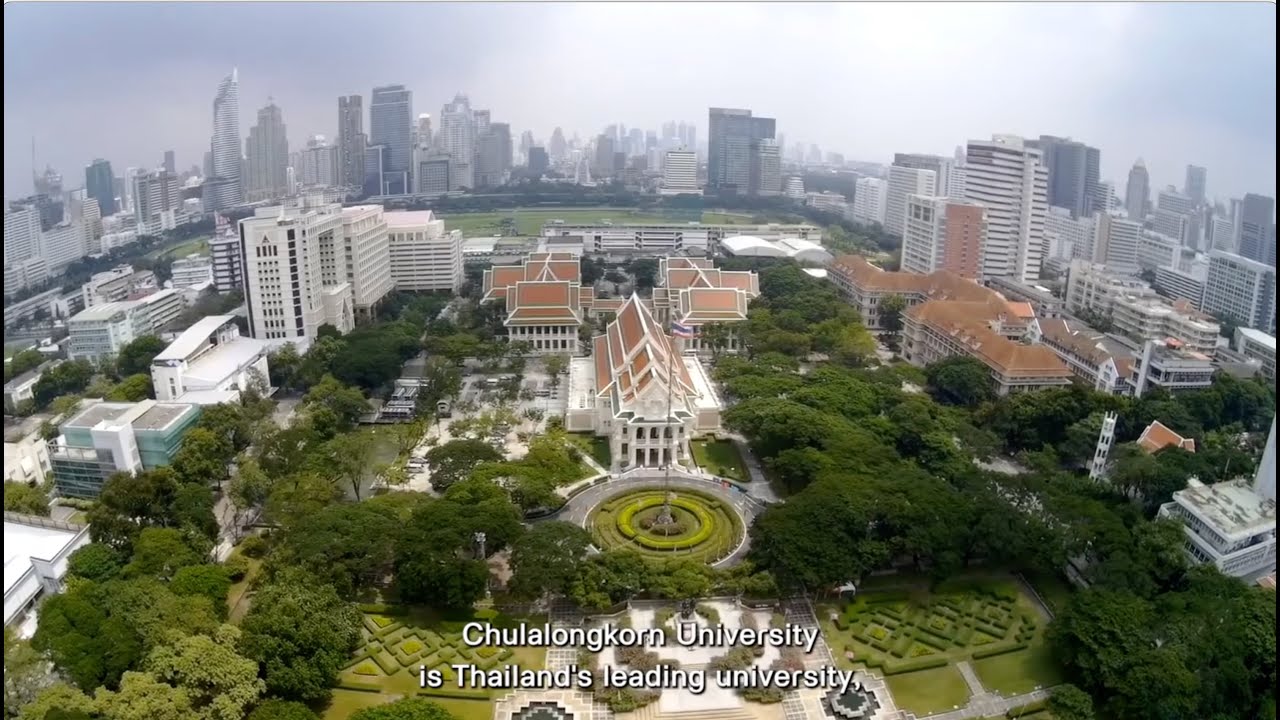
Chulalongkorn University's main campus stands in central Bangkok, connecting Pathum Wan with Siam, Sam Yan, and Banthat Thong. The surrounding urban district is defined by Phaya Thai Road to the west, Rama I Road to the north, and Rama IV Road to the south. Within the university are historic buildings, academic faculties, research laboratories, libraries, sports facilities, tree-lined walkways, and student activity areas. This arrangement gives CU a distinctive character in which architectural heritage coexists with modern science, technology, and urban life.
Although Chulalongkorn University is widely known as a historic institution, the purpose of its creation extended beyond education for members of the traditional elite. Its origins lay in a royal policy to develop people who could administer a modern country and contribute to the public good. Over time, this mission expanded from civil service education into advanced professional and academic study across many disciplines, opening opportunities for students to prepare for careers in government, business, research, education, and other sectors.
The university's early history began during the reign of King Chulalongkorn, when Siam undertook extensive reforms in public administration, education, law, transportation, and economic development. Government modernization increased the need for officials trained in languages, public administration, finance, and professional skills. Establishing an organized school for civil servants was therefore an important part of building the country's modern institutions.
In 1899, King Chulalongkorn established a school for civil service training in a long building near Phiman Chaisri Gate within the Grand Palace. The institution prepared personnel for public service at a time when government departments were expanding and administrative responsibilities were becoming more complex. The school became one of the earliest foundations of Thailand's modern higher education system.
On April 1, 1902, the institution was renamed the Royal Pages School, known in Thai as Rong Rian Mahatlek. It continued preparing personnel for public administration while developing a more systematic educational framework. Its significance lay in connecting formal study with professional responsibilities and the administration of a changing country.
During the reign of King Vajiravudh, Rama VI, plans emerged to expand the school beyond the training requirements of individual government departments. The institution was reorganized as the Civil Service College of King Chulalongkorn in honor of King Vajiravudh's father. The intention was to establish a lasting educational memorial that would continue contributing to national progress and create opportunities for more advanced forms of education.
The transition to a civil service college involved significant changes to academic programs. A modern state required expertise in law, diplomacy, government, finance, engineering, medicine, agriculture, and education. These disciplines were not simply administrative skills; they represented the foundations of professions and academic fields essential to the country's long-term economic and social development.
Between 1914 and 1915, preparations were made for buildings that would support the future university. King Vajiravudh encouraged the construction of an administration building near Sanam Ma Road and laid its foundation stone on January 3, 1915. The development of this architectural complex became an important step toward bringing different forms of higher education together within a recognizable university campus.
On March 26, B.E. 2459, corresponding to March 26, 1917, King Vajiravudh officially elevated the Civil Service College of King Chulalongkorn to Chulalongkorn University. The university was founded to commemorate King Chulalongkorn and continue his educational ideals. Its establishment marked a major turning point in the history of higher education in Thailand, creating the country's first university and strengthening the connection between advanced learning and national development.
The Thai and Gregorian years of the university's foundation require careful interpretation. Because Thailand historically began its new year in April, March 26, B.E. 2459, corresponds to March 26, 1917, rather than March 1916. For this reason, Thai historical accounts consistently use B.E. 2459, while English-language university histories use 1917. Both refer to the same founding event.
At the time of its establishment, Chulalongkorn University consisted of four faculties: Public Administration, Medicine, Engineering, and Arts and Science. Eight academic divisions covered government, law, diplomacy, finance, medicine, engineering, agriculture, and teacher education. This structure reflected the university's purpose as a multidisciplinary institution designed to support national development.
During the university's early years, teaching facilities were not all located within a single campus. Medical education developed from the Royal Medical College and Siriraj Hospital, while other programs used the administration building and facilities associated with Windsor Palace. CU was therefore formed through the gradual integration of existing schools and academic programs, followed by the development of shared administration and modern university facilities.
Between 1917 and the early 1920s, the university improved academic standards and prepared for formal degree-level education. Medical education benefited from cooperation with the Rockefeller Foundation, which supported the development of teaching, laboratories, and professional training. Such international partnerships helped raise the quality of professional education and scientific research in Thailand.
Between the 1920s and late 1930s, Chulalongkorn University expanded student admission and developed curricula for students completing secondary education. Degree-level programs became more clearly established. The admission of women into university education was another important development, reflecting the gradual expansion of educational opportunity and the changing role of women in Thai society.
Changes to Thailand's political and administrative system after 1932 also affected the university's academic organization. Legal studies, political science, and public administration evolved in response to new national circumstances. In 1943, certain medical and health professional academic units became part of the newly established University of Medical Sciences, which later developed into Mahidol University. This development reflected the wider expansion of Thai higher education beyond its original institutional foundations.
After World War II, Chulalongkorn University continued establishing and expanding faculties in the sciences, engineering, economics, commerce, accountancy, architecture, education, and social sciences. The university gradually transformed from an institution originally associated with civil service training into a large research university supporting a broad range of professions and academic disciplines.
Health-related faculties grew in importance as the university expanded into medicine, dentistry, pharmacy, veterinary science, allied health sciences, psychology, and nursing. At the same time, faculties in arts, fine and applied arts, communication arts, political science, law, and economics contributed to the understanding of language, culture, society, government, and economic development.
In 2017, Chulalongkorn University marked its centenary. One of the major commemorative developments was Chulalongkorn University Centenary Park in the Banthat Thong neighborhood. The park represents a commitment to using university land for the benefit of Bangkok, providing green space, stormwater management, recreational opportunities, and an example of climate-responsive urban landscape design.
In 2008, Chulalongkorn University became an autonomous public university under the Chulalongkorn University Act B.E. 2551. This reform provided greater flexibility in academic administration, research, personnel management, and institutional development, while maintaining public responsibility and governance through the University Council. It formed part of the wider evolution of Thailand's university system toward research and innovation in an increasingly international environment.
An important structural change took effect on January 24, 2026. The School of Agricultural Resources became the Faculty of Integrated Agriculture, the former Graduate School was reorganized as the College of Interdisciplinary and Integrative Studies (CUii), and the College of Lifelong Learning for the Public, known as Chula XL, was established. These academic changes support interdisciplinary education, flexible learning, agricultural innovation, and opportunities for people of different ages to continue developing their knowledge and skills.
The Faculty of Integrated Agriculture reflects CU's growing contribution to contemporary agricultural development. It integrates agricultural resources, science, technology, business, and innovation. Academic activities take place in Bangkok and at facilities in Nan Province, where students and researchers can connect their studies with agricultural communities and local development. The faculty seeks to develop knowledgeable agricultural entrepreneurs and support sustainable food production and resource management.
The College of Interdisciplinary and Integrative Studies, or CUii, developed from the university's former Graduate School. It promotes education across traditional disciplinary boundaries, bringing together health sciences, science and technology, humanities, social sciences, and interdisciplinary research. Its academic approach is particularly relevant to contemporary problems that cannot be solved through a single field of expertise.
Chula XL provides lifelong learning opportunities for members of the public. On October 21, 2026, the university officially launched the Chula XL Hub platform to bring together online courses and professional development opportunities from university academics and other experts. Learning categories include digital technology and artificial intelligence, engineering, languages, health, social and life skills, and creative arts. Some courses are free while others involve fees, according to the program's arrangements.
In 2026, Professor Wilert Puriwat, D.Phil., serves as President of Chulalongkorn University. His administration emphasizes the development of education, research, innovation, and partnerships that respond to global change. An important institutional direction is the development of student-centered and socially engaged learning, enabling the university's knowledge and expertise to generate practical benefits for the wider population.
The name Chulalongkorn University is derived from the royal name of King Chulalongkorn, Rama V, who founded the educational institution from which the university developed. Its name therefore represents both a royal commemoration and the continuation of an educational vision. King Vajiravudh established the university as a lasting memorial to his father and as an institution that would advance the country's intellectual and professional capabilities.
The university's most important emblem is Phra Kiao, a royal coronet associated with the royal heritage of King Chulalongkorn. It has become a symbol of the university's origins and institutional identity. The emblem appears in university insignia, official materials, buildings, academic traditions, and ceremonial settings, representing the relationship between Chulalongkorn University and its historical foundation.
Pink is the official university color, associated with the royal birth color of King Chulalongkorn. It was adopted as an institutional symbol and became especially visible through student activities and traditional sports competitions. Over time, pink has come to represent shared identity among students, alumni, academics, and staff across generations.
The rain tree, known in Thai as Chamchuri, is the university's symbolic tree and a distinctive feature of its landscape. Large rain trees provide shade along walkways and outdoor gathering spaces. The tree also has a cultural role in student welcoming traditions, when older students present newcomers with small branches or leaves tied with pink ribbons. This gesture symbolizes the beginning of their membership in the Chulalongkorn University community.
University songs are another important part of CU's identity. Songs such as Maha Chulalongkorn and Kiat Phum Chula are associated with university events, ceremonial occasions, and alumni gatherings. Singing together helps strengthen a sense of belonging, while other university traditions preserve historical memory and encourage responsibility toward society.
March 26 is Chulalongkorn University's annual foundation anniversary. Commemorations normally include royal tribute ceremonies at the monument to King Chulalongkorn and King Vajiravudh, merit-making activities, and academic or cultural programs. On March 26, 2026, the university celebrated its 109th anniversary with ceremonies attended by members of the royal family, university executives, faculty members, staff, students, and alumni.
Among the notable events celebrating the 109th anniversary was a Piphat Duek Dam Ban traditional Thai music performance at Chulalongkorn University Auditorium. The performance preserved a distinctive musical tradition and highlighted the university's responsibility for cultural education and heritage. Activities such as this demonstrate how contemporary academic institutions can support traditional arts through teaching, performance, research, and public engagement.
One of the university's important orientation traditions is CU First Date, an event designed to introduce new students to university life and build connections across faculties. On July 18, 2026, CU First Date welcomed the incoming CU 110 student cohort at the university auditorium and the area surrounding the royal monument. The program included student club activities, performances, alumni participation, and opportunities for newcomers to learn about the university's history and student culture.
The traditional football competition between Chulalongkorn University and Thammasat University is another important part of student and alumni history. Beginning in 1934, it developed from a football match into an event associated with institutional friendship, student creativity, teamwork, and public expression. The organization and scheduling of the competition depend on the institutions and event organizers, so it should not be assumed to take place every year without changes.
Other university traditions include teacher appreciation ceremonies, student orientation programs, volunteer activities, alumni reunions, and commemorations of King Chulalongkorn on October 23. These activities reinforce gratitude, shared identity, and community responsibility. Student organizations and clubs also provide opportunities for leadership development, cooperation, and experience beyond formal academic study.
One of the university's most significant landmarks is the Royal Monument of King Chulalongkorn and King Vajiravudh, also known as the Two Kings Monument. It stands in front of Chulalongkorn University Auditorium and serves as the focal point for royal tribute ceremonies and important institutional occasions. The monument symbolizes the university's connection with the King who established its educational foundations and the King who formally founded it as a university.
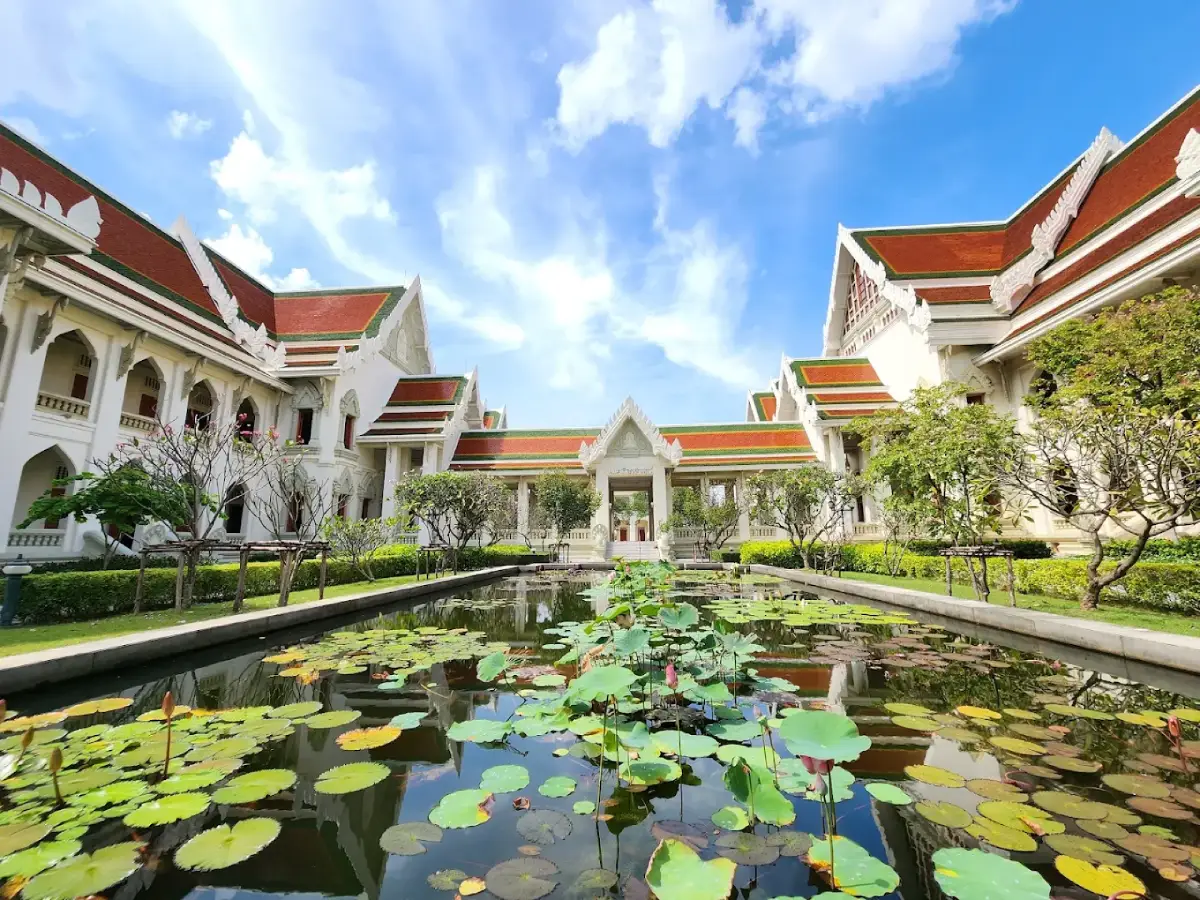
Chulalongkorn University Auditorium is a historic building recognized for its distinctive Thai-inspired architecture. It combines modern structural design with traditional Thai elements, including gables, rooflines, and decorative details. The auditorium is used for royal degree conferment ceremonies, cultural performances, academic events, and other university functions. Its landscaped grounds and formal setting make it one of the campus's most recognizable photographic landmarks.
Maha Chulalongkorn Building is another important part of the university's architectural heritage. Associated with the early development of the university campus, it represents the evolution of educational buildings during the Rattanakosin period. Its importance lies in both its continued academic use and its historical role in the growth of Thailand's university education system.
Chakrabongse Building houses the Chulalongkorn University Memorial Hall, which presents the history of the institution through photographs, archival documents, exhibits, and accounts of important people. Visitors can learn how the Royal Pages School developed into Thailand's first university. The exhibition at Chakrabongse Building is open free of charge from Monday to Friday, 08:30–16:30.
Additional archival resources are located on the 15th floor of Borommaratchakumari Building, where the Memorial Hall's records facilities operate Monday through Friday, 08:30–17:00. These collections preserve the university's documentary heritage. Researchers wishing to consult particular materials should follow the archive's access procedures so that historical records can be used responsibly and preserved for future study.
Chulalongkorn University Museum is an educational and cultural exhibition space presenting university history, contemporary art, and subjects of public interest. During 2026, its activities included temporary exhibitions concerned with art, the environment, and academic knowledge. Public exhibitions generally operate Monday through Friday, 09:00–16:30, excluding official holidays and subject to the schedules announced for individual programs.
The Chulalongkorn University Museum of Natural History, located within the Faculty of Science, is another valuable educational destination. It contains collections related to animals, plants, biological specimens, and natural science. The museum supports learning about the classification of living organisms, biodiversity, and ecological relationships. Visitors should confirm opening times and access conditions with the responsible department before arranging a visit.
The Office of Academic Resources, commonly known as the Central Library, provides an important center for study and research. Its resources include printed books, scholarly journals, electronic databases, digital materials, and study spaces. The library supports students, faculty members, researchers, and eligible external users. Access and service conditions vary according to the university's current library regulations.
Chulalongkorn University Centenary Park is a major green space designed to address the environmental challenges of a densely developed city. Its landscaped lawn, pathways, public activity areas, and stormwater management features help retain rainfall and support urban water management. The park serves as a recreational area and an educational example of sustainable landscape architecture and climate-responsive urban design.
Chulalongkorn University Dhamma Center provides space for religious, ethical, and contemplative activities. Its programs contribute to personal development and reflection, helping university members cultivate balance between intellectual achievement and ethical living. Activities take place according to the center's own schedule and include opportunities for learning and discussion related to spiritual well-being.
The Faculty of Engineering is a major center for education and research in civil, electrical, mechanical, computer, chemical, industrial, environmental, and advanced engineering disciplines. Its international undergraduate programs include Nano Engineering, Aerospace Engineering, Information and Communication Engineering, Robotics and Artificial Intelligence Engineering, Automotive Design and Manufacturing Engineering, and Semiconductor Engineering. These fields are closely linked with emerging industries and technological development.
The Faculty of Science supports both fundamental scientific research and practical applications. Its academic programs cover mathematics, physics, chemistry, biology, computer science, geology, environmental sciences, food technology, and marine science. Research in these fields provides knowledge that can be applied to engineering, medicine, biotechnology, natural resource management, and data-driven innovation.
Chulalongkorn University's health science faculties include Medicine, Dentistry, Pharmaceutical Sciences, Veterinary Science, Allied Health Sciences, and Nursing. The Faculty of Medicine is closely linked with King Chulalongkorn Memorial Hospital of the Thai Red Cross Society, supporting clinical education and medical research. Dentistry prepares dental professionals and provides oral healthcare services. Pharmaceutical Sciences addresses medicines, pharmaceutical technology, and professional practice, while Allied Health Sciences includes medical technology, physical therapy, nutrition, and radiological technology.
The Faculty of Veterinary Science contributes to animal health, disease prevention, and research connecting human, animal, and environmental health. The Faculty of Psychology investigates human behavior and mental processes. The Faculty of Nursing focuses primarily on graduate education, professional development, nursing administration, and nursing research rather than offering a standard undergraduate nursing degree through the university's general undergraduate admission listings.
In the humanities and social sciences, Chulalongkorn University provides education through the faculties of Arts, Political Science, Law, Education, Communication Arts, Economics, and Commerce and Accountancy. Their programs include languages, literature, history, law, government, international relations, education, economics, business, and communication. These fields are essential to understanding social challenges, developing public policy, managing organizations, and communicating effectively in a changing world.
The Faculty of Architecture and Faculty of Fine and Applied Arts develop expertise in design, architecture, urban planning, visual arts, music, and performance. Architecture examines buildings, city environments, landscape design, industrial design, and communication design. Fine and Applied Arts includes Thai music, Western music, visual arts, dance, and creative arts, contributing to both the preservation and contemporary development of cultural heritage.
The Faculty of Sports Science focuses on exercise, human movement, sports training, physical performance, and health promotion. Its work contributes to both competitive sports and public well-being. The Faculty of Integrated Agriculture brings together agricultural resources, science, technology, and management to support food systems, innovative farming, and sustainable agricultural entrepreneurship.
Beyond its faculties, CU operates specialized colleges for Population Studies, Petroleum and Petrochemical Studies, Public Health Sciences, Interdisciplinary and Integrative Studies, and Lifelong Learning. It is also home to Sasin School of Management, which provides graduate business education. These units offer flexible approaches to advanced education, professional development, interdisciplinary research, and lifelong learning.
In the 2026 academic year, Chulalongkorn University provides bachelor's, master's, and doctoral degrees, together with graduate diplomas, higher graduate diplomas, international programs, and academic collaborations with overseas institutions. Undergraduate applicants should review the current TCAS 69 requirements and faculty announcements. Graduate applicants should consult the individual program's admission criteria, application periods, and teaching arrangements.
Research at Chulalongkorn University ranges from medicine and healthcare to engineering, artificial intelligence, environmental sciences, energy, food innovation, business, and public policy. CU Innovation Hub and the university's research offices support the development of new knowledge and its practical application. Specialist institutes, laboratories, and interdisciplinary research centers also contribute to cooperation with industry, government, and international academic partners.
In 2026, the university advanced the use of digital technology in educational administration through a collaboration with Thailand's Office of the Basic Education Commission. The project developed automated verification of incoming students' academic qualifications, reducing paperwork and improving the efficiency of educational record management. This initiative demonstrates how university expertise can contribute to administrative innovation and potentially benefit the wider Thai higher education system.
Chulalongkorn University's sustainability activities include waste reduction, efficient resource use, green space development, and public transportation. Chula Zero Waste promotes more responsible waste management, while the CU Shuttle Bus network provides transportation among university buildings and connects the campus with nearby transit stations. Together, these initiatives help address the challenges of operating a major university in a densely populated urban district.
The university is closely connected with the economic and cultural life of Siam, Sam Yan, and Banthat Thong. These neighborhoods contain restaurants, shops, student housing, markets, and services used by students, staff, and the public. The university's property management activities have contributed to the development of commercial districts and public spaces, helping connect campus life with the wider city.
Nearby destinations include Samyan Mitrtown, a mixed-use complex directly connected to Sam Yan MRT Station; Siam Square, known for shopping and youth culture; the Bangkok Art and Culture Centre, which hosts contemporary exhibitions; and the Jim Thompson House Museum, renowned for traditional Thai architecture and the history of Thai silk. These places allow a university visit to be combined with cultural, artistic, and educational experiences in central Bangkok.
For visitors interested in educational tourism, Chulalongkorn University offers several destinations with public access under appropriate conditions, including the Two Kings Monument, Chulalongkorn University Museum, the Memorial Hall, and Centenary Park. Teaching buildings, administrative offices, laboratories, research centers, and medical facilities remain working environments with specific access restrictions. Organized academic visits should be arranged with the responsible university unit in advance.
Getting There to Chulalongkorn University is convenient by BTS Skytrain, MRT subway, public bus, taxi, or private car. BTS passengers can use Siam Station or National Stadium Station, which provide access to the northern and western sides of the university. Visitors can walk or transfer to the CU Shuttle Bus network, depending on their destination building.
Travelers using the MRT Blue Line can get off at Sam Yan Station, Exit 2, which connects to Chamchuri Square. From there, they can walk into the university's southern campus area near Rama IV Road or continue by CU Shuttle Bus toward central academic buildings. Public transportation is often particularly practical because traffic along Rama I Road, Rama IV Road, and Phaya Thai Road can be heavy during peak commuting periods.
Public buses also serve major roads surrounding the campus, including Phaya Thai Road, Rama I Road, Rama IV Road, and Banthat Thong Road. Travelers should verify their route numbers and boarding locations on the day of travel because Bangkok's bus services have undergone changes in route numbering and operating patterns.
Drivers can approach the university via Phaya Thai Road, Rama I Road, Rama IV Road, or Banthat Thong Road. They should identify the entrance closest to the faculty or office they plan to visit. Parking facilities include designated university parking areas, with access and capacity subject to university regulations and event-related arrangements.
For academic administration, the university's Office of Academic Affairs can be contacted at +66 2 218 0201, +66 2 218 0202, or +66 2 218 0431. The Memorial Hall can be contacted at +66 2 218 7097–7098 or +66 2 218 4594–4595, while Chulalongkorn University Museum can be reached at +66 2 218 3645–3646. Individual faculties and departments maintain their own contact numbers.
Chulalongkorn University occupies a central place in the history of Thai education. Its development extends from the Civil Service Training School of 1899 through the Royal Pages School of 1902, the Civil Service College of King Chulalongkorn, and the founding of Thailand's first university in March 1917. The institution has evolved from preparing personnel for public administration into a comprehensive university supporting education, scientific research, cultural preservation, and international academic cooperation.
In 2026, as Chulalongkorn University celebrates 109 years, it continues to preserve its historical identity through Phra Kiao, the color pink, the rain tree, the Two Kings Monument, and important campus buildings. At the same time, the university is expanding into interdisciplinary education, integrated agriculture, and lifelong learning. CU's contribution therefore extends beyond producing graduates to creating knowledge, developing innovation, preserving culture, widening access to education, and applying academic expertise for the benefit of society.
| University Name | Chulalongkorn University (CU) |
| Thai Name | จุฬาลงกรณ์มหาวิทยาลัย |
| University Type | Autonomous Public University; Thailand's First Institution of Higher Education |
| Address | 254 Phaya Thai Road, Wang Mai, Pathum Wan, Bangkok 10330, Thailand |
| Foundation Date | March 26, 1917 (March 26, B.E. 2459 in the Historical Thai Calendar) |
| Historical Origins | Civil Service Training School, 1899; Royal Pages School, April 1, 1902 |
| Anniversary in 2026 | 109th Anniversary |
| Important Founding Figures | King Chulalongkorn (Rama V), Founder of the Predecessor Institution; King Vajiravudh (Rama VI), Founder of Chulalongkorn University |
| President in 2026 | Professor Wilert Puriwat, D.Phil. (Oxon) |
| University Emblem | Phra Kiao, the Royal Coronet |
| University Color | Pink |
| University Tree | Rain Tree (Chamchuri) |
| Legal Status | Autonomous Public University Under the Chulalongkorn University Act B.E. 2551 (2008) |
| Faculties in Academic Year 2026 | 1. Faculty of Education 2. Faculty of Psychology 3. Faculty of Dentistry 4. Faculty of Law 5. Faculty of Communication Arts 6. Faculty of Nursing 7. Faculty of Commerce and Accountancy 8. Faculty of Political Science 9. Faculty of Science 10. Faculty of Sports Science 11. Faculty of Engineering 12. Faculty of Fine and Applied Arts 13. Faculty of Architecture 14. Faculty of Allied Health Sciences 15. Faculty of Veterinary Science 16. Faculty of Arts 17. Faculty of Integrated Agriculture 18. Faculty of Pharmaceutical Sciences 19. Faculty of Economics 20. Faculty of Medicine |
| Colleges and Additional Academic Units | 1. College of Population Studies 2. Petroleum and Petrochemical College 3. College of Public Health Sciences 4. College of Interdisciplinary and Integrative Studies (CUii) 5. College of Lifelong Learning for the Public (Chula XL) 6. Sasin School of Management 7. School of Integrated Innovation |
| Academic Locations and Networks | Main Campus in Pathum Wan, Bangkok, With Academic and Research Operations in Nan, Saraburi, and Other Locations According to Individual Units' Missions; Not All Are Separate University Campuses |
| Education Levels | Bachelor's, Master's, and Doctoral Degrees; Graduate Diplomas; Higher Graduate Diplomas; International Programs; and Lifelong Learning Courses |
| Academic Strengths | Science, Engineering, Medicine, Health Sciences, Economics, Business, Law, Education, Political Science, Architecture, Arts, Integrated Agriculture, and Interdisciplinary Research |
| Important Campus Landmarks | 1. Two Kings Monument 2. Chulalongkorn University Auditorium 3. Maha Chulalongkorn Building 4. Chakrabongse Building and University Memorial Hall 5. Chulalongkorn University Museum 6. Museum of Natural History 7. Office of Academic Resources (Central Library) 8. Chulalongkorn University Dhamma Center 9. Sasa Patasala Building and Sasin School of Management 10. Sala Phra Kiao 11. University Sports Facilities 12. Chulalongkorn University Centenary Park |
| Important Traditions and Events | 1. University Foundation Day — March 26 2. King Chulalongkorn Memorial Day — October 23 3. CU First Date Student Welcome 4. Teacher Appreciation Ceremonies 5. Alumni Homecoming Activities 6. Chulalongkorn–Thammasat Traditional Football Event According to Organizers' Schedules 7. Traditional Piphat Music Performances and Cultural Events |
| Selected Administrative Office Hours | Monday – Friday, 08:00 – 17:00, Except Public Holidays |
| Chulalongkorn University Museum Hours | Monday – Friday, 09:00 – 16:30, for Public Exhibitions According to the Announced Schedule |
| University Memorial Hall Hours | Chakrabongse Building: Monday – Friday, 08:30 – 16:30 Borommaratchakumari Building, 15th Floor: Monday – Friday, 08:30 – 17:00 Free Admission |
| Visitor Access | Public Outdoor Areas and Museums Are Accessible According to Their Rules. Classrooms, Laboratories, Research Centers, Administrative Offices, and Clinical Areas Have Additional Restrictions |
| Facilities | Libraries, Classrooms, Laboratories, Research Centers, Sports Facilities, Student Residences, Food Courts, Healthcare Services, CU Shuttle Bus, Parking, and Public Green Spaces |
| Getting There | BTS Siam or National Stadium; MRT Sam Yan, Exit 2; CU Shuttle Bus; Public Buses; Taxis; and Private Cars Using the Entrance Closest to the Destination Building |
| Nearby Attractions and Learning Destinations | 1. Chulalongkorn University Centenary Park 2. Chulalongkorn University Museum 3. Chulalongkorn University Memorial Hall 4. Samyan Mitrtown 5. Siam Square 6. Bangkok Art and Culture Centre 7. Jim Thompson House Museum 8. MBK Center |
| Nearby Restaurants | 1. Kokinaemsae Samyan, Chulalongkorn Soi 11, Tel. +66 84 980 0591 2. Tan Kun, U-Center, Chulalongkorn Soi 42, Tel. +66 90 626 5363 3. The Coffee Club Kitchen, Samyan Mitrtown, Tel. +66 92 248 6906 4. Khot Sian Spaghetti, Chulalongkorn Soi 3, Tel. +66 95 578 1711 5. Sukii Shabu Samyan, Chulalongkorn Soi 50, Tel. +66 83 087 6620 6. Ssamthing Together, Samyan Mitrtown, Tel. +66 98 545 4546 |
| Nearby Accommodation | 1. Triple Y Hotel, Samyan Mitrtown, Tel. +66 2 219 1611 2. Pathumwan Princess Hotel, Phaya Thai Road, Tel. +66 2 216 3700 3. ibis Bangkok Siam, Rama I Road, Tel. +66 2 874 7111 4. Holiday Inn Express Bangkok Siam, Rama I Road, Tel. +66 2 217 7555 5. Mercure Bangkok Siam, Rama I Road, Tel. +66 2 874 7222 6. Novotel Bangkok on Siam Square, Tel. +66 2 209 8888 7. CU iHouse, Chulalongkorn Soi 9, Tel. +66 2 217 3188 (University Residence; Eligibility Conditions Apply) |
| Office of Academic Affairs Telephone | +66 2 218 0201, +66 2 218 0202, +66 2 218 0431 |
| University Memorial Hall Telephone | +66 2 218 7097–7098, +66 2 218 4594–4595 |
| Chulalongkorn University Museum Telephone | +66 2 218 3645–3646 |
| Official Website | https://www.chula.ac.th/ |
| Office of the Registrar Website | https://www.reg.chula.ac.th/ |
| Current Status | Operating as an Autonomous Public University Providing Education, Research, Innovation, and Public Services |
Academic Programs and Fields of Study at Chulalongkorn University, Academic Year 2026
| Faculty / College / Academic Unit | Degree Programs and Fields of Study |
| Faculty of Education | Bachelor's Degree Fields 1. Early Childhood Education 2. Elementary Education 3. Secondary Education 4. Health and Physical Education 5. Educational Technology 6. Art Education 7. Music Education 8. Business Education 9. Non-Formal Education 10. Counseling Psychology, Guidance and Special Education Graduate Education 1. Master's and Doctoral Studies in Education, Educational Administration, Educational Research, and Educational Technology |
| Faculty of Psychology | Bachelor's Degrees 1. Bachelor of Science in Psychology 2. Bachelor of Science in Psychological Science (JIPP), International Program Master's Degrees 1. Master of Arts in Psychology 2. Master of Arts in Counseling Psychology Doctoral Studies 1. Doctoral Education in Psychology According to Faculty Programs |
| Faculty of Dentistry | Professional Degree 1. Doctor of Dental Surgery Graduate Education and Specialist Training 1. Master's Degrees in Specialized Dental Sciences 2. Doctoral Education in Oral Sciences and Related Fields 3. Approved Dental Specialist Training and Higher Graduate Diploma Programs |
| Faculty of Law | Bachelor's Degrees 1. Bachelor of Laws 2. Bachelor of Laws for Previous Degree Holders 3. Bachelor of Laws in Business and Technology Law (LLBel), International Program Graduate Education 1. Master of Laws 2. Doctoral Degree in Law |
| Faculty of Communication Arts | Bachelor's Degree Fields 1. Public Relations 2. Advertising and Brand Communications 3. Media Design and Production 4. Journalism, Information, and New Media 5. Speech Communication 6. Performing Arts 7. Cinematic Arts 8. Bachelor of Arts in Communication Management (BCM), International Program Graduate Education 1. Master's and Doctoral Studies in Communication Arts |
| Faculty of Nursing | Master's Degree Fields 1. Master of Nursing Science in Pediatric Nursing 2. Adult and Gerontological Nursing 3. Psychiatric and Mental Health Nursing 4. Nursing Administration Doctoral Degree 1. Doctor of Philosophy in Nursing Science, International Program Professional Training 1. Specialized Nursing Education Programs |
| Faculty of Commerce and Accountancy | Bachelor's Degrees and Fields 1. Bachelor of Accountancy 2. Entrepreneurial Management 3. Management Information Systems 4. Banking and Finance 5. Marketing 6. International Logistics Management 7. Bachelor of Science in Statistics 8. Bachelor of Business Administration (BBA), International Program Graduate Education 1. Master of Business Administration 2. Master's Degrees in Finance and Financial Engineering 3. Master's and Doctoral Studies in Business, Marketing, Accounting, and Management |
| Faculty of Political Science | Bachelor's Degree Fields 1. Government 2. International Relations 3. Public Administration 4. Sociology and Anthropology 5. Bachelor of Arts in Politics and Global Studies (PGS), International Program Graduate Education 1. Master's Degrees in Political Science and Public Administration 2. Doctoral Studies in Political Science and Public Administration |
| Faculty of Science | Bachelor's Degree Fields 1. Mathematics 2. Computer Science 3. Chemistry 4. Biology 5. Zoology 6. Physics 7. Botany 8. Genetics 9. Chemical Engineering 10. Geology 11. General Science 12. Environmental Science 13. Marine Science 14. Biochemistry 15. Materials Science 16. Microbiology 17. Imaging and Printing Technology 18. Food Technology 19. Bachelor of Science in Applied Chemistry (BSAC), International Program 20. Bachelor of Science in Biotechnology (BBTech), International Program Graduate Education 1. Master's and Doctoral Studies Across Fundamental and Applied Sciences |
| Faculty of Sports Science | Bachelor's Degree 1. Bachelor of Science in Sports and Exercise Science Graduate Education 1. Master's and Doctoral Studies in Sports Science, Exercise, and Related Fields |
| Faculty of Engineering | Bachelor's Degree Fields 1. Civil Engineering 2. Electrical Engineering 3. Mechanical Engineering 4. Automotive Engineering 5. Industrial Engineering 6. Chemical Engineering 7. Mining and Petroleum Engineering 8. Georesources Engineering 9. Environmental Engineering 10. Survey Engineering 11. Metallurgical Engineering 12. Computer Engineering 13. Computer Engineering and Digital Technology 14. Nuclear and Radiological Engineering International Bachelor's Programs 1. Automotive Design and Manufacturing Engineering (ADME) 2. Nano Engineering (NANO) 3. Information and Communication Engineering (ICE) 4. Aerospace Engineering (AERO) 5. Robotics and Artificial Intelligence Engineering (RAIE) 6. Chemical and Process Engineering (ChPE) 7. Semiconductor Engineering Graduate Education 1. Master's and Doctoral Degrees in Computer, Mechanical, Electrical, Civil, Chemical, Industrial, Environmental, Energy, and Related Engineering Disciplines |
| Faculty of Fine and Applied Arts | Bachelor's Degree Fields 1. Thai Music 2. Western Music 3. Visual Arts 4. Dance 5. Creative Arts Graduate Education 1. Master's and Doctoral Studies in Fine Arts, Music, and Performing Arts |
| Faculty of Architecture | Undergraduate Degrees and Fields 1. Bachelor of Architecture 2. Industrial Design 3. Landscape Architecture 4. Bachelor of Science in Architectural Design (INDA), International Program 5. Bachelor of Fine and Applied Arts in Communication Design (CommDe), International Program Graduate Education 1. Master of Architecture 2. Graduate Studies in Urban and Regional Planning, Architecture, and Design |
| Faculty of Allied Health Sciences | Bachelor's Degrees 1. Bachelor of Science in Medical Technology 2. Bachelor of Science in Physical Therapy 3. Bachelor of Science in Nutrition and Dietetics 4. Bachelor of Science in Radiological Technology Graduate Education 1. Master's and Doctoral Studies in Health Sciences and Allied Health Disciplines |
| Faculty of Veterinary Science | Professional Degree 1. Doctor of Veterinary Medicine (Six-Year Program) Graduate Education 1. Master's and Doctoral Studies in Veterinary Science and Related Disciplines |
| Faculty of Arts | Bachelor's Degree Fields 1. Thai 2. English 3. History 4. Geography and Geoinformatics 5. Information Studies 6. Philosophy 7. Dramatic Arts 8. South Asian Languages 9. Chinese 10. Japanese 11. Korean 12. French 13. German 14. Spanish 15. Italian 16. Russian 17. World Literature and Creative Writing 18. Language and Information Technology International Program 1. Bachelor of Arts in Language and Culture (BALAC) Graduate Education 1. Master's and Doctoral Studies in Languages, Literature, History, Philosophy, Information Studies, and Humanities |
| Faculty of Integrated Agriculture | Bachelor's Degree 1. Bachelor of Arts and Science in Agricultural Resources Administration Master's Degree 1. Master of Science in Agricultural Innovation and Entrepreneurship for Sustainability |
| Faculty of Pharmaceutical Sciences | Professional Degree 1. Doctor of Pharmacy Graduate Education 1. Master's and Doctoral Studies in Pharmaceutical Sciences, Clinical Pharmacy, Pharmaceutical Technology, Pharmacology, and Related Fields |
| Faculty of Economics | Bachelor's Degree 1. Bachelor of Economics International Program 1. Bachelor of Arts in Economics (EBA) Graduate Education 1. Master of Economics 2. Doctor of Philosophy in Economics |
| Faculty of Medicine | Professional Degrees 1. Doctor of Medicine (Six-Year Program) 2. Chulalongkorn University International Medical Program (CU-MEDi) Graduate Education 1. Master's Degrees in Clinical Sciences, Biomedical Sciences, Medical Physics, and Related Fields 2. Doctoral Degrees in Medical and Clinical Sciences 3. Higher Graduate Diplomas and Approved Medical Specialist Training |
| College of Population Studies | Graduate Education 1. Master's-Level Population Studies 2. Doctoral-Level Population Studies 3. Research on Population Change and Aging Societies |
| Petroleum and Petrochemical College | Graduate Education 1. Master's-Level Education in Petrochemical Technology and Polymer Sciences 2. Doctoral-Level Education in Petrochemical Technology and Polymer Sciences |
| College of Public Health Sciences | Graduate Education 1. Master's-Level Education in Public Health Sciences 2. Doctoral-Level Education in Public Health Sciences |
| College of Interdisciplinary and Integrative Studies (CUii) | Graduate Education 1. Master of Arts in Interdisciplinary Tax Management 2. Interdisciplinary Programs in Health Sciences 3. Interdisciplinary Programs in Science and Technology 4. Interdisciplinary Programs in Humanities and Social Sciences 5. Additional Master's and Doctoral Interdisciplinary Programs Listed by the College |
| College of Lifelong Learning for the Public (Chula XL) | Lifelong Learning Categories 1. Digital Technology and Artificial Intelligence 2. Engineering and Technology 3. Languages and International Communication 4. Life and Social Skills 5. Health and Well-being 6. Creativity and Culture These Courses Are Lifelong Learning Offerings and Do Not Automatically Constitute Separate Degree Programs |
| Sasin School of Management | Graduate Education 1. Master of Business Administration (MBA) 2. Executive MBA (EMBA) 3. Doctor of Business Administration (DBA) |
| School of Integrated Innovation | Bachelor's Degree 1. Bachelor of Arts and Science in Integrated Innovation (BAScII) |
Frequently Asked Questions (FAQ)
Q: Where is Chulalongkorn University located?
A: Chulalongkorn University is located at 254 Phaya Thai Road, Wang Mai, Pathum Wan, Bangkok 10330, Thailand, near Siam Square, Sam Yan, and Rama I Road.
Q: When was Chulalongkorn University founded?
A: The university was formally founded on March 26, 1917, corresponding to March 26, B.E. 2459 in the historical Thai calendar. Its origins date to the Civil Service Training School established in 1899.
Q: Who founded Chulalongkorn University?
A: King Chulalongkorn, Rama V, established the institution from which the university developed. King Vajiravudh, Rama VI, formally elevated that institution to Chulalongkorn University.
Q: How many faculties does Chulalongkorn University have in 2026?
A: The university has 20 faculties covering medicine, sciences, engineering, education, arts, law, business, political science, and additional disciplines. Its Faculty of Integrated Agriculture became a faculty in January 2026, alongside changes to several colleges and interdisciplinary academic units.
Q: What is Chulalongkorn University known for?
A: It is known as Thailand's first university, with strengths in multidisciplinary education, research, science and technology, health sciences, economics, business, law, social development, and innovation.
Q: What are Chulalongkorn University's opening days and hours?
A: Certain administrative offices, including the Office of Human Resources Management, operate Monday through Friday from 08:00 to 17:00. Museums, libraries, and individual academic buildings have separate opening and service schedules.
Q: Can members of the public visit Chulalongkorn University?
A: Visitors may enter public spaces, Centenary Park, university museums, and the Memorial Hall according to their regulations. Classrooms, laboratories, research facilities, and administrative offices may require permission.
Q: How can I get to Chulalongkorn University?
A: Take the BTS Skytrain to Siam or National Stadium Station, or the MRT Blue Line to Sam Yan Station, Exit 2. Continue on foot or use the CU Shuttle Bus to reach the appropriate campus building. Public buses, taxis, and private vehicles are also available.
 Category: ●University
 Group: ●Autonomous Universities
Last Update : 1 WeekAgo
 Last Update : 1 WeekAgo
 Click to Access the Navigation Map GPS
Chulalongkorn University Map
Recommend

 Art, Culture and Heritage
 Historical Sites and Monuments(3)
 Landmarks and Memorials(23)
 Royal Palace(13)
 Art, Craft Centres, Tradition(35)
 Museums(59)
 Historic Homes and Cities(3)
 Art Gallery(16)
 Educational Places
 Museum for Study(6)
 Library(4)
 Public university(8)
Autonomous Universities(8)
 Rajamangala University of Technology(6)
 Rajabhat University(6)
 Private University(22)
 Places of Worship
 Temple(72)
 Church(2)
 Mosque(67)
 Other Sacred Sites(8)
 Research and Development
 Royal Project(1)
 Suburban Living
 Village, Community(5)
 Local Market(9)
 Floating Market(2)
 Nature and Wildlife
 River, Canal(3)
 Bays and Beaches(1)
 Other natural attractions(1)
 Entertainment and Agricultural
 Zoos and Aquariums(5)
 Animal camps and shows(5)
 Stadium(9)
 Farms, Parks and Ecotourism(20)
 Amusement Park(1)
 Waterpark(4)
 Theater(7)
 Cinema(1)
 Shopping
 Shopping and Night Market(20)
 Department Store(7)
 Spas and Wellness
 Spas and Wellness(1)
 Restaurant
 Michelin Star(5)
 Accommodation
 Hotel(3)
 Call Customer Service in Tourism
 Call Customer Service in Tourism(1)
 Travel Articles, Recipes
 Travel Review, Food Review(43)
 Royal Thai Desserts and Recipes(56)


